Tag: Mukul Mudgal

  • BARC India scales up drive against panel tampering

    BARC India scales up drive against panel tampering

    MUMBAI: Continuing with its mission to make audience measurement more robust in India, BARC India has upped its Vigilance drive with stronger counter-measures to protect the system from Panel Tampering and other unfair practices with respect to manipulation of television viewership.

    In March 2017, BARC India had set up an independent Disciplinary Committee (DisComm) to probe complaints of viewership malpractice. Over the course of last 28 months, 18 cases have been referred to the DisComm with evidence of such malpractices. 

    The highest number of instances have been reported from markets in South India: 6 from Tamil Nadu, 5 from AP/Telangana and 1 from Karnataka. Penal action has been taken against 12 channels in the country. It may be recalled that FIRs were filed in Telangana and arrests have been made in Karnataka and Gwalior.

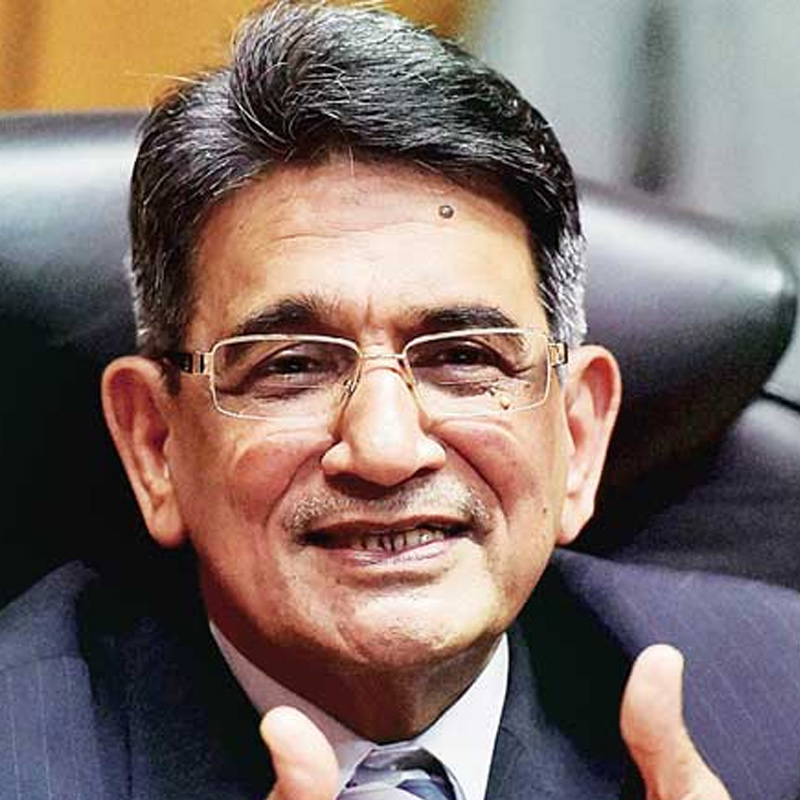
    The DisComm is headed by Justice Mukul Mudgal, former Chief Justice of Punjab and Haryana High Court, and has representation of all three industry bodies Indian Broadcasting Federation (IBF), Indian Society of Advertisers (ISA) and Advertising Agencies Association of India (AAAI). The committee also comprises of D. Shivanandan, former Mumbai Police Commissioner and Maharashtra DGP, and Paritosh Joshi, independent technical expert.

    BARC India is also evangelizing initiatives like Sample Return Path Data (SRPD), which will not only make the viewership data more robust but will also help address the issue of panel home tampering. BARC India also has a strict code of conduct for redressing viewership malpractices that is undertaken by all entities subscribing to BARC India’s weekly service. 

    BARC India has also engaged with TRAI and Ministry of Information & Broadcasting to get regulatory support and legal provisions to make panel tampering a punishable offence. BARC India and several industry members have made the point in TRAI’s Consultation Paper on TV viewership measurement.

    “The functioning of the Disciplinary Committee has been extremely professional and effective since its inception in March 2017. Panel Home tampering has long plagued the industry and the giant strides that BARC India has taken to tackle this menace and the sanctions imposed have proved an effective deterrent. Along with my other committee members, we are firm in our resolve to eradicate such malpractices from the industry and shall impose appropriate sanctions as and when required.” added Justice Mudgal

  • ASCI introduces ‘Independent Review Process’, appoints Justice Mudgal as chairman

    MUMBAI: The Advertising Standards Council of India (ASCI) has introduced an ‘Independent Review Process’. This procedure facilitates an independent mechanism to review the recommendations made by Consumer Complaints Council (CCC) if either the advertiser or the complainant is dissatisfied with such recommendations.

    The new Independent Review Process will have a chairman, who will be a retired Judge of the Supreme Court/High Court, assisted by the secretary general/chief complaints officer, along with the chairman or co-chairman who was involved in the CCC recommendation and a technical expert, where necessary. Currently, Justice Mukul Mudgal (Retd. chief justice of Punjab and Haryana, High Court) has been appointed by the self-regulatory organisation as the chairman for all Independent Review Process cases henceforth.

    ASCI has been rapidly progressing on various initiatives for upholding self-regulation in advertising, safeguarding consumers’ interest and partnering with various government bodies in restraining misleading advertisements. This has led to a substantial increase in ASCI’s responsibilities and work load. In this background, ASCI appoints Dr. CBS Venkataramana, IAS (Retd.), as the chief complaints officer (CCO), who will play a vital role in driving efficient complaint redressal and 360 degree stakeholder interactions.

    Serving as an Indian Administrative Service (IAS) officer for about 33 years, Dr. Venkataramana has undertaken several important assignments at the State Govt. and Central Govt. level. In his role as the CCO, Dr. Venkataramana will be responsible for managing complaint lodging, investigation, redressal and follow up processes for effective compliance of ASCI codes.

    Commenting on these initiatives, ASCI’s chairman Srinivasan K. Swamy said, “ASCI is constantly evolving and seeking effective measures to enable self-regulation in advertising and compliance to ASCI codes. The inclusion of the Independent Review Process mechanism creates transparency for both advertiser and complainant in further facilitating fair judgement of complaints. Further, the appointment of Dr. Venkataramana will go a long way in ensuring speedier and more effective complaint redressal process.”

    DETAILS: The Independent Review Process is applicable where the CCC recommendations are made after considering the response received from the Advertiser and on fulfilling the following conditions by the party seeking review:

    A written application, in the prescribed form, (available on the ASCI website) has to be submitted within 10 business days of the receipt of CCC recommendations.

    The application is accompanied by a non-refundable prescribed Fee plus applicable taxes.

    The Parties will be at liberty to provide additional information/material not submitted earlier together with the application as per (a) above. Additional information/material submitted by the complainant seeking a review will be sent to the advertiser who shall send his response to the ASCI secretariat in five business days from the date of receipt of such additional information/material.

    The advertiser seeking review confirms suspension of the offending advertisement, pending the Independent Review Process recommendations. By submitting the Independent Review Process application, it is understood that the advertiser shall accept and comply with the recommendations made by the Chairman of the Independent Review Process.

    The Independent Review Process meeting will be convened once in a Fortnight/Month. Both the complainant and the advertiser will be intimated as to the date, time and venue of the meeting at least 5 business days prior to the date of the meeting.

    Proceedings under the Independent Review Process are not adversarial or adjudicatory in nature and hence parties may be represented in the meeting by their company officials only.

    The Chairman of the Independent Review Process, after hearing both parties, will give his/her recommendations within two business days thereafter. In case, additional information or clarification is required from either party or the technical expert, the Chairman may, as per his/her discretion, continue the hearing on another convenient date.

    In the event either of the parties do not wish a personal hearing, the Chairman of the Independent Review Process may complete the review based on the additional information/material submitted and his/her findings would be conveyed over email to both the parties within a period of 2 business days.

    Independent Review Process shall not be applicable in case of ex-parte CCC recommendations. However, Re-examination of such recommendations will be undertaken by the CCC on payment of prescribed fee plus applicable taxes (which at the discretion of ASCI maybe reduced/ waived off in deserving cases) and adhering to the conditions laid down in clause (a) (d) & (e) above.

  • BARC India formally sets up independent council to probe viewership malpractices complaints

    MUMBAI: BARC India has set up an independent disciplinary council to further strengthen transparency and credibility of its measurement system.

    The six-member BARC India Disciplinary Council (BDC) will investigate and address complaints related to viewership malpractices and tampering of BARC India’s measurement system.

    The BDC will be headed by Punjab & Haryana High Court’s former chief justice Mukul Mudgal and has former Mumbai police commissioner and DGP Maharashtra D Shivanandan and independent technical expert Paritosh Joshi as its members. Viacom18 group general counsel and company secretary Sujeet Jain, GroupM South Asia CEO CVL Srinivas and GCPL AVP corporate legal Pankaj Phadnis are the other members, representing the three stakeholder bodies – IBF, AAAI and ISA.

    BARC India has already set up a vigilance team to probe viewership malpractices complaints, as well as investigate abnormal viewership data recorded from BARC India panel households. The new council will independently examine vigilance team reports, and where culpability is clearly established, it will be empowered to order punitive action appropriate to level of offence. The action could range from written warning and a fine for first level offence, to suspension of viewership data for three months, leading up to termination of BARC India’s contract with the subscriber.

    Alongside setting up of the high-level BDC, BARC India has re-drafted terms of the contract it signs with its subscribers. This has been done to address limitations in the current End User License Agreements (EULA) and strengthen legal provisions that will allow the BDC to act against viewership malpractices. The updated EULA will soon be circulated to all BARC India subscribers, and they would be required to sign them.

    “The BDC is a step forward in our commitment to ensuring transparency, and eradicating this long existing malpractice of panel tampering. We hope to build further credibility in our processes and systems under guidance of Justice Mudgal. The independent council will also benefit from the advice of a seasoned law enforcement expert like Shivanandan, and the continued support of industry stakeholders,” said BARC India CEO Partho Dasgupta.

  • Top court throws out BCCI’s review petition on Lodha recommendations

    Top court throws out BCCI’s review petition on Lodha recommendations

    MUMBAI: The Supreme Court today dismissed the Board of Control for Cricket in India (BCCI) petition that sought a review of the court’s validation of the Lodha panel recommendations. The battle for IPL’s digital rights, meanwhile, is heating up, with heavyweights such as Star India, Sony Pictures, Facebook, Jio, Twitter, and Amazon in the contention. Facebook lately has been focusing more on live-streaming content. Twitter, which has been live streaming NFL games on its platform, is also looking for more sports tie-ups. Amazon recently launched its prime video service. Reliance Jio, meanwhile, has been providing free content to its users on its Jio TV app and is the top contender given its scale. Bidding for IPL digital rights closes on 25 October and the results of the process will be announced the same day.

    In a landmark judgement in July this year, the top court had accepted a majority of the reforms recommendations made by the three-member panel appointed by the court and ordered the BCCI to respect it. The dismissal comes a day after the Supreme Court reserved its order and gave BCCI more time to implement the Lodha recommendations.

    It was after interacting with 74 people involved with the sport that the Lodha Committee came up with its recommended reforms. The panel spoke to former India captains, first class and international players, coaches, managers & administrators, authors, lawyers journalists, and club owners, and Justice Mukul Mudgal.

    The committee also spoke to Ajay Shirke (present BCCI secretary), Shashank Manohar (former BCCI president), Amitabh Chaudhary (present joint secretary), Anurag Thakur (present president), Anirudh Chaudhry (present treasurer), Gautam Roy (present vice-president, BCCI), Rajeev Shukla (present IPL chairman), Ratnakar Shetty (former joint secretary), Sanjay Jagdale (former secretary and selector), Shivlal Yadav (former interim president, BCCI) and the late BCCI president, Jagmohan Dalmiya. It has now become clear that a number of recommendations were actually proposed by a former state representative in the BCCI, and who is now a senior BCCI functionary.

    BCCI had called the judgement ‘unconstitutional’ and the three-member Supreme Court bench, headed by Chief Justice T S Thakur which accepted the reforms put forward, had a ‘prejudiced approach’ against the board. BCCI had also formed a team of lawyers, headed by the retired justice Markandeya Katju, to present the case on behalf of the board.

    Katju stated that the apex court’s verdict wasn’t binding on BCCI as the former was legislative in its identity. He further said: “The matter ought to have been forwarded by the Supreme Court with the Lodha recommendations to the Parliament with its own recommendation. So that Parliament could enact a law if required.

    While addressing the press, Katju claimed, “What the Supreme Court has done is unconstitutional and illegal. There has been a violation of principles of the Constitution. Under our Constitution, we have legislature, executive and judiciary. There is a broad separation of functions. It’s the legislature’s prerogative to make laws. If judiciary starts making laws, one is setting a dangerous precedent.”

    The dismissal of the review petition comes a day after the Supreme Court decided to reserve their order in the case after Kapil Sibal, BCCI’s legal counsel, requested for more time to ensure the complete implementation of the recommendations. Then Thakur, the CJI, asked for a written undertaking from the board on the dates by which it will implement the Lodha reforms in toto.

    The Lodha committee was established in January 2015 to decide the degree of punishment for those found guilty by the Mudgal report, which looked into the Indian Premier League spot-fixing scandal of 2013. The three-member panel was also given the responsibility of recommending structural and administrative changes to the BCCI.

    Meantime, online social networking service Facebook reportedly attempted to be in the race for the media rights of BCCI’s Indian Premier League. Facebook is likely to bid for digital rights of IPL. Twitter too had shown interest over the digital rights of the league. Facebook sought digital rights to live-stream India’s biggest sporting tournament. The social networking giant had purchased the tender documents for the bidding process.

    Facebook had curated a excellent experience for the preceding 2016 IPL season, with scoreboards, pages, videos and more. Nearly 360 million posts, comments and likes were posted on the social network during the tournament.

    Twitter India Head of Sports Partnerships Aneesh Madani told ET that they were constantly evaluating opportunities to transform live sports experiences in partnership with their most valued global sports partners and IPL 2016 tender purchase was representative.

    BCCI alleged in the Supreme Court that the Justice RM Lodha committee was trying to “run cricket” in the country by giving directions regarding match schedule, including the cash-rich IPL, which was beyond its jurisdiction. Senior advocate Sibal also questioned the purpose of recommendation to have three or five selectors for selecting the team and asked “does it serve the purpose of transparency?”

    “BCCI has floated global tenders for IPL and the terms and conditions are based on standards followed globally,” he said. To this, the bench said if Lodha committee does something beyond its jurisdiction, BCCI is at liberty to approach the apex court.

  • Top court throws out BCCI’s review petition on Lodha recommendations

    Top court throws out BCCI’s review petition on Lodha recommendations

    MUMBAI: The Supreme Court today dismissed the Board of Control for Cricket in India (BCCI) petition that sought a review of the court’s validation of the Lodha panel recommendations. The battle for IPL’s digital rights, meanwhile, is heating up, with heavyweights such as Star India, Sony Pictures, Facebook, Jio, Twitter, and Amazon in the contention. Facebook lately has been focusing more on live-streaming content. Twitter, which has been live streaming NFL games on its platform, is also looking for more sports tie-ups. Amazon recently launched its prime video service. Reliance Jio, meanwhile, has been providing free content to its users on its Jio TV app and is the top contender given its scale. Bidding for IPL digital rights closes on 25 October and the results of the process will be announced the same day.

    In a landmark judgement in July this year, the top court had accepted a majority of the reforms recommendations made by the three-member panel appointed by the court and ordered the BCCI to respect it. The dismissal comes a day after the Supreme Court reserved its order and gave BCCI more time to implement the Lodha recommendations.

    It was after interacting with 74 people involved with the sport that the Lodha Committee came up with its recommended reforms. The panel spoke to former India captains, first class and international players, coaches, managers & administrators, authors, lawyers journalists, and club owners, and Justice Mukul Mudgal.

    The committee also spoke to Ajay Shirke (present BCCI secretary), Shashank Manohar (former BCCI president), Amitabh Chaudhary (present joint secretary), Anurag Thakur (present president), Anirudh Chaudhry (present treasurer), Gautam Roy (present vice-president, BCCI), Rajeev Shukla (present IPL chairman), Ratnakar Shetty (former joint secretary), Sanjay Jagdale (former secretary and selector), Shivlal Yadav (former interim president, BCCI) and the late BCCI president, Jagmohan Dalmiya. It has now become clear that a number of recommendations were actually proposed by a former state representative in the BCCI, and who is now a senior BCCI functionary.

    BCCI had called the judgement ‘unconstitutional’ and the three-member Supreme Court bench, headed by Chief Justice T S Thakur which accepted the reforms put forward, had a ‘prejudiced approach’ against the board. BCCI had also formed a team of lawyers, headed by the retired justice Markandeya Katju, to present the case on behalf of the board.

    Katju stated that the apex court’s verdict wasn’t binding on BCCI as the former was legislative in its identity. He further said: “The matter ought to have been forwarded by the Supreme Court with the Lodha recommendations to the Parliament with its own recommendation. So that Parliament could enact a law if required.

    While addressing the press, Katju claimed, “What the Supreme Court has done is unconstitutional and illegal. There has been a violation of principles of the Constitution. Under our Constitution, we have legislature, executive and judiciary. There is a broad separation of functions. It’s the legislature’s prerogative to make laws. If judiciary starts making laws, one is setting a dangerous precedent.”

    The dismissal of the review petition comes a day after the Supreme Court decided to reserve their order in the case after Kapil Sibal, BCCI’s legal counsel, requested for more time to ensure the complete implementation of the recommendations. Then Thakur, the CJI, asked for a written undertaking from the board on the dates by which it will implement the Lodha reforms in toto.

    The Lodha committee was established in January 2015 to decide the degree of punishment for those found guilty by the Mudgal report, which looked into the Indian Premier League spot-fixing scandal of 2013. The three-member panel was also given the responsibility of recommending structural and administrative changes to the BCCI.

    Meantime, online social networking service Facebook reportedly attempted to be in the race for the media rights of BCCI’s Indian Premier League. Facebook is likely to bid for digital rights of IPL. Twitter too had shown interest over the digital rights of the league. Facebook sought digital rights to live-stream India’s biggest sporting tournament. The social networking giant had purchased the tender documents for the bidding process.

    Facebook had curated a excellent experience for the preceding 2016 IPL season, with scoreboards, pages, videos and more. Nearly 360 million posts, comments and likes were posted on the social network during the tournament.

    Twitter India Head of Sports Partnerships Aneesh Madani told ET that they were constantly evaluating opportunities to transform live sports experiences in partnership with their most valued global sports partners and IPL 2016 tender purchase was representative.

    BCCI alleged in the Supreme Court that the Justice RM Lodha committee was trying to “run cricket” in the country by giving directions regarding match schedule, including the cash-rich IPL, which was beyond its jurisdiction. Senior advocate Sibal also questioned the purpose of recommendation to have three or five selectors for selecting the team and asked “does it serve the purpose of transparency?”

    “BCCI has floated global tenders for IPL and the terms and conditions are based on standards followed globally,” he said. To this, the bench said if Lodha committee does something beyond its jurisdiction, BCCI is at liberty to approach the apex court.

  • Shyam Benegal Committee: CBFC can only certify films, not recommend cuts

    Shyam Benegal Committee: CBFC can only certify films, not recommend cuts

    NEW DELHI: In recommendations that are bound to stir a major debate among moralists and others, a government-appointed committee has said that no alterations or changes in any film can be made by the Central Board of Film Certification (CBFC) only with the consent of the rights holder.

    The members of the Shyam Benegal Committee were of the ‘unanimous view that the rights owner has complete rights over his/her film.’

    In its report submitted to the Information and Broadcasting ministry on 26 April 2016 but placed on the ministry’s website now, the Committee has said that there should be no system of imposing excisions (as is practiced at present) and the CBFC must transition into solely becoming a film certification body, as indeed the name of the institution suggests.

    The Committee is of the view that it is not for the CBFC to act as a moral compass by deciding what constitutes glorification or promotion of an issue or otherwise. The scope of the CBFC should largely only be to decide who and what category of audiences can watch the depiction of a particular theme, story, scene etc., unless the film in question violates the provisions of Section 5B(1) of the Cinematograph Act 1952 or exceeds the limitations defined in the highest category of certification recommended by this committee.

    In both such cases, the CBFC would be within its rights to reject certification to a film, but not authorized to dictate excisions, modifications and amendments. The CBFC categorization should be a sort of statutory warning to audiences of what to expect if they were to watch a particular film once the CBFC has issued this statutory warning. ‘Film viewing is a consensual act and up to the viewers of that category,’ the Committee felt.

    The Committee had been constituted by the government on New Year’s Day this year to suggest a paradigm that ensures that artistic creativity and freedom do not get stifled /curtailed even as films are certified. Noting that “in most countries of the world there is a mechanism/process of certifying feature films and documentaries”, an official release had said that the attempt should also be that “the people tasked with the work of certification understand these nuances”.

    The Committee had been asked to recommend broad guidelines / procedures under the provisions of the Cinematograph Act 1952 / Rules for the benefit of the chairperson and other members of the Screening Committee. The staffing pattern of CBFC was also to be looked into in an effort to recommend a framework which would provide efficient / transparent user friendly services.

    The other members of the Committee include filmmakers Goutam Ghose, Kamal Haasan and Rakeysh Omprakash Mehra, creative director Piyush Pandey, media veteran Bhawana Somayya, Nina Lath Gupta who is managing director of the National Film Development Corporation, and Joint Secretary (Films) Sanjay Murthy as Member Convenor.

    This is not the first time that such a committee has been set up. After earlier attempts, the last committee that examined similar issues was headed by the eminent Mukul Mudgal. However, no action has been taken on that report submitted in 2013.

    The present Guidelines issued in 1991 are general in categorization and therefore prone to ambiguity in interpretation. The committee recommended that Guidelines need to be drafted for each category of certification. While doing so, the Committee has taken into consideration all the issues of concern listed in the 1991 Guidelines and included them in the recommended Guidelines as well.

    The committee said the principle objectives of guidelines should be to ensure that the content viewed by potentially vulnerable audiences (including children) is suitable for their viewing, and by making such categorizations, empower consumers to make informed viewing choices.

    Simultaneously, the guidelines are also aimed at ensuring that the artistic expression and creative freedom of filmmakers are protected through objectively laid down parameters for certification that do not attempt to act as a moral compass on what should or should not be shown to audiences, but endeavour to specify the category of audiences that are deemed fit to watch a film, given its content.

    The Committee therefore said that at least two of the objectives of censorship listed in the Guidelines – ‘clean and healthy entertainment’ and ‘of aesthetic value’ – are not within the ambit of the CBFC – as a film certification body, it is not responsible for ensuring the aesthetic composition of a film or for “clean and healthy entertainment”.

    The Committee believes that the objective that a film should be responsible and sensitive to the realms of society is a subjective clause and should be avoided, as there is no definition of what constitutes the values and standards of society at a given point of time. The insertion of clauses that are open to varying interpretations would only render the process of certification more difficult and open to controversy. As an alternative to this clause, an attempt has therefore been made by the committee to lay down a ceiling for the highest category of certification, beyond which the CBFC can refuse certification.

    The Committee examined the need for a separate rating for films with explicit scenes of sex, violence etc. While internationally there is no separate rating for such films, and they invariably get an R or 17+ rating, such films carry a line to the effect that the film has extreme nudity or violence, as the case may be.

    But since a similar approach would not be effective in India, the Committee was of the view that the categories need to be extended. This would release the current ‘pressure cooker situation’ of filmmakers needing to cater to the demands of a certain section of the audience for financial gain through insertion of such sequences but having no avenues to showcase the same except through suggestive sequences in films.

    The committee also agreed that in the present context, unlike in the past, there are no specific timings during which a certain kind of cinema would enjoy playtime. Thus, in contrast to previous times when adult-rated films with explicit scenes were normally showcased as late night shows, in the digital era nothing stops anyone from viewing any content at any time

    In this scenario, having an A-c rating (A with Caution) would help audiences to make distinct choices, prevent the insertion of suggestive sequences in films that would otherwise be classified as Universal viewing and also facilitate the business of film by being available for viewing at all times but restricted strictly to adult audiences.

    Under new guidelines framed by the Committee, a filmmaker would have to specify the category in which he feels the film would go.

    The objective of the guidelines framed by the Committee would be to ensure that:
    a. Children and adults are protected from potentially harmful or otherwise unsuitable content:
    b. Audiences, particularly parents and those with responsibility for children are empowered to make informed viewing decisions;
    c. Artistic expression and creative freedom are not unduly curbed in the process of classification of films;
    d. The process of certification by CBFC is responsive, at all times, to social change.

    In view of this, the Committee felt that the categories UA and A need to further sub-divided.

    The UA category should be divided into sub-categories of UA 12+ and UA 15+ under the CBFC Rules. The Committee recommended this in light of the sociological changes that have occurred since the introduction of the Cinematograph Act in 1952. While UA l2+ caters to young teenagers who are yet to be exposed to the adult world and can therefore be exposed to adult issues in only a minimal manner, UA 15+ seeks to keep in mind that young adolescents are at an age when they are being introduced to the adult world, and are ready to be exposed to various concerns and issues of the adult world, albeit in a moderate manner.

    It has also been recommended that the Adult category be further divided into A and A-C (Adult with Caution) sub-categories. The objective of this sub-categorization is to enable adults to make informed choices about the kind of film they would like to watch. Not all adults prefer to watch films that have explicit portrayals of various issues such as violence, sex, discrimination, use of language etc. The purpose of the A-C category is to warn audiences of the explicit depiction of various issues, thus enabling them to make a considered choice.

    Films that violate the provisions of Section 5B(1) of the Cinematograph Act, 1952 will not be considered for certification.

    Films submitted for telecast on television or for any other purpose should be re-certified.

    The committee has made it clear that any complaints received by the central government should be referred to the CBFC whose chairperson may, if he considers it necessary to do so, refer the film to a revising committee for examination once again in view of alleged violation of Section 5B(1) of the Cinematograph Act, 1952.

    In order to preserve Indian Cinema, the committee recommends that every applicant should deposit the Director’s Cut in the National Film Archives of India for preservation. At present, only the certified version is submitted but the committee felt that the original will ‘truly reflect the cinematic history of Indian cinema.

  • Shyam Benegal Committee: CBFC can only certify films, not recommend cuts

    Shyam Benegal Committee: CBFC can only certify films, not recommend cuts

    NEW DELHI: In recommendations that are bound to stir a major debate among moralists and others, a government-appointed committee has said that no alterations or changes in any film can be made by the Central Board of Film Certification (CBFC) only with the consent of the rights holder.

    The members of the Shyam Benegal Committee were of the ‘unanimous view that the rights owner has complete rights over his/her film.’

    In its report submitted to the Information and Broadcasting ministry on 26 April 2016 but placed on the ministry’s website now, the Committee has said that there should be no system of imposing excisions (as is practiced at present) and the CBFC must transition into solely becoming a film certification body, as indeed the name of the institution suggests.

    The Committee is of the view that it is not for the CBFC to act as a moral compass by deciding what constitutes glorification or promotion of an issue or otherwise. The scope of the CBFC should largely only be to decide who and what category of audiences can watch the depiction of a particular theme, story, scene etc., unless the film in question violates the provisions of Section 5B(1) of the Cinematograph Act 1952 or exceeds the limitations defined in the highest category of certification recommended by this committee.

    In both such cases, the CBFC would be within its rights to reject certification to a film, but not authorized to dictate excisions, modifications and amendments. The CBFC categorization should be a sort of statutory warning to audiences of what to expect if they were to watch a particular film once the CBFC has issued this statutory warning. ‘Film viewing is a consensual act and up to the viewers of that category,’ the Committee felt.

    The Committee had been constituted by the government on New Year’s Day this year to suggest a paradigm that ensures that artistic creativity and freedom do not get stifled /curtailed even as films are certified. Noting that “in most countries of the world there is a mechanism/process of certifying feature films and documentaries”, an official release had said that the attempt should also be that “the people tasked with the work of certification understand these nuances”.

    The Committee had been asked to recommend broad guidelines / procedures under the provisions of the Cinematograph Act 1952 / Rules for the benefit of the chairperson and other members of the Screening Committee. The staffing pattern of CBFC was also to be looked into in an effort to recommend a framework which would provide efficient / transparent user friendly services.

    The other members of the Committee include filmmakers Goutam Ghose, Kamal Haasan and Rakeysh Omprakash Mehra, creative director Piyush Pandey, media veteran Bhawana Somayya, Nina Lath Gupta who is managing director of the National Film Development Corporation, and Joint Secretary (Films) Sanjay Murthy as Member Convenor.

    This is not the first time that such a committee has been set up. After earlier attempts, the last committee that examined similar issues was headed by the eminent Mukul Mudgal. However, no action has been taken on that report submitted in 2013.

    The present Guidelines issued in 1991 are general in categorization and therefore prone to ambiguity in interpretation. The committee recommended that Guidelines need to be drafted for each category of certification. While doing so, the Committee has taken into consideration all the issues of concern listed in the 1991 Guidelines and included them in the recommended Guidelines as well.

    The committee said the principle objectives of guidelines should be to ensure that the content viewed by potentially vulnerable audiences (including children) is suitable for their viewing, and by making such categorizations, empower consumers to make informed viewing choices.

    Simultaneously, the guidelines are also aimed at ensuring that the artistic expression and creative freedom of filmmakers are protected through objectively laid down parameters for certification that do not attempt to act as a moral compass on what should or should not be shown to audiences, but endeavour to specify the category of audiences that are deemed fit to watch a film, given its content.

    The Committee therefore said that at least two of the objectives of censorship listed in the Guidelines – ‘clean and healthy entertainment’ and ‘of aesthetic value’ – are not within the ambit of the CBFC – as a film certification body, it is not responsible for ensuring the aesthetic composition of a film or for “clean and healthy entertainment”.

    The Committee believes that the objective that a film should be responsible and sensitive to the realms of society is a subjective clause and should be avoided, as there is no definition of what constitutes the values and standards of society at a given point of time. The insertion of clauses that are open to varying interpretations would only render the process of certification more difficult and open to controversy. As an alternative to this clause, an attempt has therefore been made by the committee to lay down a ceiling for the highest category of certification, beyond which the CBFC can refuse certification.

    The Committee examined the need for a separate rating for films with explicit scenes of sex, violence etc. While internationally there is no separate rating for such films, and they invariably get an R or 17+ rating, such films carry a line to the effect that the film has extreme nudity or violence, as the case may be.

    But since a similar approach would not be effective in India, the Committee was of the view that the categories need to be extended. This would release the current ‘pressure cooker situation’ of filmmakers needing to cater to the demands of a certain section of the audience for financial gain through insertion of such sequences but having no avenues to showcase the same except through suggestive sequences in films.

    The committee also agreed that in the present context, unlike in the past, there are no specific timings during which a certain kind of cinema would enjoy playtime. Thus, in contrast to previous times when adult-rated films with explicit scenes were normally showcased as late night shows, in the digital era nothing stops anyone from viewing any content at any time

    In this scenario, having an A-c rating (A with Caution) would help audiences to make distinct choices, prevent the insertion of suggestive sequences in films that would otherwise be classified as Universal viewing and also facilitate the business of film by being available for viewing at all times but restricted strictly to adult audiences.

    Under new guidelines framed by the Committee, a filmmaker would have to specify the category in which he feels the film would go.

    The objective of the guidelines framed by the Committee would be to ensure that:
    a. Children and adults are protected from potentially harmful or otherwise unsuitable content:
    b. Audiences, particularly parents and those with responsibility for children are empowered to make informed viewing decisions;
    c. Artistic expression and creative freedom are not unduly curbed in the process of classification of films;
    d. The process of certification by CBFC is responsive, at all times, to social change.

    In view of this, the Committee felt that the categories UA and A need to further sub-divided.

    The UA category should be divided into sub-categories of UA 12+ and UA 15+ under the CBFC Rules. The Committee recommended this in light of the sociological changes that have occurred since the introduction of the Cinematograph Act in 1952. While UA l2+ caters to young teenagers who are yet to be exposed to the adult world and can therefore be exposed to adult issues in only a minimal manner, UA 15+ seeks to keep in mind that young adolescents are at an age when they are being introduced to the adult world, and are ready to be exposed to various concerns and issues of the adult world, albeit in a moderate manner.

    It has also been recommended that the Adult category be further divided into A and A-C (Adult with Caution) sub-categories. The objective of this sub-categorization is to enable adults to make informed choices about the kind of film they would like to watch. Not all adults prefer to watch films that have explicit portrayals of various issues such as violence, sex, discrimination, use of language etc. The purpose of the A-C category is to warn audiences of the explicit depiction of various issues, thus enabling them to make a considered choice.

    Films that violate the provisions of Section 5B(1) of the Cinematograph Act, 1952 will not be considered for certification.

    Films submitted for telecast on television or for any other purpose should be re-certified.

    The committee has made it clear that any complaints received by the central government should be referred to the CBFC whose chairperson may, if he considers it necessary to do so, refer the film to a revising committee for examination once again in view of alleged violation of Section 5B(1) of the Cinematograph Act, 1952.

    In order to preserve Indian Cinema, the committee recommends that every applicant should deposit the Director’s Cut in the National Film Archives of India for preservation. At present, only the certified version is submitted but the committee felt that the original will ‘truly reflect the cinematic history of Indian cinema.

  • Action taken in 75 complaints of violations by TV channels in last three years, Govt not considering independent mechanism

    Action taken in 75 complaints of violations by TV channels in last three years, Govt not considering independent mechanism

    NEW DELHI: The Government has reiterated that there is no proposal under consideration of the Information and Broadcasting Ministry for an independent broadcasting media authority/separate mechanism in the country for complaints relating to media

    I and B Minister Arun Jaitley told Parliament that the adequate provisions in the form of various Acts / Rules / Regulations/ Guidelines already exist with regard to print and electronic Media.

    He also referred to the Inter-Ministerial Committee for TV channels, self-regulatory bodies Broadcasting Content Complaints Council (BCCC) headed by retired Judge Mukul Mudgal for general entertainment channels, the News Broadcasting Standards Authority for news television channels, the Consumer Complaints Council (CCC) of the Advertising Standards Council of India (ASCI), and the Press Council of India for print media.

    The BCCC took action in a total of 5036 cases between 2013 and 2015, while the NBSA took action in 1464 complaints between 2012-13 and 2014-15.  

    Thus BCCC had 2298 complaints in 2015, 1791 in 2014 and 947 in 2014. The NBSA -had 110 complaints in 2014-15, 1143 in 2013-14, and 216 in 2012-13  

    Action was taken in 75 complaints relating to violation of Programme or Advertising Codes for Television channels, while the Press council of India heard 521 complaints between 2012-13 and 2015-16.

  • Action taken in 75 complaints of violations by TV channels in last three years, Govt not considering independent mechanism

    Action taken in 75 complaints of violations by TV channels in last three years, Govt not considering independent mechanism

    NEW DELHI: The Government has reiterated that there is no proposal under consideration of the Information and Broadcasting Ministry for an independent broadcasting media authority/separate mechanism in the country for complaints relating to media

    I and B Minister Arun Jaitley told Parliament that the adequate provisions in the form of various Acts / Rules / Regulations/ Guidelines already exist with regard to print and electronic Media.

    He also referred to the Inter-Ministerial Committee for TV channels, self-regulatory bodies Broadcasting Content Complaints Council (BCCC) headed by retired Judge Mukul Mudgal for general entertainment channels, the News Broadcasting Standards Authority for news television channels, the Consumer Complaints Council (CCC) of the Advertising Standards Council of India (ASCI), and the Press Council of India for print media.

    The BCCC took action in a total of 5036 cases between 2013 and 2015, while the NBSA took action in 1464 complaints between 2012-13 and 2014-15.  

    Thus BCCC had 2298 complaints in 2015, 1791 in 2014 and 947 in 2014. The NBSA -had 110 complaints in 2014-15, 1143 in 2013-14, and 216 in 2012-13  

    Action was taken in 75 complaints relating to violation of Programme or Advertising Codes for Television channels, while the Press council of India heard 521 complaints between 2012-13 and 2015-16.

  • Only two cases of vulgarity and indecency on reality TV shows reported to Government in last two years

    Only two cases of vulgarity and indecency on reality TV shows reported to Government in last two years

    NEW DELHI: Only two instances have come to the government over the past two years of vulgarity and indecency in reality shows on television, and both relate to Colors.

    Answering a question in Parliament today, Information and Broadcasting Minister Arun Jaitley however ruled out any guideline to check such trends as he said “the existing provisions contained in the Programme and Advertising codes and the existing mechanism are considered adequate to regulate content including reality shows on TV channels”.

    In the first case relating to Bigg Boss Season-7, Colors had been issued an advisory on 26 March 2014 and a warning was issued on 8 January last year on the second case relating to “Fear Factor Khatron Ke Khiladi-Dan Ka Blockbuster” when the channel was asked to run an apology scroll.

    The Minister said in reply to a question that the content telecast on private satellite TV channels including reality shows of different genres is regulated under the cable Television Networks (Regulation) Act, 1995 and cable Television Network Rules, 1994 framed there under. The Act does not provide for pre-censorship of any programmes and advertisements telecast on such TV channels.

    However, it prescribes that all programmes and advertisements on such TV channels should be in conformity with the prescribed programme code and Advertising code enshrined in the Act and the rules framed there under, which contains a whole range of principles to be followed by these  channels including the reality shows carried thereon.

    He said the Government has set up Electronic Media Monitoring centre (EMMC) to review the content of private TV channels in the contest of violation(s) of programme and Advertising Codes.

    An Inter-Ministerial committee (IMC) has also been set up in the Ministry to look into the specific complaints or suo-motu take cognizance against the violation of programme and Advertising codes and appropriate action is taken as per cable Television Networks (Regulation) Act’ 1995, if any violation if established.

    This Ministry also issues advisories to TV channels from time to time on various issues, which are also relevant to reality shows. These are available at Ministry’s website www.mib.nic.in.

    In addition,the  National Commission for Protection of Child Rights (NCPCR) has formulated the ‘Guidelines for Media Reporting on children, which have been circulated by this Ministry among ail TV channels/NBA,/IBF on 23 November 2012. The guidelines lay down provisions to be followed by broadcasters/producers in case child participants are taken in their shows.

    Besides, as part of its self-regulating mechanism, Indian Broadcasting Foundation which is a representative body of non-news & current affairs TV channels, has set up the Broadcasting content Complaints Council (BCCC) headed by retired High Court judge Mukul Mudgal to examine complaints about television programmes. BCCC has also issued some Advisories on various issues related to reality shows to their member channels, which are available at their website i.e. www.ibfindia.com.

    The Programme code, inter-alia, provides that no programme should be carried in the cable service which (i) offends against good taste or decency; (ii) contains anything obscene, defamatory, deliberate, false and suggestive innuendos and half truths; and (iii) denigrates women through the depiction in any manner of the figure of a women, her form or body or any part thereof in such a way as to have the effect of being indecent, or derogatory to women, or is likely to deprave, corrupt or injure the public morality or morals.

    Action is taken against defaulting channels whenever any violation of the said codes is noticed or brought to the notice of the Ministry.