Tag: Mukesh Singh

  • Media should reflect on whether airing gang rape film is justified: Jaitley

    Media should reflect on whether airing gang rape film is justified: Jaitley

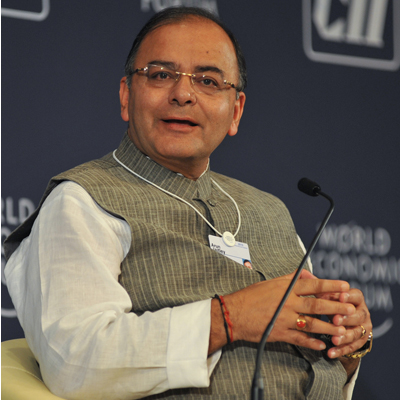
    NEW DELHI: Even as the Delhi High Court is still to decide finally on the ban on India’s Daughter by Leslee Udwin, Information and Broadcasting Minister (I&B) Arun Jaitley said, over the weekend, that the media worldwide should reflect on issues surrounding the film made by BBC and specifically on whether a media organisation should allow its platform to be used by a rapist to justify his innocence.


    Asked by reporters in London to give his view on the ban, Jaitley who, is a also lawyer, said the matter was in court. 


    “The Home Ministry and Parliament had a certain view, which was expressed. Without getting into the issue because it has been challenged in the court and let the court decide this; I will only mention two points to be borne in mind by anyone who wants to produce any film on these causes,” he said.


    Jaitley pointed out to a provision under Section 228A of the Indian Penal Code, which came into force following the Justice Verma Committee report, to prohibit the naming and showing any photograph of the rape victim.


    “Secondly, it is a question for the media itself to debate whether during the pendency of the appeal, a media organisation should allow its platform to be used by a rapist to justify why he is not guilty,” he added.


    “My understanding of the English law is that on both these counts in a sub-judice matter wit the appeal pending, a media forum may not have been made available to the accused to justify his innocence,” Jaitley said.


    He made a direct link with the comments of one of the rapists, Mukesh Singh, who had claimed he was at the wheel and hence “not part of the act.”


    “These are the two crucial issues on which I would like the media itself to reflect on,” the Minister said.


  • Delhi HC refuses to lift ban on ‘India’s Daughter;’ says media trial influences judges

    Delhi HC refuses to lift ban on ‘India’s Daughter;’ says media trial influences judges

    NEW DELHI: The Delhi High Court today refused to stay the ban on BBC’s documentary India’s Daughter by British filmmaker Leslee Udwin on the Nirbhaya gang rape of December 2012, saying the case was sub judice in Supreme Court and allowing its display in the masses could affect the case.
     

    Justices BD Ahmed and Sanjeev Sachdeva said media trials tend to influence judges by subconsciously creating pressure. Although the judges said they were prima facie not opposed to airing of the documentary, it should be released after the Supreme Court decides the appeals of the convicts in the matter.
     

    “Media trials do tend to influence judges. Subconsciously a pressure is created and it does have an effect on the sentencing of the accused/ convict,” it said in support of its observation.


    The bench was of the view that the documentary could “interfere with the justice system” but refused to pass any interim orders. “Had it been originally placed before us, we would have asked you to place material before us on why the ban should be lifted. But it has come here from the roster bench of Chief Justice, so we will not pass any interim orders.”


    Observing that airing of the video could make or ruin the case of one of the rape convicts, Mukesh, it said, “Whether he has shown remorse or not would be considered at the time of his sentencing. Why not wait till the Supreme Court decision?”


    On the contention that ban on airing of the video till the apex court judgement could also lead to gag on reporting of all sub judice matters, the bench said, “We agree.” It said that earlier media had a self-imposed code of not reporting sub judice matters, but now “media has thrown it (the code) to the winds.”


    The Central government represented by advocate Monika Arora opposed airing of the documentary saying it would give a platform to the convict to air his views and that it also contains derogatory statements against the victim. 

    She also said that the Information and Broadcasting Ministry only issued an advisory to cable TV networks to abide by the magisterial court’s order banning airing of the documentary.

    The petitioners claimed that since the documentary was freely available on the Internet, and its viewing by lakhs of people had caused no untoward or law and order situation, there are no grounds for banning the video. The petitioners also said that parts of the convict’s interview are already part of the judgment in the case by the trial court and High Court and thus are public records.

    The court had earlier refused to give urgent hearing after three law students –Vibhor Anand, Arun Menon and Kritika Padode– in their two separate PILs said “fundamental right of freedom of speech and expression have been infringed due to government’s illegal action to ban the broadcast.” They had approached the High Court after a trial court on 4 March had banned until further orders the broadcast of the interview of 16 December, 2012 gangrape convict Mukesh Singh, allegedly conducted in July 2013 inside Tihar jail.


    Earlier, a trial court had restrained the media from broadcasting or publishing the interview of Mukesh Singh after the Delhi Police moved the court seeking the restraint. The Information and Broadcasting Ministry had also issued an advisory to all television channels not to broadcast the film or excerpts from it.


    The pleas had sought lifting of the ban on the ground that it is “a look at the mindset of one of the convicted rapists.” One of the pleas had also sought direction to the Bar Council of India to expedite action against the two lawyers — advocate AP Singh and ML Sharma — who had allegedly made derogatory anti-women remarks in the documentary. It also claimed that the parents of the gangrape victim have not objected to the telecast of the documentary.


    Meanwhile, Udwin told the Los Angeles Times that the Indian government should hang its head in shame for banning her film. 

    However, the government claims she was permitted to interview the convicts in jail when she said was doing research and would not use the film for commercial purposes. The film has already been aired in several countries including the United States and the BBC4 in the United Kingdom. NDTV was to have aired the film on International Women’s Day but could not do so in view of the ban.

  • Govt. moves to stop screening on internet websites as notice is issued to two lawyers

    Govt. moves to stop screening on internet websites as notice is issued to two lawyers

    NEW DELHI:  Even as the documentary “India’s Daughter” by Oscar-winning British filmmaker Leslee Udwin on the Nirbhaya gang-rape case has been telecast by BBC4 on a channel not available in India despite the ban by the Delhi High Court, two lawyers who defended the rapists have been issued notices for their allegedly anti-women remarks.


    The notices were issued by the Bar Council of India to M L Sharma and A P Singh under a provision of the advocates act and their licences to practice may be cancelled if BCI is not satisfied with their response.


    Sharma has already refuted the charge that he made any such remarks in the documentary.


    Within hours, the film became available on YouTube despite a message that showed “URL Blocked”. It also became available on some other websites.


    Home Minister Rajnath Singh said two days earlier that the government was exploring ways to block the film on YouTube. He also said action would be taken for the telecast of the film last night and added that he was pained by the development


    The documentary was to have been aired in the UK, Denmark, Sweden, Switzerland, Norway, Canada, and India (NDTV 24X7) on International Women’s Day 8 March.


    But a statement from the BBC two days earlier said given the “intense level of interest” it would telecast the film later. Butthe channel later said in a communication to the Home Ministry that it had no plans to telecast the documentary in India, “in compliance with the Indian Government’s directive”.


    Singh had also said that it would attempt to block the telecast in other countries and the External Affairs and Information and Broadcasting Ministries had been asked to ensure the film was not broadcast on any platform anywhere in the world.

     
    Singh had made a statement in Parliament amid massive uproar over how permission was granted to the filmmaker to interview Mukesh Singh, one of the six men who brutally raped and tortured a 23-year-old paramedical student on a moving bus on 16 December 2012. She had died 13 days later in a Singapore hospital.

    In the interview, Mukesh Singh said the rape and killing was deliberate to teach women a lesson, and displayed no remorse as he blamed the woman.

    The BBC said in its statement, “This harrowing documentary, made with the full support and co-operation of the victim’s parents, provides a revealing insight into a horrific crime that sent shock waves around the world and led to protests across India demanding changes in attitudes towards women.”

    “The film handles the issue responsibly and we are confident the programme fully complies with our editorial guidelines,” it said.

    Delhi Police chief BS Bassi said: “We took a regular order from a competent court and informed BBC and other channels against broadcasting and uploading of the video of the interview on internet and so that nobody violates the law.” The Delhi Police have filed a case and have started investigation, Mr Bassi said. He said permission to take interview is always the discretion of the concerned authority, so we are not looking for criminality in that.


    The Delhi Police has written to the Telecom and Communications Ministry and sought blocking of the film on YouTube. The Police may also question the crew who shot the film. While its co-producer Dibang is in India, Udwin is understood to have left late last night for the United Kingdom. (Ms Udwin was producer of the award-winning feature film ‘East is East’ which had starred Om Puri among others around twenty years earlier,)


    Lalita Kumaramangalam felt that showing the film was ‘morally wrong’ as the broadcaster did not think about the anguish that women who have faced such things will go through.


    However, film lyricist and Rajya Sabha member Javed Akhtar said the film should be shown to reveal to the world what rapists are like. He said he could have understood the ban if Mukesh’s lawyer had asked for it. He said the goal of such documentaries is to bring out disgust against rapists’ point of view. “It makes people aware such a mindset is not uncommon.”


    Bharatiya Janata Party member of Parliament from Mumbai Poonam Mahajan has said in an article that the film only shows the mindset of men.


    Meanwhile, people took to the streets in Varanasi earlier this week and burnt an effigy of the BBC in protest against the documentary.


    Minister of State for Parliamentary Affairs Mukhtar Abbas Naqvi said the channel that broadcast the Nirbhaya documentary will not be forgiven.


    The victim’s father, who had cooperated with the filmmaker, has now said that BBC should not have been shown in view of the ban.


    Meanwhile, Udwin has said society created the rapists by teaching them “what to think”. She said she was not inspired by the rape to make the film, but the wave of protests this generated all over the country within hours of the report. In an interview with India Insight (a blog on Reuter website), she said the argument that airing the convict’s interview would amount to giving him a platform to promote his views was “stupid” and “uneducated.”


    In a separate interview to CNN, Udwin described the people she spoke with – the attorneys, the lawyers, and the culprits – as “ordinary, apparently normal and certainly unremarkable men.” 


    CNN says that Udwin’s documentary illustrates how even people with power in India harbour shockingly similar attitudes. One of the lawyers who represented the attackers says he would burn his own daughter alive if she behaved dishonourably. Another defence lawyer gestures with his hands to describe women as “flowers” who must be protected by men and “diamonds” who face inevitable assault if they end up in the wrong places.

  • India’s Daughter: Country takes a step towards judicial dictatorship

    India’s Daughter: Country takes a step towards judicial dictatorship

    MUMBAI: Nirbhaya, a name that garners sympathy whenever it is pronounced, but is sympathy enough for the daughter of the nation, who was brutally raped and murdered? What has changed after her sad demise? The answer is NOTHING.


    After the fatal incident that took place on 16 December, 2012, politicians used the name Nirbhaya to seek sympathetic affection. In other words, the name Nirbhaya became a part of dirty vote bank politics. What started as a revolt to abolish rape ended up becoming an empowerment scheme in the Indian government. And today the name is making headlines again. But for what? Have the rapists, who were responsible for her fatal death, been hung? No. There’s no cause to be so optimistic because such is not the case.


    A British film enthusiast Leslee Udwin has made a documentary titled “India’s Daughter” focusing on the brutal incident that took place in Delhi, three years back.  The documentary, which was aired by the BBC in the UK, features conversations with Mukesh Singh and fellow convicts who raped and tortured a 23-year-old woman on a moving bus in December 2012. Excerpts from the documentary irked lawmakers. The government of the world’s largest democracy has banned the telecast of the documentary in the country. The problem with the documentary is the interview given by the convicted Mukesh Singh. It is alleged that Singh used abusive content against women in India, which may hurt national sentiments. Was rape of Nirbhaya not enough to hurt national sentiments? How does a rapist’s reaction cause ban to a piece that was documented after two years of professional research?


    The other controversial point that emerged from the documentary is the interview that was scheduled in Tihar Jail. Let’s do a reality check, Tihar Jail in Delhi is the largest jail in South Asia and it is quite obvious that no one can interview a prisoner without the jailor’s permission. So if we put everything in perspective, two years ago a British film enthusiast, who has experience of acting in movies like Merchant Of Venice and producing 1999 British cult comedy East is East and its sequel, teamed up with a group of Indian, which includes a journalist, to make a documentary. After two years of research, analysis and interviews the documentary was scheduled to be premiered on International Women’s Day i.e. 8 March.


    NDTV, in a press release announced that its English news channel will telecast the interview-based documentary in India on International Women’s Day at 9 pm. However, the Delhi High Court spelled a verdict to hold the screening in India till further notice and hence the channel will not be airing the documentary as per schedule.


    Speaking to Indiantelevision.com, NDTV editorial director Sonia Singh says, “As there is a court order, we won’t be airing the documentary as of now.”


    “We are shocked at the ban and censorship. There will be no further comments,” adds a spokesperson from the channel.


    Now let’s scan through a few opinions that came from prominent personalities after the excerpts of interview were out on public platforms.


    Director and producer of the documentary Leslee Udwin told Indiatelevision.com that the film’s message conveyed that the time had come to respect women and not just treat them well. She was hoping for a sea-change.


    “An interview, which will defame India internationally is totally unacceptable,” said India’s Parliamentary Affairs Minister Venkaiah Naidu, on the Nirbhaya documentary.


    The honourable Minister, is no doubt aware of what happened to Draupadi in Mahabharata. Will he impose a ban on screening of the Mahabharata too, as it defames the integrity of a WOMAN?


    Home Minister Rajnath Singh went a step further. His tweet read, “The producers of documentary on Nirbhaya were required to take approval from the Jail authorities before telecast but they did not do so.”


    It is utterly surprising how a foreigner enters the largest jail in South Asia and conducts an interview, which is certainly not shot by a hidden camera without taking the necessary permissions. The incident signifies that there are no consensus in the lawmaking fraternity as someone might have allowed the developments which others had a problem with. Sharing his emotions the Home Minister tweeted, “I was personally hurt by this, spoke to authorities, made sure all steps were taken to stop the broadcast.”


    One wonders why, with all the power, doesn’t he increase the pace of judicial proceedings to ensure justice to Nirbhaya?


    Ex-cop woman-turned politician and BJP’s Delhi head Kiren Bedi’s opinion differs from other party leaders and was seconded by veteran journalist Rajdeep Sardesai. He opined, “@thekiranbedi strongly defends the telecast of the Nirbhaya documentary. I support her view!”


    Rajya Sabha member and famous scriptwriter and lyricist Javed Akhtar said, “It’s good that this documentary has been made. If anyone finds it objectionable, they should change their mindset.”


    Author Chetan Bhagat’s tweet read, “Lack of consent and banning free speech comes in the same category – violation of individual rights.” After watching the documentary online, Bhagat once again tweeted, “Documentary #IndiasDaughter is extraordinary. Moving, thought provoking. Makers have Nirbhaya’s parents consent. Available on YouTube for now.”


    India should not forget that filmmakers like Satyajit Ray and Ritwik Ghatak hail from the same country where every second thing is getting banned. The first Asian to win a Nobel Prize for literature was also an Indian and with all this censorship, we are not only demeaning the stalwarts but defaming our Motherland internationally. We compare ourselves with western countries and while they rejoice Argoand Zero Dark Thirty, we ban the screening of India’s Daughter.


    The rape itself is demeaning and there cannot be anything more defamatory than the brutal act. If India is so concerned about pride and integrity, the judiciary should put efforts in prohibiting such fatal and irrational acts instead of banning a fact-based documentary. Mukesh Singh’s interview makes my blood boil as it should every Indian’s. The fact that all men do not subscribe to the same thought can only be proved by action and not by words, by respecting woman and not demeaning them. The day all men in India take an oath of not raping, rape will be abolished and that will be the biggest manly act in independent India.

  • Film on Nirbhaya gang rape to premiere on International Women’s Day

    Film on Nirbhaya gang rape to premiere on International Women’s Day

    NEW DELHI: The India-United King co-production India’s Daughter, which is based on the gruesome Nirbhaya incident of December 2012, will be telecast in a world premiere simultaneously in India, the UK, Denmark, Sweden, Switzerland, Norway and Canada.


    NDTV 24×7 will telecast of the interview-based documentary in India on International Women’s Day – 8 March at 9.00 pm. 


    India’s Daughter tells the story of the horrific Delhi gang rape and of the unprecedented protests and riots, which this horrific event ignited throughout India, demanding changes in attitudes towards women.


    Director-producer Leslee Udwin said in a press meet today, “When news of this gang-rape hit our TV screens in December 2012, I was as shocked and upset as we all are when faced with such brazen abandon of the norms of ‘civilised’ society. But what actually inspired me to commit to the harrowing and difficult journey of making this film was the optimism occasioned by the reports that followed the rape. Courageous and impassioned ordinary men and women of India braved the December freeze to protest in unprecedented numbers, withstanding an onslaught of teargas shells, lathi charges and water canons, to make their cry of ‘enough is enough’ heard. In this regard, India led the world by example – and I love India for this. In my lifetime, I can’t recall any other country standing up with such commitment and determination for women’s rights.”


    With exclusive and unprecedented access, the film examines the values and mind-sets of the rapists. Udwin told indiantelevision.com that the message of the film was that the time had come to respect women and not just treat them well. She was hoping for a sea-change.


    The film took her two years to make. She conducted interviews that ran into 87 hours of filming but then reduced the film to just 26 interviews.


    Speaking at the press meet, Udwin said she found the family of the girl to be extraordinary human beings. She had found audiences crying after private screenings in India and many men had come to her to say they would henceforth work to change the mind-set of their fellow men.


    Interestingly, the film also carries interviews of men who feel women are to blame for the rape cases.
     

    One of the accused, Mukesh Singh, offers a revealing insight into his attitudes towards women and into why men rape. He said women are more responsible for rape than men, women should not travel late at night, nor should they go to discos and bars or wear the ‘wrong clothes’. He also claims that his execution will make life more dangerous for future rape victims. Referring to rape and responsibility, Singh said: “You can’t clap with one hand – it takes two hands. A decent girl won’t roam around at 9 o’clock at night. A girl is far more responsible for rape than a boy. Boy and girl are not equal. Housework and housekeeping is for girls, not roaming in discos and bars at night doing wrong things, wearing wrong clothes. About 20 per cent of girls are good.”


    He suggests that the rape and beatings were to teach the girl and her friend a lesson that they should not have been out late at night. And he criticised the girl for having fought back against her attackers saying, “When being raped, she shouldn’t fight back. She should just be silent and allow the rape. Then they’d have dropped her off after ‘doing her’, and only hit the boy.”


    Referring to her encounter with the rapists (during 31 hours of interviews in Tihar Jail over seven days), Udwin said, “The horrifying details of the rape had led me to expect monsters. The shock for me was discovering that the truth couldn’t be further from this. These were ordinary, apparently normal and certainly unremarkable men who shared a rigid and ‘learnt’ set of attitudes towards women. What I learned from these encounters, is the degree to which society itself is responsible for these men and for their actions. These rapists are not the disease, they are the symptoms. Gender inequality is the disease, and gender inequality is the solution. The only one.”


    Two lawyers who defended the men convicted of the rape and murder also reveal insightful attitudes in their interviews.


    In a previous televised interview, lawyer AP Singh said, “If my daughter or sister engaged in pre-marital activities and disgraced herself and allowed herself to lose face and character by doing such things, I would most certainly take this sort of sister or daughter to my farmhouse, and in front of my entire family, I would put petrol on her and set her alight.” And he confirms to Udwin in the documentary that his stance remains the same. “This is my stand. I still today stand on that reply.”


    Another defence lawyer who acted in the case, ML Sharma, says, “In our society, we never allow our girls to come out from the house after 6:30 or 7:30 or 8:30 in the evening with any unknown person. You are talking about man and woman as friends. Sorry, that doesn’t have any place in our society. We have the best culture. In our culture, there is no place for a woman.”


    The girl’s mother sums up a widely held attitude, “Whenever there’s a crime, the girl is blamed, ‘She should not go out. She shouldn’t roam around so late or wear such clothes. It’s the boys who should be accused and asked why they do this. They shouldn’t do this.”


    Writer and historian Dr Maria Misra of Oxford University says, “Her death has made a huge difference. I think that, first of all, it has really brought home the issue of the problems of the way young and independent women are perceived in Indian society. It’s opened up a debate in India that I think hasn’t been held publicly and widely about exactly what the relationship between men and women should be.”


    The girl’s father adds, “My daughter has become a symbol. In death, she has lit such a torch that not only this country, but the whole world, got lit up. But at the same time, she posed a question. What is the meaning of ‘a woman’? How is she looked upon by society today? And I wish that whatever darkness there is in this world should be dispelled by this light.”