Tag: Mukesh Khanna

  • Gadda Co welcomes Mukesh Khanna as brand ambassador

    Gadda Co welcomes Mukesh Khanna as brand ambassador

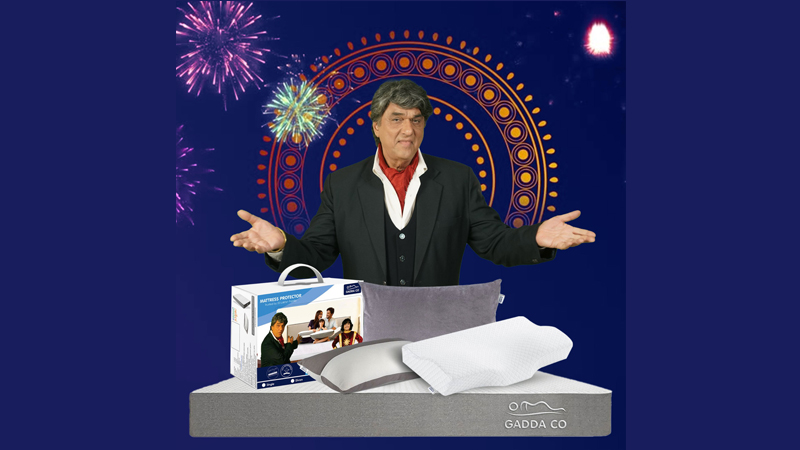
    Mumbai: Gadda Co, a leader in the mattress and bedding industry, has partnered with legendary actor Mukesh Khanna, famed for his roles as Shaktimaan and Bhishma in “Mahabharat”, as its new brand ambassador. This collaboration highlights Gadda Co’s dedication to providing top-tier sleep solutions, including mattresses, pillows, and waterproof protectors that offer unmatched comfort and durability.

    Expressing his excitement, Mukesh Khanna said, “I have always believed in the power of good health, and quality sleep is at the foundation of that. Gadda Co has proven to be a brand that cares deeply about offering products that enhance the quality of life for people across India. Their dedication to quality, comfort, and durability aligns with my personal values, and I am excited to be a part of this journey, whether it’s the mattresses or the protectors, their attention to detail in crafting products that support good sleep is truly commendable.”

    Under the Baby & Mom Retail house of brands, Gadda Co has built a reputation for delivering products that guarantee restful and rejuvenating sleep. This partnership with Mukesh Khanna reflects the brand’s strategic move to strengthen its presence in the Indian market by connecting with consumers through a beloved and trusted figure.

    Baby & Mom Retail founder and CEO, Shish Kharesiya stated, “Having Mukesh Khanna on board as our brand ambassador is an honour. His association with Gadda Co perfectly resonates with our brand’s values of providing reliable, long-lasting products. We are excited to take our brand to new heights with him by our side. At Gadda Co, we believe that everyone deserves a restful, comfortable sleep, and with Mukesh Khanna as our ambassador, we aim to communicate this message more effectively to our audience.”

    This collaboration is set to elevate Gadda Co’s brand recognition, further embedding its commitment to quality sleep for Indian consumers through its trusted products.

  • COLORS acquires rights to air epic Mahabharat

    COLORS acquires rights to air epic Mahabharat

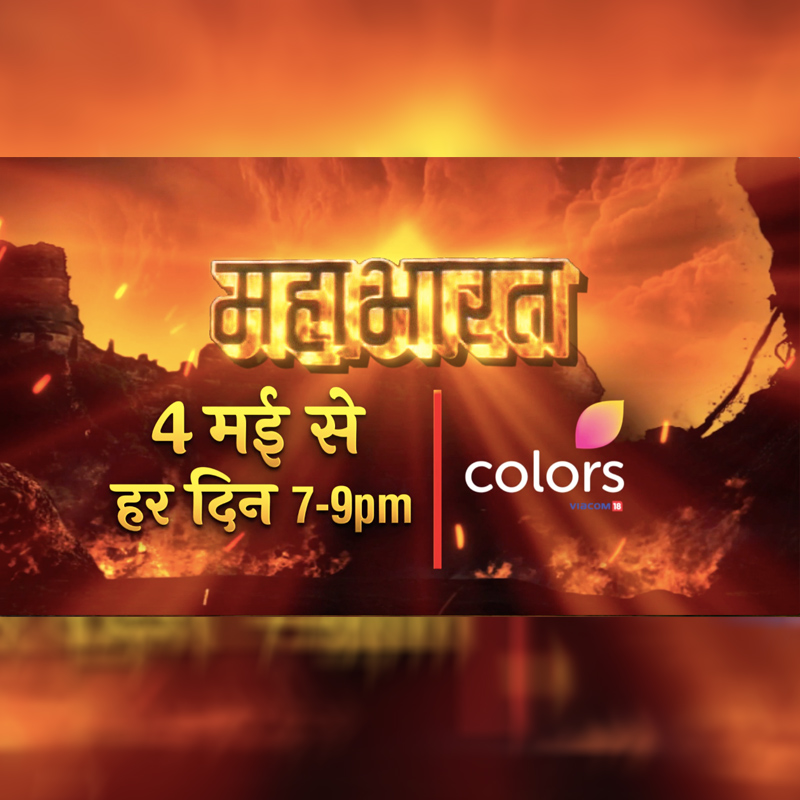
    Mumbai: Iconic mythological show Mahabharat is set to air on COLORS starting Monday, 4 May 2020, every day from 7-9 pm.

    Starring Nitish Bharadwaj, Mukesh Khanna, Rupa Ganguly, Gajendra Chauhan, and Puneet Issar, Mahabharat is directed by Ravi Chopra. Mahabharat was first aired between 1988-90. Back in time, watching the show used to be a morning ritual and the streets would go silent as the entire nation would tune in to watch the episodes with their families. Decades later, the show is still deemed cult for its rich storyline, grandeur, and fine performances and holds a memorable place in our lives.

    Manisha Sharma, chief content officer, Hindi Mass Entertainment, Viacom18, says: “Due to the nationwide lockdown, the television landscape is changing quite significantly. The popular classics and erstwhile shows have found a renewed interest amongst the audience as they provide relief and induce nostalgia. We, at COLORS, are constantly and very closely evaluating the viewership trends and designing our programming to give our audience the best content. In a similar move, we are elated to air Mahabharat on television to give our viewers another opportunity to relive the golden times.” 

  • Doordarshan brings back ‘Shaktimaan’

    Doordarshan brings back ‘Shaktimaan’

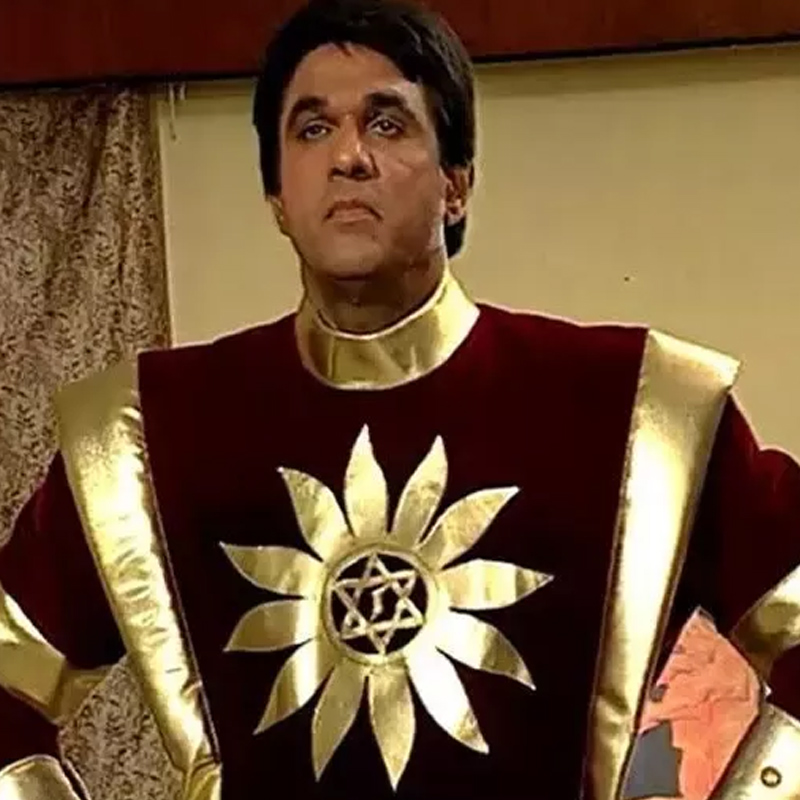
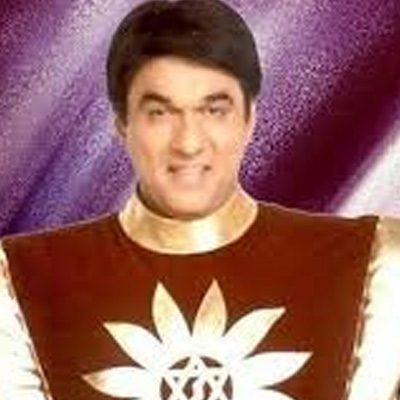
    MUMBAI: After Ramayana, Doordarshan is all set to re-telecast another popular TV series Shaktimaan to entertain the masses who remain indoors on account of the ongoing lock-down caused by the Covid-19 pandemic. According to reports, the one-hour-long series will be re-telecast every day from 1 pm on DD National beginning 1 April.

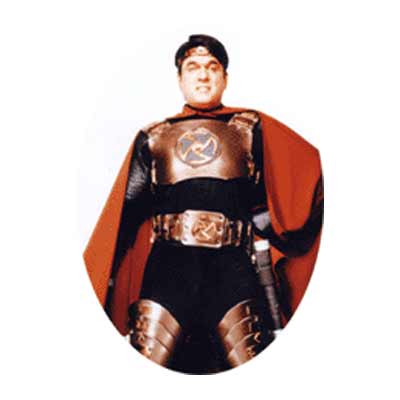
    The once-popular superman series, produced by Mukesh Khanna, who played the role of Shaktimaan, had entertained youngsters and old people alike. Khanna played the role of "Pandit Gangadhar Vidhyadhar Mayadhar Omkarnath Shastri", a newspaper photographer. Shaktimaan was portrayed as a human who achieved superhuman powers through meditation.

    The Hindi-language TV show was telecast on DD 1 from 13 September 1997 to 27 March 2005.

    Earlier, Prasar Bharati and the I&B ministry announced the re-telecasting of classics like Ramananda Sagar-directed Ramayana through the public broadcaster. When the epic TV serial was re-telecasted for the first time, people thronged the DD website to watch the streaming, causing it to crash due to the excessive traffic.

    Reports say that the public broadcaster is also planning to bring back Chanakya and Upanishad Ganga which will air on DD Bharti.

  • &TV opens new timeslot with daily soap Waaris starting 16 May

    &TV opens new timeslot with daily soap Waaris starting 16 May

    MUMBAI: Zee Entertainment Enterprises Limited (Zeel) Hindi GEC &TV will start airing a new daily soap Waaris starting 16 May at the 700pm and will run Monday to Friday. With this, &TV has opened up its 700pm slot as primetime as against its previous primetime slot of 730pm. Waaris replaces the rerun of Begusarai. The show is presented by Patanjali Kesh Kanti and powered by Lemce Socks. Waaris is produced by Ashvini Yardi’s Vini Yard Films.

    Talking about the show, &TV business head Rajesh Iyer said, “With Waaris, we are now opening up a new time slot and further increasing our original programming hours. The concept of Waaris reflects certain social stigmas that are yet plaguing our society and we believe that a differentiated concept like this will certainly be able to find the share of heart amongst the audiences.”

    Vini Yard Films’ Yardi said, “Waaris deals with the cultural issue of the girl child in our country. The story deals with a strong mother who guards a fierce secret to protect her child and the well-being of the community they belong to. Set in the heartland of Punjab, Waaris touches your heart immediately through its rich story- telling and its stark characters.”

    Waaris is the story of a child Manpreet, who thoughtlessly obeys everything that his mother says without any questions asked. But his mother Amba had lied…Maa ne jhooth bola tha… and this lie is what sets the momentum of the show. While Manpreet is a girl in reality, her identity has been kept under the wraps and she is known as Amba’s son to the entire village. So starts the journey of Manpreet and the age old feud between the two warring landowners – the Pawanias and the Bajwas in proving their supremacy. The show brings together an ensemble cast that includes Aarti Singh as Amba Pawania – Manpreet’s mother, Iqbal Khan as Charan Pawania – Manpreet’s father, Akshay Dogra as Charan’s younger brother Jagan Pawania, Mukesh Khanna as Lalaji Bajwa, Sidhant Suryavanshi as Harjeet Bajwa and the little Sania Tauqeer as Manpreet Pawania.

  • &TV opens new timeslot with daily soap Waaris starting 16 May

    &TV opens new timeslot with daily soap Waaris starting 16 May

    MUMBAI: Zee Entertainment Enterprises Limited (Zeel) Hindi GEC &TV will start airing a new daily soap Waaris starting 16 May at the 700pm and will run Monday to Friday. With this, &TV has opened up its 700pm slot as primetime as against its previous primetime slot of 730pm. Waaris replaces the rerun of Begusarai. The show is presented by Patanjali Kesh Kanti and powered by Lemce Socks. Waaris is produced by Ashvini Yardi’s Vini Yard Films.

    Talking about the show, &TV business head Rajesh Iyer said, “With Waaris, we are now opening up a new time slot and further increasing our original programming hours. The concept of Waaris reflects certain social stigmas that are yet plaguing our society and we believe that a differentiated concept like this will certainly be able to find the share of heart amongst the audiences.”

    Vini Yard Films’ Yardi said, “Waaris deals with the cultural issue of the girl child in our country. The story deals with a strong mother who guards a fierce secret to protect her child and the well-being of the community they belong to. Set in the heartland of Punjab, Waaris touches your heart immediately through its rich story- telling and its stark characters.”

    Waaris is the story of a child Manpreet, who thoughtlessly obeys everything that his mother says without any questions asked. But his mother Amba had lied…Maa ne jhooth bola tha… and this lie is what sets the momentum of the show. While Manpreet is a girl in reality, her identity has been kept under the wraps and she is known as Amba’s son to the entire village. So starts the journey of Manpreet and the age old feud between the two warring landowners – the Pawanias and the Bajwas in proving their supremacy. The show brings together an ensemble cast that includes Aarti Singh as Amba Pawania – Manpreet’s mother, Iqbal Khan as Charan Pawania – Manpreet’s father, Akshay Dogra as Charan’s younger brother Jagan Pawania, Mukesh Khanna as Lalaji Bajwa, Sidhant Suryavanshi as Harjeet Bajwa and the little Sania Tauqeer as Manpreet Pawania.

  • ‘Make an Indian’ through the right type of kids content

    ‘Make an Indian’ through the right type of kids content

    MUMBAI: In a country where one third of the population is composed of children, very little has been done to encourage and promote kids content. While most will argue and point to the vibrant plethora of content for kids that kids’ networks in India boast of, it is just a fraction of what is required and can be achieved. To discuss the issues that held the industry back from catering quality kids content,  industry stalwarts like filmmaker Subhash Ghai, CFSI chairman Mukesh Khanna, GEAR Education founder Shrinivasan, Green Gold founder and CEO Rajiv Chilaka, Bioscopewala Pictures president Nishith Takia and Viacom 18 Kids cluster head Nina Jaipuria were a part of a panel. Moderated by FICCI animation chairman and Screenyug Creations founder Ashish SK, the panel addressed the need to have a Kids Content Act.

    The panellists unanimously agreed that India lacks any guidelines on what kind of content kids should consume, which exposed them to content that isn’t meant of them. Today’s kids are tomorrow’s future, and hence what content today’s kids consumed would have a character building influence on the adult of tomorrow, was the argument that Ghai had in support of the Act.

    “The formative years till the age of 8 years are crucial for a child. That is why pre-school content for kids has great power to familiarise them with our culture and add morals and values to their lives,” Shrinivasan stressed. “India lacks any form of parenting education. Parents often mistake the TV to be their babysitter, and expect their children to learn life values from it. Therefore we must pay attention to what kids are consuming on television.”

    A large part of the panel discussion was dominated by the need to have more Indian content for kids that reflected Indian culture and connected today’s kids with the roots of their parents. Both Ghai and Khanna felt that this generation of kids were so taken by the second screen – be it the mobile phone or the tablet — they were slowly drifting away from their own culture and embracing the west. They pointed at westernised kids’ content available right now and the lack of proper home grown content that adhered to the values of the land. Chalika also pointed out that he grew up amidst Archie comics and American and British superheroes and characters.

    Jaipuria however begged to differ with her fellow panellists. Pointing out to the progress of her own network, Jaipuria shared that 65 per cent of what Nickelodeon showrd was originally home grown, and the rest was either dubbed or tweaked to make it relatable for the local kids. Bringing in a fresh perspective to the digital era, she shared that soon all players would be in an even field thanks to digitisation. This would lead to such a huge demand for kids content that she doubted the country could meet at the moment with any measure of sustainability. Her reason for supporting an act was to ensure that the industry and all its sections — the creators and the distributors– were prepared with a ready supply of quality kids content for the near future.

    To make that a reality, there were certain legal, financial, and logistical hold ups, the moderator pointed out. Takia, who has been closely involved with the making of the recent National Award winning children’s film Delhi Safari, painted a sad picture of the current motion pictures sector for kids’ films. “Our film did extremely well in China and South Korea, but failed miserably in India. The movie was pulled out of screens way too quickly. Most of the money we made was from foreign market. This shows how we need to create an environment where children’s films reach their due audiences. The act may consider screen reservation or other ways to ensure viewership of such films,” he said. Government sanctions, subsidies, and entertainment tax reliefs were also brought up while discussing the act.

    “The ease of producing a children’s film is the key to take this industry in the right direction. Outside India, most animated children’s films are co-produced but Indian film makers can’t do that. We are restricted by law,” said Khanna. “The act should deal with this and allow filmmakers to co-produce the films and share the financial burden of creating something which requires a huge budget.”

    To address the visibility issue, Ashish proposed a free to air DD Kids channel so that kids living in the most remote parts of the country could enjoy quality content.

    The one take away from the discussion was perhaps the phrase ‘make an Indian.’ Giving a clever twist to the extremely popular ‘Make In India’ phrase that prime minister Modi had devised , the panellists urged that content creators should ‘make an Indian’ out of the tiny tots, riding on powerful home grown kids content that reflected the country’s culture.

    With so much stress on raising the country’s kids to the right type of ‘Indian’, is there a risk of homogenising kids content and regulating creativity? — A question the panel raised but did not answer.

  • ‘Make an Indian’ through the right type of kids content

    ‘Make an Indian’ through the right type of kids content

    MUMBAI: In a country where one third of the population is composed of children, very little has been done to encourage and promote kids content. While most will argue and point to the vibrant plethora of content for kids that kids’ networks in India boast of, it is just a fraction of what is required and can be achieved. To discuss the issues that held the industry back from catering quality kids content,  industry stalwarts like filmmaker Subhash Ghai, CFSI chairman Mukesh Khanna, GEAR Education founder Shrinivasan, Green Gold founder and CEO Rajiv Chilaka, Bioscopewala Pictures president Nishith Takia and Viacom 18 Kids cluster head Nina Jaipuria were a part of a panel. Moderated by FICCI animation chairman and Screenyug Creations founder Ashish SK, the panel addressed the need to have a Kids Content Act.

    The panellists unanimously agreed that India lacks any guidelines on what kind of content kids should consume, which exposed them to content that isn’t meant of them. Today’s kids are tomorrow’s future, and hence what content today’s kids consumed would have a character building influence on the adult of tomorrow, was the argument that Ghai had in support of the Act.

    “The formative years till the age of 8 years are crucial for a child. That is why pre-school content for kids has great power to familiarise them with our culture and add morals and values to their lives,” Shrinivasan stressed. “India lacks any form of parenting education. Parents often mistake the TV to be their babysitter, and expect their children to learn life values from it. Therefore we must pay attention to what kids are consuming on television.”

    A large part of the panel discussion was dominated by the need to have more Indian content for kids that reflected Indian culture and connected today’s kids with the roots of their parents. Both Ghai and Khanna felt that this generation of kids were so taken by the second screen – be it the mobile phone or the tablet — they were slowly drifting away from their own culture and embracing the west. They pointed at westernised kids’ content available right now and the lack of proper home grown content that adhered to the values of the land. Chalika also pointed out that he grew up amidst Archie comics and American and British superheroes and characters.

    Jaipuria however begged to differ with her fellow panellists. Pointing out to the progress of her own network, Jaipuria shared that 65 per cent of what Nickelodeon showrd was originally home grown, and the rest was either dubbed or tweaked to make it relatable for the local kids. Bringing in a fresh perspective to the digital era, she shared that soon all players would be in an even field thanks to digitisation. This would lead to such a huge demand for kids content that she doubted the country could meet at the moment with any measure of sustainability. Her reason for supporting an act was to ensure that the industry and all its sections — the creators and the distributors– were prepared with a ready supply of quality kids content for the near future.

    To make that a reality, there were certain legal, financial, and logistical hold ups, the moderator pointed out. Takia, who has been closely involved with the making of the recent National Award winning children’s film Delhi Safari, painted a sad picture of the current motion pictures sector for kids’ films. “Our film did extremely well in China and South Korea, but failed miserably in India. The movie was pulled out of screens way too quickly. Most of the money we made was from foreign market. This shows how we need to create an environment where children’s films reach their due audiences. The act may consider screen reservation or other ways to ensure viewership of such films,” he said. Government sanctions, subsidies, and entertainment tax reliefs were also brought up while discussing the act.

    “The ease of producing a children’s film is the key to take this industry in the right direction. Outside India, most animated children’s films are co-produced but Indian film makers can’t do that. We are restricted by law,” said Khanna. “The act should deal with this and allow filmmakers to co-produce the films and share the financial burden of creating something which requires a huge budget.”

    To address the visibility issue, Ashish proposed a free to air DD Kids channel so that kids living in the most remote parts of the country could enjoy quality content.

    The one take away from the discussion was perhaps the phrase ‘make an Indian.’ Giving a clever twist to the extremely popular ‘Make In India’ phrase that prime minister Modi had devised , the panellists urged that content creators should ‘make an Indian’ out of the tiny tots, riding on powerful home grown kids content that reflected the country’s culture.

    With so much stress on raising the country’s kids to the right type of ‘Indian’, is there a risk of homogenising kids content and regulating creativity? — A question the panel raised but did not answer.