Tag: Mukesh Ambani

  • Uday Shankar sole media exec in top-100 powerful Indians list

    Uday Shankar sole media exec in top-100 powerful Indians list

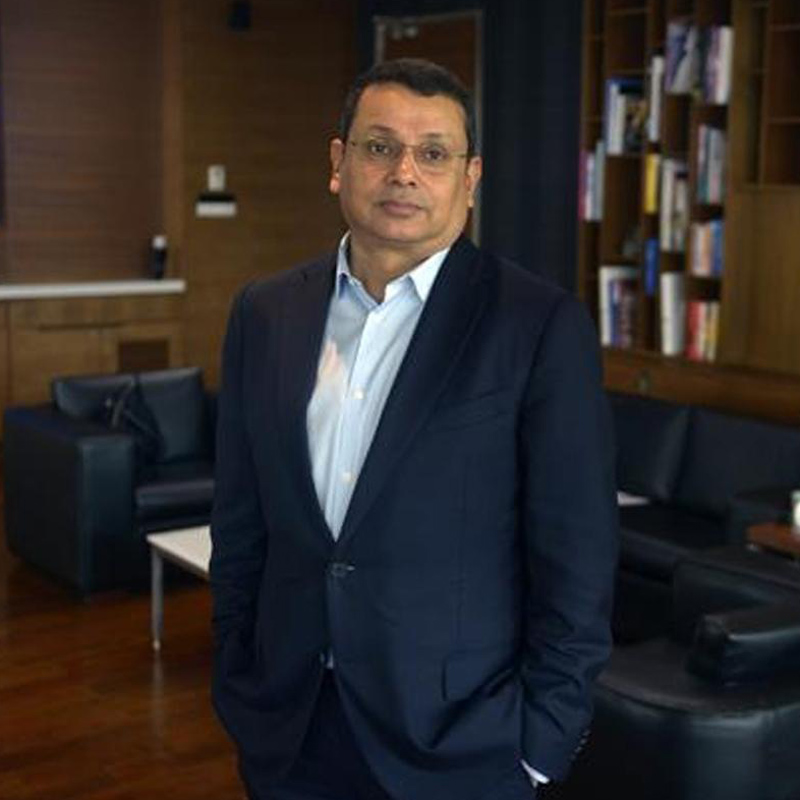
    MUMBAI: Sharing the space with the likes of Narendra Modi, Amit Shah, Mukesh Ambani and Virat Kohli is the torchbearer of the Indian broadcast sector, Star India’s Uday Shankar. Indian Express’ list of most powerful Indians has ranked him at 69, making him the sole representative of the entire broadcast industry of the country.

    Those who made the top 100 include people from various walks of life–politicians, Bollywood actors, businessmen and cricketers. In December 2017, Shankar was bumped up from the position of Star India CEO and chairman to 21st Century Fox Asia president. Taking pride in Shankar’s work, 21 Century Fox executive chairman Lachlan Murdoch and CEO James Murdoch commented, “Uday’s new role will enhance our strategic focus across all of Asia and enable us to further capture opportunities, building on the transformation Star India has driven in our most important growth market.”

    Under Shankar’s leadership, Star India has grown by leaps and bounds. In September, Star successfully won a Rs 16,347.50 crore bid for IPL’s global media rights across platforms. He also leads the company’s video business across entire Asia for both Fox and Star and is closely involved with the parent company’s key leaders, including Rupert Murdoch and his sons, on key strategic initiatives in the region.

    Holding the reigns of a global media powerhouse, Shankar has expanded Star India into regional language channels and produces close to 17,000 hours of content each year in eight languages. Shankar’s mantra for success has been to string together a group of high-calibre executives who understand the territory and carry out the work precisely.

    The network has grown into two major areas–entertainment and sports. The latter has seen the inclusion of several non-cricketing properties, thanks to Star, such as Pro Kabaddi League, Indian Super League and leagues for sports like table tennis, badminton, etc. Lately, the network has even carved a niche for itself in the OTT space with Hotstar.

    Also Read :

    Comment: The rise and rise of Uday Shankar

    Uday Shankar becomes president of 21st Century Fox, Asia

  • Eros Intl’s Deshpande hints at group rejig, likens RIL tie-up to ‘blank canvas’

    Eros Intl’s Deshpande hints at group rejig, likens RIL tie-up to ‘blank canvas’

    NEW DELHI: The Eros group, which includes an India-listed company with the parent Eros International plc. listed on NYSE, will soon start the process of simplifying the organisational structure to realign shareholders interest after an announcement that Reliance Industries Ltd. would be investing in the parent for a five per cent stake, according to a company executive.

    In addition, Eros International will not use the money being put in by a RIL subsidiary into the joint venture with the Indian arm to set up a combined fund of $150 million for content consolidation from India but will fund the JV internally.

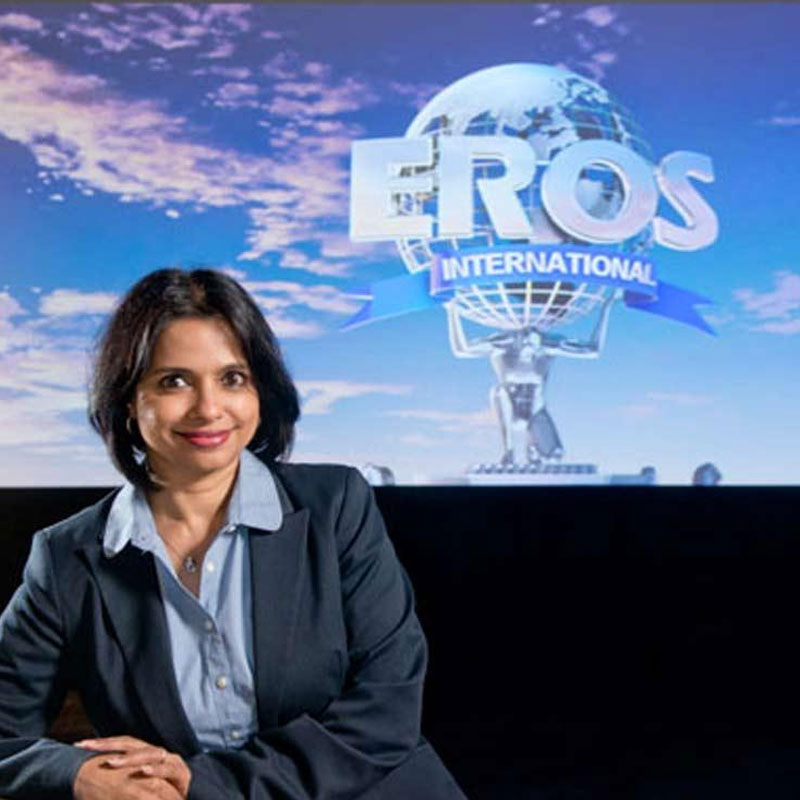
    “At the parent level, there is a massive infusion of cash and it is fungible. So Eros International Media Ltd (the Indian arm of Eros International Plc.) will have the resources to do what it is aiming to do. It is a market leader and we are joining hands with one of the biggest players in the business, Reliance Industries. So content consolidation is here to come,” Eros group CEO and MD Jyoti Deshpande told business news channel CNBC-TV18.

    Asked whether Eros International Plc will use the money being paid by Reliance to contribute its share in the $150 million [Rs 500 crore each from the two partners in the Rs 1,000 crore corpus] fund being set up by the RIL-Eros India joint venture, Deshpande clarified: “No. The money that Reliance is putting in is not to be used for this purpose. That is for a different purpose. It [Reliance] is putting money in the parent. The [Eros] group has enough resources of its own to fund this joint venture.”

    She went on to add: “The current cash on parent’s books without Reliance stake is already about $140 million. The parent always gives film advances to the Indian company and the Indian company sells overseas rights, etc. to the parent company. So even without 5 per cent stake, the group already has in excess of Rs 500 crore with it already.”

    According to Deshpande, who will be quitting Eros and formally joining RIL attached to chairman Mukesh Ambani’s office to look after its entertainment business in April 2018, Eros will soon take steps to align all the interests of shareholders, while refusing to comment or commit on any mergers and/or reverse merger with NYSE-listed parent.

    So, if the RIL money will not be pumped into the joint venture by Eros International Plc and kept aside for other purposes, what will the company do with the cash?
    Pointing out that the minority stake signals “beginning of a very long-term partnership”, Deshpande told CNBC-TV18, “At the moment there is no immediate use of the cash except that it nicely brings down the net debt of the group and capitalises our balance sheet quite nicely and gives us flexibility if we need cash during movement of structure, etc. So I think it is firepower that it gives us and it gives us alignment. More than the money it aligns us to a very powerful partner.”

    Pressed further by journalists on timelines of possible restructuring and re-alignment of shareholders’ interest post a JV with RIL, Deshpande said without committing on any mergers, “There has been a lot of talk on the cards that we need to align all shareholders’ interest at one level. Right now it is a stepped kind of structure. So we are actively looking to see what we can do in that respect, where we align all shareholders at one level…All these things are governed by huge compliance, so I am not at liberty to share anything further on this topic. However, what shareholders can take away is that we are actively working towards aligning the interest of all shareholders at one level.”

    Asked about RIL’s investments in another content maker and OTT platform owner Balaji Telefilms and whether the RIL-Eros JV will stop scouting for more partners, Deshpande explained, “I think the industry is quite fragmented and the vision is to try and consolidate it, grow the industry together using Eros’ expertise in the content space. So, the idea is to make all kinds of content…[and] so it is not a limiting kind of a partnership, it is a very blank canvas wide partnership.

    “We want to work with every content maker that is out there— [what] specific plans RIL has, I will be able to share post April. But wearing the Eros hat right now, I think the plan is to make as much compelling content as possible, keep content prices under control, partner and try and grow the market. We are open to all kinds of ideas, all kinds of collaborations [and] not just with content partners, but with other OTT partners. So I think the idea is to put one and one together and make it eleven.”

    Dwelling on the financial performance of Eros International in FY’19, Deshpande, who’s had leadership stints at Star and Zee earlier, said, “I think scale is what you can expect. I think we can grow in the next year by another 15-20 per cent because the slate will expand, we can double the slate with half the money. So I think it is a great outlook, it is a win-win outlook for both companies.”

    Also Read:

    RIL to buy 5% in Eros; cos to set up $150 mn content fund

  • RIL to buy 5% in Eros; cos to set up $150 mn content fund

    RIL to buy 5% in Eros; cos to set up $150 mn content fund

    MUMBAI: Continuing its media march, which is also an indication of further disruptions in the Indian and global entertainment industry, the USD 51 billion Reliance Industries Ltd (RIL) is all set to acquire 5 per cent equity stake in NYSE-listed Eros International Plc (Eros) and jointly set up a $150 million (Rs 1,000 crore) fund to co-produce and consolidate content from India.

    In the transaction, which is subject to regulatory and other approvals, RIL, through a subsidiary, is looking to pick up the minority stake at a price of $15 per share, representing an 18 per cent premium to the last closing price of the stock. Eros stock quoted at $13.30 on the NYSE at local US time of 16:01:15 on 20 February 2018, having opened at $13.25. RIL closed Tuesday at Rs 919.40 on the Bombay Stock Exchange.

    RIL and Eros International Media Ltd (Eros India) will equally invest in the fund to produce and acquire Indian films and digital originals across all languages, according to a joint statement put out late on Tuesday evening.

    RIL’s investment will also result in some management changes in both the companies. Eros’ group CEO and MD Jyoti Deshpande will be stepping down from her executive role after over 17 years and move on to head the media and entertainment (M&E) business at RIL as the president of the chairman’s office.

    Deshpande will start her role at RIL from April 2018 but will continue to remain as a non-executive director on the board of Eros, while Kishore Lulla will resume his position as group chairman and CEO of Eros, the statement added.

    In her new role at RIL, Deshpande will lead the company’s initiatives in M&E to organically build and grow businesses around the content ecosystem, such as broadcasting, films, sports, music, digital, gaming, animation as well as integrate Reliance’s existing media investments such as Viacom18 and Balaji Telefilms with a view to build, scale and consolidate the fragmented $20 billion Indian M&E sector.

    RIL chairman and MD Mukesh Ambani said, “We are pleased to join hands with Eros, as it will bring further synergies into our plans, making for a win-win partnership. We are delighted to welcome Ms Jyoti Deshpande into the Reliance family and believe that she will not only give wings to our plans but also play a pivotal role in transforming the sector.”

    Lulla elaborated, “I am very pleased that Eros is partnering with RIL in its entertainment journey with several synergies across technology, content and digital with Eros Now. We look forward to collaborating and growing as we continue to make new strides on the digital and content forefronts. I am confident that together, we can make a meaningful difference. Jyoti Deshpande has been an invaluable part of the incredible Eros growth journey and I am confident that she will make a positive impact on the industry in her new role at RIL.”

    Eros International Plc (NYSE: EROS) is a leading global company in the Indian film entertainment industry that acquires, co-produces and distributes Indian films across all available formats such as cinema, television and digital new media. Eros International Plc became the first Indian media company to list on the NYSE and also runs a fledgling OTT service under Eros Now brand. 

    “I am delighted that RIL has strategically aligned with Eros. My new assignment at RIL will allow me to push boundaries, set new standards of excellence, assemble a world-class young leadership team and adopt a collaborative approach to architect and execute this ambition…but more than anything, I cannot wait to roll up my sleeves,” said Deshpande while commenting on the proposed partnership.

    The Eros and earlier Balaji investments by RIL indicate that Ambani may be investing small in content and distribution companies, but taking big steps towards building an integrated media and entertainment behemoth, an industry observer opined, adding that with the financial muscle that the Ambanis have, the Indian media sector should brace itself for some more disruptions after the Reliance Jio show.

    In the TMT sector, RIL already has investments in media companies like Viacom18 (majority stake), TV18/Network18, telecom company Reliance Jio and a host of other media properties, including magazines and digital ventures.

    Also Read :

    TV18 to increase Viacom18 stake to 51%

    Reliance Industries buys Balaji Telefilms stake for Rs 4.13 bn

    Viacom18 celebrations: Mukesh Ambani sets the roadmap for next 10 years

    Reliance Jio, China’s Omnicom fuel massive global mobile data traffic

  • 2017’s Top India TV industry leaders – Part I

    2017’s Top India TV industry leaders – Part I

    MUMBAI: The year 2017 threw up myriad conundrums and dilemmas for the men and women who are the showrunners of India’s media and entertainment (M&E) sector, which is expected to grow at a compound annual growth rate (CAGR) of 13.9 per cent, to reach USD 37.55 billion by 2021 from USD 19.59 billion in 2016, outshining the global average of 4.2 per cent.

    It was a rocky year, one during which everyone’s mettle was tested. First, there were the aftereffects of demonetisation. If that wasn’t enough, the Goods and Services Tax was unleashed in the second half of 2017. This sent everyone into a tizzy. Business targets went awry as executives grappled with the changes they had to deal with. Net results: industry growth numbers dipped. Despite this, the resilience of the industry and media leaders was never in question.

    Like in the past, we decided to list down—not in any particular order—the top 20 senior leaders from the television industry who, we believe, made noteworthy moves in 2017.  Of course almost every professional in the business deserves to be lauded in these rapidly mind-numbing-confusing-as-hell changing times—for even just hanging in there.  Forget about doing well. However, a list has to be selective and we took upon ourselves to do so. We hope you will appreciate our initiative. Read on for the first installment in our year-ender series featuring six of India’s top TV industry leaders and their achievements in 2017.

    public://Mukesh-Ambani1.jpg

    Mukesh D Ambani

    Disruption. That’s what the D in his full name stands for, apart from his entrepreneurial father’s name Dhirubhai. And clearly that’s what the chairman of Reliance Industries did in 2017. He shook old established players in the telecom sector by giving away wireless data access for free through Reliance Jio–a process he started just as 2016 was ending–quickly adding more than 100 million subscribers.

    The old guard yelped, blocked calls to their networks, but he plodded on through the year, fought them out in courts, and had his way. In the process, he forced them to rework their business plans and models.

    The entry of Jio has forever changed the way the telecom industry prices services for customers. The cheap data has also changed the way Indian viewers are consuming their video content.  Probably, forever.

    Since the launch of Jio more than 200 crore hours of video and around 10 GB data per capita per user per month are being consumed every month by just Jio subscribers. The number for the 375 odd million internet users will be much higher than that. Apart from wireless delivery of video, Ambani also has plans for distribution by fibre to the home (FTTH). If leaked pricing plans are to be believed, he is likely to totally upset the economics of the cable TV ecosystem, too.

     Jio has also invested in content companies such as Alt Balaji, partnered with Hotstar, and appointed Siddharth Roy Kapur Films to curate content for its VOD services. And Ambani already owns close to 38 TV channels under the Network18 group, and has a joint venture with Viacom that gives it a clutch of channels amongst which figures the leading Hindi GEC Colors and other entertainment channels in many languages. Ambani has more disruption plans up his sleeves. At the Viacom18 tenth anniversary celebrations in Mumbai he said he has not paid attention to the video content business under that group company. But he added that the teams there were going to see a greater involvement from his side. That should give a lot many in the TV business sleepless nights.

    public://Uday_Shankar.jpg

    Uday Shankar

    This journo turned media CEO clearly stands head and shoulders above almost every TV and media industry executive in the country. Over the years, his bold, brazen and, at times, out of the box moves have seen what was once a smallish TV network expand into the leader in the media and entertainment landscape—of course, the foundation had been laid some his predecessors and the promoters, the Murdoch family, gave ample support to this ‘jewel’ in the crown of the parent company that’s now known as 21st Century Fox and is seeking regulatory approvals in the US to merge with Disney. 2017 was no different for Uday.

    The year saw Uday getting appointed as the Asia head of Fox – of which Star India is an offshoot. But before that he betted big by coughing up USD 2.55 billion on sewing up the all-media rights for the world’s top cricket property – the Indian Premier League. Many have scoffed at the audacious price he has been willing to pay for that property; something which they did when Paul Aileo and Peter Chernin picked him to run Star India around a decade ago after Peter Mukerjea’s departure.

    But Uday proved the nay-sayers wrong in every way.  He is likely to do it again. And again. Under Uday’s leadership, the India business has firmly established itself as a world-class asset with durable businesses across entertainment, sports, satellite distribution and OTT. Now he has set his eyes to do the same with Fox Asia.

    public://Jawahar_Goel.jpg

     Jawahar Goel

    The third of the four Goel brothers who nourished Essel Group (Zee and Dish TV’s parent), along with the eldest sibling Subhash Chandra, Jawahar Goel, or JG as he’s popularly known as in the industry, has always been a street fighter—and a smart one at that. Historic boardroom battles in New Delhi’s Lawrence Road-based Essel House in the 1990s, notwithstanding (Zee had three JVs with Rupert Murdoch’s Star TV then), JG is regarded as a go-to-man in the industry by most people because of his understanding of the complexities and nuances of the various segments of the media industry. A tech-savvy person, his tablet is the holder of many secrets and strategies.

    2017 saw him getting into the limelight if, for a bit, in stops and starts. In late 2016, he announced what seemed like a mother of a merger with rival Videocon d2h–the process of regulatory clearances for the same took up most of 2017. Everyone expected the going to be smooth and the final clearance came from the ministry of information and broadcasting at close to the end of the year. And then came the announcement in the last week of December 2017 that the merger was being delayed because of technical glitches. And those glitches became clear in early 2018: JG had instructed his investment bankers and lawyers to relook the deal in the light of the fact that the Videocon group was defaulting on loans and whether any action by the government or financial institutions would have an impact on the valuation of Videocon d2h. The market has interpreted this to mean that JG is back at his best: he is striking a further hard bargain or that he has decided to not do it all.

    JG also set the cat among the pigeons in the year by alleging in letters to the TRAI, IBF and the MIB that if the rights of the IPL were awarded to Star India by the BCCI it would tantamount to a monopoly. Nobody heeded him and the rights still went to Star India. That still did not stop JG: he then appealed to the courts that Star’s pay TV service Life OK should not be allowed to go FTA as Star Bharat. Once again, the courts did not agree with him.

    2018 will be an interesting period for him. He will have to come clean on whether Dish TV is going ahead with its merger with Videocon d2h or not.  And if not then what is the course, he and his CEO—a top notch professional who ran Hero Honda—Anil Dua are going to do with the firm going forward. It’s over to the man.

    public://Arnab-goswami2.jpg

    Arnab Goswami

    You can hate him, you can love him, but you just can’t ignore him—no matter how one tries doing the last. Republic TV—Arnab’s new baby—before its debut whipped up a political storm with BJP politician Subramaniam Swamy questioning use of the word `republic’ for a commercial venture and his former employers Times TV Network dragging him to court over who owned the copyright over the phrase ‘the nation wants to know.’

    But Arnab loves a slugfest; he got into a public brawl with Times TV on ratings, distribution practices with the latter taking him to court. For a moment it looked like the News Broadcasters Association and even the ratings body had got polarized with those for and against Republic or those for Times TV. So much so that Arnab called it names. But finally sense prevailed as the dust settled and Republic took up membership of the association.

    Republic TV continued to be a hot topic of discussion throughout 2017 with its line of editorial stand and shows, which some critics dubbed as absolutely partisan and non-journalistic. However, despite widespread criticisms Republic TV not only managed to lead the ratings game amongst the TV news channels, but also succeeded in dividing the news fraternity at one time over audience measurement numbers.

    That it continues to lead a life on the edge of ethics and non-ethics — and thrive — speaks volume of the Arnab charm and his brand of opinionated journalism. With Republic TV expanding into VR programming and also spreading wings outside Indian shores ( it debuted in the Middle East last year), 2018 would be an interesting period of evolution of this news venture backed by some of the staunchest supporters of  PM Modi and his government.

    public://Smriti_Irani.jpg

    Smriti Irani

    For many years, Smriti Irani along with Ekta Kapoor and Star India contributed to the rise and rise of Indian television thanks to the hugely popular Kyuunki Saas Ki Kabhi Bahu Thi, a series in which Smriti played the role of a dutiful Indian daughter in law, who had sanskaar yet was willing to stand up for herself when she was wronged. 

    Now, 17 years later, Smriti sits over the entire broadcast sector as India’s TV content regulator as  the minister of information and broadcasting, a position none of the executives or professionals in Indian television even envisaged she would one day hold.

    Smriti acted quickly following her appointment: she put a halt to the process of e-auctions of DD’s free-to-air direct-to-home platform DD FreeDish.  She even stopped the privatisation of time slots on national broadcaster DD National and even said not yet to two productions (one by Gajendra Singh and the other by Balaji Telefilms), which had got the go ahead. That did not augur well for at least Singh as it allegedly caused him grievous losses.

    Then, under her watch, her ministry has been demanding that the world’s most valued cricket league the IPL is of national import and that Star India needs to share its feed with pubcaster DD, something which the Fox group company sees as not fair. Additionally, the ministry has also raised the fees for live uplinking—a move which many see as targeted at making things dearer for Star India as it cover test cricket in six languages in 2018.

    Smriti also left her stamp on this year’s IFFI, which was probably the most glamorous in its history with A-list Bollywood stars winging it to Goa. Her ministry lifted the bar for the festival in terms of scale and quality.

    She also clamped down on steamy condom commercials, which were flooding channels on TV channels during the day. Broadcasters were ordered to telecast such ads only between 10 pm and 6 am.

    public://Shashi Shekhar Vempati.jpg

    Shashi Shekhar Vempati

    Shashi Shekhar Vempati has quite a few creds to his name. One of them being that he is youngest executive to be the CEO of pubcaster Prasar Bharati and the other being that he is the first private sector manager called on to run the behemoth. And 2017 put all his managerial skill sets to the test.

    When he joined, there were plans already in place to grow DD Free Dish, to study if there was opportunity in the kids’ space for it and check out if a gasping DD National could be given fresh oxygen and survive the hectic competition in general entertainment television.

    Shashi slammed the brakes on all growth plans, heeding to the orders of the powers that be (read his new I&B boss Smriti Irani). Under his watch, the e-auctions of DD Free Dish, the selling of slots to private producers were called off. He also told DD director general Supriya Sahu to dive deeper into DD Kids and not rush into it. And he spent a large part of the year studying what DD was all about and what he could do and not do at the organisation. 

    This apart, Shashi has been focusing his energy on two fronts: one on sports and the second on DD’s News outreach and ensuring that the pubcaster relays the right messaging of a nation, which is being watched by the world.  India is predicted to become a global power— one of the most important consuming countries globally in the not, too, distant future.

    Most people saw the Supreme Court’s endorsement of the Delhi High Court verdict, which disallowed Doordarshan or DD from sharing the live feed of cricket matches of ESPN and Star India with cable operators as a setback. But not the new kid on the block; Shashi saw it as an opportunity.

    During an interview with www.indiantelevision.com, Vempati said that the decision forced away complacency at the pubcaster where earlier many changes and additions were either being implemented either too slowly or not at all. Prasar Bharati now had a reason to make DD Sports a go to destination for viewers and would help in promoting DD Free Dish and DD terrestrial to larger audiences across many more cities than the 19 in which DD’s terrestrial signals are available, and to switch DD Free Dish to MPEG-4.

    Shashi said that the verdict has created an avenue for making DD Sports the place for cricket. Earlier, cricket and other sports were being aired on DD National. Now they would be aired on DD Sports. The court’s verdicts’ would prevent cable operators from pushing their own ads while blanking out DD National signals during matches. In future, through DD Sports, there would be a separate feed for cricket and there would be no need to blank out an important channel like DD National.

     Shashi will be watched through the year in 2018. He has plans to harness new technologies such as in-built digital tuners in some television models, DVB through dongles and mobiles and plugging into hotspots that are DVB ready. He feels that DTT is a new viewership base and is a new way for advertisers to connect with viewers.

  • Nov 2017: Wireline internet bleeds subscribers

    Nov 2017: Wireline internet bleeds subscribers

    BENGALURU: Mukesh Ambani’s Reliance Infocomm Limited (Jio) closed the month of November 2017 (Nov-17, month ended 30 November 2017) with 152.08 million wireless broadband subscribers having added 6.12 million subscribers (grown by 4.19 percent). As per Telecom Regulatory Authority of India (TRAI) data, the number of wireline broadband internet subscribers in India has declined 0.13 million from 17.98 million in Oct-17 to 17.85 million in Nov-17. This decline in wireline broadband internet subscribers is more than the 0.06 million decline in Oct-17 and the decline of 0.07 million subscribers in Sep-17.

    Overall broadband internet service providers

    The top five service providers constituted 92.92 percent market share of the total broadband subscribers (wired, mobile wireless, fixed wireless) at the end of Nov-17. These service providers were Jio (152.08 million), Bharti Airtel (69.38 million), Vodafone (50.16 million), Idea Cellular (32.90 million) and Bharat Sanchar Nigam Limited or BSNL (21.37 million).

    Wireless broadband internet service providers

    The fastest growth rate in mobile wireless internet subscribers was by Idea Cellular – its subscriber base increased by 6.03 percent (grew 1.87 million) in Nov-17. Jio had the second fastest growth as per the numbers mentioned above followed by Bharti Airtel Limited that grew 3.77 percent (added 2.44 million subscribers) in Nov-17, followed by Vodafone India. Vodafone’s wireless internet subscribers grew 3.59 percent or by 1.74 million. With the exit of Reliance Infocomm due to restructuring, BSNL entered the top five wireless broadband internet list in Nov-17. The public sector telecom player had 11.94 million broadband internet subscribers at the end of Nov-17.

    Top five wireline broadband internet service providers

    As on 30 November 2017, the top five Wired Broadband Service providers were BSNL (9.43 million), Airtel (2.14 million), Atria Convergence Technologies or ACT(1.27 million), Mahanagar Telecom Nigam Limited or MTNL (0.94 million) and Hathway Cable & Datacom (0.69 million). Airtel, ACT and Hathway gained 0.01 million subscribers each in Nov-17, while the public sector BSNL and MTNL lost 0.05 million and 0.2 million subscribers respectively.

    Overall, the combined subscriber base of the top five wireline broadband internet service providers lost 0.04 million subscribers in Nov-15. This means that the rest of the players besides the top five players lost another 0.09 million subscribers.

    Other broadband internet service providers

    MSOs and cable video service providers (LCOs) also provide wired broadband internet services in the country. These cable service providers have a number of subsidiaries and alliances, hence broadband numbers are split as applicable. The consolidated subscription numbers of these entities could be larger than the numbers of some of the wired internet services providers mentioned above. However, it must be noted that some of these MSOs and LCOs could have lost subscribers in November 2017, considering the fact that the top five wired broadband internet services providers have lost only 0.04 million of the 0.13 million wireline internet subscribers in November 2017.

    Notes: (1) TRAI reports indicate data in millions of numbers up to 2 decimal places. Hence it is assumed in this report that a figure of 0.51 million (5.1 lakh) subscribers for You BB for Dec-2015 would be granular to the nearest 10,000. While percentages have been mentioned up to two decimal places, the accuracy may vary, depending upon the exact number.

    Also Read:

    Jio continues leading broadband subs addition while wireline internet loses subs in Oct

    Wireline broadband subs base falls, overall broadband subs base grows

    Aug-17:Jio leads broadband subscriber growth, BSNL leads wireline subscriber decline

  • The year the telecom sector quaked

    The year the telecom sector quaked

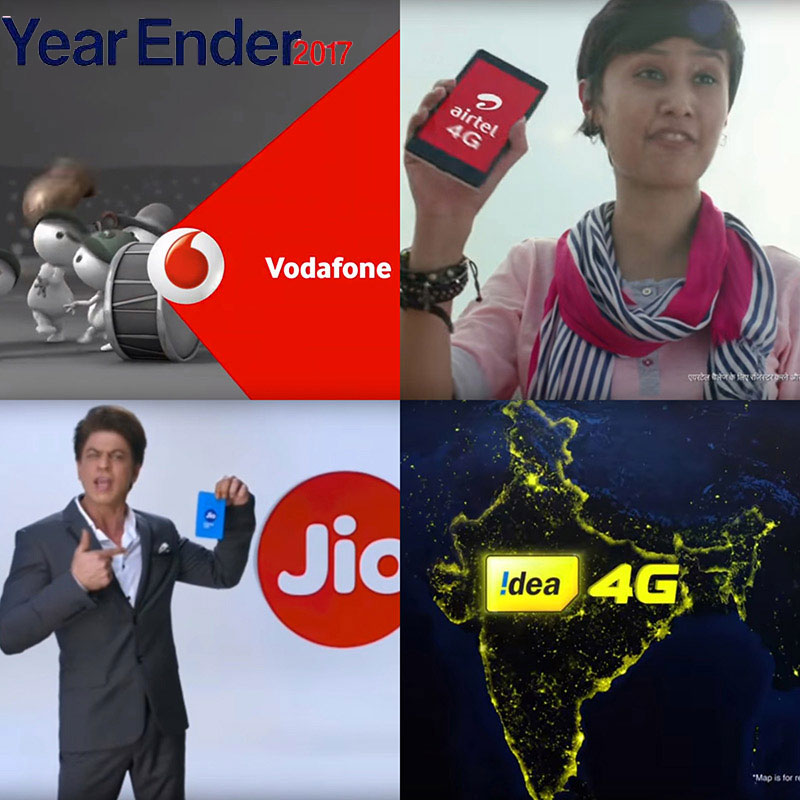
    An interplay of myriad factors contributed to India’s telecom industry witnessing both turmoil and revolution in 2017. Consolidation was the buzzword as some of the largest telecom operators merged even as Reliance Jio Infocomm Ltd (RJio) emerged as a frontrunner for Reliance Communications’ (RCom) assets according to reports. RJio can also take credit for ushering in a data revolution in the country.

    Moreover, smartphone penetration during the year increased three-fold with the aggregate number of users at more than 300 million. With smartphones still accounting for less than 50 per cent of handset users (650 million) in the country, another surge in data consumption is on the anvil.

    The price war

    Indian tycoon Mukesh Ambani sparked a price war in 2016 with the launch of Reliance Jio. As a consequence, the country’s large telcos have been burning through cash this year to hold on to their market share. Vodafone and Airtel tried luring customers through cheap data and unlimited calling offers. Reliance Jio, however, clearly won that battle. Within the first month of commercial operations, Jio announced that it had acquired 16 million subscribers. This was the fastest scaling up by any mobile network operator anywhere in the world. The operator crossed the 50 million subscriber mark 83 days from its launch, crossing 100 million subscribers on 22 February 2017. By October 2017, it had around 130 million subscribers. 

    With telcos looking to push for higher data pack purchases, 4G became cheaper than 3G. Today, 4G data costs are as low as 1 paisa per MB.

    Sectoral consolidation 

    From as many as 13 players at one point in time, we are now left with just five major contenders even as RCom sits on the brink of leaving the fray. Earlier this year, Vodafone India and Idea Cellular decided to merge operations to create India’s largest telecom operator worth more than $23 billion beating Sunil Bharti Mittal-led Airtel. With this deal, Vodafone India’s valuation stood at Rs 82,800 crore and Idea’s at Rs 72,200 crore. 

    RCom, reeling under a debt of around Rs 46,000 crore, shut down its voice services from 1 December 2017 after it failed to close its wireless business merger deal with Aircel. The Telecom Regulatory Authority of India (TRAI) has issued a directive to RCom’s customers to move to other networks by the end of this year. Vodafone, Airtel, and Jio created special packs for RCom customers to lure them to their networks. 

    Telcos and handsets 

    In July 2017, Jio introduced JioPhone–the company’s first affordable 4G feature phone powered by KaiOS. The phone was made available for a security deposit of Rs 1500, which could be reimbursed on returning the phone after three years. This phone was released for beta users on 15 August 2017 and pre-booking for regular users started on 24 August 2017. 

    To strengthen its presence amidst the battle for market share, Airtel launched Android-powered 4G smartphones in partnership with Indian cellphone manufacturer Karbonn Mobiles. Airtel also partnered various other mobile handset manufacturers, including Intex, to create an ‘open ecosystem’ of affordable 4G smartphones.

    Not one to be left out of the party, Vodafone and domestic handset maker Micromax came together to offer a smartphone priced a shade under Rs 1000 with a three-year rider.

    Internet of Things

    Despite posing privacy risks, Internet of Things, or IoT, remained one of the buzzwords in tech circles this year. According to Vodafone Plc’s annual IoT barometer report 2017-18, the percentage of companies with more than 50,000 connected devices active has doubled in the last 12 months with over 84 per cent of IoT adopters saying that their use of IoT has grown in the last year. From the Indian organisations that were a part of the study, 81% felt that IoT was key to digital transformation.

    In India, Vodafone marked itself as the first brand to undergo this evolution. The telco repositioned itself as a contemporary and future-fit brand. It is a significant metamorphosis for one of India’s most iconic and loved brands since the ‘Power to you’ tagline was introduced in 2009. This new positioning, a part of Vodafone’s rebranding exercise across 36 countries, is designed to underpin its belief in new technologies and digital services playing a positive role in transforming society.

    Net neutrality  

    In what was seen as a sign of things to come, the US Federal Communications Commission voted in December to scrap net neutrality, which requires internet service providers to treat all internet traffic equally. The TRAI, not too long after, came out in strong support of net neutrality in a series of recommendations following a long process of consultations on the issue. The regulator believes that the licensing terms should be amplified to provide explicit restrictions on any sort of discrimination in internet access based on the content being accessed, the protocols being used or the user equipment being deployed. 

    With IoT being the talk of the town, networks fighting to grab RCom’s assets and customers, and an ongoing telco war between Airtel, Vodafone, and Jio to become the country’s numero uno operator, it will be interesting to watch how the industry shapes up in 2018.

  • Reliance launches JioTV for web

    Reliance launches JioTV for web

    MUMBAI: After recently announcing a web version of its content platform, JioCinema, Reliance Jio has silently introduced the web version of its Live TV watching platform, Reliance JioTV. The launch of the platform has been imminent as the customers of Reliance are asking for a web version of the JioTV for quite some time.

    Jio customers can now head over to jiotv.com on any browser. All the content and live TV channels that are available in the JioTV application are made available on the web version. Moreover, the web interface is similar to the interface of the JioTV application for Android. The channels are displayed in a line-based interface and users can toggle between the SD and HD channels.

    Interestingly, unlike the Jio TV app on mobile phones, JioTV on the desktop can stream and play programmes with the help of internet service providers other than Reliance Jio.

    With this move, Reliance Jio is allowing its customers to watch online content anywhere. Furthermore, users can access the website in any mobile browser. This essentially removes the hassle of downloading the application to watch the content.

    JioTV has more than 525 channels and more than 90 channels in HD.

  • RIL to plan IPO for Reliance Jio: Bloomberg

    RIL to plan IPO for Reliance Jio: Bloomberg

    Mumbai: Reliance Industries Ltd (RIL) may launch the initial public offering (IPO) for Reliance Jio by late 2018 or early 2019 to further challenge the collective might of Airtel and the Idea-Vodafone combine, according to a Bloomberg report. Reliance Jio, which hasn’t made a profit since its official launch last year, is targeting to improve its financial performance before diluting any stake.

    Reliance Jio reported net loss of Rs2.71 billion in the quarter ended 30 September 2017, though the business made profit before interest and taxes over the period. The wireless operator is “ahead of our schedule in terms of the returns” generated, Ambani said at a recent event.

    A Reliance Jio listing would cap a return to the mobile market for Ambani, more than a decade after a family feud that led him to cede control of a previous telecom venture to his younger brother. Reliance Jio, which is wholly owned by RIL, launched a free-for-life call service last year that triggered a price war and consolidation in one of the world’s most crowded mobile markets.

    Bharti Airtel Ltd this year agreed to absorb Tata Group’s mobile phone business, while Vodafone Group Plc and Idea Cellular Ltd announced they would merge their local operations to create the nation’s largest wireless operator. Despite being the newest entrant, Reliance Jio has accumulated more than 138.6 million subscribers, making it the fourth largest operator at the end of September, according to data from Trai.

    Deliberations about a Reliance Jio listing are at an early stage, and there’s no certainty they will lead to a transaction, Bloomberg’s sources said. A representative for Reliance Industries declined to comment.

  • Netflix expects rapid content growth from India

    Netflix expects rapid content growth from India

    MUMBAI: When Netflix CEO and president Reed Hastings comes calling—and it was his second visit to India this year—you know it means serious business. On a content partnership and library programming hunt, the video-streaming service’s team met up with several Indian media houses, including Shah Rukh Khan-promoted Red Chillies Entertainment and other independent production houses last week.

    Hastings and the Netflix team had a meeting late last week with the editorial team of Network18, a part of Viacom18, an equal Indian joint venture of the US media giant Viacom and a group company of India’s oil-to-energy-to-telecoms-to-broadcast conglomerate Reliance Industries Limited (RIL).

    Netflix later clarified on Monday to Indiantelevision.com that Hastings met up with the editorial team of Network18 before his interview was conducted on the business news channel last week and that no business was discussed.

    Incidentally, Viacom18 not only sits on a huge library of Indian language programming and the ability to produce fresh shows but is also active in the studio business having produced several Hindi blockbusters. Its latest production Padmavati, though, has run into a history vs. fiction controversy and, according to an official statement from the company, the 1 December 2017 release of the film has been voluntarily deferred.

    Both RIL chief Mukesh Ambani and Hastings believe that digital holds a great future for content distribution. Ambani on Friday at the Viacom18 10th anniversary bash here extolled the “synergies” that can come from the talent in the “Viacom18 family and digital distribution” (of Voot and Reliance Jio) where there’s “no limit to growth”. Hastings, in an interview to CNBC-TV18 channel last week, said Netflix “makes TV watching so easy because it is on the internet.”

    Expect Rapid Content Increase from India, says Hastings

    Excited about the one billion plus Indians who “are just wild about entertainment and television market,” Netflix CEO Reed Hastings is betting big here and wants to source more content—originals and Bollywood related—even as his team hunts for partnerships. 

    “You should expect rapid increase (in Indian content on Netflix), dozens of series a year from now will be underway,” Hastings told business news channel CNBC-TV18 in an interview aired late last week when asked to give a sense of investments being made in content from India for the rest of the world. “Of course, there are the global shows we have like Narcos, filmed in Columbia, popular all around the world. We have got a new German original Dark…and then we are adding more Bollywood films. We are also adding Sacred Games and originals that we are doing here in India.”

    Though he has “never completed a whole Bollywood movie” having sampled several of them, Hastings said he does “get the subtlety” of the content and it was fascinating to see the “breadth of entertainment (in India) and how that works”.

    According to Hastings, Netflix is a comparatively new player in India, being active for just two years, but would be indulging in producing more content for the Indian market and simultaneously the world too.

    He also did not envisage that uneven bandwidth infrastructure in India could pose problems to streaming services. “We launched in Mexico five years ago, which had a relatively slow internet, and it has just accelerated tremendously because people want to watch Netflix, YouTube, other content sourced online and it is moving to the internet life,” he said. “In India, in last two years with Reliance Jio, just the biggest explosion in bandwidth (has happened) that the world has ever seen. It is just incredible what is happening here in India. As we go to other countries, (we are) saying an investment like Reliance Jio is transformative for the society.a”

    Though Netflix globally is spending crazy amounts on content and customer acquisition—its content budget is approximately $8 billion—analysts say the company is also adding to its liabilities.

    Despite reporting an impressive earnings report for Q3 of 2017 in October, analyst Ryan McQueeney of US’ Zacks Investment Research pointed to some shortcomings: “Netflix’s third-quarter report revealed that its long-term debt now totals $4.89 billion. This is up nearly 46 per cent from the $3.36 billion in long-term debt that it started the year with, and it marks a 106 per cent growth in debt from the end of the year-ago period. Investors should also note that Netflix said its total liabilities have reached $13.62 billion, up from $10.91 billion at the end of 2016 and $9.82 billion in the prior-year quarter.”

    However, such criticism hasn’t deterred Netflix or its co-founder yet. “Content is best when it really has a local flavour, but then it is approachable by other people,” Hastings said in the CNBC-TV18 interview, adding, “We have an American comedian, Hasan Minhaj, who does stand-up in California and he is popular all over the world now on the Netflix platform. Same is with Narcos. So you get all these interesting crossovers.”

    Netflix relies a lot on data and technology to source and create content. Pointing out that the 110 million-member global company has reached its position because it was producing content that people were “excited about”, Hastings said that they use artificial intelligence to help them figure out what was best.

    “We call it informed intuition. While we want the creatives to have a lot of data but ultimately, it is a judgment call of a human being with a creative vision and that is the intuition. The intuition is the most important part but we would like it to be informed by how other shows have done,” he explained.

    Like a true champ, Hastings did not shy away from giving credit to his competitors where due. “Hotstar is doing a great job here in India. They are leading in the subscription internet category. There are a lot of other global internet companies, YouTube, Facebook, Amazon and Apple. So there are many competitors – the traditional media companies and the entire internet sector. And what that is doing is everybody is bidding to have the most valuable content. So the prices now for creators are increasing,” he told the TV channel interviewer.

    Netflix-Red Chillies Partner For Multilingual Spy Series

    A new multilingual Netflix original series, based on the book Bard of Blood, in partnership with Shah Rukh Khan’s Red Chillies Entertainment has been announced. Penned by young Indian author Bilal Siddiqi, the book will be brought to life as an eight-episode high-octane political espionage thriller series for more than 109 million Netflix members around the world.

    Khan said in a statement, “We have always tried to create world-class content and entertainment from India. Netflix has shown that Indian stories have a global audience and we would love to use this platform and its reach to tell more stories.”

    Set against the backdrop of the Indian sub-continent, the multilingual series will tell the story of an expelled spy, Kabir Anand, who is recalled from his new life as a Shakespeare professor in Panchgani to save his country and long-lost love. A combination of combat skills, intellectual background and personal circumstances propel Kabir to avenge the past and face his deadliest enemies in a race against time. The series will be shot on location and the characters will interact in Hindi, Urdu, English and other languages.

    “We believe in the global vision of Red Chillies to create groundbreaking content out of India. It’s exciting to deepen our relationship with Red Chillies and expand our slate of originals in India,” Hastings said.

    In a series of tweets, dwelling on the partnership, Khan said “Netflix and Red Chillies chill” and later joked “think will cast Reed Hastings in the series too. He is a natural.”
     

  • Viacom18 celebrations: Mukesh Ambani sets the roadmap for next 10 years

    Viacom18 celebrations: Mukesh Ambani sets the roadmap for next 10 years

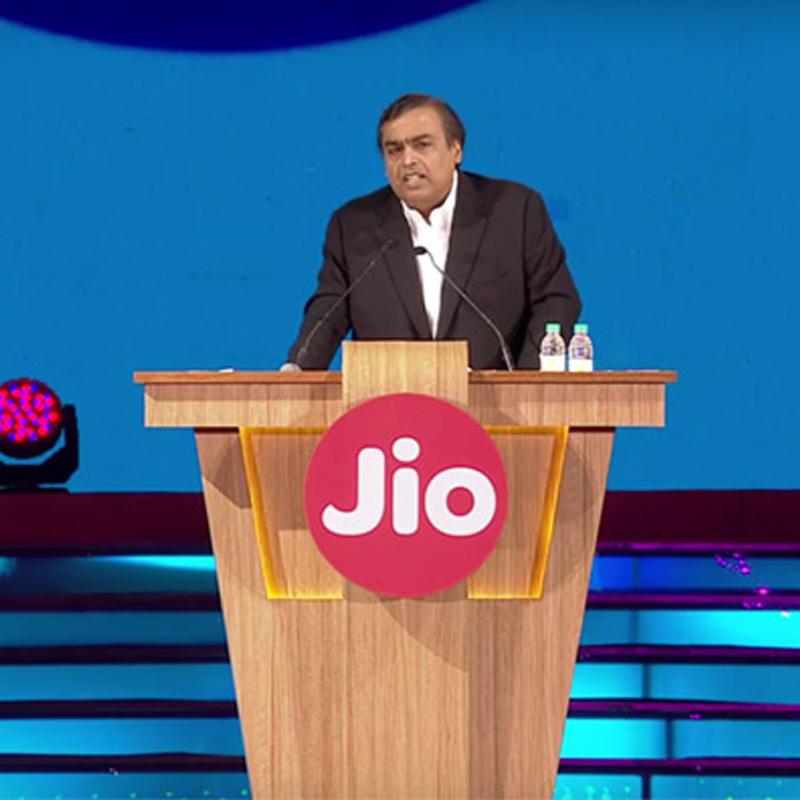
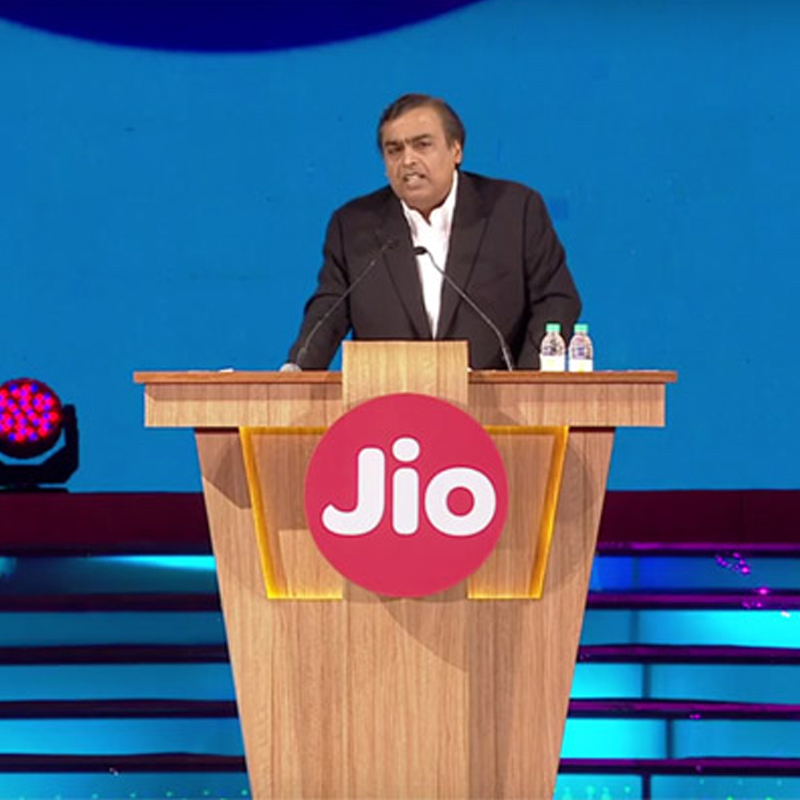
    MUMBAI: Indian television channel owners better watch out. Mukesh Ambani is riding into town and he means business. He sounded his intent at Viacom18’s tenth anniversary celebrations which, were held over the weekend in Mumbai’s NSCI Dome. He came in for a bit post 9 pm. And he was there for a few minutes on the massive stage that was flanked by large LED panels all around the dome. However, what he said, as a joint venture partner of US network Viacom, is what should make other TV industry entrepreneurs sit up and take note.

    Clearly laying out the roadmap for the group for the next 10 years, Ambani, India’s richest man, said: “The digital industry in India and the entertainment industry is going to grow manifold. The next decade is going to be the golden period of the entertainment industry and all of you should contribute and learn from this opportunity. This is a once-in-a-lifetime opportunity. And for all of us–Sudhanshu (Vats, the group CEO of Viacom18) told us we are in the storytelling mode–I think collectively for all of us, the entire Viacom18 team, has the responsibility to win the hearts of 1.3 billion people. (With) the synergies that can come from the talent in the Viacom18 family and digital distribution, there is no limit to growth. It’s been over three years since Viacom18 is part of the Reliance group along with Viacom. But I have to tell you. I was, too, obsessed with Jio and I had told Sudhanshu that once I am done with it I’ll be there. The birthday gift I am giving you is I will give you some of my time and support.”

    Obviously, Ambani is looking at replicating the aggressive growth that he has got from his 4G enterprise Reliance Jio. “I think that what we have achieved in Jio in the last two years is take India from 154th in the world to number one in the world in mobile data consumption. Last month on Jio alone, the video viewing was 200 crore hours. And this is just the beginning,” he said.

    Ambani also extolled the young leaders – the average age at Viacom18 is 32 and he urged Sudhanshu to keep at it that over the next decade – “to have courage to dream big, the determination to realise their vision, to have curiosity and the ability to learn.You have to learn something new everyday. And I believe that empathy is required of everyone–to see and understand what the other feels. It is not about yourself, it is about everybody else. These are three principles, which have helped me. I believe for leaders and the team at the top, the job is to win the hearts of our people.”

    Ambani erred when he said that he remembered in 1997 when Colors was launched (he obviously meant 2008), there was skepticism if a third entertainment channel could succeed. “Today as you stand here, the success is all yours – the entire ViacomTV18 team,” he said. “Today is the day to remember the founders and founding team of Viacom18, which includes Raghav Bahl and others.”

    The tenth anniversary celebrations had performances from many artists associated with Colors’ entertainment shows right from Manish Paul to Malaika Arora Khan to Parthiv Gohil to Mouni Roy to Bharti Singh to Raghu Dixit to Kailash Kher, among many others. The party was attended by the crème de la crème of the industry, including Sony Pictures Networks India CEO NP Singh, Star India MD Sanjay Gupta, Dentsu Aegis CEO Ashish Bhasin, Madison World chairman Sam Balsara as well as actors, producers and directors.

    For many, it was an evening to remember.