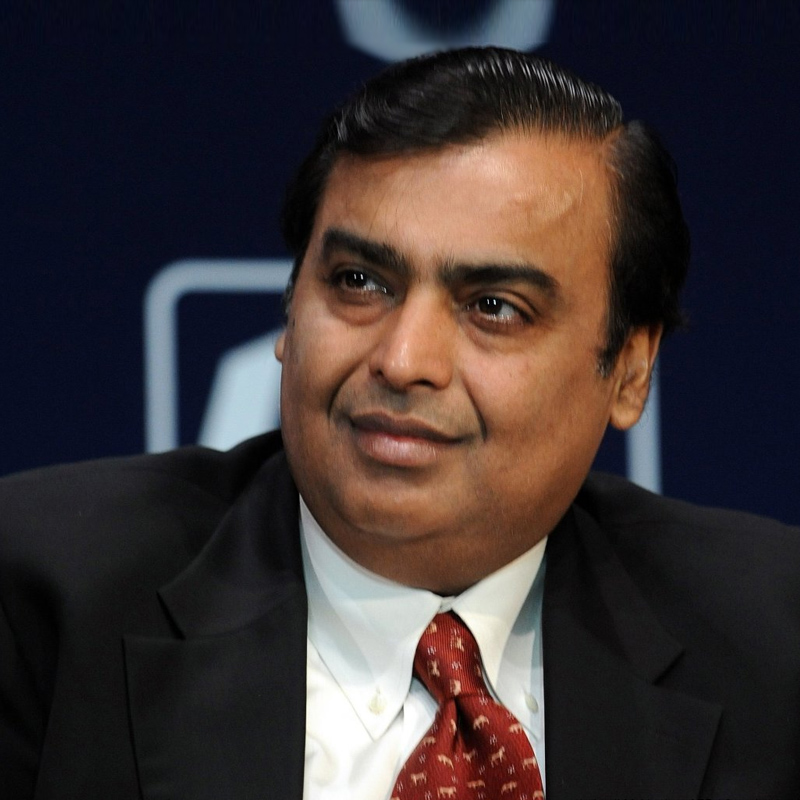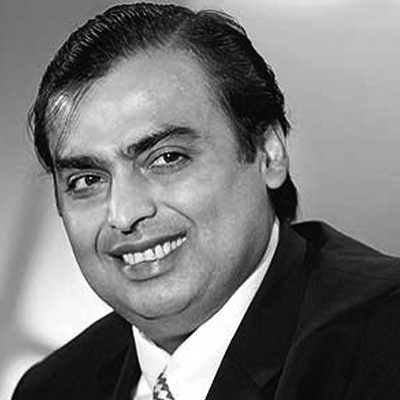
Tag: Mukesh Ambani

  • Reliance Industries gets board approval to fund Network18 group acquisition

    Reliance Industries gets board approval to fund Network18 group acquisition

    MUMBAI: We predicted that the executive exodus at Network18 was a precursor to Reliance Industries Ltd (RIL) engineering an acquisition. (Read: More Network18 senior management to exit as Reliance begins to take full control) of the Raghav Bahl led Network18 Media.


    And it has turned out to be true. RIL, late this evening, announced to the BSE that it has got board approval to pump in Rs 4,000 crore into the Independent Media Trust (IMT), of which RIL is the sole beneficiary, for acquisition of control in Network18 Media & Investments Ltd (NW18), including its subsidiary TV18 Broadcast Ltd (TV18) and the open offers to be made consequent to the acquisition.


    NW18, as is known is the owner of a premier suite of digital internet properties, ecommerce businesses, and differentiated broadcast content.


    IMT is expected to use the funds to acquire control over NW18 and TV18 resulting in the ownership of about 78 per cent in the former and 9 per cent in the latter and to acquire shares tendered in the open offers.


    Further in terms of SEBI (substantial acquisition and takeover regulations) 2011, IMT would be making an open offer to public shareholders for acquisition of NW18, TV18 and Infomedia Press Ltd equity shares. IMT would be simultaneously making a public announcement under takeover regulations. RIL would be a person acting in concert to the open offers.


    The acquisition will help differentiate the RIL 4G business, says the press release, by providing a unique amalgamation at the intersect of telecom, web and digital commerce via a suite of premier digital properties. The suite includes: in.com, IBNLive.com, Moneycontrol.com, firstpost.com, cricketnext.in, HomeShop18, bookmyshow.com. The broadcast channels include: Colors, CNNIBN, CNBCTV18, IBN7 and CNBC Awaaz. 


    “It was bound to happen,” says a media observer. “Mukesh Ambani has made a huge 4G play. He needs content to be pumped over the network to make the 4G investment pay off more, because consumers need video on 4G. By acquiring the NW18 and TV18 properties, he’s got a quick entry into the content and ecommerce space.  However, RIL, which, is very financially driven, will do well to leave the content creators alone and not try and force too much financial efficiencies onto them. If they do allow the creative to flow with some financial caution as is the practice in NW18 and TV18 group, then they could well have a robust, differentiated content business. Otherwise…”
  • Sensex sees a high with Modi win

    Sensex sees a high with Modi win

    MUMBAI: It is not only that BJP and the citizens of the largest democracy are rejoicing over the victory of Narendra Modi, who is set to swear in as the next Prime Minister. The hope that Modi had shown to people during his campaigns, has reflected on the sensex today. The S&P BSE Sensex had managed to rally over 1400 points in quick time on Friday.

    At 11:00 a.m.; sensex was trading 982 points higher or 4.1 per cent at 24887.82. It hit a low of 24,271.54 and a high of 25,375.63 in trade today. According to a news report in the Economic Time, a few cash rich companies will be a priority for investors now.


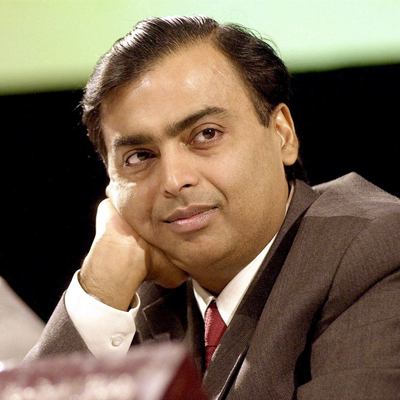
    According to another report by Financial Express, shares of Mukesh Ambani owned Reliance Industries Limited (RIL) increased by as much as 9 per cent.


    Mukesh Ambani-led Reliance Industries scrip surged 8.47 per cent to touch one-year peak of Rs 1,142.50 at the BSE. Shares of another listed-entity Reliance Industrial Infrastructure rose by 3.94 per cent to Rs 455.85.On the NSE, the blue-chip stock zoomed 8.71 per cent to hit its fresh 52-week high of Rs 1,145.25.


    Another market report available on Economic Times.com, mentions how the shares of the Adani group of companies have escalated to as much as10 per cent. The Group head Gautam Adani is known to be close to India next PM Narendra Modi as the mandate of the 16 Lok Sabha gave a humongous victory to the BJP.


    This Gujarat based company along with RIL, which has its oil refinery at Jamnagar is expected to gain the most with Modi’s win. At 09:30 a.m.; Adani Ports & Special Economic Zone was trading 3.4 per cent higher at Rs 227.85, Adani Enterprises was up 6.2 per cent to Rs 532.45 and Adani Power was trading 4.4 per cent higher at Rs 57.40. 


    The rupee meanwhile rallied to a 11 month high of 58 of 58.71 against the dollar early today due to persistent selling of the US currency by both banks and exporters on hopes of higher foreign capital inflows. The weakness of the dollar in the overseas market has also boosted the rupee value.


    Major business news channels and newspapers have said the stocks of certain companies like ICICI Bank, Axis Bank, PNB, BOI, Yes Bank, RIL, IOC, ONGC, GAIL, HPCL, Maruti Suzuki, M&M, Motherson Sumi and Apollo Tyres have gone bullish.. According to Economic times, United Phosphorus, Dhanuka Agritech, Lupin, Divis, Aurobindo Pharma, L&T, Voltas, Crompton Greaves, Cummins, TCS, Mind Tree, Tech Mahindra, HCL Tech, Tata Steel, Century Textile, DB Corp, Emami Ltd, IRB Infra, Havells India and Welspun India will outperform as the new government takes charge.

  • Is blaming the watchdog politicos’ new defence matra?

    Is blaming the watchdog politicos’ new defence matra?

    MUMBAI: The countdown to the general elections has well and truly begun, what with political parties and their prime ministerial hopefuls engaging in an unending game of one-upmanship.


    What is surprising though is that this time round, the fourth estate, otherwise hailed as ‘the watchdog of democracy’, is at the receiving end of this mud-slinging match.


    For starters, two years after an Indian Express report about the controversial movement of two army units towards the national capital, General VK Singh, who was the then army chief, opted to call the reporters ‘presstitudes’ while dismissing the article as ‘the fable of a sick mind’.  


    Then, Arvind ‘Aam Aadmi’ Kejriwal, during his recent speech at Rohtak in Haryana, alleged that Mukesh Ambani had bought some TV channels and newspapers and asked them to give extensive coverage to Rahul Gandhi and Narendra Modi.


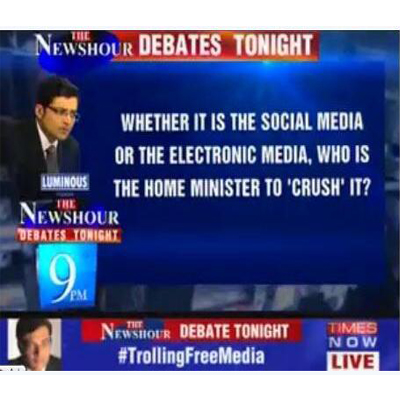
    Just the other day, at a Congress function in Solapur, Union Home Minister Sushil Kumar Shinde threatened “to crush elements in the electronic media spreading false propaganda” although he clarified the very next morning that he was targeting “social media, not journalism”.


    And while on the subject of social media, readers will recall how West Bengal Chief Minister Mamata Banerjee, known for her stiff stance on most issues, got a Jadavpur University Chemistry Professor arrested for allegedly circulating ‘anti-Mamata’ cartoons on the Internet in 2012.


    The same year, a similar fate befell a small scale industrialist who was arrested for allegedly posting ‘offensive’ messages on social media targeting Union Finance Minister P Chidambaram’s son Karti.


    Yes, social media can often be a double-edged sword but what is equally important is that it has given the aam aadmi a voice.


    Times Now Editor-in-Chief Arnab Goswami puts it correctly when he says that the media is variously termed as good or bad depending on whether it praises or bashes politicians. Indeed, politicos trolling media to suit their purpose was the subject of a News Hour debate not so long ago while #Trollingfreemedia had the Twitterati debating the issue endlessly.


    So much so, the Editors Guild came out in protest with a statement that read: “Ironically, leaders who built up reputations and support by engaging the public through the media are now turning on the very media when they come under critical scrutiny.”


    The News Broadcasters Association (NBA) too issued a press statement saying: “A news channel’s endeavour is to cover news-worthy events across all segments of national and international life and to present news to viewers, which is current and relevant. The media provides a service that is essential for any democratic society. This is particularly important when the most fundamental aspect of a democracy, the elections are round the corner. At such a time, the media plays an indispensable role in enabling citizens to stay well informed and make important choices. There can be no acceptable reason for attacking the media on frivolous, unsubstantiated grounds. Intimidation and preventing the media from performing its duties amounts to interfering with the freedoms enshrined in and guaranteed by the Constitution.”


    The NBA specifically appealed to political leaders across parties and public figures not to level baseless charges against the media and keep the discourse civil and sane.


    Somehow, now media has become everyone’s punching bag. Nonetheless, journalistic maturity is needed without losing the enthusiasm, energy and insightfulness.

  • Fareed Zakaria Takes Viewers to India for a Look at a Nation at a Crossroads

    Fareed Zakaria Takes Viewers to India for a Look at a Nation at a Crossroads

    MUMBAI: CNN’s and TIME’s Fareed Zakaria travels to and across India for an extraordinarily insightful look at the world’s largest democracy from the inside – its complexities, challenges, and achievements. The one-hour in-depth special report, India at a Crossroads – A Fareed Zakaria GPS Special will debut Sunday, Dec. 29 on CNN International at 5.30pm IST.

    While much of the world has experienced sluggish economic times in recent years, Zakaria reports India’s average economic growth (GDP) over the last decade has been robust – around seven percent. And, Zakaria points out, in 2014, India will exercise the “largest democratic process in human history” as hundreds of millions of Indians, using 800,000 voting booths and 1.3 million voting machines, will engage in the world’s largest democratic action by voting in the national elections.

    Watch the video: Our new positioning: Burson-Marsteller, Being More
    Yet, in addition to having democracy in common with America, India’s governance is also experiencing a crisis of political dysfunction – and on a grand scale. Widespread corruption threatens some of its economic opportunity, and India’s social caste system and endemic disparities faced by women threaten to incite a home-grown Indian version of an ‘Arab Spring’.

    To give global viewers greater perspective into the opportunities and obstacles faced by the one-sixth of humanity that is India, Zakaria spoke with leaders in business, politics, Bollywood, and more. For insights on India’s multicultural, multi-class, multilingual, multi-religious society, Zakaria spoke with: the Deputy Chairman of India’s Planning Commission Montek Singh Ahluwalia; chairman and managing director of Reliance Industries Limited Mukesh Ambani, the wealthiest man in India; actress and human rights activist Shabana Azmi; former CEO for Procter & Gamble in India Gurcharan Das; politician and anti-corruption activist, Arvind Kerjriwal; actor and talk show host Aamir Khan; tech entrepreneur Nandan Nilekani; Member of Parliament from the Indian state of Odisha, Jay Panda; and chairman emeritus of India’s largest conglomerate, the Tata Group, Ratan Tata.

    More information about why India – and the success of India – is essential for the world may be found at www.cnn.com/gps. During the special broadcast, producers of the special will engage with viewers using the hashtag “#CrossroadsIndia” via Twitter.

  • An epic wait for Epic

    An epic wait for Epic

    MUMBAI: What do &Pictures, Star World Premier HD and Romedy Now have in common? The three channels have had a smooth run-up to their recent launch.

    However, starting a new channel isn’t an easy task. One has to get approvals from various ministries which can be labeled as the biggest hurdle (at least in some cases), apart from want of money and resources, in premiering a new channel.

    A classic case of such a channel which is yet to see the light of day despite everything being ready is Mahesh Samat’s Epic Television, a venture invested in by Mukesh Ambani and Anand Mahindra.  

    Epic, which will air content based on the country’s history, folklore, and mythology, albeit in a contemporary format, was slated for a mid-August launch. However, it’s end-September and there’s still no sign of the channel going live.

    Apparently, production of the shows is already on floors and various agencies too have been decided, but there’s no clarity even about when the channel will go on test signals. This, despite the hope that Epic would cash in on rising demand for specialty channels, given the increasing speed of digitisation.

    So what’s keeping it from going on air? Among the series of approvals to be procured before a new channel can be launched: first comes the foreign ministry, next the home ministry, and most importantly, the I&B ministry. Only when all of them have looked into the nitty-gritties and given their clearance can the newbie go live. Again, clearances may take as little as three months, or as long as three years. In the meanwhile, if a file gets stuck with a ministry for more than six months, it has to go for re-approval.

    While we may keep wondering as to which phase of this bureaucratic process, the Epic file is stuck in, according to sources, the channel isn’t alone in its predicament. Nearly 45 to 50 files are stuck with various ministries owing to a variety of issues.

    With elections round the corner, one wonders whether these would stand a fighting chance versus the many issues the ruling party may want to deal with first, even if just to guard their turf.

    So, we will have to continue playing the waiting game…

  • Disney, Mumbai Indians in licensing pact

    Disney, Mumbai Indians in licensing pact

    MUMBAI: Mukesh Ambani-owned IPL franchise Mumbai Indians has inked a licensing deal with The Walt Disney Company India to launch co-branded merchandise products targeted at under-14 kids segment.

    The co-branded merchandise will be sold in around 5,000 Reliance retail outlets and will be also be promoted through the digital medium.

    The two partners see a brand fit. Mumbai Indians have India’s favourite cricket icon Sachin Tendulkar at its helm who has huge following among kids particularly under-14. Mickey Mouse, Disney’s famous cartoon property, is also a popular character among kids..

    With this association, the merchandise revenue of Mumbai Indians is expected to climb in comparison to last year’s revenue of Rs 50-60 million, according to Mumbai Indians co-owner Nita Ambani.

    Ambani further said that her vision for Mumbai Indians was to make it a strong and satisfactory brand that is financially independent without the support of RIL. She also said that the franchise will break even in the long run.

    Walt Disney India MD Ronnie Screwvala is delighted with this alliance. “Disney being the most acclaimed brand internationally has only bonded with brands that are commercially feasible in its nature,” he said.

    He also feels that this coalition of Mumbai Indians and Walt Disney will expedite the aggrandizing of brand equity for both .
    The former entrepreneur cum CEO of UTV also mentioned that the under 14 segment has high potential and will keep burgeoning in the next few years. He pegs the licensing market for kids in 4-14 age group at Rs 14 billion.

  • Police arrests TV5 editors, Editors Guild condemns irresponsible reporting

    Police arrests TV5 editors, Editors Guild condemns irresponsible reporting

    MUMBAI: The Crime Investigation Department (CID) of Andhra Police has arrested two senior editors of the Telugu news channel TV5 for alleging Ambani brothers’ involvement in the death of former chief minister YS Rajshekhar Reddy.

    The report, citing a Russian website, was first aired by TV5 and was later broadcast on NTV and Saakshi TV. This led to attacks on Reliance groups’ outlets in Andhra Pradesh.

    Reddy was killed in a helicopter crash on 2 September last year.

    After the attacks, criminal cases have been filed against the two other channels also. The cases were handed over to the CID, which arrested TV5 senior executive editor Brahmananda Reddy and input editor P Venkatakrishna from their office amid protests by staff.

    Meanwhile, the Editors Guild of India has expressed grave concern over “unprofessional” reporting by channels.

    In its statement, the guild asked the channels to desist from “irresponsible reporting”. “Such reporting is sensational in nature and goes against the basic ethics, standards and principles of journalism,” it said while condemning such reporting.

    The statement further said that “such reporting triggered some violence in certain parts of Andhra Pradesh is highly unfortunate”.

    “It may be pertinent to reiterate news organsiations should exercise all possible rigour and cross-checking of fact, source and motivation of the information before disseminating it in public,” it added.

    Meanwhile, both Mukesh and Anil Ambani-led companies have issued statements expressing shock at the report.

  • ‘We are seeing the beginnings of a global iconic brand in the IPL’ : Unni Krishnan – Brand Finance India Managing Director

    ‘We are seeing the beginnings of a global iconic brand in the IPL’ : Unni Krishnan – Brand Finance India Managing Director

    The Indian Premier League (IPL) is set to revolutionise the cricketing economy, draw in a new bunch of younger audiences with the T20 format, reinforce India’s superpower status, create club cultures, and build market values that are in line with the English Premier League (EPL).


    Just two years into birth, the IPL is enjoying a brand value of $311.44 million (IPL brand value of $240.72 million and IPL brand value to BCCI of $71.22 million) and an eye-popping enterprise value of $2.01 billion, according to UK-based brand valuation consultancy Brand Finance.


    There is no stopping Shah Rukh Khan. Not even a dismal performance at the IPL. Kolkata Knight Riders, the team that the Bollywood star owns, leads the pack of eight with a valuation of $42.1 million. Mukesh Ambani’s Mumbai Indians walks into the crease at the second spot with a brand valuation of $41.6 million, followed by Rajasthan Royals with $39.5 million. The others in the pecking order are Chennai Super Kings ($39.4 million), Delhi Daredevils ($39.2 million), Bangalore Royal Challengers ($37.4 million), Kings XI Punjab ($36.3 million) and Deccan Chargers ($34.8 million).


    The IPL and the team franchises will have to prepare for a long slog if they are to reach anywhere near the value of the EPL and its member clubs. They will have to induct professional management teams, introduce rigorous corporate structures, and chalk out strong commercial streams including merchandising and licensing.

    In an interview with Indiantelevision.com’s Sibabrata Das, Brand Finance India managing director Unni Krishnan talks about the wonderful start the IPL has made, the potential it has in creating a global fan base and the things that need to be done to stretch the value of the brand and its market capitalisation.


    Excerpts:

    Sceptics have questioned the rationale for valuing Kolkata Knight Riders at $42.1 million. Does the performance of the team get a low weightage in comparison to the high-profile value of Shah Rukh Khan as the team owner?
    The valuation process was on 2-3 months before the second edition of the IPL and, in many ways, you can’t predict the future. Having said that, enough data is available to prove that KKR has customer loyalty, a high degree of fan following, and amount of viewing for the matches that they play. Shah Rukh is able to generate an identity for the team. KKR is also able to tie in high-profile sponsors and sources of licensing and merchandising (L&M). Brand value is nothing but an ability to create fan base and convert that into cash.

    Even in the inaugural edition of the IPL, KKR didn’t fare too well. And in the second season, its performance has actually skid. So is there scope for a re-rating of the team franchise’s brand value?
    Unlike the EPL clubs which have created a track record, the IPL is new. When we went into the exercise, the performances were just a year old. Which is why we can’t yet form a strong view of a clear winner. The valuation of the eight team franchises falls within a tight range of $42.1 million and $34.8 million.

    KKR is one of the clubs which has made money from the first year itself. But valuations are not chipped in stone. When we carry out our second exercise after a few months, we will weigh in certain factors like KKR’s performance, captaincy and blogger issues that could have had an impact on the commercial revenue streams and the value of the brand.

    Brand Finance has valued the IPL brand at $311.44 million while fixing the enterprise value at $2.01 billion. Is there a ratio between the value of the brand and its market capitalisation?
    Since the IPL is at its infant stage, the ratio between the brand and the market value is low and not clear yet. We can arrive at a benchmark after 3-4 years as the value of the brand grows. In a typical matured stage, the range varies between the 40-50 per cent ratio. The brand-to-the market value ratio in case of the EPL, for instance, should fall within this region. The brand contributes to the market value in a significant way.

    How come a recent study by UK-based Intangible Business and MTI Consulting has almost halved the team valuations that you have arrived at?
    Valuations are based on opinions and the quality and strength of assumptions. We have conducted a rigorous exercise.

    Has IPL’s shift in home to South Africa for the second season created a disruption in the fan build-up process and hence a dip in valuation?
    The IPL property is not under-rated because it has gone to South Africa. We are, in fact, seeing the beginnings of a global iconic brand. In the cricket-following countries like England, South Africa and Australia, it is creating a new interest among the youth, who had moved away to other sports. A whole new set of fans and audiences are being created,breaching ethnicity and race. Led by a blend of Indian and foreign players, it will take the next 4-5 years to build a global fan base for the teams, cutting across the identification of countries. We are going to see a global brand coming out of India much like the Tatas. That is the potential of the property that IPL is.


    But the IPL will not have a clear run in this T20 form of cricket. There are other countries like South Africa and England who are going to have their own form of IPL. Serious competition is going to come. But having said that, the foundations and start of the IPL have been a huge success. The value is just not in marketing but also with a lot of economic substance embedded into it.

    EPL clubs have a heritage of 100 years and have moved towards corporatisation. Some of the values of these clubs are in the wide range of $100-600 million. The IPL does not have that kind of legacy or magnitude. But it has a lot of headspace for value creation

    Do the IPL teams have the potential of becoming as big as the EPL clubs?
    The EPL clubs have a heritage of 100 years and have moved towards corporatisation and rigorous structures. Some of the values of these clubs are in the wide range of $100-600 million. The IPL does not have that kind of legacy or magnitude built into it yet. But it has a lot of headspace for value creation, though much depends on how an organised management process and system is being set up. We may have the teams being listed and huge value being created going forward.

    When do you see listing of these teams happening?
    There is a lot of money and Bollywood thrown into the system called IPL. Listings can happen in the next 3-5 years after revenue streams, cost drivers and the need for professional management teams are clearly understood. Sustainable value needs to be built. Some teams may even opt for private equity.

    How IPL is going to impact the business of sports marketing in India?
    It will be a game changing moment for sports marketing and merchandising in India. The global L&M market is $108 billion and is a significant industry on its own. Manchester United and Real Madrid have a vey strong licensing and merchandising model. India is taking its first baby steps. IPL is the medium under which these processes will come into the country. Bangalore Royal Challengers has already started focusing on sports marketing. L&M has a strong commercial role that needs to be developed, going forward. The IPL teams have appointed top legal firms to protect their IPRs. The leakages inside the system have to be plugged or you will have a case of lost opportunities.

    What are the steps IPL needs to take to scale up?
    More teams and seasons need to be introduced. But IPL can’t consider the T20 format as its personal fiefdom because competition is already starting. We are yet to see the teams take to the professional management skills that the EPL clubs have imbibed. But the teams are on the right track.

    Will Test cricket be severely impacted because of the T20 format?
    The Test format will be in crisis unless there is a reinvention in its game architecture. It is especially dying out among the youth in the developed countries. The T20 game has given a new lease of life to cricket. Whichever format is innovative will succeed. But T20 certainly has an edge.

  • Indian Soldier NDTV Indian of the Year, Pachauri Global Indian 2007

    NEW DELHI: The NDTV Indian of the Year 2007, cutting across all categories, went to the Indian Soldier, with Prime Minister Dr Manmohan Singh handing over the trophy to the Chief of Army Staff General Deepak Kapoor, looked on by one of the oldest surviving Param Vir Chakra awardee and also the widow of an Indian soldier.

    A visibly moved Singh said that the Indian soldier embodies all the core values that are enshrined in the constitution of the country.

    Singh, who himself got the special award for the politician category, which was given away by NDTV chief Dr Prannoy Roy, said he was an accidental politician who did not often sleep well because the responsibility of doing anything that would affect the lives of a billion-plus Indians was indeed a heavy one.

    R K Pachauri, who heads the global panel on climate change, won the Global Indian of the Year, beating the likes of Indra Nooyi of PepsiCo and K P Singh of DLF.

    The Indian of the Year for music went to, predictably, A R Rehman, who was unable to attend the ceremony but sent a pre-recorded acceptance speech, while Shahrukh Khan won the a special award and his Tamil counterpart Rajnikanth won the Best Entertainer of the Year.

    The best business person of the year was given away to Mukesh Ambani by Finance Minister P Chidambaram who, asked what he was doing by way of the coming budget, quipped, “Do away with all taxes,” and after a short pause, added, “appropriate all incomes!”

    Ambani, on his acceptance, said that the PM must be congratulated for his endeavour of taking to economy to benefit the rural community with his outlook of “inclusive growth.”

    Former President Dr APJ Abdul Kalam was honoured with the Indian Leader of the Year award who most inspired the country in 2007. Kalam, asked by Barkha Dutt what he would do if he were to revisit the presidency, said, “I would electrify the Rashtrapati Bhavan (President’s House) with solar power.”

    Incidentally, the Indian Soldier also won the Best Unsung Hero of the Year.

  • Indian Merchant’s Chamber, CNBC UNIVERSE launch news ticker on IMC building

    MUMBAI: The Indian Merchants Chamber (IMC) and CNBC Universe have collaborated to launch a news ticker on the IMC building in Churchgate. Reliance Indutries chairman Mukesh Ambani will dedicate the ticker into service.

    The news ticker will provide live news headlines from the world of business and markets, courtesy CNBC TV18 & CNBC AWAAZ, the two flagship television properties in the CNBC Universe.
    Ajay Chacko, head, marketing CNBC Universe said, “As India’s leading business platform, it’s our constant endeavor to deliver relevant and the latest content wherever our audiences are.

    Moreover, we believe that this ticker will provide a service to the business community in Mumbai. The location of the ticker is at the heart of India’s financial center and this truly symbolizes our dedication to service business audiences in our country”

    An IMC spokesperson added, “As this is the centenary year of the IMC, it was apt that we take initiatives that highlight and epitomize the commitment and sincerity with which the chamber has served the interest of the business community of the city for 100 years. The IMC-CNBC Universe ticker is another invaluable example of this everlasting effort and it truly marks a landmark moment for the chamber.”