Tag: Mukesh Ambani

  • RIL will stand the test of time: Raghav Bahl

    RIL will stand the test of time: Raghav Bahl

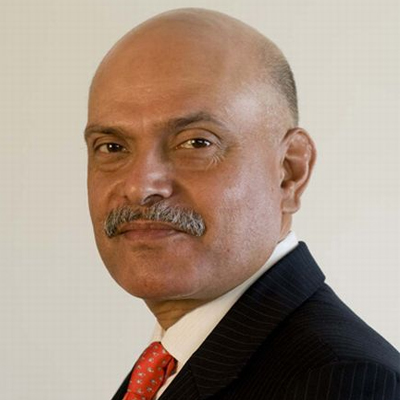
    MUMBAI: He was much in the media about three months ago when he had sold his baby to an Indian business tycoon. After spending two months in the US researching for his ‘second innings’ as he calls it, Network18 founder and non-executive director Raghav Bahl is back in business.


    Speaking at the TV.Nxt 2014 summit with Vanita Kohli Khandekar, Bahl seemed at ease while talking about his 18 successful years in the business and what could have been avoided. He highlights two life changing situations for his company with the first being in 1999, when he decided to move from a software and content production company to a broadcasting one. ”If you want to scale up you had to be in broadcast and we clearly wanted to be in the news side of it. It was no fun in being a 10 per cent player,” he says.


    The second string of life was in 2007-08 when Viacom came to India looking for a partner and along with Network18 created the GEC Colors. ”They thought that if CNN and CNBC could coexist in the same balance sheet then they must be doing something right,” he proudly says adding that their main point was being a news company that entered the entertainment field. 


    “When the parent is a news company, we have a draconian law in India that a single Indian shareholder has to have 51 per cent of the news broadcast company, which meant I had to have 51 per cent at any point of time. That’s draconian for a single first generation entrepreneur. A lot of issues that TV18 faced were due to this, which is a less understood facet of the company,” he adds.


    However, he also agrees that his peak investment phase in 2008 including diverging into HomeShop18 and Infomedia was a classical error because it coincided with the economic depression. ”We were losing about Rs 2 crore a day with cash loss of Rs 750 crore.” he admits. Although in 2009-10 he got an infusion of Rs 1000 crore equity capital, Bahl says that he should have used at least half of it to reduce debts than expand.


    As popularly perceived that news is a loss making business, Bahl disagrees by saying that it actually makes a lot of money. Network 18’s news side was making Rs 700 crore to Rs 800 crore topline which it reinvested back in the business. “Which is why it seemed like it was making losses,” he says.


    Bahl also points out that in the last four months, the company has launched six channels. ”Our EBIDTA was Rs 150 crore to Rs 200 crore. This is very healthy.  Out of this, Rs 100 crore EBIDTA comes from CNBC business,” he informs. As per him, the nearest competitor to Network18 reaps Rs 250 crore to Rs 300 crore in topline.


    He is unperturbed about the hype that surrounded Reliance Industries’ takeover of his company. ”There has been a lot of prejudgment regarding RIL. Just because we were a news company, we were in focus because there is an institutional morality built into it. The larger the biz house, the more the issue,”  he says, while adding that Ronnie Screwvala’s deal of selling UTV to Disney didn’t come as much under media scanner as his company. The deal with Mukesh Ambani was a contractual commitment that was declared as convertible debentures on the first day. He hopes well for Network 18 in its new owners’ hands. ”Few years down the line, its balance sheet will be good,” he saysSide by side, he also foresees subscription revenues to grow to Rs 1000 to Rs 1500.


    Addressing the slew of exits from the company after his own departure, Bahl asserts that those were just a few, while dozens have stayed loyal including R Jagannathan from Firstpost and Senthil Chengalvarayan, Menaka Doshi and Latha Venkatesh from CNBC-TV18. ”We just assume that the owner wants to compromise. I think Reliance Industries will stand the test of time,” he asserts.


    Fear of journalism being tampered with is also a big question with the acquisition. Bahl feels that people undervalue Indian journalism. ”The world thinks it is power but it actually is a thankless business,” he says. Media in India is independent and plural with no media having more than 5-7 per cent voice, he adds.


    With digital on the rise, which is also to be Bahl’s second stint at entrepreneurship, he believes that it will be the biggest competition to news, though not immediately but in the next 10 yearsHe has chosen to tread the path of mobile news. ”I am out of the TV business but news is my first love. There is a large amount of innovation happening in news. The way I serve, target, personalise and curate content will be important,” says he. According to him, the next generation news companies won’t be just content focused but will be a 50:50 share of content and technology. At the same time, the engineer will be as important as the editor. 


    Khandekar said that this view was similar to what Google is doing by offering news. But Bahl clarified that Google does not create content, it only curates content. In today’s world even big media companies, curate content apart from its original ones. But what matters most to the consumer is the experience. ”Anybody who says that he won’t curate or aggregate content is living in the medieval age. A journalist is a curator himself. But, the quality of original content will be the differentiating factor,” he stresses. His two month experience in the US has also taught him that in order to have a good brand, one needs at least 33-40 per cent original stuff.


    While company acquisitions happen world over, Bahl feels that the industry does need capital in it. He feels that technology companies will find it difficult to enter the news business but news creators can learn technology easily. According to him New York Times and Times of India are examples of how companies have adopted better technology while online sites such as Vice and Vox have emerged into the digital era with high quality production of news. 

    Finally talking about the huge sum of money that Bahl pocketed from the transaction, he says that although it has taken away his insecurity, it has also made him more sensible.
  • “ISL teams to breakeven in two-four years”: Andy Knee

    “ISL teams to breakeven in two-four years”: Andy Knee

    International Management Group or simply known as IMG has been a world renowned leader in sports, fashion and media management with operations in more than 30 countries.

    In 2014, IMG was acquired by WME a global entertainment and media agency. In India, the company has formed a joint venture with Reliance Industries. The JV was formed between good buddies Mukesh Ambani and former IMG chairman Teddy Forstmann who died of brain cancer in November 2011.

    IMG Reliance has signed a 15 year partnership with the All India Football Federation (AIFF) to improve and popularise football in India beginning from the grassroots to the professional level. One of its initiatives is the Hero Indian Super League- an IPL styled tournament for football that is slated to begin from 12 October 2014.

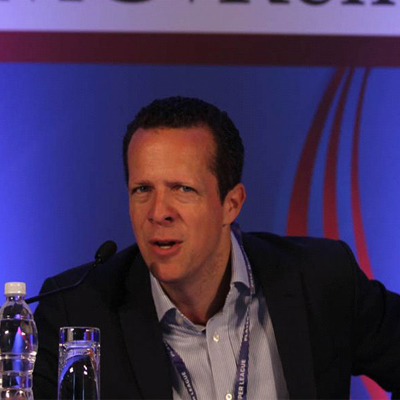
    Present at the international and domestic player draft was IMG football vice president Andy Knee.  His previous stint was at electronic giant Phillips where he was the head of sponsorship. In 2006 he was appointed as director of the Football Championship League where he was responsible to raise the profile for the 24 clubs and improving the competitions revenue.

    Though the league is highly pressurising, one will find Knee always at ease and silently observing team owners replying to hard hitting questions from journalists. On the day of the international player draft, Knee speaks exclusively to indiantelevision.com’s Herman Gomes.

    Excerpts

    The league will kick off in October this year. How is IMG-Reliance developing the league for the first time in India?

    We are doing something unique. We are taking a lot more risks than we typically do in a project. So we are investing in buying rights, in the infrastructure, marketing and putting up an expert team of football from India and abroad to help galvanize the league for the first time.  We want to make the Hero ISL an astounding success and generate value and return more importantly for our clubs and the league to be a catalyst for football to explode interest and participation here.

    In China, IMG has stake in the Chinese Football Association promoted Super League. Commercially the league there is secure and financially controlled by the government. Why have you chosen a private drive model here?

    What we do in China is very different. There we have a 10 year deal with the Association where we represent rights and sell those rights to sponsors. They have an existing league and therefore we do not have an ownership position in China.  IMG works with them to help generate more revenue from the league. We also advise them on how to improve their administration and governance of the sport. In India it is very different. It is not typical of what IMG normally indulges in. Usually we have clients or we work with or on the behalf of partners.  We have had business in India for a very long time and we have been successful in the creation of the IPL. We now looked at football and thought how is it possible that a country of this importance and size does not have advanced football infrastructure industry? So our former owner Ted Forstmann along with Mukesh Ambani discussed it together and decided to do something great in football by coming up with the ISL.

    China has certain advantages. They have got some great stadia and they are fortunate from that point of view, but China hasn’t been in the world cup in recent memory.  Japan and Korea have also risen fast and it proves it can be done. So I think if everyone is pulling in the same direction it will be a very big help.

    IMG has a presence in almost 30 countries. What are the global learnings you have put in to develop the sport in India?

    Globally, we have been representing TV, sponsorship and licensing rights. We have also worked with player business, TV production, hospitality, ticketing, commercialisation of stadia over multiple markets.  We bring that experience to India.  Frankly speaking only some of it is relevant here. For example we helped the financing and seat sale of the Wembley stadium. Is that relevant to India? Unfortunately not! Sadly we are away from our teams being in a position to invest in a significant new stadium. I hope that opportunity comes but that’s a little bit down the chain. So we take the expertise we have all gained through working many years in football and apply those bits that are relevant for India.

    Sports fans and analysts are of the opinion that the ISL will reduce the I-League tournament to an inconsequential format. What are your thoughts?

    I understand that when a new format is introduced it can be seen as a threat to the established leagues. My view is that it can’t be a threat to the I-League because the football pie in the country is very small at the moment. I do not know what is the size of the football industry here but all I know is that it is very small. We could all fight over a small slice of the football pie but actually there is just not much there to get there. We all need to make that pie 100 times bigger and there is plenty to go around. So it is about the game at the moment. It’s not about who gets what bit. Co existence can happen very easily but I hope the ISL will popularise the sport unbelievably. So people would want to watch Delhi Dynamos and then go and watch Mohun Bagan at different time of the year. They are just football fans who watch the Premiere League but they also love the fact that India has a real football league they can support and be proud of.

    How much will IMG-Reliance be investing for the infrastructure of the game in India?

    Well we are not spending too much money on the grassroots facilities. I would love us to be in a position to do so but we are not going around building pitches. We need some far better football facilities but we are not doing that. We hope that will happen organically because people are getting greater interest in football so more space is given to football. Whether its I-League or ISL teams there will be greater money coming for the sport but that money will be reinvested for the football ecosystem to grow, develop and expand.

    It is understood that each of the eight teams have to annually spend Rs 2 crore to invest in grassroots programme to develop football. How will that amount be utilised?

    This is what the teams have to do. Teams bought the rights to run their respective teams and the money they have paid is for a 10 year period and they pay it in 10 equal slices in one year. On top of that there is a requirement to invest in grassroots. This is the requirement we put on teams but at the same time actually we probably didn’t need to because all the teams understood how important this is. The teams know they have to invest in grassroots, in local football programmes in local communities. The teams have got to spend on two requirements-  grass roots and  marketing. The teams do not have to send us that money. Absolutely not! That’s for the teams to build their brand, popularity and love of the game in their local cities.

    IMG ran a three day Grassroots Developmental Programme in Kolkata where we conducted theory as well as practical sessions. We are going to roll that out farther to other cities and teams will do their bit in local cities.

    What is the age group you are planning to target through the Grassroots Developmental programme?

    Typically we look towards the age group of 11 or 12 year olds. This is not certain but we may go a little older because the U-17 World Cup is a very focal point. The teams and we would like to play our part in helping India to produce a team to be proud of in 2017.

    Will the Hero ISL have a league ambassador?

    We had talks if we wanted a league ambassador a big name who just works on the behalf of the league but we decided not to. The teams have got some great owners and some great marquee players so there is no magic celebrity we are planning to unveil. We want the league owners to stand out and the teams themselves. Yes we know we need some stardust but we have people like Ranbir Kapoor and Sachin Tendulkar to do that.

    How did the league go about deciding a fixed price for each of the players?

    Well we had a base price for each of the players that the teams agreed. There is pressure on the business models of the teams. They will lose money for the first couple of years but this is an investment. But we agreed on a price that will make the teams happy. This is the sport where if you want the best you have to spend eye watering sums of money. We found a point where we said not all of these guys are a big name but they are going to be of very good quality. So we will get great playing products and market these guys so that Indians appreciate. They might not be the Beckhams , Messis or Ronaldos but these guys are fantastic players in their own rights. But more importantly than that we need to showcase Indian talent and reassure the country and sports fans that we might be 150th in the FIFA rankings but there is talent here and reasons for real optimism about the future.

    India will be hosting the under 17 World Cup in 2017. What is the Indian government planning for the World Cup and how will it be contributing to the league?

    From what I have heard the government has some plans in terms of upgrading the stadia. I assume the stadia will be good. Well we have got some great team owners and known companies who are behind the league. We have got support of the government and so there will be greater investment in the sport from that point of view.  It’s funny how 20 to 30 years ago you could find the typical teams in an U 17 World Cup like England, East Germany, France and Spain. But now, those teams can come from anywhere. Everyone is developing football unbelievably fast and India has a big gap and it’s not like we can close it. With the third highest number of people playing football (I think only Germany and the States has more active footballer) Don’t tell me there is no talent here. Of course there is talent. We just need to put the processes and infrastructure in place in developing the talent.

    By when do you see the teams breaking even?

    We hope that will happen in two-four years and that depends on certain factors. If India properly embraces football and fans turn on their TV and come to the stadia, it will happen faster. If the reception takes a little bit longer to get warmed up it will happen a bit later. We realise this will not be a success overnight. We will love it if it explodes interest in the first year but at the same time there is the acceptance that Rome wasn’t built in a day. So every team and the league knows you have got to have some patience here. 

    How do you see Star’s association helping the league and will there be localisation of the sport in terms of commentary?

    This is a sport that must succeed on TV.  We have got the most powerful Indian TV network that is going to publicise the ISL across all its channels in different languages.  We have got a partner that really believes in it and has invested significant money. There will be some localization, I am sure, but I do not know how many languages. Star is desperate to take the game to people across India. They have got their skin in the game and their bosses in the states are looking at it closely and there is pressure on us too and we have a partner that is very committed for this league to succeed.

    On a parting note what message would you like to give to football fans in India?

    Tune in, come and have a look and enjoy it. I think this is going to be something that India has never seen from a quality and show point of view and I hope people embrace it, whether they watch 20 minutes of one game or whether every single game of the ISL.

  • Rakesh Khar joins Network 18 as operations GM

    Rakesh Khar joins Network 18 as operations GM

    MUMBAI: Network 18 has roped in a senior hand to head its operations. Rakesh Khar has recently joined the company as its general manger operations. This is his second stint with the company.


    Khar has a rich experience across several news channels over a period of nearly three decades. He has worked as  Zee Media consulting editor and as editor of Zee Research Group, Financial Chronicle as senior editor, Sahara Samay as strategic planning head and network business editor, Zee News executive editor, TV18 assistant editor, The Economic Times corporate editor and the Kashmir Times staff correspondent.


    Based out of Delhi, Khar has experience ranging from conceptualisation, execution, operations and strategy. He has built several editorial teams in print and TV news organisations.


    In the past couple of months, the network has seen several changes, after its acquisition by Reliance Industries led Mukesh Ambani. 

  • COAI gets a new core member in Reliance Jio Infocomm

    COAI gets a new core member in Reliance Jio Infocomm

    MUMBAI:  In a new addition to the core members of Cellular Operators’ Association of India (COAI), Mukesh Ambani owned Reliance Jio Infocomm Limited (RJIL) has joined telecom industry body, reported PTI. With this, its core members have risen to seven.


    After being at loggerheads regarding spectrum allocation issues, COAI and RJIL have finally put their problems behind and joined hands. This move precedes RJIL’s pan-India rollout of 4G services next year. The company holds pan India broadband wireless access spectrum that can be used for 4G services.


    Prior to RJIL joining the association, COAI had six core members — Bharti Airtel, Vodafone India, Idea Cellular, Aircel, Unitech Wireless (now Telewings Communications) and Videocon Communications (now Videocon Telecom).


    Talking about the new member, COAI’s director general Rajan S Mathews said, “We are delighted that Reliance Jio Infocomm has joined us in our common endeavour to roll out innovative and affordable mobile broadband services to the citizens of India.”


    COAI represents mobile service providers, telecom equipment manufacturers and other communication services and product companies in India. Members of the telecom body jointly have about 68 percent of subscribers and around 71 percent of revenue share in the market.


    Besides its core members, it also has 12 associate members. COAI has opened the associate membership to social media companies like Facebook. Other associate members include Alcatel-Lucent India, Cisco Systems India, Ericsson India, IBM India, GTL Infrastructure, Huawei Technologies, Indus Towers, Intel Corporation, Nokia Networks, Qualcomm India and ZTE India.


    Corroborating the news, RJIL’s managing director, Sandip Das said, “We are pleased to join the COAI, where along with other operators, we hope to create an operating environment that will help us realise this ambition for all Indians as an industry, in the overall context of our nation’s development.”


    In addition to fixed and wireless broadband connectivity, RJIL also plans to provide various digital services in key domains such as education, healthcare, security, financial services, government-citizen interfaces and entertainment. In the past, the company has also entered into agreements with telecom companies including COAI member Bharti Airtel and its mobile tower arm Bharti Infratel.

  • Reliance Industries reports 14 per cent higher YoY PAT for Q1-2015

    Reliance Industries reports 14 per cent higher YoY PAT for Q1-2015

    BENGALURU: Reliance Industries Limited (RIL) reported 7.2 per cent growth in consolidated operating revenue in Q1-2015 to reach Rs 107905 crore on a y-o-y basis. The company’s y-o-y PAT jumped 13.7 per cent in Q1-2015 to Rs 5957 crore.


    Two of the smallest contributors to RIL revenue – organised retail and others – which include its mobile, 4G services, internet, tower and television segments are covered in this report. The company’s other segment has reported 1.8 per cent lower revenue in Q1-2015 at Rs 1772 crore as compared to the Rs 1804 crore in Q4-2014 and slightly lower than the Rs 1775 crore in Q1-2014. The performance details of this segment have not been indicated by the company.


    The Reliance organised retail juggernaut continues to roll on, going from strength to strength. A few years ago the Indian behemoth had announced its foray into the then estimated Rs 3 lakh crore size Indian retail market with planned investments of Rs 25,000 crore.


    This quarter Q1-2015, RIL reported revenue from its organised retail segment at Rs 3999 crore which was 14.5 per cent higher than the Rs 3492 crore in the year ago quarter and 9.5 per cent higher than the Rs 3653 crore in the immediate trailing quarter Q4-2014. And the segment has reported operating profit (EBIDTA) in Q1-2015 at Rs 81 crore which is more than three times (3.38 times) the Rs 24 crore in the last quarter, as opposed to a loss of Rs 0.4 crore in Q1-2014.


    Here is what a part of the company’s press release has to say:


    In May 2014, the board of Reliance Industries Limited approved funding of up to Rs 4,000 crore to Independent Media Trust (“IMT”), of which RIL is the sole beneficiary, for acquisition of control in Network 18 Media & Investments Limited (“NW18”) including its subsidiary TV18 Broadcast Limited (“TV18”). In July 2014, RIL has completed the acquisition of control of Network 18 Media and Investments Limited (“NVV18”) including its subsidiary TV18 Broadcast Limited (“TV18”).


    In June 2014, Reliance Jio Infocomm Ltd. (“RJIL”) has signed a telecom tower sharing agreement with Ascend Telecom Infrastructure. Under the agreement, RJIL will utilise the pan-India tower infrastructure of Ascend to launch its 4G services, ensuring a faster and more efficient rollout to its customers.


    In May 2014, RJIL and Tower Vision India, an independent tower company in India, have entered into a Master Service Agreement for tower sharing. Under the agreement, Reliance Jio would utilise the telecom tower infrastructure of Tower Vision to launch its services across the country.


    In April 2014, RJlL and Reliance Communications Ltd.(“ RCOM”) have announced the signing of a Master Services Agreement for sharing of RCOlVl’s extensive intra-city optic fiber infrastructure. Under the terms of the agreement, RJIL will utilise RCOM’s nationwide intra-city fiber network for accelerated roll-out of its state-of­ the-art 4G services across the country. In addition, in April 2014, RJIL and ATC India, one of the leading independent tower companies in India, signed a tower sharing agreement. Under the agreement, Reliance Jio would utilise the telecom tower infrastructure of ATC India to launch its services across the country.

  • Sagarika Ghose tweets goodbye to CNN-IBN

    Sagarika Ghose tweets goodbye to CNN-IBN

    MUMBAI: Like so many others before her, she took to Twitter to announce her departure from the network she has been associated with for so long. CNN-IBN deputy editor Sagarika Ghose tweeted late on the night of 3 July: “Goodbye CNN-IBN. God bless!”


    Sagarika had gone on leave with her husband  IBN18 editor in chief Rajdeep Sardesai  last month and expectations were that she would return if one went by the email he had sent out to his team about their departure. 


    Speculation, however, was that she would not return to the channel – part of the Network18 group, now owned by Mukesh Ambani’s Reliance Industries – and would probably hop over to the Aroon Purie and TV Today Network owned English news channel Headlines Today.


    She also sent out a message to her colleagues at CNN-IBN in which she stated that she was leaving to try her hand at something “a little more challenging and creative, explore new vistas in reportage and commentary after almost a quarter of a century in journalism, among them 9 fabulous years at CNN-IBN.”
     
     
    She added in the message: “CNNIBN has not only been an integral part of my life for almost every waking minute these past years, but more important, working with you has been a joy and an honour. At CNNIBN, an incredible team of professionals brought total commitment and integrity to reporting the news. We put journalism first and because of that we became a trusted and much loved brand.
     
     
    “A free fearless press is the infrastructure of democracy–without it the term “citizenship” is diminished indeed. CNNIBN was always free and responsible! That’s why it became such an incredible success, so beloved of viewers. We created magic and that magic touched millions of lives, and the magic will remain with each of us always! The words of John Tusa, the venerable former director general of BBC World Service come to me: “Journalists cannot become the outriders of authority…but the freedom we have is the freedom to be responsible,” continued Sagarika in the message.
     
     
    She ended it with: “Good bye is an unhappy word. I prefer au revoir..until we meet again.”


    It is not known whether Rajdeep too will be following in the footsteps of his wife and announcing his departure from the news network, but once again speculation is that it is only a matter of time. Apparently, he has an offer to pen a book from Penguin.


    Sagarika is the daughter of former DD director general Bhaskar Ghose, who strove to change the face of the pubcaster.


    Meanwhile, even as she posted her farewell on Twitter and in a message, her husband announced on Twitter that he is  “reading Dilip Kumar bio and listening to SJ/Mukesh/Shailendra classic: yeh mera deewanapan hai.. Bliss! Gnight, shubhratri.”

  • Cancel all Reliance Jio Spectrum licences, says CAG

    Cancel all Reliance Jio Spectrum licences, says CAG

    NEW DELHI: The nationwide broadband spectrum allocated to Infotel Broadband Services, now a Reliance Industries company, should be cancelled for allegedly rigging the auction and violating rules, says the Comptroller and Auditor General (CAG).

    In a draft report sent to the Department of Telecom for comments, CAG said, “The DoT failed to recognise the tell-tale sign of rigging of the auction right from beginning of the auction” in which a small ISP, Infotel Broadband Services (IBSPL) emerged winner of pan-India broadband spectrum by paying 5,000 times of its networth.

    The draft report says IBSPL which is ranked 150th in the list of ISP submitted an earnest money deposit of Rs 252.50 crore “through the covert and overt assistance of third party/private bank”, bid for Rs 12,847.77 crore (5000 times of its networth) for pan-India spectrum and then sold the company on the day of completion of the auction.

    According to the draft report, these “indicated IBSPL’s collusion and sharing of the confidential information with a third party in violation of auction conditions/rules.”

    According to news agency reports, the Mukesh Ambani-promoted RIL, which acquired IBSPL within hours of it winning the spectrum and later renamed it Reliance Jio, outrightly rejected any suggestion whereby spectrum was acquired in any manner other than through a transparent bidding process duly supervised by the Government. It also noted that this was not the final report as the DoT had not sent its comments.


    An RIL spokesperson said the auction for the BWA spectrum was one of the most competitive auctions in the Indian telecom history which fetched final bid price more than six times the reserve price for the pan-India spectrum.


    On bank guarantee, the spokesperson said according to the NIA, bidders were required to submit bank guarantee for desired amount as earnest money deposit (EMD) along with its application. “EMD was based on specific deposit requirement for each telecom circle. Accordingly, IBSPL submitted a bank guarantee of Rs 253 crore in format as prescribed in NIA. Since no money was deposited as EMD, the question of source of deposit does not arise,” the spokesperson said.


    The draft CAG report said, “Due to inclusion of inadequate eligibility criterion for participation in the auction, the promoters of the IBSPL enriched themselves and made unfair gain.” 


    CAG rejected DoT’s response that the eligibility criterion for participation in the auction was finalised after due diligence and on sector regulator TRAI’s recommendations saying it was the department’s responsibility to ensure that only serious ISPs participated in the auction.


    DoT in its response admitted that there was no eligibility criterion with respect to minimum net worth or paid up capital for participation in the auction.


    “Neither the top management of the DoT nor the important committees could detect these tell tale signs of collusion and sharing of confidential information by the biggest bidder, a tiny Internet Service Provider (ISP).


    “The IMC (inter-ministerial committee) did not satisfy itself as to how the IBSPL, a company with a networth of Rs 2.5 crore, would be able to pay the bid amount of Rs 12,847.77 crore within ten days,” it said.


    CAG in the report said, “The government should get the matter investigated even at this juncture, fix responsibilities on the bidders, which violated the auction conditions/rules prescribed and cancel the allotment of the BWA spectrum along with exemplary punishment on the colluding firms.”

    The CAG estimated that the decision of the government to allow an ISP licence holder having BWA spectrum to provide voice services against payment of Rs 1,658 crore resulted in undue advantage worth Rs 22,842 crore to Reliance Jio.

    The DoT has said the auction rules allowed all kinds of telecom operators to participate in auction and there were no inherent limitation in providing voice service using BWA spectrum.

    “Had the successful bidder of pan-India BWA spectrum obtained UAS licence (permits held by mobile phone service providers), he would have become eligible to use BWA spectrum to provide any of the service permitted under UASL including full mobile service,” the official source said.

    Telecom operators like Bharti Airtel, Idea Cellular, Vodafone, Aircel etc hold unified access service licence (UASL) that allows them providing full mobile phone services as well.


    The BWA auction rules gave option to participants to procure BWA spectrum under UASL against payment of Rs 1,658 crore as paid by other operators but there was no guarantee of giving them initial spectrum as was given to incumbents.


    CAG has rejected logic of DoT saying that auction guidelines linking of BWA spectrum with UASL is “unfair and highly inappropriate.” 


    According to the draft audit report, the IBSPL promoter director went on electronic media on June 11 2010 to confirm that they had been in talks with RIL during the course of auction process.

    The report said it was in ‘gross violation of the confidential clause of NIA which had prohibited bidders and insiders from conveying any confidential information to any other person, including any other bidder or its insiders.’


    The CAG has also indicted telecom regulator Telecom Regulatory Authority of India (TRA) for not giving clear recommendation and remaining a passive observer when changes were made in its suggestion to reduce quantum of spectrum in auction.


    TRAI in 2006 had recommended to make available spectrum for entry of 12 players but finally only two blocks of spectrum were put for auction that restricted scope for entry to only two pan-India players. 

  • Nita Ambani Joins RIL Board as Director

    Nita Ambani Joins RIL Board as Director

    MUMBAI: The shareholders of Reliance Industries Limited (RIL) have approved the appointment of Nita M. Ambani who is the chairperson of Reliance Foundation (RF), as director on the board of Reliance Industries at an AGM held on 18 July 2014.


    On behalf of the board, RIL chairman Mukesh Ambani welcomed his spouse and said, “Nita has been engaged in several initiatives that have strengthened Reliance, right from building the world-class township and the ecological development at Jamnagar, next­ generation office campuses, designing customer touch paints of Reliance Retail, healthcare initiatives, successfully setting up and running institutions such as Dhirubhai Ambani International School and Mumbai Indians to, most importantly, managing Reliance Foundation. We are delighted to welcome her to the Board of Reliance Industries as an accomplished individual who will add significant value to Reliance’s journey of growth.”


    While accepting her new role with a sense of humility and responsibility she said, “RIL has always aimed to better millions of lives and my mission will be to bring speed, scale and social contract to RIL.’s larger mission. I accept this responsibility as a tribute to millions of RIL stakeholders, as well as to my tireless colleagues at Reliance foundation.”


    Nita Ambani, the wife of India’s richest man was at the forefront of the ecological development of RlL’s Jamnagar refinery site where a biodiversity plan covering 3.2 million trees over 2000 acres was implemented.


    She developed the world-class township in Jamnagar from scratch, setting new standards in quality of life. Nita has also led initiatives spanning education, health, rural transformation, environmental protection and sports over the past two decades. She has also built institutions in fields such as education, sports and healthcare in India, through Reliance Foundation and Mumbai Indians from scratch. She also leads 13 schools in the Reliance fold, including 1 international school- Dhirubhai Ambani International School- which is a testament to her commitment to excellence in education. These schools are striving to provide quality education to more than 15,000 students.


    With RIL acquiring Network 18 and now announcing Nita as one of the directors in the board, it will be interesting to see the developments shaping up in the company.

  • Reliance Jio to see phase-wise launch in 2015

    Reliance Jio to see phase-wise launch in 2015

    MUMBAI: The annual general meeting (AGM) of Reliance Industries was much awaited. With the talk around the company only growing in the past few weeks after it acquired Network18, eyes were fixed on the probable outcome of this meeting. The 40th AGM which was held today, saw RIL chairman Mukesh Ambani highlighting the future of the much awaited 4G broadband network in the country under the brand of  Reliance Jio.


    “I had shared the vision of this initiative, Jio- of a digital India- last year and of the unique opportunity that we have to maximise the benefits of the digital age. Digital services will help contribute significantly to the Indian economy and help improve lives of our 1.25 billion countrymen,” he said while addressing shareholders at the AGM.


    He also informed the shareholders that limited set of trials for Jio are already underway and the expanded trials would begin from August 2014 which would continue through 2014 and early 2015. “The year 2015 will see the phased launch of Reliance Jio across India. Millions of customers would have started to use the digital platform and services in their daily lives. The fruits of the tremendous value created by this (Jio) Rs 70,000 crore initiative would start to flow,” he stated.


    The broadband service will cover all states at launch accounting for 90 per cent urban India and 215,000 villages. Eventually it will cover over 600,000 villages. “They would ensure that every Indian has access to the state-of-the-art digital connectivity and services that are on par with or better than anywhere else in the world,” said Ambani proudly. 


    Assuring the shareholders about its future, Ambani emphasised, “Reliance Jio will be one of the largest job-creating and wealth-creating business initiatives in India.” Currently 10,000 full time employees are working on Jio along with 30,000 professionals from Reliance’s partners and vendors across the world. This apart, he said that 100,000 people are working across India in creating the digital infrastructure backbone for the network. “Millions of new entrepreneurs and jobs can be expected to spring up in the tertiary and secondary sectors in new and innovative digital enterprises and services,” he added.


    Throwing light on the reason for acquisition of Network18, Ambani said, “The acquisition through an open offer of Network18 media and investments and its subsidiary TV 18 broadcast by Independent Media Trust, the sole beneficiary of which is Reliance Industries is one aspect of the digital services play.” He stated that this would strengthen its 4G business at the intersect of telecom, web and digital commerce and the media through a suit of premiere digital properties.


    The reason for strengthening its large projects, one of which is Jio is to get Reliance Industries closer finding its way into the presetigious list of  Fortune 50 companies. He added: “Our efforts and focus over the next two years will be to intensify these initiatives and have them reach out to more citizens across the social spectrum. Reliance will be moving from investing in India’s economic future to integrating deeper with India’s social fabric.” 


    The AGM was also significant as it saw the appointment of Mukesh Ambani’s spouse Nita Ambani on the Reliance Industries board. Ambani stated that she was being appointed – as she was an “accomplished individual, the chairperson of the group’s CSR initiative, Reliance Foundation, which has done exceedingly well – “for furthering the group’s growth agenda.”


    Industry watchers have been speculating  whether she will have a role to play in the Network18 group, which RIL is in the process of acquiring totally. The megacorp has denied that this “will come to pass, at least for now.”

    Stay tuned in!!!


  • Network18’s Raghav Bahl’s goodbye email

    Network18’s Raghav Bahl’s goodbye email

    MUMBAI: Even as Reliance Industries and Mukesh Ambani cruise on their path to acquire control of the Network18 group, promoter and founder Raghav Bahl – along with his wife Ritu Kapur – sent out an email  to the entire staff of the group explaining their position and their departure from the enterprise they built up.  


    The email is pretty candid and begins with them stating that “yesterday, Ritu and I effectively ended our entrepreneurial leadership of N18 by agreeing to exit our shareholding (although I would be around to ensure a smooth transition).”

    Bahl exudes confidence in Mukesh Ambani and RIL as the potential owners of the Network18 group. “Believe us, the Group is in terrific hands. Mr Ambani is a visionary and truly good human being. And we have no doubt that Network18 would soar into the “cloud” under this dispensation. All of you have very good cause to be excited and optimistic about the future,” he says in the email.

    The husband wife team then go on to thank the thousands of team mates “whose collective tejasvi karma has buoyed N18 to where it is today. Our heartfelt gratitude towards all of them! (We would like to make a special mention of our very own Vandana, who was the first manager-cum-driver-cum-lights”man” of TV18 in the early 90s).” (The reference is to his sister Vandana Mallick who was like the rock of gibraltar for Bahl through his career and who resigned from the group earlier in the day today).

    They end by asking the entire employees of the Network18 group to “wish us well as we embark on our next quest – we are, as usual, utterly positive about the future. God bless you, and God bless Network18.”