Tag: Mukesh Ambani

  • Q1-17: Reliance Retail revenue up 46 percent; Jio subscriber base is 15 lakh

    Q1-17: Reliance Retail revenue up 46 percent; Jio subscriber base is 15 lakh

    BENGALURU: The Mukesh Dhirubhai Ambani led Reliance Industries Limited (RIL) organized retail segment – Reliance Retail,  continued its growth momentum and profitability in the quarter ended 30 June 2106 (Q1-17, current quarter). RIL’s organised retail segment contributes to less than 1 percent to gross revenues and yet, in terms of sheer numbers is bigger than most of other major players in the organised retail space in India. 

    Reliance Retail revenue for Q1-17 grew 45.8 percent year-over-year (y-o-y) to Rs 6,666 crore from Rs 4,572 crore in the corresponding year ago quarter (Q1-16). Quarter-over-quarter (q-o-q), the retail segment’s revenue also grew at double digits – a remarkable 18.6 percent from Rs 5,646 crore in the immediate trailing quarter (Q4-16). RIL says that the increase in turnover was led by growth in digital, fashion & lifestyle and petroleum products.

    Note: The unit of currency in this report is the Indian rupee – Rs (also conventionally represented by INR). The Indian numbering system or the Vedic numbering system has been used to denote money values. The basic conversion to the international norm would be:
    (a) 100,00,000 = 100 lakh = 10,000,000 = 10 million = 1 crore.
    (b) 10,000 lakh = 100 crore = 1 arab = 1 billion.

    Reliance Retail reported segment EBIT (Earnings before interest and taxes) of Rs 148 crore (2.2 percent EBIT margin), 31 percent higher y-o-y as compared to Rs 113 crore (2.5 percent EBIT margin) and 15.6 percent higher q-o-q than Rs 128 crore (2.3 percent EBIT margin).

    Reliance Jio Infocomm Limited (RJIL), a subsidiary of RIL, extended its trial services to all LYF devices users under the Jio LYF preview offer. (LYF is the mobile handset brand of Reliance Retail) This has enabled testing of all the services to customers outside the initial set of test users. RJIL now has over 15 lakh test users on its network claims an RIL release. The average monthly consumption per user is in excess of 26 GB and is increasing rapidly. Average voice usage per month is over 355 minutes. The test program will be progressively upgraded into commercial operations in coming months says RIL.

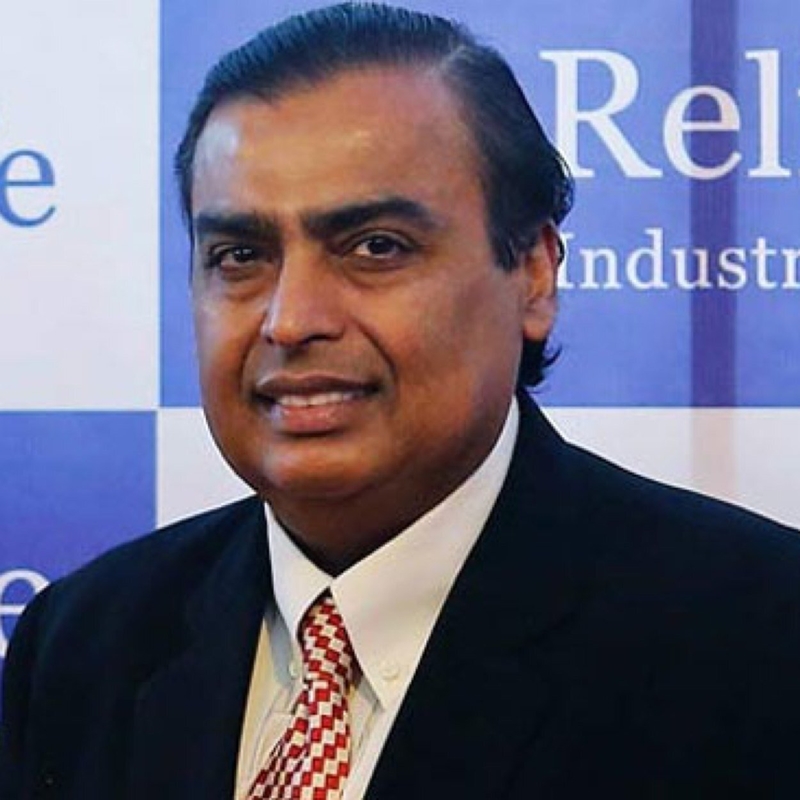
    RIL chairman and managing director Mukesh Ambani said, “At Reliance Jio, we have built an entire ecosystem that will allow Indians to live the digital life to the fullest. This transformational ecosystem consists of broadband connectivity, devices and powerful applications and services which will be available to every consumer in India.”

    RIL numbers

    For Q1-17, RIL achieved a turnover of Rs 71,451 crore ($ 10.6 billion), a decrease of 13.4 percent, as compared to Rs 82,509 crore in the corresponding period of the previous year. The company says that decline in revenue was led by the 26 percent y-o-y decline in benchmark (Brent) oil price which averaged at $ 45.6/bbl (bbl is oil barrel) in Q1-17 as compared to $ 61.9/bbl in the corresponding period of the previous year. Impact of lower prices was partially offset by higher volumes in refining and petrochemicals segments.

    Profit after tax including exceptional items was higher by 18.1 percent at Rs 7,113 crore ($ 1.1 billion) as against Rs 6,024 crore in the corresponding period of the previous year.

    Said Ambani, ““At Reliance, we continued to harness the power of our integrated energy and materials business portfolio. We maintained our earnings growth trajectory during this quarter, as the world grappled with new dimensions of economic uncertainty. Though regional refining margins trended downwards, our high-conversion refining system was able to take advantage of higher margins on middle distillates and wider discounts on sour crude oils. Our refining business delivered another record performance and achieved industry leading GRM (gross refining margin). Our petrochemicals business has a wide product portfolio, superior feedstock linkages and serves high-growth end-markets in India. As a result, we achieved yet another quarter of margin expansion in petrochemicals business and delivered EBIT growth of more than 20.5 percent y-o-y.”

  • Q1-17: Reliance Retail revenue up 46 percent; Jio subscriber base is 15 lakh

    Q1-17: Reliance Retail revenue up 46 percent; Jio subscriber base is 15 lakh

    BENGALURU: The Mukesh Dhirubhai Ambani led Reliance Industries Limited (RIL) organized retail segment – Reliance Retail,  continued its growth momentum and profitability in the quarter ended 30 June 2106 (Q1-17, current quarter). RIL’s organised retail segment contributes to less than 1 percent to gross revenues and yet, in terms of sheer numbers is bigger than most of other major players in the organised retail space in India. 

    Reliance Retail revenue for Q1-17 grew 45.8 percent year-over-year (y-o-y) to Rs 6,666 crore from Rs 4,572 crore in the corresponding year ago quarter (Q1-16). Quarter-over-quarter (q-o-q), the retail segment’s revenue also grew at double digits – a remarkable 18.6 percent from Rs 5,646 crore in the immediate trailing quarter (Q4-16). RIL says that the increase in turnover was led by growth in digital, fashion & lifestyle and petroleum products.

    Note: The unit of currency in this report is the Indian rupee – Rs (also conventionally represented by INR). The Indian numbering system or the Vedic numbering system has been used to denote money values. The basic conversion to the international norm would be:
    (a) 100,00,000 = 100 lakh = 10,000,000 = 10 million = 1 crore.
    (b) 10,000 lakh = 100 crore = 1 arab = 1 billion.

    Reliance Retail reported segment EBIT (Earnings before interest and taxes) of Rs 148 crore (2.2 percent EBIT margin), 31 percent higher y-o-y as compared to Rs 113 crore (2.5 percent EBIT margin) and 15.6 percent higher q-o-q than Rs 128 crore (2.3 percent EBIT margin).

    Reliance Jio Infocomm Limited (RJIL), a subsidiary of RIL, extended its trial services to all LYF devices users under the Jio LYF preview offer. (LYF is the mobile handset brand of Reliance Retail) This has enabled testing of all the services to customers outside the initial set of test users. RJIL now has over 15 lakh test users on its network claims an RIL release. The average monthly consumption per user is in excess of 26 GB and is increasing rapidly. Average voice usage per month is over 355 minutes. The test program will be progressively upgraded into commercial operations in coming months says RIL.

    RIL chairman and managing director Mukesh Ambani said, “At Reliance Jio, we have built an entire ecosystem that will allow Indians to live the digital life to the fullest. This transformational ecosystem consists of broadband connectivity, devices and powerful applications and services which will be available to every consumer in India.”

    RIL numbers

    For Q1-17, RIL achieved a turnover of Rs 71,451 crore ($ 10.6 billion), a decrease of 13.4 percent, as compared to Rs 82,509 crore in the corresponding period of the previous year. The company says that decline in revenue was led by the 26 percent y-o-y decline in benchmark (Brent) oil price which averaged at $ 45.6/bbl (bbl is oil barrel) in Q1-17 as compared to $ 61.9/bbl in the corresponding period of the previous year. Impact of lower prices was partially offset by higher volumes in refining and petrochemicals segments.

    Profit after tax including exceptional items was higher by 18.1 percent at Rs 7,113 crore ($ 1.1 billion) as against Rs 6,024 crore in the corresponding period of the previous year.

    Said Ambani, ““At Reliance, we continued to harness the power of our integrated energy and materials business portfolio. We maintained our earnings growth trajectory during this quarter, as the world grappled with new dimensions of economic uncertainty. Though regional refining margins trended downwards, our high-conversion refining system was able to take advantage of higher margins on middle distillates and wider discounts on sour crude oils. Our refining business delivered another record performance and achieved industry leading GRM (gross refining margin). Our petrochemicals business has a wide product portfolio, superior feedstock linkages and serves high-growth end-markets in India. As a result, we achieved yet another quarter of margin expansion in petrochemicals business and delivered EBIT growth of more than 20.5 percent y-o-y.”

  • RIL innovates; to live stream Q1-2016-17 results on FB, Youtube, Periscope

    RIL innovates; to live stream Q1-2016-17 results on FB, Youtube, Periscope

    MUMBAI: When you are a company that generates Rs 1,000 crore a day in revenue, you have to do things in style right? We are referring to the Mukesh Ambani group company Reliance Industries Ltd (RIL).

    It is touting a first for a global company as it gets ready to stream live its CFO’s Alok Agarwal’s analysis of its Q1-2016-17 results from a single axis (read a camera) over Youtube, Twitter’s Periscope and Facebook Live today. In most cases in the past, companies have streamed an event live on one of the three platforms but using different cameras.

    Says a company official: “Three cameras means three different angles for three different platforms. And an individual can look at only one camera at a time which means that somewhere or the other it appears as though he is not addressing people.”

    Apparently, RIL has technically innovated to have one video out from a single camera and distributing it to the three outlets with the help of a switcher.

    The test signal of the feed was seen on the verified Facebook page of RIL president and media director Umesh Upadhyay, the company’s Twitter feed called @FlameOfTruth and its YouTube landing, @flameoftruth2014.

    The company had streamed its results announcement live on Facebook in January 2016 with Agarwal holding forth on its Q3 2015-16 results. It then added Periscope to communicate its Q4 2015-2016 results.

    Now it has taken the step to simulcast the live stream on all the three digital platforms for its Q1 2016-2017 financials.

    “We are where the sophisticated consumer of media and stakeholders are, spread across different geographies and time zones ” an RIL official confirmed, requesting not to be named.

    A promo announcing this LIVE feed has already attracted 4.14 lakh reach, 1.03 lakh views, 2,300 likes on Facebook alone.

    RIL has more than 3 million shareholders. Even if 10 per cent of them log onto the live stream, that will be equal to the audiences that some TV shows get.

    Now if cable TV operators choose to stream this to their subscribers that could mean even more reach for RIL.

    YouTube: https://www.youtube.com/user/flameoftruth2014

    Facebook: https://www.facebook.com/RelianceIndustriesLimited/

    Twitter: https://twitter.com/flameoftruth

  • RIL innovates; to live stream Q1-2016-17 results on FB, Youtube, Periscope

    RIL innovates; to live stream Q1-2016-17 results on FB, Youtube, Periscope

    MUMBAI: When you are a company that generates Rs 1,000 crore a day in revenue, you have to do things in style right? We are referring to the Mukesh Ambani group company Reliance Industries Ltd (RIL).

    It is touting a first for a global company as it gets ready to stream live its CFO’s Alok Agarwal’s analysis of its Q1-2016-17 results from a single axis (read a camera) over Youtube, Twitter’s Periscope and Facebook Live today. In most cases in the past, companies have streamed an event live on one of the three platforms but using different cameras.

    Says a company official: “Three cameras means three different angles for three different platforms. And an individual can look at only one camera at a time which means that somewhere or the other it appears as though he is not addressing people.”

    Apparently, RIL has technically innovated to have one video out from a single camera and distributing it to the three outlets with the help of a switcher.

    The test signal of the feed was seen on the verified Facebook page of RIL president and media director Umesh Upadhyay, the company’s Twitter feed called @FlameOfTruth and its YouTube landing, @flameoftruth2014.

    The company had streamed its results announcement live on Facebook in January 2016 with Agarwal holding forth on its Q3 2015-16 results. It then added Periscope to communicate its Q4 2015-2016 results.

    Now it has taken the step to simulcast the live stream on all the three digital platforms for its Q1 2016-2017 financials.

    “We are where the sophisticated consumer of media and stakeholders are, spread across different geographies and time zones ” an RIL official confirmed, requesting not to be named.

    A promo announcing this LIVE feed has already attracted 4.14 lakh reach, 1.03 lakh views, 2,300 likes on Facebook alone.

    RIL has more than 3 million shareholders. Even if 10 per cent of them log onto the live stream, that will be equal to the audiences that some TV shows get.

    Now if cable TV operators choose to stream this to their subscribers that could mean even more reach for RIL.

    YouTube: https://www.youtube.com/user/flameoftruth2014

    Facebook: https://www.facebook.com/RelianceIndustriesLimited/

    Twitter: https://twitter.com/flameoftruth

  • Sub Rs 3K LYF 4G smartphones

    Sub Rs 3K LYF 4G smartphones

    MUMBAI: Bringing Mukesh Ambani’s vision of digitising the entire country to get its people to use the internet a step closer to fruition, LYF Smartphone+, the True 4G smartphone brand from Reliance Retail, has pushed the envelope of affordability in the Indian smartphone space by announcing a very aggressive price of Rs. 2999 on four of its Flame models – Flame 3, Flame 4, Flame 5 and Flame 6. This move also resonates with the Prime Minister Narendra Modi’s vision of a digitally-connected India says a Reliance Retail press release.

    The Indian device ecosystem always featured a clear line of distinction between smartphone users and featurephone users with price acting as a major barrier. With the introduction of 4G smartphones at a price which rivals that of featurephones, LYF has made it easy for featurephone users to upgrade to smartphones.

    Like all LYF devices, the Flame series too offers smartphones equipped with VoLTE, or voice over LTE — a technology that enables the device to provide advanced features such as faster call setup, high-definition (HD) voice and video calling, seamless switching between voice and video calls and multi-party conferencing on a 4G LTE network.

    The dual-SIM slots, a characteristic feature of every Flame phone, allow users to simultaneously use a 4G SIM in either of the slots. Further, all LYF devices come with a free Jio preview offer, under which every user buying a LYF phone gets access to the entire range of Jio services, Flame series provides a platform for users to migrate from older networks such as 2G or 3G to the more advanced 4G ecosystem. In addition to this, Flame series also offer smart aesthetic features and superior hardware technology claims the Reliance Retail release.

    With all the models being equipped with a primary camera and also a front camera, or a selfie-shooter, Flame series allows users to shoot images of all types with a range of photography features such as HDR, panorama, face detection, smile shutter, burst mode, slow motion video, metering, white balance, anti-banding and ISO. 

    Will the competition, especially the Chinese smartphone manufacturers for whom India is a focus market, react with aggressive price points? Only time can tell. The Indian consumer will definitely benefit with lower priced smartphones, bringing closer the mission of Indian political and industry leaders to have every Indian connected.

    Also read:

    Reliance Retail launches LYF Wind 5 smartphone

    Reliance Jio’s mid-segment LYF Water 5 smartphone launches on Amazon

    Reliance Jio embarks 4G trail service for public

  • Sub Rs 3K LYF 4G smartphones

    Sub Rs 3K LYF 4G smartphones

    MUMBAI: Bringing Mukesh Ambani’s vision of digitising the entire country to get its people to use the internet a step closer to fruition, LYF Smartphone+, the True 4G smartphone brand from Reliance Retail, has pushed the envelope of affordability in the Indian smartphone space by announcing a very aggressive price of Rs. 2999 on four of its Flame models – Flame 3, Flame 4, Flame 5 and Flame 6. This move also resonates with the Prime Minister Narendra Modi’s vision of a digitally-connected India says a Reliance Retail press release.

    The Indian device ecosystem always featured a clear line of distinction between smartphone users and featurephone users with price acting as a major barrier. With the introduction of 4G smartphones at a price which rivals that of featurephones, LYF has made it easy for featurephone users to upgrade to smartphones.

    Like all LYF devices, the Flame series too offers smartphones equipped with VoLTE, or voice over LTE — a technology that enables the device to provide advanced features such as faster call setup, high-definition (HD) voice and video calling, seamless switching between voice and video calls and multi-party conferencing on a 4G LTE network.

    The dual-SIM slots, a characteristic feature of every Flame phone, allow users to simultaneously use a 4G SIM in either of the slots. Further, all LYF devices come with a free Jio preview offer, under which every user buying a LYF phone gets access to the entire range of Jio services, Flame series provides a platform for users to migrate from older networks such as 2G or 3G to the more advanced 4G ecosystem. In addition to this, Flame series also offer smart aesthetic features and superior hardware technology claims the Reliance Retail release.

    With all the models being equipped with a primary camera and also a front camera, or a selfie-shooter, Flame series allows users to shoot images of all types with a range of photography features such as HDR, panorama, face detection, smile shutter, burst mode, slow motion video, metering, white balance, anti-banding and ISO. 

    Will the competition, especially the Chinese smartphone manufacturers for whom India is a focus market, react with aggressive price points? Only time can tell. The Indian consumer will definitely benefit with lower priced smartphones, bringing closer the mission of Indian political and industry leaders to have every Indian connected.

    Also read:

    Reliance Retail launches LYF Wind 5 smartphone

    Reliance Jio’s mid-segment LYF Water 5 smartphone launches on Amazon

    Reliance Jio embarks 4G trail service for public

  • CNN to air India’s Big Chance from 11 June

    CNN to air India’s Big Chance from 11 June

    MUMBAI: India is the fastest growing economy in the world. In the past two years, the country even managed to benefit from the global crude oil price crash. The largest democracy on earth has a young and vibrant population and is poised for a technological boom. As it opens up to a globalised world, India still has a depth of history and intensity of culture that awes and fascinates tourists from all parts of the world.

    During the half-hour special, CNN’s Indian-born Fareed Zakaria speaks with some of India’s key figures including:

    • Mukesh Ambani, India’s richest man and Chairman of Reliance Industries Limited, the country’s second most profitable company

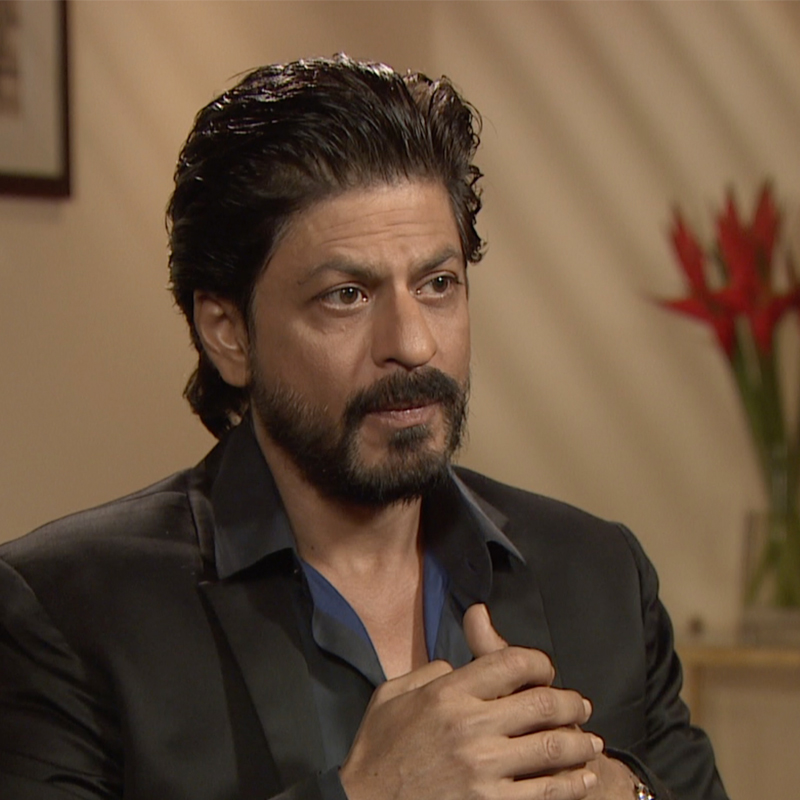
    • Bollywood’s #1 superstar Shah Rukh Khan

    • Kunal Bahl, founder and CEO of SnapDeal, India’s leading e-commerce platform

    Coming from different professional branches, the portrayed personalities try to find out if now is India’s big chance.

    Airtimes (New Delhi/Mumbai)
    Saturday June 11 at 1900 IST
    Sunday June 12 at 1100 IST
    Monday June 13 and at 0000 IST
    Tuesday June 14 at 2200 IST
    Wednesday June 15 at 1400 IST

  • CNN to air India’s Big Chance from 11 June

    CNN to air India’s Big Chance from 11 June

    MUMBAI: India is the fastest growing economy in the world. In the past two years, the country even managed to benefit from the global crude oil price crash. The largest democracy on earth has a young and vibrant population and is poised for a technological boom. As it opens up to a globalised world, India still has a depth of history and intensity of culture that awes and fascinates tourists from all parts of the world.

    During the half-hour special, CNN’s Indian-born Fareed Zakaria speaks with some of India’s key figures including:

    • Mukesh Ambani, India’s richest man and Chairman of Reliance Industries Limited, the country’s second most profitable company

    • Bollywood’s #1 superstar Shah Rukh Khan

    • Kunal Bahl, founder and CEO of SnapDeal, India’s leading e-commerce platform

    Coming from different professional branches, the portrayed personalities try to find out if now is India’s big chance.

    Airtimes (New Delhi/Mumbai)
    Saturday June 11 at 1900 IST
    Sunday June 12 at 1100 IST
    Monday June 13 and at 0000 IST
    Tuesday June 14 at 2200 IST
    Wednesday June 15 at 1400 IST

  • Rajat Nigam: Innovation, pricing and technological flexibilities are keywords of the business model

    Rajat Nigam: Innovation, pricing and technological flexibilities are keywords of the business model

    People are seldom aware of the importance of technology in seamlessly supporting a large media network such as the one Reliance has. Owned by Mukesh Ambani’s Reliance Industries, Indian mass media venture Network18 Media and Investments Limited is one of the oldest television networks in India. Known for its array of business channels in India, the network has partnered with other networks such as ETV and Viacom.

    At the helm of the group’s technologically integrating other networks and channels under one umbrella efforts is Group Chief Technology Officer Rajat Nigam. Managing the technology and technical infrastructure of all Network 18 products, be they television, radio or digital and also looking after Reliance Infocomm, industry veteran Nigam has an experience of about 20 years in the fields of television, radio, sports etc.

    Nigam is gearing up to bring better upgradations and new technologies with best practices that include having an unified digital newsroom with integrated technology and workflow supporting different businesses of traditional broadcast and digital platforms.

    Speaking with Indiantelevision.com’s Megha Parmar, Nigam sheds light on the challenges that he faces for the smooth functioning of all the channels under the network, digitization, DAS, VOOT, on HD and 4K, competition and the technological roadmap. Excerpts of the interaction:

    What books and blogs do you read, more so currently?

    In this collected world, you have lots of things to read about. If you are asking about my personal interest, I like reading blogs on cricket and the discussions that happen in various business forums. I also keep track of multiple newsletters globally that keep me updated about everything for which I have subscribed. It’s my sneak-peek into what is happening in this world.

    What has been the most complicated assignment done by you?

    I have been here in Network18 for about 10 months now, which is a significantly small time. However, I can’t say that there was nothing challenging, because Network18, just by its size and expanded horizon is a challenge as well as an integrated opportunity.

    With so many channels under the group, what are the challenges that you usually face for the smooth functioning of all of them?

    Broadly speaking, we can divide Network 18 into two parts. One is the entertainment sector and the channels which are related to it and the other is the news sector. In entertainment there is fiction as well as factual entertainment. So the more challenging aspect from a technical point of view is to create a workflow around the sector. Entertainment channels by their very nature are packaged channels with more emphasis on the creative content.

    From the technology point of view, the challenge of virtue and integration happens mostly in news channels. The content keeps generating instantly and all the time across the globe to which we need access. You have to start putting it out with speed and accuracy. So, from Network18’ perspective, it’s a very difficult thing to integrate this and to enhance the quality and productivity to ensure an efficient workflow. It’s more of an opportunity. But this requirement is more on the news channels side. We currently operate more than 20 news channels in India and are the biggest news network in the country. All the news channels are based out of different places and locations in the country. We have an integrated newsroom operation which creates an opportunity for professional satisfaction as well as the channels’ growth.

    Network18, on the one hand is a content generator, and on the other is a content aggregator. We are quite rich on digital as well, with portals like moneycontrol.com which has a huge subscriber base.

    Network 18 has taken over some other networks. How easy or difficult was it integrate technologically these other networks and channels under the Network18 umbrella. What were the challenges faced?

    Technology in the broadcast and digital industry is moving very fast. That by itself is a challenge in every aspect. Having different networks and groups integrated is a challenge, but it is a challenge that is possible to overcome. We have laid a roadmap for it and are working towards it. We have partly achieved it as well.

    We will reveal more information about the unified newsroom soon.  As far as integration is concerned, it will be one of the biggest in the globe.

    Network18 has recently launched VOOT, what are your thoughts on that and other digital properties?

    Yes, VOOT managed by our group company Viacom18, is the OTT carrying content of entertainment genre. We, as a group, are committed to provide premium quality offering for our viewers across platforms. VOOT is a destination where superior quality entertainment content for all age groups can be accessed at any place and on any device. Network18 has been one of the top two digital networks for many years now, having a variety of rich content. All of our products have uniqueness and are widely accepted, be it Moneycontrol, Firstpost, Overdrive or any other property. News18 and Pradesh18 provide digital consumers news as it happens with the latter being highly localised and available in multiple language. We shall continue to expand our digital offerings in the coming months with innovative and smart technology solutions creating digital destinations underlined with philosophy of mobility and personalisation.  

    What are the challenges you face on your digital platform as India is yet to see a completely rolled-out phase of digitization?

    If you see the global practices, it’s natural to consider and figure out what could be in store for India. We clearly are at an early stage when it comes to digitisation. One part of it is happening on field – that is the roll-out of DAS IV which will get completed by December 2016 and is very important from broadcast’s business point of view. But, from the technology point of view, digitisation or the digital world, enabling us around content differentiation is more relevant. There are a large number of OTT platforms that are getting rolled out in India, while some are available in India from outside. VOOT is an entertainment platform which has rolled-out effectively and the response has been very good. We are very confident about the content that we have.

    VOOT uses high end technology and surely provides a high quality experience which is very important in this era. With respect to content, the advantage that we see as a network is the vastness in our content, which is our USP.

    How many updates has the app undergone so far as in the software that runs these devices, considering that portable devices – be they on mobile screens and other touch screens that are evolving quickly?

    In a digital era, the upgrades and updates are extremely important. Five years back, innovation was supposed to be a unique thing where the focus on innovation was an option. In today’s time, innovation is a routine and continuous. If we don’t innovate, we are sure to perish. The upgradations and updations will be a regular part, whether it is VOOT or for all our digital products. We will continue to enhance our user experience and the aim is to provide quality service. Consumer gratification is the bottom line.

    We have a highly capable team of talented people who remain updated on what is happening in the world and they innovate themselves. It gives us confidence in enhancing our product. We continue to reach the expectations of the viewers and that also provides us an edge over the competition. Everything which is good for the network will be explored.

    What is your take on OTT and where do you see it over the next five years in India and globally?

    OTT is openly a very generic word. It’s a term which is used in hurry. The most common OTT that we use in our daily lives is WhatsApp. When we see the bigger picture, OTT is across. From the content consumption point of view, the challenge is with respect to the infrastructure as we are not yet a digital country. We are yet to have a digital structure at par with the other countries in the world. In the next few months or in a year, we will have a better infrastructure and that’s when the actual OTT business model will start working.

    With Netflix entering India, is India using that as an advantage and leapfrogging technologically?

    India is a different country and the consumers are totally different. We cannot generalise what is happening outside with the Indian market. The platform that you are referring to is extremely successful in the world, but the challenge with respect to India is pluralism of taste, language and the fragmented consumers. This is where the problem lies in India in contrary to other international players.

    Innovation, pricing and technological flexibilities are keywords of the business model. We keep that as a part of our working guidelines. The challenge that we have from a network’s point of view and a network dominated by news is skilled talent with innovative approach. It is a part of the culture and it needs to be imbibed.

    What’s your idea about expanding Talent Quotient (TQ)?

    There is always a need to improve TQ and should happen in a coordinated fashion, so that we can reach the common objective.

    Will DAS IV be a boon or a curse for the network? How has DAS I, II and III affected Network 18?

    This is the last phase of digitisation. Digitisation has been long in demand from the industry. We surely look forward to get benefitted from it. DAS IV is in the interest of everyone i.e., the broadcasters as well as the viewers. Honestly, even if there is no guarantee on it, digitisation is bound to happen. One has to compete with different platforms with the content available across platforms, its digital formats. It is also important to have content delivered in good quality as well as in a controlled or adequate manner that the consumer wants. It’s good that we are in the last phase and post December, the scenario is going to be better and there will be unification across.

    The earlier phases have been beneficial. DAS has provided us better control on the business. More of control and transparency is good for business.

    Given that many networks are going HD and 4K, what is your take? And your take on 8K?

    India as a country has been late at adopting technology. High definition TV channels started in 2010 in India which was by far quite late if we compare the availability of HD TV and content outside. From 2010 to 2016, suddenly there was a splurge of HD channels in the country and that will continue to happen. Going further into the next stage, more people have started talking about 4K and 8K. Honestly, 8K is something which is used as a term in the labs today; it does not have relevance for the consumer’s application at present. From the television perspective, 4K is a generic term. The real term is UHD TV which is more relevant for television.

    Now the way the chain for television is built, for the conversion of a channel to 4K, the complete chain has to be changed from content production to content delivery. The content can be produced at a controlled rate as a broadcaster. 4K is surely bound to happen, but it will take time. 4K content is premium quality content which will ride on the digital platform for sure. In the days to come, there are platforms which will carry 4K content, but the challenge there again would be the availability of 4K content.

    We have been exploring 4K content and as a group we want to be at the forefront in that respect. We have also highlighted some 4K content. We have studied the entire workflow. We are sure that we would be one of the early adopters of 4K content, but it’s still sometime away before 4K content starts streaming into houses.

    What are Network18’ plans in that direction?

    4K is more relevant for entertainment channels and sports. We don’t have a demand or high compulsion for news channels in HD as yet. Conversions are driven by business models, and currently the models that are followed in SD news channels are themselves not hugely motivating. That is why if a channel wants to get upgraded to HD, the big value chain has to get upgraded. The entire infrastructure also needs to get upgraded. However, gradually we will see a few news channels in HD, but the entire news fraternity going HD is not an immediate proposition.

    In the case of Network 18, we are HD ready and have a proper technology roadmap with us whenever it happens. We will look into giving HD feeds in near future.

    What is your opinion about reverse signals and the challenges its implementation will bring out?

    They all are different philosophies and ideas to provide innovation to the consumers. We are looking at new cultures and technologies and building them up even more, which will translate to a good workflow. The challenges are common, though the viewer/consumer remains the king and he needs to be gratified. Every strategy needs to be driven for the viewer’s benefit. We are migrating to a unicast industry, but as the number of users is high and each consumer would be the user of the content, it is still far for us.

    Many companies have started going the cross platform partnership way. Your view on that? Will Network 18 do something similar?

    As I mentioned earlier, innovation is the key in today’s time and is extremely important. Network 18 has a portfolio which is highly diversified. There is no immediate need for looking for collaborations from outside. However if there is an opportunity, we will be open to it.

    Network18 has an eCommerce platform, online publications, etc. How are they different from the technology perspective compared to eCommerce giants such as Flipkart, Amazon, etc.?

    Every organisation is bund to have an advantage of carrying legacy with it. We were in the business much before the earlier younger players started coming into this market. We have been in the market. However, legacy also comes with experience and that is our strength. But the challenge is to have an integrated infrastructure and technology to support each other that we are working on.

    We have seen news in two forms – video and text. What type of results does that have?

    Video is certainly going to be the future. We have recently rolled out our new website news18 and it has got a good response. The user satisfaction has been high and the quality is good. The technology that has been used for it is also optimum quality. The decoding that has been done is also high. It is integrated with news TV. It is only to provide news in a better way to the on-the-go users.

    What else is there on Network18’s technology road map?

    Technology has, off late, changed its form from being a business enabler to being a business driver and this has been duly recognised internally by us. The industry is witnessing interesting times wherein technology is galloping imparting pluralism in relevant aspects from content production of next generation 4K and HDR immersive experience to gratifying content consumption on multiple platforms taking the industry from broadcast to unicast mode

    Network18 technology teams, supported by the management, are engaged in all these emerging trends and continue to focus on evaluating newer technologies and innovative workflows to enhance working efficiencies and improve presentation values. Upgradations and bringing new technologies with best practices in the facility is work- in- progress.

    We shall soon have a unified digital newsroom with integrated technology and workflow supporting different businesses of traditional broadcast and digital platforms. Going by our size of such a vast news network in multiple languages and genres, a global solution designed for the network that would allow searching and sharing of content and news stories across locations with ease and efficiency will soon be commissioned. It will be a one of its kind, even globally. We are quite excited about our plans and these will unfold in the days to come. We continue to strive for professional excellence.

  • Rajat Nigam: Innovation, pricing and technological flexibilities are keywords of the business model

    Rajat Nigam: Innovation, pricing and technological flexibilities are keywords of the business model

    People are seldom aware of the importance of technology in seamlessly supporting a large media network such as the one Reliance has. Owned by Mukesh Ambani’s Reliance Industries, Indian mass media venture Network18 Media and Investments Limited is one of the oldest television networks in India. Known for its array of business channels in India, the network has partnered with other networks such as ETV and Viacom.

    At the helm of the group’s technologically integrating other networks and channels under one umbrella efforts is Group Chief Technology Officer Rajat Nigam. Managing the technology and technical infrastructure of all Network 18 products, be they television, radio or digital and also looking after Reliance Infocomm, industry veteran Nigam has an experience of about 20 years in the fields of television, radio, sports etc.

    Nigam is gearing up to bring better upgradations and new technologies with best practices that include having an unified digital newsroom with integrated technology and workflow supporting different businesses of traditional broadcast and digital platforms.

    Speaking with Indiantelevision.com’s Megha Parmar, Nigam sheds light on the challenges that he faces for the smooth functioning of all the channels under the network, digitization, DAS, VOOT, on HD and 4K, competition and the technological roadmap. Excerpts of the interaction:

    What books and blogs do you read, more so currently?

    In this collected world, you have lots of things to read about. If you are asking about my personal interest, I like reading blogs on cricket and the discussions that happen in various business forums. I also keep track of multiple newsletters globally that keep me updated about everything for which I have subscribed. It’s my sneak-peek into what is happening in this world.

    What has been the most complicated assignment done by you?

    I have been here in Network18 for about 10 months now, which is a significantly small time. However, I can’t say that there was nothing challenging, because Network18, just by its size and expanded horizon is a challenge as well as an integrated opportunity.

    With so many channels under the group, what are the challenges that you usually face for the smooth functioning of all of them?

    Broadly speaking, we can divide Network 18 into two parts. One is the entertainment sector and the channels which are related to it and the other is the news sector. In entertainment there is fiction as well as factual entertainment. So the more challenging aspect from a technical point of view is to create a workflow around the sector. Entertainment channels by their very nature are packaged channels with more emphasis on the creative content.

    From the technology point of view, the challenge of virtue and integration happens mostly in news channels. The content keeps generating instantly and all the time across the globe to which we need access. You have to start putting it out with speed and accuracy. So, from Network18’ perspective, it’s a very difficult thing to integrate this and to enhance the quality and productivity to ensure an efficient workflow. It’s more of an opportunity. But this requirement is more on the news channels side. We currently operate more than 20 news channels in India and are the biggest news network in the country. All the news channels are based out of different places and locations in the country. We have an integrated newsroom operation which creates an opportunity for professional satisfaction as well as the channels’ growth.

    Network18, on the one hand is a content generator, and on the other is a content aggregator. We are quite rich on digital as well, with portals like moneycontrol.com which has a huge subscriber base.

    Network 18 has taken over some other networks. How easy or difficult was it integrate technologically these other networks and channels under the Network18 umbrella. What were the challenges faced?

    Technology in the broadcast and digital industry is moving very fast. That by itself is a challenge in every aspect. Having different networks and groups integrated is a challenge, but it is a challenge that is possible to overcome. We have laid a roadmap for it and are working towards it. We have partly achieved it as well.

    We will reveal more information about the unified newsroom soon.  As far as integration is concerned, it will be one of the biggest in the globe.

    Network18 has recently launched VOOT, what are your thoughts on that and other digital properties?

    Yes, VOOT managed by our group company Viacom18, is the OTT carrying content of entertainment genre. We, as a group, are committed to provide premium quality offering for our viewers across platforms. VOOT is a destination where superior quality entertainment content for all age groups can be accessed at any place and on any device. Network18 has been one of the top two digital networks for many years now, having a variety of rich content. All of our products have uniqueness and are widely accepted, be it Moneycontrol, Firstpost, Overdrive or any other property. News18 and Pradesh18 provide digital consumers news as it happens with the latter being highly localised and available in multiple language. We shall continue to expand our digital offerings in the coming months with innovative and smart technology solutions creating digital destinations underlined with philosophy of mobility and personalisation.  

    What are the challenges you face on your digital platform as India is yet to see a completely rolled-out phase of digitization?

    If you see the global practices, it’s natural to consider and figure out what could be in store for India. We clearly are at an early stage when it comes to digitisation. One part of it is happening on field – that is the roll-out of DAS IV which will get completed by December 2016 and is very important from broadcast’s business point of view. But, from the technology point of view, digitisation or the digital world, enabling us around content differentiation is more relevant. There are a large number of OTT platforms that are getting rolled out in India, while some are available in India from outside. VOOT is an entertainment platform which has rolled-out effectively and the response has been very good. We are very confident about the content that we have.

    VOOT uses high end technology and surely provides a high quality experience which is very important in this era. With respect to content, the advantage that we see as a network is the vastness in our content, which is our USP.

    How many updates has the app undergone so far as in the software that runs these devices, considering that portable devices – be they on mobile screens and other touch screens that are evolving quickly?

    In a digital era, the upgrades and updates are extremely important. Five years back, innovation was supposed to be a unique thing where the focus on innovation was an option. In today’s time, innovation is a routine and continuous. If we don’t innovate, we are sure to perish. The upgradations and updations will be a regular part, whether it is VOOT or for all our digital products. We will continue to enhance our user experience and the aim is to provide quality service. Consumer gratification is the bottom line.

    We have a highly capable team of talented people who remain updated on what is happening in the world and they innovate themselves. It gives us confidence in enhancing our product. We continue to reach the expectations of the viewers and that also provides us an edge over the competition. Everything which is good for the network will be explored.

    What is your take on OTT and where do you see it over the next five years in India and globally?

    OTT is openly a very generic word. It’s a term which is used in hurry. The most common OTT that we use in our daily lives is WhatsApp. When we see the bigger picture, OTT is across. From the content consumption point of view, the challenge is with respect to the infrastructure as we are not yet a digital country. We are yet to have a digital structure at par with the other countries in the world. In the next few months or in a year, we will have a better infrastructure and that’s when the actual OTT business model will start working.

    With Netflix entering India, is India using that as an advantage and leapfrogging technologically?

    India is a different country and the consumers are totally different. We cannot generalise what is happening outside with the Indian market. The platform that you are referring to is extremely successful in the world, but the challenge with respect to India is pluralism of taste, language and the fragmented consumers. This is where the problem lies in India in contrary to other international players.

    Innovation, pricing and technological flexibilities are keywords of the business model. We keep that as a part of our working guidelines. The challenge that we have from a network’s point of view and a network dominated by news is skilled talent with innovative approach. It is a part of the culture and it needs to be imbibed.

    What’s your idea about expanding Talent Quotient (TQ)?

    There is always a need to improve TQ and should happen in a coordinated fashion, so that we can reach the common objective.

    Will DAS IV be a boon or a curse for the network? How has DAS I, II and III affected Network 18?

    This is the last phase of digitisation. Digitisation has been long in demand from the industry. We surely look forward to get benefitted from it. DAS IV is in the interest of everyone i.e., the broadcasters as well as the viewers. Honestly, even if there is no guarantee on it, digitisation is bound to happen. One has to compete with different platforms with the content available across platforms, its digital formats. It is also important to have content delivered in good quality as well as in a controlled or adequate manner that the consumer wants. It’s good that we are in the last phase and post December, the scenario is going to be better and there will be unification across.

    The earlier phases have been beneficial. DAS has provided us better control on the business. More of control and transparency is good for business.

    Given that many networks are going HD and 4K, what is your take? And your take on 8K?

    India as a country has been late at adopting technology. High definition TV channels started in 2010 in India which was by far quite late if we compare the availability of HD TV and content outside. From 2010 to 2016, suddenly there was a splurge of HD channels in the country and that will continue to happen. Going further into the next stage, more people have started talking about 4K and 8K. Honestly, 8K is something which is used as a term in the labs today; it does not have relevance for the consumer’s application at present. From the television perspective, 4K is a generic term. The real term is UHD TV which is more relevant for television.

    Now the way the chain for television is built, for the conversion of a channel to 4K, the complete chain has to be changed from content production to content delivery. The content can be produced at a controlled rate as a broadcaster. 4K is surely bound to happen, but it will take time. 4K content is premium quality content which will ride on the digital platform for sure. In the days to come, there are platforms which will carry 4K content, but the challenge there again would be the availability of 4K content.

    We have been exploring 4K content and as a group we want to be at the forefront in that respect. We have also highlighted some 4K content. We have studied the entire workflow. We are sure that we would be one of the early adopters of 4K content, but it’s still sometime away before 4K content starts streaming into houses.

    What are Network18’ plans in that direction?

    4K is more relevant for entertainment channels and sports. We don’t have a demand or high compulsion for news channels in HD as yet. Conversions are driven by business models, and currently the models that are followed in SD news channels are themselves not hugely motivating. That is why if a channel wants to get upgraded to HD, the big value chain has to get upgraded. The entire infrastructure also needs to get upgraded. However, gradually we will see a few news channels in HD, but the entire news fraternity going HD is not an immediate proposition.

    In the case of Network 18, we are HD ready and have a proper technology roadmap with us whenever it happens. We will look into giving HD feeds in near future.

    What is your opinion about reverse signals and the challenges its implementation will bring out?

    They all are different philosophies and ideas to provide innovation to the consumers. We are looking at new cultures and technologies and building them up even more, which will translate to a good workflow. The challenges are common, though the viewer/consumer remains the king and he needs to be gratified. Every strategy needs to be driven for the viewer’s benefit. We are migrating to a unicast industry, but as the number of users is high and each consumer would be the user of the content, it is still far for us.

    Many companies have started going the cross platform partnership way. Your view on that? Will Network 18 do something similar?

    As I mentioned earlier, innovation is the key in today’s time and is extremely important. Network 18 has a portfolio which is highly diversified. There is no immediate need for looking for collaborations from outside. However if there is an opportunity, we will be open to it.

    Network18 has an eCommerce platform, online publications, etc. How are they different from the technology perspective compared to eCommerce giants such as Flipkart, Amazon, etc.?

    Every organisation is bund to have an advantage of carrying legacy with it. We were in the business much before the earlier younger players started coming into this market. We have been in the market. However, legacy also comes with experience and that is our strength. But the challenge is to have an integrated infrastructure and technology to support each other that we are working on.

    We have seen news in two forms – video and text. What type of results does that have?

    Video is certainly going to be the future. We have recently rolled out our new website news18 and it has got a good response. The user satisfaction has been high and the quality is good. The technology that has been used for it is also optimum quality. The decoding that has been done is also high. It is integrated with news TV. It is only to provide news in a better way to the on-the-go users.

    What else is there on Network18’s technology road map?

    Technology has, off late, changed its form from being a business enabler to being a business driver and this has been duly recognised internally by us. The industry is witnessing interesting times wherein technology is galloping imparting pluralism in relevant aspects from content production of next generation 4K and HDR immersive experience to gratifying content consumption on multiple platforms taking the industry from broadcast to unicast mode

    Network18 technology teams, supported by the management, are engaged in all these emerging trends and continue to focus on evaluating newer technologies and innovative workflows to enhance working efficiencies and improve presentation values. Upgradations and bringing new technologies with best practices in the facility is work- in- progress.

    We shall soon have a unified digital newsroom with integrated technology and workflow supporting different businesses of traditional broadcast and digital platforms. Going by our size of such a vast news network in multiple languages and genres, a global solution designed for the network that would allow searching and sharing of content and news stories across locations with ease and efficiency will soon be commissioned. It will be a one of its kind, even globally. We are quite excited about our plans and these will unfold in the days to come. We continue to strive for professional excellence.