Tag: Mukesh Ambani

  • After telecom, Jio to bite into broadband and TV

    After telecom, Jio to bite into broadband and TV

    MUMBAI: After disrupting the telecom sector, Muskesh Ambani led Reliance Jio is now heading towards the fixed broadband and television space.

    The company will launch high speed fibre to the home (FTTH) broadband in more than 30 cities early next year, to offer TV as well as internet to subscribers, it is learnt.

    As reported by Business Standard, Jio has mapped out a plan to address over 100 million TV households across these cities, including tier II and III, by ensuring dense fibre presence for last-mile connectivity to homes. In the first phase itself, at least 50 million households will be offered the service, according to sources in the know.

    Jio has already spread out over 300,000 kilometres of optic fibre (half of which is through a long-term contract with Anil Ambani’s Reliance Communications).

    In his annual speech, Reliance Industries chairman Mukesh Ambani indicated that Jio was on track to offer high-speed broadband services. The infrastructure was in place and it would be the next big monetisation opportunity for the company, he had said.

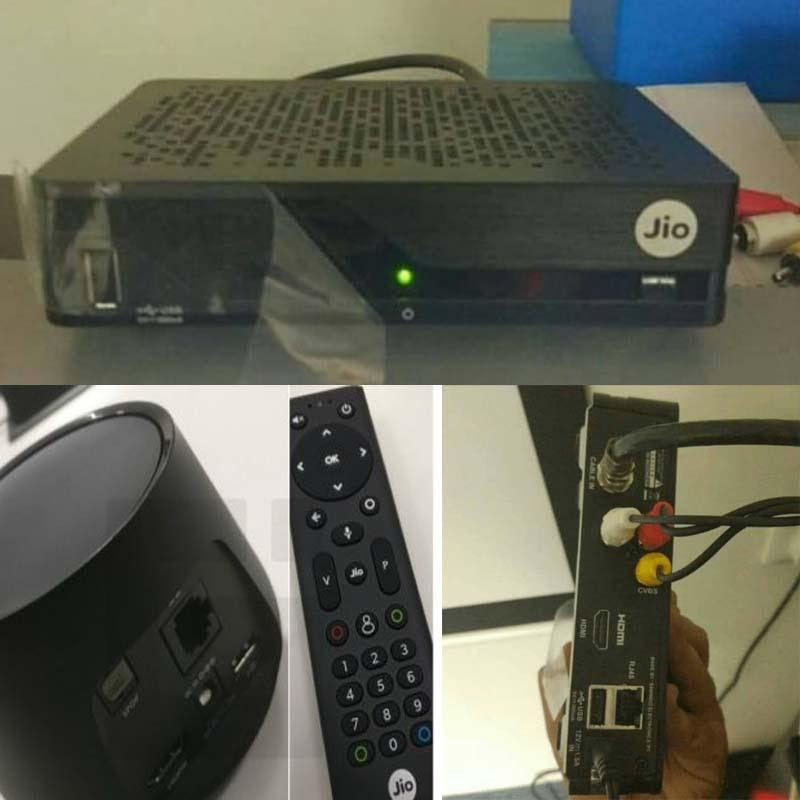
    According to the news report, Jio is expected to woo customers with premium offers such as ultra-high speed of up to 1 gigabit per second. The set-top box, as part of the package, will be a home entertainment hub – offering TV channels, high-end gaming and video on demand, among others.

    Jio is eyeing an average revenue per user of around Rs 1000 to Rs 1500 per month from subscribers (which includes internet and TV), as their usage of data goes up, a source said.

    Trials are being conducted in Mumbai and Delhi with only internet services at speeds of 100 megabits per second and 100 gigabytes of data free of cost. It is providing a special router, which connects multiple devices at a refundable deposit of Rs 4500. With a multi-service operator (MSO) licence in place, it will also offer TV services.

    Representatives of conventional TV industry cite numbers to back their claim that this is a tough game. While there are 180 million TV households in the country, subscribers fork out an average of only Rs 300- 400 a month for as many as 400 to 500 channels currently, they say.

    Competitors also say that currently, only three million subscribers cough up over Rs 1000 for high-speed broadband internet and only two million rustle up a similar amount per month for DTH or cable. So, the market that Jio is looking to address is currently niche and a small one.

    “Deploying FTTH is an expensive business and obviously Jio is making large investments. So, they have to get an adequate return on their investments. They might offer free broadband like they are doing currently and as they did earlier in the mobile space,” said a top industry executive to BS. But they will have to increase tariffs to make money and that might not translate into mass adoption.

    If the experiment succeeds, the number of households with TV and broadband, currently growing very slowly, could just explode, he said.

  • Comment: Reliance Industries’ telecom-media play fascinating, but complex & challenging too

    “This breakthrough and revolutionary device named JioPhone, along with Jio’s disruptive tariff, will unleash the power of Digital Life in the hands of 1.3 billion citizens of the largest democracy in the world,” Mukesh Ambani told  a gathering of about 2,000 at Reliance Industries’ 40th AGM in Mumbai last week even as thousands round the world followed his announcements online, “Jio will be the greatest accelerator of the Bharat-India connectivity. Indians even in the remotest villages will now have the same access to digital entertainment, digital learning, e- healthcare, e-banking, e-governance and real-time information that are enjoyed by those in cities like Mumbai or Delhi.”

    India and the domestic stock markets gasped as Ambani, head of one of world’s largest petrochem companies in the world unveiled sops like practically cost-free handsets (Jio Phone), free voice calls and limited-yet-very-attractive data plan for Jio phone subscribers. Setting the cat amongst the pigeons, he also announced that the 4G LTE Jio Phone handsets could be hooked to a TV set to watch streaming videos on a larger screen — an Apple TV-like or Chromecast-like devise, as the experts described it.

    The announcements — disruptive, as Ambani admitted himself  — had an immediate effect on 21 July 2017: share prices of other telcos and some market-listed DTH and MSO companies tumbled on the stock market. If people at some traditional media houses are to be believed, strategists started scouring excel sheets to examine where and how their bottomlines could get affected and what could be a flanking strategy, if at all that was needed.

    The $30 billion fourth-generation mobile network Jio, launched in September 2016, already has 100 million paying customers. The target is 500 million of those Indians who use low-end feature phones. The Jio Phone is to be available to the masses from September (beta testing starts August 2017) for free on a three-year refundable deposit of Rs. 1,500. Under the `Dhana Dhan’ plan of  Rs. 153 per month, subscribers can get unlimited data with conditions. As there will be a “fair usage policy of half a GB per day to ensure that bandwidth is fairly apportioned for every user”, as Ambani said, the `unlimited’ data may not be as free flowing as being envisaged.

    But if Jio is targeting the 500 million feature phone users in India, mostly in non-urban areas,  even Rs. 153 per month could be a bit daunting. So, there would be sachet packs of Rs. 54/week and a two-day plan for Rs. 24 that provide similar value. Jio is targeting 5 million handsets to be available every week and from last quarter of 2017 they’d be manufactured in India under Make In India programme of the present government. Talk about killing birds with a stone!

    If Ambani called the Jio project a disruptive one, he was actually telling the truth. The question is: how disruptive and what’s the trigger?

    “The answer in one word: data. The refining and petrochemicals group is changing its stripes with an audacious and expensive bet on data, which Mukesh Ambani says is `the new oil’,” a Bloomberg analyst wrote in a newspaper, adding, “Assuming half of the country’s 500 million feature-phone users switch (to Jio phones), Jio collects $6 billion interest-free for three years.”

    One would say a brilliant strategy to lock in the refundable amount for the phone and gain additional cash for expansion; not that Reliance is falling short immediately on funds.

    Now, the questions arise. Will Jio Cable TV devise impact the business of DTH and satellite TV operators’ bottomlines? Should companies like Tata Sky, Dish TV/Videocon D2h, Airtel Digital and Sun Direct be worried? Can Jio Cable TV replace the low-cost cable services provided by the likes of Siti Network, Hathway-GTPL, DEN Network, SCV, Fastway, Ortel, InCable, Nxt Digital, etc? If it’s looking to replace the present TV services — delivered via satellite, cable and telecom infrastructure (OTT) — from where will it get varied programming? Will it tie up for content with non-Reliance Industries controlled broadcasters like Star, Zee, Sony Pictures, Discovery, HBO, etc? Will the broadcasters ultimately end up paying the Jio platform for carriage of their content or Jio pay for outside content?  Or, is Jio another experiment at triple play from a company that’s sitting on piles of cash because its petrochem business is booming? 
    There are no clear answers at the moment to such posers.

    A Bank of America Merrill Lynch advisory on 21 July 2017 while analyzing and lauding some aspects of the Jio announcements (smaller telco names losing their “value proposition” of lower priced voice offering, is one such observation) pointed out, “We do not see today’s announcement as being negative for Dish (one of India’s largest DTH operator from the Zee group now in the process of merging another operator Videocon D2h with itself), as the announced plan caps the TV viewing to 3-4 hours per day, which will prevent users to switch to Jio Phone TV. However, we do see long term DTH ARPU growth coming under pressure from the offer and related developments.”
    This brings us to the question of content on various Jio networks. Remember, the company has been testing its MSO services and has dropped hints about a DTH service too whose nature of delivery is not yet clear.

    At the moment, RIL controls 53 television channels and several digital media properties, all of them housed across Network18 and joint venture Viacom18. Apart from these, RIL’s media arms are also the “partner of choice in India” (Ambani’s words) for leading global brands such as CNBC, CNN and Forbes magazine.
    The combined Network18 channels on an average reach over 500 million viewers every week, Ambani claimed, adding with digitization of the media business and expansion of mobile broadband and fixed broadband connectivity, driven by Jio, the media and entertainment part of RIL’s business empire has “exponential growth potential in the future”.

    While RIL was preparing to announce its revolutionary Jio phone and bundled services at mind-numbing price points, it had already stitched up a deal with one of India’s biggest and best content producers, Balaji Telefilms Ltd.(BTL), for a stake that was a shade under 25 per cent at a cost of Rs. 4133 million. BTL said that the proceeds from the transaction would be used to up content development, especially for ALT Balaji (the OTT platform).

    Balaji had already integrated the ALT app with JioMoney, the mobile wallet from Reliance Payment Solutions, earlier this year to provide digital transaction experience to its subscribers. RIL’s stake in Balaji may force the content producer to change its content strategy to tailor it more to Reliance’s needs. Similar strategic stakes in some other content producing companies cannot be ruled out in future as also taking control of a financially-beleaguered broadcasting company having a few on-air TV channels.

    So, 53 up and running TV channels of various hues and in several Indian languages, combined with Balaji’s content generating prowess, does give RIL access to quite a big content library to push on its Jio Phone platform. Even if for limited viewing on cheap data packs.

    Pointing out that Reliance Jio capex will reduce drastically going forward, a former asset manager at a Mumbai brokerage firm opined that RIL already has 100 million+ paying Jio subs, it has access to the technology, content and capital and, more importantly, got management bandwidth, which all combine to become a heady cocktail for any successful telecoms-media company — a la Comcast or Netflix or a media behemoth that has the potential of ruling the waves.

    But a behemoth is also more prone to questions from regulatory regimes; especially in a country like India where prevalence of multiple languages make the job of a regulator to define monopoly that much more difficult.

    And, that brings us to our last important issue that Reliance Jio phone and allied services raise: monopoly and potential discrimination. Since Jio is bundling several apps and services, critics observe, it’s already started to build a `paid-for walled garden’. Will such a `garden’ be against Net Neutrality — an issue that’s being presently studied by Indian telecoms and broadcast regulator TRAI? An arrangement between Facebook and Anil Ambani-controlled Reliance Telecommunications forinternet.org or free Internet was struck down by TRAI in 2015 giving a major setback to the social media giant.

    Questions, questions and more questions. So, we’d leave it here presently with straws in the wind. But the head of an MSO company, on condition of anonymity, aptly summed up the Reliance’s telecom-media play: “The threat has arrived, though these are early days to say as to who will get hurt.”
      
    ALSO READ:

    Jio to raise Rs 200 bn for next phase of expansion

    Mukesh Ambani offers JioPhone from 15 Aug

    Reliance Jio to launch Android powered 4K STBs
  • Mukesh Ambani offers JioPhone from 15 Aug

    MUMBAI: At the 40th AGM on Friday, Reliance Industries CMD Mukesh Ambani introduced ‘India Ka Smartphone’ – the JioPhone. It is said to be a 4G-enabled cost-efficient feature phone, which works on voice commands. Announcing the launch, Ambani’s daughter Esha said, “It is made in India by the young Indian.” 

    She said that Jio would provide that at an effective price of Rs 153 per month, that is, three per cent of the existing price. If these users were to consume a similar quantity of data on other operator’s network, they would spend Rs 4,000 – 5,000 per month.

    The launch is likely to further change the landscape of how people consume video content in India. The OTT space is likely to get a major push and RIL has already announced buying a stake in Balaji Telefilms.

    Mukesh Ambani also announced the following:

    JioPhone will be available for free.

    Dhan Dhana Dhan plan is available at Rs 153 per month 

    Rs 309 per month Jio phone TV cable: It comes preloaded with the Namo app and can play ‘Mann Ki Baat’ radio programme too. 

    Smart TV as well as CRT can be connected with the Jio phone TV cable 

    Jio will reinvent the conventional feature phone with a revolutionary device 

    RIL aims to sell five million JioPhones a week

    It will be available for user testing in beta from 15 August and for pre-booking from 24 August

    RIL plans to collect a fully refundable, one-time, security deposit of Rs 1,500 with every phone

    Also Read:

    Jio to raise Rs 200 bn for next phase of expansion

  • CCI reviewing Jio-RCom pact for sharing 800 MHz spectrum

    MUMBAI: Mukesh Ambani’s Reliance Jio Infocomm has sought approval from the Competion Commission (CCI) for the proposed spectrum sharing deal with Anil Ambani’s Reliance Communications. The CCI website states that the deal is under review.

    Jio is waiting for an approval from the CCI for pacts entered into with Reliance Communications (RCom) and its subsidiary Reliance Telecom Ltd (RTL) for using 800 MHz spectrum, PTI reported. Jio, as is known, is the latest entrant in the highly competitive Indian telecom market.

    Jio had entered into an agreement with RCom for acquisition of right to use some spectrum in the 800 MHz band. Besides, it had, in January 2016, signed agreements with RTL and RCom providing with the option related to use of the spectrum.

    The pacts were “pursuant to the guidelines for trading of access spectrum by access service providers” issued by the Department of Telecommunications on October 12, 2015, as per the notice submitted to the CCI. According to the notice, Jio was testing its network for providing high definition voice, mobile telephone services, video, data and messaging as on the date of entering into the agreements.

  • Programming revamp benefitted News18 India, says editorial head

    MUMBAI: Hindi news channel News18 India, which undertook a revamp of its programming strategy few months back focusing on exclusive reports largely based on sting ops, has claimed that the plan is working as its ratings and viewership have increased.

    Some of the sting operations carried by News18 India after programming reboot included ‘ Operation Namak Haram’ that exposed top Pakistani film actors and singers living in India and their alleged involvement in black money deals; ‘Surgical Strike Ka Saboot’ involved a police officer in PoK or Pakistan-occupied Kashmir who admitted that strikes were carried out by the Indian Army on September 29, 2016 and ‘Operation Kaali Kursi’ that exposed bank managers of private banks willing to aid an undercover reporter in converting almost Rs. 70 million of old currency notes into new ones after demonetization late last year.

    Speaking to Indiantelevision.com, News18 India consulting editor Prabal Pratap Singh said, “The channel has grown exponentially since its re-launch. Several of our shows are consistently No. 1in their slots. This is a testimony to the content that we have been airing, which is in line with our channel’s philosophy  of `Danke Ki Chot Par’.”

    Singh said as the editorial head of the channel, his role is to help the team focus on issues that are relevant to India, especially those viewers who would be watching or tracking a Hindi news channel. “Focus on pertinent content and issues, relevant to our viewers, has ensured tremendous growth in our viewership,” he added.                      
    According to BARC India data of weeks 15-18, News18 India had an average weekly impression of 3634 (in ‘000) with a 16 per cent market share in the HSM megacities in NCCS 15+, which placed the channel one spot behind the segment leader Zee News that had a market share of 17.5 per cent during the period under review.  

    News18 India is part of the Network18 group that is controlled by Mukesh Ambani-promoted Reliance Industries Ltd. Reliance acquired Network18 from its founder Raghav Bahl and his associates in 2014.

    ALSO READ:

    Bebaq. Bekhauf set to change; TV18 to revamp IBN7 on 9 Nov


  • Epic to reposition as an infotainment channel; Sehwag show announced

    MUMBAI: It’s making an epic shift. Epic TV which saw the departure of its founder and MD Mahesh Samat for Disney last year, is now positioning itself as an infotainment channel, broadening its programming from just mythology and history and adding a wide array of original content across various genres.

    Promoted by Samat along with investments from Anand Mahindra and Mukesh Ambani, the channel began by showcasing some of the most well produced programmes in India. But it failed to get commercial traction courtesy distribution issues and the fact that a mass of Indians prefer soaps and drama series as compared to the Hindi GECs a compared to the original and unique Indian programming it offered.

    Aditya Pittie – one of the largest distributors for the Patanjali group – came in to manage and run the channel as a director last year and has since been working on its relaunch.

    Says Pittie: “The infotainment genre is a content driven destination colonized by international players and syndicated programming with infrequent home-grown shows available. There is an evident and growing discrepancy in what is available and what popular sentiment demands. In this divide is the opportunity that Epic is best positioned to capitalise on.”

    Pittie has been in conversation with various producers to shore up the content on the Epic. Viewers can expect programming bouquet to be expanded to include a mix of non-fiction content that aspires to imbibe the diversity of India. And a regular calendar of commissioned programmes that that explore, discover and inspire pride are slated to be rolled out.

    Amongst the first includes a show hosted by the swashbuckling former Indian opening batsman Virender Sehwag, who continues his form through social media and cricket commentary.

    “This is the first TV show that Sehwag is hosting and he is a perfect fit for the Epic brand,” explains Aditya. “We Indians, as people, are very emotional. So, instead of treading the predictable path of logic-driven sterilised content, the content showcased on Epic is just like India – an honest portrayal of the passions and emotions that make us who we are.”

  • IPL tendering process to commence 17 July; bidding to be fierce

    MUMBAI: The Mukesh Ambani-owned Mumbai Indians pulled of a wafer thin victory against the Rising Pune Supergiants in the final of the Vivo IPL 2017, possibly giving a super boost to the TV ratings that Sony Pictures Networks India (SPN India) will notch up for its telecast. The final match could also be the last time both SPN India and Hotstar could be telecasting the Vivo IPL as both their contracts with the Board of Control for Cricket in India (BCCI) have ended.

    Come 17 July, and the tendering process will start to bag the IPL telecast and rights – both national, international and streaming over the internet. The auction process was supposed to commence last year but was quashed by the Supreme Court appointed Justice Lodha committee.

    The IPL title sponsorship tender will commence earlier on 31 May 2017. Chinese smart phone maker Vivo’s title sponsorship contract too has ended with the latest edition of the IPL.

    The decision on the two dates was taken by the BCCI, the members of the IPL governing council, and the Supreme Court appointed committee of administration on Saturday 20 May.

    Industry experts expect the price for the five year rights – yes, the cycle of the IPL rights has been reduced to five years by the BCCI to further exploit its potential – to reach stratospheric heights. The expectation is that potential bidders like Star India, SPN India, Amazon India, and new player in the game the Discovery promoted D-Sports could end up writing cheque amounts close to double of what was paid for the previous cycle – on a like to like basis.

    For both Star India and SPN India, bagging the rights is crucial. Star India has targets to achieve $1billion EBIDTA by 2020 and one of the tools to help it get there is of course the spread of Hotstar. Over the last two years, it has launched a clutch of sports channels in its bouquet. SPN India too will want to retain the rights as it has been one of its cash cows over the past three to four years, notching up new records in advertising and viewership every year. It too has launched a clutch of channels and has even partnered with ESPN for a channel in India.

    Clearly, the side which bats and bowls well during the tendering process will win.

  • OpenSignal too finds Airtel better than Jio in 4G speed, latter tops in reach

    MUMBAI: Bharti Airtel is the top performer among the mobile service providers in India in terms of 4G data speed, concluded a report by OpenSignal, a provider of insights into coverage and performance of mobile operators worldwide.

    OpenSignal said its survey was based on 1.3 billion measurements from 93,464 customers on the major wireless networks between December 2016 and February 2017. It stated that Airtel’s average 4G speeds came in at 11.5 Mbps. In second slot was Vodafone at 8.59 Mbps and Idea was the next with speeds of 8.34 Mbps. Jio was fourth, with speeds down to 3.92 Mbps. This clearly showed that Airtel still continues to be the best network of India.

    All the carriers were found to be below the current 17.4 Mbps global average for 4G download speeds.

    However, Jio customers were able to get an 4G signal from its network 91.6 per cent of the time. Idea came in second place at 59.45 per cent, Vodafone was third at 59.05 per cent, and Airtel came in fourth in this category with 54.72 per cent.

    Global internet speed test platform Ookla, based on web and app platforms, had recently shown Airtel as the top 4G high-speed internet provider in India. But, the report was questioned by Jio. Earlier this week, TRAI released a report suggesting Jio was the fastest 4G high-speed internet provider, while Airtel was the third-fastest.

    Also Read: Airtel does not agree with ASCI’s ‘conclusion’ on misleading ad

    Jio freebies: TDSAT puts off Airtel-Idea hearing to May

    Jio says Ookla has admitted to flaws in speed measurement system

  • Ambani advocates ‘Keep in India’ agenda for PM

    NEW DELHI: Industrialist and Reliance Industries Chairman Mukesh Ambani, has made a strong pitch for “Keep In India” – an addition to the to-do list of the Modi government after Make in India, and Digital India

    Speaking at the India Today conclave in Mumbai over the weekend, Ambani spelt out a vision for how technology can provide solutions to the most challenging problems that India is facing –from education, financial inclusion, healthcare to job creation and entrepreneurship.

    But, he said, there was need to protect Indian data as India emerges as one of the leaders in steering the fourth industrial revolution. “As we enter the digital age, we must remember data and information is power. If the benefits of the Indian technology revolution are to be fully captured –we need to ensure that data remains in India…like Digital India, Make in India, we need Keep in India initiative to ensure data remains within India.”

    He said: “We cannot be arrogant about technology, it has to always serve the common man and we have to learn from the common man.” Apart from connecting 99 per cent Indians digitally, Ambani will be focusing on the education sector, along with his wife Nita Ambani in 2017.

    In his wish list for the prime minister Narendra Modi, Ambani said the challenge is now for execution. He said that India’s lack of existing physical, digital infrastructure is a boon. It takes away the burden of replacing or upgrading existing technology. The most challenging problems facing humanity in India will be solved using technology.

    He felt that India could be a leader in the fourth industrial revolution but the time was now to seize the opportunity to make India a prosperous nation.

    The real impoverishment he said is the denial of opportunity. “We should not allow any Indian to suffer from that poverty.”

  • Jio data offer unsustainable, acknowledges Airtel

    MUMBAI: Bharti Airtel, India’s largest mobile operator, has opined that the new tariff announced by Reliance Jio was very aggressive and unsustainable, and the industry would respond to it with additional data offerings and more competitive plans.

    Yesterday Airtel anounced waiving of roaming charges to compete with free roaming and voice calls offered by Jio. The Mukesh Ambani-led Jio has not only promised to match the best mobile data usage plan in the market but add 20 per cent to it.

    Tariffs that they (Jio) announced were still very aggressive, which meant they got to respond. They all got to do more packages… they had to throw in more data. All those things need to be done, PTI reported Bharti Airtel chairman Sunil Mittal telling the press.

    Jio, which has invested USD 25 billion on its 4G wireless data network, will terminate free data plans from 1 April, but has offered consumers the option of signing up for a Jio Prime membership for Rs 99 to continue using unlimited services for a year by paying Rs 303 every month.

    Acknowledging that Jio’s plan to start charging customers was “good news” for operators, he said it however, would not signal the end to tariff war. Good news was that eventually they announced that they would. But yes, it was the pricing which was unsustainable.

    Mittal, who is also the chairman of global industry body GSMA, recommended consolidation for the Indian telecom industry to “get the economic case back”, pitched for affordability in spectrum pricing that has gone “out of control” in the last few years, and said the spectrum surplus industry would not need an airwave auction, at least in 2017-18.