Tag: Mukesh Ambani

  • Reliance AGM: Mukesh Ambani unveils JioHotstar’s new AI-led features

    Reliance AGM: Mukesh Ambani unveils JioHotstar’s new AI-led features

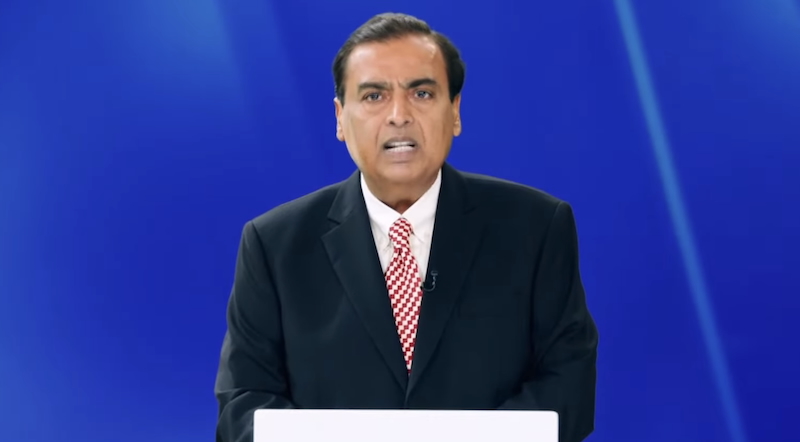
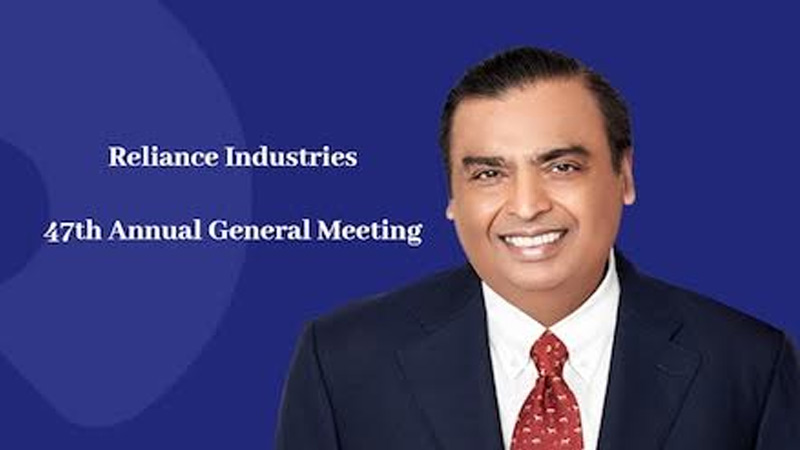
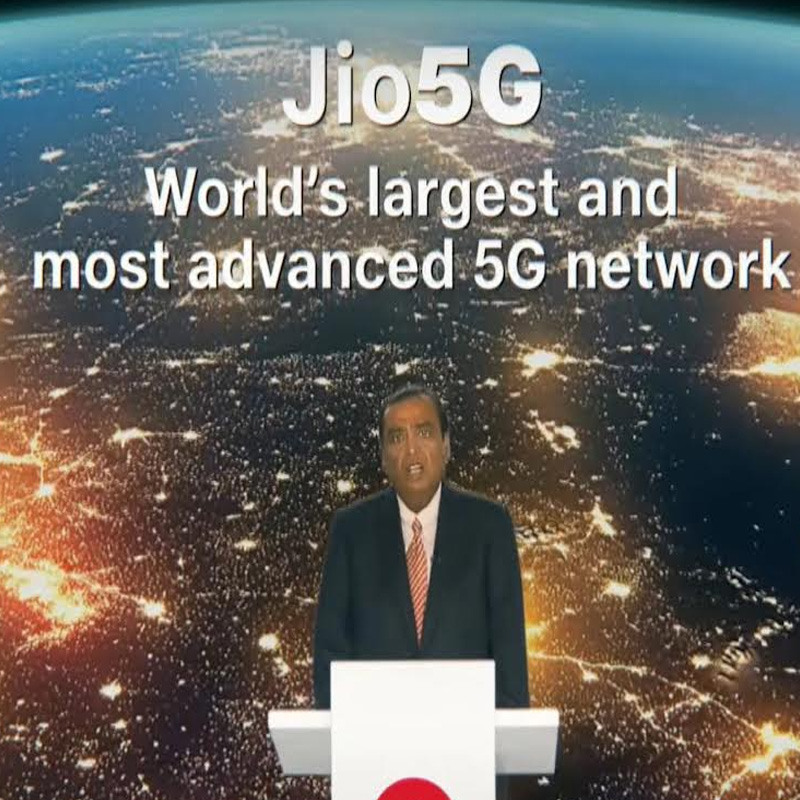
    MUMBAI: Reliance Industries chairman Mukesh Ambani  declared at the firm’s annual general meeting held today that JioStar has reshaped India’s media landscape within months of launch. The media and entertainment arm now boasts over 3.2 lakh hours of programming—six times more than its nearest rivals—with 30,000 hours added annually.

    The JioHotstar app has surged to 600m users in just three months, including 75m connected TVs. With 300m paying subscribers, Ambani claimed it has become the world’s second-largest streaming platform, achieved entirely in India. Reliance also commands a 34 per cent share of India’s TV market, equal to the next three networks combined.

    To cement its lead, Ambani unveiled a trio of AI-driven features. Riya, a voice-enabled assistant, promises effortless content discovery across shows, films and sports. Voice Print uses AI voice cloning and lip-sync to let stars “speak” in viewers’ own languages without losing authenticity. And JioLenZ offers multiple, personalised viewing options at the click of a button.

    “We have created an experience that combines the best of content, software and AI,” said Ambani. “JioStar will continue to expand across platforms and geographies as we serve a billion screens.”

  • Reliance joins hands with Google Cloud to put India’s AI future on steroids

    Reliance joins hands with Google Cloud to put India’s AI future on steroids

    MUMBAI: Reliance Industries has never done things by halves. On 29 August, India’s largest private company unfurled its latest grand project: a sweeping expansion of its alliance with Google Cloud, centred on a new, dedicated AI-first cloud region in Jamnagar, Gujarat. The ambition is as audacious as it is familiar. Having once upended India’s telecoms industry with Reliance Jio and cheap data, Mukesh Ambani is now training his firepower on artificial intelligence, promising to democratise access to computing muscle for the world’s most populous country.

    The project is being pitched as India’s “AI leapfrog moment.” Reliance will design, build, and power state-of-the-art cloud facilities, all running on renewable energy and plugged into Jio’s sprawling fibre and digital network. Google will provide the brains: its AI hyper computer, a secure and integrated generative AI stack, and the know-how to run workloads of breath taking intensity. The facility, Reliance says, will meet global service-level standards and support the most demanding AI use cases—from training large models to building next-generation applications for consumers and enterprises.

    Why Jamnagar? The coastal city is already the beating heart of Reliance’s refining and petrochemicals empire. It is also becoming a symbol of the company’s reinvention: its green energy giga factory is rising there, and now the AI cloud campus will sit alongside it. Running on renewable power, the project ticks boxes for sustainability even as it scales to hyper speed. Jio, meanwhile, will string high-capacity fibre links connecting Jamnagar to metros like Mumbai and Delhi, effectively wiring India’s AI ambitions to its business and political capitals.

    Mukesh Ambani cast the partnership in almost civilisational terms: “Just as Jio and Google came together to democratise the internet for every Indian, we will now democratise intelligence for every Indian,” he declared. The subtext was clear: Reliance does not want to merely be a customer of AI; it wants to be the platform on which India builds its AI future.

    For Google, the tie-up is equally strategic. The American giant has long struggled to monetise India at scale, despite Android’s dominance. Its alliance with Reliance, first forged through a $4.5bn investment in Jio Platforms in 2020, has been its best bet. Sundar Pichai, Google’s boss, was almost wistful: “Our work together over the last decade has helped bring affordable internet access to millions. And now, we are building on this to help shape the next leap with AI. This is only the beginning.”

    The beginning it may be, but the context is fiercer. Microsoft has partnered with the Adani group to push Azure into Indian enterprises. Amazon Web Services (AWS) has invested heavily in local data centres. By anchoring Google Cloud in Reliance’s infrastructure, Ambani is offering it the biggest distribution muscle in the country—from India’s biggest retailer to its mightiest mobile operator.

    Reliance has always built moats around scale and integration. Hydrocarbons fed petrochemicals; petrochemicals funded telecoms; telecoms birthed digital platforms; retail wrapped around them. Now AI is being woven into every strand. Reliance’s retail arm, one of the world’s fastest-growing, will be powered by predictive analytics and AI-first services. Its digital platforms can churn out generative-AI-powered customer tools. Even its energy and refining business can tap AI for predictive maintenance, efficiency, and emissions management.

    The bet is as much about geopolitics as economics. AI compute has become a strategic resource, akin to oil in the 20th century. By hosting a dedicated, hyperscale AI cloud region in India, Reliance and Google are hedging against global bottlenecks in semiconductors and compute availability. They are also offering Indian enterprises and the government a “sovereign-flavoured” cloud alternative to relying wholly on Western or Chinese platforms.

    The entire project will be underpinned by Reliance’s push into renewable power. The AI data centres, notorious for their energy hunger, will be fed through Reliance’s green energy parks and hydrogen initiatives. Jio’s high-capacity fibre, spanning metros and regions, adds the digital sinew to match the green muscle. The combination allows Reliance to brand the initiative not merely as profitable, but as sustainable—a key card to play with regulators, policymakers, and global investors.

    For India, the stakes are towering. Domestic enterprises, startups, and public sector organisations often face prohibitive costs in accessing cutting-edge AI compute. By pooling Reliance’s infrastructure with Google’s stack, the hope is to lower barriers and accelerate adoption. Small businesses may soon have access to AI tools that were once the preserve of Silicon Valley. Universities and research institutes could run high-performance AI models without prohibitive cost. And the government could scale citizen-facing AI services in health, education, and agriculture.

    But challenges remain. Building AI facilities is one thing; ensuring India has the talent, regulation, and guardrails to use them responsibly is another. AI also raises thorny issues of bias, surveillance, and security. Reliance’s ambition to become India’s AI backbone will inevitably attract scrutiny—whether from privacy hawks, antitrust watchdogs, or foreign competitors.

    Yet, if history is a guide, Reliance has a knack for bending markets to its will. When Jio entered telecoms in 2016, it offered free calls and dirt-cheap data, triggering a brutal price war that wiped out rivals and left India with the world’s cheapest mobile internet. Now, Ambani appears ready to repeat the trick with AI: offer access at scale, bundle services across Reliance’s ecosystem, and set the floor so low that competitors struggle to keep up.

    The Jamnagar AI cloud, then, is not just about servers and software. It is about a new architecture of power: technological, economic, and political. If it works, Reliance and Google may indeed make India a global leader in artificial intelligence. If it fails, it could end up as another white elephant in the deserts of Jamnagar.
    For now, though, one thing is certain. India’s AI race has just been given a jolt of steroids—and Mukesh Ambani is holding the syringe.

    (The picture featured above is representational of two businessmen joining hands and there is no intention to insinuate that it  resembles either Mukesh Ambani or Sunder Pichai. It is an AI generated image)

  • Reliance Communications comprehensive loses amount to Rs 2,068 crore in Q3

    Reliance Communications comprehensive loses amount to Rs 2,068 crore in Q3

    MUMBAI: Reliance Communications Ltd (RCom.), once a dominant force in the Indian telecom sector, continues its painful spiral into financial oblivion. The latest Q3 FY25 results make for grim reading, with deepening losses, shrinking revenues, and an insolvency process that looks more like a never-ending courtroom drama. The company, under corporate insolvency resolution since 2019, posted a staggering net loss of Rs 2,068 crore for the quarter ending 31 December 2024, further extending its financial nightmare.

    But is there a miracle in sight? Or is RCom. doomed to be a cautionary tale in corporate history?

    Standalone Results

    RCom.’s revenue from operations in Q3 FY25 stood at Rs 65 crore, marginally slipping from Rs 66 crore in the previous quarter. Compared to Rs 71 crore in the same period last year, the company seems to be on a never-ending treadmill-moving, but going nowhere. The nine-month revenue isn’t offering much comfort either, standing at Rs 206 crore, a dip from Rs 220 crore in FY24. With operations at a standstill and no meaningful revenue streams, RCom.’s survival depends on asset monetisation. However, that process has been moving at the pace of a turtle on vacation.

    Consolidated Results

    RCom.’s financials for Q3 reveal a disaster unfolding in slow motion. If numbers could scream, these would be deafening.

    RCom.’s profit after tax (PAT) might as well be renamed loss after tax, as it posted a net loss of Rs 2323 crore for Q3 and a whopping Rs 6779 crore for the nine-month period. The losses are on autopilot, and there’s no emergency landing in sight. The EBITDA situation? Let’s just say it stands for “Empty Bucket DA”. There’s no sign of improvement, and the company continues to hemorrhage cash.

    Revenue from operations came in at Rs 87 crore for Q3, which, in telecom terms, is barely enough to keep the call centers running. The nine-month revenue stands at Rs 272 crore, proving that RCom.’s once-mighty earnings have taken a permanent vacation.

    If you’re an RCom. shareholder, consider looking away. The earnings per share (EPS) before exceptional items was (Rs 8.67) per share for Q3 and (Rs 25.10) per share for the nine-month period. After exceptional items? Let’s not even go there.

    To top it all off, the comprehensive loss for Q3 stood at Rs 2,373 crore, ballooning to Rs 6,878 crore for the nine-month period-because apparently, one kind of loss just wasn’t enough.

    The financial report reads less like a balance sheet and more like a horror novel. With no operational revenue and a debt mountain that refuses to shrink, the road ahead is looking rockier than ever.

    Discontinued Operations

    RCom.’s discontinued operations, including its wireless spectrum, towers, fibre, and media convergence nodes, continue to be the financial equivalent of quicksand. Despite being classified as “held for sale” since 2018, these assets remain unsold, haunting the company’s balance sheet like a ghost that refuses to be exorcised.

    The real horror story lies in the discontinued operations segment, where the company booked a massive provision of Rs 1,840 crore towards license and spectrum fees, sending the total net loss soaring to Rs 2,068 crore. For the nine-month period, RCom.’s total losses ballooned to Rs 6,012 crore, with discontinued operations contributing Rs 5,874 crore in losses. If you’re looking for signs of improvement, well, there aren’t any-the loss for the same period last year was Rs 6,232 crore.

    The segment’s revenue was a pathetic Rs 3 crore, against expenses of Rs 160 crore, leading to a Rs 156 crore loss. Making matters worse, the company has not accounted for interest on loans amounting to Rs 1,327 crore for Q3, further distorting its actual financial position.

    Debt and Insolvency

    RCom.’s financial position is about as stable as a house of cards in a hurricane. The company has defaulted on both interest and principal payments for years. Its total debts now exceed total assets, with a debt-to-assets ratio of 1.02. Net worth? Completely wiped out, standing at a shocking negative Rs 68,490 crore as of December 31, 2024.

    The insolvency resolution process remains stuck in legal limbo, with creditors desperately waiting for some sort of recovery. But with Supreme Court and NCLT hearings stretching on indefinitely, they might be waiting for a long, long time.

    Segment-wise performance

    . Telecom services: With just Rs 65 crore in revenue, the core business has all but collapsed. The segment continues to operate at a loss, and there’s no revival plan in sight.

    Infrastructure and enterprise solutions: This segment is in hibernation mode, waiting for the insolvency proceedings to play out.

    Discontinued operations: The spectrum, towers, and fibre assets remain stranded, with no buyers in sight, making them a financial black hole.

    With no revenue growth, no operational revival, and mounting liabilities, RCom.’s future looks about as promising as a sinking ship without a lifeboat. The resolution process remains entangled in legal battles, and the much-needed asset sales haven’t made any progress. Creditors are frustrated, and shareholders have zero hope of recovery.

    Unless a miraculous acquisition or restructuring deal materialises, RCom. is likely to become a footnote in India’s corporate history-a grim reminder of how unchecked expansion, debt mismanagement, and regulatory battles can sink even the biggest players.

  • Gayatri Yadav roped in as  group CMO and EVP at Reliance Industries

    Gayatri Yadav roped in as group CMO and EVP at Reliance Industries

    MUMBAI: Veteran marketing leader Gayatri Yadav has joined Reliance Industries Limited as group chief marketing officer (CMO) and EVP, strategic initiatives, chairman’s office. In this role, she will collaborate closely with Mukesh Ambani, Nita Ambani, Isha Ambani, Akash Ambani, and Anant Ambani to drive brand innovation and strengthen consumer engagement.

    Gayatri, who brings over three decades of diverse experience, has held prominent positions across FMCG, media, and investment sectors. Her career includes key roles at Procter & Gamble, General Mills, and Star India, where she spearheaded major marketing strategies. Most recently, she served as CMO at Peak XV Partners (formerly Sequoia India & SEA), leading its rebranding and digital growth initiatives.

    Reflecting on her journey, Gayatri expressed gratitude for past opportunities and highlighted her excitement to contribute to Reliance’s growth-driven vision, stating: “What is good for India is good for Reliance.”

    Beyond her corporate roles, Gayatri holds board positions at Paani Foundation, United Way Mumbai, and PRS Legislative Research, underscoring her commitment to social impact.

  • India leads in global app usage and downloads but trails in user spending

    India leads in global app usage and downloads but trails in user spending

    MUMBAI: When Mukesh Ambani unleashed Reliance Jio onto India like a storm on 5 September 2016, it wasn’t just a telecom revolution—it was the dawn of a digital obsession. Cheap data plans and free calls? Indians grabbed them faster than a free plate of samosas at a wedding. Apps, once exotic creatures of the tech-savvy elite, became everyone’s new best friends, spreading like wildfire across cities, towns, and even the smallest villages.

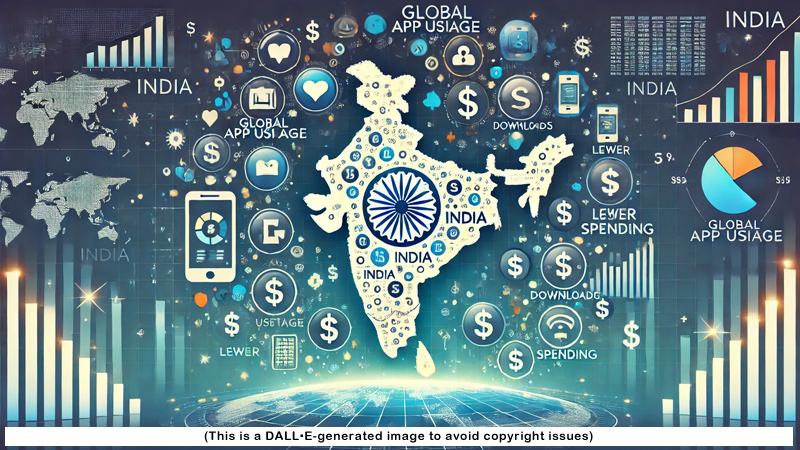
    Fast forward to 2024, and India isn’t just flirting with mobile apps—it’s a full-blown love affair. The country now holds the crown for the highest global app downloads and usage, clocking in a jaw-dropping 1.12 trillion hours glued to screens. But here’s the plot twist: while Indians swipe, scroll, and stream like pros, they aren’t exactly reaching for their wallets. In-app purchases? Still a shy, hesitant nod rather than a full embrace. Turns out, we’re better at clicking than cashing in.

    According to Sensor Tower’s State of Mobile 2025 report, India recorded 24.3 billion app downloads last year, down slightly from 25.6 billion in 2023. However, the time spent on apps climbed significantly from 991 billion hours in 2023 to 1.12 trillion hours in 2024—a staggering demonstration of just how glued to screens Indians truly are.

    Globally, in-app purchases surged 13 per cent year-on-year (YoY) to reach $150 billion, but India fell behind, failing to make the top 20 countries in IAP revenue. For context, the United States led the pack at $52 billion, followed by China at $25 billion.

    But India had its bright spots: IAP revenue in the media & entertainment (M&E) category (dating apps, specifically) jumped 25 per cent YoY to $55 million, with Bumble leading the charge. Similarly, IAP revenue in the social media category climbed 29 per cent YoY to $54 million, led by YouTube. The film & TV streaming segment saw the most significant growth, with IAP revenue skyrocketing 86 per cent to $45 million, dominated by Disney+ Hotstar.

    Social media and entertainment apps still rule

    Social media and entertainment apps continued to dominate user preferences, with Instagram and Jiocinema topping the charts. However, downloads in these categories slipped, with social media app downloads dropping 10 per cent to 1.19 billion and M&E app downloads dipping 8 per cent to 663 million.

    Despite this dip in downloads, Youtube and Whatsapp retained their positions as the undisputed leaders in user engagement, cementing their status as essential apps for entertainment and communication.

    Generative AI apps steal the spotlight

    Generative AI was the showstopper in 2024, with downloads soaring to 177 million—a jaw-dropping leap from 75 million in 2023. Revenue in this category also tripled, reaching $12 million, driven by the success of apps like Chatgpt and Gemini. Clearly, India’s appetite for AI-powered tools has grown, and it shows no signs of slowing.

    Gaming hits a speed bump

    India’s mobile gaming market, which generated $3.8 billion in revenue in 2024—a 22.6 per cent increase from 2023—has hit a roadblock as downloads fell by 11 per cent year-on-year to 8.5 billion in the same year.

    Despite gaming remaining a vital part of India’s app ecosystem, this drop in downloads suggests a possible shift in user behaviour or preferences. This trend raises questions about the sustainability of growth in the mobile gaming sector amidst evolving market dynamics.

    With 900 million internet users, India’s mobile app market continues to thrive, even as it grapples with challenges in monetisation. The data tells a compelling story:

    1    Total downloads in 2024: 24.3 billion
    2    Time spent on apps: 1.12 trillion hours
    3    IAP revenue in M&E (dating): $55 million (+25 per cent  YoY)
    4    IAP revenue in social media: $54 million (+29 per cent  YoY)
    5    IAP revenue in film & TV streaming: $45 million (+86 per cent  YoY)
    6    Generative AI app downloads: 177 million (+136 per cent )

    As India’s app-hungry users swipe, scroll, and binge their way through the digital universe, one thing is clear: the potential here isn’t just big—it’s mind-bogglingly massive. All that time spent on apps isn’t exactly translating into cash for developers yet. It’s like owning a cricket team full of star players who can’t find the boundary.

    The question now is, can 2025 be the year India’s digital ecosystem finally hits a six? With generative AI promising to spice up content and app developers scheming to turn downloads into dollars, the stage is set. The world’s watching, India’s clicking, and app creators are sweating it out like it’s the IPL finals.

    Who’ll crack the code to India’s app goldmine? Stay tuned, because this is one game where the ads might just be worth watching.

  • Ayushmann Khurrana named brand ambassador for 25 Ficci Frames

    Ayushmann Khurrana named brand ambassador for 25 Ficci Frames

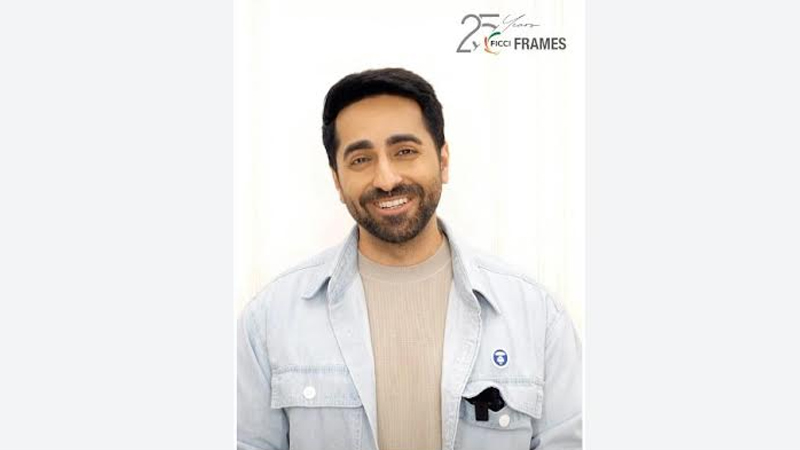
    MUMBAI: Lights, camera, celebration! As Ficci Frames gears up for its 25 anniversary, Indian cinema superstar Ayushmann Khurrana has been announced as the brand ambassador for the event, becoming the face of India’s media & entertainment industry. This silver jubilee edition promises to combine star power, disruptive innovation, and global relevance, making it a landmark occasion for India’s thriving creative landscape.

    This year’s theme, “RISE: Redefining Innovation, Sustainability, and Excellence,” reflects Ficci Frames’ transformative role in shaping the narratives, creativity, and evolution of India’s media and entertainment industry. Over 25 years, the event has emerged as the premier platform for industry collaboration, bringing together global leaders, policymakers, and creative talents to discuss the future of entertainment.

    Expressing his excitement, Ficci Media chair & entertainment committee and Jiostar CEO- entertainment, Kevin Vaz said, “The silver jubilee edition of Ficci Frames is a celebration of 25 years of excellence and a tribute to the legacy we have built in shaping India’s Media & Entertainment industry. Ayushmann Khurrana, with his incredible journey of creativity, innovation, and connection with audiences, represents the very ethos of Ficci Frames. His association will elevate this milestone event and inspire future generations of storytellers and creators.”

    Sharing his thoughts on being the first brand ambassador for Ficci Frames, Khurrana said, “It is a huge honour for me to be announced as the first Brand Ambassador for Ficci Frames in its silver jubilee year! As someone who arrived in Mumbai from Chandigarh with nothing but dreams in my eyes, I could never have imagined this incredible journey, one where my work has not only touched lives but also become a part of India’s rich pop culture tapestry. In my new role, I am committed to working closely with the exceptional Ficci team to champion disruption, celebrate innovation, and highlight the excellence our industry consistently delivers.”

    Ficci Frames has long been a beacon of leadership in India’s creative ecosystem. Previously chaired by Yash Chopra and co-chaired by Karan Johar, the event is now led by Kevin Vaz, alongside co-chairs Meta India VP & MD Sandhya Devanathan, and Warner Bros. Discovery GM, south Asia Arjun Nohwar.

    Notable global icons, such as Hugh Jackman, James Murdoch, and Mukesh Ambani, have graced the Ficci Frames stage in the past. Indian cinema legends like Shah Rukh Khan, Aishwarya Rai Bachchan, and Amitabh Bachchan have also contributed to its star-studded history.

    Held annually in Mumbai, the silver jubilee event promises to dive into cutting-edge technologies like artificial intelligence, virtual reality, digital content creation, and the metaverse, while continuing to highlight traditional media. The programme will feature keynote addresses, B2B meetings, masterclasses, policy roundtables, and the Best Animated Frames Awards (BAF).

    With Khurrana leading the charge, this year’s Ficci Frames is set to redefine the boundaries of media and entertainment innovation, paving the way for the next 25 years of creative excellence.

  • Network18 tops the charts as India’s number one news network

    Network18 tops the charts as India’s number one news network

    MUMBAI: When it comes to dominating the Indian news scene, Network18 doesn’t just report the news—it is the news. Mukesh Ambani’s Reliance Industries has done it again, making headlines for owning the headlines!

    With the latest BARC ratings in its corner, the network is flexing its muscles as India’s number one, clocking a jaw-dropping AMA of 2,02,636—nearly double its closest rival’s 1,10,826. Looks like the competition is still buffering while Network18 streams ahead!

    Network18’s meteoric performance was propelled by its power-packed programming for Maha Kumbh 2025, which captivated audiences nationwide. The comprehensive coverage, combined with visually stunning storytelling, resonated deeply with viewers, garnering over 200 million views across the network’s digital platforms. This milestone further reinforced Network18 as the go-to destination for impactful and engaging event coverage.

    With 20 national and regional TV channels, Network18 connects with diverse audiences across India. Its impressive portfolio includes CNN-News18, which has reigned as the number one English news channel for over two years, and News18 India, dominating primetime as the top Hindi news channel.

    In the business news category, CNBC-TV18 continues to lead as the unquestioned authority, delivering reliable and influential coverage. Network18’s regional channels have also consistently claimed top spots, demonstrating the network’s strong local connect and commitment to reaching every corner of the country.

    The BARC ratings (Source: BARC | Metric: AMA 000s | TG: 15+ | Period: Wk 02’25 | Market: All India) showcase Network18’s significant dominance over its competitors. These figures cement the network’s reputation as India’s largest and most trusted news source.

    With its innovative programming, on-ground coverage of pivotal events, and strong digital presence, Network18 has redefined news consumption in India. Whether it’s covering global stories or deeply local issues, the network’s ability to inform, engage, and connect remains unmatched.

    Network18 has not just captured numbers; it has captured trust.

  • Donald Trump, Mukesh & Nita Ambani, Kalpesh Mehta & Pankaj Bansal: What’s the connection?

    Donald Trump, Mukesh & Nita Ambani, Kalpesh Mehta & Pankaj Bansal: What’s the connection?

    MUMBAI: When the incoming president of the US invites you, you definitely have to go. The pre-swearing in inaugural festivities thrown by the to-be -President  Trump at an intimate gathering of  friends and family at Trump National Sterling in Virginia saw a handful  of Indians mark their presence. But those who really want to make a splash of it are two Indian real estate developers who are the Republican leader’s Indian partners in Trump Towers. 
     

    Mr & Mrs Trump The fireworks celebration

    We are referring to Tribeca Developers founder Kalpesh Mehta and M3M Developers managing director Pankaj Bansal who were seen hobnobbing with Trump and sharing a glass of bubbly with him.  Both Mehta and Bansal are key partners in the development of Trump Towers in India, reflecting the strong ties between Indian business leaders and the Trump Organisation. Kalpesh Mehta, the licensed Indian partner for Trump Towers, has been instrumental in bringing the Trump brand to India. They were also seen cracking a few jokes with India’s richest couple – Mukesh and Nita Ambani.  Mukeshbhai and Nitabhabi, apparently, took an overnighter on their private jet for a spin to Washington DC.

    Global leaders, including Amazon.com founder Jeff Bezos and other prominent business figures, were also in attendance.

    A nearly 20 minute firework display was watched by Trump and his wife Melania and his extended family from the balcony of his club.

    Trump’s alleged excesses have already got critics carping  about his proximity to several American billionaire friends of his who are getting crucial posts and others (one of them read crypto currency industry)  who are handing out $250 million to  the inauguration committee for spending on what is being called the most expensive inauguration  (read party) of a president in history. Other presidents have reportedly spent less than $50  million (Obama) on their inauguration spending prior to Trump who spent a massive $107 million following  his 2017 election victory.


    With the Trump-baiters getting their knives out even before he has got into the White House, we wonder what they will come up with after he does. We can only wait and watch.  

  • Prasar Bharati’s Waves OTT now on Jio Stores, expanding Indian content access

    Prasar Bharati’s Waves OTT now on Jio Stores, expanding Indian content access

    MUMBAI: In the bustling streets of Mumbai, where skyscrapers narrate tales of ambition, one name consistently towers above the rest—Mukesh Ambani.

    The maestro of business expansion has struck again, this time joining forces with Prasar Bharati, India’s cherished custodian of cultural narratives.

    In a move that seamlessly blends legacy with technology, the public broadcaster’s OTT platform, Waves, now graces the Jio Store shelves, promising a cinematic journey through India’s heart and heritage.

    Imagine the allure: archives of Doordarshan’s golden era, the timeless melodies of All India Radio, and an array of fresh originals—all a tap away for millions of Jio users. This partnership isn’t just about streaming content; it’s a bridge connecting India’s storied past with its digital future, hand-delivered by Ambani’s ever-expanding empire.

    Is there a realm Mukesh Ambani doesn’t touch? It seems unlikely, as Jio continues to rewire how India consumes entertainment, one milestone at a time.

    Since its launch, Waves has rapidly garnered attention, amassing over one million downloads and positioning itself as a premier destination for Indian audiences. With this collaboration, Waves takes a strategic leap to become accessible across all Jio devices, leveraging the telecom giant’s expansive reach and connectivity.

    Imagine how India’s rich cultural tapestry can now reach every corner of the nation? With Waves on Jio Stores.

    Waves offers something for everyone:

    . Original Content: Explore new fiction and non-fiction programming.

    . Legacy Programming: Rediscover classic shows from Doordarshan archives.

    . Live Events: Stream real-time happenings from across the nation.

    . Gaming and E-Commerce: A unique blend of entertainment and interaction.

    . Nostalgia Features: Enjoy photo albums and magazines highlighting India’s heritage.

    This diverse lineup ensures that Waves caters to audiences of all ages and preferences. As the platform grows, its popularity underscores a collective demand for authentic Indian storytelling.

    Prasar Bharati CEO Gaurav Dwivedi expressed his optimism about this partnership, “We are thrilled to take Waves to the next level by making it available to Jio users. The platform has already received a fantastic response, and with Jio’s vast subscriber base, we are excited to introduce our diverse and compelling content, which includes – Nostalgia, Live Channels, Magazines, Photo Albums, etc., to even more homes.”

    A Jio spokesperson added, “We are excited to partner with Prasar Bharati to offer Waves to our users. This partnership offers a wider content offering to audiences at large and ensures that they are able to choose from the best.”

    Why does this partnership even matter?

    The inclusion of Waves on Jio Stores signifies a blending of modern technology with the cultural essence of India. It underscores Prasar Bharati’s mission to preserve India’s heritage while ensuring it resonates with contemporary audiences.

    From classic TV dramas to innovative new content, Waves aims to deliver a robust digital entertainment experience that celebrates India’s diversity.

    Are you ready to surf India’s cultural treasures with Waves?


  • Mukesh Ambani appoints Ira Bindra as group president, people & talent

    Mukesh Ambani appoints Ira Bindra as group president, people & talent

    MUMBAI: In the vast ocean of corporate titans, even the youngest sharks have the power to disrupt the tides.

    Such is the case at Reliance Industries Ltd (RIL), where Mukesh Ambani, the captain of India’s largest private sector ship, has made a bold and transformative move. Ira Bindra, a seasoned global HR leader, has been appointed as group president, people & talent—a decision brimming with promise and significance. With this strategic appointment, Ambani signals a renewed focus on people, culture, and leadership in a company that shapes global narratives. It’s a moment of overwhelming excitement, as Bindra steps into a role that could redefine the future of one of the world’s most influential conglomerates.

    This appointment is a rare instance where Ambani himself announced a senior leadership hire, reflecting its strategic importance.

    Bindra, a 47-year-old HR leader with over two decades of global experience, will oversee talent development, leadership initiatives, and cultural transformation across the organisation. She is the first non-family woman and the youngest professional to join RIL’s Executive Committee.

    “Ira Bindra joins us from Medtronic, USA, where she was head of human resources and vice president – global regions,” Ambani stated in an internal communication. “She will work with me, Isha, Akash, Anant, and the executive committee to drive transformation across our company for people, culture, and leadership.”

    Bindra will collaborate with RIL’s business and HR leaders to elevate the company’s human resource practices to world-class standards. Her role includes fostering inclusive leadership and aligning HR strategies with RIL’s ambitious growth objectives.

    An alumna of Delhi’s Lady Shri Ram College (1998) and Maastricht School of Management in the Netherlands (1999), Bindra’s illustrious career spans leadership roles at GE Capital, GE India, GE Healthcare, GE Oil & Gas, and Medtronic. She has worked across diverse sectors, including med-tech, financial services, and global industrial enterprises, in regions such as India, the United States, Europe, Asia, and Latin America.

    Ambani emphasised Bindra’s expertise, stating, “Her experience spans designing new operating models, creating business lines, and executing significant divestitures—contributing to improved performance and outcomes.”

    Bindra has expressed enthusiasm for her new role, sharing in a LinkedIn post: “I look forward to this new and exciting chapter that will bring new learnings and leverage my prior experiences to propel the next chapter of growth and transformation for Reliance, in partnership with the leaders and teams at Reliance”