Tag: MTV

  • DirecTV offers 100+ channels on portable devices in US

    DirecTV offers 100+ channels on portable devices in US

    NEW DELHI: Twenty-two new channels have been added to DirecTV’s mobile app making it possible for American subscribers to see more channels out of home on smartphones and portable devices.


    DirecTV already has 90 ‘out-of-home’ channel on its app. The new channels include MTV, Comedy Central, TBS, Spike, OWN and TNT. 


    The full list of new DirecTV Everywhere live streaming channels includes BET, Cartoon Network, CMT, CNN, Comedy Central, Galavision, HLN, MTV, MTV2, Nickelodeon East, OWN, Palladia, Smithsonian Channel, Spike, TBS, TCM, TNT, truTV, TV Land, UniMas, Univision East, and VH1.


    Thus, viewers who install the DirecTV free app will now have access to more than one hundred TV channels on portable modes.


  • Chrome Data: Religious channel genre see growth in OTS

    Chrome Data: Religious channel genre see growth in OTS

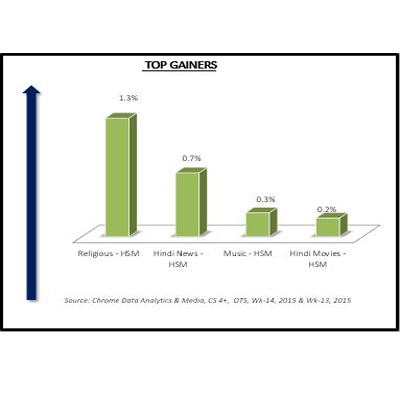
    MUMBAI: Week 14 of opportunity to see (OTS) collated by Chrome Data Analytics & Media, saw a spike in the religious channel genre in the Hindi Speaking Markets (HSM). With 1.3 per cent growth, the genre was led by Aastha channel with 96.7 per cent OTS.


    This was followed by Hindi News genre, which grew by 0.7 per cent in HSM. ABP News topped the category with 94.9 per cent OTS.


    Music in HSM too saw a hike with 0.3 per cent with MTV leading the chart with 90.2 per cent OTS.


    Last but not the least, the Hindi Movies genre too garnered growth with 0.2 per cent. Max led the chart with 94.5 per cent OTS.


    Talking about the losers this week, English Entertainment channels in the eight metros dropped by 9.1 per cent with AXN affecting the most with 52.3 per cent OTS. English Movie channels witnessed a drop of 8.8 per cent with Movies Now topping the space with 63.3 per cent OTS.


    Next in the list was English News channels that saw a dip of 7.2 per cent in the eight metros. Times Now led the space with 72.9 per cent OTS.


    Lastly, Business News channels observed a dip of 5.8 per cent with CNBC Awaaz topping the chart with 77.5 per cent OTS.

  • MTV launches challenge for selfie-obsessed millennials

    MTV launches challenge for selfie-obsessed millennials

    MUMBAI: MTV is giving all selfie enthusiasts a chance to whip out their phones and strike a pose with the MTV The Great Selfie Challenge. A digital show to kill boring and legitimize the unhealthy obsession of taking selfies, MTV The Great Selfie Challenge, is a show where five selfie enthusiasts will get the opportunity to travel across India completing challenges in the quest for the most epic selfie.


    MTV India digital head Ekalavya Bhattacharya said, “While several brands have tried to create a quirky campaign around selfies, none of them have been particularly striking. They have almost always exclusively been contests asking users to send in their photos. How boring! What’s different about this show is that it isn’t just about an epic selfie but also the incredible, crazy and adventurous story that’s behind every great click.”


    MTV is looking for selfie buffs, who are willing to travel thousands of kilometers, go to lengths, doing some of the craziest stuff imaginable – from cliff diving to going underwater to hanging out with ghosts – all in the bid to get that perfect selfie. Participants need to complete three selfie challenges that have been laid out on www.mtvindia.com/selfie in order to partake in this show. The five best entries will be selected to experience the most thrilling and adventurous selfie dares, which forever will leave their mark in selfie history.

  • Razorfish India appoints Arnab Majumdar as biz development director

    Razorfish India appoints Arnab Majumdar as biz development director

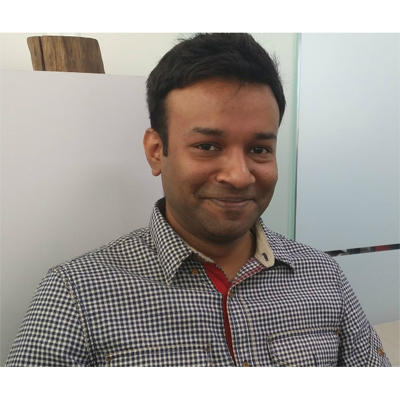
    MUMBAI: Razorfish India is further strengthening its core team and has brought in Arnab Majumdar to head business development. While he will be based in Mumbai, his mandate is to lead business acquisitions and establish new business operations models across its offices in India.


    Razorfish India CEO Charulata Ravi Kumar said, “We are constantly seeking highly curious people who have the energy and a razor sharp mind to persistently look for lateral solutions for the clients we partner. When I met Arnab, that’s just what I saw in him. He is able to cut through the many layers and get to the core of a business need. He will be a key member of our Business Transformation Advisory team that partners new clients to set them off on the digital path.”


    Majumdar added, “I have admired Razorfish for the vision and ability to drive the next level of digital around the world. The opportunity to lead business growth for Razorfish in India and be part of the team that transforms business for some of the most prestigious brands is fantastic and I am excited to be part of this.”


    Razorfish has a 500 strong team of specialized talent across creative, media and technology. The company is further strengthening its team and Majumdar’s appointment is a step towards that direction.


    Majumdar, with his experience of over 12+ years in the media industry has experience across print, television and online channels. He has worked with companies like CNBC TV 18 and MTV.

  • A new ‘Cloudwalker’ in the virtual world

    A new ‘Cloudwalker’ in the virtual world

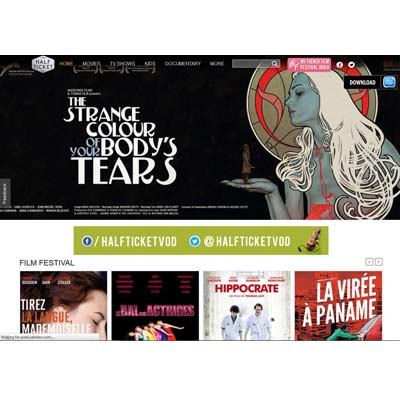
    MUMBAI: As the digital ecosystem in India is set to expand, the market for Video on Demand (VOD) platforms is only growing. A new kid on the bloc is Half Ticket, which claims to be India’s first curated VOD megastore.


    Launched 45 days ago by CloudWalker Streaming Technologies, the company researched for seven months before giving a go ahead to the beta version of the site. CloudWalker founder Jagdish Rajpurohit says, “We call ourselves as an enabler of one’s content in the digital world. If one has content which has a strong demand, and if people watch this content, then one will earn money.”


    But how different is Half Ticket from its competitors? Rajpurohit says as a matter of strategy they decided to curate content across the internet and bring it to the platform. They see themselves as digital exhibitors at par with brick and mortar multiplexes. “The difference between YouTube and other VOD’s is that one has to search content while in our case we make the content available to the audiences with ease,” says Rajpurohit while adding that they didn’t pay for the content.


    Besides curating, the company is also creating digital content. Explaining the same he says, “We are offering pre-marketing digital services. If one is making a film, one also shoots a lot of the making of the film which is useless. By using this and adapting our own scripts, we make customised content for producers to use for promotions.” It is also making a digital comedy serial in Hinglish of which the IP will rest with CloudWalker.


    The platform is also creating a space for independent cinema which will give them an opportunity to earn revenue for a longer time. “Half Ticket is not a video platform but it’s a digital distribution platform. It works on the strategy to help producers’ monetise better,” he says.


    While low bandwidth is one of the biggest challenges, according to Rajpurohit, the biggest opportunity will come when 4G enters the space. He further goes on to say, “Compared to the last five years, I see better days ahead. But the biggest challenge will be to make people aware that premium content is available digitally and one has to pay for it.”


    A 12 member team looks after curation of the content. “Our crucial point was that the internet today is uploading close to 220 hours of content every minute. In this scenario there is a 99 per cent chance of one missing the content they wish to see until and unless there is curation involved; one will not be able to choose the best,” the executive informs.


    So what is the checklist followed to select the content? Firstly, the content sourced is strictly family oriented. Secondly, the ratings and reviews based on film websites are taken into account before filling the content deck.


    The total team strength of the company is 32 and is based in Mumbai. The first level of funding came from the seven promoters of CloudWalker, who have invested a total of Rs 7 crore. It is in talks with two to three more funding companies who have expressed interest in the platform.


    The portal, which follows an advertisement driven model, is also reaching out to regional cinema makers. “We are telling regional cinema filmmakers that if they want to reach out to audiences worldwide, it will become much cheaper to bring the new content to a digital platform and release it. And as far as revenue is concerned, it is the same. If a film sells two to four lakh tickets across the world, then the production house can easily earn Rs 4 to 5 crore which is not possible theatrically,” he informs.


    The company plans to soon announce a Master Class for film distribution in the independent cinema.


    While content from channels like Colors, MTV, Nick, Viacom18, YouTube, History TV18, Dailymotion among others is already available on the platform, it is also in talks with two GECs. “The platform has 23,000 to 24,000 hours of content currently and is attracting a traction of 75,000 to 80,000 users every day. An app released four days ago has so far received 150 to 200 downloads,” boasts Rajpurohit.


    As part of its promotions, the platform tied up with My French Film Festival India and had a special screening at PVR wherein celebrities like Digamanshu Dhuliya, Ketan Mehta and Anurag Kashyap were present.


    Chalking the road ahead, Rajpurohit concludes, “We are in talks with new film distributors and will continue bringing festivals like ‘My French Film Festival’ to India.”

  • YuppTV takes Colors, MTV and News 18 to Singapore and Malaysia

    YuppTV takes Colors, MTV and News 18 to Singapore and Malaysia

    MUMBAI: Focusing on providing content to subscribers and expanding its network in markets around the world, YuppTV today announced the launch of Colors, MTV, and News 18 channels in Singapore and Malaysia region. With this move, YuppTV’s offerings have become stronger in Singapore and Malaysia regions, delivering 200 plus Indian TV channels worldwide in 12 Indian languages, as live TV, 10 days of catch-up TV, along with unlimited movies.

    IndiaCast group chief operating officer Gaurav Gandhi said, “With the launch of Colors, MTV India and News 18 on YuppTV in Singapore and Malaysia we have further strengthened our partnership with the platform. We are committed to deliver quality entertainment and news services to South Asian audiences across the globe and are confident that our content will be enjoyed by audiences in Singapore and Malaysia.”

    While Colors features a number of shows such as Comedy Nights with Kapil, Balika Vadhu, Shastri Sisters, Meri Aashiqui Tumse Hi, and Bigg Boss 8, MTV aims to entertain young people through its innovative content.

    “Meeting the high demand for Indian television in Singapore and Malaysia, we are pleased to take popular channels, Colors, MTV and News 18 to TV viewers in these regions. We are confident that TV viewers from Singapore and Malaysia will be delighted to watch their favourite shows in the comfort of their home,” commented YuppTV CEO Uday Reddy.


  • “Want to be the ‘Influencer Network’ in 2015”: Sunil Lulla

    “Want to be the ‘Influencer Network’ in 2015”: Sunil Lulla

    With over 30 years of experience, Sunil Lulla brings skills in media, marketing, communication and management.


    From spending an early part of his career, which spanned over a period of nine years, in advertising with JWT to rolling out indya.com, in the first wave of the internet; from bringing zing and youthfulness to MTV to help build the television business for The Times Group, Lulla has been a prominent member on many industry boards and forums where he shaped policies and set industry standards and best practices.


    His decision to move on from the Times Television Network managing director and CEO to Grey Group India chairman and managing director did come as a shock to many. Nonetheless, the man who engages in a new passion every few years is back to his first passion.


    In a freewheel interview with Indiantelevision.com’s Meghna Sharma, Lulla talks about his plans for Grey and much more.


    Excerpts…


    Back to advertising. So far, so good?

    Very good. The communications business is the best place to stay eternally young (smiles).


    If you had to compare, how different has been advertising’s evolution from that of broadcasting industry?

    Both bring new challenges and new ideas each day, blended with a frenetic pace and an youthful environment. TV broadcast is focused around the consumer via which it builds relationships with the customer. Advertising is built around the customer via which it creates story telling for the consumer. They are different spectrums. The TV industry faces significantly more regulatory challenges than the communication industry. There is a zameen aasman ka difference in scale and profitability. Advertising brings the edge of ideas unlimited.


    It’s been four months, any changes that you have brought in the company? Why?

    Grey group is a stable, growing business, producing famous and effective work. I’ve used the time to get to understand the business better. Meeting clients and understanding their challenges and in helping gear Grey group offer integrated solutions and ideas, across advertising, communication, the vast spectrum of digital and social; activation and advocacy. These are via our own Grey group services and those with partners / affiliates, such as RC&M, Penn Schoen Berland and Talent House. Importantly, working closely with the team, which is energetic, talented, innovative and always bubbling with ideas and energy. I believe in the short period of four months, gearing to grow and being able to work across services seamlessly, has been my focus.


    Many of our clients are now accessing more than one service from Grey group. For our affiliate partners, we have been able to provide Grey thinking, muscle and experience. What’s visible is perhaps the new campaigns of Swacha Bharat, the Border Security Force and the announcement of Quickr and Reach Mobile as new businesses.


    Importantly, in the next few weeks there are many campaigns of Grey group, which continue to define culturally sensitive communication, aimed at changing social behaviour, which is one of the biggest challenges any communication company can deliver on. We believe our clients should be satisfied with our services and offerings but continuously challenge us to deliver outstanding performance. Which is exactly what Grey clients do.


    How has the year 2014 been for Grey India?

    There has been top line and bottom line growth as per expectations. The new account wins are all based on differentiated communicate on briefs and the focus on adding alliances is preparing Grey group for a strong 2015. Talent has been stable and the awards have been coming in. All in all – a good year for Grey. We are not very boastful about our achievements; our clients hopefully do the talking for us.


    One mandate, which you are really proud of, and why?

    I cherish my new role at Grey group, via which we are building a differentiated service business to build strong brands for our clients. Each of our clients are precious to us and the work we do, we believe, plays a big role, in making their brands famous and effective.  I do believe the new ‘Swacha Bharat’ campaign enables us to work with the Prime Minister’s vision of changing behaviour which is always a tough task. The communication is simple, mass oriented and evokes the right emotive and attitudinal cord.


    How much of the business that you generate out of India is globally aligned?

    Some of our global alignments are P&G, GSK, Volvo, amongst others. 65 per cent of our business is India alone business.


    Competition is growing multifold, so how would you differentiate Grey from the others?

    We believe Grey group’s thinking and capability is being rapidly geared to offer integrated solutions around advertising, social, mobile, web, activation, advocacy, rural and crowdsourcing. With many more to be included. Powered by our vision to create Famous and Effective solutions, work and brands, Grey group is becoming a highly differentiated ‘Influencer Network’. We say Grey groups role to influence consumer choice and thinking and via its array of skills it is designed to be ‘an influencer network of choice, creating famous and effective work’. Each way of approaching the consumer needs to be true to the host medium but interconnected to the behaviour we need to change. Grey enjoys a very strong reputation because of its Planning, Creative, Digital and Communication Skills and this is poised to grow with strength.


    According to you, has Grey really been ‘Famously Effective’?

    Absolutely – the wins at Cannes and Effies are a great testimony. The growth of each of our clients business is evidence of the work – working!


    What are the plans lined up for the digital side of your business?

    Growth is the obvious agenda. Growing and strengthening resources in the Delhi and Bangalore NCR are on the agenda for 2015. Focusing on having more of our clients across our range of services avail of our Award winning Digital solutions. Continuing to create cutting edge and new solutions is the everyday task. Focusing on learning and training for our talent is the key.


    How do you see an increase in media fragmentation impacting creative agencies?

    Agencies should stop worrying about definitions. We do not see ourselves as a creative-alone agency. Grey’s role is to influence consumers and we believe that requires each of us to continuously grow skills and expertise, which is our focus. Agencies can easily learn, adapt and innovate to tell stories be it on a one to one basis or one to many basis. If there is no structured integration, then one must bring it in any way into the service, as businesses will not grow in a linear fashion.


    With an increase in penetration of smartphones and tablets, the biggest challenge will be on how to most optimally use the mobile phone for building a brand. What advise will you give the brands and digital agencies?

    We reserve recommendations like these, exclusively for our clients (Smiles)


    Do you think Indian advertising has been able to shift paradigms with changing times?

    The glass is always half full, which makes it encouraging for the industry to keep pouring skills, ideas, talent and investment in creating culturally cutting edge work. The new Swach Bharat campaign defines that. On an overview, the Indian industry has successfully paved the way for new paradigms.


    What is at top of your wish list for Grey India for 2015?

    Be the Influencer Network which successfully enables Famous and Effective Brands and Communications.

  • The Content Hub: Thinking digital

    The Content Hub: Thinking digital

    MUMBAI: Digital has become the core of any strategy today. And highlighting the same were the digital content creators at indiantelevision.com’s ‘The Content Hub,’ where the makers shared their valuable insights on the success stories and how they manage making money in this competitive market.


    Sharing their views were Viral Fever and TVF Media Labs founder and CEO Arunabh Kumar, Rajshri Entertainment MD and CEO Rajjat Barjatya, Viacom18 Media – MTV and MTV Indies EVP and business head Aditya Swami, Qyuki Digital Media co-founder and MD Samir Bangara, Zenga Group MD and CTO Shabir Momin, YouTube head of content operations India Satya Raghavan and Multi Screen Media EVP and head – digital business Uday Sodhi.


    Moderated by CNBC-TV18 editor, storyboard Anant Rangaswami, the discussion began with Rangaswami raising the point of how each digital creator makes money differently in the business.


    According to Sodhi, while ‘digital only’ may not be the viable way of going about it right now, for popular sports it will turn around. “Look at television or any other entertainment, sports is a critical part where money goes from advertisers and from an eyeballs perspective. Why the same pattern is not followed on digital? It will happen, but how it grows and how much money it takes, only time will tell,” opined Sodhi.  


    Rangaswami believes it is an interesting curve and content can make money on digital. Agreeing to him, Kumar shared that in the financial year 2012-13, also the first year of TVF online network, its total turnover was equal to one day of shooting cost of an MTV promo and this financial year its total turnover is the cost of one promo of MTV. “The growth has been really phenomenal. Once upon a time, we were doing 10-15 thousand views on YouTube and the brands feature were also very less. That time there was this whole idea that a brand or a client could own a piece of content after giving you money. But cut to now, we have shows on MTV or our channel or AIB and you can see a lot of brands being open to that.”


    For Kumar, it is a pretty much age old television model where for example Cadbury takes a lot of money for KBC, because it is watched by a lot of people.


    According to Bangara, the big opportunity is the content marketing opportunity. “If advertisers and brands let creators do what they need to without putting restrictions, then it will work much better. Because audiences online are very different than audiences consuming content on the traditional platforms.”


    The traditional media players believe that production value equals quality. “In the online space, production value is not directly proportionate to popularity. The concept drives engagement and therefore you don’t need expensive budgets to ride your films on digital platforms,” said Bangara.


    Rangaswami further delved to find out whether is it easier to sell branded content on digital than on television? Contradicting his statement, Swamy feels that the future of TV is TV and from a reach and growth perspective, there is huge growth and spread still on television. “On branded content, the way we make this work is that it is the combination of bringing the screens together.  If you go to see TV and digital separately, the challenge will be much harder. But a lot of branded content that we do, we bundle the whole thing. For example, take the premium content like ‘Coke Studio’ series that we produce, we produce it as a broadcaster, give it legs on television and it kind of survives on beyond TV as well.”


    Going forward, Rangaswami highlighted the different needs of monetisation of content. Barjatya revealed that Rajshri has 20,000 hours of content that it has aggregated with Mukta Arts. “That brings in the revenue. But we also do a lot of experimentations. We have a channel in the entertainment space, bollywood news space, hollywood news space, television space, channels in kids, food and devotional space. These I think will grow going forward.”


    But, according to Barjatya, money still needs to keep coming in and that can come only through blockbuster movies, which the company has acquired over the last couple of years.


    According to Raghavan brands are experimenting, content creators are experimenting and the entire ecosystem is experimenting. He pointed out that the difference the industry is noticing in the last few years is that advertisers are ready to put their money on content because they believe that the creator of the content or the participant will be able to create the content and distribute it as well. “Till now what was happening was that they wanted to own the delivery itself which is why a lot of brands created good stuff but later fell off the clip. Now, they are trusting a lot on the creators. That’s where the point of money floating to content creators and to networks is multiplying.”


    Further adding to this, Momin felt that success on the digital platforms is not counted only by achieving the million views mark. “People get onto the digital platforms for multiple reasons. A movie production house comes to the digital platform not to make money or for ad sales but they are now looking at increasing their eyeballs reach.” He believes that there are other serious players who are trying to make this as a profession. “Branded content is becoming content and that will always be there because they are the ones who are pumping in a lot of their money but if you look at the industry overall , it is the rate of creating content which is growing,” said Momin. 

  • Viacom18 sweeps 2014 PROMAXBDA Asia awards with 17 wins

    Viacom18 sweeps 2014 PROMAXBDA Asia awards with 17 wins

    MUMBAI: Viacom18 Media Pvt. Ltd. today announced its sweeping victory at the recently concluded 2014 PromaxBDA Asia Awards, on 4 December in Singapore, taking home 14 awards.


    The PromaxBDA Awards recognize excellence in on-air promotion, branding and advertising on programming, channel or brand. Awards were open to satellite, cable, broadcast, television, radio station and associated new media, their agencies and production houses.


    2014 PromaxBDA Asia Award Categories Won


    GOLD

    ·         Best Children’s Promo – Nick Dekho Dekho Tum Song Promo

    ·         Best Children’s Campaign – Nick Class Mein Blast

    ·         Best Script – Comedy Central Tees “Territories”

    ·         Funniest Spot – MTV Soap-Box Spot

    ·         Something for Nothing – Indie Talkies Promo

    ·         Most Innovative Use of Digital – Anger Management – Destructomatic App

    ·         App-Titude Award – MTV Count Your Drinks App

    ·         Best Print Campaign – MTV Youth Marketing Forum 2014


    SILVER

    ·         Best Comedy Promo – Weekend Stache “P.T.”

    ·         Best Integrated Marketing Campaign – MTV Sent The Youth In India To Polling Booths (MTV  Rock The Vote – RTV)

    ·         Funniest Spot – The Dot is Sexy – Rock the Vote

    ·         Something For Nothing – Webbed Season 2 Teaser

    ·         App-Titude Award – MTV Indies App and Website

    ·         Best On-Air Ident – MTV Channel Ident

  • “I am a firm believer of strengthening what we have already started”: Sudhanshu Vats

    “I am a firm believer of strengthening what we have already started”: Sudhanshu Vats

    Over the past seven years, Viacom18 has grown to be one of the bigger conglomerates in India. The JV which started off as a partnership between Viacom International and Network18’s subsidiary TV18 and is now a JV between Viacom and Reliance Industries which has taken over Network18 has grown out of just a broadcasting business into a film and live events business.


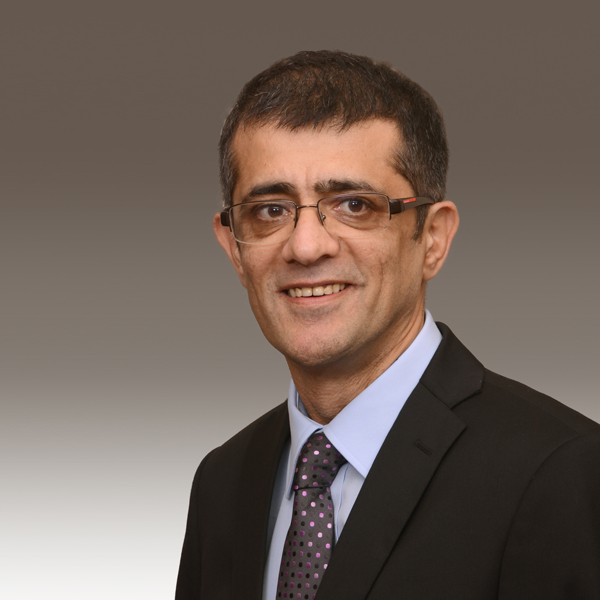
    At the helm of it is Viacom18 group CEO Sudhanshu Vats who joined the company nearly three years ago after a double decade long stint at Hindustan Unilever Limited (HUL). Energetic and dynamic, Vats has a belief of uniting the entire Viacom18 channels and departments into ‘one Viacom18’.


    Spending much of his career at HUL, Vats still thinks from a consumer perspective. Speak to him now of content and he will first think of what the consumer is doing. On the occasion of the completion of seven years of the company, he speaks to indiantelevision.com’s Meghna Sharma and Vishaka Chakrapani about the growth of the company and where it is headed.


    Tell us about the seven year journey.


    When Viacom18 was formed seven years ago, there were only three channels MTV, Vh1 and Nick, and now we have 10 channels. That is an expansion in our broadcast business. We have also entered the film entertainment business through Viacom18 Motion Pictures in 2011. About a year and half ago, we got into experiential/live entertainment business. So now we have broadcast, films and live entertainment under our wings. We began our journey at about Rs 100 crore. In the last seven years we have grown 20 times. 


    A significant milestone is that we have turned PAT profitable in FY-14. That was our first year of PAT profitability at Viacom18. It’s important to not only grow exponentially but also profitably. Profitable growth is sustainable and gives you fuel for investment.


    What’s your growth strategy?


    I am a strong advocate of sharper segmentation. The more I think about it, the more I am convinced. Let us start from a consumer point of view. What is happening in India is that the country is urbanising at a very fast pace, income levels are growing, people are becoming more aware. Urbanisation is happening more rapidly than we see because it goes beyond the tangible phenomenon of growth in cities / urban habitats, attitudinally India is urbanising at a rapid pace. 


    Prime Minister Shri Narendra Modiji’s campaign is all about tapping in to the mindset of urban Indian youth who may not stay in urban India but has a mindset of aspiration, opportunity, development, fair play, which is universal. From the point of view of content, we see that when we move from rural to urban we move from a “We to I” mindset and develop a stronger individual identity. So we want to customise content for every Indian. In the utopian sense 1.2 billion people want 1.2 billion packages. Are there screens available to consume content? Yes 900 million. Is there capacity to carry content? Yes, with the digitisation of cable network and planned growth in broadband and 3G/4G we are building sufficient capacity in the content pipes. With consumer desiring more and more content it can’t be the same/similar content being churned out. So sharper segmentation is needed.


    In each of the genres we exist, we will segment further and deepen our presence. We will continue to look at adjacent genres. We have Colors and Rishtey in Hindi GEC. Post legal and regulatory clearances, we will have a strong presence of Viacom18 in regional GEC genre as well.


    Within Colors, a few years ago we didn’t have comedy sub-genre and we now have Comedy Nights with Kapil – and that’s a hit. We are also looking at other sub-genres. It’s about providing a spectrum of options to viewers within the channel.


    Was moving into movies an alternative to launching a movie channel?


    When we look at movies, we look at whether there is a consumer case, and also a commercial case. Movies have about a 13-14 per cent viewership according to TAM. So there is a consumer case. However a movie channel isn’t differentiated enough. We aren’t so sure if there is a commercial case for us, given the rising acquisition rights for films.


    What about a sports channel?


    Sports is a genre that we aren’t looking at in the short- to medium-term. If you look at the consumer case again people are watching a lot of cricket. But even in that, it’s a 0-1 situation. When India is playing international cricket or it is a short form game, viewership is huge but the moment India isn’t playing, or it is test cricket, viewership drops. At the same time viewership for domestic cricket is very poor. For other games, viewership will take time to develop. 


    It is a genre which has promise in the future. But it is a long gestation game. It needs deep investment and commitment.


    Leagues are increasing in number. Where do you see them going?


    Leagues are an interesting development where players are finding a sweet spot between sports and entertainment. Is it a promising place in the future? Perhaps yes. All this depends on the journey of the company. For Viacom18, I think there is enough and more to be done in deepening our current genres or entering identified adjacent genres. Our focus should be to strengthen the same. Having said that, we will continue to evaluate all opportunities from time to time. 


    How is the business of Live Viacom18 doing? A few months ago it was bringing in 2 per cent of your revenue. What is it now?


    This year we should be at about 4 per cent of our total revenue.  Live entertainment is the place where we start getting straight into the wallet of the consumer. It broadens our revenue streams – first is advertising, second is subscription and third is direct share of the wallet. In urban India, this phenomenon will grow rapidly. Particularly in certain genres like music, there is nothing to beat live entertainment. Other forms of entertainment are passive. So if you see in EDM or Bollywood dance music, we have two properties – Vh1Supersonic and MTV Bollyland. I am equally keen on the kids genre. The entire piece on experiential entertainment is a good space. We want to surely reach 10 per cent in future.


    Are you expanding the number of events that you have?


    Last year Vh1Supersonic was a standalone property. This year we are doing arcades and mini events in big towns- Bengaluru, Mumbai, Delhi with three artists. We have taken Vh1 Supersonic gigs to 50+ clubs and hundreds of colleges. With MTV Bollyland, we went deeper to mini-metros and towns with 1 million + populations – in fact it’s going to be 12 towns this year. We are also taking the IP outside India with the first event soon to be held in Dubai.


    Will there be any more additions to the list?


    I am a firm believer of deepening and strengthening what we have already started. For Colors, we will evaluate as we move forward, because we do a lot of non-fiction shows and the genre lends itself very well to live events.


    How has your ad inventory grown due to the 12 minute ad cap rule?


    A 12-minute ad cap for pay TV is a step in the right direction – it improves viewer experience. The viewer wants quality content and while he or she may want to watch some advertising, the problem lies in the fact, that there are cases when advertising outweighs the content duration. In future good content will command a premium on the 12-minute ad inventory. In India ad rates are under-indexed, possibly amongst the cheapest in the world, so there is a lot of room for growth. Colors, MTV, Nick, Vh1 and Comedy Central have successfully improved ERs. Across our genres our attempt will be to get good content that leads to higher viewership and better rates.


    What is the network’s take on geo targeting?


    The pilot has been conducted in the kids’ cluster. It’s a clear win-win situation for both broadcaster and advertiser, therefore it gives us confidence to scale it up across genres. While the FMCG sector will derive a lot of value, other sectors also stand to benefit from this. In addition geo-targeting will help us tap newer clients and local advertisers in future.


    What is the state of carriage fees? Has it come down or is it still on an upward swing?


    Overall carriage has come down in the past two years. The broad understanding was that with digitisation there would be no carriage at all. So it hasn’t come down as much as we would have liked it to. This is due to the lack of addressability of the consumer/viewer. No wonder then, that carriage, rather than continually coming down, has begun to rise again in recent months. As we move forward, MSOs would need to drive revenues and collections from the subscribers, thereby reducing /eliminating dependence on carriage.


    What about the unequal advertising/subscription skew in India?


    Worldwide ad subscription revenue tends to be almost equal. Like many things in India, change for the better is slow but gaining momentum.


     What best practices does Viacom18 need to grow?


    The next growth phase requires that we build capacity in talent, systems and processes and invest behind key strategic opportunities. Capacity building especially in processes and systems is an ongoing journey. We have begun to lay greater emphasis on analytics, automation and processes such as ERP. They are being implemented at Viacom18. We have focused leading brands in each genre and this is unique to us. Finding the right balance between independence and interdependence is important, hence we are driving synergy as we grow. We are building greater interdependence – in our processes and in our culture.


    We are hiring from colleges, as well as carrying out lateral hires. We constantly evaluate how best do we provide our people with new and exciting opportunities within the organisation. Finally, we also have a structured end-to-end approach to offer to our clients through our Viacom18 Integrated Network Solutions team. We offer a full bouquet of services to advertisers, who can partner with us on live events, broadcast, film integration – the entire spectrum of consumer connect.