Tag: MTV

  • Viacom inks global content & ad sales deal with Snapchat

    Viacom inks global content & ad sales deal with Snapchat

    MUMBAI: Viacom has inked a global partnership with Snapchat that capitalises on and extends the expertise of both companies to creatively and authentically speak to millennial and post-millennial audiences.

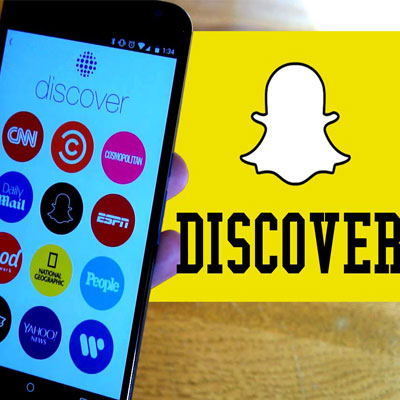
    The wide-ranging deal, anchored in both content production and advertising sales, will bring two high profile channels to Snapchat Discover — a Comedy Central International channel and an MTV Channel in the US, which will complement the already successful Comedy Central and MTV International Discover channels.

    The agreement also grants Viacom the right to sell Snapchat’s US owned and operated advertising inventory, allowing Viacom to offer added value to television advertisers who want to add Snapchat’s wildly popular premium video platform to the media mix. In addition, Viacom also has agreed to provide Snapchat with expanded access so Snapchat can produce Live Stories covering more of Viacom’s tent pole events.

    “Viacom and Snapchat naturally complement each other in significant ways that make us ideal partners in both content and business development. Snapchat captures young audiences on an intimate and immersive mobile video platform while Viacom is the leader in premium long- and short-form storytelling for these same audiences. Add in Viacom’s custom marketing solutions and commitment to evolve our global mobile strategy and you’ve got a partnership that is great for both companies, for advertisers, and is a real evolution of the marketplace,” said Viacom CFO Wade Davis.

    In addition to selling its advertising alongside its own content on Snapchat Discover, Viacom will now also have the right to sell Snapchat’s US owned and operated ad inventory, which includes ads in ongoing Stories such as New York, capturing daily happenings in New York City, and non-partnered holiday Live Stories, such as Valentine’s Day. 

    Viacom is the only television company to have this arrangement with Snapchat.

    “Snapchat provides the best storytelling experience on mobile. Through this partnership with Viacom, we can now offer television advertisers a way to tell their stories across television and mobile in a frictionless way,” said Snapchat chief strategy officer Imran Khan.

    On the content side of the deal, Viacom will further invest in the creation of original premium video content specifically for Snapchat Discover. While MTV International and Comedy Central have previously been committed to creating original content on Discover, additional resources will now be put towards the launch of an MTV US Channel and a Comedy Central International channel on the platform.

    MTV’s new Snapchat Discover channel will feature a wide range of content created exclusively for the platform and updated daily. At launch on 9 February, this includes MTV News articles and video with design and art direction unique to Snapchat, exclusive celebrity interviews, and more. MTV is also developing additional Snapchat-native content, including brand-new original series and reinvented MTV fan-favorite franchises for the platform.

    Comedy Central will launch internationally on Snapchat Discover on 10 February, delivering always funny content to fans globally. The new international channel will serve Snapchat users daily doses of comedy, from curated WTF News articles and exclusive videos with their favourite comedians to upcoming original series set to debut on Snapchat Discover in the coming year. Since its US launch in January 2015, the Comedy Central channel on Snapchat Discover has become a vibrant pipeline for Comedy Central to develop fresh comedic voices and original content. It is one of the most popular brands on the platform.

    Another key element of the Viacom/Snapchat partnership will leverage Snapchat’s Live Stories, which are curated collections of user-submitted content covering major events and places around the world. Through the partnership, Snapchat will have unique access to cover Viacom’s one-of-a-kind, tentpole events, such as MTV’s Video Music Awards (VMAs), BET Experience, and MTV’s EMAs.

    The deal grew organically out of a dynamic Viacom/Snapchat relationship, including many custom advertising campaigns created by in-house creative agency Viacom Velocity that ran in Snapchat Discover, as well as “break-the-internet” level of fan engagement for Viacom events covered by Snapchat Live Stories and Snapchat Discover channels launched a year ago.


  • Viacom inks global content & ad sales deal with Snapchat

    Viacom inks global content & ad sales deal with Snapchat

    MUMBAI: Viacom has inked a global partnership with Snapchat that capitalises on and extends the expertise of both companies to creatively and authentically speak to millennial and post-millennial audiences.

    The wide-ranging deal, anchored in both content production and advertising sales, will bring two high profile channels to Snapchat Discover — a Comedy Central International channel and an MTV Channel in the US, which will complement the already successful Comedy Central and MTV International Discover channels.

    The agreement also grants Viacom the right to sell Snapchat’s US owned and operated advertising inventory, allowing Viacom to offer added value to television advertisers who want to add Snapchat’s wildly popular premium video platform to the media mix. In addition, Viacom also has agreed to provide Snapchat with expanded access so Snapchat can produce Live Stories covering more of Viacom’s tent pole events.

    “Viacom and Snapchat naturally complement each other in significant ways that make us ideal partners in both content and business development. Snapchat captures young audiences on an intimate and immersive mobile video platform while Viacom is the leader in premium long- and short-form storytelling for these same audiences. Add in Viacom’s custom marketing solutions and commitment to evolve our global mobile strategy and you’ve got a partnership that is great for both companies, for advertisers, and is a real evolution of the marketplace,” said Viacom CFO Wade Davis.

    In addition to selling its advertising alongside its own content on Snapchat Discover, Viacom will now also have the right to sell Snapchat’s US owned and operated ad inventory, which includes ads in ongoing Stories such as New York, capturing daily happenings in New York City, and non-partnered holiday Live Stories, such as Valentine’s Day. 

    Viacom is the only television company to have this arrangement with Snapchat.

    “Snapchat provides the best storytelling experience on mobile. Through this partnership with Viacom, we can now offer television advertisers a way to tell their stories across television and mobile in a frictionless way,” said Snapchat chief strategy officer Imran Khan.

    On the content side of the deal, Viacom will further invest in the creation of original premium video content specifically for Snapchat Discover. While MTV International and Comedy Central have previously been committed to creating original content on Discover, additional resources will now be put towards the launch of an MTV US Channel and a Comedy Central International channel on the platform.

    MTV’s new Snapchat Discover channel will feature a wide range of content created exclusively for the platform and updated daily. At launch on 9 February, this includes MTV News articles and video with design and art direction unique to Snapchat, exclusive celebrity interviews, and more. MTV is also developing additional Snapchat-native content, including brand-new original series and reinvented MTV fan-favorite franchises for the platform.

    Comedy Central will launch internationally on Snapchat Discover on 10 February, delivering always funny content to fans globally. The new international channel will serve Snapchat users daily doses of comedy, from curated WTF News articles and exclusive videos with their favourite comedians to upcoming original series set to debut on Snapchat Discover in the coming year. Since its US launch in January 2015, the Comedy Central channel on Snapchat Discover has become a vibrant pipeline for Comedy Central to develop fresh comedic voices and original content. It is one of the most popular brands on the platform.

    Another key element of the Viacom/Snapchat partnership will leverage Snapchat’s Live Stories, which are curated collections of user-submitted content covering major events and places around the world. Through the partnership, Snapchat will have unique access to cover Viacom’s one-of-a-kind, tentpole events, such as MTV’s Video Music Awards (VMAs), BET Experience, and MTV’s EMAs.

    The deal grew organically out of a dynamic Viacom/Snapchat relationship, including many custom advertising campaigns created by in-house creative agency Viacom Velocity that ran in Snapchat Discover, as well as “break-the-internet” level of fan engagement for Viacom events covered by Snapchat Live Stories and Snapchat Discover channels launched a year ago.

  • MTV to roll out ‘Girls On Top’ on 7 March

    MTV to roll out ‘Girls On Top’ on 7 March

    MUMBAI: Come March and MTV will be rolling out a new show based on girl power and their issues titled Girls on Top. The new show celebrates women and will shatter long standing stereotypes and question the nonsensical taboos surrounding the women in India today.

    The show will premiere on 7 March and will be aired from Monday to Friday at at 6:30 pm. 

    Redefining what it means to be an ideal girl, the show portrays the young Indian girl in her various avatars from a havoc wrecking goddess to a hardworking superwoman; from a devilish diva to a manic pixie dream girl; from a bookish romantic to a tattooed hell-raising disc jockey.

    Based on three girls trying to survive in Mumbai, who share an apartment, the show sheds light on the way these girls deal with job, love and domestic issues.

    The three leads in the show are Isha played by Saloni Chopra shown as a TV producer, a tabloid journalist Gia played by Barkha Singh, and DJ Revati played by Ayesha Adlakha making their way through life in Mumbai and how they grow stronger together as they face one difficult circumstance after another.

    Commenting on the launch of the new show, Viacom18 EVP and business head youth and EEC Ferzad Palia said, “With Girls On Top, we at MTV are all set to take a close look at the lives of three young women trying to make it on their own in Mumbai. The show will focus on their struggles around work, love and life, but at the same time, will also offer viewers an insight into the changing face of Indian women. They’re here to claim what’s theirs – the right to choose a career and a partner, the freedom to express themselves through their work and their style and the independence to live life on their own terms. It’s a show that will resonate with all those young women who have ever dreamed of a life outside the confines of societal norms by breaking stereotypes and questioning taboos. I’m sure our young viewers will fall in love with our three protagonists from MTV Girls On Top because somewhere they’ll find their own story within theirs.”

  • MTV to roll out ‘Girls On Top’ on 7 March

    MTV to roll out ‘Girls On Top’ on 7 March

    MUMBAI: Come March and MTV will be rolling out a new show based on girl power and their issues titled Girls on Top. The new show celebrates women and will shatter long standing stereotypes and question the nonsensical taboos surrounding the women in India today.

    The show will premiere on 7 March and will be aired from Monday to Friday at at 6:30 pm. 

    Redefining what it means to be an ideal girl, the show portrays the young Indian girl in her various avatars from a havoc wrecking goddess to a hardworking superwoman; from a devilish diva to a manic pixie dream girl; from a bookish romantic to a tattooed hell-raising disc jockey.

    Based on three girls trying to survive in Mumbai, who share an apartment, the show sheds light on the way these girls deal with job, love and domestic issues.

    The three leads in the show are Isha played by Saloni Chopra shown as a TV producer, a tabloid journalist Gia played by Barkha Singh, and DJ Revati played by Ayesha Adlakha making their way through life in Mumbai and how they grow stronger together as they face one difficult circumstance after another.

    Commenting on the launch of the new show, Viacom18 EVP and business head youth and EEC Ferzad Palia said, “With Girls On Top, we at MTV are all set to take a close look at the lives of three young women trying to make it on their own in Mumbai. The show will focus on their struggles around work, love and life, but at the same time, will also offer viewers an insight into the changing face of Indian women. They’re here to claim what’s theirs – the right to choose a career and a partner, the freedom to express themselves through their work and their style and the independence to live life on their own terms. It’s a show that will resonate with all those young women who have ever dreamed of a life outside the confines of societal norms by breaking stereotypes and questioning taboos. I’m sure our young viewers will fall in love with our three protagonists from MTV Girls On Top because somewhere they’ll find their own story within theirs.”

  • FCC action could stifle TV innovation

    FCC action could stifle TV innovation

    On Wednesday, FCC chairman Tom Wheeler proposed a new technology mandate that would require satellite and cable TV providers to disaggregate or separate their services so that a few companies could repackage them as their own without negotiating for content rights like everybody else in the market does today. While the chairman touts consumer benefits to his proposal, the opposite is the case. 


    The proposal, like prior federal government technology mandates, would impose costs on consumers, adversely impact the creation of high-quality content, and chill innovation. It also flies in the face of the rapid changes that are occurring in the marketplace and benefitting consumers.


    As a member of the technical advisory committee that the FCC formed, I, along with others on the committee, put in an extraordinary amount of time examining these issues. The Report we produced comprehensively discussed the widely-adopted apps-based model. The chairman ignores the less regulatory apps-based approach that is already expanding the array of choices that consumers have to access content on retail devices.  


    In the 21st century, television has been on a tear of innovation. In the 1980s, wanting your MTV became an anthem. The 1990s saw an explosion of channels and diversity of voices on television, and the beginnings of HDTV. Change has been accelerating ever since. 


    Netflix now has more customers in the US than any traditional TV provider; tablets, smartphones, smart TVs, connected devices for accessing video are ubiquitous; and new online video services are announced all the time. There are services from online powerhouses like Amazon; from new entrants like Sony’s Play Station Vue and Dish’s Sling TV that sell packages including linear channels; and from programmers like HBO, Showtime, and CBS. Just this week, we’ve seen the influence of these new services in locking up content at Sundance.


    These changes are bringing enormous consumer benefits — the quantity and variety of high-quality programming is better than ever, and consumers expect access to content anytime, anywhere, and on devices of their choice.


    Comcast is responding with our innovative X1 platform, and enabling access on a growing array of devices. Like other traditional TV distributors, online video distributors, networks, and sports leagues, Comcast is using apps to deliver its Xfinity service to popular customer-owned retail devices.


    These apps are wildly popular with consumers. Comcast customers alone have downloaded our apps more than 20 million times. This apps revolution is rapidly proliferating, and we are working with others in the industry and standards-setting bodies to expand apps to reach even more devices.


    Given these exciting, pro-consumer marketplace developments, it is perplexing that the FCC is now considering a proposal that would impose new government technology mandates on satellite and cable TV providers with the purported goal of promoting device options for consumers. 


    A little background here. Congress enacted “navigation device” legislation twenty years ago that directed the FCC to foster retail alternatives to cable set-top boxes. The FCC responded with a CableCARD mandate. Despite the cable industry’s longstanding and ongoing support for CableCARDs, consumers showed little interest in the technology; it saddled cable operators and their customers with over $1 billion in unnecessary costs; and, it was overtaken by the explosive growth in connected devices and apps. 


    It is strange now that the FCC is ignoring the important lesson of history that intrusive federal governmental regulatory interference in the market just doesn’t work by proposing new mandates at a time when Congress’s goals are being realized in the marketplace and consumers have unprecedented device choices that go well beyond what anyone could possibly have imagined even a decade ago. 


    The proposal would require traditional TV distributors like satellite and cable providers – but not other video distributors – to re-architect their networks and develop an undefined new piece of customer equipment just so device companies can take apart the video service and selectively reassemble it. 


    Consumer costs would rise, content security would weaken, and consumer protections such as privacy would erode. It would undermine intellectual property rights and content licensing agreements. The Chairman has said that his proposal addresses these concerns, but the simple fact is that the proposal strips away the tools that video distributors use to present service in a way that satisfies security, regulatory, and licensing requirements.


    As noted, the FCC’s track record on these types of technology mandates has been less than stellar. CableCARD is just one example. Another is the 1394 output mandate. The FCC required cable operators to include 1394 outputs on their set-top boxes, the mandate went on for years even after it was clear that other outputs had won out in the marketplace.


    Already, a broad range of parties is weighing in to support the innovation that is occurring in the marketplace and raising concerns including Disney, 21st Century Fox, NBCUniversal, and Viacom as well as small, independent, and diverse programmers like TV One, Fuse Media, Crossings TV , Revolt, and Baby First Americas; device manufacturers like Roku, Cisco, and ARRIS; diversity organizations such as the Hispanic Technology and Telecommunications Partnership (HTTP), a coalition of Hispanic organizations; and legislators, including 30 members of the Congressional Black Caucus and the National Black Caucus of State Legislators.


    As the Commission considers taking this initial step to launch a rulemaking proceeding to determine whether to impose new mandates and if so, what those should ultimately be, we look forward to studying the proposal and providing constructive input. We hope the FCC will decide to avoid this major step backward for consumers and video innovation. 


    (Disclaimer: The article has been sourced from Comcast’s website. The views expressed here are purely personal views of the author, who is Comcast Cable SVP – business and industry affairs and chief technology officer Mark Hess and Indiantelevision.com does not necessarily subscribe to them.)

  • FCC action could stifle TV innovation

    FCC action could stifle TV innovation

    On Wednesday, FCC chairman Tom Wheeler proposed a new technology mandate that would require satellite and cable TV providers to disaggregate or separate their services so that a few companies could repackage them as their own without negotiating for content rights like everybody else in the market does today. While the chairman touts consumer benefits to his proposal, the opposite is the case. 


    The proposal, like prior federal government technology mandates, would impose costs on consumers, adversely impact the creation of high-quality content, and chill innovation. It also flies in the face of the rapid changes that are occurring in the marketplace and benefitting consumers.


    As a member of the technical advisory committee that the FCC formed, I, along with others on the committee, put in an extraordinary amount of time examining these issues. The Report we produced comprehensively discussed the widely-adopted apps-based model. The chairman ignores the less regulatory apps-based approach that is already expanding the array of choices that consumers have to access content on retail devices.  


    In the 21st century, television has been on a tear of innovation. In the 1980s, wanting your MTV became an anthem. The 1990s saw an explosion of channels and diversity of voices on television, and the beginnings of HDTV. Change has been accelerating ever since. 


    Netflix now has more customers in the US than any traditional TV provider; tablets, smartphones, smart TVs, connected devices for accessing video are ubiquitous; and new online video services are announced all the time. There are services from online powerhouses like Amazon; from new entrants like Sony’s Play Station Vue and Dish’s Sling TV that sell packages including linear channels; and from programmers like HBO, Showtime, and CBS. Just this week, we’ve seen the influence of these new services in locking up content at Sundance.


    These changes are bringing enormous consumer benefits — the quantity and variety of high-quality programming is better than ever, and consumers expect access to content anytime, anywhere, and on devices of their choice.


    Comcast is responding with our innovative X1 platform, and enabling access on a growing array of devices. Like other traditional TV distributors, online video distributors, networks, and sports leagues, Comcast is using apps to deliver its Xfinity service to popular customer-owned retail devices.


    These apps are wildly popular with consumers. Comcast customers alone have downloaded our apps more than 20 million times. This apps revolution is rapidly proliferating, and we are working with others in the industry and standards-setting bodies to expand apps to reach even more devices.


    Given these exciting, pro-consumer marketplace developments, it is perplexing that the FCC is now considering a proposal that would impose new government technology mandates on satellite and cable TV providers with the purported goal of promoting device options for consumers. 


    A little background here. Congress enacted “navigation device” legislation twenty years ago that directed the FCC to foster retail alternatives to cable set-top boxes. The FCC responded with a CableCARD mandate. Despite the cable industry’s longstanding and ongoing support for CableCARDs, consumers showed little interest in the technology; it saddled cable operators and their customers with over $1 billion in unnecessary costs; and, it was overtaken by the explosive growth in connected devices and apps. 


    It is strange now that the FCC is ignoring the important lesson of history that intrusive federal governmental regulatory interference in the market just doesn’t work by proposing new mandates at a time when Congress’s goals are being realized in the marketplace and consumers have unprecedented device choices that go well beyond what anyone could possibly have imagined even a decade ago. 


    The proposal would require traditional TV distributors like satellite and cable providers – but not other video distributors – to re-architect their networks and develop an undefined new piece of customer equipment just so device companies can take apart the video service and selectively reassemble it. 


    Consumer costs would rise, content security would weaken, and consumer protections such as privacy would erode. It would undermine intellectual property rights and content licensing agreements. The Chairman has said that his proposal addresses these concerns, but the simple fact is that the proposal strips away the tools that video distributors use to present service in a way that satisfies security, regulatory, and licensing requirements.


    As noted, the FCC’s track record on these types of technology mandates has been less than stellar. CableCARD is just one example. Another is the 1394 output mandate. The FCC required cable operators to include 1394 outputs on their set-top boxes, the mandate went on for years even after it was clear that other outputs had won out in the marketplace.


    Already, a broad range of parties is weighing in to support the innovation that is occurring in the marketplace and raising concerns including Disney, 21st Century Fox, NBCUniversal, and Viacom as well as small, independent, and diverse programmers like TV One, Fuse Media, Crossings TV , Revolt, and Baby First Americas; device manufacturers like Roku, Cisco, and ARRIS; diversity organizations such as the Hispanic Technology and Telecommunications Partnership (HTTP), a coalition of Hispanic organizations; and legislators, including 30 members of the Congressional Black Caucus and the National Black Caucus of State Legislators.


    As the Commission considers taking this initial step to launch a rulemaking proceeding to determine whether to impose new mandates and if so, what those should ultimately be, we look forward to studying the proposal and providing constructive input. We hope the FCC will decide to avoid this major step backward for consumers and video innovation. 


    (Disclaimer: The article has been sourced from Comcast’s website. The views expressed here are purely personal views of the author, who is Comcast Cable SVP – business and industry affairs and chief technology officer Mark Hess and Indiantelevision.com does not necessarily subscribe to them.)

  • MTV and Vizeum launch ‘The Junkyard Project’

    MTV and Vizeum launch ‘The Junkyard Project’

    MUMBAI: MTV in partnership with Vizeum, the media agency from Dentsu Aegis Network, is all set to launch The Junkyard Project. The objective behind the initiative is to stir an important awakening in the minds of citizens across, especially the youth.


    MTV is a great believer in the power of youth. Apart from being at the forefront of every pop-culture trend, MTV has always led several social movements celebrate youth power. 


    Commenting on MTV’s The Junkyard Project, Viacom18 Media Pvt. Ltd. head – marketing, media and insights, youth entertainment Sumeli Chatterjee said, “MTV started with a basic question how can we make conversations around do-not-litter cool and interactive. #DunkThatJunk is gamification of the concept that junk should be dunked inside the dustbin. The simplicity of the concept coupled with interactive presentation is the key reason why these videos spread like wild-fire.  And, also drew heavy participation by Bollywood and tv celebrities. It is just a game, but with a serious message in it. We have driven 1.5 mn interactions in a fortnight of launching this campaign on social media. And, this is just the beginning.” 


    “True to its spirit of being in the forefront of trend-setting, it has been an exciting journey together with MTV in re-defining the Swacch Bharat initiative leveraging MTV’s partner celebs attracting as many as 6000 user-generated videos in the first 2 weeks itself. We are now creating platforms for our audience to live this trend and subsequently, more platforms for them to share with their friends once they choose to be the advocates, “added Vizeum India executive VP Samarjit Rajkumar.

  • Viacom Intl Media Networks Asia ups Paras Sharma as SVP

    Viacom Intl Media Networks Asia ups Paras Sharma as SVP

    MUMBAI: Viacom International Media Networks (VIMN) has promoted Paras Sharma to senior vice president of MTV & Comedy Central Brands and Digital Media, Asia, with immediate effect.


    Based in Singapore, Sharma will continue to report to VIMN executive vice president and managing director for Asia Mark Whitehead.


    In his new role, Sharma will maintain his existing portfolio and take on the additional responsibility to explore the launch of new adult brands in Asia.


    “Along with attracting top talent from outside the company, one of my key priorities is strengthening VIMN Asia’s existing leadership team as we enter the next phase of growth,” said Whitehead. “Today’s promotion is a result of Paras’ ability to think strategically at a regional scale and his considerable contributions to the company. I am confident he will continue to be an integral part of our Company’s long-term success in Asia.”


    In his two-year tenure with VIMN, Sharma has led a few accomplishments including double-digit ratings growth across Asia for both the MTV and Comedy Central brands, and worked closely with Advertising Sales to deliver local programming via two successful music events – MTV Music Evolution and MTV World Stage Malaysia.

  • Peter Chernin backs former Viacom exec Van Toffler’s new digital studio

    Peter Chernin backs former Viacom exec Van Toffler’s new digital studio

    MUMBAI: Former MTV and Viacom executive Van Toffler has launched a new digital content studio called Gunpowder & Sky, which is being backed by Peter Chernin.
     
    Toffler has joined hands with former Endemol global head of strategy Floris Bauer, and Otter Media, which is the digital joint venture between Chernin Group and AT&T – to form Gunpowder & Sky.
     
    The new studio will focus on cutting-edge entertainment for millennial audiences of varying lengths from 90 seconds to 90 minutes, which will be distributed online globally online.
     
    Chernin Group CEO Peter Chernin said, “Gunpowder & Sky is a bold move for us into what we think is the next great opportunity in content production — producing premium groundbreaking video with up-and-coming as well as established writers, directors and talent for primary distribution on emerging platforms.”
     
    “The organising principle is, we want to nurture and find people with new ideas about how to tell stories. And we want to do that globally, with stuff that lives primarily in the digital ecosystem,” said Toffler, who will head Gunpowder & Sky as CEO.
     
    In a statement, Chernin called Gunpower & Sky “the next great opportunity” in content production with new as well as established writers, directors and talent for distribution on emerging digital platforms.
  • MTV to air season 5 of ‘Unplugged’

    MTV to air season 5 of ‘Unplugged’

    MUMBAI: The fifth season of MTV Unplugged is all set to go on air from 2 January, 2016.

    The show will be aired every Saturday at 8 pm.

    The show showcases India’s biggest musical maestros performing their chart topping numbers that have swayed the nation in their most natural forms with acoustic arrangement of music and a live studio performance sans any post production.

    The audience this season will see musicians such as Pritam, Hariharan, Rahat Fateh Ali Khan, Sukhwinder, Jeet Gannguli and Swarathma performing unplugged music for legions of fans. These are the musical geniuses, who have proven their mettle in the Indian music industry with songs that refuse to fade into oblivion.

    Viacom18 EVP and business head – Youth and English Entertainment Ferzad Palia said, “MTV is the cultural home of the youth of today. And music is what drives them. Royal Stag Barrel Select MTV Unplugged is a show that brings together the biggest music stars of today, musicians and artists whose songs have shaped the youth of today with lyrics and music that appeal to them and define them. This year, the musicians we have on board are people who have in some way rebooted the Indian music industry by infusing certain freshness into the way things are done. And the unplugged versions of their songs are something you’ll want to witness and listen to again and again.”

    On the advent of the new season, Pernod Ricard India assistant vice president Raja Banerji added, “Royal Stag Barrel Select MTV Unplugged has already touched millions of hearts across the nation. Keeping up with the brand philosophy of “Make it Perfect,” Royal Stag Barrel Select, has made an endeavour to encapsulate the brand experience and has stepped up a notch higher, with every season, to ‘make it perfect’ through a series of Unplugged concerts. There is no better place to enjoy powerful, uninhibited music than here.”

    Season 4 was graced by some of the biggest names from the world of music such as AR Rahman, Kailash Kher, Mohit Chauhan and Sonu Nigam whose beautiful compositions and unplugged renditions of popular songs have captured the hearts of audiences all over.