Tag: MTunes

  • Major re-structuring at Helios Media; Raj Shrivastav elevated to national head

    Major re-structuring at Helios Media; Raj Shrivastav elevated to national head

    MUMBAI: Helios Media has announced a major change in its restructuring. The speciality revenue monetisation company for content owners has elevated Raj Shrivastav as the national head for Living Foodz and Brand Chef business.

    Rahul Jaiswal will lead the northern and western regions for MTunes, EPIC and Fakt Marathi while Avnish Bhagat will be leading the southern and eastern regions for MTunes, EPIC and Fakt Marathi. 

    The company had recently elevated Shrutish Maharaj to chief sales officer.

    Talking about the restructuring, Maharaj says “It’s been quite a journey for us as a team loaded with some amazing experiences and most satisfying accomplishments. However for a young company like us, it’s important to keep redefining ourselves to stay focused and grow faster. The restructuring of our sales team is with an eye on enhanced efficiency and focused approach”

    Helios Media has also acquired mandates for a couple of television channels in the recent past and is on a fast track to growth.

    “The core team of Helios has been with the company since its inception and has grown along with the organisation. With team strength of over 40 people in Mumbai, Delhi, Bengaluru and Kolkata, we boast of a young and energetic team who are nurtured with the spirit of being partners in the growth of our clients”, says Helios Media COO Bala Iyengar. 


  • Major re-structuring at Helios Media; Raj Shrivastav elevated to national head

    Major re-structuring at Helios Media; Raj Shrivastav elevated to national head

    MUMBAI: Helios Media has announced a major change in its restructuring. The speciality revenue monetisation company for content owners has elevated Raj Shrivastav as the national head for Living Foodz and Brand Chef business.

    Rahul Jaiswal will lead the northern and western regions for MTunes, EPIC and Fakt Marathi while Avnish Bhagat will be leading the southern and eastern regions for MTunes, EPIC and Fakt Marathi. 

    The company had recently elevated Shrutish Maharaj to chief sales officer.

    Talking about the restructuring, Maharaj says “It’s been quite a journey for us as a team loaded with some amazing experiences and most satisfying accomplishments. However for a young company like us, it’s important to keep redefining ourselves to stay focused and grow faster. The restructuring of our sales team is with an eye on enhanced efficiency and focused approach”

    Helios Media has also acquired mandates for a couple of television channels in the recent past and is on a fast track to growth.

    “The core team of Helios has been with the company since its inception and has grown along with the organisation. With team strength of over 40 people in Mumbai, Delhi, Bengaluru and Kolkata, we boast of a young and energetic team who are nurtured with the spirit of being partners in the growth of our clients”, says Helios Media COO Bala Iyengar. 


  • “Ad cap should have been restricted to only pay channels”: Yogesh Radhakrishnan

    “Ad cap should have been restricted to only pay channels”: Yogesh Radhakrishnan

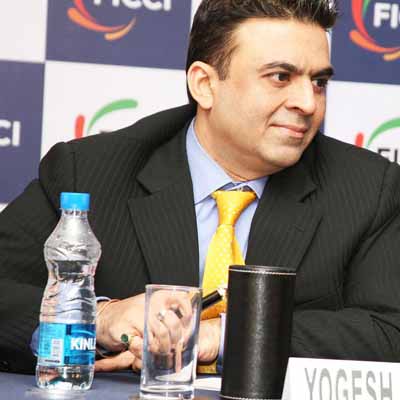
    A veteran in the cable TV industry, someone who dabbled in the sector almost three decades back, Yogesh Radhakrishnan, now the MD and CEO of Pioneer Channel Factory, has seen the sector grow from the scratch.


    Known for setting up businesses, Radhakrishnan has been the man behind building IndusInd Media and Communication Limited, ETC and ETC Punjabi, rejuvenating Zee Cinema, setting up Zee Middle East, launching the first HD movies channel with Times Television Network – Movies Now and the first HD music channel – MTunes.


    Radhakrishnan, who has seen the sector emerge from a mere video-tape business to entering the digital era, talks to Indiantelevision.com’s Seema Singh about the emergence of cable TV in India, the first satellite channel, the emerging music sector and more…


    Excerpts:


    How did you get into the cable industry? How was the sector then? Why did you move out of it?


    In an era when the only form of entertainment was Doordarshan, I was fascinated how it could capture loyal viewership despite old, dusted black and white movies they telecast. I sensed that if people were given the option of better quality of movies on their own TV sets without the hassle of VCR or cassette which was prohibitively expensive there would be a huge demand for it. Thus was born the idea of launching cable TV in India. However re distribution of home video cassettes was illegal so in the year 1988, I pioneered the launch of India’s first copyrighted cable content with my three other partners under the brand name Cable Master. This gave the entire cable TV trade a flip and a legal straw to hold on to as the Government was yet to announce licensing policy for cable TV operators.

    In the next stage of evolution from cable to satellite TV, in the year 1992, we were all geared to launch a channel but lost out the lone transponder on Asiasat 1 to Zee. Those were the days  of quotas and licence raj and we had to partner with an established business house to do business in India.


    At that time the Hinduja group was on the verge of launching IndusInd, and so we partnered with them to create a media division and that is how the IndusInd Media Communications was created as a joint venture.

    Incable emerged to be the largest consolidator at that time to bring in the economies of scale in a city like Mumbai which had more than 8000 cable operators. We were the biggest players across most of the states in the country.

    Under IndusInd, we launched India’s first cable channel In Mumbai and a 24 hour movie channel CVO.

    Recognising the strength of ground distribution that our company had, we got many offers for joint ventures from the likes of HBO, Time Warner Cable, TCI etc. A huge multi million dollars offer from Rupert Murdoch didn’t go through due to valuation differences between the Hinduja’s and News Corp.


    In 1997, the cable industry got into a turmoil and that was the day I decided to move out of cable.


    You went on to launching ETC which you later sold to Zee? What’s the story behind that? How did Movies Now and the distribution venture with BCCL happen?

    In the year 1998, the concept of a 24 hour music channel was a need I saw and that is when I launched ETC, a channel focusing on new releases, as has been established nowadays the exposure of songs on TV plays a big role in the box office success of a film. ETC became the number one Hindi music channel followed by MTV, which was then a Hinglish channel.


    ETC was the second listed company after Zee and after the successful launch of the channel, we also pioneered the daily live telecast by securing the rights to the telecast of Gurbani from the Golden temple and thus ETC Punjabi was born which went on to become the No.1 Punjabi channel and continues to be in that position till date in its other avatar PTC Punjabi.


    After music and Punjabi channels, we saw the gap for 24 hour Hindi news channel, and that is how ETC News was conceived even before Aaj Tak was launched. But Technology wasn’t in place at that time a camera cost Rs 20 lakh, which today is close to Rs 50,000. Editing equipment, bandwidth for news feeds had to be sourced from DD, all in all, it was an expensive proposition. Hence, a 24 hour news channel had to be put on hold.


    Subsequently in 2002 when we got a good offer from Subhash Chandra, we sold ETC Networks to Zee.


    And then my association with Zee began, which was also an exciting time. I was a partner with Zee Middle East. Subsequently, I went on to build a strong company in Zee Middle East, which till date is one of the strongest markets for ZEEL.


    In 2008, I sold back my equity to Zee and wanted to return back to India where the action really was. Former Times Television Network CEO English channels Ajay Trigunayat, was in Dubai then. We got together with our project to launch India’s first ever English Movie channel in HD.


    I had discussions with BCCL MD Vineet Jain and a JV was formed in 2010 to launch four channels and then we further got into launching a distribution venture together called Prime Connect.


    Movies Now was one of most successful TV channel launch. It went on to becoming the No. 1 channel in the first week of its launch. Finally, in 2012, I exited the company by selling my equity back to BCCL.


    Then you moved on to setting up Pioneer Channel Factory? How is MTunes doing?
     

    Following the trend of people wanting to go to multiplexes for the pleasure of enjoying quality production of Hindi cinema and their desire to watch songs in its full glory, I set out to launch MTunes, india’s first Bollywood music channel in HD on the premise of Bollywood music like never seen before. Our songs were carefully selected to ensure they lived up to the channel premise.
     

    Acknowledgement from advertisers came as we got many campaigns exclusively on our channel due to its HD premise. Today, MTunes delivers far greater HD audiences than English movie, entertainment or even sports for that matter.


    Our second music channel Music Express resonates well with the industry, we package music with Glamour and Gupshup. Bhakti Sagar is our foray into the spiritual space.


    How will digitisation help the music channel industry?

    In analogue what was important was opportunity to see (OTS). In digital, all the channels are blocked in one category. The advantage for us is that we are in HD and so we got the advantage of the four million eyeballs. Our reach is good in HD and we are also available on SD. So for our advertisers it is a win win situation.


    How big is the music channel industry currently?


    If you take 14 music channels on an average, advertising and promo put together, we would be around Rs 700-Rs 900 crore.


    Unless and until you can differentiate yourself, you will not be able to grow majorly. If you see the broadcast business, be it GEC, sports or music, it’s very unfortunate that you are operating in the world’s cheapest advertising market (CPT) and cheapest pay TV market and this growth is slow.


    What is your take on music channels turning into youth general entertainment channel? Are you looking at foraying in the youth space?
     

    No way. It is a lovely genre to be in and is growing. Youth programming will drive this market to a large extent.


    But I don’t look at great economics that really works in any GEC space, unless and until there is good subscription that one is getting. If you strip off the subscription from all these channels and make them play pure advertising driven GECs I think each of them will lose money.


    Where do you see the music channel industry heading, considering music is easily available, you think there is still a market for music channels?

    Linear television will always have its market. Music will continue to be in a market where there is a television population which is very huge. There are a lot of people who watch content online and for them we are present online. There is still a large market and it will continue to be that way.


    Television is larger than life, especially music channels like MTunes which is very current and new and which plays new music and promos and that is what people look forward to rather than online where you need to make searches for content, while here content just keeps flowing.


    Why did music and news channels not follow 10+2 ad cap?


    US is such a free market and FCC is very strict in terms of regulation, but they do not have an advertising cap. Why should the government intervene on how much of advertising air time one should carry. For a moment Pay channels could be directed but definitely not the FTA channels. And that’s what we argued in the court. In short people will not watch your channel, if you put too much of advertising. So why is it that the government wants to intervene with channels and that too for free to air channels. We are not charging customers any money, its free.


    If we put in excess advertising, anyways our ratings will fall as no one would watch the channel, and that would affect our business.


    Ad cap should have been restricted to only pay channels, as India is the only country, where the pay channels are getting paid from both subscription and advertising.

    Government needs to create level playing field. Currently as independent networks, it is a difficult situation.


    How do you think music channels can start generating more revenue?
     

    Carriage is the biggest drainer. Network channels have the advantage of either not paying carriage or less carriage. Advertising is stuck in the low rate game. Cartelization is a good experiment that we all can get into in order to get decent rates. But, with the plethora of channels available, advertisers have a lot of options.

    It’s not just the music channels, but with new GEC launches, competition is getting tough even in the GEC space.


  • Premium HD viewing: Strategic advantage of Bollywood music in HD

    Premium HD viewing: Strategic advantage of Bollywood music in HD

    MUMBAI: Broadcasters are constantly trying to tap into the premium affluent viewer by introducing HD channels to their existing channel bouquet. With as many as 29 HD channels available across various categories viz., GECs, Hollywood movies, Lifestyle and Infotainment, MTunes is the only Bollywood music channel available in HD 1080i and Dolby 5.1 Surround Sound. Launched 3 years ago, MTunes has continued to drive a superior and one of a kind viewer experience in the cluttered and undifferentiated category of Bollywood music.

    The arena for premium eyeballs has a sharper focus with HD offerings. As per the latest HD report for the month of October 2014 by TAM, HD channels in India are already reaching over 20 million viewers!  In this rapidly growing and competitive space, MTunes has emerged as the preferred choice, garnering higher reach over 20 other premium HD channels barring only GECs and Star Sports 1. With a reach of over 1.4 million HD viewers across Hindi speaking markets, MTunes HD leaves behind some prominent HD channels as seen below:

    •    MTunes HD (1.4Mn) vs Infotainment channels: History TV18 (0.91Mn), Nat Geo Wild (0.72Mn), NGC (0.57Mn), Discovery (0.56Mn), Fox Traveller (0.14Mn)
    •    MTunes HD (1.4Mn) vs Sports channels: Ten Sports (1.2Mn), Star Sports 4 (0.79Mn), Sony Six (0.54Mn)
    •    MTunes HD (1.4Mn) vs English movie channels: Star Movies (0.95Mn), Zee Studio (0.60Mn), Movies Now (0.48Mn), Sony Pix (0.09Mn)
    •    MTunes HD (1.4Mn) vs Business news channel: CNBC TV18 (0.11Mn)•    MTunes HD (1.4Mn) vs English Entertainment channel, Star World (0.32Mn)

    In the category of Bollywood music, MTunes HD is the only channel offering high definition content and delivering over 1 Million premium GVTs vis a vis all other standard definition Hindi music channels.

    Commenting on this emphatic performance, Mr Naresh Ramnath (COO, Pioneer Channel Factory) said, “Launching a premium Bollywood music channel in HD has been a pioneering & visionary consumer offering which is now empirically proven by the TAM HD report. Delivering an unparalleled premium viewing experience is the core of our channel strategy. Technological differentiation, single-minded focus on relevance and innovative on-air programming has helped us build premium viewer affinity within the highly competitive category of Bollywood music. ”

    Sharing his views on this development, Mr. Bala Iyengar (COO, Helios Media) said, “High definition is synonymous to premium audience. MTunes, being the only Hindi music channel in high definition has already carved a niche for itself. To top this, MTunes HD reaching out to more viewers across categories definitely makes it the best buy to cater to premium viewers.”


  • Helios Media elevates Bala Iyengar as COO

    Helios Media elevates Bala Iyengar as COO

    MUMBAI: Helios Media, a specialty services company for the broadcast sector, recently completed two years in operations. And with the television industry undergoing critical developments with digitisation, regulations in inventory management, growth of niche genres and evolving dynamics of how viewers consume entertainment, the media brands are exploring newer avenues for engaging with audiences while advertisers are on a constant search for platforms to maximise reach. Traditional practices are being reviewed and the market is in a constant state of innovation.

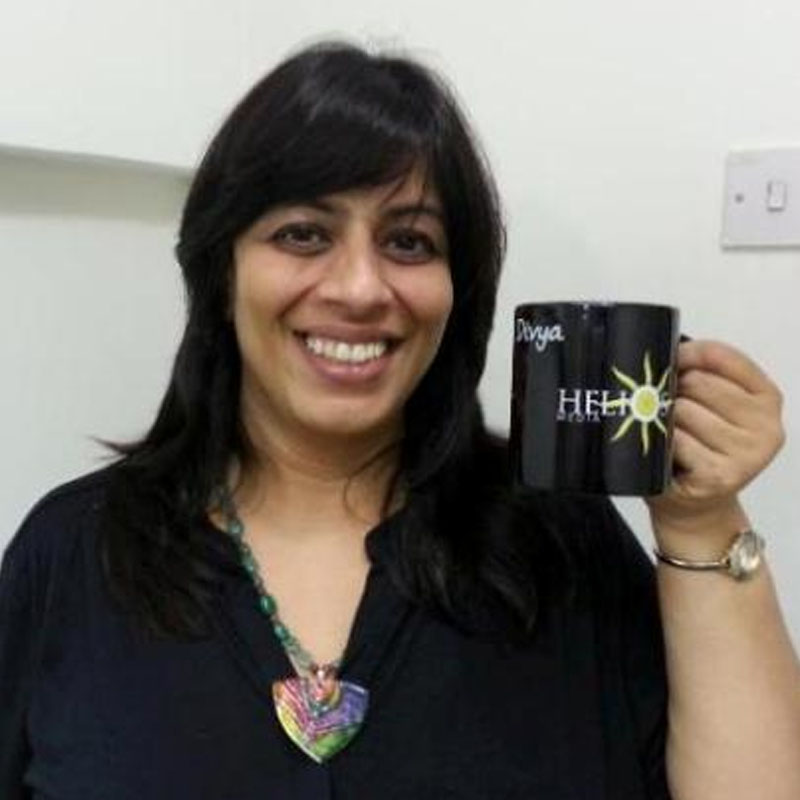
     “With the changing social fabric, growth of internet penetration and the change in consumer behaviour, the means to reach the viewer have increased manifold. As we move forward, our focus will be on getting into deeper partnerships with relevant platform creators to enhance the solutions we offer our clients. A TV channel is not just for TVCs anymore, and we will work with them in the overall revenue management space, going beyond traditional commercial inventory. In addition to inventory sales, we have enhanced our teams to include talent in the areas of content syndication, custom events, celebrity management and strategic digital initiatives. To take this scale of operations forward, it’s only natural that Bala steps up to take charge of our complete offering and provide seamless service to our clients”, says Helios Media founder & MD Divya Radhakrishnan.

    Commenting further on his elevated role and plans ahead, Helios Media chief operating officer Bala Iyengar added, “The team has been groomed as idea generators and solutions providers who can offer expert advice on how to connect the advertiser with the audience. And this has helped us bring in the 150+ advertisers on MTunes HD, develop a market strategy for Channel X, exponentially increase the revenue base for FoodFood and set to motion the revenue agenda for FTV India. We will shape ourselves to be the go-to destination for advertisers seeking innovative ways to connect with audiences, and for channels seeking breakthrough strategies to boost revenue.”

    The company was launched with a vision to provide broadcasters with business critical expertise in the areas of revenue management, brand consulting and creative development. And has demonstrated results for brands such as MTunes HD, Channel X, FoodFood and Fashion TV.

  • Divya Radhakrishnan & the Helios solution

    Divya Radhakrishnan & the Helios solution

    Media veteran Divya Radhakrishnan gets a little nostalgic as she recollects that moment a couple of year ago when she was contemplating which direction her life should take. Says she: “After working for almost 25 years, when I told my mother that I was planning to quit, I least expected her to be supportive of my decision. But then her response motivated me to go ahead: she said just do it. And so I did it.”

    The former TME president finally dug her heels in and made the drastic career change.

    “I knew I was going to be on the other side of the table now and it was not going to be easy,” she says while thanking the leadership role she played at Rediffusion-Y&R, which helped her get an insight into how things work in various verticals of a media business. “But then I thought to myself that being independent and leading a business with decision-making power at my own risk would give me a greater sense of freedom and that really motivated me,” she adds.

    Her decision was pretty calculated too, she says.

    “There are close to 180 odd channels in India not aligned to any broadcast network. Agencies, clients, vendors, and others, however, expect them to have everything that a large network does like sales, marketing, research, and what have you. Now in a large network you can amortise your costs across several channels,” she explains. “But for a standalone channel the high overhead can be killing. Hence, I decided I would first focus on the sales outsourcing function for TV channels and once I achieved that, I would add more services. I needed to find someone who had a similar vision and I found that in Bala Iyengar and so we started out.”

    Right from the start, Divya was clear that her agenda would go beyond being just-another-organisation to fill a need gap, and getting recognition for creating a brand in a commoditised business of air time sales.

    Hence, Helios Media has ambitions to provide advisory and undertake operations for independent players in the broadcast industry. In order to differentiate itself it has set up various verticals like sales, marketing communications, advertising, research, content, PR, broadcast operations, syndication, events and new media to create a 360 degree outsourcing company which television channels can rely on. Divya on her part is also involved in a TV content production firm TouCan with sister-in-law Bhavna Radhakarishnan.

    With over 50 people on board now, finding the right team was not easy for Divya at the start. “Since I was coming from the other end, I needed to get the business heads in place so they could get the correct people for us,” she says.

    Among those who she managed to snare figured: Bala Iyengar (business head Zoom), Vaibhav Vishal (a former MTV veteran) and Prashant Nigam (also from Zoom). Iyengar is business director and leads the sales vertical. Vishal is the creative and content leader whereas Nigam looks after content syndication and special projects. The four pillars run the show headquartered in Mumbai, although the organisation has branches in Delhi, Bengaluru and Chennai.

    Helios is like a morphing organism, tailor making itself, depending on client and market needs. Though its headquarters are in the Maximum city, it has resources at regional levels as well.

    The organisation which started with its first client MTunes is now handling four different channels and is hoping to bill almost Rs 100 crore in revenue by this year end for them. Divya is also in conversation with others including an international TV network which wants Helios to draw out an entry and operational plan for a few of their channels.

    However, getting clients wasn‘t easy for it as it had to prove its credentials to the market.

    “The first eight to 10 months were all about investment of our resources, energy and talent to prove not only to ourselves but also to channels what we can do for them,” narrates Divya.

    Two agencies had approached the MTunes management when they announced that they would be outsourcing their ad sales functions.

    “The approach and the pitch with which Helios met us made us realise that they have enough insight and perspective about how to sell the channel at its launch stage itself,” says MTunes HD CEO Saravanan P, who asserts that the association helped their operations to touch inventory levels as high as the top two channels in the genre and they could also maintain it almost through the year.

    “The challenge was to pull off a decent ER (effective rate ) but we managed a very aggressive one which can be termed as an achievement for a channel in its first year of operation,” Saravanan adds. The agency also handles marketing, research, PR and social media.

    MTunes HD CEO Saravanan P says Divya & her team helped the new channel get very aggressive effective advertising rates

    “The past performance of the Helios team is very well known in the industry. Their recent success story with MTunes strengthened our belief on their capability. However, that is not the only reason why we outsourced our sales to them. FoodFood, being a genre creator, needed to be correctly represented to the clients and the agencies. Helios came forward with that understanding of the channel and the genre. For the long run, it is not just a few crores which advertising clients would like to put into the channel but would also like to get the correct association. We hope that Helios Media will be able to build that bridge between us and clients,” points out FoodFood CFO Sanjay Kumar Ballabh who came on board around four months back.

    Helios has a tool called DARE (defining, articulating, resulting and extending) to understand the brand and find solutions for the brand, especially for niche channels.

    “Using the tool, we could draw up the brand promise for MTunes as ‘Music like never seen before,‘” she says. “We worked almost like partners of the channel when we enabled the creation of a music countdown show called Trending which is probably the only show on right now with an indicator for the top songs in the country. We track them on YouTube, Hungama, and Radio City airplay etc and Ormax is our partner on this initiative. The concept is completely ours and has found a presenting sponsor in Airtel.”

    Divya has been focusing on other services such as marketing and content for her clients ever since she has got the ad sales engine chugging well. She says: “Marketing a channel is very different from marketing a biscuit. The customer is not really paying for a channel, and hence we have to be creative while inducing him to watch it. “

    Vivaki Exchange‘s Mona Jain & Mindshare Fulcrum‘s Amin Lakhani are impressed with Divya & the Helios team and the innovative solutions they offer brands

    Sources indicate that Helios has advised client FoodFood to go beyond cooking and also talk about other aspects related to food like eating out, food conversations, what to eat and when, health and nutrition, among others.

    Divya refused to comment on this but what she is really kicked about is the power of social media. “Digital should accentuate what‘s going on television,” she says. “And we have shown what can be done on digital through our work for MTunes.”

    Helios has designed and put together the online consumer interface for the channel in the form of its website with audio players, playlists, interviews, and what have you. But she faced a major challenge when she was assigned the task to build consumer engagement for MTunes HD on Facebook and Twitter: it had no rights to put the music it airs on TV on digital. Hence, the solution it found was to start conversations about youth interests.

    “Generally we spoke to them on Facebook and Twitter like a friend would do to them about everything that concerned them,” says Divya. “Of ocurse we also had guessing games about celebrities eyes and created special events online on friendship day. Right now we are working on creating a TV program which uses the interactivity of social media.”

    Divya and Helios have got fans in the media business. For example Vivaki Exchange CEO Mona Jain and Mindshare Fulcrum principal partner Amin Lakhani. “What sets Helios apart from the rest is not only the team which is packed with experienced as well as young talent but also the innovative ideas they come up with to service and represent a brand,” echoed both Jain and Lakhani.

    Divya knows she is onto a good thing and is looking forward to capitalise on the strengths she has built up in Helios. Says she: “When the 10+2 ad cap comes into play we will be best equipped to help our clients. Because I have all the verticals in-house and hence solutions that can help channels monetise what they have better.”

    Clearly, this is one lady on a mission.

  • 2011: The defining year for the music genre

    2011: The defining year for the music genre

    Year 2011 was special for the youth and music channels in more than one way. For starters, the genre grew with the advent of focused new players, and also came of age as channels clearly selected the model they want to follow.

    If 2010 was the year of uncertainty for the genre, 2011 was the Buddha moment, when the players found the light, the path and, most importantly, the business model.

    So far the category was suffering with the biggest limitation – no scope for differentiation as every channel had access to the same pool of music. But 2010 end was a watershed moment, after which viewers started witnessing an urge amongst the players to be, for the lack of a better word, different.

    Finally, in 2011, the two clear categories emerged within the genre – one was pure play music and other was youth centric channels.

    The clear distinction or segregation happened with the launch of pure play music channels like Mix and MTunes. This channel brigade was led-by 9XM with other players including B4U Music, Music India and, up to some extent, Mastiii. Meanwhile, the youth genre found stability on the tri-pad of MTV, Channel [V] and UTV Bindass.

    Though executives of all of these channels differ on their content strategies and business models, they all agree that this genre is extremely competitive and in order to reach their target audience, they need to be far more than a mere TV channel.

    The biggest challenge is that the genre is highly fragmented and is marred with low viewership. As it is, music is no longer the mainstay of music channels. So experimentation by the youth channels continued in 2011. While Channel [V] found solace in fiction properties, MTV went for a mix of reality along with non-film music. UTV Bindass targeted youth from campuses and also focused on relationships.

    Similarly, among the pure play channels, while 9XM continued serving latest Bollywood music with the animated characters, Mastiii had comedy gags to retain audiences. Mix, the four-month-old channel, opted for mood mapping and is working on improving its distribution.

    The genre now has 19 players and they are fighting for an ad pie between Rs 3.5-4 billion yearly and a share of 200-240 GRPs (gross rating points)on a per week basis. Thankfully, the music space has undergone transformation and today they have some differentiated content and not the same generic content – be it music or reality shows.

    UTV Bindass business head Keith Alphonso says, “Finally, after 14 years, the genre has matured in 2011. We have taken the positioning of a youth channel and it is a three-horse race – MTV, UTV Bindass and Channel [V]. Though every channel is creating its niche, we have decided that we want to own the three verticals which are close to heart of the youth – campus, relations and music. For us, it is important to emerge as a brand.”

    But the question remains: How will the music and youth channels survive with such competition? Answers MTV India EVP and business head Aditya Swamy, “Unlike general entertainment channels, youth genre is not sold on GRPs. In any case, the difference between the top and the eighth player will be less than 10 GRPs. Advertisers and clients look at what more we are putting on the table; its always GRP++. And so, we give them much beyond TV. We give social media, digital etc as we are engaging our consumers on multiple platforms.”

    Agrees Channel [V] EVP and GM Prem Kamath, “First I think calling this genre niche is a big oxymoron. Youth constitutes 60 per cent of total population. Everyone is targeting them, so definitely its not niche. But, having said that, the problem with the genre is that with only music, there is a certain level you can grow. Best chances are you can get up to 30-35 GRPs. Yes, you can make some money if you are on top, but there is no growth.”

    About Channel [V]‘s decision of entering into fiction, he says, “Our offerings are customised for the youth. The two fiction properties are top rated shows and in certain markets, they rate even higher than shows on the GECs.”

    Among the three youth channels, Channel [V] plays least amount of music. It has only two bands — 8-11 am and 4-6 pm – reserved for music.

    Kamath explains, “Today the maximum consumption of music is happening over the phone or music players. Secondly, it is same everywhere and exclusive music is not working as it is not monetiseable. Plus we do
    not want just a visual radio.”

    Interestingly, the genre suffers from a very low time spent of around 25 minutes per week. Even FM radio stations become a competition for the channels, given the passive listening that is happening with pure music channels.

    “The biggest challenge is to increase the time spent on the channel. The average time spent on our channel is 28-30 minutes per week, but that needs to grow. Secondly, the whole genre is struggling to get the due respect from viewers as well as advertisers,” Max EVP and business head Neeraj Vyas says.

    Vyas adds that in order to increase the stickiness and to get appointment viewing, the channel will have more format shows, and Mix will be a platform for the singers and other musicians.

  • Divya Radhakrishnan launches Helios Media

    Divya Radhakrishnan launches Helios Media

    MUMBAI: Divya Radhakrishnan, who had quit in February this year as president of TME, the media arm of Rediffusion-Y&R, has launched her own venture, Helios Media.

    Helios Media, an integrated ancillary service company for television broadcasters, has collaborated with specialised partners to complement services in all allied areas. It has set up Sales, Marketing, Research and Traffic management verticals and will offer the services as a composite piece or as a stand-alone, based on the requirements of the broadcasters.

    The company has set up offices in Mumbai, Delhi, Bangalore and Chennai.

    The company has also roped in former business head of Zoom, Bala Iyengar as business director. He will lead the sales and content syndication function at the company.

    According to the official communique, the vision of this company has been crafted on the premise that the increasing number of TV channels in India is facing a key business challenge. While content is the primary scope of these channels, a lot of effort has to be invested in creating a robust eco-system to run the business. This puts in a lot of stress on the channel business head, resulting in dilution of focus from the key delivery, which is content. Also, the proliferation will lead to further slicing of the revenue pie making the all-encompassing business model non-viable.

    The company has already signed up two music channels — MTunes and Music Express — as clients. It has also partnered with World Media Connect (WMC) as its Asian arm. WMC markets Indian Channels to the ethnic population based in US and UK. The portfolio includes six channels of the Sun TV Network (Sun TV, KTV, Gemini TV, Udaya TV, Gemini Movies, Surya TV) and Punjjabi TV at present.

    Helios Media said that with the above contracts already in place, it is in advanced stages of negotiations with four speciality channels coming into India.

    Radhakrishnan has over 24 years of rich experience in the business of media management. She has worked with leading advertising agencies like Publicis and Rediffusion Y&R. In her last assignment, she headed the Contact Practice at Rediffusion Y&R wherein the Media company TME, Public Relations company Rediffusion PR and the Event Management company Showdiff Worldwide were under her leadership.

    Meanwhile, Iyengar, who has over 14 years of experience, has worked with leading media networks like Times of India, Sony Entertainment Television, Star Network and MTV.