Tag: MSOs

  • ARNAB GOSWAMI ANNOUNCES THAT R. BANGLA WILL BE LIVE FROM TOMORROW, MAKING IT THE FASTEST NEWS TELEVISION LAUNCH

    ARNAB GOSWAMI ANNOUNCES THAT R. BANGLA WILL BE LIVE FROM TOMORROW, MAKING IT THE FASTEST NEWS TELEVISION LAUNCH

    Mumbai: Republic Media Network’s Editor-in-Chief Arnab Goswami is proud to formally announce the launch of Republic Bangla– the Network’s hugely-awaited Bengali news channel. Republic Bangla will go live on-air on 7th March 2021 at 8 am.

    From 8 am on Sunday, the channel will beam LIVE across all cable operators, MSOs, DTH platforms and on digital feeds. The Network also released details of the channel numbers that Republic Bangla will be available on, across platforms. The Network also urged its viewers to contact their service providers and send a whatsapp to 7004698699 should encounter any trouble with regard to viewing the channel.

    Making the announcement, Republic Media Network’s Editor-in-Chief said, “The Republic Bangla launch has been a turnkey project for the entire Republic Media Network with a record 65 day execution span. This launch is a result of the combined will, passion, determination, grit and hard work of the best professionals in the news media industry. I am so proud.”

    “Never before in news media has a channel been possibly launched so swiftly. The launch is a testament to the drive of my colleagues at Republic Media Network. I am proud and humbled that India’s biggest news network will be broadcasting in three languages from tomorrow morning,” Goswami added.

    Republic Bangla has already become one of the largest news organisations in West Bengal having recruited over 300 employees in 60 days. With reporting crews in every district of West Bengal, Republic Bangla will have the widest ground presence and deepest news gathering ability in the Bengali news genre from the day of launch.  

    Republic Bangla has pledged to disrupt the Bengali news genre with breakaway formats, deep investigative stories, breaking news wheels and campaign-style journalism for causes that matter to the people.

    The Network’s Editor-in-Chief Arnab Goswami will be anchoring ‘Jabab Chay Bangla’ in his signature debate format with innovations and additions – an announcement which has already generated a lot of excitement and anticipation amongst viewers ahead of launch.

    Republic Bangla’s tagline “Kotha hobey chokhe chokh rekhe” has resonated with the people of Bengal and become a chant all over the world. The Tsunami of support has only pushed Republic Media Network further to deliver content and news in a way that has never been done before in the Bengali-news media space.

    With Republic Bangla, the Network embarks on an endeavour to bring in a new era of Bengali journalism that is fearless, unhindered by agendas and uncompromising on the truth.

    Republic Media Network is bound by the principles of seeking accountability of the powerful, reportage for the citizen, putting India first, and being uncompromisingly & unflinchingly nationalistic. This promise to put people first and the quest for the truth will carry forward with Republic Bangla.

    “We are grateful for the trust that has been bestowed upon us both by the people of Bengal as well as our supporters across the world.  Your faith in Republic Bangla has been overwhelming. I, on behalf of my entire team, assure you that this channel is here to disrupt and bring in a new wave of journalism.  Republic Bangla pledges to millions of Bengali viewers across the world that it will put Nation First & News First,” Arnab Goswami said.


    Republic Bangla will be Republic Media Network’s third channel in three years, and its foray into the regional broadcast news-media space. Republic TV launched in May 2017 and became the number 1 channel from the very first week. In February 2019, Republic Bharat was launched and soon became the Nation’s number 1 Hindi news channel. In addition to a broadcast channel in  multiple regional channels, Republic Media Network has also annoyed its plan of launching a global media news channel.

  • LCOs fire back at TRAI for ‘conduits’ remark before Bombay HC

    LCOs fire back at TRAI for ‘conduits’ remark before Bombay HC

    KOLKATA: Local Cable Operators (LCOs) appear to be agitated with industry regulator Telecom Regulatory Authority of India (TRAI) for portraying them as ‘conduits’ between the multi-system operators (MSOs) and subscribers. According to sources, TRAI has overlooked the role played by LCOs as last mile owners in a reply to ongoing litigation against NTO 2.0 in the Bombay high court.

    The Maharashtra Cable Operators Federation (MCOF) is of the view that it might lead to subscriber ownership transferred to the MSO. While the TRAI may indicate it is not concerned about LCO’s revenue, it also portrays LCOs as mere recharge operators in the mobile business.

    “TRAI has worsened our situation by making assertive statements going against our interests,” the MCOF said in a memo.

    In another statement, TRAI has conferred the credit for creating infrastructure to the MSOs. Despite putting lakhs of kilometres of a network together, the LCOs may stand to lose over Rs 1,00,000 crore worth of infrastructure due to the incorrect statement, the MCOF asserted.

    According to the federation, TRAI has overlooked the imbalance where benefits flow to broadcasters and MSOs at the cost of LCOs regardless of whether the subscriber pays more or less than pre-NTO days under compulsion to justify its judgemental errors. The unsubstantiated justification for reducing NCF on additional STB completely discounts the fact that most of the STBs are serviced by the LCO who incurs per visit costs that are not billed for.

    The federation has urged the operators to raise their voices and protest the statement to make TRAI file a revised affidavit before the high court.

  • The challenges & opportunities before incoming TRAI chairman PD Vaghela

    The challenges & opportunities before incoming TRAI chairman PD Vaghela

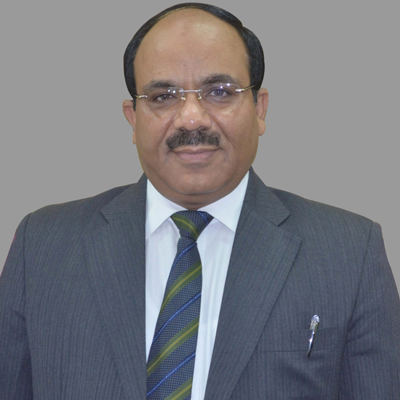
    KOLKATA: As the extended five-year term of Ram Sewak Sharma as chairman of the Telecom Regulatory Authority of India (TRAI) concludes today (30 September), industry will be looking closely at his replacement, PD Vaghela. The Gujarat cadre 1986 batch IAS officer is the outgoing  pharma department secretary who celebrated his sixtieth birthday on 22 September. Prior to that, he was the chief commissioner of commercial tax in Gujarat. He is also believed to have played an important role in the roll out of the goods and service tax in 2017. Also

    Vaghela is taking the chair at what can be termed a very crucial time for both the telecom and broadcasting sectors. While his predecessor has been widely criticised by stakeholders for over-regulating, Vaghela will have to bring more balance if he wants to narrow down the gap and sense of distrust between industry and the regulator.

    A task which could be challenging as he apparently has not had much to do with the broadcasting sector during his 34 years of being a civil servant. A B.Com graduate from Gujarat, he has masters degree from an institute in the The Hague, a post-graduation in business administration and finally a doctorate in sociology.

    Vaghela has held senior positions in the Kandla Port Trust, with Gujarat tourism, with the industries and mines department, the rural development department, as municipal commissioner (Bhavnagar), and in the home ministry.

    Read more news on TRAI

    One school of thought in the industry is that given his background and the circumstances during his appointment, Vaghela will mostly follow Sharma’s path during his tenure.

    At this moment, broadcasters are indulged in legal battles with the industry watchdog on many fronts including the ad cap and the amended new tariff order.

    A senior executive at one of the big four broadcasters says while the court’s verdict will have to be implemented by both broadcasters and the TRAI, Vaghela’s first challenge will be the direction TRAI will take once the litigation between industry and the regulator is adjudicated upon.  According to him, the new chairman has to also look after the viability of small cable operators who are worried about their future.

    The executive also adds that everyone is now perceiving broadband, not broadcasting, as the future of entertainment. Hence, he adds that the new chairperson can play an important role in carefully steering the future of the broadcasting industry.

    While there is a high chance that a number of consumers will shift to IP-based streaming content via OTT services, Vaghela will have to tread carefully, balancing digitisation and safeguarding traditional broadcasters’ interests.

     “The RS Sharma regime has failed broadcasters. He served an important role in UIDAI implementation. Hence, we had huge expectations from him but we have been disappointed at the end,” a senior industry source states. 

     Although the executive is not very optimistic about the new chairman being able to dilute this sentiment, he thinks the industry should at least observe him for the next few months, before pronouncing any judgements.

    However, another industry veteran claims Vaghela is quite likely going to continue to carry on in the same vein as Sharma. Like his peers in the industry, he acknowledges that there have been frequent changes in regulation which have been challenging, but he also credits Sharma for bringing in some semblance of order in to the TV distribution ecosystem.

    Read more news on NTO 2.0

    “There was so much of scrapping between MSOs, LCOs and broadcasters,” he says. “By pushing cable TV digitisation and mandating some sort of price standardisation through regulation, he forced the industry’s hand to try and work together, which they are doing currently. Yes, there is some irritation from time to time, but the value chain is working closer together, keeping rules modernisation, upgradation and customer service in mind.”

    The veteran also adds that Sharma played a large role in pushing ahead the Narendra Modi-led government’s digitisation agenda, by allowing new pricing models as far as mobility is concerned. “The Jio phenomenon of cheap data, free calls, has been a game changer for the spread of the internet where incumbents such as Airtel and Vodafone and Idea were working with legacy business and consumer models.”

    The CEO of a TV network points out that even though the court cases against NTO 2.0 continue in the courts, Vaghela will very much have to “balance value for consumers with the interest of broadcasters along with operators. He will also possibly play a significant role in OTT legislation as the government is gearing up its efforts to regulate this rapidly growing vertical.”

    “Along with working on major rollouts like 5G implementation, enhancing fibre-to-home broadband connectivity across the country on the telecom side, Vaghela can choose to leave his mark as far as cable TV amendments, a national broadcaster policy, DTH licensing are concerned. Additionally, he could things take a step further and start looking at drawing up a national video policy encompassing TV, streaming, and possibly mobile delivery of video,” says the CEO.

    On the telecom side, Vaghela has contentious issues like super high 5G pricing (at Rs 492 crore per MHz in the 3500 Mhz band) which could deter the ailing telecom service providers(TSPs)  from making a bid. The adjusted gross revenue ruling has gone against at least two of them who have been reeling courtesy the price war that Jio has waged for the past few years. The consultation paper on whether a floor price needs to be put in place for telecom services will also take up his attention. Then, he will have to decide on interconnect usage charges that TSPs charge each other for calls made by customers. They are due to be scrapped by early next year.

    Of course, he will have a bunch of old hands who have been at the regulator for a few years. There’s the TRAI secretary Sunil Gupta, and numerous other advisers who provided back end support for almost every decisive direction, recommendation, and regulation the watchdog has given over the years. How he takes their advice and inputs and formulate these into law for broadcasting and telecom will decide whether he will be blessed or vilified by the industry.

    (This piece has been penned following conversations with real executives from the business of television. Most of them requested that their identity be kept secret while using their quotes and views in this piece) 

  • NXT Digital does a financial turnaround in FY 2020

    NXT Digital does a financial turnaround in FY 2020

    MUMBAI: Among the early movers in the cable TV industry, the Hinduja group run – NXT Digital has turned out impressive financials for the financial year 2020. The topline has shown significant growth, it has turned EBIDTA positive and how; the red ink on its bottomline has been replaced by fat profits and to top it all it has even declared a dividend of 50 per cent. And it's all thanks to its subsidiary IMCL, which has declared a robust performance over the past four quarters. 

    On a consolidated basis, revenues grew by 65 per cent over FY19, from Rs 704.62crore to Rs 1,162.10crore; operating EBIDTA rose significantly to Rs 218.01crore against a loss of Rs 72.61crore; its PAT is a healthy Rs 110.05 crore as against a loss of Rs 303.43 crore in FY19. Buoyed by the great showing, a dividend of 50 per cent has been declared to the joys of many a shareholder. 

    NXT Digital announced that its HITS platform today has five million subscribers through local cable operators (LCOs) and smaller multisystem operators (MSOs) in 1500 towns all over India, and even in remote places such as Ladkah, Kargul, the far north east and the Andaman, Nicobar and Lakshwadeep islands. The technology, using C-band is not affected by rain or adverse weather and customers in these areas continue to enjoy digital services, uninterrupted. 

    "This kind of outstanding performance consistently over the last four quarters speaks volumes on our commitment towards our subscribers through strong value creation," says IMCL CEO Vynsley Fernandes."We firmly stand committed to further our endeavor of creating an integrated platform for digital services, offering cable TV, satellite, broadband and other digital media, all under one roof. Building an effective framework along with our product bundling strategy has been crucial for our business turnaround in FY20. With close to a 100 per cent prepaid base and a substantial presence in phase 3 and 4 markets, IMCL expects to continue on its digital growth path."

     The company says it has continued to focus on key drivers through FY' 20. Some of these include: 

    * Targeting the the fastest growing segments of semi-urban and rural India. Over 60 per cent of its subscriber base is in these markets which continue to see increasing pay TV penetration as well as growing average revenue per user (ARPU).

     *Growing ARPU through value added services and differentiated products in the cities. Launching innovative products like layering cable TV with broadband and value-added services, coupled with 24X7 services on ground.

     * Successfully implementing the new regulatory framework, set out by the TRAI (Telecom Regulatory Authority of India) in early 2019. The visionary framework which brought in much needed transparency to the pay TV ecosystem and enhanced subscriber choice has buoyed the business model and set out a clearly defined level playing field for the industry. 

    * Maintaining pre-paid collections at nearly 100 per cent, whilst ensuring low churn through a focused E&R (engagement &retention) model for subscribers and franchisees. 

    * Leveraging its leadership position in technology, whilst improving cost efficiencies. Recently moved to 32APSK technology, that improves satellite throughput by over 30 per cent. 

    * Working closely with its 9,000 plus franchisees to remain focused on the subscriber through continuous enhancement of the quality of service and viewership experience. 

     This apart, the company is working on developing an indigenous set top box keeping in mind the government's Make in India mandate; it has been conducting digital online training for its LCOs; it has built a robust digital payment collection platform, and even rolled out a proactive business continuity plan to ensure that its subscribers get top class service even during cyclone and the ongoing Covid2019 pandemic that has rocked India and the world. 

    Going forward, it plans to expand on its managed services model and has signed on additional MSOs; that should double its subscriber base to 10 million. The company says the model effectively supports these smaller MSOs and LCOs several of whom are unable to sustain their businesses due to increasing costs of connectivity and technology obsolescence. 

    Fernandes adds that the idea is to expand the services its franchisees can offer, making them multi-product and multi- service providers; offering customers a whole range of services from FMCG products to digital and financial solutions. 

    "This will help our franchisees not only sustain their businesses, but diversify and grow their earnings portfolio, across the country," he says. "We remain focused on delivering integrated services to customers, bundling television with broadband services from our ISP subsidiary OneOTT iNTERTAINMENT, which has a presence in over 40 cities."

  • MIB asks states to ensure operational continuity of media amid Covid-19 outbreak

    MIB asks states to ensure operational continuity of media amid Covid-19 outbreak

    MUMBAI: In view of the coronavirus pandemic, the ministry of information and broadcasting (MIB) has directed all state governments and union territories to ensure uninterrupted operation of information networks as their outreach is of vital importance.

    At this juncture, robust and essential information dissemination networks such as TV channels, news agencies, teleport operators, digital satellite news gathering (DSNG), DTH, and Highend-in-the Sky (HITS), MSOs, cable operators, FM radio and Community Radio Stations (CRSs) are of utmost importance to ensure timely and authentic information dissemination. The proper functioning of these networks is required not only to create awareness among people and to give important messages but also to keep the nation updated of the latest status.

    The MIB also said in the press release that false and fake news need to be avoided and good practices need to be promoted and these networks play a pivotal role in ensuring the same.

    The critical infrastructure in this case include:

    (a) Printing presses and distribution infrastructure of newspapers and

    magazines;

    (b)All TV channels and supporting services like teleports and DSNGs;

    (c) DTH/HITS operations connected equipment /facilities, etc. including

    maintenance;

    (d) FM/CRS networks;

    (e)Networks of MSOs and cable operators; and

    (f) News agencies.

    In order to ensure continuity of these services, MIB requested state

    Governments and union territory administrations to facilitate operational

    convenience of the above-mentioned services.

    It also requested the keep the following points in case any restrictions are contemplated to be imposed for containment of COVID-19:

    (a) All operators of such facilities I intermediaries in the chain be permitted

    to remain operational;

    (b)Facilitating smooth supply and distribution chain as may be required;

    (c) The facilities should be permitted to be manned by the staff of the

    service providers;

    (d) The movement of the accredited staff of services providers be permitted;

    (e) The movement of vehicles carrying media persons, DSNGs and others including provisioning of fuel, wherever required may be facilitated; and

    (f) Availability of uninterrupted electric supply and other logistics as requested by such facilities have to be provided;

  • NTO 2.0: Ambiguity persists as arguments continue in Bombay, Kerala High Courts

    NTO 2.0: Ambiguity persists as arguments continue in Bombay, Kerala High Courts

    MUMBAI: Ambiguity continues in the ecosystem with just one day left for the implementation of new tariff order amendments (NTO 2.0).

    On Friday’s hearing in Bombay high Court, no conclusion was reached regarding interim relief. The Telecom Regulatory Authority of India (TRAI) will continue its argument on Monday.

    According to sources close to the development, TRAI has been directed not to take any coercive step. Although there is no any conclusion yet, a decision will mostly be taken on Monday.

    Earlier, broadcasters’ argument was that the entire regime is set to kick in from 1 March. Since it is around the corner, they have moved the court seeking a stay. If they implement it before hearing, the entire petition becomes infructuous.

    In response to the argument, TRAI counsel said on Thursday that it’s not the entire amended interim regime that is kicking off from 1 March. The TRAI counsel added that broadcasters’ obligation to declare new prices became effective from 15 January, but they did not make any progress on it without any stay order. If they declare prices, then only other stakeholders in the industry will be able to comply with the regime, as TRAI noted.

    The Bombay High Court also asked TRAI to take instructions on deferment of NTO 2.0 as they did for the 2017 regime before the Madras High Court on Wednesday. After TRAI expressed its unwillingness to defer NTO 2.0, the hearing on interim stay started on Thursday.

    In another case, the Kerala High Court has passed an interim order directing the TRAI not to take steps that are detrimental to the interest of the All India Digital Cable Federation (AIDCF) members. Although on Friday’s hearing no judgement was passed for interim relief, the decision of interim protection has been reserved.

    In another development, Discovery has moved its petition to Delhi High Court which was heard today. The next hearing for the petition has been scheduled for 19 March.

  • No plan to levy 10% licence fee on b’casters, cable ops: I&B Min

    No plan to levy 10% licence fee on b’casters, cable ops: I&B Min

    MUMBAI: The Minister Of Information and Broadcasting Prakash Javadekar has made it clear in a parliamentary response that the ministry does not intend to add any sort of 10 per cent licence fee on broadcasters and cable operators in India.

    His response came for a question that asked if the minister had an intention to do so on the lines of what it follows for the DTH industry. Currently, DTH operators need to pay 10 per cent of their gross revenue as annual licence fee.

    The Telecom Regulatory Authority of India (TRAI) in a recommendation, last year, mentioned that this 10 per cent should be brought down to 8 per cent of adjusted gross revenue rather than gross revenue.

    The minister also mentioned there is no central register that maintains industry-wise information regarding licence fees.

  • I&B Ministry grants registration to 15 MSOs in Jan 2020

    I&B Ministry grants registration to 15 MSOs in Jan 2020

    MUMBAI: The Ministry of Information and Broadcasting (MIB) has published a document listing all the registered multi system operators (MSO) in the country. As per the document, there are 1630 registered MSOs in India as on 31 January 2020.

    Fifteen MSOs were granted registration in the month of January 2020. A total of 150 MSOs were granted registration in the year 2019. Surprisingly, just one MSO, Sharma Cable Network, was granted registration in the entire of 2018 as per the document.

    All the granted registrations are valid for a period of 10 years. The name of the companies that were added in the registration list in January includes Latiyal TV Club, Vijayendra Cable, Seven Star Digital; Maxnet Communication, AG Digital Communication, Jai Maa Vaishnavi Jai Mata Di Star Cable, Digimedia Cable, Cable Operator Association of Yamunagar N Jagadhari, Siddhi Cable Center, Barale Cable Network, Aryabhatt Digital Network Pvt Ltd, The Nandhyal Communications, Tiranga Networks and DNA Cables.

    The ministry has also cancelled the registration of Skyway Digital on 27 january 2020. The total number of MSO registrations cancelled by MIB is 74 till 31 January 2020.

  • India Ratings: NTO 2.0 negative for broadcasters, neutral for MSOs

    India Ratings: NTO 2.0 negative for broadcasters, neutral for MSOs

    MUMBAI: Credit rating agency India Ratings (Ind-Ra) & Research believes that Telecom Regulatory Authority of India’s (TRAI) amendments to the tariff and interconnection regulation are largely negative for broadcasters and neutral for multiple system operators (MSOs).

    The rating agency, a subsidiary of the Fitch Group, said that the amendments (NTO 2.0) have focused on a reduction in the final customer price, resulting in broadcasters bearing the largest burden in the entire value chain.

    Ind-Ra in its report said that the revised regulations stipulate a reduction in a-la-carte pricing for channels and a cap on bouquet prices in line with a-la-carte prices would impact broadcasters’ profitability meaningfully.

    The regulatory had put a cap on network capacity fees (NCF) & carriage fees and a higher number of pay channels in base NCF, which sound optically negative for MSOs, but would have a marginal impact as they are broadly in line with the current on-the-ground ecosystem, said the report.

    Meanwhile, the reintroduction of discount on bouquet prices compared to a-la-carte channel prices is surprising, given that the Madras High Court had earlier ruled against it.

    The amendment directs broadcasters and distributors to submit the revised channel prices by 15 January 2020 and 30 January 2020 respectively, with full implementation from 1 March 2020.

    Ind-Ra also believes that the regulation has essentially de-risked the business model of distributors (MSOs, local cable operators (LCOs)), as their revenue stream will contain fixed NCF from subscribers and content commission from broadcasters, thereby effectively passing through content costs.

    The increase in the total number of channels under the base NCF to 200 from 100 earlier is unlikely to have any major impact, as MSOs anyways offer above 200 channels under the current price regime for NCF of INR130.

    The rating agency also added that the exclusion of mandatory channels as per the government from the bouquet of 200 channels may free-up space for additional pay channels, which may further reduce NCF for MSOs.

    MSOs earn content fees and distribution fees from broadcasters as a proportion of the content cost. MSOs’ realisations may slightly be impacted as the overall content costs and resultant content & distribution fees have also reduced.

    As the continued investment in content remains critical for broadcasters, the revised regulation capping prices of both a-la-carte channel and channel bouquet may curtail broadcasters’ ability to invest in quality content, said the Ind-Ra report.

    According to the rating agency, the risk is even higher for the sports genre, where content creation/acquisition costs can be more than in the news genre. Also, the regulation on channel prices discourages bundling weaker channels with strong anchor channels in the same bouquet.

  • MIB grants registration to 11 MSOs in Dec 2019

    MIB grants registration to 11 MSOs in Dec 2019

    MUMBAI: The Ministry of Information and Broadcasting (MIB) has published a document listing all the registered multi system operators (MSO) in the country. As per the document, there are 1616 registered MSOs in India as on 31 December 2019.

    Eleven MSOs were granted registration in the month of December 2019. A total of 150 MSOs were granted registration in the years 2019. Surprisingly, just one MSO, Sharma Cable Network, was granted registration in the entire of 2018 as per the document.

    All the granted registrations are valid for a period of 10 years. The name of the companies that were added in the registration list in December includes Sri Laxmi Narasimha Swamy Communication; DVR Siti Digital; M.D. Cable Network; Blue Star Cable Services; Unify Netsol pvt ltd.; Feroz Digital Networks; Shiva Sai Laxmi Communications; Array Access Digital Services; Realtouch Cable & Broadband pvt ltd.; Shiv Cable Network and Golleshwar

    You can access the full list here