Tag: MSOs

  • National MSOs to meet in Mumbai on gross billing issue

    National MSOs to meet in Mumbai on gross billing issue

    MUMBAI: The national multi-system operators (MSOs) are meeting on 3 January in Mumbai to discuss the smooth rollout of gross billing in Maharashtra. While the deadline set by the Telecom Regulatory Authority of India (TRAI) to achieve 100 per cent customer application forms (CAFs) for phase II cities and submitting compliance report for gross billing for phase I cities came to an end on 31 December 2013, the MSOs have been unable to start gross billing in Maharashtra. The meeting has been called to discuss on the matter and come up with ways to ensure that gross billing begins in the state.

    “Since the issue of entertainment tax, which is supposed to be included in the bills generated to the consumer, is in the Bombay High Court, we cannot start gross billing in the state. We will be meeting on Friday to discuss issues at hand,” informs a MSO who will be attending the meeting.

     The MSOs are claiming to have achieved 90-95 per cent CAF and also submitted the compliance report for Delhi and Kolkata to TRAI. “But, the situation is a little different in Maharashtra,” admits the MSO.

    While no independent MSO will be a part of the meeting, the national players operating in Maharashtra: Hathway Cable & Datacom, DEN Networks, SitiCable and InCable will meet tomorrow.

    But, the last mile operators (LMOs) have decided to not allow gross billing in Maharashtra. “The case is anyways in the Bombay High Court and so the MSOs cannot start gross billing in the state. Though Hathway has verbally agreed to give partial access to its subscriber management system (SMS) to the LMOs and said that while it will bill the LMOs, the latter can bill the subscriber, thus being the owner of its subscriber, there has been no response from DEN and IMCL on the same,” informs Maharashtra Cable Operators Federation (MCOF) president Arvind Prabhoo.

    “We will not allow gross billing to start in Maharashtra till all the issues are resolved,” adds Prabhoo.

  • TRAI releases its 2013 report card

    TRAI releases its 2013 report card

    MUMBAI: The year 2013 saw the Telecom Regulatory Authority of India (TRAI) cracking its whip on the broadcasters as well as every other party within the industry for its betterment. It released several papers and regulations in order to do so. The Regulator that released its activity report for the year gone by as the New Year kicked off, said that consumer interest has been one of its main mandates.

    To ensure good consumer experience, in 2013, TRAI amended ‘standards of quality of service (duration of ads in TVs)” of 2004. And what came into effect was the regulation that restricts advertising air time to 12 minutes for a clock hour. The regulator says that this practice is not uncommon in several countries and also goes along with the provisions of the Cable TV Network Rules (1994). “Excessive advertisement adversely affects the quality of viewing experience of the consumer. The objective behind the issue of these regulations was to ensure a better quality of experience for the consumer,” says the TRAI’s activity paper.

    But even after this amendment, not all the broadcasters have been following it and the current fate of the ad cap is in a limbo. Several broadcasters have even challenged it in the Delhi High Court including the News Broadcasters Association (NBA). When channels openly did not follow the rule, TRAI started prosecuting them for it. Complaints were filed against 14 broadcasters for non compliance with the regulation. With this, TRAI disappointed many channels as the regulation came at a time when advertising rates were dipping and digitisation had not even entered phase II.

    TRAI also came up with The Telecommunication (Broadcasting and Cable) Services Tariff Orders for cable TV and DTH services that provides standard tariff packs for supply and installation of STBs to consumers in DAS areas and Customer Premises Equipment (CPE) to DTH consumers.

    When India’s oldest DTH operator, Dish TV went to the regulator for extension of its 10 year licence that was to expire on 30 September, it woke up to the fact there were no guidelines/rules on  extension. The new consultation paper is reportedly coming out this month and meanwhile Dish TV has been allowed to continue on its existing terms and conditions.

    The issue of media ownership was also addressed with the Regulator coming out with a consultation paper that discussed points related to ownership of a media outlet, disqualification from the media sector and rules for mergers and acquisitions in the sector. Media monopoly issues were also taken up when the Ministry of Information and Broadcasting (MIB) asked TRAI to examine whether there was a requirement of restrictions on MSOs and LCOs to prevent them from monopolising cable TV markets.

    The TAM brouhaha that saw adamant broadcasters unsubscribe to its ratings system led to the TRAI coming up with its guidelines defining parameters for ratings agencies and ratings systems.

    Major steps were taken to strengthen the process of digitsation. Multi-system Operators (MSOs) and Local Cable Operators (LCOs) were ordered to bring a proper subscriber management system (SMS) in place and disconnect signals for those whose details were not entered.

    Pay TV channels were asked to have written interconnect agreements with MSOs. One of the provisions that protected broadcasters was that an MSO could not demand signals for a particular channel under the ‘must provide’ clause and ask for carriage fee.

    As India is progressing towards digitisation, a la carte channels should also be available along with packages, so that subscribers can opt for either a la carte or bouquets or a combination of both. 14 LCOs and a MSO were also taken to court for not following DAS regulations.

  • Financial books of some Kolkata MSOs should be audited: Analysts

    Financial books of some Kolkata MSOs should be audited: Analysts

    KOLKATA: At a time when some multi-system operators (MSOs) in Kolkata are stuck in a legal battle with the government authorities over non-payment of taxes, city-based analysts feel that the financial books of some MSOs should be duly audited.

    “Some MSOs should be audited by the authorities as non-payment of taxes is causing loss to the state as well as central exchequer,” says a cable TV analyst Mrinal Chatterjee.

    Last year, in August 2013, Kolkata-based MSO Kolkata Cable & Broadband Pariseva Ltd (KCBPL) managing director Bijoy Kumar Agarwal was arrested for evading service tax payment to the tune of Rs 5.52 crore. Agarwal was arrested during a raid conducted by the service tax officials probing the alleged financial irregularities of the MSO.

    Says a local cable operator (LCO), “All these years, it was the LCOs who were held responsible for all the deeds and misdeeds. Now digitisation has helped in unfolding the truth that even the MSOs are resorting to unfair means to do their business. The government authorities must look into the matter seriously.”

    Trouble for operators in Kolkata seems to be intensifying. Before it was the Telecom Regulatory Authority of India (TRAI) and now they are being closely monitored by the tax inspectors, police authorities and even the judiciary.

  • India-A hotbed for news channels

    India-A hotbed for news channels

    “To improve is to change, to be perfect is to change often.” This quote from Winston Churchill is in my opinion the best way to describe 2013 for the Indian television market scenario and BBC Global News, the parent company of BBC World News and bbc.com.

    Let’s first take a broad look at the changes in the Indian market.  While regulation forced the industry to adopt digitisation, it is commendable that the industry responded and today MSOs have had around 70 to 80 per cent success in seeding STBs in phase I and phase II. Digitisation has happened and is progressing – but at the moment that is only the technical side. Addressability remains a concern. But large changes such as this in markets as humongous and diverse as India are bound to take time. Our outlook is positive and we are hoping that once business models start to take shape, this change will be positive for all stakeholders. But there is no doubt that traditional models are being disrupted. The cable industry will have to look at differentiation, quality of service and value added services to drive revenue growth. The capacity constraint that drove carriage revenues is likely to moderate with digitization. There is demand for niche content. New launches are happening in the super-niche format. The demand for Pay-TV is growing with increase in the availability of premium content. Consumers are willing to pay for HD content. Cable operators have also started offering HD-enabled STBs.

    The other major change is the pattern of consumption of content. Viewing has become personal with the consumer demanding and expecting flexibility in terms of timing, volume of content consumed and place of consumption. Increasing mobile & broadband penetrations and affordability of smarter devices are offering alternative digital distribution platforms. Consumption of live TV on-the-go and catch up TV is on the rise.  All these are very positive changes that signal well for the robust growth of the industry.

    It has also been a year of evolution for BBC Global News. We moved into state of the art brand new studios in the heart of Central London in what is easily the world’s largest and most advanced newsroom. Both in anticipation and in response to audience trends, we have successfully converged our news operations to deliver the best multimedia, multi platform international news. Our improved look on TV, our website, our apps – all these make for a greatly enhanced experience for the consumer. Our new brand campaign ‘Live the Story’ is not just an advertising tool, it is an ethos for the way we approach content and we want to reinforce that message in the market. It is in recognition of this ethos that World News America received an Emmy award for “Best continuing coverage of a news story” for Ian Pannell and Paul Wood’s reports from Syria. And among our many editorial highlights was the 100 women season with Mishal Husain’s exclusive interview with Malala featuring not just on BBC World News but across all BBC platforms domestic and international. Indeed one of the catalysts for 100 Women was the Delhi gang rape attack in December last year.

    It is great to see the audience responding to us. In India, BBC World News has maintained its status as the leading international English news channel among the country’s affluent, influential opinion leaders, business decision makers and frequent international travellers, according to the latest Ipsos PAX survey. BBC World News also beats India’s domestic news channels to take the number one spot amongst the highly desirable, upscale audience.  BBC Global News, including BBC World News and bbc.com is the only news brand across TV, online and mobile to show quarter on quarter growth. Social media is equally important for us to improve our engagement and we continue to achieve important audience milestones on Twitter. @bbcworld now has more than 5 million followers and @bbcbreaking has passed the 8 million follower mark.

    As economics and politics in India become even more interesting with the country entering election mode, we have just announced a season of programmes focusing on India to air in February 2014. India Direct will delve behind the headlines to bring audiences insight on our country as we strive to be significant player on the global stage. The India Direct season will give BBC audiences around the world the opportunity to see everyday life in India. Through programmes like Fast TrackOne Square Mile and Working Lives, the BBC’s unrivalled network of journalists explore the issues faced by people here – from the economic opportunities and challenges to living life at every level of society; from its traditions and history to future plans and innovations.  We are looking forward to what promises to be a really insightful coverage of India. We also hope to bring an international perspective to the coverage of the elections. As the world focuses on India, our journalists will also showcase India to the rest of the world with our global coverage.

    The world of media and journalism is very dynamic and India is a vibrant market. We believe that the changes in the media landscape are all positive; we ourselves are steadily progressing in tandem with global trends and certainly have a very positive outlook for India. We believe that the market respects and appreciates our content and that our ability to provide superior international news content on multiple platforms will differentiate us and keep us growing.

    (Preet Dhupar is BBC Global News COO for India. The views expressed in the above article are the author’s personal views)

  • NationalChip’s STB solutions for Indian digitisation

    NationalChip’s STB solutions for Indian digitisation

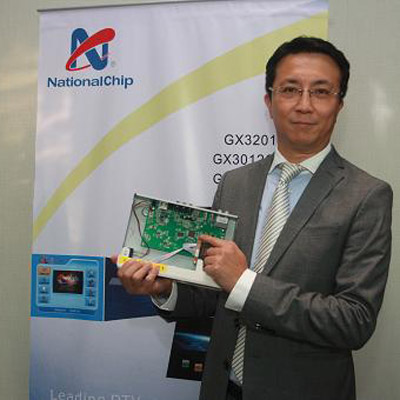
    MUMBAI: When it comes to technology, China is one of the leading Asian countries in the world that comes to mind. So it’s no surprise when leading China based IC developer and manufacturer of digital TV solutions, NationalChip, launched new set top box chips (system-on-chip) for the Indian market.

    The company is looking to increase its market share in India’s fast-growing set-top box (STB) chip manufacturing market. As part of its growth plans, NationalChip has launched new set-top box chips (system-on-chip) for the Indian market.

    The company’s new HD STB chip is based on GX3201 that delivers HD content at over 1000 MIPS CPU performance, 1080P HD decoding and security implementation. To cater to the mid to lower end subscribers that forms the major chunk of the Indian cable TV universe, the company has launched SD STB chip based on GX3001R or GX3012Q that offers high speed CPU for user experience as well as true colour display for enhanced picture quality.

    According to NationalChip, these chips can support advanced security implementation that are demanded by most prominent conditional access vendors (CAS) and MSOs.

    “India has nearly 6,000 MSOs whereas there are only 300 MSOs in China. There is a huge opportunity for us to tap into this large cable TV market and we have the resources, the name and the technological advancement to cater to it,” says NationalChip VP Patrick Dou.

    NationalChip’s HD solution also supports OTT application that will allow subscribers to access online video content through home network internet. Currently the chip allows the viewer to use Wi-Fi connectivity to access sites such as YouTube to experience HD videos on their larger screens.

    “We are telling the MSOs here that they can secure subscription revenue and at the same time provide value added services to their subscribers with our HD solution that supports OTT application,” adds Dou.

    After having been in the industry since its inception in 2001 the chip manufacturer is looking to expand into new markets. It has identified India as one of the key markets apart from southeast Asia and Europe, Middle East & Africa (EMEA). NationalChip, which began operations in India from 2011, is working with local Indian STB manufacturers by providing them with software support to develop STBs locally.

    The company claims that its chips have been officially authorised by many CAS companies including NDS (Now under Cisco), Sumavision, NSTV, ABV, Logic Eastern, Ensurity, E-CAS, and Only One CAS. With the new product offering, the STB chip manufacturer is looking to work with other major CAS vendors in the Indian market.

    “We have a leading product lineup, turnkey solutions, track record and technical capability to support sustainable development of the Indian market,” says an optimistic Dou. On the business front, Dou says that the company has shipped 1.5 million chips to the Indian market in the last two years.

    “This might not seem like a big number but for a company which has been in the market for just two years, it’s quite an achievement,” stresses Dou. Dou is looking to up NationalChip’s market share to 30-35 per cent in the next four years, up from the current five per cent share.

    However, that will be a tough task as the STB chips market is currently dominated by big players like French Italian MNC STMicroelectronics, America’s Broadcom, and Taiwan’s ALi Corporation.

    To achieve this growth, the company is expanding to other cities in the country. Currently having its office only in Delhi it soon has plans to branch out to Mumbai, Pune, Hyderabad, Bengaluru, Ahmadabad and Chennai. The company currently has Pune-headquartered Millennium Semiconductors as its only distributor in India.

    “We have been in this business for nearly two decades now and have the right know how to take NationalChip and its advanced technology to the leading MSOs in the country. We are sure that with its advanced security feature as well as great capability to showcase HD content all leading MSOs will be more than willing to join hands with NationalChip and us,” says Millennium Semiconductor Sr.GM Technical Operation Sunil Deshmukh.

    Being the first local Chinese company to develop digital TV IC solutions since 2001, NationalChip is also the first and only Chinese IC company to achieve big deployment to support digitalisation phases in India.

  • Unbundling channel rates a danger to TV ecosystem?

    Unbundling channel rates a danger to TV ecosystem?

    MUMBAI: In the midst of the digitisation process in India, several issues continue to be left unanswered. One such being the matter of unbundling of channels for which the Telecom Regulatory Authority of India (TRAI) issued a consultation paper asking suggestions from stakeholders regarding the same but no decision was reached after that. There is however a rift between MSOs and aggregators on the issue with the MSOs favouring it and aggregators being against it.

    The real question is whether or not it will benefit everyone including the broadcasters, MSOs, aggregators and finally the consumer. 

    A report on the situation in the US by investment banking and asset management firm Needham and Co’s entertainment analyst and MD Laura Martin says, unbundling of cable TV rates could well be a recipe for disaster for all concerned. In the report, Martin has taken a look at the issue from the consumer’s perspective and its consequences for them and for the ecosystem. 

    Martin’s report reveals that US households pay about $720 per year for 180 channels out of which they watch just 18. Consumers would like to pay $30 per month to watch these 16-20 channels. As compared to this, in India, annual rates are a paltry $30-$60 per annum for anywhere between 120 channels to 200 plus channels. 

    Martin argues that if consumers wanted to have all 180 channels as a la carte, their annual spending would increase to $1260, i.e, 75 per cent higher than the current price. 

    Here’s how it goes: cable TV channels in the US generate $56 billion from advertising and $45 billion from subscribers, while pay TV distributors pocket $30 billion, if one goes by last year’s figures. She estimates that if there was unbundling about 124 channels out of these 180 would be wiped out as they would not be in a position to have an average of the 165,000 viewers which Martin estimates are needed to break even on each cable TV channel’s $280 million per annum investment. Her view is that niche channels would simply disappear.

    The decrease in channel choices, points out Martin, would also mean that approximately $80 to $113 billion would be lost in consumer value and the government would lose $20 billion in taxes. It will also put the US, which is already dealing with a high unemployment rate of 7.3 per cent in October 2013, at a risk of losing 1.4 million additional jobs.

    She also warns that if these 180 channels do not create content that is engaging young Americans in the 18-34 year age group, there might be no traditional linear television left in 10 years. Viewers are resorting to cord-cutting and migrating increasingly to online for their entertainment to services such as Hulu, Netflix, Big Frame, Defy Media, Fullscreen, Machinima, Maker Studios,etc. According to a statistics portal Statistica, 43 per cent of Americans between the ages of 18 and 34 preferred Netflix as compared to 46 per cent of paid subscribers who chose cable.

  • MCOF to meet MSOs to discuss billing issues

    MCOF to meet MSOs to discuss billing issues

    MUMBAI: The easier a process becomes, the better it is. It seems this is the process that Maharashtra Cable Operators’ Foundation (MCOF) has opted for in order to make the entire digitisation process a smooth ride. In a new initiative, the apex body of cable operators in Maharashtra has sent a letter to all the MSOs inviting them to a meeting where they would discuss about the proper implementation of digitisation.


    In the letter, of which Indiantelevision.com has a copy, the MSOs have been requested to schedule the meeting in the coming week.


    When both the parties meet, they are expected to discuss issues related to: interconnect agreement, billing, Consumer Application Form (CAF), package activation, a la carte channels choice, disconnection of set top boxes (STBs) without notice, misleading and false  information given about the LMO to the customer over call center, ownership of STB and uniform rates.
    We are making an effort from our side to meet each MSO separately, says Arvind Prabhoo


    The letter has come out a day after the Telecom Regulatory Authority of India (TRAI) gave the MSOs the final deadline of 15 December to submit the duly filled CAFs and also implement gross billing by December.  “CAF is not the only issue, there are issues related to service tax and billing,” says MCOF president Arvind Prabhoo.  “There is no clarity on whether the consumers will be billed on the service provided by the MSO or on the MRP of the package that the subscriber opts for,” he adds.


    The meeting has been called to discuss the issues concerning both the MSOs and the LMOs.


    “We are making an effort from our side to meet each MSO separately. In the meeting, we will try and understand the system of billing devised by the MSO and make suggestions, if required. If not, we will go hand-in-hand with MSOs, provided our legal status is maintained,” informs Prabhoo.


    The apex body which comprises more than 1500 LMOs is also unsure about the settlement mechanism between the MSO and the LMO once the billing is done. “The MSOs so far haven’t spoken to the LMOs on how they will pay the LMO for the customer it bills,” points out Prabhoo.


    Expressing concern on the 15 December deadline set for submitting CAFs, Prabhoo says, “If 50 per cent CAFs have been filled in one year on an average, how does TRAI expect the remaining 50 per cent to be filled in next three weeks? Also, with the holiday season coming in, is TRAI looking at switching off STBs, if the deadline is not met?”


    With TRAI pushing MSOs to start gross billing from December, Prabhoo comments, “The issue relating to entertainment tax is subjudiced. So when the MSO says it will start gross billing from next month, is it looking at levying entertainment tax as well?”


    It should also be noted that the Nasik Cable Operators Association has moved the Telecom Disputes Settlement and Appellate Tribunal (TDSAT) on billing. While TRAI was supposed to respond to it on 22 November, the tribunal has granted time till 23 January to the regulator to respond. “So when both entertainment tax and billing is subjudiced, why is TRAI pushing cable operators for contempt of court?” he questions.


    On the issue of TRAI asking the MSOs to either convince the LMOs to start billing or do it themselves, Prabhoo sternly says, “They can do it, if they want. We are not going to be delivery boys. We are owners of our own businesses. And we have the right to bill our own consumers and that is what we are fighting for.”

  • Industry speaks on cable monopoly

    Industry speaks on cable monopoly

    MUMBAI: The Telecom Regulatory Authority of India (TRAI) is now looking at ensuring a level playing field for both the multi system operators (MSOs) and the local cable operators (LCOs). The regulator on 26 November came out with a recommendation paper which put a cap of 50 per cent on MSOs stake in any state. The recommendation paper aims at curbing the monopoly of MSOs.

    “Currently there are no restrictions on the area of operation and accumulation of interest in terms of market share in a city, district, state or country by MSOs. It has been observed in some states that a single entity has, over a period of time, acquired ‘control’ of several MSOs and LCOs, virtually monopolising cable TV distribution in that market. Cases of market dominance by MSOs have been reported at various forums. Such monopolies/market dominance in the TV channel distribution market are not in the best interest of consumers and may have serious implications in terms of competition, pricing, quality of service and the efficient growth of the TV channel distribution market,” states the recommendation paper.

    The regulator has now recommended that market dominance should be determined based on market share in terms of the number of active subscribers of MSOs in the relevant market. To evaluate the level of competition or market concentration in a relevant market, the Herfindahl–Hirschman Index (HHI) should be used. The TRAI has also recommended that the threshold value for any individual/ ‘group’ entity contribution to the market, HHI should be not more than 2500.

    ABS 7 Star CMD Atul Saraf

    “We welcome the recommendation paper. If one has to see, there is monopoly of one or two players in few states like Punjab, UP etc. I feel 50 per cent is also huge; it should be reduced to 25 per cent to give a level playing field. The recommendation paper if implemented will give quality service to customers,” says ABS 7 Star CMD Atul Saraf.  

    According to Hathway Cable & Datacom MD and CEO Jagdish Kumar G. Pillai, the MSO, by definition, does not have a market share of more than 50 per cent. “We are not impacted by this. And then it is just a recommendation paper. What will be interesting is how the regulator will ascertain the percentage of one’s operation till the country is fully digitised. It is impossible to know one’s percentage share in the analogue phase,” says Pillai.

    He adds, “It will impact some MSOs that are dominant players in few states.”

    Hathway Cable & Datacom MD and CEO Jagdish Kumar G. Pillai

    The recommendation paper states that MSOs that currently have more than 50 per cent stake in any state need not reduce their share, but cannot get into any further mergers and acquisition (M&A). “By this, the regulator has ensured that the MSOs are also not affected,” informs Pillai.

    Through the recommendation paper, TRAI wants to ensure that there is no dominance of any player and that there is a level playing field for the LCOs, MSOs and the broadcaster.  

    The TRAI is laying down the rules for the future. “One never knows about the future in terms of technology and also the methods used by the MSOs to operate. The regulator has to think not for a couple of years, but 10-20 years down the line. The recommendation paper ensures that the LMOs and the MSOs on pan-India basis can co-exist and function rationally,” opines Maharashtra Cable Operators Federation president Arvind Prabhoo.

    Maharashtra Cable Operators Federation president Arvind Prabhoo

    The 50 per cent cap will ensure excellent quality service, healthy competition and also keep costs in check. “The 50 per cent stake is still high, the regulator should keep the cap at 30-40 per cent,” he says. 

    According to Prabhoo, it is a progressive move by TRAI. “The authority is ensuring that there is no monopoly – vertical or horizontal and at the same time, is also ensuring that the LMOs have a choice. The LMOs welcome the move,” he states.

    Ortel Communications president and CEO Bibhu Prasad Rath says, “As I understand, the authority, through this recommendation, is trying to restrict the building up of the market share by any individual /group entity through M&A/control of an entity over many MSOs and LCOs. This does not apply to us because of our differentiated business model being independent and expanding directly through last mile connectivity without going through any M&A or control of other MSO/LCOs.”

    Rath thinks that a 50 per cent market share in a state for any MSO will be fair from a competition perspective. “So we do not see much problem in this. However, we believe that the market share should always be calculated by combining cable TV and DTH together as both aim to serve the same set of customers. The regulator has dismissed this argument which we think is unfair,” exults Rath.

    Ortel Communications president and CEO Bibhu Prasad Rath

    Rath also opines that any such regulation can be implemented smoothly when digitisation is fully put into practice. “In an analogue era, it is not practical to implement this. We hope the MIB will take care of these issues before notifying the same,” he states.

    GTPL COO Shaji Mathews says that the monopoly guidelines have their origins from the analogue era when broadcasters had complained to the TRAI. Says he: “It was an issue which was faced by the broadcasters due to dearth of space on cable networks then; it is being addressed at a time when the country is moving towards digitization.”

    Mathews feel that the recommendation paper doesn’t address two key points — one, when the cable networks join hands to fight against the broadcasters and two, when the broadcaster joins hands with a particular cable network to help them monopolise. “Both these issues which are the root cause to monopoly have not been addressed in the recommendation paper,” says Mathews.

    Mathews also points out that though the recommendation discourages monopoly, it encourages those cable operators who are related to broadcasters to grow their base in areas where they until now had no base. “For the viewer to get good service and for the cable operators to exist and also run a profitable business, there needs to be a transparent and non-discriminatory system. The regulator needs to bring laws for content players,” concludes Mathews.

    TRAI recommendations on monopoly or market dominance in cable TV services
  • LCOs demand access to SMS from MSOs

    LCOs demand access to SMS from MSOs

    KOLKATA: The process of shifting from analogue to digital feed is not without its share of problems; a key issue being the resultant tug-of-war between local cable operators (LCOs) and multi system operators (MSOs) over access to the subscriber management system (SMS).

    The Digital Addressable Cable TV Systems (DAS) requires MSOs to establish a subscriber management system (SMS), where details of all subscribers, along with their choice of services including channels and bouquets, are maintained.

    While cable and entertainment analysts feel, “This brings in addressability and consequently, complete transparency in the whole system,” LCOs have a different take on the matter. They are of the opinion that once MSOs start billing consumers directly, they may end up losing control over their hard-won subscribers. Hence, they’re now asking MSOs to allow them access to the SMS to avoid such an eventuality.

    Says Rajiv Sharma, lead analyst (telecom and media), HSBC Securities: “LCOs are worried about losing control over their subscribers if MSOs bill directly. They are of the view that MSOs should allow LCOs access to subscriber management systems, which are similar to what is being done for airline ticketing.”

    A city-based cable op told indiantelevision.com, on condition of anonymity, that he had worked very hard for the last 20 years and it would be very unprofessional if his business and database were to go out of his hand and to the MSO whom he would then have to depend on totally.

    Meanwhile, an MSO questioned as to how he could allow LCOs access to the SMS which his company had spent a few crores on. Typically, it’s the MSOs that invest in infrastructure including network, encryption, ERP, call centers and SMS.

    Director Manthan Broadband Services pointed out the benefits of SMS as enabling subscribers exercise their choice of services and budget their bills accordingly. “It also helps us in managing their accounting and billing of the services rendered effectively in the long term,” said he.

    Cable analyst Namit Dave suggested that MSOs and LCOs should work hand-in-hand for mutual benefit. While Sharma pointed out that the battle between MSOs and LCOs was sending out wrong signals to the investor community. “Gross billing remains a deterrent for MSOs and we anticipate some delay as we don’t expect clarity on the entertainment tax issue anytime soon,” he said. News is Hathway has suggested it expects to move to gross billing not before phase I i.e. the fourth quarter of the current fiscal.

  • DAS Phase II MSOs get 29 November deadline for activating SMS

    DAS Phase II MSOs get 29 November deadline for activating SMS

    MUMBAI: The noose is tightening around those operating in digital addressable system (DAS) phase II areas. The Telecom Regulatory Authority of India (TRAI) today stated that MSOs have until 29 November 2013 – less than 10 days from today to complete the process of collecting the consumer application forms (CAFs) with information which includes the name, address, choice of channels and bouquets and entering the information into their subscriber management systems (SMS).  They have been directed to have the SMS operationalised by then and also submit a compliance report.


    The direction states that the SMS system has to comply with the digital addressable cable TV system requirements as mentioned in regulation 20 of the Telecommunication (Broadcasting and Cable Services) Interconnection (Digital Addressable Cable Television Systems) Regulations, 2012, for ensuring efficient and error-free service to the subscribers by recording and providing individualised preferences for channels, billing cycles or refunds.


    It is to be noted that the regulator had first on 26 April directed the MSOs to ensure that the SMS is operationalised and the signals of TV channels are transmitted to only those subscribers whose details such as name, address, choice of channel and bouquets etc are entered into the SMS. The MSOs were also directed to disconnect TV signals of the subscribers whose details were not entered into the SMS system and allow such subscribers to surrender their set top boxes. The MSOs had then been asked to furnish compliance report by 7 May.


    Again on 19 July, the Authority convened a meeting of the MSOs operating in Mumbai, Kolkata and other 38 cities covered under DAS phase-II to review the progress of implementation of DAS, wherein the MSOs were asked to collect the CAFs, complete in all respects, including choice of channels/ services and enter the complete details of the subscribers in the SMS by 20 September.  The regulator had even issued a letter on 23 July directing MSOs to ensure compliance and communicate the same to the LCOs and furnish the report in the given deadline. But with the MSOs failing to comply yet again, the regulator again held a meeting on 25 September with the MSOs to review the progress of implementation of digitization in DAS phase II cities. The MSOs in this meeting had requested for the extension of the deadline to 15 November. Once again, they slipped on that deadline.
    With the new sunset date being set as 29 November, can we expect compliance or another extension?