Tag: MSOs

  • JAINHITS DPs successfully hosts LCO meet for AP

    JAINHITS DPs successfully hosts LCO meet for AP

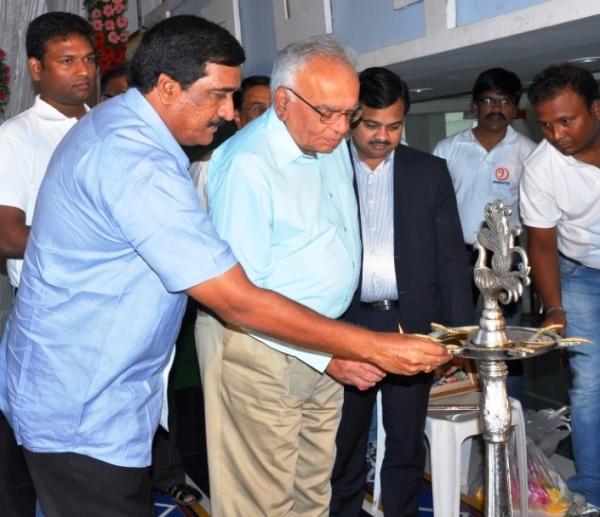
    VIJAYWADA:  JAINHITS, India’s only HITS Platform based service in an effort to digitize all analogue cable networks in the country, conducted a massive LCO (Local Cable Operators) meet in association with the state DP (Distribution Partners) for the Andhra Pradesh region. The meet saw close to 650 LCOs from across the state. The objective was to inform the gathering about the immediate cable digitization solutions that JAINHITS can provide across every corner of India.


    Present on the occasion, Mr. Pradip Baijal, Ex Chief, TRAI (Telecom Regulatory Authority of India) said, “JAINHITS has obtained content coupled with all the regulatory approvals to supply cable TV and broadband, and has downloaded its signal. The time has come for the latest technology of HITS to take the signal directly to the LCOs, and then to subscribers, and to also supply broadband to subscribers through the LCOs.”


    According to the TRAI’s policy, it is expected that the services of several lakh cable subscribers are likely to be disrupted due to non-receipt of their Digital Addressable System (DAS) license from the Centre. Thus, JAINHITS – India’s first DTN service based on the next generation technology of HITS (Headend-In-The-Sky) can play a crucial role with its triple play service offering: Video, Voice and Data that can help digitize all analogue cable networks.


    JAINHITS is not only offering digital cable services, but also providing high speed broadband and multi-screen service which allows the subscribers to view their favorite content on their TV sets, smart phones or tablet PCs – anywhere, anytime; apart from that there are interactive services such as healthcare, education and financial inclusion. HITS is the only platform in the country, offering complete empowerment  and ownership to even the smallest LCO by making him a Leader & Cable Owner and an Independent Service Operator (ISO), by introducing innovative Products, Services, Schemes & Offerings etc. which will make the Digitization Process within the reach of their economic availability.
     

    All the DPs for the state of AP were present at the meet namely; V. Balaji, Master Care Electronics Pvt. Ltd. (Vijayawada), P. Prasada Raju, One Implex Business Solutions Pvt. Ltd. (Hyderabad), Srinivasa Rao, Priyadarshini Communications (Kurnool), Prasada Raju, Priima Infomatics Pvt. Ltd. (Warangal), S. M Reddy, Sm Channel Marketing and B. Suresh, Sri HiSpeed Network (Tirupati). Giving the local flavor, the DPs present there elaborated on the relevance of the services for the AP market. In heavy monsoon period unlike the competition, JAINHITS technology, offers uninterrupted broadcast services for its subscribers in the region.


    The key proposition of the HITS platform is its cost-effective investment for cable operators which stands at a minimum of only Rs 25,000 per month. With this, they expect to do business with 400 plus partners and install over 1000 Mini Downlink Headend’s across 640 districts of India by the end of 2014.


    About JAINHITS:

    JAINHITS is a satellite communications company with no ground presence & has MSO, ISP and HITS license. Its product portfolio includes Mini Downlink Headend and CMTS for Cable Operators with some add on accessories like Nodes, Amplifiers and Wi-Fi Hot Spots which will help them increase their ARPUs. JAINHITS is offering more than 250 Digital TV Channels through the Standard and High Definition Set Top Boxes (MPEG-4) with the Bureau of Indian Standard (BIS) standards, Broadband through Wired and Wireless Modems, Value Added Services like Video On Demand (VoD) and Innovative Products like Cloud Broadband, Gaming Console etc. JAINHITS plans to soon provide online Education and Healthcare to its consumers through its network of ISO’s.


    Only JAINHITS delivers signals directly to LCO / MSO Networks across India with a plug and play solution. With an aim to make cable operator businesses independent and growth oriented, it helps LCOs go Digital over night and ensure full compliance across legal, regulatory, and content requirements at the lowest comparative investments.

  • National and local MSOs meet in Kolkata to discuss billing process

    National and local MSOs meet in Kolkata to discuss billing process

    KOLKATA: The multi system operators (MSOs) seem to be in full swing to bring the gross billing system in place. This time, to discuss the smooth rollout of gross billing in the Kolkata Municipal Area (KMA), the national representatives of MSOs that included SitiCable Network and Den Networks, along with the local players like Manthan and AMBC among few others met and signed a deal to expedite the process. 


    Kolkata has 30 lakh cable homes and most of them still get ad hoc bills from the MSOs. Thus, to implement the gross (consumer) billing for January, and bring transparency in the entire process, the MSOs have requested cable TV subscribers to ask for bills from the local cable operators (LCOs) before paying the monthly subscription charges.


    In fact, in order to ensure that the gross billing process is smooth in the KMA area, the MSOs from national and eastern regions meet regularly, especially after West Bengal and the central government authorities have asked them to speed up the process.


    “Today’s meeting was on the smooth rollout of the billing. Customers should ask for a bill from the LCOs before paying their bills every month,” said AMBC managing director Sujit Das.


    Siticable Kolkata director Suresh Sethia also brought to notice that the MSOs have conducted a check on the overall implementation of digital addressable system (DAS) including the billing and collection process.  


    According to the regulations set by the Telecom Regulatory Authority of India (TRAI), subscribers will get 15 days from the date of the bill to make the payment. “In case the subscriber fails to make the payment till the due date, we may charge interest on the outstanding amount,” said Sethia, also adding that in the recent meeting the MSOs have decided to be firm on these agendas.


    The seriousness of the MSOs is evident as most of them have uploaded the bills on the server, and some have even given the print outs to the LCOs so that bill collection can be done, remarked a city based analyst.

  • First Indian Digital TV Honours on 28 Jan

    First Indian Digital TV Honours on 28 Jan

    MUMBAI: 2013 was a watershed year for the cable TV and DTH industry, what with the the entire TV industry – cable TV operators, MSOs, DTH players –  working on going into overdrive, pushing the government’s digital addressable system (DAS – digitisation) mandate. There were big developments and even bigger initiatives, and it is with a view to recognising and rewarding such endeavours as well as the individuals and organisations behind them that Indiantelevision.com has instituted a first-of-its-kind initiative called ‘The Indian Digital TV Honours’, to be held on Tuesday 28 January at The Lalit, New Delhi.


    The list of best practices and worthy winners has been compiled by an advisory board comprising senior executives, industry veterans and the indiantelevision.com editorial team led by founder, CEO and editor-in-chief Anil Wanvari.


    According to Media Partners Asia executive director and co-founder and member of the advisory board Vivek Couto, The Indian Digital TV Honours is a laudable effort as it will go a long way in encouraging individuals to accelerate the development of the industry.  “That’s because it seeks to recognize the achievement, innovation and vision of the stakeholders,” he says.”


    Media observer and consultant and member of the advisory board Sanjeev Hiremath adds: “It is an encouraging initiative by Indiantelevision.com. It is a way to both support and encourage the implementation of DAS. I am glad that a platform like this has been set up by the Indiantelevision team.”


    BCCL president corporate development (and member of the advisory board) Sunil Lulla believes there was a need to acknowledge the manner in which television distribution is changing. “I am glad that there is another first from Indiantelevision.com. Acknowledgement is needed. Though the switch from analog to digital will take time, encouragement is needed.”


    Chrome Data Analytics and Media founder and MD Pankaj Krishna joins his peers in lauding the effort. “I am sure pretty soon, others will follow it too. One must remember that digitisation is very critical to us now and with the change in wind, the transition from analog to digital is going to become crucial. In short, it is like the change from Kodak film roll which we used 10 years ago to a digicam, which has become a part of our lives now.”


    So how did the advisory board select the winners? Says Wanvari: “We had detailed discussions with various stakeholders in the industry, to come up with a filtered list of top achievements to which the advisory members also contributed.”


    Adds Lulla: “A list was given to us comprising names of people and companies that have made a difference to digitisation from various points of view like preparedness, initiatives taken, consumers, success etc. So, I looked at these from various perspectives like who made it simple for consumers, who followed the regulations, which company or person drove the change and so on…”


    What were the criteria for selection? Couto anwers: “The criteria were simple. Any stakeholder or regulator who has ushered in development through investment, leadership or a combination of both to accelerate quality content and infrastructure for consumers will feature in the list.”


    The entire selection process took almost a month for the advisory board. Hiremath, who identified categories to honour key initiatives, says: “This is going to be an exciting and interesting event.”


    According to Hiremath and Couto, while the first edition will honour well-known names from the industry, the awards will only get bigger and better with time.


    “We will see OTT players, software developers, app developers and many others entering the ecosystem in the future,” Couto rounds off.
     

    The Event is: 

    Powered by Partner:  Den

    Associate Partners: Hathway, Surewaves, Videocon D2H

    Support Partner: SES, The One Alliance

    Media Partner: India News

    Thanks to HBO Defined and HBO Hits for the support

    Online Media Partners: Radioandmusic.com, Tellychakkar.com

    Event Executed By: ITV2.0 Productions

    An Initiative By: Indiantelevision.com

  • MCOF and its MSO-LMO revenue sharing proposal

    MCOF and its MSO-LMO revenue sharing proposal

    MUMBAI: The struggle to find a solution on how multisystem operators (MSOs) and cable operators (LMOs – last mile owners) will work together in a digitised India continues.  The discussions between Maharashtra Cable Operators Federation (MCOF) and Hathway Cable & Datacom to come up with a workable arrangement had given some hope for a smooth rollout of MOS-LMO revenue shares, and consumer billing in Mumbai. But talks between the two seem to have come to a standstill for some time now. 


    Indiantelevision.com has got a hold of the proposed revenue share model which has been hammered out after a lot of thought and conversation: it takes into consideration operational expenses (OPEX) and the capital expenditure (CAPEX) of both the LMOs and MSOs.


    “It is as much in our interest as it is in the MSO’s to resolve the bottleneck, differentiate amongst subscribers and cater to their needs to optimise the network resources and push ARPUs up in the shortest time,” says MCOF president Arvind Prabhoo.  


    According to the proposed revenue sharing structure, the MSO: LMO share for free to air (FTA) channels should be 37 per cent : 63 per cent. For basic pay packages, the price range of which is Rs 150-Rs 250 (excluding taxes), the proposed revenue share is 45 per cent : 55 per cent; for advanced pay channels, which are in the price range of more than Rs 250, the revenue share proposed is 50 per cent : 50 per cent. For special/VOD packages, it is 75 per cent : 25 per cent and for HD channel packages it is 60 per cent: 40 per cent.


    “The best way for the industry to not only survive but prosper to its true potential is to work as a pure and true partnership business. MCOF will act as the collection management and settlement entity,” adds Prabhoo.  


    The MCOF model assumes that every MSO has two systems in place: the subscriber management system (SMS) and Financial Accounting System (FAS). The SMS hosts the entire subscriber details and is the basis of value chain reconciliation and audit.  


    “We have proposed that the MSO use this to generate end-customer bills with full details, factoring the LMO income share and taxes at various levels. These bills would be raised in the name of the LMO network and carry the tagline powered by the MSO,” says Prabhoo.


    The billing details, as per the proposal, will be pulled by MCOF and placed on the cloud and each LMO would gain access via the worldwide web using a mobile device or through a desktop.  The collection data is planned to  be captured in real time using MCOF approved technology, which is currently UPASS and updated on the MCOF cloud in real time and at the MSO-end either in real time or on an end of day basis.


    “We will work out the tax liability at LMO levels and guide them to use the technology to compile tax returns/challans. We will also reconcile the MSO-LMO accounts taking into account prepaid/post paid, online payments made to the MSO and unpaid customers,” informs Prabhoo.  


    Explaining the reason for the proposed revenue share, Prabhoo says, “The LMO has certain base expenses to cover, such as employees, office rent, repairs and replacements of shared infrastructure, audit and tax returns.”


    The effective OPEX for an LMO, according to MCOF for 1000 subscribers is Rs 109,500 a month. “The LMO’s per subscriber cost comes to Rs 109.5. We need at least Rs 109- Rs 110 to pay the employees and other costs. So this is the minimum and then comes profitability,” he highlights.


    The average CAPEX per subscriber is close to Rs 4000. Also, MCOF points that while the subscribers/employee ratio for an LMO is around 400, it is expected to be more than 5000 for a MSO. Thus making the OPEX element much higher for an LMO than an MSO.  


    Prabhoo feels that while the MSO is a wholesaler and LMO the retailer, the assumption of equal sharing as envisioned by the Telecom Regulatory Authority of India (TRAI) needs to be rectified and replaced by equitable sharing.


    “We have had detailed discussions with the TRAI on this and the matter will be reviewed sooner or later, but for sure it is not correct on TRAI to assume equal sharing by all three stakeholders,” he says.   


    The collection cost currently is entirely on the LMO while a good part of the monies flows to MSOs. This, according to MCOF needs to be allocated in the revenue share formula, if not actually computed and reimbursed. “For all practical purposes the LMO’s work load will increase as he acts as the marketing arm and administrative support system for the MSOs. Also, another round of set top box (STB) deployment/retrieval/repairs/replacement by HD boxes will entail quite a lot expense.”


    MCOF, in the email to MSOs, has also suggested that carriage fees should be clubbed with customer revenues, being a mathematical product of STBs in place and carriage fee per STB.


    MCOF has agreed that the UPASS technology, devices and connectivity costs will be borne by the LMOs. Also while integration, payment gateway, electronic processing and settlement system costs are incurred by the MSOs for direct connections or internet services, for any additional integration, the cost can be shared with the LMOs on a pro-rata basis.


    The LMOs are also suggesting carriage fee sharing as a loyalty bonus. “This can be mutually worked out,” says Prabhoo.  


    The new system will enable the MSO to see and monitor the exact collections made each month by the LMO and also the revenue due to the MSO, excluding taxes. While revenue will be booked in both books as per packages, the LMO will pay the MSO per month for all the collections made during the previous month after deducting taxes and the LMO share within seven days of the invoice being generated by the MSO.


    While MCOF is trying to move things forward, what’s stopping the MSOs? “Well! There are talks going on between the promoters of the MSOs. There is no consensus amongst the MSOs and that is what is taking time,” says a Hathway official on condition of anonymity.


    According to the official, the proposed revenue share by MCOF is acceptable, with minor changes. “But, all the MSOs operating in the state, have to come to a consensus, which I don’t see happening soon,” he says. The official feels that billing in Mumbai is most likely going to  be delayed further.


    SitiCable Network, which also has a presence in the country’s financial capital says it may soon conclude on how it will share revenues. “We are negotiating. We may announce our revenue share in a couple of days. Since, we have a small presence in the state, we are seeing what other MSOs are doing there,” explains  SitiCable Network chief operating officer Anil Malhotra.

  • Manthan Partners with Magnaquest Product SURE!

    Manthan Partners with Magnaquest Product SURE!

    MUMBAI: ManthanBroadband Services Pvt. Ltd, one of the leading MSOs in India, has signed up a 10-year deal with SURE!, a Magnaquest product, to provide comprehensive cloud-based Subscription Lifecycle Management that include Billing, CRM, and end-to-end Managed Services, the two companies announced today.

    In one of the first-of-its kind deal in the MSO space, Magnaquest will host the entire infrastructure of the application, and manage it for Manthan as part of their Managed Services Contract. This Software-as-a-service (SaaS) business model is backed by globally-proven Magnaquest Operations support.

    SURE!, Magnaquest’s award-winning and globally proven combination of BSS, OSS and Managed Services will align perfectly with Manthan’s installation goal of over 3.6 million STBs by 2014 across the states of Bengal, Orissa, Assam, Jharkhand and Meghalaya. SURE! will also complement the focus of Manthanin transforming the entire network to address next generation digitization requirements and provide best customer experience.

    Speaking about the global search for the right Subscriber Management, Billing and Managed Services partner, Mr.Gurmeet Singh, Director, Manthan Broadband Services, said, “We were looking for a provider of international quality, a solution that is robust for geometric expansion and growth, and at the same time, flexible to support us in various business approaches, fast innovation and dynamic market models. We were looking for a partner with a technology that would not fail, but also bring in domain-edge, strategic approach and business insights support to mutually-nurture in taking the right strides over a long period of time.”

    “The reasons for selecting SURE!, from Magnaquest, are many including their undisputed global leadership in Media & Entertainment domain for SMS, international-class solutions, a rapidly scalable technology, and even more significantly – the ability and willingness to completely take up the responsibility of planning, creating, deploying and managing our entire technology infrastructure, while meeting our future requirements as we grow in the new era of digitized Indian Pay TV market” he said.

    “Having evaluated various global players in the space and considered the value-edge in the offerings of all Subscription Lifecycle Management companies, we had no doubts in going ahead with SURE! because of its client-centric DNA, ability to think for our end-subscribers, speed and flexibility, optimized costs, its ‘Pay-as-you-grow’ model and, the brand promise,” Mr. Singh said. “We are sure SURE! will help us in our overall mission to become one of India’s most-loved provider of home and mobile entertainment connectivity.”

    “We are very excited to be chosen by Manthan, one of the fastest growing regional MSOs in the country, after a global search for a strategic technology and consulting partner. We are looking forward to a great relationship and supporting Manthan’s leadership in attaining their ambitious goals with our proactive and comprehensive value offerings. We have a promise to improve ARPU and enable loyalty from subscribers, growth readiness and total operations management. It is a partnership that can change the game for end-users, making their experience of entertainment connectivity truly world-class and best-in-class.,” said Rajiv Debbad, Director – Business Development, SURE!

    “We have delivered our subscriber management and billing solutionon SaaS platform to Manthanin flat 3 week’s time. We are amongst a handful of players in the world poised and ready to harness the Subscription Revolution underway. SURE! is more than a product, platform or suite of industry-focused niche solutions-set. It is a brand, a faith, a promise to optimize technology for the success of your business,” Mr. Debbad said.


  • MIB: Now on to DAS phase III & IV

    MIB: Now on to DAS phase III & IV

    MUMBAI: Within days of the Telecom Regulatory Authority of India (TRAI) giving out its fact sheet on how digital addressable system (DAS) phase I and II have progressed, the Ministry of Information and Broadcasting (MIB) directed all the stakeholders also known as  ‘the task force of digitisation’ to assess its progress and chart out a road map for the coming year.


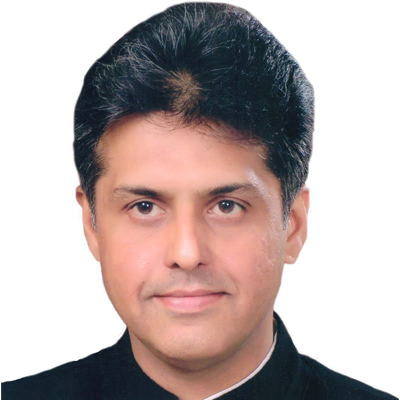
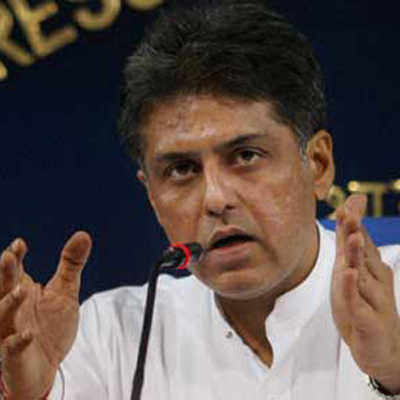
    The meeting saw minister Manish Tewari, secretary Bimal Julka, additional secretary Supriya Sahu, leading MSOs such as Den CEO S N Sharma, The One Alliance president Rajesh Kaul, LCOs, News Broadcasting Association (NBA) secretary Annie Joseph, Indian Broadcasting Foundation (IBF) secretary Shailesh Shah and Tata Sky CEO Harit Nagpal. After speaking to everyone about the issues faced in DAS phases I and II and Sahu’s presentation on the value that digitisation was creating in the country, Tewari gave the go ahead to implement the next two phases.


    However this time it won’t be with two deadlines but rather a one stretch implementation across the remaining parts of the country with just one deadline of 31 December 2014. Although the ministry was of the opinion that two deadlines should exist, the TRAI had voiced its opinion in 2011 that phase III and IV could be achieved simultaneously.


    All the stakeholders brought out the issues they had faced in the first two phases to which the minister warned them to sort out their own problems internally or this would lead to a postponement of complete national digitisation – which would not bode well for the industry.  He also told everyone to keep working in coordination even now – and iron out any wrinkles or resolve all problems so that digitisation can progress further.


    Tewari said that the upcoming elections may slow down the process but digitisation is here for good and there’s no stopping it now.  The IBF and NBA have been asked to once again air promos highlighting the importance of digitisation.


    Now that the green signal has been given, all stakeholders can now attack the rest of the country without having any boundaries. But this is the toughest part as the issues they will face in the interiors will be much higher  and more difficult to resolve than metros and towns. Phase I and II saw nearly 25 million set top boxes being seeded while phase III and IV will see about 75 million more boxes being put in place.


    The minister has also assured support saying that the issues in the previous phases will be addressed as they move towards the next ones. 

  • DEN, Hathway and InCable get interim relief  on ent tax

    DEN, Hathway and InCable get interim relief on ent tax

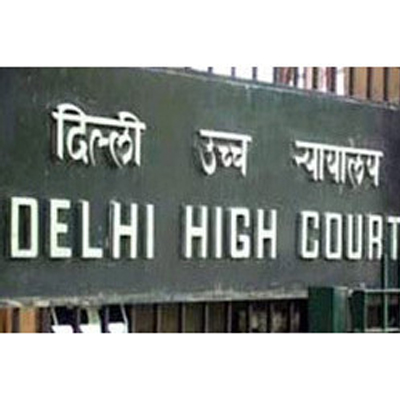
    MUMBAI: The big four  of Indian cable TV – DEN Networks, Hathway Cable and Datacom, InCable and Siti Cable – heaved a sigh of relief as 21 January ended. The reason: the Delhi High Court – which was hearing their appeal seeking to restrain the state government’s entertainment tax authorities from taking any coercive action against them for not paying entertainment tax – gave them relief, if at least for some time. The  HC passed an interim order, forbidding the tax folks  from taking any steps  against  three of the MSOs – Den, Hathway and InCable.


    The cases that were heard in one day saw the appeals of  DEN and Hathway being joined  together while InCable and Siti Cable presented its case separately.  With the order coming into effect, MSOs have been relieved of the duty of collecting entertainment tax from the LCOs and submitting it to the government till the judgment on the case is passed. The next hearing will be on 13 March.


    The respondent (the entertainment tax collection authorities) have been given four weeks to file its reply to the case. In the meanwhile, its hands are tied. However, what was not clear at the time of writing whether  the onus is back on the LCOs to pay the tax to the government.


    Although the MSOs are receiving the tax from LCOs, they claim they aren’t getting the full amount. Hence, the balance amount normally has to be coughed up by the MSO whether it is paid the same or not by the LCO. This is pretty unfair, they have stated.


    The  MSOs approached the Delhi HC as  the inexplicable  pressure was being thrust on them to cough up taxes.

  • Four national MSOs file writ petition against Ent Tax

    Four national MSOs file writ petition against Ent Tax

    MUMBAI: Entertainment tax has become a bothersome issue for both MSOs and LCOs. Right from the amount of tax levied to ownership of collection, state government mandates have got the two cable TV factions locking horns. While government regulations mandate MSOs to collect tax from the LCOs and submit it, the LCOs would rather take the onus on themselves.


    Four Indian national MSOs – Den, Hathway, Siticable and InCable have filed separate writ petitions in the Delhi HC to challenge several aspects of the entertainment tax being imposed as well as the tax collecting authority’s stance towards the MSOs in the state of Delhi.  The cases are all set to be heard today in a joint hearing.


    While Hathway Cable & Datacom was put through an enquiry on its own premises, others have decided to legally protect themselves before something similar happens to them. Siticable claims that it has been fulfilling all duties effectively. An ex parte order was taken out against it for non compliance in April and May 2013 which Siticable had appealed against. When that didn’t go very far, it decided to lodge its writ petition seeking redressal and  justice.


    Siticable’s first hearing was yesterday when the lawyer on behalf of the tax authority asked for a day’s time to come up with its side of the case. “We had deposited the tax and had also filled the form 10 as per requirements. Yet the authorities were after us. So we went to court to request that no coercive action be taken by them ,” says Siticable CFO Sanjay Goyal.


    Hathway is of the opinion that entertainment tax collection is a duty that has been undertaken by the LCOs for several years now and that is how it should be. Its writ petition states that the order passed against it was unreasonable.


    MSOs say that they are alright with collecting the tax and passing it on to the department but traditionally it had been the job of the LCO to do that. However, in case of  a lapse of payment by the LCO, the MSO should not be asked to cough up the remaining money is what they say.


    The case will come up for hearing today. Who knows whether the Delhi High Court will give a stay order or decide on its fate tomorrow itself.

  • I&B ministry to take up cable TV monopoly recommendations

    I&B ministry to take up cable TV monopoly recommendations

    MUMBAI: The inter-ministerial committee in the information and broadcasting ministry (MIB) is likely to take up the Telecom Regulatory Authority of India’s (TRAI’s) recommendations on controlling monopoly/market dominance in the cable TV sector this week. These were released by the TRAI on 26 November 2013. This was revealed by MIB minister Manish Tewari to the Times of India (TOI) yesterday.


    According to the TRAI recommendations, a barometer known as the Herfindahl Hirschman Index (HHI) is to be used to measure monopoly of MSOs or cable TV service providers in a market which as defined as a state (with certain exceptions).


    The recommendations state that “the threshold value for any individual/group/entity contribution to the market HHI should be no more than 2500.”  According to the TOI report, this constitutes 50 per cent market share, the market being defined as a state.


    The TRAI recommendations further state that “any M&A among MSO(s) or between an MSO and LCO in a relevant market shall require the prior approval of the regulator. The decision on any proposal, complete in all aspects, shall be conveyed within 90 working days.”


    They go on to further add that in “the cases where any group’s contribution to HHI in a market is more  than 2500 as on the date of issue of guidelines, such legal entity/ ‘group’ shall take necessary remedial measures, within 12 months from the date of issue of guidelines, so as to limit  its ‘control’ in various MSO(s)/ LCO(s) in such a way that the  contribution to market HHI of that ‘group’ reduces to less than or equal to 2500.”


    Tewari told the TOI that the ministry was “seriously looking at introducing a cap on the market share of MSOs to stop monopolistic practices, whether due to political pressure or political ownership, to protect plurality and diversity of content.” 

  • Chennai Corp cracks the whip on cable TV ops

    Chennai Corp cracks the whip on cable TV ops

    MUMBAI: A major crackdown on cable TV operators is taking place in Chennai. 


    The Chennai civic body, The Chennai Corporation has gone on a drive to collect infrastructure usage and registration charges from local cable TV operators in the city.


    Sources in Chennai revealed that around 16 companies were given legal status after they coughed up Rs 1 crore to the corporation. Currently, the civic body charges Rs 9,400 per km as infrastructure use rent to cable TV and telecom operators, though a proposal to hike it to Rs 32,000 is pending with the government. 


    The Chennai Corporation has been trying to clean up the city and had issued orders to its employees and staff to snap cables of the operators who did not pay up. It expects to collect another Rs 1 crore in the coming week. 

    The civic body is expected to next streamline the way the cables have been strung over head all over Chennai, say officials.