Tag: MSOs

  • Expected economic recovery to benefit media and entertainment industry: Ind-Ra report

    Expected economic recovery to benefit media and entertainment industry: Ind-Ra report

    MUMBAI: Future seems to be optimistic for the Indian media and entertainment sector, at least that is what the India Ratings & Research (Ind-Ra) report says. The agency has revised the outlook on the media and entertainment sector for FY15 and it expects improvements in advertisement spending (ad spending) by corporates with a gradual economic recovery, eventually making the industry stable from negative.


    The upcoming elections will also contribute to the increase in ad-spending in the Q4-FY14 and Q1-FY15. The agency maintains a “stable outlook” for most of Ind-Ra rated entities for FY15.

    High newsprint prices due to currency movements along with limited capacity to pass on cost increases to end-consumers could continue to impact the profitability of print media players dependent on imported newsprint in FY15. However, some comfort is drawn from the expected improvement in ad revenue. 

    Increasing digitisation of cable TV distribution in FY15 will increase subscription revenue for broadcasters and multi system operators (MSO), which would positively impact their business profile with reduced dependence on cyclical ad revenue. However, the agency believes timely completion of the digitisation regime remains the key as the capex undertaken by cable operators and direct-to-home operators towards distribution of set-top boxes will be monetised fully once the digitisation drive is complete. 

    Telecom Regulatory Authority of India’s (TRAI) proposal for increasing foreign direct investment limits in the broadcasting sector, if implemented, could lead to increased investor interest in the sector. Investor interest would also be boosted by the digitisation impact. 

    Ind-Ra expects print and TV media will continue to dominate the industry, commanding a major chunk of the ad spend over the medium term. However, online ad spend would be the fastest growing segment on the back of increasing penetration of Internet and Internet-enabled hand-held devices coupled with changing lifestyles.  


    Ind-Ra does not envisage a positive outlook for the industry, given the industry’s continued strong dependence on ad revenue and only a moderate economic recovery expected in FY15. However, timely implementation of digitisation coupled with deleveraging of MSOs could result in a positive outlook as also a fall in newsprint prices. 
     

    Lower economic growth unable to give a boost to corporate ad spending could result in a negative outlook. Furthermore, an increase in newsprint cost further straining profitability and impacting credit profiles could also result in a negative outlook.

  • TRAI’s toothless content aggregator regulations

    TRAI’s toothless content aggregator regulations

    The Telecom Regulaotry Auhtority of India  (TRAI) was right in both identifying and bringing in new regulation in an attempt to curb content aggregator aggression (read: broadcaster aggression). However, the restrictions are very minimal and on the face of it, they don’t seem to have too much teeth. Aggregators can get renamed as Agents but will TRAI’s effort at redoing and notifying regulations for them really act as an agent of change?


    There is no restriction on the ownership of agent companies or how many broadcasters they can represent. (Will need to be addressed in issue of cross media.) Broadcasters belonging to the same group can bundle channels. For the immediate future it is more likely to lead to a futile exercise in splitting existing contracts and  and overtime and consulting fees for the guys in black suits (read: lawyers).


    Already agreed terms including carrying weak channels and desired packages are the tradeoffs by which the DPOs negotiate to their advantage, so contrary to TRAI’s belief that they add to unwanted costs, they actually subsidize the DPOs costs – whether for carriage, packaging or for a preferred LCN.


    Restricting multi-broadcaster packages is not important. What is important are the DPO’s packages which are what subscribers eventually subscribe to. As mentioned, these are negotiation tradeoffs.


    In any case most of the channel pricing and bouquets evolved arbitrarily at a time when there were already existing TRAI restrictions on a-la-carte, bouquets, price freeze on existing channels etc and very often broadcasters introduced highly priced new channels to offset the freeze on existing channels pricing. Even internal allocations between various broadcasters within an aggregator skewed rationale on pricing.


    The new regulations have not addressed many potent issues which have been plaguing the business and continue to beg solutions. For starters, let us understand that the entity signing the RIO is of little consequence to the consumer.  Where are the guidelines for DPOs to price to consumers? Should the retail pricing be determined by the DPO or Broadcaster and who should communicate this to the consumer?  Same goes for the packages. Is the DPO the real content aggregator buying in wholesale and then retailing to consumers or is he merely offering his delivery infrastructure and payment gateway for a commission?  What is the business model TRAI envisages? Is it going to continue as a B2B or should there be complete transparency to consumer in a B2C approach? 


    Third party channels within aggregator/agent will be most likely impacted. The Stars and Zees are big enough bouquets by themselves, same goes for the TV18/Viacom18 group channels. (Presuming 50 per cent ownership qualifies to label a broadcaster a Group Company!). Yes, Sony and Discovery channels on paper need to be split but their distribution venture has survived many long years and they can resolve any internal issues without upsetting present equations.


    The onus is now on the various DPOs – whether DTH or MSO – to leverage the only real advantage and actually negotiate separately for each of the various broadcasters’ bouquets. Some positive effect of this is likely but it would take a while for the dynamics of negotiations to change. For now it will more likely be just a paper tiger.


    All of this makes sense only if the end objective of DAS is achieved: which is individual consumer choice and billing. For now it seems to be stuck in a farcical CAF exercise. No one has really asked the consumer if he is happy paying his 150-200 bucks (ARPU) and wants to continue having his unlimited thali and buffet! And if one were to do the maths on this basis for current pay TV homes and allocate say 40 per cent to content- well, everyone’s happy!


    (The author is a media observor and consultant, and the views expressed are his own.)

  • TRAI says 44% of DTH subscribers inactive

    TRAI says 44% of DTH subscribers inactive

    MUMBAI: Direct-to-home television service providers appear to be having a tough time retaining their subscribers. A large portion of their registered subscribers are inactive.


    Of the total registered subscriber base of 60.71 million of the six DTH companies as on 30 September, 2013, the number of active subscribers was just 34.26 million (or 56 per cent), according to the Telecom Regulatory Authority of India’s quarterly report titled ‘The Indian Telecom Services Performance Indicators’.


    The DTH subscriber base as on 30 September 2013 was three per cent more than a quarter ago.


    The report said the number of internet subscribers (excluding internet access by mobile devices) has increased 1.38 per cent  from 21.89 million at the end of June 2013 to 22.19 million at the end of September 2013.


    The number of broadband subscribers has also risen. The figure went up from 15.20 million in June to 15.35 million in September, thus registering a quarterly growth of 0.99 per cent and year-on-year (y-o-y) growth of 4.52 per cent. That apart, the number of narrowband subscribers (except internet access by mobile devices) increased from 6.69 million to 6.84 million, registering a quarterly growth of 2.25 per cent from a quarter ago.


    The report also mentions that the number of private satellite TV channels as permitted by the Information and Broadcasting Ministry is 784, of which 187 are pay channels. The maximum number of TV channels (Pay, FTA and Local) being carried by any of the reported Multi System Operators (MSOs) is 218 whereas in the conventional analogue form, maximum number of channels being carried by any of the reported MSOs is 100 channels.


    As per the report, the number of telephone subscribers has decreased from 903.09 million at the end of June 2013 to 899.86 million at the end of September 2013, thus registering a negative growth of 0.36 per cent over the previous quarter. “This reflects y-o-y negative growth of 4.03 per cent over the same quarter last year,” states the TRAI report.


    The report also highlights a net decline of 2.78 million telephone subscribers during the quarter. “The total wireless (GSM + CDMA) subscriber base has decreased from 873.36 million to 870.58 million, registering a negative growth rate of 0.32 per cent over the previous quarter. The y-o-y negative growth rate of wireless subscribers for September is 3.97 per cent,” says the report.


     The number of subscribers who accessed internet using a mobile device is 188.20 million during the quarter ending September 2013.

  • TRAI ends aggregation of content from different broadcaster groups

    TRAI ends aggregation of content from different broadcaster groups

    Updated – 08:05pm

    MUMBAI:  Aggregation of television content from various broadcasters will soon be history and content aggregators will be able to act only as agents of broadcasters.

    These are the provisions in the amended regulations notified by the Telecom Regulatory Authority of India (TRAI) today.

    The TRAI has barred content aggregators from signing Reference Interconnect Offers (RIOs) with Distribution Platform Operators and said broadcasters themselves will now need to publish the Reference Interconnect Offers (RIOs) and also enter into interconnection agreements with Distribution Platform Operators (DPOs).

    TRAI has now clearly defined the roles of the broadcaster, the channel aggregator and the DPOs which include the multi-system operators.

    Broadcasters have six months to sign RIOs with DPOs themselves and current content aggregators like Media Pro, IndiaCast UTV Media Distribution and One Alliance will only be able to function as agents of broadcasters.

    TRAI has allowed a broadcaster to appoint an agent for signing the RIOs, but clearly stating that the agent can only act in the name of and on behalf of the broadcaster.

    The regulator in the notification clearly mentions that the appointed agent cannot alter the bouquets as offered in the RIO of the broadcaster and if one agent acts as an authorised agent of multiple broadcasters, individual broadcasters need to ensure that such agents do not bundle channels or bouquets with other broadcasters, TRAI said.

    TRAI has, however, provided relief to broadcaster groups by allowing more than one company belonging to the same group to bundle their channels into packages.

    Broadcasters will have to file amended RIOs and interconnection agreements with the regulator.

    According to TRAI, currently around 239 pay channels (including HD and advertisement-free channels) are offered by 55 pay broadcasters. These channels are distributed by 30 broadcasters/aggregators/ agents of broadcasters.

    “The distribution business of 58.6 per cent of the total pay TV market available today is controlled by the top three aggregators,” the TRAI said, referring to Media Pro, IndiaCast and One Alliance.

    TRAI feels that the bouquets offered by aggregators comprise popular channels of multiple broadcasters they represent. Thus, leaving DPOs with no option, but to subscribe to these bouquets and then push these channels to the consumers to recover costs.

    Analysis of bouquets offered by Aggregators

    “This shows that aggregators are offering bouquets comprising as many as 20 channels of six broadcasters. Another bouquet, comprising 13 channels, has channels drawn from 9 broadcasters,” says TRAI through its published report.

    Explaining further the TRAI paper says, “Media Pro has mostly entered into agreements with MSOs for around 65 channels out of the 76 pay channels it distributes. These MSOs include both smaller independent MSOs as well as MSOs operating at national level. Similarly, IndiaCast and MSM Discovery have mostly entered into agreements for around 30 (out of 36 channels being distributed by it) and 20 channels (out of 28 channels being distributed by it) respectively. This substantiates the allegation of the DPOs that the large aggregators are virtually compelling them to enter into agreements to subscribe to almost all of their channels.”  

    The regulator has also found that majority of the channels distributed by the aggregators belong to broadcaster groups who own or control the aggregator. “90.7 per cent- Media Pro, 58 per cent IndiaCast and 57 per cent- MSMD.” 

    According to the regulator, the rates being charged from non-vertically integrated DPOs are, in some cases, higher by 62 per cent as compared to the vertically integrated DPOs.

    “The situation becomes even worse in the case of relatively smaller non- vertically integrated DPOs in which case the rates charged are higher by about 85 per cent as compared to the vertically integrated DPOs.”

    TRAI feels that the amendment will not only ensure a better spread of popular channels in different bouquets available to the DPOs but would also reduce the number of less popular channels pushed on to such bouquets.

    “Even in case a DPO fails to arrive at an agreement with a particular broadcaster the opportunity of finalising agreements with other popular broadcasters is not lost. Thus, DPOs would be placed in a much better position to carry out their businesses,” TRAI said.

    “The interconnect regulations aim at making available the content to DPOs in a transparent and non-discriminatory manner. For this, it is important that the offerings of the broadcasters are available in the public domain. This is why broadcasters have been mandated to publish an RIO prescribing the technical and commercial terms for making available their TV channels to the DPOs,” it says.

  • Arasu has a provisional MSO licence to operate: Manish Tewari

    Arasu has a provisional MSO licence to operate: Manish Tewari

    NEW DELHI: The Tamil Nadu Arasu Cable TV Corporation, a multi-system operator (MSO) run by the TN government – has been claiming that the government has not given it an operational licence, thereby restricting it from transmitting digital signals to its subscribers. The MSO even filed a case in the Madras High Court in December, 2013 and got a stay over Telecom Regulatory Authority of India’s (TRAI) earlier order which stated that MSOs transmitting analogue signals in Chennai would be prosecuted.


    While the case is yet to get its second date of hearing, the Information and Broadcasting (I&B) minister Manish Tewari, in a response to a question in the Parliament, said that on 26 November, 2007 Arasu had applied for grant of MSO registration in conditional access system (CAS) notified area of Chennai. The Ministry had granted provisional permission on 2 April, 2008. It was on the condition that after TRAI recommendations are considered, the Ministry will decide whether state governments/PSUs and other entities can enter into broadcasting activities including MSO/Cable operations.


    Along with Arasu, four other MSOs in Chennai were also given CAS licences in 2006 including IMCL, Hathway Cable and Datacom, Kal Cable and JAK communications.


    In response to a question about licences given to private players in other southern states, Tewari said that CAS was implemented in the notified areas of Delhi, Mumbai and Kolkata on 31.12.2006; while in Chennai, it was implemented since 2003 under notifications of 14 January, 2003 and 31 July, 2006. Since CAS was implemented only in Chennai, no CAS permission was granted to MSOs in other southern states.


    The entire episode has in a way turned everything around. The case is pending in court till the time TRAI submits its response. So while TRAI – which is completely against the idea of govt. owned MSOs and awaits Ministry’s response to its recommendations – awaits the responses, it could mean that Arasu is free to operate. Moreover, it can even give digital signals or seed STBs as TRAI can’t take any action against it, given that the MSO has a temporary licence.


    The picture will be clear only after the Ministry brings out its regulation and the case in the Madras High Court proceeds.

  • Bengaluru MSOs to start gross billing, packaging from April

    Bengaluru MSOs to start gross billing, packaging from April

    MUMBAI: The multi-system operators (MSOs) in Bengaluru are determined to do all that is needed to be in the good books of the Telecom Regulatory Authority of India (TRAI). The latest is that 12 MSOs met today in Bengaluru to discuss the status of consumer application forms (CAFs), gross billing, local cable operators (LCO) agreements and packaging to ensure compliance with TRAI regulations on digitisation.


    “This was a coordination meeting where we discussed about gross billing and also packaging,” informs a highly placed MSO who was present at the meeting.


    The group of 12 MSO will soon come out with a joint advertisement that will be published in Bengaluru newspapers and will inform the consumers about gross billing and packaging.


    The same was done in Delhi when the MSO Alliance jointly came out with an advertisement in local newspapers on the issue of gross billing.


    “We are looking at forming a joint committee in order to ensure that the guidelines set by TRAI can be followed,” informs the source.


    The timeline to start gross billing was also discussed in the meeting. “Gross billing in Bengaluru will start not later than April 2014,” informs Hathway Cable & Datacom MD & CEO Jagdish Kumar Pillai. Another important issue raised was that of the LCO-MSO agreement. “There were discussions on the revenue share for LCOs, the package rates etc,” adds Pillai.


    A Bengaluru-based MSO on the condition of anonymity informs, “The MSOs discussed on getting into a truce so that none of the MSOs infringe on each other’s subscribers. No decision has been taken on this though. The MSOs have asked for a couple of days to come to a final decision.”


    Another point discussed was that each LCO has to pay Rs 90 per subscriber per month to the MSO for using its services. “Discussions on packaging took place, which should be in place by April,” adds the Bengaluru based MSO.


    Earlier this week, Hathway, which has around eight lakh subscribers in the city, had switched off set top boxes of close to two lakh subscribers as they had not filled CAFs. “We had switched off 2.5 lakh STBs. This was to ensure that we comply with the TRAI guidelines,” concludes Pillai. 

  • “IndusInd to soon start pre-paid cable TV services”:  Tony D’silva

    “IndusInd to soon start pre-paid cable TV services”: Tony D’silva

    Almost a-year-and-a-half ago Hinduja Ventures Limited (HVL) brought Tony D’silva – a man with more than four decades of experience across sectors such as media, FMCG and pharma – on board as the president of the company to spearhead its Headend in the Sky (HITS) business.


    Now, D’Silva has been given responsibility as MD & group CEO of IndusInd Media &  Communications Ltd (IMCL)  with long time  MD &  CEO of HVL’s flagship cable company Ravi Mansukhani stepping down earlier this week. As he takes on a bigger role, he is looking at betterment of the company with introduction of newer services. He sounds quite optimistic while suggesting prepaid model for billing and doesn’t hesitate in saying that he wants to give the local cable operators (LCOs), the rightful ownership of their subscribers.


    In an exclusive interview with Indiantelevision.com’s Seema Singh, D’Silva talks about his plans for InCable and HITS.


    Excerpts:


    What does becoming the MD and CEO of IMCL and CEO of Hinduja Group-media mean to you? How is this development going to change Hinduja Group’s media businesses and your life professionally? What are your immediate challenges?


    I have mixed feelings because the challenges are very steep. The future is exciting but there are grey areas to be covered before we achieve the state of growth with digitisation and monetisation. While I am looking forward to the challenges, I am wary of the fact that many hurdles need to be crossed. Bringing along processes is difficult and ultimately to monetise this business, the only way is to go prepaid.


    The industry must refocus itself to become customer friendly and start customer care services. Everybody in the digitised world is looking at increased revenues. The only way to make more money is by starting packaging, bundling and including small packages with regional and sports channels. The customers need to be segmented. Those who can afford to pay more can take higher priced packages, while those who can’t can opt for the basic pack. Unfortunately, there is a mental block in the mind of the consumers towards cable TV. They are not ready to shell out much for cable TV experience, but there is no such block to pay for broadband or triple play or video on demand (VOD).


    That’s where the entire industry should move. They should look at offering more value added services (VAS) and TV Everywhere services. This is what needs to be monetised. My focus will be on bringing the infrastructure to meet these requirements, putting procedures and making the whole business transparent so that every stakeholder in the value chain gets a share of the revenue.


    As the Group CEO – media and MD & CEO of IMCL, you will be responsible for restructuring the entire media business and value creation, how are you planning to do that? 


    We have two-three different businesses. My role is to monetise all these businesses so that the value of the group’s media businesses can grow. While phase I and II of digitisation was all about packaging, bundling etc, phase III and IV is all about HITS. I am very clear that ultimately it is the local cable operator who should own the network. Even in the HITS business, Grant Investrade Ltd (GIL) will be the white label which will be a pure technology service provider, with VOD and VAS.


    My aim is also to push the broadband segment which is lagging so far. We have a vast infrastructure for broadband which hasn’t been utilised. It is one area we will start developing now. We are not using that broadband, we are renting it out and they are monetising it. Now, we will restructure that segment as well.


    I will look at restricting the business to area specific responsibility. Our focus will be on customer care, which involves interface with customers through call centres and backend support. We will also focus on the LCO: MSO relationship as cable operators are another crucial part of our business model. The third is the broadband and new services.


    I would also want to make all our centres, profit centres.


    As far as HITS is concerned, it is a separate business with a different team and focus.


    Recently, Grant Investrade Ltd announced an investment of Rs 300 crore in the cable distribution business. How do you plan to utilise that investment? Will your approach for the growth of the company be different from your predecessor? How will you ensure HITS turns out to be profitable?


    The previous management did a great job. There is no other way than HITS to deal with phase III and IV. With HITS, the average cost of delivering data that comes to be Rs 18 per customer through optical fibre will go down to Rs 8.


    The HD box is the future and we will give HD boxes in the price of SD boxes. The operator in the HITS business is competing with DTH. The LCOs have the money but they face difficulty in buying bulk boxes. Thus, we are giving them the option of cash and carry. The operator has the option of buying boxes as per his need.


    My profit is by profit of numbers. As my subscribers increase, my cost will come down. Initially, I may incur losses but then it’s a volume game for me. If we are serious about digitisation, the government should have first cleared our HITS project. We are saying the LCOs can own the consumers and can do the packaging. We will help them seed boxes. It is different than JAINHITS. We have three to four different boxes and they get an option to choose.


    How much has been invested in HITS? Is more investment needed? When do you see the licence being cleared by the Information and Broadcasting Ministry?


    We have been waiting since 14 months to get the licence. We have already spent close to $10 million in the technology which is handled by Castle Media and people. Another $100 million will be invested in HITS project. This investment will happen once we get the licence.


    We are suffering because of the wait. When we started the project, the dollar rate was close to Rs 43, now it is Rs 63. Who will take the responsibility to pay for the escalation?


    There is a turf war going on between the LMOs and MSOs? Are you looking at resolving these issues?


    We are losing the focus in this fight, which is the customer. Industry is beginning to realise that just having subscriber numbers is not enough. We may not be the largest MSO in the country, neither am I aiming for that. My mission is to make InCable the most respected MSO in India. And that’s what the business model should be.


    By when will the VAS and VOD services come in to effect? Will HITS benefit IMCL? Do you think the customer in phase III and phase IV will readily pay for these services?


    A lot of this is application and we have a full fledged plan. Hopefully, when we launch HITS we will launch it with these services. These services will also be provided on InCable. IMCL will be HITS’ customer. The values and charges will be the same for IMCL as for other LCOs.


    The content requirement differs in phase III and phase IV and so HITS becomes an important platform. We will provide different packages based on the requirement. In fact we are encouraging LMOs and MSOs to strike their own deal with broadcasters.


    The customers in phase III and IV has money as well. We are targeting 20-25 per cent of the phase III and IV market through HITS. And that market is available.


    Phase III and IV need 90 million STBs. How many of these will be seeded by IMCL? Is DTH a competition for phase I and phase II? Will you set up new headends for phase III and IV?


    We will not seed STBs if our licence is not cleared.


    It is true that in phase I and II cities, the MSOs have to up their antennas and come up with VAS services. 70 per cent of the boxes are SD boxes when the market world over is moving to HD. Are we expected to replace all the boxes later? That will be an expensive proposition. Most part of DTH and mobile is pre paid, so we should move towards that. This will promote transparency. We should be launching prepaid in couple of months. HITS will be a complete prepaid model.


    No new headends will be set up in phase III and IV.


    In how much time can we expect changes at IMCL?


    I have given myself two months to at least start changing the process, procedures and start customer friendly actions by upscaling our call centres like those of DTH players.


    By when will the ARPUs for MSOs go up? What would the increase be? Do you see it rising to Rs 500 in the next one year?


    The customer will pay if you give him the services he wants. He has no restriction on the amount of money he pays for his mobile phone services. So there is no restriction on the money he pays. But don’t expect the ARPUs to go up if you do not upscale your services.


    With gross billing, will there be more transparency in the system? Are you ready to share the carriage fee with LCOs?


    I have serious concerns with gross billing. Who is responsible for service tax and entertainment tax? I do not have a problem if it is a prepaid model. The authorities have to realise that relevant issues need to be addressed before gross billing begins.

    As of today, the carriage fee has supported the business model for the MSOs. We get the money from there. If the model changes, we will be happy to share the carriage fee.


    Can we expect the launch of local cable TV channels from your end? Any numbers you are looking at?


    We already have local cable TV channels. But now, as per regulation, these channels need to be encrypted. In InCable, we are revamping the system and encrypting the local channels. We have a separate company that deals with these channels.

    In HITS, the local cable TV channels will be handled by the LCOs.


    How do you plan to strengthen your broadband service? Any expansion plans in newer regions? Is there a plan to launch Docsis 3.0 broadband? What will differentiate you?


    Broadband is one of the key to monetising. We have broadband, but not well utilised. We will use DOCSIS 3.0 and promote it now. We need to focus on the requirements.

     

  • Silverline Television Network to seed 25 lakh DEN STBs in WB

    Silverline Television Network to seed 25 lakh DEN STBs in WB

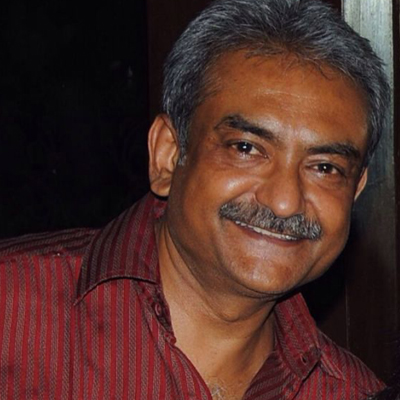
    KOLKATA: West Bengal is embracing the digitisation process open heartedly. So while earlier the MSOs from the state got together to speed up the gross billing in the city, now Silverline Television Network (STN), which distributes the services of DEN Cable TV in West Bengal, plans to seed close to 25 lakh set top boxes (STBs) in the state by December, 2014 in Digital Addressable System (DAS) phase III and IV areas.


    Silverline Television Network, a joint venture between DEN (51 per cent) and Silverline Broadband Services (49 per cent) was formed in 2011. STN has already installed four lakh STBs in the state in DAS Phase I and II with an investment of 150 crore. For the next installment, it has earmarked an investment of Rs 300 crore, which alongside the cost of the STBs, will also be used in increasing its network and fibre connectivity in the state.


    “We have seeded 3.60 lakh STBs in the Kolkata Municipal Area area and another 40,000 in the rest of West Bengal including 24 North Parganas and Hooghly. In phase III and IV of digitisation, we plan to install approximately 25 lakh more set top boxes in the state. By December 2014, we want to reach the target of 30 lakh STB,” remarked STN director Apurba Banerjee optimistically as he spoke about strengthening its presence within the state. “Our connectivity has already reached Siliguri, Bankura, Raichak, Bangaon and a part of Diamond Harbour,” he added.


    The company has one digital headend at present and offers 280 channels. When quizzed about the most popular package in phase I area, that is the KMC area, he said, the monthly subscription available at Rs 180 was quite popular initially. However, since TEN Sports wasn’t available in that, many switched to the Rs 230 monthly package.


    The cable TV analysts say the Phase III and IV of DAS is going to be smoother and easier as consumers in smaller towns have already started enquiring about the STB. “Going forward, it will be a smooth journey for DEN to install 30 lakh STBs in West Bengal,” remarks an analyst.


    DEN, a cable TV distribution company, reaches an estimated 13 million households in over 200 cities across 13 key states in India, like in Delhi, Uttar Pradesh, Karnataka, Maharashtra, Gujarat, Rajasthan, Haryana, Kerala, Madhya Pradesh and Uttarakhand among other markets. DEN Networks has seeded around 5 million set top boxes.

  • TRAI: Phase I and II CAF collection nearing completion

    TRAI: Phase I and II CAF collection nearing completion

    MUMBAI: When the entire process of digitisation started in the country, nobody would have thought it would be such a tough nut to crack and there would be a slippage of so many deadlines. Recently, the Telecom Regulatory Authority of India (TRAI) warned the multi-system operators (MSOs) and subscribers in the digital addressable system (DAS) Phase I and II towns that enough was enough and that they had better get going on finishing the task of submitting the Customer Application Forms (CAFs) with two deadlines – on 27 January for 23 cities and on 31 January for eight cities – once again proving elusive.

    The caning seems to have worked well as everything is getting back on track now. A TRAI official informs that the work in the Phase I and II of Digital Addressable System (DAS) is near completion. Cities with 27 January as the deadline – Rajkot, Surat, Vadodara, Faridabad, Mysore, Aurangabad, Nasik, Pimpri-Chinchwad, Pune, Sholapur, Amritsar, Ludhiana, Jaipur, Jodhpur, Agra, Allahabad, Ghaziabad, Kanpur, Lucknow, Meerut, Varanasi, Chandigarh and Howrah – have almost been  100 per cent  penetrated with active set top boxes (STBs). Almost 85 per cent work has been done (as of 29 January) in areas with 31 January as the deadline that includes cities such as Patna, Ahmedabad, Ranchi, Bengaluru, Kalyan-Dombivali, Nagpur, Navi Mumbai and Thane.

    MSOs have been given two to three additional days post the deadline to submit their compliance reports to TRAI.


    “We are in touch with the MSOs on a daily basis and nearly 99.7 per cent has been completed as per the deadlines. If subscribers have failed to fill the forms, MSOs have cut off connections, saving TRAI’s time and also saving themselves from any action against them,” informs a TRAI official.

    However, Maharashtra Cable Operators Federation (MCOF) president Arvind Prabhoo says that only 70 to 75 per cent work has been completed in the second deadline areas, while in Navi Mumbai hardly 30- 40 per cent work is done.

    A cable operator from Airoli says, “We had got CAF forms in the beginning till about June last year. After that it stopped coming to us.”


    But Siti Cable COO Anil Malhotra says that almost 90 per cent work has been completed and the subscribers who fail to fill the forms by tonight will have to face a TV blackout. “Scrolls have already been running to make them aware about it and thus we are sure that we will reach 100 per cent compliance soon,” he remarks.


    Hathway Cable and Datacom CEO Jagdish Kumar claims that in these areas Hathway has reached near about 100 per cent. “By 27 December, almost 90 per cent work was done, while the rest had to face a disconnection. Few customers came back to fill the forms and others switched to DTH,” he says. In the next eight cities, about 80 per cent of forms have been collected and fed into the system.


    Another leading MSO, Den Networks is also claiming to have achieved 100 per cent compliance for the two dates. Says Den Networks CEO S N Sharma, “In these cities we have complied fully and sent the report to TRAI. We have data of all subscribers and for those who haven’t sent them, their cable connections have been cut off.”


    A bright day for digitisation doesn’t look far if the above numbers are to be believed. While few exceptions are always there, most of the stakeholders are taking it seriously. And if the MSOs continue at the same pace and work towards achieving the goal diligently, by February, the work for phase III and IV will kick off.

  • The LMO-MSO relationship will get clarified within six months: Sameer Manchanda

    The LMO-MSO relationship will get clarified within six months: Sameer Manchanda

    NEW DELHI: Digitisation has given an opportunity for cable to compete with direct-to-home (DTH). There was a time when digital meant DTH and cable was largely analogue. But now, there is competition between digital and digital. While world over, cable is supposed to provide premium products, here in India, DTH was and is considered as a premium product. Digitisation has given cable an opportunity to show its might to DTH, compete with it, and provide customers television without interruption and with broadband internet and Value Added Services (VAS).


    We are in a highly competitive work environment. For smaller players to emerge, they will need scale, pure execution and vision of where they want to see themselves. They should be thinking big and along with that, should have the patience to wait for at least 5-10 years. There will be hiccups and ups and downs, but as long as they manage and maintain the course, they will achieve their goal. Cable has a unique proposition. It has scale, is a mass product, has mass appeal, is bigger than DTH, and every home has been watching cable since 1991. So just believe in the vision.


    Cable is a technology; we just have to leap frog from analogue to a complete different pipe, and that will happen in the next 5-10 years. As we saw in the case of mobile, even cable will go the same way as the world has gone.


    I know that there is a lot of pain, and in the beginning years, we have all faced it and will probably face it for a little longer too. But in the next 10 years, everyone will benefit. And every stakeholder, be it small Multi System Operators (MSOs), Last Mile Owners (LMO) or national MSOs, each one will gain. The industry can only be as vibrant and strong as each of its players. So, one player cannot remain vibrant while the other isn’t. The whole industry has to be vibrant and so, we all have to take a step forward in unifying the cable industry and making it vibrant.


    The LMOs and MSOs have to think that they are partners. Right now, there is a turf war of economics. But it will wear off once they realise that the customer will go wherever he/she wants to. He will go to DTH or the IPTV platform or 4G or any other platform where he/she gets better service. So, the LMOs and MSOs have to understand that they have to be together.


    If you see, the MSOs are ploughing in a lot of investment; they are dealing with broadcasters and are taking risks. They are also the ones who are making the pipe much stronger, so if you look at that, there is a role that the MSO plays and then there is a role that the LMO plays.


    Today, the turf war is on economics. But in six to nine months, each player will understand the strengths and weaknesses of each party. And if they play to the strengths, the customer will get a better product and then he/she will pay much more than what he/she earlier paid. Because if you see that from 70 channels, they will have 300-400 channels, then there will be VAS and much more. So you will see that the LMOs will be making much more than what they are making today.


    The revenue share needs to be sorted and these are things that need discussion. The MSO is also in a tight position. He has to deal with broadcasters and also ensure that the customer management is better than DTH. There are investments that need to be made. So I think that both parties need to understand each other.


    The first effect of digitisation has already been felt and that has happened from the customers’ end. The customer today has moved from some 70 channels to 300 channels and all this with no interference. He/she has been given a box for a reasonable sum and in a few minutes, with no wire and antenna, he has started getting the digital experience. This has been the real effect of digitisation, which has unfortunately gone unnoticed. And this was the reason that 21 million homes, which could have chosen DTH, chose digital cable instead. So the effect of digitisation has been felt, but now because of switch offs, the LMO issue, and under investment by some players, the impact is marred. So there will be good and bad times for cable, but then in a couple of years, it will all be sorted.


    The entire chain of media will become vibrant. The broadcaster, LMO and MSO will gain. Currently, since everybody is looking at getting the most, there are wars, but this will get resolved in six months, it can’t take longer. I want to see the industry getting stronger, more vibrant. Customers should be so happy with cable that they start moving from other players to cable. We all want cable to be strong and the whole chain to be very vibrant.


    I am an optimist. Media has a great future in the next 5-10 years. No one part can say that he will gain while others don’t. All stakeholders will benefit. Even the customers will have the option of close to 1,000 channels. Yes, they will have to pay more for that, but at least, they will have the option to pay for what they want to watch, which was not there earlier. But unfortunately, this will need them to cough up a lot of money. There will be pain, but eventually, every stakeholder will have to think about 5-10 years later.


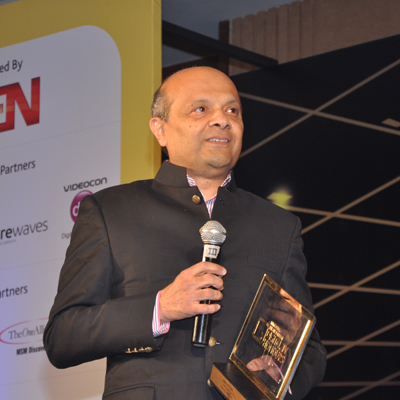
    (The remarks above are a part of the acceptance speech by DEN Networks Chairman & Managing Director Sameer Manchanda during indiantelevision.com’s The First Indian Digital TV Honours held in New Delhi on 28 January 2014)