Tag: MSOs

  • TRAI extends deadline for pre-consultation paper on standards of QoS amendments

    TRAI extends deadline for pre-consultation paper on standards of QoS amendments

    MUMBAI: Nearly a week after issuing the notification that the Telecom Regulatory Authority of India (TRAI) is looking at making amendments to the Standards of Quality of Service (digital addressable cable TV systems) (amendment) regulation 2012 (12 of 2012) for ensuring better billing practices by MSOs and LCOs, it has decided to extend the date for receiving comments from stakeholders.


    The earlier deadline of 8 September 2014 has been extended to 12 September 2014 on the request of stakeholders. However it states that no further extensions will be entertained.


    The amendment, when approved, will come into effect 30 days from the date of publication and will be called Standards of Quality of Service  (digital addressable cable TV systems) (amendment) Regulations 2014.


    TRAI says that the main purpose of issuing this new amendment was because it kept receiving complaints from subscribers about not getting proper bill and receipt. The regulator feels that financial disincentives should be levied on non-compliant MSOs and LCOS, similar to how it happens in the telecom field where this action has yielded result.

  • Prakash Javadekar asks MSOs to deploy indigenous STBs

    Prakash Javadekar asks MSOs to deploy indigenous STBs

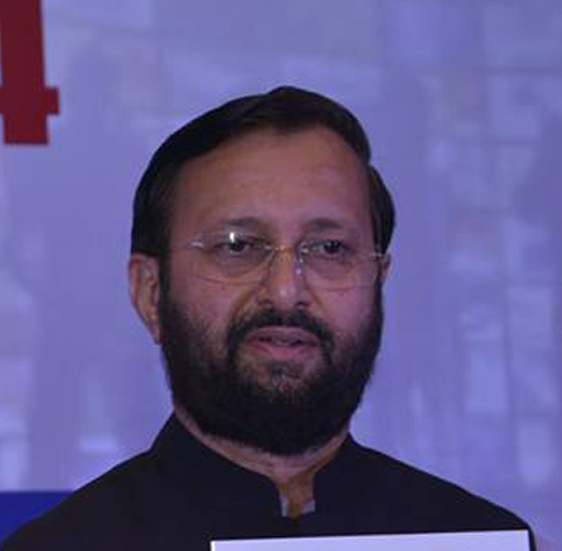
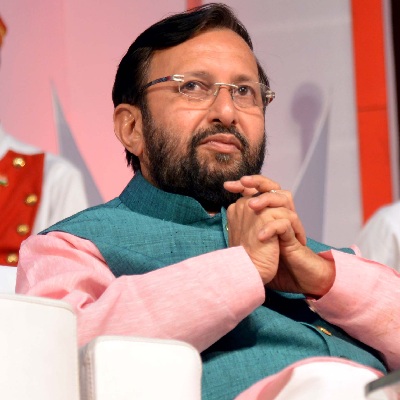
    NEW DELHI: Information and Broadcasting (I&B) Minister Prakash Javadekar has said the government has initiated efforts to promote greater production of indigenous set top boxes (STBs) so that Indian consumers stop using low-grade imported STBs as digitisation grows in the country.


    The Minister said that he had called a meeting of manufacturers in mid-August and was surprised to learn that good quality Indian STBs were not only being made but were being exported.


    He therefore wondered why multi-system operators and local cable operators only installed imported STBs for which there was no arrangement for servicing.


    Javadekar said that he expected another 120 million homes to be covered by digital addressable system (DAS) by the end of 2016 and he would prefer that they all install Indian STBs.


    He said that DAS will not only bring better quality television but also value added services.


    He regretted that the process of digitisation appeared to have slowed down in the last 15 months but said the new government will take quick action to overcome the delays.


    The Government has already announced that Phase III of digitisation will be completed by December 2015 and the final phase by December 2016

  • TRAI blames MSOs and LCOs for delay in DAS implementation

    TRAI blames MSOs and LCOs for delay in DAS implementation

    MUMBAI: The Telecom Regulatory Authority of India (TRAI) has come up with certain amendments to the Standards of Quality of Service (digital addressable cable TV systems) (amendment) regulation 2012 (12 of 2012). The regulation has laid down norms for billing of subscribers in digital addressable system (DAS) areas.


    It says that even after coming up with the QoS regulation, it kept receiving several complaints from subscribers about not getting proper bill and receipt. Subsequently, the regulator issued a direction in December 2013 directing MSOs to offer prepaid and postpaid payment options, generate bills and issue receipts.


    It also made a team consisting of representatives from TRAI and the Broadcast Engineers Consultant India Limited (BECIL) to inspect the head-end and subscriber management system (SMS) of MSOs in Delhi. During the inspection it noticed non-compliance by cable operators. Some cable ops are not offering prepaid option of payment while those who did offer, didn’t give an option of electronic payment.


    It again issued a direction on 27 May 2014 to ensure bill delivery either by hand, post or e-mail, within 45 days of the direction to provide online payment option in its SMS, electronic acknowledgement to subscribers on payment. MSOs and LCOs are still delaying implementation of the same.


    Since no details are being inserted in the SMS, it is hampering the transparency of financial transactions between MSOs and LCOs thereby affecting smooth implementation of DAS.


    TRAI states that ‘in the absence of proper billing and accounting of receipts, there is a distinct possibility of loss of revenue accruable to government’.


    Due to all these reasons, the regulator feels that financial disincentives should be levied on non-compliant MSOs and LCOS, similar to how it happens in the telecom field where this action has yielded result.


    For non-compliance of issuing bills, a disincentive of not exceeding Rs 20 per subscriber will be levied on the MSO and/or its linked cable operator and for the second time, penalty would be Rs 50. For non-compliance of regulations, Rs 100 will be penalised on each MSO for each contravention. If the MSO and LCO have entered into an agreement, both of them will be penalised for faults while in the case of no deal being signed, only the MSO is liable to pay.


    The regulator says that the MSO may offer multiple denomination schemes for recharging, with an expectation that monthly recharge schemes would be one of the options.


    Another amendment that has been suggested is to ensure that bills have service tax registration number and entertainment tax registration number of either the MSO or the linked cable operator.


    However, before imposing penalties, TRAI will give opportunities to the concerned MSO or LCO to represent its case.


    The amendment, when approved, will come into effect 30 days from the date of publication and will be called Standards of Quality of Service  (digital addressable cable TV systems) (amendment) Regulations 2014.


    Stakeholders can provide comments before 8 September.


    Click here for the press release


    Click here for the amendment

  • TRAI seeks views on penalties for non-compliant MSOs and LCOs in DAS areas

    TRAI seeks views on penalties for non-compliant MSOs and LCOs in DAS areas

    MUMBAI: Days after the news of new deadlines being set for phase III and IV of digital addressable system (DAS) was known, the Telecom Regulatory Authority of India (TRAI) has decided to straighten up the multi system operators (MSO) and local cable operators (LCOs) who are turning up their noses regarding billing in the first two phases.


    TRAI has come out with a notice inviting stakeholders to give their inputs regarding penalties to be imposed on non-compliant MSOs and LCOs. It says that it has received several complaints from DAS subscribers that they weren’t getting either the bill or the receipt of payment for their TV subscription services.


    Therefore, in order to protect the interest of consumers, ensure transparent business practices and promote efficiency, it is proposing to amend the regulation to incorporate provisions of levying financial disincentives on such MSOs and LCOs. TRAI is also seeking to amend the Standards of Quality and Service (digital addressable cable TV systems) Regulations 2012 (12 of  2012) dated 14 May 2012.


    The regulation lays down quality of service norms to be adhered to by the service providers, providing cable TV services through DAS.


    TRAI seeks comments from stakeholders on the draft regulation by 8 September to sksinghal@trai.gov.in.

  • 106 MSOs registered says Javadekar; Arasu application under review

    106 MSOs registered says Javadekar; Arasu application under review

    MUMBAI: The government is doing well in the area of registering multi system operators (MSOs), especially in those areas where digitization has been implemented. This was stated by information & broadcasting minister Prakash Javadekar in a written reply in th Rajya  Sabha. He revealed that 106  MSOs have  have been granted permanent registrations by his ministry to enable them to operate in digital addressable system (DAS) zones.


    He added that the I&B ministry had received a letter from the Tamil Nadu chief minister J Jayalalithaa to also register the government run MSO the Tamil Nadu Arasu Cable TV Corp  Ltd to allow it to operate in the DAS notified areas of the southern state.


    He disclosed that his ministry was examining Arasu’s application in the light of the TRAI’s recommendations regarding the entry of government entities in the broadcasting and distribution activities.


    The TRAI has been consistent in its stand that state government entities should not be allowed to enter the business of broadcasting and distribution of TV channels. It had made these recommendations in its paper on Issues related to entry of certain entities into Broadcasting and Distribution Activities in December 2012, and reiterated them in its consultation paper on monopoly/market dominance in cable TV in June 2013.

  • MSOs, LCOs asked to take DD channels only from C-Band

    MSOs, LCOs asked to take DD channels only from C-Band

    NEW DELHI: Sticking to its promise of ensuring that Doordarshan channels are made available across all cable and DTH platforms, Information and Broadcasting (I&B) Minister Prakash Javadekar has taken the positive step.


    Reiterating that it is mandatory to carry 24 channels of Doordarshan in digital addressable system areas and eight channels in non-DAS areas, the Government today also stressed that it was necessary that all multi-system operators (MSOs) and cable operators to take only C-band signals of Doordarshan channels.  


    In the advisory, the I&B Ministry said that the mandatory carriage had been notified in September 2013.


    However, some MSOs were taking the DD beam from the Ku-band of DD’s DTH service, resulting in inferior quality of transmission of DD channels. Furthermore, some MSOs were not even carrying the mandatory channels, according to Prasar Bharati.


    In this context, the Ministry said Para 3 of the 5 September 2013 notification was clear that only C-band signals had to be taken ‘for retransmission by dish antenna/television Receive of not less than 12 feet diameter, and Yagi antenna, to ensure good quality reception’. 

  • Kolkata LMOs to join hands with smaller MSOs

    Kolkata LMOs to join hands with smaller MSOs

    KOLKATA: Cable TV industry in Kolkata is up for some change. The last mile owners (LMOs) who have for long been complaining about losing their consumers to the multi system operators (MSOs) because of digitisation, are now looking for different ways of retaining their customers. While it had started with setting up of cooperatives, the LMOs are now joining hands with the smaller MSOs, who are also DAS licence holders.


    As part of this arrangement, a group of LMOs will sign a Memorandum of Understanding (MoU) with the MSO. While the group will have access to the headend, SMS and other backend services of the MSO, it will be free to create its own packages and also bill the consumers. This will also help the LMO to own its customers.


    “We have already prepared an agreement with a DAS licence holder who will levy a minimum price against every set top box (STB) that we take from him. Joining of other LMOs is in progress,” said an enthusiastic LMO on condition of anonymity.


    According to market sources, some of the MSOs that may get into such an arrangement are Sristi Cable TV Network, Kailash Cable Network, Meghbela Cable & Broadband Services and Barasat Cable TV Network. The smaller MSOs are looking at increasing their topline and bottomline and strengthening their presence in the region by partnering with the LMO group.


    “LMOs will partner with DAS licence holders either by forming a cooperative or working independently with him using his network,” informs a cable TV industry source.


    Meetings in this regard had started a year ago between the two parties operating in the KM area which currently has close to 33 lakh digitised cable TV homes. The LMOs will not be swapping the STBs in the current digitised homes, but will try and capture the new homes which have not yet been digitised.  


    The partnership will give the LMO the power to bill its subscribers, create packages based on consumers’ choice, and get a share of carriage fees as well as ownership of STBs.


    Cable Operators Sangram Committee general secretary Apurba Bhattacharya while confirming the development said, “It is good that LMOs are looking for new business models to earn their living. The operators are happy to get into this space. We will run the business ourselves.”


    LMOs in Kolkata are moving to this arrangement, since setting up of a headend not only takes time, but is expensive as well. “Setting up the headend requires a lot of permissions and an investment of some crores, so it is better to get into partnership with existing DAS licence holders than to set up our own headend,” says a LMO.


    A last mile owner who is in talks with one of the smaller MSOs concludes, “During the analogue regime, the revenue share between the MSO and LMO was 20:80 but after digitisation, this has come down to 65:35. The business model is not at all lucrative anymore.”

  • Business models, regulations and technology adoption need to evolve: Frost & Sullivan

    Business models, regulations and technology adoption need to evolve: Frost & Sullivan

    MUMBAI: Frost & Sullivan hosted the third edition of its ‘Digital Media India Summit’ on June 24 at the Le Meridien, Delhi. The summit included over 100 participants from broadcasters, cable, DTH, and telco operators as well as industry bodies and government representatives. The summit addressed key industry trends and issues such as regulatory challenges in the video ecosystem, big picture for Indian television business, benefits and challenges of TV-everywhere, collaborative workflows in multimedia video; and preparing for Phase 3 and Phase 4 of Digitization.


    At the summit, Mukul Krishna, Senior Director, Global Digital Media Practice, Frost & Sullivan, presented the key trends influencing the video broadcast and services industry globally and in India. He also talked about the important factors that can drive growth in the multiscreen video market, alleviate churn for service providers and the key technologies that a stakeholder requires to adopt in the current industry environment. He said, “India requires a collective movement from all stakeholders to catalyze short term as well as long term growth. The industry should be working towards not just survival or sustenance but thriving growth.”


    The panel on regulatory challenges in video included Satya Gupta, SAAM Corpadvisors Pvt. Ltd. (ex TRAI); SK Singhal, Advisor (broadcasting and Cable Services), TRAI; Sisir Pillai, Chief Strategy Officer, Digicable; Roop Sharma, President, Cable Operators Federation of India, and Avnindra Mohan, President (Legal & Regulatory), Zee Network. The panelists discussed revenue sharing models among broadcasters, MSOs and LCOs gross billing, and the role of TRAI in regulating the same for all stakeholders. They also discussed the apparent lack of transparency and standardization in regulatory guidance on revenue sharing, the digital acquisition forms for subscribers and disparate pricing across different states. In response to his co-panelists, TRAI Advisor, S.K. Singhal emphasized that the rules by the regulatory body are guidelines and not rigid as they are interpreted to be. He pointed out the potential of the industry to grow driven by opportunities in multimedia distribution. He also alluded to the telecom industry’s growth riding on the back of value-added services and encouraged the broadcast and service provider industry to innovate their services.


    In a presentation on the big picture of the TV business in India, Vanita Kohli Khadekar, Columnist and Author (The Indian Media Business), talked about a few interesting trends in the Indian TV industry, which included – digitization of content, consolidation and growth of online video. These trends are shaping the Indian TV industry like never before and are bringing in a multitude of changes across all segments. She said, “India is looked as a market of huge volumes in terms of opportunity; however one doesn’t realize that India is not one market, but several.” She highlighted that India is highly fragmented in viewership by state and language and hence it requires customization in programming as well as business models.


    During another discussion on ‘Is TV everywhere good for video business’, the panel discussed trends in the video content ecosystem, distribution, and the necessity to create compelling content for multiple media. The major challenges faced are multiple taxation levied on the broadcast industry and piracy. The panelists concluded that the way forward is content availability over IP, monetization of content and control of piracy. The panelists concurred that personalization, localization and more importantly, ‘searchability’ with the right metadata is critical for the success of TV-everywhere. Frost & Sullivan’s Vidya S. Nath, Director, Digital Media, Global Innovation Center chaired this panel which had Subhashish Mazumdar, Senior VP, North & East, Hinduja Group (Media); Sisir Pillai, Chief Strategy Officer, Digicable; Rajiv Khattar, President – Projects, Dish TV India, as panelists.


    The panel on collaborative workflows in multimedia video distribution discussed the essential requirements of a media company today. The panelists conveyed that every company requires to evolve out of departmental and functional siloes and create a cohesive platform that leverages a central repository of content. Standards are very important to ensure interoperability across applications and devices. The panelists in this session included Ujwal Nirgudkar, Chairman, SMPTE-India Section; Sameer Kanse, Head, Media Services, Tata Communications; and Irfan Khan, Marketing & Strategic Alliances, Tangerine Digital, and was chaired by Avni Rambhia, Principal Analyst, Frost & Sullivan.


    On the occasion, Vidya S. Nath noted in her address that consumer-viewing habits have evolved dramatically with the availability of multiple screens, and hence business models, regulation and technology adoption have to change side-by-side to abet industry growth.


    The final panel discussion on preparation for phase 3 and 4 in digitization brought forth the various mistakes committed in the first and second phases such as short deadlines to complete the digitization in cable TV, which left cable operators clueless and grappling to meet expectations and deadlines. The key aspect that was highlighted was the need for chalking out a roadmap for digitization with a clear agenda for the stakeholders and participants. The importance of standardization was also put forth by the panelists. Vynsley Fernandes, Director, Castle Media, moderated this discussion that saw participation by Arvind Prabhoo, Founder, Maharashtra Cables Operators’ Federation and Tony D’Silva, CEO, Hinduja Group (Media).


    The innovative and exclusive growth workshops hosted during this summit for CXOs on disruption to transformation and new age business models for pay TV and video brought out many interesting trends and aspects of the digital media industry. The summit also touched upon transforming media workflows for effective ROI and coping with growing fragmentation of media in the digitized world, which were presented by Sameer Kanse and Rajendra Khare, Co-Founder and CMD, SureWaves MediaTech, respectively.


    The event partners for this summit were SureWaves, Tangerine, and Tata Communications, while the media partners were Broadcast & CableSat, Cablequest, Convergence Plus, Digital Studio, Indian Television and Light Reading India.
  • Over 100 additional MSOs get 10 year licences, 16 fail to get clearance

    Over 100 additional MSOs get 10 year licences, 16 fail to get clearance

    NEW DELHI: A total of 104 multi-system operators (MSOs) all over the country have been granted permanent registration for 10 years to operate the digital addressable system while the licences of 16 MSOs have been cancelled.


    The MSOs in both the approved and the cancelled list had been given provisional permission earlier.


    Those who have got permission include IndusInd Media and Communications, Hathway Cable & Datacom, Manthan Broadband, Den Network, Home Cable, Digicable Network, Delhi Distribution Company and Asianet Satellite Communications.


    Kolkata based MSO Digicable Communications has been denied permission after the break-up of the joint venture with Mumbai based Digicable Networks, which has received permission for Greater Mumbai, National Capital Territory of Delhi and Greater Kolkata.


    Digicable Network India managing director & CEO Jagjit Singh Kohli said that they would ask for a stay on MIB’s decision to cancel the licence in the court. 


    Other cancelled permissions include Skynet Digital Services, Jai Maa Vaishno Entertainment, Intermedia Cable Communications, Supersonic Networks and Godfather Communications.


    Industry sources said that the approved list was in addition to the 140 whose names had been approved in March last year.


    The Ministry website mib.nic.in has added information about the approved MSOs, listing the areas for which they have been given permission.


    The website also contains the reasons in brief for the denial of permission to those which have failed to get the licences. In most cases, it is due to failure to get clearance from the Home Ministry.


    The new list is the outcome of Open Houses held by the Ministry with various MSOs, while some have come as a result of court cases. 

  • Cable bills in Kolkata to see a 15 per cent hike from 1 August

    Cable bills in Kolkata to see a 15 per cent hike from 1 August

    KOLKATA: Cable TV viewers in the Kolkata Municipal Area (KMA) will have to face another price hike in their cable TV bills, starting 1 August. This, after the Telecom Regulatory Authority of India (TRAI) hiked the tariff ceiling by 15 per cent for broadcasters.


    While consumers in the region have still been coping with the price hike after TRAI made gross billing mandatory, multi system operators (MSOs) are now all set to increase the channel package rates by 15 per cent.  


    That apart, more than 31 lakh cable TV homes in Kolkata may witness both channel addition and deletion. A few favourite channels can also be included in the new package with additional charges. However, MSOs have assured that the rentals for the Janata Pack will remain unchanged.


    Most MSOs linked the price rise to the TRAI regulation on tariff hike.


    Siticable Kolkata director Suresh Sethiya said, “After the price defreeze proposed by the regulator, that is 15 per cent, April onward, when MSOs now sit with broadcasters for renewal of channel contracts, they will have to shell out more money compared to the previous contracts. We can’t take the pinch on ourselves as we don’t have enough resource to fall back upon. Therefore cable rents are bound to go up in the range of 15-20 per cent from 1 August.”
     

    “We have no other option but to increase the channel package rates as the broadcasters have started bargaining a lot,” said a small MSO operating in Kolkata.  


    An official from KCBPL-GTPL, referring to the directive of Train on Subscriber Management System (SMS) and online up gradation said, “We are bound to increase the price as we have to show the bill and pay tax on that. Secondly, to follow the new bill delivery system of TRAI, we will incur additional costs in terms of software development and manpower.”


    Since DAS has yet not been implemented on ground in any area, subscribers are suffering. “LCOs have started taking full package charge from subscribers in the name of TRAI. But, sadly the same is not being passed on to us. While the LCOs are making good profit and broadcasters are earning more and more, MSOs are still suffering from the financial crunch. In the past few months, our financial health has gone from bad to worse. Questions are now being raised on our existence in the future,” concluded another MSO operating in the region.