Tag: MSOs

  • TRAI orders monthly, quarterly compliance reports from TV distributors

    TRAI orders monthly, quarterly compliance reports from TV distributors

    NEW DELHI: India’s broadcast regulator has ordered all distribution platform operators (DPOs) — including DTH, cable (MSOs), headend in the sky (Hits)  and IPTV players — to file performance monitoring reports every month and quarter, in a bid to sharpen oversight of the sector.

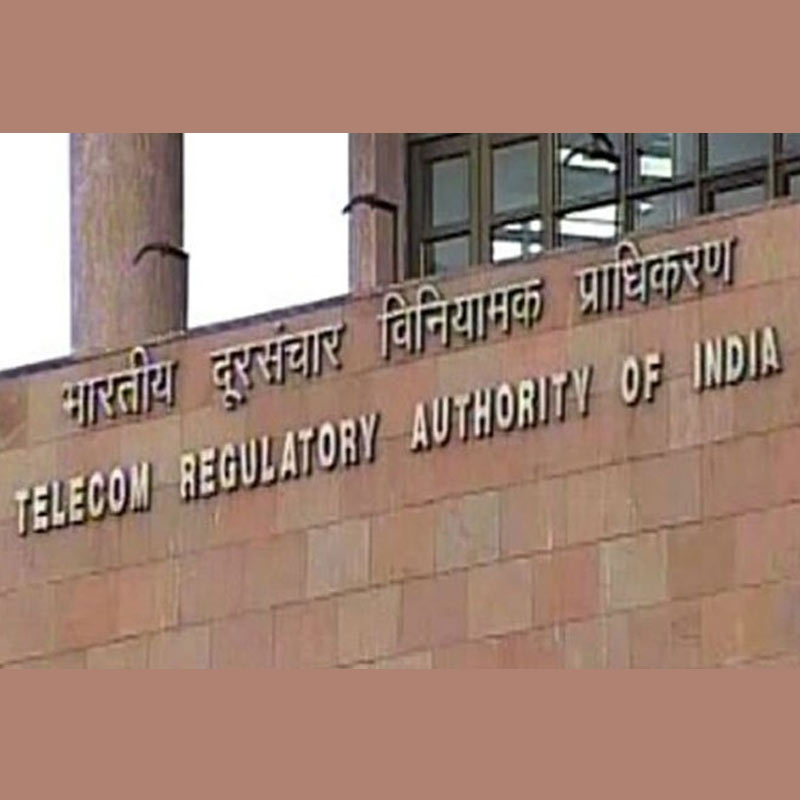
    The Telecom Regulatory Authority of India (TRAI), acting under section 12 of its 1997 Act, said the move was aimed at ensuring compliance, protecting consumer interests and fostering orderly growth of the TV distribution industry.

    Until now, only DTH firms were required to furnish quarterly reports, a rule dating back to 2008 and expanded in 2019 to cover MSOs and Hits)  operators. The new order updates formats to reflect changes in tariff, interconnection and quality-of-service rules.

    From now, operators must file monthly reports within ten days of month-end, and quarterly reports within 15 days of each quarter’s close. Smaller DPOs with fewer than 30,000 subscribers may skip the quarterly filing.
    The order marks another tightening of regulatory screws on a sector under pressure from both rising consumer expectations and surging competition from streaming platforms.

  • Government updates list of mandatory must-carry cable TV channels

    Government updates list of mandatory must-carry cable TV channels

    MUMBAI: The ministry of information and broadcasting has issued a revised notification mandating changes to the list of channels that cable operators, including multi-system operators (MSOs) and local cable operators (LCOs), must carry under the Cable Television Networks (Regulation) Act, 1995. 

    In the latest directive, six existing mandatory channels have been updated, including:
    * DD Assam (Regional Entertainment)
    * DD Odia (Regional Entertainment)
    * Sansad TV-1 HD and Sansad TV-2 HD (Lok Sabha & Rajya Sabha News)

    Additionally, four new channels have been made mandatory:
    * DD National HD (Hindi Entertainment)
    * DD News HD (Hindi News)
    * DD Sports HD (Sports)
    * DD India HD (English News)

    The ministry emphasised strict compliance with the updated requirements, warning that violations would invite punitive action under the Act, associated Rules, and registration terms. Cable operators have been instructed to ensure proper categorisation and transmission of the channels within their network offerings. It issued the advisory to cable ops and MSOs on 30 January 2025.

  • MIB simplifies process of registration for India’s cable TV operators

    MIB simplifies process of registration for India’s cable TV operators

    UMBAI:  India’s ministry of Information and broadcasting has issued an advisory on 17 January outlining significant changes to the registration process for local cable operators (LCOs) and multi-system operators (MSOs) under the Cable Television Networks (Regulation) Act, 1995.

    The advisory highlights that, as per Section 3 of the Act, operating a cable television network without registration is prohibited. Applicants are now required to register or renew their registration online through the newly established Broadcast Seva Portal. This modernised approach addresses long-standing concerns regarding the cumbersome manual registration processes previously employed.

    Pursuant to the above, the central government has now introduced key amendments to the Rule vide Notification S. 0. No. 65(E) dated 17  January2025. Further, in exercise of powers conferred under clause (h) of Section 2 of the CTN Act, 1995, a notification vide S.O. No.315(E) dated 17  January , 2025 notifying the section Officer and additional  joint secretary to be the registering authorities for LCOs and MSOs respectively, has been issued.

    Key amendments outlined in the advisory include:

    Online Registration: LCO registration will be facilitated online via the Broadcast Seva Portal.
    Validity Extension: The registration will now be valid for five years, increased from one year.
    Processing Fee:  The registration fee has been set at Rs 5,000.
    National Registration Number: Registered LCOs will receive a unique National Registration Number valid throughout India.

    The new registering authority for LCOs will be designated section officers handling digital addressable systems (DAS) in the ministry. Additionally, applicants will need to verify their identity online using PAN, Aadhaar, and other required documents, with Aadhaar sharing being voluntary.

    Current LCOs are urged to apply for their registration renewal at least 90 days before expiration. Those with applications pending at local head post offices must withdraw and reapply through the Broadcast Seva Portal.

    The Ministry encourages all interested parties to take immediate action and offers support via a dedicated helpline (011-23381707) and toll-free number (18002127307), which are also available on the portal.

    These changes aim to streamline the registration process and enhance the operational framework for cable television networks in India.

    The advisory can be downloaded from this link b clicking on the word advisory
    The notification of the process of registration can be downloaded by clicking on the word notification
    The notification empowering the section officer for LCOs and the additional joint secretary in the case of MSOs can downloaded by clicking on the word notification.

  • West Bengal cable TV operators raise tariffs by 5-10 per cent: PTI report

    West Bengal cable TV operators raise tariffs by 5-10 per cent: PTI report

    MUMBAI: Cable TV operators have increased customer tariffs by five to 10 per cent, according to a report by the Press Trust of India (PTI) referring to the state of west Bengal.

    Quoting various cable TV network owners in Kolkata, the report revealed that the price hike was enforced on the fraternity, courtesy the rise in content costs demanded by broadcasters in August. The PTI report further stated that the cable TV ecosystem was trying to find a balance between rising costs and not put the entire burden on the end customer at home. 

    Meghbela Broadband co-founder Tapabrata Mukherjee was quoted as saying that his network has not yet raised customer prices as it has been absorbing costs for the past two months. 

    “We can no longer sustain it,” he told  PTI. “On an average, we will raise tariffs by five to six per cent, though other broadcasters have hiked rates by more than 10 per cent, and in some cases, by as much as 20 per cent.”

    India Cablenet Co director Suresh Sethia informed  PTI that SitiCable’s minimal tariff hike is a strategy to compete with mobile users who prefer short-form content on platforms like YouTube and Facebook. The network has also launched Tubers TV, allowing users to submit short-form content up to eight minutes long, which has gained popularity.

    “Our price hike ranges between 5-10 per cent across different packages,” Sethia explained. “Overall, cable connections in Bengal have decreased to around 68 lakh from one crore four years ago.”

    That’s a challenge, that pay TV distribution faces nationally. 
     

  • TRAI notifies amendments to regulatory framework for broadcasting and cable services and releases

    TRAI notifies amendments to regulatory framework for broadcasting and cable services and releases

    Mumbai: Telecom Regulatory Authority of India (TRAI) has issued Telecommunication (Broadcasting and Cable) Services (Eighth) (Addressable Systems) Tariff (Fourth Amendment) Order, 2024 (1 of 2024);  Telecommunication (Broadcasting and Cable) Services Interconnection (Addressable Systems) (Sixth Amendment) Regulations, 2024 (4 of 2024); the Telecommunication (Broadcasting and Cable) Services Standards of Quality of Service and Consumer Protection (Addressable Systems) (Fourth Amendment) Regulations, 2024 (3 of 2024) and also recommendations to Ministry of Information and Broadcasting (MIB) on ‘Listing of channels in Electronic Programme Guide and Upgrading DD Free Dish platform to an Addressable System’. These amendments, except for a few clauses, shall come into force after 90 days from the date of its publication in the official gazette.

    In consonance with the complete digitization of the cable TV sector, TRAI on 3 March 2017 had notified the Regulatory Framework for Broadcasting and Cable services. The framework was further tuned to the need of the broadcasting ecosystem and to address the concerns of stakeholders through amendments issued in 2020 and 2022.

    The stakeholders namely, broadcasters, MSOs, DTH operators and LCOs had taken up further issues for the consideration of the Authority from time to time.

    To address such issues, the Authority issued a consultation paper on “Review of Regulatory Framework for Broadcasting and Cable services” on 8 August 2023 seeking stakeholders’ comments.

    The consultation paper sought comments and suggestions from various stakeholders, on several issues which included Network Capacity Fee (NCF), discount limit on sum of MRP of a-la-carte channels for fixing MRP of bouquets by the distributors of TV channels (Distribution Platform Operators-DPOs), equivalence of an HD channel in terms of SD channels for capacity calculations, mandatory FTA News Channels in all packs formed by the DPOs, level playing field with DD Free Dish, amendment to Reference Interconnect Offer, listing of channels in Electronic Programme Guide (EPG), revenue share between MSO and LCO, carriage fee, removal of channels after expiry of existing interconnection agreement, issues related to billing cycle, regulation of platform service channels, review of prescribed charges, consumer corner, establishment of websites by DPOs, manual of practice, etc.

    The Authority analysed the comments of the stakeholders and the discussion held during the open house discussion and noted the level of competition in the market due to the presence of multiple Broadcasters, DPOs (MSO/DTH/HITS/IPTV) and LCOs. Accordingly, there is a need to provide flexibility to the service providers for enabling them to adopt to the dynamic market conditions while at the same time safeguarding the interest of consumers and small players through transparency, accountability and equitability.

    Based on the above considerations, TRAI has notified the amendments to Tariff Order 2017, Interconnection Regulations 2017 and QoS Regulation 2017. The primary objective of these amendments includes the following:

    a  Facilitate growth of the broadcasting sector by reducing regulatory mandates and compliance requirements.

    b  Provide flexibility to the service providers to adopt a market driven approach while safeguarding the interest of the consumers and small players through transparency, accountability and equitability.

    c  Promoting ease of doing business by simplifying the regulatory provisions.

    The salient features of these amendments include the following:

    A. Tariff Order

    i  Ceilings of Rs 130 for 200 channels and Rs 160 on more than 200 channels have been removed on Network Capacity Fee (NCF) and is kept under forbearance to make it market driven as well as equitable. Service provider may now charge different NCF based on number of channels, different regions, different customer classes or any combination thereof. To ensure transparency, all such charges have to be mandatorily published by the service providers and communicated to the consumers besides reporting to the TRAI.

    ii  DPOs have now been permitted to offer discount up to 45% while forming their bouquets to enable flexibility for them in forming bouquets and to offer attractive deals to the consumers. Earlier this discount was permitted only up to 15%.

    iii  A pay channel available at no subscription fee on the DTH platform of the public service broadcaster has to be declared free-to-air by the broadcaster of the channel for all the addressable distribution platforms also so as to have a level-playing field.

    iv  DPOs have been mandated to declare tariff of their platform services.

    B. Interconnection Regulations

    i  With the proliferation of HD television sets and to encourage transmission of high-definition content, distinction between HD and SD channels has been removed for the purpose of carriage fee.

    ii  Carriage fee regime simplified and made technology neutral by prescribing only single ceiling for carriage fee, thereby, providing the DPOs with the option to charge a lesser carriage fee as deemed appropriate.

    iii  The above measures are expected to not only simplify the offerings of the service providers to the consumers but also promote the availability of high-quality channels.

    C. QoS Regulations

    i    Charges for services like installation and activation, visiting, relocation and temporary suspension which were prescribed earlier under regulation have now been kept under forbearance. DPOs have to publish the charges of their services for clarity and transparency to consumers.

    ii  Relaxation of certain regulatory compliances for small DPOs.

    iii  Duration/Term/Validity of all prepaid subscriptions to be specified in number of days only for greater clarity to the consumers.

    iv  DPOs may display Distributor Retail Price (DRP) in the electronic programme guide (EPG) along with MRP for channels.

    v  DPOs to categorise platform service channels under the genre ‘Platform Services’ in the EPG.

    vi  DPOs to display respective MRP of the platform service channel in the EPG against each platform service to ensure transparency.

    vii  DPOs provide an option of activation/deactivation of any platform service.

    D. Financial disincentives have been introduced for contravention to provisions of the Tariff Order and certain other provisions of Interconnection Regulation and QoS Regulation to ensure accountability of service providers.

    E.  Service providers publish all the information related to tariff and other charges which have now been kept under forbearance, on their websites. Moreover, they need to communicate the tariff and other charges to the subscribers, pertaining to the plans being subscribed.

    Further, the Authority also issued recommendations to MIB on certain issues covered in the consultation process. These issues include ‘Listing of channels in Electronic Programme Guide’ and transition of ‘DD Free Dish’ to an addressable system. The salient features of these recommendations are as follows:

    A.  Listing of channels in EPG:

    While giving permission to each channel, MIB to seek information from broadcasters about primary language of each channel and sub-Genre of every non-news channel as per Interconnection Regulation 2017 and display the same on Broadcast Seva portal of MIB to enable DPOs to place the channel at appropriate place in the EPG for easy navigation by the consumers, in accordance with the present regulation.

    B.  Upgradation of DD Free Dish platform to an Addressable System:

    i  In order to ensure quality of viewing experience, prevent unauthorized re-transmission of television channels to combat piracy and maintain the record of subscribers, Prasar Bharati to take steps to convert DD Free Dish platform from a non-addressable system to an addressable system and make a beginning by encrypting the signals of private satellite television channels at DD Free Dish head end before uplinking. Subsequently, all other channels of DD Free Dish may also be transmitted in encrypted form.

    ii  Public service broadcasters will be provided with the requisite exemptions of TRAI Regulations, once such notification is issued by MIB.

    iii  Prasar Bharati may utilize indigenous technologies for Conditional Access System (CAS), Subscriber Management System (SMS) and interoperable Set Top Boxes (STBs).

    iv  Prasar Bharati should adopt interoperable STBs for DD Free Dish to act as catalyst for transitioning the entire ecosystem from operator-based STBs to interoperable STBs to empower consumers’ choice. This will eliminate the need for changing STBs every time the service provider is changed.

    v  A roadmap for transition of DD Free Dish from non-addressable to addressable platform along with authorizing manufacturers and distributors by Prasar Bharati for sales and aftersales service of STBs, has been suggested to MIB.

    vi  MIB may direct private DPOs to adopt and implement interoperable STBs.

    TRAI in the present amendments, addressed those issues which were covered in the consultation paper dated 8 August 2023. However, during the consultation process for these amendments, certain other issues were also raised by various stakeholders which need to undergo a detailed consultation process for the consideration of TRAI.   These issues and suggestions have been noted and TRAI will come out with a comprehensive consultation paper shortly to address the relevant issues.

  • DTH industry sees sharp decline: 1.32 million pay subscribers lost in July-September 2023

    DTH industry sees sharp decline: 1.32 million pay subscribers lost in July-September 2023

    Mumbai: The Direct-to-Home (DTH) television industry has long been a cornerstone of the entertainment landscape, offering viewers access to a wide array of channels and programming from the comfort of their homes. However, recent data released by the Telecom Regulatory Authority of India (TRAI) reveals a significant decline in DTH subscribers during the period of July to September 2023. According to the report, DTH services lost approximately 1.32 million pay subscribers during this timeframe, raising questions about the evolving dynamics of the pay-TV market.

    The decline in DTH subscribers is a reflection of several factors reshaping the television industry. One of the primary drivers behind this trend is the increasing popularity of alternative viewing platforms, such as Over-the-Top (OTT) streaming services and video-on-demand (VOD) platforms. With the proliferation of high-speed internet connectivity and the availability of affordable smartphones and smart TVs, consumers now have more choices than ever before when it comes to accessing content.

    The pay DTH subscriber base decreased by 2.02 per cent from 65.50 million in the quarter ended June 2023 to 64.18 million in QE September 2023. According to TRAI’s Indian Telecom Services Performance Indicator Report, pay DTH attained a total active subscriber base of around 64.18 million for the quarter ended September 30, 2023. This is in addition to the subscribers of the DD Free Dish (free DTH services of Doordarshan).

    Since the introduction of the DTH Sector in the year 2003, Indian DTH (direct-to-home) services have displayed phenomenal growth, according to TRAI. During the QE 30th September 2023, there were four pay DTH service providers in the country including Tata Play with 32.43 per cent share followed by Bharti Telemedia with 27.01 per cent and  Dish TV India with 21.54 per cent share. Sun Direct TV had a 19.02 per cent share in QE in September 2023.

    As per TRAI report and as of September 30 2023, there are 995 MSOs registered with MIB. As per the data reported by MSOs and HITS operators, as of September 2023, there are 11 MSOs & 1 HITS operator who have a subscriber base greater than one million. With GTPL Hathway leading the charts with over nine million subscribers.

    As per broadcasters’ reporting in pursuance of the Tariff Order dated 3rd March 2017 as amended, out of 904 permitted satellite TV channels which are available for downlinking in India, there are 361 satellite pay TV channels as of 30th September 2023.

    TRAI said, out of 361 pay channels, 257 are SD satellite pay TV channels and 104 are HD satellite pay TV channels.

  • Trai has to play a balancing role: advisor of broadcasting & TCSR DG Anil Bhardwaj

    Trai has to play a balancing role: advisor of broadcasting & TCSR DG Anil Bhardwaj

    Mumbai: In an interaction with independent consultant Anuj Gandhi at Ficci Frames Fasttrack 2022, Trai advisor (broadcasting) and TCSR DG Anil Bhardwaj said that the regulator has to play a balancing role. He compared it to making a decision about what to do with a screw. One either loosens or tightens it, he said.

    In addition, he also mentions that a consultation process is going on regarding NTO 2.0. One side wants everything controlled, while the other does not want the regulator to control anything at all. The industry, he said, needs a regulator because they cannot sort out their issues. The aim is to have as light a touch of regulation as possible. That is Trai’s ethos.

    While saying that Trai has done some good things, he admitted that some bad things may have been done. But Trai is willing to review, consult, and come back. He also noted that while content is king, distribution remains extremely important. For the linear TV ecosystem to sustain, the stakeholders have to nurture and support each other. There are 1,00,000 LCOs in the country. Each has two to three people on the ground. That is the kind of distribution power available. “Ignore them at your own peril. Everybody is at a crossroads with everybody else. A linear TV channel needs a content creator, an aggregator, or a broadcaster. You need an integrator and then the last mile operators. If someone is dying and someone else is making money as a result, ultimately, who will suffer? Linear will be dead if one arm starts killing the other. Linear TV will grow if people are willing to nurture and sustain each other,” he noted.

    He said that regulation does not put a cap on pricing. One can charge Rs 100 for a channel. What he is against is the mirage of pricing that happens with bundling. That results in consumers being misled, which is what Trai is completely against. Certain channels, he said, are sold at Rs 6 through reverse deals and have fixed the MRP (maximum retail price) at Rs 19. Privately, he has asked them why this is being done. As a regulator, data is obtained and almost everything comes to Trai. The reason given is that the channel level will go down if it is not priced at that rate. “This is the mentality of the distribution head of one of the largest broadcasters in our country. In that situation, you need a regulator. We have not asked a niche English channel not to price themselves at Rs 50 or Rs 100. They have shut down because they could not sustain their model. They were showing ads and they also wanted to charge a certain fee. Previously, this was being driven through deals done with the distributor, which today is not possible because there is transparency in the system. For bundling, we said a mirage of price was created. So we will have some semblance. We tried Rs 19. We thought of Rs 12. The purpose is not to tell the industry what to fix. It is to avoid misleading the consumer. We are again reviewing that in the consultation. We have kept postponing the implementation of NTO 2.0 till we are through with this consultation process. We want to know if the price of Rs 12 is okay or not.”

    He further said, “We have done certain good things. Maybe we have done some bad things. That is why nothing is cast in stone. We are willing to come back and consult. We are willing to forego regulation provided the market matures. If we reduce or remove regulation, we will find that the market is not functioning as it should.” He noted that in the current consultation, one side says control everything and the other side says do not control anything. One side desires a minimum level of assurance regarding distribution effort. So a balancing role has to be played by Trai. The market is not mature. There are issues, he noted, with broadcasting, with channels shutting down. He also noted that channels are sometimes shut down by distribution as a certain show or content might cause a problem for some people. “This is the kind of country that we live in.”

    He said that as a regulator, Trai has to act strongly, but it cannot be done tomorrow or people will complain of high-handedness. The market has to mature to a level where certain things are known and numbers and facts are known. He gave the example of hundreds of MSOs getting audits done themselves by one of the 52 auditors chosen by Trai. That is, until you reach a certain place. “Without distribution, no ecosystem can survive.” On the content front, he said that Arpu is Rs 273. The ecosystem decides this, not the regulator. “If the industry is dying, please raise prices. Content is king, which is why digital media is paying five times more for content production compared to linear broadcast. So, if broadcasters need more revenue for content investment, then please review your models. Trai has never said not to invest in content. Broadcasters should make models in such a way that the money invested comes back. We will not stop you. Please make good content.”

    He added that numbers for the broadcasting industry are coming down, which could be due to a combination of factors, including OTT, DD Freedish, and Covid. Today, there are 900 or so TV channels. There are 1,000 odd MSOs. DTH is 70 million homes, and cable is not at 70 million. The balance is DD Freedish, which is growing. “Linear TV is finding its own new paradigm, new place. The punch is with OTT. It is important to understand why. Content is king, but distribution remains extremely important,” he said.

    He stated that some consumers believe that content is better on digital or OTT apps. That is why some have cut the cord. A broadcaster should allow a user to have five screens at the same cost or at a much lower cost than what is charged for linear TV. Then users will not go elsewhere. There are millions of smart connected TVs today.

    He also noted that India is unique in many ways. He gave the example of the mandatory content sharing bill for events of national importance. That applies to some sports events, even if the acquisition price is high. The aim is to have the events seen by the masses, and it goes beyond the ambit of commercial deals done. This is something that the Supreme Court has agreed with. “We are a very different country. It is an evolution. I am not saying that we are 100 per cent correct or that the US is correct,” he concluded.

  • Trai extends deadline to receive stakeholder comments on ‘renewal of MSO registration’ consultation paper

    Trai extends deadline to receive stakeholder comments on ‘renewal of MSO registration’ consultation paper

    Mumbai: The Telecom Regulatory Authority of India (Trai) has extended the deadline to receive comments & counter comments on the consultation paper ‘renewal of multi-system operators (MSOs) registration’. Stakeholders can submit their written comments by 24 August and their counter comments by 31 August.

    Trai decided to delay the deadline after stakeholders sought an extension of time for sending their comments on the consultation paper, however, no further requests for extension would be considered, it said.

    The consultation paper seeks the comments of MSOs on relevant issues about renewal of MSO registration including the quantum fee to be paid for such renewal.

    The key issues addressed in the consultation paper are 1) what should be the qualifying conditions, if any, to be prescribed for MSO renewal? 2) list of necessary compliances for renewal of MSO registration 3) period of renewal 4) whether a one-time fee should be levied at the time of renewal? 5) should there be a window to apply for renewal before expiry of MSO registration? 6) provision to ensure continuity of service to consumers on expiry of registration.

    The ministry of information and broadcasting (MIB) plans to revise the policy guidelines regarding the renewal period of MSOs to maintain uniformity with the direct-to-home (DTH) and broadcasting sector. It has proposed to keep the renewal period for MSO registration after every ten years.

    Also Read: MIB proposes to introduce policy guidelines for renewal of registered MSO and HITS operators

  • MCOF demands TRAI resolve pending grievances by 2 October

    MCOF demands TRAI resolve pending grievances by 2 October

    Mumbai: The Maharashtra Cable Operators’ Foundation (MCOF) has written to the chairman of the Telecom Regulatory Authority of India (TRAI) and minister of information and broadcasting (I&B) Anurag Thakur to resolve pending grievances of local cable operators (LCOs) before 2 October.

    According to the association, the inaction of TRAI has resulted in a loss of Rs 600 crore per year for LCOs. “The LCO fraternity will take steps to protect itself no matter the consequences on the rest of the value chain,” the letter reads.

    The LCOs had sought TRAI intervention in the matter of unilateral imposition of inter-connect agreement by multi-system operators. It alleged that MSOs leveraged their portals to impose prepaid terms on LCOs while offering post-paid services to subscribers, and called for redefining the shareable revenues between broadcasters and cable operators, and asked TRAI to clear ambiguity in set-top-box ownership.

    “Our subscribers and we are wondering as to why TRAI has not taken any step to implement the NTO 2.0 after the SC verdict refusing interim relief to broadcasters’ pleadings,” said MCOF. “The broadcasters and MSOs continue to milk the disempowered customers through packaging tricks and also deny a level playing field for standalone broadcasters. On a conservative basis, the forced excess payment towards content that subscribers do not want is Rs 50 per month.”

    Model interconnection agreement (MIA) and standard interconnection agreement (SIA) are signed between MSOs and LCOs for the retransmission of TV signals. MIA ensures that there is a mutual agreement in the terms set between LCOs and MSOs in line with the regulatory framework, to avoid disputes and ensure a level playing field. SIA provides for standard terms and conditions prescribed by regulation that may be adopted by MSOs and LCOs if they fail to mutually agree on an MIA.

    During NTO 2.0 litigation, LCOs claimed that TRAI has incorrectly portrayed them as a conduit between MSOs and subscribers undermining the role they have played as last-mile owners bringing connectivity to lakhs of homes. LCOs fear that subscriber ownership may be transferred to the MSOs and will lead to broadcasters and MSOs benefitting disproportionately at the cost of LCOs.

    LCOs have adopted a prepaid billing model for cable TV subscriptions to bring transparency and plug leakage of revenues. However, LCOs claim that while MSOs impose prepaid terms on the LCOs, they continue to offer post-paid services to TV subscribers by leveraging their portals. This has impacted their revenue collection.

    “The payout of pay-TV channels to cable operators for retransmission of TV signals is much lower than the amount billed to the customer,” said MCOF. “This fact is visible at a glance at the P&L statement of MSOs who disclose Netted Content Costs,”, said the letter.

    LCOs have asked TRAI to clear ambiguity on set-top-box ownership resulting in unilateral pricing without invoicing or service level agreement (SLA) to the subscribers.

    The LCOs service 10 crore homes and employ five lakh semi-skilled personnel. The letter states that the sector is at a make-or-break point with thousands of crores invested in fibre infrastructure at risk of disuse and economical infotainment to 40 crore viewers. It said that LCOs’ long list of grievances has been brushed aside by TRAI without any justification.  

  • DTH operators report sharp drop in subscribers in Jan-March: TRAI

    DTH operators report sharp drop in subscribers in Jan-March: TRAI

    Mumbai: The total number of active DTH subscribers declined to 69.57 million at the end of March 2021 from 70.99 million at the end of December 2020, as per the Telecom Regulatory Authority of India (TRAI). This is in addition to the subscribers of DD Free Dish (DTH service of Doordarshan).

    The share of leading DTH players stood at Tata Sky (33.3 per cent), Dish TV India (24.09 per cent), Bharti Telemedia (25.54 per cent), and Sun Direct TV (17.07 per cent).

    A total of 901 satellite TV channels have been permitted by the ministry of information and broadcasting (MIB) out of which 327 are pay-TV channels. There are 235 SD channels and 92 HD channels. All the other channels permitted by MIB may be considered free-to-air channels.

    There are 1726 MSOs registered with MIB out of which only 12 MSOs and one HITS operator have a subscriber base greater than one million. Siti Networks had 8.2 million subscribers followed by GTPL Hathway at 7.7 million, Hathway Digital at 5.6 million, Den Networks at 4.5 million, Thamizhaga Cable TV Communication at 3.5 million, Kerala Communicators Cable at 3.05 million, Tamil Nadu Arasu Cable at 2.9 million, Fastway Transmissions 2.2 million, NXT Digital (HITS) at 2.05 million, KAL Cable at 2.02 million, VK Digital at 1.7 million, Asianet Digital Network at 1.2 million and NXT Digital (Cable TV) at 1.1 million.

    There are 366 private FM radio channels in 105 cities with 30 private FM radio broadcasters. Odisha Television Ltd, has ceased the operation of its single FM radio station in the city of Rourkela, Odisha. The advertising revenue reported by FM radio broadcasters is Rs 321.52 crore as against Rs 323.01 crore in the previous quarter.

    There are 324 operational community radio stations up from 315 in the previous quarter.