Tag: MSO

  • MSO’s should be marketing CAS now: Sameer Nair

    MSO’s should be marketing CAS now: Sameer Nair

    MUMBAI: The cable fraternity is wasting the huge first mover advantage they already have in hand vis-a-vis pushing addressability in chasing the mandating of CAS, feels Star Entertainment India CEO Sameer Nair.

    Reiterating Star’s well documented opposition to mandated CAS, Nair asserts that the MSOs are seriously missing a trick on the matter in their “all-consuming” focus on getting a mandate out that will fix a time frame for the rollout of CAS.
    Nair drew attention to the latest reports circulating indicating that it could be anywhere between six to eight months at the minimum for the mandated CAS rollout to take off (if at all).

    According to Nair, even as big corporate players were preparing the ground for different addressable delivery platforms to roll out, the cable fraternity were only focussed on getting a cut-off date in place for the rollout of CAS.

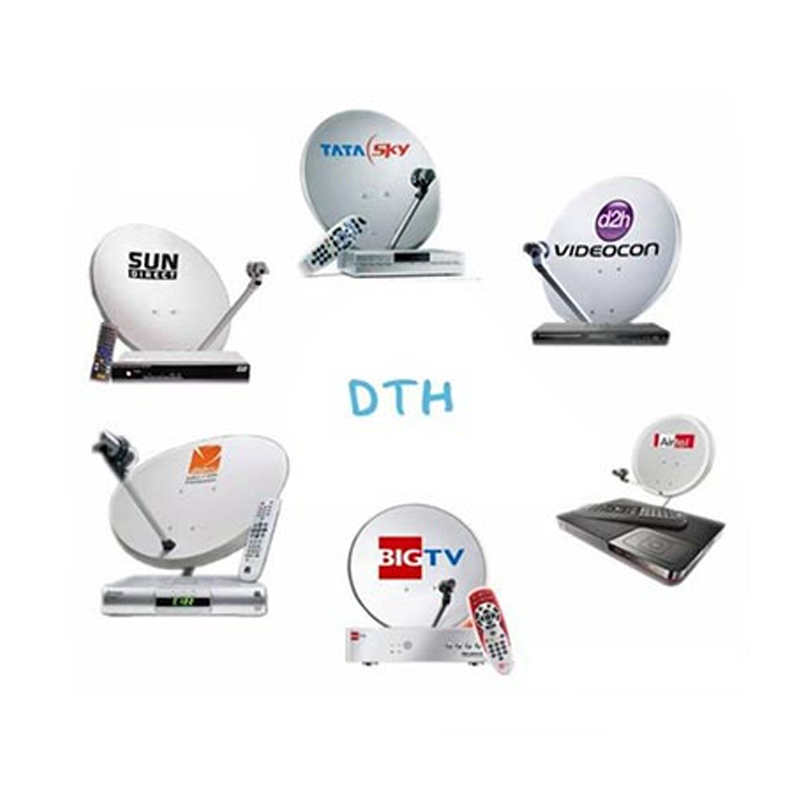
    Nair is of the view that with the imminent arrival of Tata-Sky DTH, Zee’s Dish TV ramping up and the big telecom players aggressively pushing ahead with IPTV, market forces would soon make the whole debate irrelevant and the MSOs may well end up “missing the addressability bus”.

    Nair averred that MSOs should instead be focussing their efforts on attractively packaging and marketing CAS to their direct points to begin with and concurrently convincing their franchisees of the need to get CAS going, government or no government.

    Another issue he raised was on the inability of many cable ops to deliver on CAS even if it was mandated. He said that barring a few big MSOs, most operators were simply not ready for CAS. Neither did they have the set top boxes nor the subscriber management systems in place to get it off the ground.

    According to Nair, in such a scenario, the likely result would be a blackout of pay channels in many areas, as had been witnessed in Chennai. But the difference here, he pointed out, was that unlike in Chennai, where there was no great demand for pay channels, in this case it would more likely be because of inability to deliver.

  • Zone Vision’s Club channel launches in Korea

    Zone Vision’s Club channel launches in Korea

    MUMBAI: Club Channel, owned and operated by Zone Vision Networks Ltd, launched in Korea on 3 April.

    The Club Channel will air 24-hours a day, seven days a week, initially to one million cable subscribers. Series such as the popular Globe Trekker, Saturday Kitchen, Fashion File and the ‘Uncovered’ series, will be among the titles included in the 60 per cent of acquired content for the channel.

    The remaining 40 per cent of content for the channel will be produced locally. One of the MSO’s which Club Channel will launch on is CJ, one of Korea’s leading producers and distributors of entertainment products and services in Korea.

    Zone Vision general manager Asia Pacific Alan Hodges said, “Asia continues to be a key growth area for Zone Vision, and we are delighted that our next channel launch will be in Korea. Club Channel has such an eclectic mix of programming, we are sure that its shows will appeal to the broad spectrum of viewers in Korea.”

    Club Channel Korea managing director of programming and strategy Ki-Myung Kim added, “Club Channel Korea has unlimited potential to fascinate young generations who love clubbing, party, and leading new cultural trends. This channel will build up club maniacs and grow with them to be the best lifestyle channel specializing in Clubbing & Party. Based on this unlimited potential of channel style, we are expecting the number of subscribers to increase considerably over the next 12 months.”

  • CAS: MSOs propose a rollout plan to govt.

    CAS: MSOs propose a rollout plan to govt.

    NEW DELHI: The CAS story limps along with an early solution not in sight, as industry stakeholders are yet to find a common ground. This was evident in today’s meting on the issue called by the government.

    Though the MSOs did make a proposal on sequence of CAS implementation and one particular MSO provided some additional data relating to the Chennai market where CAS has been implemented, lack of data from others, notably the broadcasters and local cable operators, didn’t help matters much.

    The government, which is also under pressure due to a Delhi court direction on CAS rollout by the first week of April, could use the data provided by the MSOs to force the pace, a government official said, adding this could include mandating individual prices of TV channels.

    The official did admit that at the two meetings on CAS held till now, there has been a sense of “resistance” from the pay broadcasters to come out with a la carte pricing of channels, which is “complicating the matters a bit.”

    According to information available with Indiantelevision.com, some of the MSOs have proposed a plan, which envisages a phased preparation for CAS with a blackout of TV channels — not going through a set-top box — after 5 July.

    The MSOs today said that for CAS rollout, 5 April should be taken as the zero hour. The preparatory phase should last till 20 May. The time between 21 May and 21 June should be treated as transition phase, while the final implementation of CAS should start from 5 July onward when all TV channels would have to go through boxes on a mandatory basis or face the threat of a blackout.

    The MSOs also suggested that the government should mandate the maximum retail price (MRP) for individual channels as also bouquets — a proposal that did not go down very well with broadcasters — if a consensus is not arrived on this.

    While the MRP issue is being pushed by consumer bodies too, the MSO said that if a consensus on this is elusive, then the sector regulator (Telecom Regulatory Authority of India) could be asked to address the issue.

    What is making matters difficult for the government is that some pay broadcasters have raised valid doubts on piracy of signals and the technology that would be used for conditional access. Country’s biggest broadcaster in terms of revenue has raised 16 issues that should be addressed before CAS is rolled out.

    According to some people who attended today’s meeting, a suggestion relating to revenue share for subscription money in the ratio of 50:25:25 (broadcasters: local cable operators: CAS operators and independent ops) was also made.

    A demand that all commercial contracts amongst broadcasters and MSOs and MSOs and cable ops be standardized was echoed today again.

    In the wake of divergent views on CAS still persisting, the information and broadcasting ministry made it clear to industry stakeholders that
    ambiguities would only lead to more confusion and wastage of time.

    With today’s meeting ending relatively inconclusive, the government has scheduled another one on Monday (3 April) to get down to serious sequencing of CAS rollout

  • Hathway launches digital cable in Hyderabad

    Hathway launches digital cable in Hyderabad

    MUMBAI: Even as the government is assimilating views of the various industry stakeholders on how to roll out conditional access system (CAS) smoothly, multi-system operators (MSOs) are busy plotting expansion of their digital cable TV service.

    Hathway Cable & Datacom today announced the launch of its digital cable in Hyderabad. The MSO has already rolled out its digital services in Chennai, Mumbai, New Delhi, Pune and Bangalore.

    Digital cable TV services are offered to the customer through a remote controlled digital device, which will be accompanied by a fully functional sleek smart card.

    “The advantages of the digital set-top boxes (s) is that the consumer does not have to pay extra money in their monthly cable TV bill but in turn can enjoy over 150 digital channels. The device costs over Rs. 2500,” Hathway said in a release.

  • MSO protests against Maharashtra cable TV tax

    MSO protests against Maharashtra cable TV tax

    The Hinduja-run MSO InCableNet has raised a voice of protest against the Maharashtra state government’s move to double the entertainment tax levied on cable operators. The state finance minister announced the hike in the budget that was presented to the assembly for 2000-2001 yesterday.

    In a press release , InCableNet has stated that the impost will “financially cripple an already burdened cable industry. The need of the hour is to implement the existing entertainment tax system rather than increase tax burdens.”

    Says IndusInd Media – the company that runs InCableNet – CEO Ram T. Hingorani: “The increase will result in a substantial financial burden on MSOs like In CableNet and cable operators who declare 100 per cent connectivity.”

    Last year the cable TV industry had hailed the-then government’s decision to levy a flat rate of Rs 15, Rs 10 and Rs 5 for each urban, semi-urban and rural cable TV homes respectively. This replaced the earlier system of charging a percentage of subscription fees.

    InCableNet says that the governments contention that entertainment tax targets were not being met by it on account of underdeclaration by cable TV operators (hence it was forced to hike rates) was unfair.

    “The system needs correction not a 100% hike to supplement the lacunae in the entertainment tax levy system” points out Hingorani. “The cable TV subscriber is no mood to pay an increased subscription, particularly in view of the burden of rising prices of day-to-day commodities and the new hikes in kerosene and LPG prices. The current budget has also increased the professional tax which is bound to affect the common man in the state. This additional burden that the Cable TV industry will have to bear will stunt its growth further as the Government is doing nothing to promote it.”

    Hingorani also complained about the varying rates of entertainment tax levied by various state governments on cable TV operators. “All the states have approximately the the number of channels with common pay channels,” he says. “Yet each of the governments imposes varying taxes.”

    He would like the government to tax pay TV channels instead of cable TV operators. “Pay TV channels earn huge sums by way of subscription and ad revenues. The government should examine whether levying a 5 to 10 per cent tax on the channel managements is more feasible. Th tax can be collected at source and evasion will be eliminated in a structure where the onus for paying the tax is absolutely clear,” he says.

    Hingorani suggests that the government should work on schemes such as voluntary disclosure to encourage declaration of larger subscriber bases by cable TV operators.

  • IN CableNet says it is no bully

    IN CableNet says it is no bully

    The Hinduja-run cable TV service IN CableNet today denied allegations about the pressure tactics used by them in the Sion-Matunga-King Circle area in Mumbai that made 32 of its operators shift loyalties to the rival SitiCable. Mr Hingorani, CEO of IndusInd Media and Communications said “The allegation is baseless and malicious. We don’t use any force or pressure tactics and would never do so.”

    Company officials said that IN CableNet had set up a state-of-the-art control room in King’s Circle in Mumbai and six small time cable ops who were unable to match the level of service decided to part ways.The company claimed that the allegations of browbeating and bullying and were made by a couple of ops who had defrauded the company of Rs 5 million and that police cases had been filed against them.

    The cable war will spread in the country and such incidents will be frequent. Every MSO claims to be non-political and non-goon based. If that was the scenario why do the skirmishes keep popping up every now and then?

  • Maharashtra government doubles cable TV tax rate

    Maharashtra government doubles cable TV tax rate

    The government in the western Indian state of Maharashtra has doubled the entertainment taxes that cable TV operators have to fork out to its coffers. Taxes were levied at the rate of Rs 5,10, and 15 per subscriber, depending on the subscriber’s location. These have been doubled. The purpose to enhance the state’s revenues. The government made these announcements in the state budget for 2000-2001 announced yesterday.

    Maharashtra is amongst the leading cable TV viewing states in India. And there is alarm that other state governments may also make similar moves in their budgets.

    Fears have also risen that the imposition will actually lead to a rise in subscriber fees because cable TV operators will not be interested in forking out the higher duty from their pockets. Currently, cable TV subscriber rates in Maharashtra range between Rs 75 and Rs 125 a month. These are expected to go up by about 25 per cent at least with the average cable TV fees rising to Rs 125, unlike Rs 100 that is the average currently.

    Says Siticable western region head D.K. Pandey: “We do not have to pay entertainment tax, it’s the cable TV operator who has to do so. We are not really impacted by the hike.”

    The other MSO in Maharashtra InCableNet is expected to voice a protest against the government’s impost later today. It has been lobbying with the government on this issue. But will the higher entertainment tax result in substantially higher revenues to the exchequer?

    Marginally, probably. Normally, cable TV operators tend to under-declare their subscriber base to the tune of 70 per cent to subscription channels and to government as they want to stem the outflow of money from their end. Since there are no audits or subscriber declaration compulsions to a cable TV authority, they fudge their numbers to reduce their burden. That will likely continue here too. If the tax authorities insist on tax payments based on last year’s entertainment tax disclosures, the cable operator can easily turn around and say that he has lost subscribers to rival or smaller operators or they have not renewed their subscription.

  • CAS Rollout: Three Months a More Comfortable Time Frame

    CAS Rollout: Three Months a More Comfortable Time Frame

    One after another, the complaints are gathering. Not enough set-top boxes (STBs); insufficient time to effectively and smoothly roll out conditional access system (CAS); and no marketing at all to generate a consumer pull.

    The pay TV broadcasters are at it again. Back in 2004, the government decided to withdraw CAS based on the backlash faced from broadcasters and consumers. Will history get repeated this time around?

    Looks unlikely. If the government decides to move the Supreme Court, it can at best get the implementation of CAS delayed by a few months. But the industry today is more or less settled to the fact that CAS is here to stay, sooner than later.

    A stockpile of STBs, imported in 2003 during the time government had mandated CAS, is waiting to enter into consumer homes. Unlike in the past, MSOs also have the support of their franchisee operators to push digital boxes
    _____****_____

    Valid, though, is the question thrown at the multi-system operators (MSOs): Can they implement CAS in the next four weeks?

    The MSOs say they can. There are several factors working for them this time. They have already deployed digital cable TV in small patches. A stockpile of STBs, imported in 2003 during the time government had mandated CAS, is waiting to enter into consumer homes and can by and large take care of at least the first phase of implementation (zone one) in the three metros.

    The MSOs also have the support of their franchisee operators to push forward the digital boxes. Unlike in the past, last mile operators have swung in favour of CAS for fear of losing subscribers to the direct-to-home (DTH) service providers. Concern over thrust of second and third bouquets by broadcasters has also brought them into the side of the MSOs in pushing for CAS.

    Still, a month’s time seems an impossible deadline to meet. MSOs will have to work out commercial agreements with broadcasters. In all fairness, this will take time as broadcasters have to negotiate and chalk out long term deals in an addressable system. Several considerations will have to be weighed in before arriving at a retail price structure of their TV channels. In the new era, discounts on volumes will also become an important part of the matrix.

    MSOs will have to work out commercial agreements with broadcasters. In all fairness, this will take time as broadcasters have to negotiate and chalk out long term deals in an addressable system
    _____****_____

    Though operators are in favour of CAS, there are several issues on the ground that have to still be sorted out. Flowing down the chain margins will have to be fixed for distributors and last mile operators. Commissions on sale and rental of STBs will also have to be worked out. MSOs, however, are confident that such agreements can be done in quick time. The problem is that everything can be “set into motion” once the commercial terms are settled with the broadcasters.

    A lot of ground has to be covered including launching promotional campaigns. Just looking at the logistics, one realises how Herculean the task is. A more comfortable time zone would be three months. But the ball game can change if support is extended by everybody including the government and a tough regulator to cut the errant stakeholders into size. Support from the broadcasters will also help in making CAS possible in quick time.

  • MSOs moot Re 1 a day rent scheme on STBs

    MSOs moot Re 1 a day rent scheme on STBs

    MUMBAI: The digital set-top box (STB) that will sit in consumer homes to receive pay channels will come cheap. Facing the threat of competition from direct-to-home (DTH) service providers, cable TV operators are preparing to enter the conditional access system (CAS) regime with an aggressive price plan.

    Multi-system operator Hathway Cable & Datacom has decided to introduce a rental scheme on its STBs with a fee as low as Re 1 a day. Incablenet is likely to follow suit but will be finalising its pricing on Monday, sources say.

    “We will be charging a rent of Re 1 per day on our boxes. Consumers will have to pay upfront Rs 999 as a refundable deposit,” Hathway Cable & Datacom CEO K Jayaraman tells Indiantelevision.com. Currently, the boxes are available for purchase at Rs 3,000 with no rental schemes.

    Even in Kolkata, Manthan Cable Network is considering a rental scheme of Rs 50 per month on an initial deposit of Rs 800-1,000. Competition can further drag down prices. “We are planning to charge a rent of Rs 50 per month on our STBs,” says Manthan director Gurmeet Singh.

    Cablecomm Services Pvt Ltd, another big operator in Kolkata, is also planning to structure its tariff plans for the CAS era.

    Siticable, which is the only MSO that has operations in the three metros of Delhi, Mumbai and Kolkata where CAS is going to be initially launched, could not be contacted for its comments. Chennai is the other city where CAS is already in place, but has seen slow uptake in demand.

    While broadcasters have expressed concern on the supply of boxes to seed the market at such short notice, cable networks have dismissed such fears as “being fictitious.” A phase-wise rollout of CAS in the three metros and an existing stockpile of STBs will make the transition smooth, operators say.

    “The industry has a stockpile of 800,000 boxes while estimates put the number of cable TV households in the notified areas of south Delhi and Mumbai for the first phase of rollout at over 600,000. Based on the demand, the boxes can be quickly replenished to keep the supply line flowing. It will take around one month to import the boxes,” says Jayaraman.

    Kolkata, where Hathway has no operations, has an estimated total of around 250,000 cable TV homes to be covered in the first zone CAS rollout. “We have a stock of 100,000 boxes and are offering 195 TV channels on our digital cable,” says Indian Cable Net CEO Amit Nag. Last year, Siticable acquired Indian Cable Net from the RPG Group to become the dominant MSO in Kolkata.

    Manthan, the largest operator in south Kolkata, has installed a digital headend and is in the process of putting its encryption system in place. “Kolkata Metropolitan Development Authority has around 1.8 million cable TV homes. The logistic cycles will be worked out,” says Singh.

    Mumbai and Delhi together have around seven million cable homes. “With CAS, we expect to give healthy competition to DTH. The ground will also get more organised and volumes, as they pick up, will drive down the cost of boxes,” says Atul Saraf, one of the founder-promoters of 7 Star.

  • CAS Ruling: MSOs now have the ammo to take on DTH

    CAS Ruling: MSOs now have the ammo to take on DTH

    It was one piece of news that cable TV networks were waiting to hear for long, too long in actual fact!


    Buffeted by potential competition from direct-to-home (DTH) operators, the timing of the Delhi High Court ruling that has ordered the government to enforce the rollout of conditional access system (CAS) in India within four weeks couldn’t have been more crucial. Tata Sky is preparing to launch in June and Dish TV, at present the only existing private sector DTH service provider, is expected to sort out programming contracts with Star India and SET Discovery by then.


    Cable TV can take DTH head on with its digital service. It has the firepower to do so, having built a rich battery of last mile operators (LMOs) who have serviced consumers over the years.


    Firstly, it can cobble together more channels than DTH can offer at the initial stage when the consumer is making the shift from analogue to digital. Already, some MSOs are making available a little under 150 TV channels. DTH operators, on the other hand, are limited by transponder space on satellite and can only ramp up under MPEG-4 compression technology.


    Second, cable TV can bundle broadband and, with preparation in future, telephony services.


    Third, it can develop interactive features with its fibre network.


    Fourth, it has manpower in place which can be quickly energised to push digital set-top boxes (STBs).


    Sure, MSOs and independent operators would have preferred the courts to have come up with the same verdict much earlier, after the government withdrew CAS in 2004. That would have given them a first mover advantage with a considerable time lag before DTH could kickstart operations.


    But there was one issue which had still to be sorted out for an effective rollout: LMOs felt insecure and did not back the rollout of digital cable. With competition from DTH looming large, they now have the support of their franchisee operators.


    But what if the verdict on CAS had come after Tata Sky’s launch and Dish TV’s content contracts had been stitched with Star and Sony? Cable TV operators would have been able to fight against DTH with two weapons in their armoury – analogue cable and voluntary digitalisation. On analogue cable, operators have the flexibility of dropping subscription fees drastically. With a price warrior in place through analogue service, digital cable could offer an alternate choice to consumers to combat DTH head on. On the flip side, the digital service would still remain unaddressable while DTH could provide consumers the choice of selecting channels and packages they want to pay for.


    Under CAS, cable operators do not have the flexibility of delivering pay channels on their analogue network. Consumers will have to select between DTH and digital cable for receiving these channels. They will, in other words, have to buy either a DTH or a cable TV set-top box.


    But delaying the direct knock-to-knock face-off between cable and DTH operators hardly serves any purpose. The business model for MSOs and independent operators can only get worse if no CAS is in place. Because the way out to stop DTH from invading into cable territory without a properly tiered and price-packaged digital service would have been possible only through rate drops. While LMOs would have been unaffected, the MSOs would have felt the pinch.


    Retooling business strategies and organising the sector is in the commercial interest of the cable operators. The hour has come to change the mindset and bring in quality and service-oriented practices. It will be meaningless to wish away competition from DTH and later IPTV providers.


    Several networks already have a stockpile of digital STBs. So far, they have been unable to place these boxes in consumer homes. Even Hathway Cable & Datacom, the more aggressive of the digital cable TV players, claims it has managed to distribute just 40,000 boxes. It would do better for operators to take a more positive view: that with CAS, digitalisation, either through cable or DTH or IPTV, would move faster.


    After all, the market is too big and diverse for any single player to cover it all.


    Ensuring a ramp up in supply of boxes, erecting a solid encryption system, and having a sound billing mechanism should be the focus areas. Also, it is crucial for operators to find more, better and premium content which can lure customers. They will also have to work out rental schemes and low up-front charges to subsidise the boxes in order to stay competitive with DTH.


    Another hard lesson to be learnt from this is that investments on old technologies won’t help. For those who have put their money on analogue STBs, the chances of surviving the battle look grim. Yes, there is a market for free-to-air analogue service. But no, not for analogue STBs as that will limit the channel offerings at a time when supply is growing rapidly.


    There will be competitive pressure for cable operators to upgrade their networks and services. Territorial monopolies will end and cable operators will also have to fight amongst themselves for retaining or acquiring subscribers.


    DTH, of course, retains one advantage. It has a national footprint while CAS is limited to the four metros in the first phase. This will give DTH economies of scale, but then it will still face the big hurdle of drawing in consumers to buy a box in the non-CAS areas.


    By bringing in CAS, the MSOs realise the entire business model changes in favour of them. Gaining control over the entire value chain across the network and having an addressable system will pump up valuation of cable companies and draw in global investors.


    The green signal on CAS couldn’t have come at a riper time. If there is any year which can drive digitalisation forward, this is it. In June-July, ESPN Star Sports will show live the football World Cup. The other key properties on the roster are ICC cricket Champions Trophy in September and the cricket World Cup early 2007 (both events on Sony).