Tag: MSO

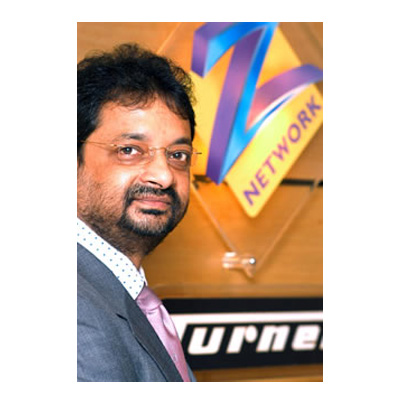
  • ‘In some areas, we have done better than One Alliance, while in some areas we have done as well as Star. But no denying that at a national level Star bouquet is way ahead of others’ : Arun Poddar – Zee-Turner CEO

    ‘In some areas, we have done better than One Alliance, while in some areas we have done as well as Star. But no denying that at a national level Star bouquet is way ahead of others’ : Arun Poddar – Zee-Turner CEO

    Arun Poddar is an industry veteran with an enriched experience and excellent track record of over 23 years in sales and distribution. He brings with him vast experience in media and broadcasting industry and proven ability in the FMCG sector. A business management graduate, Poddar started his career with Maxwell Industry. During his tenure of seven years with Maxwell, he successfully established a robust distribution network in the eastern region of the country.
    One of the many important tasks that Poddar undertook during a stint at ESPN was seamless transition of ESPN from Modi Entertainment Network, which used to be responsible for ESPN’s distribution. After working with ESPN Star Sports for seven years, Poddar joined Ten Sports as vice-president, distribution and marketing. Utilizing his expertise in sales and distribution, garnered over 21 years, he successfully structured and developed an in-house distribution team. At Ten Sports, he also established a working and monitoring format to create a direct relation between company and trade.
    After spending two years at Ten Sports, Poddar joined Zee Turner as its chief executive. A person who loves to read, paint and listen to music, Poddar in this interview with
    Indiantelevision.com Anjan Mitra holds forth on various aspects of the broadcast industry.

    Excerpts:

    What is your overview of the present scenario of the broadcast industry?
    If you really see the broadcast industry in the last 10 years, then it has evolved a lot from being totally fragmented to a situation where big corporate bodies have come in and are trying to evolve a corporate structure. The distribution segment too has seen this happening with big MSOs coming in and trying to bring a semblance of order in the business.

    At one point when big corporate entities started coming into the industry’s various segments it was felt that the industry as a whole would shape up faster having well defined corporate identities and professionally managed businesses as in other sectors. Unfortunately, that did not happen.

    From a broadcaster’s point of view under-declaration of the subscriber base had always been an issue, which slowly became an accepted norm. The whole flip-flop on CAS since 2003 has added to the confusion in the market. However, CAS in its second inning now seems to be more of a reality than just talking about bringing in new technologies.

    With the arrival of DTH and CAS, the choice of a consumer gets widened. It gives broadcasters a competitive edge as good content and a strong channel would be a winner. From cable operators’ point of view, new technologies not only bring in transparency in the whole system, but also some orderliness.

    Don’t you think that intra-industry differences and constant appealing to the umpire (the government or the regulator) has impeded industry’s growth?
    Fundamentally, everybody had their own agenda. There has always this issue of declaration or under-declaration between the cable fraternity and broadcasters. Most industry disputes emerged from this basic issue of want of more declaration of the subscriber base or a resistance to it.

    Now this basic issue gave rise to subsidiary areas of dispute. I’d say that want of more subscriber base, price hike and introduction of new channels on limited bandwidth are at the core of ills afflicting the industry. These always created an environment that was not very conducive for business on either side.

    The regulator’s efforts to address industry issues cannot be negated. At the end of the day, any industry difference would affect the subscriber. It’s always beneficial to have a neutral agency to oversee an industry as it helps the industry too to go to such a body and bounce off ideas.
    Over the last 18 months or so every issue, major or otherwise, seems to be going to disputes tribunal, which results in loss of time and inconvenience to subscribers. What do you have to say about this trend?
    This was bound to happen. When (industry) grievances are kept captive for long one glimmer of hope in a tribunal makes stakeholders run to it. Had there been a regulator or a disputes tribunal from the start or even earlier, the rush of cases in TDSAT would not have been there. It’s like giving vent to accumulated fury.

    As part of the broadcast industry, are you, unlike some others, in favour of a regulator?
    I am definitely in favour of a regulatory body.

    Even if the regulatory body may end up over-regulating the industry?
    A regulation is a regulation. At least in India you have the freedom to stand up and ask the reasons for a particular regulation and what led to its formulation. Ideally, a regulatory body should take care of the interest of all stakeholders, including consumers. It’s foolish to think that broadcasters should grow and the MSOs shouldn’t. If a particular segment is not growing, then the whole industry suffers.

    It’s easy to put the blame for all industry ills on one particular segment, but that’s not the case and a regulator should see it turns out to be a win-win situation for all.

    What do you think of the revenue share formula that the Telecom Regulatory Authority of India (Trai) has mandated?
    At this point of time, I feel there is scope to better it (from a broadcaster’s point of view). Also, at this juncture we could put across our views to the regulatory body, which would be done in all probability.

    If you ask me, what should have been the broadcasters’ share of revenue accruing from pay channels, I’d say 50 per cent, instead of 45 per cent. The remaining could have been divided in the ratio of 20:30 between the MSOs and local cable operators.

    I am giving the LCOs more share as they are the retailers, while MSOs are whole sellers. In marketing practices, retailers always have the bigger margin.

    Why do you think broadcasters’ share of the revenue gravy should be more?
    Simply because broadcasters are making investments in programming. If cable TV subscribers and viewers in general want high quality programming, then broadcasters need to invest in such shows. Quality production can only come through higher investments and costs cannot be limited or capped.

    How would broadcasters bring quality stuff if their margins are clipped? Every business runs on the formula that the return on investment is balanced. Low investments could also mean low quality production values. Would Indian viewers settle for shoddy programmes and production values?

    What’s your opinion on Trai’s move to legitimize carriage fee charged by MSOs, a reality that was never discussed openly or accepted?
    I don’t think carriage or a fee paid for carriage on cable networks’ prime band would be an issue in a digital era towards which everybody is working. A digital system will take care of not only quality of broadcasting, but also the shortage of space that’s plaguing cable networks.

    Do you feel that ratings of various TV channels will get affected during initial phase of CAS, scheduled to be rolled out from 1 January 2007?
    Any change will have its rub-off effect on all stakeholders, including customers. A transition phase always throws up some doubts, which would get ironed out over a period of time.

    'Ideally, a regulator should take care of the interest of all stakeholders.
    It’s foolish to think that b'casters should grow & MSOs shouldn’t'

    Is there a chance of some pay TV channels going free in CAS areas to safeguard their reach, which is important vis-?-vis advertising revenue?
    I really don’t think so. If the content is powerful, consumers will pay for a channel. It can happen that broadcasters introduce new free to air channels. I don’t foresee a scenario where existing pay channels turn free to air.

    Do you foresee a scenario where a consumer picks and chooses channels in a CAS regime depending on events for a short period of time?
    It is a possibility and will revolve around marketing initiatives. For example, a pay channel can be made available to a consumer for a year at X price. Now if that consumer wants the channel for just six months, then the cost would X plus a certain percentage. Shorter the period, higher would be the premium.

    This trend could be a big concern for sports broadcasters as actual pay-per-view comes into vogue. These are advanced technologies, which will follow when digitalization, DTH and CAS set in properly.

    Will CAS turn out to be beneficial from a distribution point of view?
    Certainly. Apart from bringing about some transparency in the whole system, CAS would make the environment competitive, while giving more choice to a consumer. Distribution will have a bigger role to play in such a scenario.

    With the introduction of CAS and expansion of DTH services, the focus of distribution will be more on consumer rather than just a broadcaster’s client, which is the MSO. As a distribution person, I’ll also have to keep in mind the interest of my client’s clients (consumers). Therefore, there would be a lot of play while servicing clients.

    To facilitate a loyal customer base for a cable operator, it will be very important for me to also go and directly talk to the consumer about a broadcasting product.

    What will Zee Turner do to dial the customer directly?
    The primary objective should be the content and then creating awareness about it. As a company we would try to create a communication channel with the consumer/viewer to keep him in the loop about my product in its entirety.

    The approach would have to be 360 degree in the sense that we get feedback from consumers, hitherto not permitted by cable operators to approach directly, and then create products or upgrade existing channels depending on the feedback.

    In a small way, Zee Turner has started hooking up with the consumer. But it’ll take more time for this exercise to bloom fully as some doubts still persist. Those uncertainties have to be removed before a full-fledged consumer relationship exercise can be rolled out.

    What are the future plans for Zee Turner?
    With consumer becoming the king as options for him open up, thanks to new technologies, I need to be more close to him. Most company activities will be revolving around this theme of getting up close to the consumer, apart from satisfying my direct customers, the MSOs.

    For this to happen, activities like events have to be organized either via TV channels or on the ground. As a bouquet, Zee Turner has the largest number of channels (32) across most possible genres of programming. The task before us is to pick up our positives and pass it on to the consumer in a way that is understood by him.

    'In some areas, we have done better than One Alliance, while in some areas we have done as well as Star. But no denying that at a national level Star bouquet is way ahead of others'
    Do you think the regulator is doing a fair job on the pricing front? (The question was asked before Trai mandated all pay channels will be priced at Rs 5.)
    I think the regulator is trying to do a fair job.

    Has a deal with Tata Sky been concluded?
    We are talking to each other. We had suggested a price for Zee Turner bouquet of channels based on the formula mandated by a disputes tribunal in case of Dish TV and Star India. Tata Sky is not comfortable with the suggested price.

    What are the issues bogging down an agreement to be concluded?
    Tata Sky wants to be selective in terms of channels (from the Zee Turner bouquet), which we are not agreeable to; especially when such a criteria has not been adopted for other bouquets.

    Has Tata Sky given any reason for being selective with Zee Turner channels?
    The reason is quite obvious: lack of transponder space to accommodate all channels. But we also feel this reason is not true. We are keen on giving our channels to Tata Sky, but one cannot have different set of conditions for different broadcasters. Moreover, we are guided by an order from TDSAT.

    What are the revenue targets for Zee Turner this financial year?
    Zee Turner with a subscriber base of 4 million for bouquet 1 and 3.7 million for bouquet 2 is targeting a turnover of Rs 4000 million by the end of this financial year in March 2007. This should translate into 30-35 per cent growth in revenue compared to last year. I am not taking into account bouquet 3 as the subscriber base and revenue is negligible at this point of time.

    I can say with pride that we have been improving our performance. In some areas, we have done better than One Alliance (Discovery-Sony distribution joint venture), while in some areas we have done as well as Star. But there is no denying that at a national level, the Star bouquet is way ahead of others.

  • ‘Banned’ channels allowed to go on air; some operators await decoders

    ‘Banned’ channels allowed to go on air; some operators await decoders

    MUMBAI: After Sahara One and Filmy, the weekend saw the return of the remaining seven “banned” channels to most cable TV networks in Maharashtra.

    However, these channels were still off air on networks of major multi-system operators (MSOs) like Hathway and In Cable (who hold sizeable chunk of connections in Mumbai) as well as Zee Group controlled Siticable, among those that had their equipment confiscated by the police in raids on 21 August, when reports last came in. These cable networks were expected to start beaming all the channels again once their decoders were in place.

    The first to get back on air was Zee Cinema, while the other six channels – Star Gold, Star One, Star Movies, HBO, AXN and Max – came back soon after.

    Zee Cinema, like Sahara One and Filmy, had claimed that it was telecasting U/A certified movies.

    Broadcasters of other channels also got the clearance to get back on air soon after with the Mumbai police social service branch granting permission to the channels to resume transmission late on Saturday.

    The permission came with a rider though: that the channels would follow the Mumbai High Court directives that they would not air uncertified as well as adult movies.

    The nine channels had originally been blacked from 21 August after the Mumbai Police confiscated the decoders of major cable networks and beaming equipment of channels on the charge that they had violated the law by telecasting uncertified movies. This followed orders from the Bombay High Court that channels showing adult movie content should be taken off off air.

    Meanwhile, the Cable Operators and Distributors Association (Coda) have decided to meet the information and broadcasting (I&B) minister Priya Ranjan Das Munshi to express their protest against the Telecom Regulatory Authority of India (Trai)’s support to direct-to-home (DTH) service providers for using multi-dwelling unit (MDU) technology.

    “We are planning to meet the I&B minister for placing our case against MDU. DTH is to home and not direct-to-building,” says CODA president Ganesh Naidu.

  • Trai fixes revenue share for stakeholders; carriage fee to stay with MSOs

    Trai fixes revenue share for stakeholders; carriage fee to stay with MSOs

    NEW DELHI: The Indian broadcast regulator has finally legitimised carriage fee or the payment TV channels make to be on tunable bandwidths and cable networks. The Telecom Regulatory Authority of India (Trai) has also set the revenue sharing model for industry stakeholders.

    Trai said today that from the revenue generated from pay channels, broadcasters will keep 45 per cent, multi system operators (MSOs) 30 per cent cable operators 25 per cent.

    Additionally, carriage fee is to be retained fully by MSOs, while the basic tier services fee will be retained fully by local cable operators.
    MSOs, according to Trai, can operate throughout a CAS area without any restriction on area of operation.

    The objective of having standard interconnection agreements is to ensure that implementation of CAS does not get delayed in case service providers fail to enter into mutually acceptable interconnection agreements through negotiation within the stipulated time.

    In a statement, the regulator said that apart from providing standard interconnection agreements, those dated 10.12.2004 have also been amended to prohibit such clauses in interconnection agreements that would require a distributor of TV channels using an addressable system to pay a minimum guaranteed amount as subscription fee.

    Some of the highlights of the standard interconnection agreements are as follows:

    # The service providers are at a liberty to enter into mutually acceptable interconnection agreements which are different from the standard interconnection agreements

    # If any of the service providers in the CAS areas are not able to arrive at a mutually acceptable interconnection agreement within a time-period specified by the Authority, then they shall be required to enter into interconnection agreements as per the standard interconnection agreements

    # The standard interconnection agreements between broadcasters and multi system operators have been provided only for pay channels.

    # Term of standard interconnection agreements to be 12 months.

    # All service providers in CAS areas who do not have pre-existing interconnection agreements as on the date of issue of this Regulation and who are not able to arrive at a mutually acceptable agreement shall enter into interconnection agreements as per standard agreements within 10 days of the receipt of permission by MSOs from the government.

    # All the service providers in CAS areas who have a pre-existing interconnection agreement appropriate for operating in a CAS area as on the date of issue of this regulation, but are unable to arrive at a mutually acceptable agreement within 30 days of the expiry of the pre-existing interconnection agreement, shall enter into standard interconnection agreements within 30 days of the expiry of the pre-existing interconnection agreement.

    Other details of the regulator’s latest directives on interconnect are available on www.trai.gov.in.

  • Trai proposes tariff rate on STBs

    Trai proposes tariff rate on STBs

    MUMBAI: The Telecom Regulatory Authority of India (Trai) has proposed that cable TV service providers in conditional access system (CAS) areas to offer digital set-top boxes (STBs) on a monthly rental scheme of Rs 30 and a refundable security deposit of Rs 999.

    Subscribers will also have the other option to take the permanent rental scheme with no security deposit. But the monthly rent in this case would be higher. They also have the choice of subscribing to analogue boxes.

    Under the first scheme, the regulator has said that subscribers would own the box after five years and no monthly rentals would have to be paid after that.

    In case of a period before five years, the multi system operator (MSO) or cable operator shall be entitled to make deductions from the refundable security deposit at the rate of Rs 12.50 for every month or part of the month for which the subscriber has used a STB taken on rent or lease. The deductions will be made upon the submission of the STB in working condition.

    Under the standard tariff package (STP), subscribers will have the second option of not paying any security deposit but the monthly rental will be higher at Rs 45 per STB. For analogue boxes, the rent will be Rs 23 per month per STB.

    “In both options, there will be no payment for installation, activation charges, smart card/viewing card, repair and maintenance cost. Stakeholders are also free to suggest any other option as a STP,” Trai said today in a release.

    “Since the Indian standards do permit analogue STBs, an option for these boxes has also been provided under the second category,” the regulator added.

    Trai’s draft of the tariff proposals for STBs has invited comments of the stakeholders. Stakeholders may comment on these alternatives as well as suggest any other options for Trai to consider.

    “It has been proposed that each service provider should at least offer one STP in addition to any other alternate tariff package. The rationale behind this proposal is that every consumer should have the choice of choosing from amongst various alternatives of which at least one should be a package that is approved by Trai,” today’s release said.

    Trai’s proposed draft tariff order for STB schemes in CAS areas follows the government’s notification on 31 July that CAS would be implemented in Delhi, Mumbai and Kolkata. Earlier, the division bench of the Delhi High Court had passed an order directing implementation of CAS with effect from 31 December in these three metros.

  • CAS switchover modalities will hit broadcasters, MSOs hard; Trai to have final say

    CAS switchover modalities will hit broadcasters, MSOs hard; Trai to have final say

    MUMBAI: A day after the government issued a notification setting 31 December, 2006 as the deadline for the south zones of Delhi, Mumbai and Kolkata to be fully “CAS delivered”, it fired the real bombshell – the framework under which addressability would be introduced in the notified areas.

    The backdated (31 July) notification covers a whole range of conditions that impact all constituents of the cable service delivery chain – broadcasters, cable MSOs, last mile operators.

    It even delves into issues of advertising.

    Interestingly, embedded in the fine print of the notification is a clause that allows the government to extend the time frame for the CAS switchover.

    This could be done if the government believes that the arrangements made by MSOs are inadequate and, therefore, “likely to be against the interests of a substantial portion of the subscribers in any notified area.”

    Tasked with overseeing all this is the cable and broadcast regulator, which has been given extraordinary powers in regards to the switchover to addressability in the areas that fall under the CAS notification.

    The areas for CAS implementation are the Kolkata Metropolitan areas, the areas covered by the Municipal Council of Greater Mumbai and the National Capital Region of Delhi.

    The Telecom Regulatory Authority of India (Trai), will be the final word on not just pricing of pay channels, but also in the granting of permission to cable service providers to offer addressable services, among a host of other extremely restrictive conditions.

    Some of the key issues the notification covers are:

    Interconnect Agreements

    It is Trai that will determine the “standard interconnection agreement to be used for entering into commercial agreements for distribution in the notified areas, of pay or free-to-air channels among (i) broadcasters and multi-system operators; and (ii) MSOs and local cable operators.”

    (a) Trai will set the maximum limits of security deposit and monthly rental for supply, maintenance and servicing of set top boxes of prescribed specifications to the subscribers on rental basis by multi-system operators in the notified areas;

    (b) tariff for the basic service tier along with the minimum number of free-to-air channels to be provided by the multi-system operators or local cable operators to the subscribers in the notified areas;

    (c) regulations for quality of service to be provided by the multi- system operators or local cable operators to the subscribers in the notified areas.

    Channel Pricing

    (1) Every broadcaster will have to declare the nature of each of its channels as ‘pay’ or ‘free-to-air’ channel as well as the maximum retail price of each of its ‘pay’ channels to be charged by the multi-system operators or local cable operators from the subscribers in each of the notified areas.

    (2) Each broadcaster will have to file the declaration of the nature and prices of channels within 15 days of the date of notification by the government.

    (3) If Trai believes the price declared by the broadcaster for any of its pay channels is too high, it has the right to fix and declare the maximum retail price of such a pay channel or fix a general maximum retail price for all pay channels within which the broadcasters may declare their individual prices for each pay channel.

    (4)Any order issued in this regard by the regulator will be binding on the broadcasters and the multi-system operators and local cable operators.

    (5) If a broadcaster fails to declare the price of any of its pay channels within the prescribed time limit, or fails to comply with the direction or refuses or fails to enter into an interconnect agreement with a MSO permitted by the government within the prescribed time limit, the authority can take interim measures to ensure supply of
    signals.

    (6) If the broadcaster does not comply with the directives issued by Trai, the government may, if asked to do so by the regulator, suspend permission to broadcast the channel in the country.

    (7) Every declaration on pricing filed by the broadcaster will remain valid for one Year. If the broadcaster wants to revise the price of any channel or convert a pay channel to free-to-air or a free-to-air channel to a pay channel, it will have to give one month’s notice to the MSO and subscribers:

    Govt Permission For MSOs, Cable Ops To Operate

    (1) No multi-system operator can provide addressable cable services without permission from the government.

    (2) Every MSO has been given 30 days to apply to the I&B ministry for permission to operate, along with a processing fee of Rs 10,000.

    (3) After receiving the application, the I&B ministry has 30 days to either grant or refuse permission on the basis of information that will include existing operational area, actual number of subscribers and addresses of its local cable operators in each of the notified areas, commercial arrangements with the broadcasters and local cable operators, if any, financial strength, management capability, security clearance and preparedness to supply and maintain adequate number of set top boxes for its subscribers, installation of its subscriber management system and compliance with all other quality of service standards that may be specified by Trai.

    (4) In the event of an MSO failing or refusing to enter into interconnect agreements with a broadcaster of a pay channel or an adequate number of local cable operators in the notified areas or violates the terms and conditions laid down, Trai can take interim measures to ensure supply of signals. Though what these interim measures might involve is not spelt out, it would appear to indicate that the licence to operate would in that particular area would be given to some other MSO.

    (5) MSOs violating the terms and conditions laid down by Trai face revocation of their licence.

    Public Awareness Campaign About CAS

    (1) Every MSO will have to adequately publicise to its subscribers for a period of 30 days, either through advertisements in the print and electronic media or through other means (e.g. leaflets, printing on the reverse of the receipts, personal visits, group meetings with subscribers or consumer groups etc.) the salient features of the CAS scheme.

    These will include:-

    (a) A-la-carte subscription rates and the periodic intervals at which such subscriptions are payable for receiving the various pay channels;

    (b) The refundable security deposit and the daily or monthly rental payable for the set-top box and its detailed specifications such as make, model, technical specifications, user manuals and maintenance centres etc.;

    (c) The number and names of free-to-air channels that the multi-system operator will provide to the subscribers and specific placement of each channel in the prime or non-prime bands;

    (d) The prescribed monthly service charge to be paid by each subscriber for receiving the basic tier service and the number of additional free-to-air channels, if any, offered by the MSO.

    (e) The quality of service standards specified by Trai and the arrangements made by the MSO to comply with these standards;

    (f) The subscriber management system established by the MSO to demonstrate the functioning of the STBs and interacts with the subscribers to explain the various financial, logistic and technical aspects of the system for its smooth implementation;

    (g) The arrangements for resolution of disputes between the MSO, LCOs, and subscribers in respect of the quality of service standards, payments and refunds etc.

    (2) The Authority may also arrange public awareness activities in the notified areas either directly or through authorized officers or consumer organizations etc..

    Supply And Installation of STBs

    (1) Every subscriber who wants to receive one or more pay channels shall, during the public awareness campaign or within 15 days after its expiry, apply to any one of the MSOs granted permission either directly or through any of his linked LCOs, to supply and install one or more set top boxes in his premises as per the scheme approved by Trai and deliver the requisite channels through the same:

    Provided that every subscriber shall be free to buy an STB of approved quality from the open market, if available and technically compatible with the MSO’s system. No MSO or cable operator can force any subscriber to buy or to take on rent the STB from him only.

    (2) Every subscriber who wants to receive one or more pay channels can either buy an technically compatible STB from the open market or apply to anyone of the MSOs either
    directly or through any of his linked LCOs, to supply and install one or more STBs in his.

    (3) Every MSO will have to set up and operationalise its subscriber management system within the determined time frame.

    Dispute Resolution Mechanism

    Every multi-system operator shall be obliged to maintain the quality of service as per the standards, including the arrangements for handling complaints and redressal of grievances of the subscribers, as may be determined by regulation or order by the Authority.

    Trai may look into the efficacy of such arrangements and issue necessary directions to the concerned parties for compliance.

    Transition To Addressable Systems

    (1) Immediately on operationalisation of the SMS and the installation of STBs, every MSO will have to provide pay channels in encrypted as well as unencrypted form for a period of not less than 15 days to test out the quality of service, remove any technical or operational snags and enable the subscribers to become familiar with the operation of addressable systems at their end.

    (2) Before the start of the transition period Trai can call for progress or compliance reports from the service providers.

    (3) If Trai is of the opinion that the arrangements made by the MSOs are not adequate and the switchover to CAS is likely to be against the interests of a substantial portion of the subscribers in any notified area, it may recommend to the government an extension of the notified date by such period as in its opinion is the minimum required for the satisfactory completion of the necessary arrangements by the MSOs.

    Advertisements

    No programme shall carry advertisements exceeding 12 minutes per hour, which may include up to ten minutes per hour of commercial advertisements, and up to two minutes per hour of a channel’s self-promotional programmes.

    The Industry Reaction

    The industry, which is already reeling under government pressure, reacted cautiously as the impact of the fine print was still being studied.

    A cable industry representative, who did not want to be identified, blurted out, “The government seems to have tightened the screws well and proper. The norms are very restrictive.”

    Ashok Mansukhani, chief of MSO Alliance (as apex body of MSOs in India), which had waged a legal war against the government on introduction of addressability, was more liberal in approach.

    “The rules are tough, but fair. Still, it needs to be studied in detail to realize the full impact on the industry,” Mansukhani said.

    As the quick notification of the rules caught the industry napping, a sizeable number of stakeholders were taken by surprise.

    “We still haven’t seen the rules in full to study the impact,” NDTV director Narayan Rao said, but added, “We’d do everything to adhere to government norms.”

    A seemingly non-plussed joint MD of Global News Network (managers of CNN IBN and Channel7) Sameer Manchanda said, “Prima facie the rules seem to be stringent, but there should be a level playing field for everybody and all types of platform and importance should be given to self-regulation.”

    Jawahar Goel, vice chairman of Essel Group (the umbrella organization under which Subhash Chandra undertakes various media and entertainment-related businesses) was more circumspect.

    “Jeena yahan , marna yahan; uske siva jana kahan (we have to carry out our business in India, so have little other option),” Goel said taking off on an old Hindi film song from the film Mera Naam Joker (My Name is Joker).

    On a more serious note, Goel opined that the Zee Group has to conduct business in India and has no other option but to abide by government regulations.

    He, however, did not deny that in the short term, the business of all stakeholders are likely to get affected.

    Speaking to Indiantelevision.com over phone from the US, Star Group India CEO Peter Mukerjea felt that certain clauses in the rules would “create an amount of level playing field” as some TV channels go overboard with advertising.

    To a specific question on the government mandating the quantum of commercial airtime, Mukerjea said, “ Star channels do follow the global standard of 10 minutes of advertising per hour, which may not be true for all channels. In that sense a level playing field is created.”

    Making it clear that he hasn’t yet seen the full text of rules for a CAS regime at the time of filing this report, Mukerjea said that the government’s aim seems to be regulating an area that had been left totally unregulated.

    “The positive fallout of such a norm is that there is also a scope for advertising prices to go up if the demand (for airtime) is more and supply is less. And, all this depends on compelling content,” he said.

    However, a more forthcoming view came from a MSO, which said beyond the hype one should appreciate the fact that the government has tried to regulate the cable industry and recognized it by “bringing it under regulation and defining its services.”

    The MSO added that the industry should have “seen it coming” as the much touted self-regulation was almost absent in the Indian broadcast and cable industry.

    “At a time when self regulation is not there, the government is doing what it should do: specify the norms of various services,” the MSO said.

  • Government issues CAS notification; CAS in 3 metros by 31 December

    Government issues CAS notification; CAS in 3 metros by 31 December

    MUMBAI: The government today issued a notification setting 31 December, 2006 as the deadline for the three metros of Delhi, Mumbai and Kolkata to be be fully “CAS delivered”.

    The notification honours a commitment made to the Delhi High Court which on 20 July had ordered that CAS (conditional access systems) should be introduced in all three metros on or before 1 January 2007.

    The court, in its order had also made clear its resolve not to allow further delays in the matter, declaring that all pending and any new issues related to CAS raised by the government would be taken up only after the CAS’ implementation deadline of 31 December 2006. Accordingly, it set the next date of hearing on the matter for 10 January 2007.

    The notification states: “In exercise of the powers conferred by sub-section (1) of section 4A, read with section 9 of the Cable Television Networks (Regulation) Act, 1995 (7 of 1995), the Central Government, having been satisfied that it is necessary in the public interest so to do, and having regard to the aforesaid order dated the 20th July, 2006 of the Hon’ble High Court of Delhi, hereby notifies 31st December, 2006 as the date from which it shall be mandatory for every cable operator to transmit or re-transmit programmes of every pay channel through an addressable system in the areas notified by the Government of India in the Ministry of Information and Broadcasting vide number S.O. 792(E) dated the 10th July, 2003.”

    The areas that fall under the CAS notification are the Kolkata Metropolitan areas, the areas covered by the Municipal Council of Greater Mumbai and the National Capital Region of Delhi.

    MSOs and independent cable operators will have to work out commercial agreements with broadcasters including fixing of channel rates. Said SET Discovery Ltd president Anuj Gandhi, “Now the focus will be on MSOs to show their preparedness for CAS. We hope to be ready with our rates in the next three months. By setting 1 January as the deadline, we will have to compress the time frame a bit.”

  • Trai rejects MSO plea for a la carte rates for new pay channels

    Trai rejects MSO plea for a la carte rates for new pay channels

    MUMBAI: The cable and broadcast regulator has rejected a proposal from the MSO Alliance that would have required broadcasters to offer new pay channels only as individual channels (a la carte).

    The Telecom Regulatory Authority of India (Trai), in its order issued today, noted that “there have been developments in the area of DTH in terms of likelihood of a competing operator and the decision of the Delhi High Court on implementation of CAS in the Metros of Delhi, Mumbai and Kolkata.” In the light of these developments Trai has come to the conclusion that the proposal to provide for new pay channels only as individual channel WOULD NOT lead to better consumer choice in the absence of addressability at the consumer end. Trai has decided that the only amendment that is required in the Tariff Order of 1 October 2004, is to provide for a framework to benchmark the prices of new pay channels.

    Accordingly, Trai has added a new section 3B to the 1 october 2004 order stating that in determining the similarity of rates of similar channels while benchmarking the price of a new pay channel, the factors such as the genre and language of the new pay channel /converted FTA to pay channel, range of prices ascribed to the channel of similar genre and language in the price of bouquets that existed on 26.12.2003, range of prices of individual channels of similar 
    genre and language as existing in CAS areas would be taken into account.

  • CAS: MSOs at odds over carriage, basic tier fee sharing

    CAS: MSOs at odds over carriage, basic tier fee sharing

    NEW DELHI: MSOs are divided on the issue whether carriage fee is retained by them and the basic tier fee of cable channels by local cable operators.

    While the Hinduja-owned IndusInd Media and Communications and Siti Cable (now renamed WWIL) opposed MSOs retaining carriage fee and LCOs keeping the basic tier fee, Rajan Raheja-controlled Hathway Datacom has supported such a model.

    In their submission to the Telecom Regulatory Authority of India (Trai), both Siti Cable and IndusInd have said MSOs should also get a share of the basic tier fee, which is collected by LCOs.
    Adding spice to the whole affair, the Cable Operators’ Federation of India (COFI) has suggested all round sharing of basic tier fee and carriage fee between MSOs and LCOs.

    All the three MSOs, responding to Trai’s call for feedback on interconnect regulations, have said that distribution of signals to subscribers should only be through digital set-top boxes as analogue boxes lack credentials.

    Trai had invited feedback from industry stakeholders on the proposed standard forms of interconnect agreements for CAS areas, draft regulation to mandate these standard forms and revenue sharing arrangements.

    The specific issues that were raised were the following:

    Should there be a uniform revenue share percentage between all broadcasters and MSOs and between MSOs and LCOs.
    Should the revenue share percentages for different broadcasters prevailing in Chennai be adopted in other CAS notified areas?
    Is there any other alternative method of arriving at the revenue share percentages amongst industry stakeholders.
    Upholding the rights of cable operators that it represents, COFI has suggested that franchisees of MSOs could be given a commission ranging between 5-10 per cent for selling set-top-boxes and other equipment to subscribers.

    The complete gist of comments of Hathway, Siti Cable, IndusInd and COFI on interconnect agreement is available on the regulator’s website at ww.trai.gov.in.

  • MSO says Cable TV amendments not enough

    MSO says Cable TV amendments not enough

    The changes approved by the Cabinet in the Cable TV Act, 1995 are welcome said Ashok Mansukhani, who once headed MSO InCable. “The focus is on the provider of the content, not on cable TV operators as being culpable for any questionable content,” says Mansukhani. “Earlier, a couple of cases had been filed against Star Movies where we were also named as infringers of the law. The amendment forcing broadcasters to adhere to the programming and ad code puts the onus on them.”

    According to him, the amendments, serve to bring even pay TV channels under the DD programming code. “There is an equalisation between pay TV and free to air TV channels. Earlier on, programmers used to take refuge under the statement that they were pay channels.”

    He, however, expressed doubt about the fact that the government had left policing of the amendments in the hands of local authorities. “What is all right in Mumbai may be repulsive in Agra. Hence making local designated authorities responsible for content can be a potential landmine field. A central broadcasting standards council should have been set up which will monitor content nationally. This is something the industry has been demanding.”

    Additionally, what has got Mansukhani’s goose is the fact that the government (read: DD) is forcibly blocking up three channels to prop up the inefficencies of the state owned broacaster through the amendments.

    “Almost 40 per cent of TV sets in India are not cable TV ready,” he says. “They can receive only 10-12 channels. By blocking three channels in the prime band the government- in partnership with DD – is limiting the industry from placing the channels of their and the consumers’ choice. DD has consistently been losing revenue to private channels and this amendment is a blatant effort by the broadcaster to improve its position, reduce competition through a government mandate.”

  • Trai withdraws paper on IPTV

    Trai withdraws paper on IPTV

    NEW DELHI: In view of divergent and contradictory view from broadcasting and telecom industry, Telecom Regulatory Authority of India (Trai) is set to withdraw a consultation paper on IPTV that it had issued some time back.

    Though this can be viewed as a small victory for the broadcasting and cable community, which was resisting pressure from telecom companies to take IPTV out of the ambit of Cable TV Networks (Regulation) Act.

    The decision of Trai, which was seeking opinion of the industry on IPTV at an open house today in Delhi, also means that it would not be submitting any recommendations to the government on this particular consultation paper.

    However, the step is being seen a “positive one” that would facilitate inclusion of IPTV and even mobile TV in a Broadcast Bill that the government was proposing to bring in, Indusind Media and Communication Ltd executive director corporate services and MSO alliance president Ashok Mansukhani said.

    In its consultation paper, Trai had asked whether it’s feasible to take IPTV out of the purview of the Cable TV Act and have separate licensing norms for it for its growth.

    The basic intention behind the proposed amendments in the Cable Television (Regulation) Act, 1995 was to keep the IPTV service outside the definition of `cable services’.

    Today’s development notwithstanding, the regulator played down the issue. “The chairman has indicated that probably the consultation paper needs to be revised. We would take a final decision soon,” a Trai official told Indiantelevision.com in the evening.

    The consultation paper on IPTV had drawn varied comments from stakeholders with broadcasters and MSOs saying IPTV should not be separated from cable TV and laws regulating it.

    On the other hand, the likes of Internet Service Providers’ Association of India and telecom companies wanting a slice of IPTV had pitched for separating it from cable services.