Tag: MSO

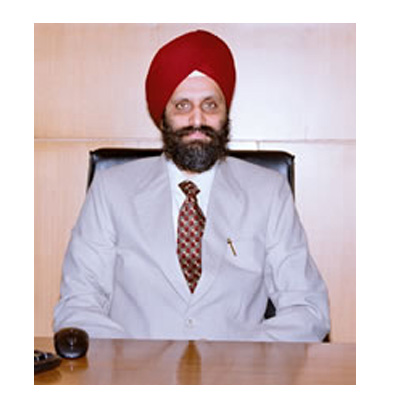
  • ‘Investors are waiting for Cas to roll out before they come up with definite valuations’ : Ravi Mansukhani – IMCL director-in-charge

    ‘Investors are waiting for Cas to roll out before they come up with definite valuations’ : Ravi Mansukhani – IMCL director-in-charge

    Cable TV is in the midst of transition. We are seeing Cas being just implemented. Consumers are wanting set-top boxes (STBs) so that they can see their favourite pay channels. Multi-system operators (MSOs) are gearing up so that demand doesn’t outstrip supply. They know this is their last chance: if they don’t do it right, direct-to-home (DTH) will take over and they will become dinosaurs.


    In an exclusive chat with Indiantelevision.com’s Sibabrata Das, IndusInd Media and Communications Ltd director-in-charge Ravi Mansukhani discusses the dynamic changes taking place in the area of cable TV, the exciting prospects for digitisation, and the challenges that lie ahead as way of competition from emerging technologies.


    Excerpts:

    HTMT had earlier decided to consolidate its media businesses under InNetwork Entertainment Ltd (INEL). What made it change track and bring IndusInd Media and Communications Ltd (IMCL) as the umbrella entity?

    Suddenly the cable distribution business, which is with IMCL, has become big and is heading towards transparency under conditional access system (Cas). It has got a definite growth path now. That was not the case earlier and we thought we would bring everything under INEL which is the content company. The track has changed and content will sit on distribution. So we are merging In2Cable ( the broadband subsidiary) and INEL into IMCL. The parent company for the consolidated media business will be HTMT (an existing listed entity). The demerged IT/ITES entity will be listed under HTMT Technologies.

    While Zee Telefilms has demerged its media entity, your restructuring process is actually consolidating the media business. Is this because the different lines of media business are still having nascent revenues?

    We couldn’t have separated the different media activities as we don’t have size at this stage. We are only demerging the IT/ITES business from the media activities as we believe these have separate identities, will need independent focus, and can unlock value for the shareholders.

    Will HTMT (residual) also house the real estate business?

    The company will have the media businesses, Shop 24 Seven (shopping channel) and the real estate business. The demerger process is underway and a listing is expected by February-end after the restructuring process gets the necessary regulatory approvals.

    Isn’t this a strange mix for an investor in the company?

    There is some real estate property which was sitting there earlier in the company. Since we aren’t expanding on that at this stage, we are leaving it as it is. Real estate may become a play later.

    How much cash will be allocated towards expanding the media business?

    We will have Rs 5 billion for this. This will be used for new business initiatives, acquisitions and funding the expansion of the media and entertainment business.

    Like Zee’s Wire & Wireless India Ltd (WWIL), are you planning to make last mile acquisitions to expand your network?

    We are adopting a different business plan where we want to partner rather than buy out operators. WWIL, on the other hand, wants to acquire 51 per cent in cable networks. Our expansion plan includes offering to operators shares in HTMT (after demerger) as they form an integral part of our distribution chain. This will be based on the subscribers they declare. No decision has been taken as to the exact ratio that would be on offer.

    Will one share be issued to operators for every declared subscriber?

    We are working towards that.

    Do you think your strategy will be more acceptable?

    We have decided that is the best way to go forward, even in the non Cas (conditional access system) areas. By becoming shareholders, operators won’t perceive us as a threat. They can own their network while we make the investments on technology and digital cable. This way they can retain their customers, particularly as they face threat from DTH and other digital cable service providers. We are not exercising the buying option yet. If they want to sell, we may step in later. And by having ownership over the network, it would be in their interest to drive up ARPUs (average revenue per user) and launch value-added services.

    Will ARPUs fall?

    Initially, it will fall or stay flat. The subscriber ARPU in the Cas areas where we are operating is Rs 250. We see this going up to $10 (Rs 450) in two years and, perhaps, to $15 (Rs 675) in five years because of value-added services. Our topline is going to be rammed in the first year, but the bottomline is going to improve immediately as we will have an assured distribution margin.

    Would you prefer inducting a strategic rather than a private equity investor?

    We would favour a strategic than a pure financial investor. We feel inputs from a strategic partner would give us a competitive edge.
    But the possibility of roping in an investor would likely be after the listing of the two entities.

    We are not looking at customer acquisition via bouquet packages. For the ground to open up territorially for the MSOs, it will take time.

    Are investors keen to know about the content side of your story?

    Investors at this stage basically want to know our distribution plan. Our focus right now is on the distribution side of the business. Perhaps, by April we will have an investment plan for content and the other lines of media business.

    Have you initiated talks with global major Liberty which has shown interest in entering into India?

    There are a bunch of them who are interested in India’s cable story. But all the investors are waiting for Cas to roll out before they come up with definite valuations.

    Multi-system operators (MSOs) have announced bouquet packages. Do you see this as a price war to win consumers or local operators from rival networks?

    Our schemes are directed to make our existing consumers happy. We are not looking at customer acquisition via packages.

    Isn’t there a conscious effort to protect your turf from WWIL, which wants to poach operators to increase its thin presence in Mumbai, and DTH service providers like Tata Sky?

    We took care to offer a better quality package than WWIL or Tata Sky. We are offering six months of free subscription for consumers who have to pay just Rs 1500 (plus taxes) in the Cas areas. We are offering three bouquet packages – Star loaded (Sitara with 18 pay channels), Sony-led (Sona with 20 channels) and Zee-Turner (Zabardast with 35 channels). Under the STB rental scheme, we are offering the Optimiser package (Star and Sony bouquets) at Rs 120 (second TV set Rs 55) and the Super Saver scheme (Star, Sony and Zee bouquets) at Rs 190 (second TV set Rs 100). DTH has a high entry barrier as installation of the boxes are costlier than cable. And for the ground to open up territorially for the MSOs, it will take time.

    With WWIL intending to poach operators, do you have a truce on the ground with Hathway Cable & Datacom?

    We would like to keep the peace on the ground.

    With Cas already on, do you see a situation where demand for STBs will outstrip supply?

    We are confident of tackling it. We have in stock 168,000 STBs and have seeded over 40,000 boxes. We are installing more than 5,000 boxes a day. People are waking up as the pay channels are blacked out. We are ready to meet the surge in demand. We have also ordered for over 100,000 STBs from a Korean vendor.

    How keen are you to beef up the content side?

    We will put all our energies into distribution now. Once we have a solid distribution platform, then we are actually de-risking on the content front. We want to get into movie production and are looking at the distribution chain as well. We have earlier done movie financing and have funded around 14 movies from the current crop.

    Are you going to line up special channels for Cas subscribers?

    We are launching thematic channels without advertisement breaks. We have already started In Digital Premium which was made available first in Mumbai. It will also be seen in Delhi and we have movies in different themes – action-oriented, comedy and drama. We are planning to charge Rs 5-10 per movie. We will add more channels.

    What are your plans for CVO?

    The cable movie channel is highly popular and is licensed across 55 cities. But it has been stagnating over the last few years. With our distribution growing, it will bounce back into the growth path. We continue to acquire movies. Last year, we bought 150 movies.

    Revenues from cable internet and content have been depressed. How are you planning to promote your broadband business?

    We are revamping our broadband business. We will be aggressive on pricing. Our focus so far was on quality, not price. We never believed in LAN-based (local area network) internet. Now we will be doing that model. For the last two years, we concentrated on consolidating and upgrading our networks. Even we will start VoIP (Voice over Internet Protocol). We have this system connecting all our Hinduja offices across the globe. We will have to see how we can expand on that and launch commercially.

    What are your revenue projections this fiscal?

    We did Rs 1.6 billion last fiscal, with cable distribution accounting for Rs 1.38 billion, INEL Rs 170 million and In2Cable Rs 50 million. We are not sure how we would finally end up this fiscal as we expect the last quarter to be chaotic. But the topline should leapfrog by FY08.

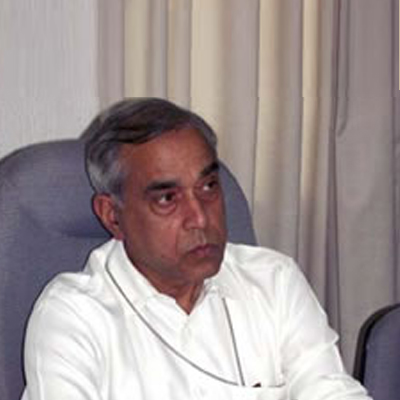
  • ‘Cable ARPUs in Cas areas to touch Rs 400 in five years’ : Jagjit Singh Kohli

    ‘Cable ARPUs in Cas areas to touch Rs 400 in five years’ : Jagjit Singh Kohli

    Subhash Chandra is betting big on his cable TV business. Wire & Wireless Ltd (WWIL), the demerged entity of Zee Group, plans to invest Rs 7.14 billion over two years. A major chunk of this will be consumed by set-top boxes (Rs 3.28 billion) and customer acquisition (Rs 1.14 billion) as he attempts to hold grip in the distribution business.


    When WWIL gets listed sometime in January-February, investors will have a touch and feel of the valuation that cable business will enjoy in the digital era.


    Launching the aggressive drive, WWIL CEO Jagjit Singh Kohli says he has ramped up 250,000 customers at an average valuation pegged at Rs 2000 per subscriber. The ambitious target in year five: 9.6 million.


    In an interview with Indiantelevision.com’s Sibabrata Das, Kohli elaborates on the steps WWIL is taking to emerge as a leading multi-system operator (MSO) with plans to launch Headend-In-The-Sky (HITS) and STBs that have internet and VoIP (Voice over Internet Protocol) capabilities.


    Excerpts:

    Is WWIL close to roping in a strategic investor?

    We are in talks with both strategic as well as financial investors. They have shown interest in our business. We would go with anybody who gives us the maximum valuation.

    What is the valuation WWIL is now getting?

    The investors are discussing of valuations in the range beyond $600 million. Our expectations are higher. We are likely to get listed by mid-January or early February. The true valuations will come out then.

    Are investors valuing the cable TV business based on the number of subscribers or future revenues?

    In India, it is too early for a subscriber-based valuation. Investors are using the discounted cash flow method. The valuations are obviously based on our future target of touching 9.6 million subscribers. There are two reasons why we will get valued more: we are doing Headend-In-The-Sky (HITS) and we are using set-top boxes (STBs) designed by Pacenet which will offer multiple usages like internet and VoIP (Voice over Internet Protocol).

    MSOs will have to make major investments on STBs. Is it going to comprise as high as 46 per cent of your overall investments?

    We are planning to invest Rs 7.14 billion in the business over two years. For STBs, our fund requirement could be Rs 3.28 billion. We are planning to pump in Rs 2.21 billion towards hardware. Another area where we will be aggressive is customer acquisition. We plan to put in Rs 1.14 billion for this.

    What is the debt to equity ratio and how are you meeting the initial fund requirement?

    The ratio will be firmed up once we know the price WWIL quotes after getting listed in the exchange. That in a way will determine how much debt component we would require to raise. Our initial fund requirement is Rs 5 billion. We have lined up a debt of Rs 2.15 billion. We have already got Rs 500 million from Infrastructure Development Finance Corporation (IDFC).

    WWIL is on a drive to acquire customers. What is the price of acquisition?

    We are offering to cable operators a valuation of Rs 2000-3000 per subscriber. While WWIL will be a 51 per cent partner, the balance 49 per cent will be with the operators. We have already ramped up 250,000 subscribers in recent months through aggressive acquisitions.

    What is the average valuation for acquiring 250,000 subscribers?

    The average valuation works out to Rs 2000 per subscriber.

    Won’t you have to handle too many operators by doing JVs with them?

    We are making proposals to networks with decent size. In Mumbai, for instance, 12 local operators are creating a company and entering into a JV with us. We want to reduce the number of JVs. Otherwise, it will be impossible to manage.


    In some of our acquisition models, we make MSOs buy out the local cable operators.


    We have set a target of ramping up our direct subsciber base to 9.6 million within five years. We expect 7.6 million to receive digital cable. Our aim is to have 4.4 million through our own digital cable service and an additional 3.2 million through our HITS platform. We will have two million through analogue acquisitions. We have expanded operations from 35 to 43 cities. We plan to be in 66 cities in three years.

    WWIL has a thin presence in Mumbai. Even in the lucrative market of South Mumbai, which is a Cas notified area, you have a negligible presence. What are you doing to correct this?

    We have linked up optic fibre and have commissioned a digital headend a few days back at Worli. We will be in the Cas notified area of south Mumbai and several operators from rival MSOs are joining us. We have acquired control over 5 Star which operates in Andheri, a western suburb of Mumbai. We have also poached a few operators from Incablenet in Andheri East and others from rival MSOs are joining us.

    The average valuation of acquiring 250,000 customers works out to Rs 2000 per subscriber.

    How are you expanding your footprint in Delhi?

    In Delhi, we have acquired a 51 per cent stake in Satellite Channels. We have also signed up with Spectranet and Sanjay Cable Network. All these MSOs were disqualified for Cas as they were found not ready by the Telecom Regulatory Authority of India (Trai) for making the switchover to addressable system by 31 December. As for Kolkata, we are very much a dominant player after buying out Indian Cable Net (formerly RPG Netcom), a leading MSO, in May 2005.

    What is the price of the STBs?

    While the cost of the basic box is Rs 2000, the one with internet is Rs 2500 and internet plus VoIP Rs 3000. Customers can enjoy interactive games and online share trading through this. We are looking at a monthly fee of Rs 70 for internet and Rs 75-100 for movie-on-demand. Subscribers will have to pay Rs 1499 as deposit and Rs 45 as monthly rent. We haven’t, though, arrived at the final pricing. We plan to introduce the internet-enabled boxes after two months and those with VoIP sometime in April.

    Who are your STB vendors?

    We have Korean and Chinese vendors who will be supplying us the boxes. We have also ordered 200000 STBs from Bharat Electronics Limited (BEL).

    Earlier, in 2003 when Cas was to be introduced, Pacenet had ordered STBs from TVS Electronics. Why haven’t you included them in the list?

    We are also considering them. But at this stage it makes more business sense to import the boxes.

    Were you doing some tests with BSNL for VoIP?

    We were testing out whether our technology would work on BSNL’s network. The tests were successful.

    Is WWIL serious on launching a HITS platform or is it a mere hype?

    We are going to do HITS and have expressed our intent to broadcasters. This will provide us a national footprint and hasten the pace for digitisation in the country. We can tap cable operators even in places where WWIL has no presence. We have booked four transponders on Thaicom satellite with effect from 1 January, with the option of taking three more. We plan to launch HITS before the end of February.

    Do you see ARPUs (average revenue per user) falling in a Cas regime?

    For one year, it may come down. Let us not forget that cable TV rates have been suppressed for artificial reasons for too long. But by deploying STBs, this scenario is going to change. We may start off with an ARPU of Rs 250 per month, but like in case of cinema theatres with the launch of multiplexes, this will go up. By year five, we may be looking at ARPUs in the region of Rs 400.

    Hathway Cable & Datacom has come out with bouquet packages along with the a la carte choices. Will you offer something similar?

    We will be introducing a combo package where consumers who buy STBs on outright purchase and take annual subscription will be offered an attractive subsidy. This scheme will make available 100 TV channels. We will be offering under this at least 20 pay channels. We will be subsiding the boxes.

    Unlike DTH, broadcasters will have to make their pay channels available on an a la carte basis at a maximum rate of Rs 5 on cable networks in Cas areas. Will this mean that they will do content deals where they give their bouquets to MSOs at lower cost than to DTH service providers? Otherwise, MSOs can create bouquets picking and choosing the best channels and dumping the weaker ones in the bouquet.

    Yes. If broadcasters don’t do that, they will always be faced with the dilemma that the MSOs can pick and choose the stronger channels in their bouquet while ignoring the rest. The other reason why we should get better costs than DTH is because we have to share the revenue with the distributors and local cable operators across the value chain.

    How does cable compare with telecom operators in triple play service?

    Indian cable systems are ready to do telephony. They have pipes already laid including ethernet. The cable architecture throughout the country is in a position to provide triple play. All that is required is the box and IP can provide the return path for voice, data and interactive services.


    The public sector telcos, on the other hand, require strong compression technologies and ADSL2+ signals are good only for distances up to 1.5 km. The private sector telcos do not have a system suitable for large scale deployment and will require a high capital cost of $300 per line, even if we take the fact that their network is ready for IPTV (which is not the case). IPTV could have happened in markets where ARPUs are high. But India is not a high ARPU market.

  • ‘Trai has kept entry barrier low to make Cas acceptable’ : Nripendra Misra – Trai chairman

    ‘Trai has kept entry barrier low to make Cas acceptable’ : Nripendra Misra – Trai chairman

    The cable TV industry is on the cusp of change. The multi-system operators (MSOs) have chalked out plans to roll out digital cable, a transition that they believe will make their business models viable and add value to their networks.


    Perturbed by the cap on a la carte pricing of their channels at Rs 5, the broadcasters, on the other hand, have taken shelter in legal cases.


    Crucial to making Cas (conditional access system) a reality has been the role played by the Telecom Regulatory Authority of India (Trai). It has not only come out with a consumer-friendly tariff order but also made sure that progress is made by the MSOs on the implementation front.


    In this interview with Indiantelevision.com‘s Sibabrata Das, Trai chairman Nripendra Misra reiterates that digitalisation is the way forward. Cas will be implemented and even regulating direct-to-home (DTH) in areas of quality of service is on Trai‘s radar.


    Excerpts:

    How ready are the multi-system operators (MSOs) to implement Cas in the notified areas of Mumbai, Delhi and Kolkata?

    The progress is satisfactory and let there be no doubt in the minds of stakeholders that Cas is going to be implemented on the due date. There is no element of uncertainty. We already have reports of 10 MSOs (as of 16 December) having conducted the trial runs for testing out their digital systems under Cas. We want to be sure that there are no glitches in implementation of Cas and that the transition is smooth.

    In Delhi, Spectranet, Satellite Channels, Sanjay Cable Network and Star Broadband Services have been issued letters by the information and broadcasting ministry that they are not in a position to switchover to addressable system by 31 December as they are not ready with the digital systems including headend, Cas and set-top boxes (STBs). What is the action Trai has taken?

    There are four networks who we found are not in a position to roll out their service. We have asked the other MSOs (Hathway Cable & Datacom, Incablenet, Wire & Wireless India Ltd. and Home Cable Network) to step in so that consumers falling under the Cas belt of Delhi do not suffer blackout of their cable TV service. We are constantly monitoring the progress made by the MSOs.

    How many MSOs have applied for licence and got approval to operate in the Cas areas?

    There were 21 MSOs and five more applied later. Our focus is on 21. Out of this, as I told earlier, 10 (as of 16 December) have started trials.

    Estimates are that there are around 1.2 million cable & satellite homes in the Cas areas. Have the MSOs brought in adequate number of STBs?

    There are already a total of over 300000 boxes available with the MSOs. It is tough to estimate the exact number of C&S households in the Cas region. The whole cable TV industry is marked by high levels of under-reporting of subscribers. But supply shouldn‘t be a problem as the MSOs say that they can quickly import the STBs in case of demand. Their argument is that they shouldn‘t be stuck up with investments if Cas, for any reason, doesn‘t pick up. We expect 40 per cent of analogue subscribers converting into digital. That apparently is in line with the global trend. Digitisation is a way forward and consumers falling under the Cas notified areas should start ordering for STBs from now so that there is no crowding towards the end.

    What gives you the confidence that Cas will take off this time?

    Unlike in 2003, we now have a broadcast and cable regulator in Trai. We have kept the entry barrier as low as possible so that Cas can get accepted by everybody. Consumers also can select individual channels and we have fixed a price cap on a la carte channels at Rs 5. The tariff order also means that STBs are available on rental schemes with a fixed deposit amount (Rs 30 per month on a deposit of Rs 999 and Rs 45 for a deposit of Rs 250). Besides, this time there is competition from direct-to-home (DTH) with DD Direct, Dish TV and Tata Sky already offering their services. In fact, we have found medium-sized MSOs in some non Cas areas investing around Rs 15 million on diogital headends so that they can compete against DTH.

    The average monthly bill for digital cable TV subscribers will not see a sigificant drop as they will be loaded with an entertainment tax of Rs 45 (other areas different), Rs 45 as rent on the STB (if they pay a deposit of Rs 250) and a service tax. Add to this a payout of Rs 77 on free-to-air (FTA) channels and there is a slim chance of lowering down the bills. Would you agree?

    We shouldn‘t be talking of a system where we do not pay taxes. The taxes are applicable even under the current system. That is no way to calculate the cable TV subscription rates. Consumers can now pay as little as Rs 5 for the channel they want to see and limit their bills.

    ‘Regulating DTH in the quality of service area is certainly on our radar

    Will the rental schemes attract value added tax (VAT)?

    Yes. In any case, taxation is not a subject which falls within the purview of Trai.

    Consumers complain that costs will go up as they have to pay for the second TV set as well?

    We have decided not to regulate on the concessional rates for the second or more TV sets. Market forces should take care of that – as has been happening now. In any case, a large percentage are single TV households. We shouldn‘t regulate wherever we can, but only in areas where there is need.

    How long will this price of Rs 5 and a minimum subscription commitment of four months for any channel last?

    We are open to taking a relook at this. As we determined on a price as low as Rs 5, we also decided to balance it by asking consumers to subscribe a channel for at least a period of four months. After six months, we intend to first assess whether a review on the pricing and other related issues is necessary at all or not.

    Are you looking at coming out with some kind of regulations for non Cas territories?

    We are considering if we should step in and regulate the non cas areas so far as quality of service is concerned.

    Will Trai try to encourage various modes of digitalisation?

    We have a forward-looking approach. We generally feel digitisation is the road ahead. Besides mandated Cas, we are looking at voluntary spread of digitisation across all technologies. We will be having a serious of discussions from January-June. The first round table kicks off on 27 January. There are various alternatives – DTH, Cas, IPTV. We will be having a series of regional meetings where we want to discuss and review all these things. Then we will send our recommendations to the government.

    Is Trai going to regulate DTH as well?

    Perhaps, we need to look at regulating DTH in the quality of service area. It is certainly on our radar. As the DTH base grows, subscribers need to be protected. But DTH is at an infant stage and it may be too early to regulate it like cable. Let us not forget that cable TV has grown in India so far as an unorganised industry.

    As the DTH base grows, subscribers need to be protected. But DTH is at an infant stage and it may be too early to regulate it like cable. Let us not forget that cable TV has grown in India so far as an unorganised industry.

  • MSOs have to now start trial runs on STBs: Trai

    MSOs have to now start trial runs on STBs: Trai

    MUMBAI: The Telecom Regulatory Authority of India (Trai) has directed multi-system operators (MSOs) to start trial runs on homes where they have seeded the digital set-top boxes (STBs) for conditional access system (Cas).

    “We have reports of 10 MSOs having conducted the trials for testing out their digital systems under Cas. The deadline starts from today. We want to be sure that there are no glitches in implementation of CAS and the transition is smooth,” said Trai chairman Nripendra Misra while addressing a consumer forum meet today in Mumbai.

    The progress is satisfactory and let there be no doubt in the minds of stakeholders that CAS is going to be implemented on the due date, he added. “Digitisation is a way forward and consumers falling under the Cas notified areas should start ordering for STBs from now so that there is no crowding towards the end.”

    With effect from 1 January, pay channels in the notified areas of South Mumbai, Delhi and Kolkata can be viewed only through the STBs.

    The cable and broadcast regulator will encourage various modes of digitalisation, Misra said. “We want to discuss on the road ahead for digitalisation. Besides mandated CAS, we are looking at voluntary spread of digitalisation across all technologies. We will be having a serious of discussions from 27 January-June.”

    Clarifying on the issue of taxes, Misra said it did not fall under the purview of Trai. “VAT will be on the deposits and rental schemes of the STBs,” he added.

  • Hathway launches digital cable in Mysore

    MUMBAI: Hathway Cable & Datacom has launched digital cable TV service in Mysore through a fibre linkup from Bangalore.

    The multi-system operator (MSO) will have the Scientific Atlanta (SA) solution using the digital content manager (DCM) which supports gig interface (GbE ports) for transmitting the 130 channels over STM4 bandwitdh.

    On the recieving end, is the SA’s digital qam (XDQ). This is an ideal bridge between flexible IP and Giga bit ethernet based backbone networks and existing qam set top boxes.

    Hathway plans to launch the service soon in Nashik, the company said in a statement. Digital cable is already available in Chennai, Mumbai, New Delhi, Pune, Bangalore, Hyderabad, and Punjab.

    The digital set-top box (STB) will offer over 130 TV channels and other value added services like interactive gaming, the release added.

  • WWIL lines up Rs 2 billion debt, rebrands digital cable as Galaxzee

    WWIL lines up Rs 2 billion debt, rebrands digital cable as Galaxzee

    MUMBAI: Zee Network’s Wire & Wireless India Ltd. (WWIL) is in the process of lining up a debt of Rs 2 billion for funding its digital initiatives and acquisition of cable operators.

    “We have already got Rs 500 million from Infrastructure Development Finance Corporation (IDFC). We are already in the process of tieing up a debt of Rs 2 billion,” WWIL CEO Jagjit Singh Kohli tells Indiantelevision.com.

    The company plans to invest Rs 7.40 billion over two years and Rs 8.50 billion within five years. “The debt to equity ratio will be firmed up once we know the price it quotes after getting listed in the exchange by February-March 2007. That in a way will determine how much debt component we will require to raise,” Kohli says.

    The company is in talks with strategic and financial investors but conclusive agreement will take place only after the listing. “We are not necessarily looking at a strategic investor. We want somebody who will give us the maximum valuation,” Kohli says.

    WWIL, the de-merged entity of Zee Telefilms’ cable TV business, has set an ambitious target of ramping up its direct subsciber base to 9.6 million within five years. “We expect 7.6 million to receive digital cable. Our aim is to have 4.4 million through our own digital cable service and an additional 3.2 million through our Headend-In-The-Sky (HITS) platform. We will have two million through analogue acquisitions,” says Kohli.

    WWIL claims to have added 250,000 subscribers in recent months through aggressive acquisitions. The multi-system operator (MSO) has also expanded operations from 35 to 43 cities. “We plan to be in 66 cities in three years,” Kohli says.

    WWIL will deploy several models of set-top boxes (STBs) aimed at various subscribers. Apart from the basic box, it plans to introduce a STB which will enable internet facilities on TV. “Customers can enjoy interactive games and online share trading through this. We are looking at a monthly fee of Rs 70 for internet and Rs 75-100 for movie-on-demand. Subscribers will have to pay Rs 1499 as deposit and Rs 45 as monthly rent. We haven’t, though, arrived at the final pricing. We plan to introduce these boxes after two months,” says Kohli.

    The basic STB is available on a refundable deposit of Rs 250 and rent of Rs 45 per month or a refundable deposit of Rs 999 with a monthly rent of Rs 30.

    WWIL will also deploy a STB through which it can offer VoIP (Voice over Internet Protocol) sometime in April, according to Kohli. The MSO is also poised to offer HITS which will enable it to tap cable operators at a national level even in places where WWIL has no presence, he adds.

    GalaxZee will be the brand under which WWIL will offer its digital cable service. “We have commissioned a digital headend two days back at Worli. We will be in the Cas (conditional access system) notified area of south Mumbai and several operators from rival MSOs are joining us,” Kohli says.

  • Hathway selects Magnaquest as SMS provider for digital pay TV operations

    Hathway selects Magnaquest as SMS provider for digital pay TV operations

    MUMBAI: Hathway Cable & Datacom is integrating its broadband and digital pay TV billing solutions. The multi-system operator (MSO) has selected MagnaQuest as its subscriber management system (SMS) provider for both the services.

    Earlier, when conditional access system (CAS) was to be implemented in 2003, Hathway had chosen Entriq (formerly known as Mindport as the SMS provider.

    Hathway was already using MagnaQuest’s MQSubscribe, a customer management and billing solution (CMB), for the past two years. “Eventually broadband, digital cable and voice services will converge. So we decided to deploy MQSubscribe for rolling out our digital pay TV services as well. We have been successfully using their billing solution for our broadband internet business for the past two years and found the system to be robust and scalable,” says Hathway Cable & Datacom MD and CEO K Jayaraman.

    Hathway Cable & Datacom will use MQSubscribe to handle subscriber information, billing, inventory and logistics management and customer care. MQSubscribe is seamlessly integrated with NDS CAS for automatic activation and deactivation of subscriptions.

    Says MagnaQuest CEO Vijay Debbad, “Apart from our domain expertise, solution flexibility and scalability, we believe it is our commitment and understanding of the Indian Pay TV industry that has enabled us to be chosen by Hathway Cable & Datacom.”

    MagnaQuest recently bagged a contract to manage the broadband and Voice over Internet Protocol (VoIP) billing services of Hyperia Ltd, Nigeria’s leading internet service provider.

  • CAS rollout: MSOs look to channel package tiers

    CAS rollout: MSOs look to channel package tiers

    MUMBAI: Multi-system operators (MSOs) have initiated talks with some broadcasters for providing their bouquet of pay channels at special rates in the conditional access system (CAS) regime. This would enable cable networks to tier various channel packages for consumers.

    The Telecom regulatory Authority of India (Trai) has fixed the a la carte pricing of pay chanels at a maximum of Rs 5 under CAS. The MSOs want broadcasters to price their bouquets below the average of Rs 5 per channel.

    “We are in a very nascent stage of discussions. Some of the broadcasters have moved the courts and are, in fact, waiting for the verdict. We expect to have more definite proposals within a fortnight,” says Hathway Cable & Datacom managing director and CEO K Jayaraman.

    The MSOs will tier different packages to make it price friendly for consumers. “We will be working out packages based on a combination of genres. This will be in addition to the a la carte pricing which, with a cap at Rs 5, is expected to be quite popular,” says Jayaraman.

    Adds IndusInd Media and Communications Ltd (IMCL) director-in charge Ravi Mansukhani: “Once the broadcasters give us their bouquet pricing, we can work out our own bundling which will offer choice to consumers and make it more attractive than the a la carte pricing.”

    The stumbling block to such negotiations at this stage, however, is a number of court cases filed by broadcasters questioning the Rs 5 cap fixed by the sector regulator. Broadcasters feel the regulated pricing is unfair and will hurt their subscription incomes.

    Hathway and IMCL, meanwhile, will soon kick-off CAS awareness campaigns jointly. The estimated spend: Rs 10 million. Hathway plans to spend an additional Rs 5 million in the first phase, says Jayaraman. Hathway has already started marketing its digital drive in bus shelters, radio and other mass media platforms.

    “We are also planning to invest independently through various marketing initiatives. This will be in addition to the joint campaigns where the spend could be Rs 10 million,” says Mansukhani.

    The MSOs have started offering digital set-top boxes (STBs) and cable at an advance deposit of Rs 250 in the CAS notified regions of south Mumbai, Delhi and Kolkata. Consumers will have to pay a rent of Rs 45 per month only after 1 January, the scheduled date for implementation of CAS. If they are not happy, they can discontinue the service.

    “We have started seeding 1,000 STBs a day since 1 November. We expect this to further pick up,” says Jayaraman. Hathway is aggressively pushing for digital cable in both Mumbai and Delhi.

    IMCL has been slow to push the STBs to its consumers. “Once the marketing campaign gathers momentum next week, we hope to seed 1,000 STBs a day. The offtake should further speed up as we go forward,” says Mansukhani.

  • CAS pricing case: TDSAT sets 12 December for next hearing

    CAS pricing case: TDSAT sets 12 December for next hearing

    MUMBAI:The Telecom Disputes Settlement & Appellate Tribunal (TDSAT) has fixed 12 December as the date for next hearing in the case filed by broadcasters against the Rs 5 tariff for pay channels set by sector regulator Trai (Telecom Regulatory Authority of India) in a CAS (conditional access system) regime.

    The Telecom Disputes Settlement & Appellate Tribunal (TDSAT) has fixed 12 December as the date for next hearing in the case filed by broadcasters against the Rs 5 tariff for pay channels set by sector regulator Trai (Telecom Regulatory Authority of India) in a CAS (conditional access system) regime.

    The pay broadcasters have challenged the two Trai notifications dated 24 August (on carriage fee) and 31 August (channel pricing). They are also contesting the revenue sharing model designed for industry stakeholders by Trai. The sector regulator had specified in the notification that the revenue generated from pay channels leaves the broadcaster with 45 per cent, while the MSOs stays on with 30 per cent and the cable operators get 25 per cent.

    Earlier this year, a division bench of the Delhi High Court had passed an order directing the implementation of CAS with effect from 31 December in the south zones of the three metros – Mumbai, Delhi and Kolkata.

  • Star signs first CAS agreement in Delhi

    Star signs first CAS agreement in Delhi

    NEW DELHI: Star India looks like being the first major broadcaster to sign on to the CAS bandwagon.

    In a clear statement of intent directed at its detractors who have been claiming that India’s leading broadcast network is only paying lip service to the government mandated rollout of addressability, Star has signed up with one of South Delhi’s biggest independent cable TV networks, Home Cable, for CAS-enabled services.

    This agreement between a broadcaster and a cable network also heralds that the “CAS dawn” is around the corner.

    Says Star India president – advertising sales and distribution Paritosh Joshi, “We have sent out CAS agreements to all the cable networks operating in the CAS notified areas of Mumbai, Delhi and Kolkata. We expect to have signed contracts in place well within the government-stipulated deadlines.”

    “Other than Home Cable, we expect to sign up the other networks in Delhi like SitiCable (now called WWIL), INCablenet and Hathway (26 per cent owned by Star) by tomorrow evening. In Kolkata there are seven or eight networks while in south Mumbai the main ones are Hatway and INCablenet,” Joshi pointed out.

    Addressability is an issue that has been buffeted by various forces, including political ones wherein the underlying theme had been to stall it as long as possible.
    Home Cable is owned by Vikki Chowdhry and services a sizable number of households in the posh Maharani Bagh and New Friends Colony areas of South Delhi where CAS is scheduled to be rolled out from 1 January 2007.

    According to Chowdhry, “The court mandated CAS has to be rolled out and since my network was one of those that has registered with the government, it is better I finish signing up the various agreements with broadcasters as soon as possible.”

    Those cable networks and MSOs who have applied for government clearance for CAS rollout in Delhi include WWIL, the Hindujas-controlled INCablenet, Hathway and few other independent operators who have big networks servicing a large area.

    CAS is scheduled to be rolled out in south zones of Mumbai, Kolkata and Delhi from the midnight of 31 December 2006 wherein all pay channels would have to pass through a set-top box on a mandatory basis.