Tag: MSO

  • Bombay High Court reserves judgement in new tariff order amendment case

    Bombay High Court reserves judgement in new tariff order amendment case

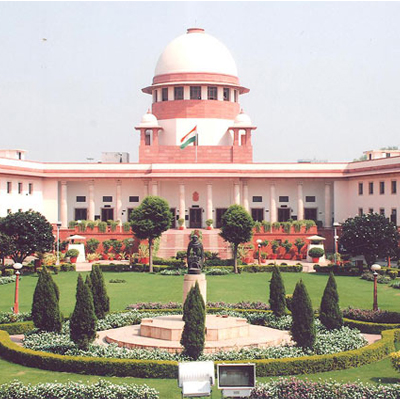
    MUMBAI: The Bombay High Court has reserved the judgment in the case of the new tariff order amendments (NTO 2.0) as the hearing got over on Thursday. While the ambiguity still continues in the ecosystem, the court is expected to pronounce the judgment in a couple of days.

    According to sources close to the development, Telecom regulatory Authority of India (TRAI) cited the judgment by Justice Nariman of Supreme Court delivered in 2018 and judgment of Delhi HC from 2007 to support that it has full right to regulate broadcasters. It alleged that regulating bouquet formation and discounts is important because broadcasters use the same to push unwanted channels to consumers and are only interested in increasing their advertisement revenue.

    On the other hand, broadcasters argued that bouquets help to make large number of channels cheaper for consumers and also attempted to prove that due to competition from streaming services and telcos, regulation for broadcast TV ought to be reduced. As LCOs filed an independent writ petition asking for stay, they also argued that any attempt by TRAI to bring down NCF will kill their business.

    Meanwhile, Kerela HC hearing a matter from MSOs protesting against an effort to reduce NCF has also reserved its order and will pronounce it soon.

    As none of the high courts pronounced any clear order on interim relief, the amended regime came into play from 1 March. Among the DPOs, Tata Sky, Airtel, Dish TV, Siti Cable and IMCL have implemented NTO 2.0 and reduced their NCF.

  • MIB grants registration to 15 MSOs in Feb

    MIB grants registration to 15 MSOs in Feb

    MUMBAI: The Ministry of Information and Broadcasting (MIB) has published a document listing all the registered multi-system operators (MSO) in the country. As per the document, there are 1645 registered MSOs in India as on 28 February 2020.

    Fifteen MSOs were granted registration in the month of February 2020. A total of 150 MSOs were granted registration in the year 2019. Surprisingly, just one MSO, Sharma Cable Network, was granted registration in the entire of 2018 as per the document.

    All the granted registrations are valid for a period of 10 years. The name of the companies that were added in the registration list in January includes Haur Cable Network,  Nabadiganta Cable Network, Krishna Enterprises, Lamjingba Times,  Sneha Digital Networks, Bangabhumi Cable and Broadband, AIS Cable & Broadband, Durga Digital, Asian Cable Network, GTPL Vijayaraya Network, VSN Network, Sri Srinivasa Cable Network, City Cable Network,  Star Digital Services and Mak Infrapromoters  

    The ministry has not cancelled any registration in February 2020. A total number of MSOs registrations cancelled by MIB is 74 till 31 January 2020.

  • MSOs share different outlooks on impact of NTO 2.0

    MSOs share different outlooks on impact of NTO 2.0

    MUMBAI: All the stakeholders of the broadcasting sector had a tough time coping with the new tariff order (NTO), which was implemented last year. While TRAI brought amendments to the new price regime, touted as NTO 2.0, on 1 January, it has again sent tremors across the industry. The changes have irked broadcasters but multi system operators (MSOs) have different opinions on NTO 2.0’s impact.

    The NTO had a drastic impact on the players in the cable industry resulting in a dip in subscriber base. However, Siti Networks nodal officer for broadband and video verticals Vishwa Bandhu Sharma feels that the new provisions will not disrupt MSOs again.

    He told Indiantelevision.com, “There was a lot of subscriber loss when NTO 1 came in effect. Multi-TV homes stopped using their second and third TV sets. But with NTO 2.0, we are expecting them to activate those TV sets again.”

    Speaking about the impact that the reduction of prices will have on the industry, Sharma shared that the ARPU would remain more or less the same because of the discount on the NCF. He said that he is expecting people to move to more a-la-carte selections for channels that have good content but are not a part of the new bouquets.

    While Sharma believes that MSOs will benefit from NTO 2.0, one of the major MSOs, not willing to be named, opined that the changes will affect the top and bottom lines of both MSOs and local cable operators (LCOs).

    “Discount of 60 per cent on additional TV will result in revenue loss for both MSO and LCO. The loss will be 12-15 per cent and will reflect in the top line and bottom line. Even if 10 per cent STBs (second TV) are recovered, the loss will be 8-10 per cent,” the executive from the other MSO stated.

    TRAI also said in the amended regulation that broadcasters shall not be permitted to give any discount for adoption of bouquets to DPOs in the 15 per cent category as permitted in Interconnection Regulations 2017. According to the executive, this will result in the reduction in bottom line of the MSOs. Additionally, it will increase disputes between the broadcasters and MSOs.

    While DD channels have been excluded from NCF, the executive said: “We have invested in infrastructure for building channel capacity and delivering it to subscribers. We cannot charge placement from the government but our right to charge NCF subscriber should not be withdrawn.”

    Siti Network’s Sharma also added, “When broadcasters were given a chance to rework their prices, they took it to the maximum level and also charged a premium rate. They also included their low base channels in the bouquets, even with bouquet price at 50-60 per cent off. Of course, it (NTO 2.0) will be a disadvantage because now to include those channels in the bouquet, they will have to reduce the price or they will have to leave the channel out for a-la-carte selection. People will not be subscribing to lesser popular channels, and that’s why they are not happy.”

  • NTO 2.0 will not have much impact at consumer level: Shaji Mathews

    NTO 2.0 will not have much impact at consumer level: Shaji Mathews

    MUMBAI: Even as stakeholders have moved courts against Telecom Regulatory Authority of India’s (TRAI) amendment of the New Tariff Order (NTO), analyst and consultant Shaji Mathews feels that it will not have any significant effect on the existing system. “I don’t think NTO 2.0 will have much effect on the consumer either, because whatever changes and choices consumers were to make, happened during the NTO 1.0 implementation. Once the legal battle on NTO 2.0 is over, the MSOs will implement it at the consumer level with cautiousness. They won’t disrupt the system,” says Mathews, who previously held positions as the VP of Star TV, COO of GTPL and CEO of KCCL.   

    According to him, NTO 1.0 was expected to remove discriminatory agreements which were imposed by broadcasters and create a level-playing field for small MSOs as well. “For that TRAI brought in the MRP regime, which was uniform pricing across the country for the consumers and transparent margins for the distribution platforms, whether they are small or big,” he says. It was expected that the MRP system will push broadcasters to bring consumer-friendly pricing, enabling consumers to avail a multitude of channels of their liking within the rates they were paying.

    “In the process, what happened was that consumers who were expecting to go a-la-carte found themselves at the receiving end because broadcasters basically priced the channels in such a way that they can defeat the whole purpose of the NTO itself,” he points out. 

    Now, by bringing in MRP regime, TRAI is expected to make it easy for consumers to choose channels based on prices.

    It also brought in certain regulations, on bouquet pricing, that the discount in pricing should not be more than 15 per cent. But while implementing, that was removed from the regulation and was kept in abeyance because of the remark of the Madras High Court. However, in the legal battle at Supreme Court, the remark made by the SC prompted the regulator to go approach the Supreme Court for a decision on the 15 per cent. But the apex court threw it back to TRAI and asked it to take steps which were within TRAI’s powers.

    In that scenario, he says that TRAI had to come out with NTO 2.0 wherein some regulations related to a-la-carte rate and bouquet rate had to have interlinked logics. And TRAI stepped in to clear the anomalies which were there in NTO 1.0.

    According to him, the consumers are not bothered about all these things. They want convenience. “I don’t share the views of TRAI and many other stakeholders that the consumer is so bothered about his freedom to choose on an a-la-carte basis. There are 800 channels in this country. In the NTO 1.0 regime, when broadcasters brought out the bouquets, there was no limit on the number of bouquets you could make. There were about 500 packages to choose from, and the consumers were frustrated. There is no point in forcing a-la-carte on consumers; they don’t really bother about whether it is a-la-carte or bouquet. They are bothered only about convenience, getting to watch their favourite channels, and they don’t want to pay too much. All these three were disrupted by the NTO. The consumer was not in a position to choose from too many packages and too many a-la-carte options.”

    Broadcasters, on their part, jacked up the prices, he said. All these went against the consumer requirements, resulting in a lot of them reducing their stickiness to watching TV. According to him, the cable industry lost around 10 to 15 per cent subscribers because of NTO.

    “It is not necessary that these consumers migrated to DTH. They did not go to OTT or YouTube, either. In fact, a lot of consumers did not go anywhere. They may come back to the system over a period of time. They have other priorities in life. They were like, let it be. That was the effect of NTO,” says Mathews. 

    He is certain that there won’t be much of a change in the case of NTO 2.0.

    “What I expect is that broadcasters will come out with revised prices. Having learned lessons from the implementation of the NTO, MSOs will not disrupt the system this time. If broadcasters reduce the prices, I think MSOs will give more channels to the consumers for the same price.  I don’t see the possibility of broadcasters increasing the prices, except in one or two cases. Some of the broadcasters are very aggressive in their stand. As regulator has come up with the Rs 12 pricing cap, some aggressive broadcasters might remove their channels from the bouquet,” he explains.

    Asked about the broadcasters’ complaint that their freedom to price has been curtailed by the NTO, he said: “Their freedom to price is there; only their freedom to bundle has been restricted. Their charges with regard to the loss of control over the pricing won’t stand. Broadcasters are making a fuss on this because it is their strategy of ensuring that the outcomes are advantageous for them.”

    On the question of TRAI’s authority to fix price cap, Mathews answers that the cap is only on the bundled channels, not on any other channels.

    He is also sure that none of the distribution platforms will create any disruptions under the NTO 2.0 regime. According to him, during NTO 1.0 the platforms went a little overboard in implementation. “So this time they will definitely not do anything disruptive. They will proceed cautiously. There will not have the same kind of disruption as we witnessed during NTO 1.0,” he states.

  • MIB grants registration to 139 MSOs in 2019

    MIB grants registration to 139 MSOs in 2019

    MUMBAI: The Ministry of Information and Broadcasting (MIB) has published a document listing all the registered multi system operators (MSO) in the country. As per the document, there are 1606 registered MSOs in India as on 26 November 2019.

    Eleven MSOs were granted registration in the month of November 2019. A total of 139 MSOs were granted registration in the years 2019. Surprisingly, just one MSO, Sharma Cable Network, was granted registration in the entire of 2018 as per the document.

    All the granted registrations are valid for a period of 10 years. Some of the companies named are Shree Sai Vision, Ajanta Sky Darshan, Zee Communications, Home Vu Digital Cable and Broadband, Mediatech Communication, etc.

    The MIB mentioned that all registered MSOs can operate anywhere in India, unless indicated otherwise.

    A day before, certain MSOs had approached the ministry regarding the status of their applications in an open house meeting.

    Earlier this year, TRAI released recommendations on MSO registrations stating that there was no need to fix a minimum entry net worth.

    You can access the full list here

  • MSO applicants seek approval status in OHM

    MSO applicants seek approval status in OHM

    MUMBAI: Five MSO applicants and registered MSOs participated in an open house meeting to ascertain the status of their MSO application for grant of registration along with other queries.

    Representatives from TJ  Cable Network, World Phone Infrastructure Services, Haur Cable Network, Lamjingba Times Pvt Ltd, Yadav Cable Network were present in the meeting.

    Representatives from TJ Cable Network raised a query regarding change of entity from proprietorship firm to partnership firm and asked whether it is possible to transfer MSO registration from proprietor to partnership. But such a change is not possible since there is no such provision in the CTN Act.

    The representative of applicant MSO World Phone Infrastructure Services informed about the status of the application and were told that their application is under examination in the DAS Section of the Ministry.

    In addition to that, the  representatives of Haur Cable Network, Lamjingba Times  Pvt Ltd, Yadav  Cable  Network  mentioned  were informed about the  status of their applications that is under scrutiny in  the DAS section and security clearance from  MHA awaited. 

  • MCOF’s Arvind Prabhu on post-NTO era, LCO concerns, OTT regulation

    MCOF’s Arvind Prabhu on post-NTO era, LCO concerns, OTT regulation

    The cable and broadcasting ecosystem started the year 2019 with a disruption – the new tariff order (NTO). With the implementation of NTO, the most dissatisfied section of the ecosystem was local cable operators (LCO) as they found the revenue-share business model would make their survival difficult which caused massive protests from LCOs. As months passed, the turmoil settled, but the ecosystem is yet to benefit from NTO, according to Maharashtra Cable Operators Foundation (MCOF) president Arvind Prabhu.

    In an interview with Indiantelevision.com, Prabhu spoke on major challenges faced by the ecosystem after NTO, how the industry evolved post-NTO, how LCOs can survive in the future with upgradation in technologies amid OTT onslaught, etc. Prabhu will also share his insights on the current state of industry at Indiantelevision.com's Video and Broadband Summit 2019, India's definitive Pay-TV and video distribution get together. 

    Edited excerpts:

    Has the industry settled down after the NTO was implemented?

    The industry has settled down but not the benefits of the NTO as envisaged by TRAI within the ecosystem. Consumers are not getting the benefits of the NTO. So the actual implementation of NTO is still found pending.

    What are the major changes you noticed post-NTO?

    What we would like to highlight is that because of the lack of proper implementation, the consumer is still not getting his choice of channels. There has been an increase in the monthly rates and we still feel the transparency is not there. The transparency which was required is still not there. Also, earlier there were two TV sets in households. Now, the second TV is still not active in post- NTO era. Only the primary TV set has been activated in the new tariff order. So, almost 20-25 per cent of our connections have still not activated.

    Initially, local cable operators showed strong disagreement to the revenue sharing model with MSOs. Has the situation changed?

    The situation has still not changed. The local cable operators (LCOs) are still not happy, especially with the network capacity fee (NCF) factor. We are still demanding the entire NCF should be given to LMO. So, the sharing with the broadcasters, the sharing of 80-20 is still not agreeable to us. There was an open-house discussion recently where lots of suggestions were given, therefore we are awaiting that to come.

    If the model does not change, have you thought of alternatives to prevent the loss?

    The revenue share model has to change. It looks like the broadcasters are going to be reducing the charges. Earlier, we thought broadcasters inflated their charges. From Rs 19 to they have gone down to Rs 12. Obviously, the ARPU is going down. If the ARPU is going down, then the revenue share also needs to be relooked and everyone in the ecosystem has to survive. If the cable operators do not get their fixed price, then they would not be able to survive. We are seeing a lot of cooperative head-ends coming up, a lot of infrastructure-sharing happening. But traditional TV is also now aligning with telcos. BSNL has opened its doors to providing its services as also Reliance Jio. There is going to be a little bit of turmoil in the market. The traditional linear viewing is changing.

    What are the other major concerns of LCOs?

    ,One of the major problem is who is the owner of the set-top box. Even today, the set-top box is given by the MSOs to LCO at Rs 1,150 or Rs 1,200. The receipt they are giving is the installation charge. As per TRAI, the installation charge is Rs 300 and registration charge is Rs 100. So, they cannot charge more than Rs 400 at any case. But they are giving the box at Rs 1,150 and saying it's installation charge. This is a violation of GST they are doing and the ultimate ownership of the box is still a question mark because the Multi-System Operators (MSOs) are taking money from LMOs, keeping the money to themselves, getting the depreciation themselves and also not paying GST.

    Also, the grievance is we are not given the choice to choose the channel that a consumer wants. As a consumer, I should have freedom of choice. But the DPOs are selling their packs, broadcasters selling their packs. I have no mechanism where I can sell my own packs. So, these all are part of NTO that was supposed to happen and that has not happened and the  tariff has gone up. So, now we are at a cross-roads.

    If you ask me whether NTO is a good thing, I will say NTO is a very good thing. It is bringing a lot of transparency, it gives equitable revenue to everyone but broadcasters and MSOs both are flouting the rules. Broadcasters are still doing fixed fee deals and MSOs are still not giving the actual audits. TRAI had also mentioned consumers be offered both prepaid and postpaid options. Now, as an LMO, LCO I am a consumer to the DPO. I have only got a prepaid option whereas my consumer is postpaid. So, what has happened is the entire liquidity of cable operators goes into prepaid mode whereas when the MSOs have to make the content  payment they make, they are easily getting three months of payment difference. So, basically MSOs are sitting on  cash. They are under-reporting to broadcasters, they have done fixed fee deals, they are not paying broadcasters also on time but they are taking prepaid from cable operators for the entire universe. The MSOs are benefitting more than anybody else.

    During the first phase of NTO implementation, a large number of consumers complained against LCOs for not giving a-la-carte channels? Why did this occur?

    Again, there was no awareness then. LCOs cannot give a-la-carte channels. Who gives a-la-carte channels? It is an MSO who has to facilitate the LCO to pass on the a-la-carte channels. MSOs are not giving a-la-carte channels, only DPO packages or the broadcaster packages. Earlier consumers were not getting that facility. Now, consumers thought the LCOs were not giving. Unfortunately, MSOs were not doing their duties and cable operators were facing the wrath of customers.

    As LCOs work on-the-ground, they are generally aware of consumer feedback. Do they think consumers are happy with the new price regime?

    Few consumers are very very dissatisfied because we are forcing packages on them and the prices have increased. Few of them – who were very very smart and educated and understood –  are very very happy with what is happening. A lot of awareness needs to happen. True pictures will emerge when we allow  consumers to select the a-la-carte channels. By and large, the ratio is 50-50.

    There are other changes in the ecosystem as well. How the OTT onslaught is affecting LCOs?

    OTT is making a lot of inroads. That is one of the points we are trying to make to TRAI that they have to bring OTT under this ambit. Because you are seeing a channel which is Rs 90 on cable or IPTV or DTH, on OTT it's available for free. And most of the people are now watching on their handheld devices. If they are getting all their entertainment and sports on an OTT platform that is not charged, it is not fair. It has to be charged and it has to be brought under regulation.

    Has Jio’s entry impacted the LCOs?

    Not much. Because they are struggling to reach a critical point. The pricing they have done also is quite affordable for LCOs to match and at Rs 699 for their basic internet charges, you know only cable operators can match those. Not much but it can be a threat.

    Why did LCOs lose a huge amount of subscribers during this phase?

    25-30 per cent of second  TV set owners may have gone to OTT or IPTV or they are not just renewing. They are finding it a luxury. Earlier they could get two TV sets coonections in Rs 300-400. Now, it's going to Rs 800-1000.

    With all the changes in technology, the emergence of new players, how do you foresee long-term future of LCOs?

    Those LCOs who upgrade themselves and do FTTH, will survive in the long run. Those LCOs who are not upgrading and think they will only do what they were doing and not invest in infrastructure, they will vanish. 

  • All India Digital Cable Federation welcomes festive promotion by broadcasters

    All India Digital Cable Federation welcomes festive promotion by broadcasters

    MUMBAI: While All India Digital Cable Federation (AIDCF) in association with its LCO operator partners always strives to deliver better services to consumers, the federation has welcomed festive promotion by broadcasters offering a discount on select a-la carte channels. AIDCF hopes that such promotional schemes from broadcasters will continue.

    “We from AIDCF commit that we will ensure all such benefits are passed to the consumers. We also hope that new consumer offers will come which will help in boosting consumption,” the federation said in a release.

    Already, voluntarily AIDCF has announced its members will include 150 SD channels instead of 100 SD channels for those subscribers who renew on or before the due date. The decision by AIDCF members resulted in savings of Rs 40 in NCF charges for cable TV customers. AIDCF is looking forward to similar consumer-friendly steps from its broadcaster partners.

    “We thank TRAI for the relentless pursuit to empower TV consumers and give consumers power of choice. To follow the spirit of NTO, cable operators enabled true customer choice by providing each customer choice to select any combination. Today, millions of unique plans are provided by cable operators despite all technical challenges. This is true consumer choice and level of customization is unmatched by any industry in India” AIDCF president SN Sharma said in a press conference.

    AIDCF thanked its LCO partners for continuing to service customers for past 25 years. The federation also pointed out that the operator partners have always upheld the consumer service and successfully seen so many transitions- right from the analogue era to digitization to post NTO world today and they intend to keep this partnership going strong for future. AIDCF also noted that LCO community has been working very hard in helping implement the new NTO and enabling the consumer to choose channels as per her wish.

    All members of AIDCF are pushing all boundaries and plan to announce new packages at attractive price points to offer superior value to subscribers. A few months experience with customer choice data post-NTO have enabled the MSO to create newer packages servicing customer specific needs in a better way by evolving packages.

  • GTPL Hathway posts consolidated revenue of Rs 4,470 mn in Q2 2020

    GTPL Hathway posts consolidated revenue of Rs 4,470 mn in Q2 2020

    MUMBAI: Gujarat-based multi system operator (MSO) GTPL Hathway has posted consolidated revenue of Rs 4,470 million (ex EPC contract) for the quarter ended 30 September, which increased 41 per cent year-over-year. While the cable TV subscription revenue stood at Rs 2,608 million, broadband revenue stood at Rs 398 million.

    The company posted a consolidated net profit (ex EPC contract) of Rs 195 million for the quarter and the EBITDA increased 5 per cent to Rs 1,156 million . Subscription revenue reached Rs 2,608 million, up 47 per cent year-over-year.

    “GTPL continued to demonstrate superior business and financial performance in the second quarter of FY20. GTPL’s cutting edge technology allows us to expand our CATV business in other regions without any major CAPEX. Our robust cash flow will not only support our capital expenditure plan that is required but also will help us in reducing our debts,” GTPL Hathway MD Anirudhsinhji Jadeja commented on the performance.

    GTPL Hathway seeded 200,000 STBs during the second quarter FY20, taking total seeded STBs as on 30 September to 9.90 million. Digital paying subscribers as on 30 September 2019 stood at 7.25 million, increased by 150,000.

    During Q2 FY20, the company added 260,000 home pass taking it to total 2.92 million as of 30 September. The MSO added 15,000 net broadband subscribers during Q2 and 11,000 FTTX subscribers while the broadband average revenue per user (ARPU) for Q2 FY20 was maintained at Rs 415.

  • GTPL Hathway appoints Anil Bothra as CFO

    GTPL Hathway appoints Anil Bothra as CFO

    MUMBAI: GTPL Hathway Ltd has appointed Anil Bothra as its chief financial officer with effect from 14 October 2019.

    Bothra is a chartered accountant, company secretary and a cost accountant who brings with him rich experience in finance & commercial domain across different industries. Bothra has successfully managed diverse and challenging assignments across the career spanning 24 years and brings expertise in driving accounts, taxation, commercial, corporate finance, cost control, budgeting, internal control & audit, investors relations, merger and acquisitions, due diligence and corporate planning.

    Bothra has worked with Atul Ltd, Shell Hazira, Adani Enterprises, Aditya Birla Group (Grasim / Hindalco & Ultratech) and Lloyds Steels. Prior to joining GTPL, Bothra was associated with Grasim Industries Ltd.

     “I am delighted to welcome Anil Bothra as our CFO. Bothra carries deep knowledge in all areas across finance & commercial and his experience will be very valuable for the Company. He will be a great addition to the leadership team, and he will play a pivotal role in our growth journey,” GTPL Hathway managing director Anirudhsinh Jadeja said.

     “I am delighted to be a part of the amazing growth story of GTPL Hathway, one of India’s largest multi system operator. I look forward to being part of the GTPL Hathway’s journey to enhance stakeholders’ value,”  Bothra commented.