Tag: MSO

  • TRAI warns Kolkata MSOs to meet the 23 August deadline

    TRAI warns Kolkata MSOs to meet the 23 August deadline

    NEW DELHI: The Telecom Regulatory Authority of India (TRAI) has expressed serious concern over the slow progress in filling up of consumer details in Kolkata despite a deadline of 23 August for subscriber application forms (CAF).

    After a meeting in Kolkata with multi-system operators who are required to update their subscriber management system for supplying signals to cable operators, TRAI said only around 30 per cent of the subscriber information was available with the MSOs. The meeting was addressed by N Parameswaram, Principal Advisor (Broadcasting) in TRAI.

    ‘This situation is totally unacceptable and alarming’, a press note signed by Parameswaram said, adding that all MSOs have been asked to initiate immediate steps to remedy the situation.

    He said TRAI may be forced to take penal action against MSOs/ local cable operators in case the deadline is not met.

    While requesting subscribers to cooperate, he said that MSOs would have no option but to switch off signals to those subscribers who have not given complete CAFs by 23 August.

    Furthermore, he said MSOs who do not switch off the signals to offending subscribers would be in breach of the law.

  • Hathway EBITDA more than triples in Q1-2014 as compared to Q1-2013

    Hathway EBITDA more than triples in Q1-2014 as compared to Q1-2013

    BENGALURU: Indian Multi Systems Operator (MSO) Hathway Cable & Datacom Limited (Hathway) reported EBITDA (including other income) of Rs 77.04 crore for Q1-2014, more than three times (3.23 times) the Rs 23.84 crore for Q1-2013, but 14 per cent lower than the EBITDA of Rs 88.47 crore for Q4-2013.


    NOTE: As per Hathway management’s estimates, EBITDA inclusive of Hathway’s economic interest in the EBITDA of its several subsidiaries/JVs/associate companies would aggregate to about Rs 96.0 crore for Q1-2014.


    Let us look at Hathway’s other figures for Q1-2014


    Hathway reported a total income from operations of Rs 232.65 crore in Q1-2014 which was 70.74 per cent higher than the Rs 132.26 crore in Q1-2013 and almost flat (just 0.64 per cent more) income as compared to the Rs 231.18 crore for Q4-2013.


    Hathway’s expense for Q1-2014 at Rs 156.56 crore was 39.14 per cent more than the Rs 112.42 crore for Q1-2013 and 9.7 per cent more than the Rs 142.71 crore for Q4-2013. Hathway’s purchase of stock in trade in Q1-2014 at Rs 0.67 crore was one fifth (5.075 times less) the Rs 3.4 crore in Q1-2013 and only about 41 per cent of the Rs 1.63 crore for Q4-2013.


    Staff cost of Rs 13.77 crore for Q1-2014 was 35.53 per cent higher than the Rs 10.16 crore in Q1-2013 and 31.02 per cent higher than the Rs 10.51 crore for Q4-2013.


    Paycost of Rs 58.45 crore for Q1-2014 was 50.22 per cent more than the Rs 38.91 crore for Q1-2013 and 18.08 per cent more than the Rs 49.5 crore for Q4-2013.


    Other expense at Rs 83.67 crore for Q1-2014 was 39.57 per cent more than the Rs 59.95 crore for the corresponding quarter of the previous year (Q1-2013) and 3.2 per cent more than the Rs 81.06 crore for the immediate preceding quarter (Q4-2013).


    PAT for Q1-2014 at Rs 5.32 crore was however less than one fifth the PAT of Rs 28.27 crore for Q4-2013. In Q4-2013, Hathway had a foreign exchange gain of Rs 5.73 crore, while in Q1-2014; it had incurred a foreign exchange loss of Rs 8.32 crore. Finance cost at Rs 21.61 crore for Q1-2014 was 53.6 per cent more than the Rs 14.07 crore in Q4-2013 and 62 per cent more than the Rs 13.32 crore for Q1-2013.


    For Q1-2013, Hathway had reported a loss of Rs (-15.87) crore. The foreign exchange loss incurred by Hathway in Q1-2013 was Rs 4.56 crore.


    Hathway’s income from operations mainly consists of subscription income from cable TV and broadband business, carriage and placement income, advertisement income, activation income from STB’s and other operating income.


    Hathway says that it continued to deploy STBs in Q1-2014 and as of June, 2013 along with its JV partners had cumulatively deployed over 0.7 crore STBs all over India and approximately 0.18 crore STBs in Q1-2014. The company says that it has deployed approximately 0.25 crore STBs in Phase I and approximately 0.41 crore STBs in Phase II areas till June 2013, which it says, makes it the biggest MSO in Phase I and II areas.


    Hathway informs that it has adequate STBs in hand and continues to roll out its services in major Phase III and IV towns.


    Hathway further says that as per MIB (Ministry of Information and Broadcasting, Government of India) reports cable television is clearly the preferred choice in Phase II cities also with a near 90 per cent share of digital STBs seeded after 15 February 2013 being seeded by cable MSOs.


    In its broadband update Hathway states that the gross additions to its broadband subscriber base was around 27,000 for the Q1-2014. Hathway’s cumulative subscriber base stood at approximately 4,24,000. As on end June 2013, the company says that it has tested its DOCSIS 3 technology for its broadband subscribers in certain cities. With DAS being successfully implemented Hathway expects to increase its broadband customer base with bundled schemes that it plans to offer shortly at competitive rates.


    Hathway says that it is in the process of raising funds to the tune of Rs 149.8 crore from its promoters and new shareholders through preferential allotment. The shares of face value Rs10 each are to be issued at a premium of Rs 274 per share (adding up to Rs 284 per share).

  • Kolkata’s cable TV ecosystem struggles to cope with CAF

    Kolkata’s cable TV ecosystem struggles to cope with CAF

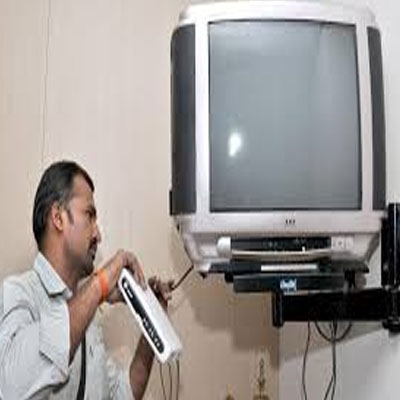
    KOLKATA: Ritika Saha, a city based Gujarati engineer, recently installed a set top box (STB) at a cost of Rs 1,400 and has still not been able to mention in writing about her preference for channels. The reason: her cable operator has not yet approached her with a consumer application form (CAF).

    “I hardly stay at home. For news and updates, a cheaper DAS package is more than enough for me. If the local cable operator does not provide me with the form, I shall not have access to cable TV post August on account of no fault of mine,” says Saha, adding that her hectic schedule does not allow her to follow up with her operator.

    “Had I placed the order for the STB eight months ago, it would have cost me just about Rs 800. The prices of these STBs have sky rocketed in the past few months,” she rues, little knowing that the depreciation of the Indian rupee against the US dollar has led to the rise in import cost of these boxes.

    There are many in Kolkata who have not yet filled up their CAFs. This is the situation even after TRAI’s order to the cable TV ecosystem in Kolkata undergoing digitisation to complete the process of collecting subscriber details before 23 August Saha is not the only one. There are many in Kolkata who have not yet filled up their CAFs. This is the situation even after the Telecom Regulatory Authority of India’s (TRAI) order to the cable TV ecosystem in Kolkata undergoing digitisation to complete the process of collecting subscriber details before 23 August. “TRAI plans to crack the whip against any MSO that fails to abide by the deadline of submitting CAFs,” informs a Kolkata based cable operator.

    CAF collection rate in Kolkata currently is about 25 per cent and should be around 60-75 per cent by 28 August,” says Siticable Kolkata director Suresh Sethia. “The implementation of DAS and its performance is not upto the mark in Kolkata,” adds media analyst Namit Dave.

    According to a report issued by TRAI last month, only 20 per cent of the city’s subscriber details and choices for channels were put up in the subscriber management system as part of the digitisation process.

    “The MSOs and cable operators are likely to miss the deadline,” says the Association of Cable Operators’ cable operators digitalisation committee convener Swapan Chowdhury. “Achieving the target by 30 August is next to impossible. Kolkata will miss the deadline,” he adds.

    “There are many other teething problems. One, not many CAFs were in supply; Two, from past seven days only the MSOs are supplying the forms to people and three even feeding in customer details is time consuming. For an exercise so massive and with so many loopholes in the process, more time is needed,” informs Chowdhury.

    While one local service provider complains of not receiving any subscriber information and management forms from his MSO, there is another MSO who says that his cable operator continues to be lethargic and has been loathe to do anything even after the forms were given to him.

    Both the MSOs and LCOs will appeal to the TRAI to extend the deadline by 15-20 daysm Both, MSOs and LCOs will appeal to the TRAI to extend the deadline by 15-20 days. “The operators and MSOs can send the subscribers’ choices of package till 31 August. And the billing can start from 1 September,” informs Sethia. “Though the MSOs will not switch off channels, the decision has been left on TRAI.”

    While 30 lakh STBs have already been installed in Kolkata, the steeper sticker prices – following the rupees downslide- makes digitisation of another 200,000 cable TV homes in Kolkata nigh impossible.

    With the depreciation of the Indian rupee to Rs 61.70 (approx) against the dollar, the import price of STBs has gone up by Rs 500-Rs 600. And this extra burden has been passed on by the distributors to consumers, says Chowdhury, adding that for some in the low income category in Kolkata, digital cable TV looks unaffordable now. “Despite the extension of the digitisation deadline, 100 per cent achievement is not possible,” he informs.

    Abhishek Cable director Rajendra Prasad Agarwal, feels that out of 35 lakh cable TV subscribers, around 30 lakh have taken STBs. “Houses with four to five cable connections have not yet taken up set top boxes,” he says. Contradicting this claim is Sethia whose estimate is that 27 lakh homes have been digitised with no analog connections left in the metropolitan area of the city.With 11.5 lakh cable TV subscribers, SitiCable is a giant in Kolkata which offers 410 channels.

    Manthan Broadband Services, another big daddy has a 34-35 per cent marketshare with a 350 channel service. . “We have 6.5 lakh to seven lakh subscribers. The CAF rate is around 25 per cent as of now,” informs Manthan Broadband Services director Sudip Ghosh. According to industry sources Hathway Cable and Datacom and Digicable Network (India) have jointly achieved 5.5 lakh installations so far.

    While the current average revenue per user in Kolkata is around Rs 180-Rs 200, cable operators in south Kolkata charge anything from Rs 350–Rs 475. What’s more is that operators in Shyam Bazaar and north Kolkata have been complaining that customers who are used to monthly subscription fees of Rs 120 are yelping about a hike to Rs 150. MSOs get to keep only Rs 70 on an average out of what subscribers are paying to local cable operators. “The local operators make huge profits,” informs Ghosh.

    Turfs have been maintained in Kolkata with everyone maintaining their position and no mergers or acquisitions taking place, unlike in the neighbouring states of Shillong, Jaharkhand, Orissa and Assam where there has been a flurry of activity.

    When asked if DTH is making inroads in Kolkata, Chowdhury says, “Since the performance of the DTH is subject to weather conditions, some dissatisfied customers will definitely opt for a digital cable connection. This can happen more so if their queries are not well addressed by the DTH players.”

    So will Kolkata meet the 31 August deadline? Answers Dave, “For the next few weeks nearly 5,000 local cable operators and 14 MSOs, which provide service in DAS area will have a herculean task to perform.”

    Yes it’s something the entire Kolkata cable TV ecosystem will have to jointly and collaboratively work together to achieve. Failing which, cable TV subscribers will see their cable connections cut.

  • AFs: Mumbai switch offs begin; Kolkata quo vadis?

    AFs: Mumbai switch offs begin; Kolkata quo vadis?

    MUMBAI: With Delhi under control now, the Telecom Regulatory Authority of India (TRAI) is focusing increasingly on the other two metros to ensure that all the consumer application forms (CAFs) come in to the MSOs.

    Following a meeting held on 2 August with MSOs operating in Mumbai and Kolkata, a decision has been taken that the time for carrots is over, now one needs to use the stick to get customers to get moving on their CAFs. And that stick is like Delhi is switching off their cable TV service, if the CAF is not yet in.

    “There will be no further extensions like in the past,” says a senior TRAI official. “In fact, the switch offs have already begun from 3 August. The process for switching off the set top boxes will take at least four to five days because we are talking about a huge number.”

    Hathway Cable & Datacom MD and CEO Jagdish Kumar agrees that his network has started switching off subscribers who are being tardy from 3 August. “But the process will be tedious,” he says. “So far, we have managed to collect 80 per cent of the forms duly filled.”

    Indiantelevision.com spoke to another three MSOs operating in the financial capital and all of them stated that CAF collection was between 70 and 80 per cent. Going by that yardstick, it appears as if cable TV subscribers don’t seem to be too disturbed about the stick, as the numbers mentioned by MSOs to indiantelevision.com even a month ago were in that range. Could they be opting for a DTH connection? We do not know, but a media observer, says that it could be a possibility.

    The TRAI official says that Kolkata should not expect to be treated with kid’s gloves. “When Delhi can meet the deadline why not Kolkata?” he questions. “We are sure that Kolkata will be able to meet the 23 August deadline as it does not have any other option.”

    Well cable TV operators and subscribers in Kolkata, that’s as ominous a warning as you can get!

  • TRAI attempts to rein in TV channel aggregators in new consultation paper

    TRAI attempts to rein in TV channel aggregators in new consultation paper

    NEW DELHI: It has been saying it will bring some order to the TV channel aggregation and distribution business. And the Telecom Regulatory Authority of India (TRAI) is now showing that it means what it has been saying.

    It today issued a consultation paper attempting to regulate the distribution of television channels from broadcaster to platform operators and discipline the distributors (aggregators). The paper involves amendments to the Tariff and Interconnection orders, and Register of Interconnect Regulations, and so TRAI has given stakeholders time till 27 August to send in their comments.

    The essence of these is that it wants to clip the immense clout that the four main aggregators MediaPro Enterprises (distributes 75 channels), IndiaCast UTV Media Distribution (distributes 35 channels), Sun Distribution Services and MSM Discovery (distributeing 30 channels each) have on the TV ecosystem in India.

    The main points of the consultation paper are that:

    * Broadcasters and not the authorised distribution agency shall publish the reference interconnect offers (RIO) and enter into interconnection agreements with the distribution platform operators.

    * If a broadcaster appoints a person as its distribution agent, it shall ensure that –

    a) The authorised distribution agent does not change the composition of the bouquet formed by the broadcaster while providing it to the distributors of TV channels.

    b) The authorised distribution agent does not bundle bouquet or channels of the broadcasters with the bouquet or channels of other broadcasters. In other words, in case the authorised distribution agency represents more than one broadcaster, they shall not link offerings of broadcasters they represent.

    c) While acting as an authorised distribution agent, such person acts for, on behalf and in the name of the broadcaster.

    The regulator has also proposed that it will give broadcasters three months to rework the RIOs and to enter into fresh interconnect agreements and filing the same with it.

    Based on the above, it has issued several orders under which it has chosen to amend earlier orders issued by it.

    These include:

    * The Telecommunication (Broadcasting & Cable) Services (Fourth) (Addressable Systems) Tariff (Third Amendment) Order 2013 to amend The Telecommunication (Broadcasting & Cable) Services (Fourth) (Addressable Systems) Tariff Order 2010 (1 of 2010)

    * The Telecommunication (Broadcasting & Cable) Services (Second) Tariff (Tenth Amendment) Order 2013 to amend The Telecommunication (Broadcasting & Cable) Services (Second) Tariff Order 2004 (6 of 2004)

    * The Telecommunication (Broadcasting & Cable Services) Interconnection (Seventh Amendment) Regulations 2013 to amend The Telecommunication (Broadcasting & Cable Services) Interconnection Regulation 2004 (13 of 2004).

    * The Telecommunication (Broadcasting & Cable Services) Interconnection (Digital Addressable Cable Television Systems) (Second Amendment) Regulations 2013 to amend The Telecommunication (Broadcasting & Cable Services) Interconnection (Digital Addressable Cable Television Systems) Regulations 2012 (9 of 2012).

    * The Register of Interconnect Agreements (Broadcasting & Cable Services) (Fifth Amendment) Regulations 2013 to amend The Register of Interconnect Agreements (Broadcasting & Cable Services) Regulation 2004 (15 of 2004)

    Background to TRAI’s attempt to regulate Aggregators

    In the paper, the TRAI says that broadcasters, MSOs, cable operators, DTH, HITS and IPTV operators are recognised as entities in the policy guidelines and regulatory framework of the Ministry and TRAI respectively. Aggregators have not been specifically defined anywhere; neither in the law or the statutory rules, nor in the regulatory framework for the broadcasting and cable TV services sector.

    As on date there are around 233 pay channels (including HD and advertisement-free channels) offered by 59 pay broadcasters. These channels are distributed by 30 broadcasters/aggregators/ agents of broadcasters.

    In the broadcasting and cable TV sector, TV channels are distributed by the broadcasters themselves or through their authorised distribution agencies to the distribution platforms viz cable TV, DTH, IPTV, HITS etc. Many such agencies operate as authorised agents (aggregators) for more than one broadcaster. After obtaining the distribution rights from one or more broadcasters, such distribution agencies form bouquets, many of which also consist of channels of one or more broadcasters. They publish Reference Interconnect Offers (RIOs), negotiate the rates for these bouquets/channels with operators of various distribution platforms and enter into interconnection agreement(s) with them.

    As on date, the distribution business of around 73 per cent of the total pay TV market, including high definition (HD) TV channels, is controlled by a few authorised distribution agencies. These channels include almost all the popular pay TV channels. These authorised distribution agencies wield substantial negotiating power which can be, and is, often misused leading to several market distortions.

    Explaining its move, TRAI said the business of distribution of TV channels from the broadcaster to the consumer has two levels:

    i) Bulk or wholesale level – wherein the distribution platform operator obtains the TV channels from the broadcasters, and ii) Retail level – where the distribution platform operator offers these channels to the consumers, either directly or through the last mile operator.

    Even as TRAI was in the process of reviewing the regulatory framework for broadcasters and their authorised agencies, the Information and Broadcasting Ministry said there have been several complaints from Multi system operators (MSOs) about the modus operandi of such entities, e.g. it has been highlighted that MSOs are forced to subscribe to certain packages. Concerns have been vehemently voiced by various MSOs and LCOs regarding the monopolistic practices of such major authorised distribution agencies of broadcasters, in view of their control over a large number of popular channels.

    The MSOs have complained that the aggregators have abused their market power by forcing them to accept all the channels of the aggregator, fixed fee deals, charging based on the entire subscriber base and not as per actual uptake of channels, insisting on minimum guarantee and other unreasonable terms and conditions.

    The TRAI further adds, in the consultation paper, that in the absence of any regulatory framework for the aggregators (including possible restrictions on the authorised agencies), they started to bundle channels of more than one broadcaster and form bouquets. These bouquets, having popular channels of a number of broadcasters, provided a better marketing proposition. These bouquets grew larger and larger with time, as the aggregator started to piggy back more and more channels, especially those having lesser standalone market values.
  • CODA to push ahead with Maharashtra ent tax issue this week

    CODA to push ahead with Maharashtra ent tax issue this week

    MUMBAI: The ongoing struggle, regarding the entertainment tax, between the Cable Operators & Distributors Association (CODA) and the Maharashtra State government has reached the next level. After postponing the decision to blackout all Hindi, English and Marathi news channels on state revenue minister Balasaheb Thorat’s request a couple of weeks ago, the organisation met with him last week.

    “He has asked us to give a detailed presentation about the current cable TV scenario in the state, the revenue generation in the current tax regime and also compare it with what will happen when entertainment tax on subscribers and set top boxes will be brought down,” confesses Anil Parab.

    The Maharashtra regime currently levies entertainment tax on cable TV subscribers at the rate of Rs 45 per sub; CODA has been imploring and lobbying with the government to scale this down to Rs 15 or Rs 20 as is the practice in many other states and cities.

    According to Parab, the current rate is too high considering that transparency in the cable TV sector has really gone up and leakages have reduced with the introduction of set top boxes and digitisation. “The only only reason we had agreed to a hike to Rs 45 per sub was because there was under-declaration in the ecosystem and hence a perceived loss to the state exchequer. But with declarations of cable TV subs by cable operators and MSOs more than doubling, rate needs to be brought down as the burden on the industry is crippling us and really hurting our viability,” he reveals.

    CODA is slated to meet the minister this week and make its presentation. As of now, Delhi’s rate is Rs 20 while in other cities it is less than five per cent. “The current rate is too much. We would be happy with anything between Rs 15 and Rs 20,” says Parab.

  • TRAI gets tough on deadline for CAFs

    TRAI gets tough on deadline for CAFs

    MUMBAI: The Telecom Regulatory Authority of India (TRAI) means business and how. The regulator had called for a meeting on 19 July with the leading Multi System Operators (MSOs) that provide cable TV services in Mumbai, Kolkata and 38 cities, covered under phase-II of Digital Addressable Cable TV Systems (DAS) implementation, to review the progress.

    TRAI has set the following deadlines for collection of the consumer application forms (CAFs) from the subscribers, complete in all respects, including choice of channels/services and entry of complete details in the subscriber management system (SMS), by the MSOs in these cities:-

    Sl. No.
    Cities
    Deadline
    1 Municipal Council of Greater Mumbai area 2 August 2013
    2 Kolkata Metropolitan area 23 August 2013
    3 38 Cities covered under phase-II of DAS implementation* 20 September 2013


    *Hyderabad, Visakhapatanam, Patna, Ahmedabad, Rajkot, Surat, Vadodara, Faridabad, Srinagar, Ranchi, Bengaluru, Mysore, Bhopal, Indore, Jabalpur, Auragabad, Kalyan-Dombivili, Nagpur, Nashik, Navi-Mumbai, Pimri-Chinchwad, Pune, Sholapur, Thane, Amritsar, Ludhiana, Jaipur, Jodhpur, Coimbatore, Agra, Allahabad, Ghaziabad, Kanpur, Luknow, Meerut, Varanasi, Chandigarh, Howrah.

    TRAI has already collected 97 per cent of CAF forms from Delhi and 80 per cent from Mumbai.

    Speaking to Indiantelevision.com, TRAI principal advisor Parameswaran N said, “The deadline to submit the customer application forms in Kolkata is 23 August and there will be no extension. TRAI will take an action against LCOs and MSOs who will not submit the CAFs on time.”

    TRAI has requested cable TV subscribers of the above mentioned areas to cooperate and submit the CAFs, complete in all respects to the respective cable operators/MSOs at the earliest, to enjoy the full benefits of digitisation. In event of failure to do so, MSOs will have no option but to switch off the signal to those consumers who have not submitted the forms, otherwise such MSOs would be in breach of the law.

    Incable MD Ravi Mansukhani said, “80 per cent forms have been submitted and by the end of this month it should be 100 per cent in Mumbai.”

    A leading Cable operator‘s spokesperson said, “CAF forms cannot be filled in a month or two. It is a long process which will take time; LCOs have to understand that this process will increase their ARPU‘s (Average revenue per user) and at the same time the subscribers too are not educated about this issue and they would only be aware of the gravity of the situation once their connections will be downgraded.”

  • TV5Monde to distribute programming through ClearVision

    TV5Monde to distribute programming through ClearVision

    MUMBAI: The French-language entertainment network TV5Monde USA will now distributing 16 travel, food and lifestyle shows via ClearVision‘s digital television network, which is meant for airports in major US markets.

    Titles being broadcast include Fine Foods (Epicerie Fine), Eco-home (Echo-logis), Custom Made (Sur Mesures), Villages in France (Villages de France), Travel Diaries (Carnets de Voyage) and Dream Hotels (R?ves d‘Hotels). ClearVision is currently offered at airports in Raleigh-Durham, New Orleans and Dallas. The television channel will begin airing in other parts of the country later in the year.

    “We are broadcasters in the away-from-home spectrum operating a program day that is scheduled hour by hour, minute by minute,” noted ClearVision COO David Tetreault. “We program many unique channels similarly to a TV station or cable MSO – partnering with TV5Monde USA provides us with rich and dynamic programming content that adds superior international flare to our broadcasts.”

  • Kolkata Cable Operators protest against MSO policies, to observe bandh tomorrow

    Kolkata Cable Operators protest against MSO policies, to observe bandh tomorrow

    NEW DELHI: Around 3000 cable operators in the eastern metropolis of Kolkata came on the streets today headed by the Cable Operators Sangram Committee to protest the various packages being offered by broadcasters and multi-service operators as these were not being accepted by the consumers.

    These LCOs also decided to hold a 24-hour bandh tomorrow from 9.00 am in support of their demands, which they claimed had the full support of the end consumer.

    A memorandum of demands was also presented to the office of West Bengal Chief Minster Mamata Banerjee, who personally holds the Information portfolio.

    The LCOs marched from Ramakrishna Mission`s Swami Vivekanda Ancient House in North Kolkata to Subodh Mullick Square in Central Kolkata to protect the Freedom of Subscribers choice.

    The memorandum said it was very strange that many MSOs had not yet published any PAF from were a Subscriber choose there package, and no a la cart rate had been provided. The LCOs also opposed the attitude of MSOs towards LCOs, still demanding unfair and unjustified monthly amounts by raising invoices on LCOs. In case of non payment against their illegal invoices, they deactivate all the STBs of that LCO without any notice.

  • Time extended for comments on draft amendments to the Interconnection Regulations and Tariff Order

    Time extended for comments on draft amendments to the Interconnection Regulations and Tariff Order

    NEW DELHI: Stakeholders have been asked by the Telecom Regulatory Authority of India (TRAI) to file by 3 July their comments on interconnect regulations and tariff order under the digital addressable system.

    TRAI has also said no request for any further extension of time for submission of comments will be entertained.

    The “Telecommunication (Broadcasting and Cable Services) Interconnection (Digital Addressable Cable Television Systems) (Second Amendment) Regulations, 2013” and the draft “Telecommunication (Broadcasting and Cable) Services (Fourth) (Addressable Systems) Tariff (Second Amendment) Order 2013” seek to amend some regulations that TRAI had passed earlier in relation to tariffs and interconnect agreements in earlier years. (Earlier, TRAI had notified the Interconnection Regulations for DAS dated 30 April 2012 as amended on 14 May last year and the Tariff Order applicable for the Addressable Systems dated 21 July 2010 as amended on 30 April last year).

    The amendments it has proposed state:

    Multi system operators (MSOs) cannot seeks signals of a particular TV channel from a broadcaster under ‘must provide‘ clause while at the same time demanding carriage fee for carrying that channel on its distribution platform.

    No minimum channel carrying capacity has been prescribed for the MSOs. However, the MSOs are mandated to carry the channels of broadcasters on non-discriminatory basis under the ‘must carry‘ provision.

    The service providers of the addressable systems are allowed to price and package their offering of channels, however, they are required to comply with the modified twin conditions, as proposed in the draft amendment to the tariff order. These twin conditions are (a) the a-la-carte rate of a pay channel forming part of a bouquet shall not exceed two times the a-la carte rate of the channel offered by the broadcaster at wholesale rates for addressable systems (b) the a-la-carte rate of a pay channel forming part of a bouquet shall not exceed three times the ascribed value of the pay channel in the bouquet. The TRAI says it is doing this to ensure that the a-la-carte rates offered to the subscribers are reasonable vis-? -vis the bouquet/package rates.

    As in the case of pay channels, operators can specify a minimum subscription period, not exceeding three months, for Free-to-Air (FTA) channels subscribed on a-la-carte basis by the subscribers.

    Subscribers are free to choose channels on a-la-carte basis or bouquet/package basis or any combination of a-la-carte and bouquet/package.

    Channels, such as HD or 3D, requiring special type of set top boxes are to be offered on a-la-carte basis and if such channels are also offered as a part of a bouquet(s), corresponding to each such bouquet, the operator would be required to offer bouquet(s) excluding the HD and 3D channels, at a reduced price, commensurate to the rates of these HD and 3D channels.

    Telecommunication (Broadcasting and Cable Services) Interconnection (Digital Addressable Cable Television Systems) (Second Amendment) Regulations, 2013

    Telecommunication (Broadcasting and Cable) Services (Fourth) (Addressable Systems) Tariff (Second Amendment) Order 2013