Tag: MSO

  • Hathway Q2-2014 y-o-y revenue up 68 per cent, loss returns after two quarters

    Hathway Q2-2014 y-o-y revenue up 68 per cent, loss returns after two quarters

    BENGALURU: Indian Multi Systems Operator (MSO) Hathway Cable & Datacom Limited (Hathway) reported net sales/income from operations of Rs 219.33 crore for Q2-2014, 68 per cent higher than the Rs 130.33 crore the company reported for Q2-2013, but 5.4 per cent lower than the Rs 231 crore for the immediate trailing quarter (Q1-2014).


    The company reported a net loss of Rs (-44.44) crore for Q2-2014, 35.26 times higher than the loss of Rs (-1.26 crore) for the corresponding period last year. Earlier, Hathway had reported positive PAT for two consecutive quarters, viz. Q1-2014 when it returned a positive PAT of Rs 5.32 crore and an even higher positive PAT of Rs 28.27 crore for Q4-2013. For FY-2013, the company had reported a net profit for the year from continuing operations of Rs 3.2 crore, while for FY-2012; the company had reported a loss of Rs 5.17 crore.


    Let us look at the other Q2-2014 figures reported by Hathway


    Hathway’s EBIDTA for Q2-2014 at Rs 40.15 crore was 68.7 per cent more than the Rs 23.8 crore for Q2-2013, but almost half (52.1 per cent) of Rs 77.04 crore for Q1-2014.


    The MSO reported a loss before other income, interest and exceptional Items, and tax of Rs (-12.9) crore for Q2-2014, as compared to a loss of Rs (-5.39) crore for Q2-2013 and a profit of Rs 34.55 crore for Q1-2014.


    Hathway reported expense of Rs 233.19 crore (5.9 per cent more than the total income of Rs 220.28 crore) for Q2-2014, more than double (2.09 times)  the Rs 111.7 crore for Q2-2013 and about 17.8 per cent more than the Rs 198.01 crore for the immediate preceding quarter (Q1-2014).


    Harthway’s pay channel cost at Rs 68.3 crore was 75 per cent more than the Rs 39.05 crore for Q2-2013 and 16.8 per cent more than the Rs 58.45 crore for Q1-2014.


    Depreciation and amortisation expense at Rs 51.32 crore was 16.2 per cent more than the Rs 44.18 crore for Q2-2013 and 23.5 per cent more than the Rs 41.54 crore for Q1-2014.


    Another major expense head – Other expenses for Q2-2014 at Rs 98.12 crore was up 62.6 per cent as compared to the Rs 60.33 crore for Q2-2013 and 17.3 per cent more than the Rs 83.67 crore for Q1-2014.


    Hathway’s finance cost for Q2-2014 at Rs 23.71 crore more than tripled (was 3.25 times) the Rs 7.30 crore for Q2-2013 and was 9.7 per cent more than the Rs 21.61 crore for Q1-2014.


    Hathway reported a foreign exchange loss of Rs (-7.51) crore for Q2-2014 as compared to a gain of Rs 4.48 crore for Q2-2013 and a loss of Rs (-8.32) crore for the trailing quarter (Q1-2014).


    Revenue and results from the other segments was a minor fraction of the overall revenue.

  • Q2-2014 Den Networks reports 35 per cent higher y-o-y cable revenues

    Q2-2014 Den Networks reports 35 per cent higher y-o-y cable revenues

    BENGALURU: Indian cable TV distribution company Den Networks Limited (Den Networks) continues to rake in the moolah with 32.4 per cent higher total revenue of Rs 271.88 crore for Q2-2014 as compared to the Rs 205.26 crore for Q2-2013 and almost flat (1.8 per cent higher) as compared to the Rs 268.69 crore for Q1-2014. The company reported a 35 per cent y-o-y jump in cable revenue for Q2-2014 at Rs 258.93 crore as compared to the Rs 192.51 crore in the corresponding quarter of last year (Q2-2013).


    Note:  
    Den Network claims that on account of a reporting policy change, w.e.f. Q2-2014, all revenue figures exclude ‘Other Income’ which is reported separately after EBITDA, and that past period figures have also been adjusted to this effect to make it comparable. Variance/s has/have been observed between the company’s investor updates of Q1-2014 and Q2-2014 and the statements filed by the company with the stock exchanges. The differences, if any between the financial analysis for Q1-2014 and Q2-2014 must be attributed to the varied accounting methodology/communications by the company. The current analysis is being done based on the updates for Q2-2014 received.


    The company reported a 35 per cent y-o-y jump in cable revenue for Q2-2014 at Rs 258.93 crore as compared to the Rs 192.51 crore in the corresponding quarter of last year (Q2-2013) on the back of strong growth in subscription revenues and higher placement revenues despite lower activation revenues in the current quarter.


    Q-o-q, the company’s investor update for Q2-2014 says that its cable business revenue was almost the same as the Rs 256.41 crore for Q1-2014, a figure that is Rs 6.44 crore (about 2.45 per cent) lower than the Rs 262.85 crore the company had reported in its Q1-2014 investor update (ref Note above).


    The company says that it has deployed about four lakh set top boxes (STBs) during Q2-2014 and claims a digital subscriber base of around five million in DAS phase I and II cities and about eight million analogue subscribers in DAS phase III and IV markets.


    Further, Den Networks believes that the next big opportunity after full digitisation of cable TV is offering high speed broadband services to its subscribers. The company announced plans to launch its broadband service offering by late Q4, FY 2013-14 (February 2014).


    Let us look at the other Q2-2014 figures announced by Den Networks


    The company has reported breakup of its cable revenue as Rs 99.11 crore as subscription revenue, Rs 119.90 crore as placement revenue and Rs 29.43 crore as digital activation revenue.


    Den Network’s consolidated EBITDA for Q2 -2014 was Rs 87.70 crore vs. Rs 38.73 crore in Q2-2013, a 126 per cent leap y-o-y, and eight per cent higher than the Rs 80.94 crore for Q1-2014.


    Correspondingly, its cable business EDITDA for Q2-2014 at Rs 85.05 crore was 134 per cent higher than the Rs 36.36 crore for Q2-2013 and seven per cent higher than the Rs 79.39 crore for Q1-2014.


    Consolidated PAT at Rs 11.18 crore for Q2-2014 was up by about 10 per cent higher as compared to the PAT of Rs 10.15 crore for Q1-2014. The company says that its cable business PAT stood at Rs 9.64 crore for Q2-2014.


    Consolidated expense at Rs 224.13 crore for Q2-2014 was 21.54 per cent higher than the Rs 184.66 crore for Q2-2013, and 2.3 per cent lower than the Rs 229.69 crore for Q1-2014. Den Network paid 18.4 per cent more towards content cost at Rs 90.54 crore for Q2-2014 as compared to the Rs 76.5 crore in Q2-2013 and the 6.5 per cent higher than the Rs 85.01 crore in Q1-2014.


    Depreciation and amortisation cost at Rs 37.04 crore for Q2-2013 was more than double (2.14 times) the Rs 17.29 crore for Q2-2013 and 11.47 per cent higher than the Rs 33.23 crore for Q1-2014. Den Networks has reported a foreign exchange loss of Rs 5.96 crore in its cable business for 2-2014.
    Den Networks claims that there is a significant demand for its digital cable services in its existing Phase III and IV markets. The pace of seeding is expected to pick up in the next few months. It also says that it is witnessing a lot of interest from smaller players (MSOs and LCOs) from Phases III and IV areas looking to align themselves with it and is receiving several such requests on a regular basis.

  • TRAI meets MCOF’s Prabhoo on LMO issues

    TRAI meets MCOF’s Prabhoo on LMO issues

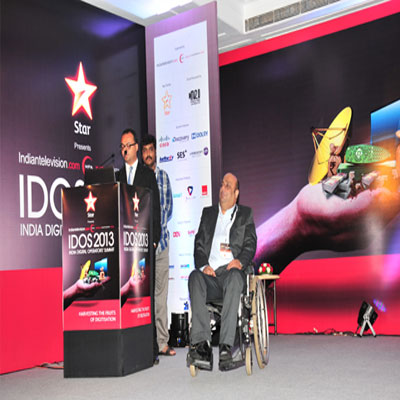
    MUMBAI: It was at indiantelevision.com & MPA’s (Media Partners Asia) India Digital Operators Summit (IDOS) that Mumbai-based cable TV heavyweight and MCOF (Maharashtra Cable Operators Federation) president Arvind Prabhoo first presented to India’s cable, DTH, regulatory and broadcast leaders the local cable TV operators’ perspective. Everyone was impressed including Telecom Regulatory Authority of India (TRAI)’s advisor N. Parameswaran, who said the regulatory body would like him to come and present at its headquarters in Delhi.

    The wheelchair bound Prabhoo did exactly that three days ago on 6 November when he presented the LMO’s viewpoint once again before the TRAI’s N Parmeshwaran, Wasi Ahmed, S K Singhal and G S Kesarwani.

    Prabhoo once again highlighted the issues that are bothering the LMOs and the role they can play in phase III and phase IV of digitisation.

    “There is a crisis in DAS I and II areas regarding LMO-MSO relationship,” says Prabhoo, adding that it was important to address the problems. Prabhoo has told TRAI that his major concern was the MSO-LMO-subscriber relationship. Subscribers belong to LMOs who collect money from them and give it to the MSOs who in turn pass it on to broadcasters. However, the MSOs believe that subscribers belong to them and not to the LMOs.

    Prabhoo also raised the issue of uneven pricing of packages in cities like Mumbai. He wants all MSOs to have similar packages so that it is convenient for a subscriber to migrate and that will even make money collection easier. At the same time, clarity on a-la-carte channels is missing even today.

    He also brought to fore the issue regarding the ownership of set top boxes (STBs). He thinks it is a big bone of contention. “On one hand, customers think they own the STBs, while the MSOs think that STBs are their property,” he remarks. “This disallows customers from migrating from one provider to another using the same STB when he shifts to a new place with a new provider and if he does, the LCO is held responsible for it. Because of this, many subscribers are shifting from cable to DTH, as it seems to be more convenient.”

    Since there’s no fixed revenue sharing deal between the MSOs and LMOs, Prabhoo came up with few solutions. He suggested that for an FTA (Free to Air) channel the sharing between MSO and LMO can be 20:80, while for pay channels it can be 75:25.

    He also suggested that the price of a STB can be reduced and a free basic broadband service be given to communicate by mail. Another suggestion was to rename the LMOs as Horizontal Connectivity Provider Agency (HCPA).

    Prabhoo also brought to TRAI’s notice the issue of entertainment tax. The 42B licenses of LMOs have not been renewed since two to three years and yet the tax is being collected from them. TRAI seemed to be unaware about the issue and has told to get in touch with the chief secretary of Maharashtra soon. They also said that as a regulator they had done everything they could.
    “There needs to be more interaction between LMO, MSO, broadcaster and TRAI if we need a proactive solution to address all our concerns,” concludes Prabhoo.

  • Close Charter launches TV streaming app

    Close Charter launches TV streaming app

    MUMBAI: Charter Communications launched its first mobile TV streaming app on Tuesday, offering a lineup of more than 100 live TV channels in the home, though the plan is to eventually allow authenticated customers to access live TV streams while they are on the go as well, Charter CEO Tom Rutledge said during Charter’s third quarter earnings call.

    Rutledge said the MSO anticipates that the new Charter TV app, offered first on Apple devices and coming later to the Android platform, will eventually add video-on-demand content to the mix and offer out-of-home access.

    Rutledge said: “Charter’s TV app is the beginning of a lot of things. It may ultimately be monetisable in ways that are different than we currently envision it.”

     “We may sell download-to-go services. We may sell video-on-demand everywhere. We may sell subscriptions everywhere,” he said. “But right now our primary business and our primary objective is to enhance our service offering and to make the total value of what we sell more valuable to the consumer.”

    Rutledge, who was a champion of Wi-Fi at Cablevision Systems, said Charter is drawing up a Wi-Fi plan of its own.

    “We think that Wi-Fi makes sense,” Rutledge said, noting that the MSO intends to start off by using dual SSIDs in Wi-Fi gear installed at commercial customer locations.

    “We want to start putting it out in our commercial customer base next year…While we don’t have a complete rollout plan yet, we’re working on beginning to deploy Wi-Fi at Charter,” Rutledge said.

    He did not mention if Charter has any plans to join the “Cable WiFi” roaming initiative that counts five members – Comcast, Bright House Networks, Time Warner Cable, Cablevision and Cox Communications – that have collectively deployed more than 200,000 Wi-Fi hot spots, with more than 500,000 on the horizon.

  • Cable TV DAS and the head end factor

    Cable TV DAS and the head end factor

    MUMBAI: Digitisation is meant to bring about transparency and order to what has for long been talked about as an unorganized business. The pressure of scaling up in order to deliver digital cable TV has also had an expected fallout: consolidation. Smaller cable ops, independent operators have been forced to join hands with existing national MSOs like Hathway or DEN or amongst themselves. And this fusing has resulted in the reduction of the number of headends in the major metros – especially in Delhi and Mumbai where there has been a shrinkage from 110 to 15 and from 50 to seven respectively.

    “Consolidation of headends is taking place in the transition from analogue to digital phase. Also the trend now is that the MSOs set up headends only in areas where they cannot get access to a fiber line or a digital line. Also they are looking for solutions like getting a line from say Delhi or Mumbai to the nearby areas,” informs an industry expert.

    Industry experts attribute this change to factors such as rising costs of digital headends, billing procedure and administrative control.

    Explains Hathway Cable & Datacom MD & CEO Jagdish Kumar: “With digitisation has come the convergence of technologies and features like high definition content, VAS and broadband accessibility. All this in turn requires large amount of investment to manage economies of scale, thus ushering consolidation.”

    While Hathway currently has 23 headends and seven backup headends, including GTPL, several independent operators, informs Kumar, have evinced a keen interest in aligning with its ongoing digital plans, largely due to its success in Phase I and II.

    “We’ve drawn up ambitious expansion plans for Phase III and IV. We will soon make announcements on a few strategic acquisitions,” he exults.

    IndiaCast Media Distribution executive vice president Amit Arora agrees that a number of Delhi and Mumbai-based independent operators have started taking their digital feeds from bigger MSOs.

    “This arrangement is gaining popularity since it isn’t easy for every independent operator to make the huge capital investment needed for digital headends. And consolidation of headends has led to central warehousing of data and SMS,” he says.
    According to Ortel Communications CEO BP Rath, with a 200 channel headend costing nearly Rs one crore, it is not worth investing that kind of money for an independent operator who caters to say 10,000 customers in a small town.

    “So, they are joining bigger players in order to take feeds from them. While smaller operators merged with bigger players even during the analogue phase, it is now happening on a larger scale. And one will see further consolidation during phase III of digitisation,” he says.

    Apart from independent operators joining forces with bigger MSOs, the other reason for consolidation is the advent of the conditional access system (CAS) and the subscriber management system (SMS), as well as the prerequisite for getting these systems audited and approved by broadcasters.

    “When the bigger MSOs are taking so long to adjust to the new system and maintain quality as per the regulation, how will the small players be able to do it?” questions InCable managing director Ravi Mansukhani. “With consolidation, the big MSOs will take care of all the back office problems and the on-ground activity will be done by the independent operators.”

    “All this has led to a whole lot of process issues, which the smaller MSOs find difficult to manage and that is why independent operators are joining bigger players,” adds Rath.

    Ortel, which has 31 analogue headends, two digital headends and four analogue plus digital headends, is waiting for phase III. “It is only after that, we will see consolidation happening in Orissa and Chhattisgarh. Though we have our own headends, we are also talking about intercity connectivity,” informs Rath.

    Kumar too feels that “the trend will continue even in phase III and IV. The demand for digitisation will impact local independent operators, who will find it difficult to manage independently. Hence, the independent operator would continue to look to aligning with the bigger MSOs.”

    However, Arora thinks otherwise. “The consolidation process has already come to a phase where I do not see any further consolidation happening in phase III. The big wave has already happened in phase II,” he says.

    So when a smaller operator takes digital feed from a bigger MSO, how do they share revenue? “The revenue share worked out between bigger MSOs and independent MSOs is purely on mutually beneficial terms based on investments and services being provided in the market,” says Kumar.

    Arora elaborates: “Everybody has worked a different revenue model. Someone has opted for a 49:51 split, some have a 50:50, while some will have a 51:49 split. The revenue share depends on the strength and the need for funds.”

    Coming to another metro, Kolkata, unlike Delhi and Mumbai, its five big players: GTPL, Hathway, Manthan, IMCL and Digicable Network have not seen an urge to merge.

    Meanwhile, Arora sounds a cautionary note. “A takeover of one MSO by the other in Kolkata would only be possible if there is a national degree of consolidation.”

    According to Mansukhani, the biggest consolidation will take place nationally. “Right now only the small and middle level players are going to the big players and then ultimately few major players will have control.”

    Mansukhani feels that even international players will show interest in India once they see healthy cash flows of the MSOs in DAS I and II areas. “This is when the maximum consolidation will take place and this will happen once the entire phase I and II is complete.”

    Talking about the evolution of cable TV on the ground in Kolkata Manthan Broadband Services director Sudip Ghosh says, “Players with a subscriber base of more than five lakh might not consolidate headends. But Kolkata can see the consolidation of players with others having a subscriber base of around three to four lakh.”

  • Siti Cable reports significant improvement in EBIDTA in Q2-2014

    Siti Cable reports significant improvement in EBIDTA in Q2-2014

    BENGALURU:  The painstaking rollout of the digitisation of India’s cable TV ecosystem and the depreciation of the rupee are taking their toll – both positively and negatively –  on national MSOs.  Take the case of Essel Group company Siti Cable Network Limited (Siti Cable), the erstwhile Wire and Wireless (India) Ltd (WWIL). Its latest quarter (Q2-2014) shows that the company has shown an improvement in its EBIDTA to Rs 32.98 crore which is 74 per cent higher than the previous corresponding quarter last fiscal.  It’s bottomline is however stained red in  Q2-2014 with a negative PAT of Rs 21.87 crore, almost double (173 per cent) the negative PAT of Rs (-12.65 ) crore the company had reported during the corresponding quarter (Q2-2013) last year. However, the loss is lower than the Rs (-27.07) crore for the immediate preceding quarter (Q1-2014).  


    Let us look at some other numbers for Siti Cable in Q2-2014


    Operating revenue in Siti Cable’s case is primarily generated from subscriber related income especially from digitisation, income from bandwidth charges, ad income, STB activation charges and other operating revenues.


    The cable network reported total revenue of Rs 162.94 crore for Q2-2014, which was 56.7 per cent more than the Rs 103.98 crore for Q2-2013 and 12.9 per cent more than the Rs 144.29 crore in Q1-2014.


    Total expenses for Q2-2014 at Rs 129.96 crore were 57 per cent more than the Rs 85.06 crore for Q2-2013 and 15 per cent higher than the Rs 113.1 crore for Q1-2014.


    Siti Cable claims that it is the only MSO in India which shares 25 per cent carriage revenue with local cable operators. A big chunk of its expense is carriage sharing, pay channel and related costs in the latest quarter. The company spent Rs 65.46 crore in Q2-2014 towards this head, which was 21.7 per cent higher than the Rs 53.03 crore for Q2-2013 and six per cent more than the Rs 61.8 crore during the immediate preceding quarter Q1-2014.


     Siti Cable’s main operating expenses include cost of goods and services, employees’ cost, selling and distribution expenses and other expenditure. Its major cost item was cost of goods and services recorded as Rs 82.7 crore during the quarter (Q2-2014)  representing 51 per cent of the total revenue in comparison to Rs 62.15 crore in Q2-2013, representing 60 per cent of the total revenue.


    Siti Cable’s Selling and Distribution Expense for Q2-2014 at Rs 12.42 crore was more than quadruple (424 per cent) the Rs 2.93 crore for Q2-2013 and more than double (225 per cent) the Rs 5.51 crore for Q1-2014. Its administrative expense at Rs 25.44 crore for Q2-2014 was almost double (95 per cent more) than the Rs 13.03 crore for Q2-2013 and 22.7 per cent more than the Rs 20.74 crore in Q1-2014.


    Another major cost item was foreign exchange fluctuation due to Rupee devaluation during the Q2-2014, which has been recorded at Rs 7.69 crore, says the company; the corresponding figure for Q1-2014 was Rs 5.11 crore.


    Siti Cable chairman Subash Chandra said, “The industry is at an inflexion point where creating the valuable ecosystem for all stake holders be it consumer, broadcaster or last mile local cable operators will ensure sustainable growth. We see immense opportunity for digitization in India in the years ahead.”


    Siti Cable CEO V D Wadhwa said, “We are pleased to report a healthy performance in the second quarter of the year, our total revenue and EBITDA in the quarter grew to Rs 162.9 crore and Rs 33 crore, a growth of 57 per cent and 74 per cent respectively over last fiscal. Our growth was largely due to greater focus on subscription revenue despite low seeding of STB’s during the quarter. We shall continue to focus on business expansion and revenue maximization in coming quarter.”


    Siti Cable informed BSE that the board of directors of the company at its meeting held on 23 October 2013, inter-alia, has approved the appointment of Anil Kumar Malhotra as manager of the company for a period of three years.

  • Siti Cable reports significant improvement in EBIDTA in Q2-2014

    Siti Cable reports significant improvement in EBIDTA in Q2-2014

    BENGALURU:  The painstaking rollout of the digitisation of India’s cable TV ecosystem and the depreciation of the rupee are taking their toll – both positively and negatively –  on national MSOs.  Take the case of Essel Group company Siti Cable Network Limited (Siti Cable), the erstwhile Wire and Wireless (India) Ltd (WWIL). Its latest quarter (Q2-2014) shows that the company has shown an improvement in its EBIDTA to Rs 32.98 crore which is 74 per cent higher than the previous corresponding quarter last fiscal.  It’s bottomline is however stained red in  Q2-2014 with a negative PAT of Rs 21.87 crore, almost double (173 per cent) the negative PAT of Rs (-12.65 ) crore the company had reported during the corresponding quarter (Q2-2013) last year. However, the loss is lower than the Rs (-27.07) crore for the immediate preceding quarter (Q1-2014).  


    Let us look at some other numbers for Siti Cable in Q2-2014


    Operating revenue in Siti Cable’s case is primarily generated from subscriber related income especially from digitisation, income from bandwidth charges, ad income, STB activation charges and other operating revenues.


    The cable network reported total revenue of Rs 162.94 crore for Q2-2014, which was 56.7 per cent more than the Rs 103.98 crore for Q2-2013 and 12.9 per cent more than the Rs 144.29 crore in Q1-2014.


    Total expenses for Q2-2014 at Rs 129.96 crore were 57 per cent more than the Rs 85.06 crore for Q2-2013 and 15 per cent higher than the Rs 113.1 crore for Q1-2014.


    Siti Cable claims that it is the only MSO in India which shares 25 per cent carriage revenue with local cable operators. A big chunk of its expense is carriage sharing, pay channel and related costs in the latest quarter. The company spent Rs 65.46 crore in Q2-2014 towards this head, which was 21.7 per cent higher than the Rs 53.03 crore for Q2-2013 and six per cent more than the Rs 61.8 crore during the immediate preceding quarter Q1-2014.


     Siti Cable’s main operating expenses include cost of goods and services, employees’ cost, selling and distribution expenses and other expenditure. Its major cost item was cost of goods and services recorded as Rs 82.7 crore during the quarter (Q2-2014)  representing 51 per cent of the total revenue in comparison to Rs 62.15 crore in Q2-2013, representing 60 per cent of the total revenue.


    Siti Cable’s Selling and Distribution Expense for Q2-2014 at Rs 12.42 crore was more than quadruple (424 per cent) the Rs 2.93 crore for Q2-2013 and more than double (225 per cent) the Rs 5.51 crore for Q1-2014. Its administrative expense at Rs 25.44 crore for Q2-2014 was almost double (95 per cent more) than the Rs 13.03 crore for Q2-2013 and 22.7 per cent more than the Rs 20.74 crore in Q1-2014.


    Another major cost item was foreign exchange fluctuation due to Rupee devaluation during the Q2-2014, which has been recorded at Rs 7.69 crore, says the company; the corresponding figure for Q1-2014 was Rs 5.11 crore.


    Siti Cable chairman Subash Chandra said, “The industry is at an inflexion point where creating the valuable ecosystem for all stake holders be it consumer, broadcaster or last mile local cable operators will ensure sustainable growth. We see immense opportunity for digitization in India in the years ahead.”


    Siti Cable CEO V D Wadhwa said, “We are pleased to report a healthy performance in the second quarter of the year, our total revenue and EBITDA in the quarter grew to Rs 162.9 crore and Rs 33 crore, a growth of 57 per cent and 74 per cent respectively over last fiscal. Our growth was largely due to greater focus on subscription revenue despite low seeding of STB’s during the quarter. We shall continue to focus on business expansion and revenue maximization in coming quarter.”

  • Dish TV reports improved results for Q2-2014, pares debt by Rs 235 crore

    Dish TV reports improved results for Q2-2014, pares debt by Rs 235 crore

    BENGALURU: India’s largest DTH services provider Dish TV India (Dish TV) reported second quarter fiscal 2014 total income from operations at Rs 592.6 crore which was 11 per cent more than the Rs 533.6 crore for Q2-2013 and 2.5 per cent more than the Rs 578.4 crore for Q1-2014.

    When it announced Q1-2014 results, the company had said that it was planning to pare down debt by Rs 750 crore. To that extent, Dish TV has reported along with its Q2-2014 results that it has reduced debt by Rs 235 crore during the half year ended 30 September 2014. Its financial expense for Q2-2014 at Rs 34.5 crore was slightly lower (by 2.5 per cent) than the Rs 35.4 crore in Q1-2014. Its financial expense for Q2-2013 was Rs 31.7 crore.

    Let us look at other results for Q2-2014 reported by Dish TV

    The company has reported an increased EBIDTA margin of 25 per cent for Q2-2014 at Rs 147.9 crore as compared to Q1-2014 when Dish TV had reported EBIDTA of Rs 121.7 crore (22 per cent margin). Its EBIDTA for Q2-2013 was Rs 155.7 crore (29.2 per cent margin).

    The company reported a lower net loss of Rs 16 crore for Q2-2014 as compared to the loss of Rs 30.4 crore for Q1-2014. Exceptional gain at Rs 76.4 crore in Q2-2013 resulted in a PAT of Rs 55.1 crore for Q2-2013.

    Dish TV’s primary expenses include cost of goods and services, personnel cost, administrative cost, Dish TV’s advertising expense for Q2-2014 at Rs 11.3 crore was almost a third (36.8 per cent) of the Rs 30.7 crore in Q1-2014. Advertising expense in Q2-2013 was almost double at Rs 22.2 crore for Q2-2013.

    The company’s selling and distribution expense for Q2-2014 at Rs 62.4 crore was 19.5 per cent higher than the Rs 52.2 crore in Q2-2013 and 5.5 per cent more than the Rs 59.3 crore reported for Q1-2014.

    Dish TV reported 1.64 lakh additional subscriptions during Q2-2014 as compared to the 2 lakh new subscribers the company had reported for Q1-2013. Dish TV had said that it had added 4.77 lakh new subscribers in Q2-2013 and had achieved a gross of 1.39 crore and 1 crore net subscribers at the end of Q2-2013.

    Its subscriber acquisition cost (SAC) during Q2-2014 at Rs 1,849 per subscriber was 18.7 per cent lower than the Rs 2,273 per subscriber during Q2-2013, but about 1.1 per cent more than the Rs 1,828 SAC per customer for the immediate preceding quarter (Q1-2014).

    Subscription revenue for Q2-2014 at Rs 537 crore was higher by 13.6 per cent as compared to the Rs 477 crore for Q2-2013 and higher by 1.7 per cent as compared to the Rs 528 crore for Q1-2014. Its ARPU at Rs 165 remained the same for Q2-2014 and Q1-2014.

    Dish TV managing director Jawahar Goel said, “We added 164 thousand net subscribers during the quarter and maintained our leadership share. Aided by quality additions, Dish TV’s churn remained at 0.6 per cent per month while SAC was flattish. This was despite the fact that being seasonally weak, the quarter witnessed brief periods of desperate attempts to undercut prices by select DTH platforms. Dish TV, aware of the subsequent fallout of throw away prices, chose not to jump on the bandwagon.”

    “With massive opportunity in the form of Phase III and IV of mandatory digitisation ahead, we are confident of acquiring industry leading incremental share while still keeping a tab on the subsidy per box. We continue to be conscious about self-funded growth with minimal debt on the books. In line with that, we repaid debt to the tune of Rs 235 crore in the first half and would be paying off the rupee equivalent of $ 9 crore in the second half of the current fiscal,” he added.
    “We are on track and look forward to acquiring additional transponder capacity to beef up our existing, industry leading bandwidth in the current fiscal. We intend to leverage the additional capacity to distribute localised content as well as strengthen carriage revenues. Moreover, with more than 60 per cent of the broadcasting industries subscription revenues coming from DTH alone, it is now time that the favourable terms, including carriage fees, extended to the MSO’s by the broadcasters be either revisited or offered to DTH platforms as well. This becomes all the more imperative considering that, in a digital environment, cable MSO’s are now almost there in terms of package wise billing in select 2-3 cities of Phase I & II,” said Goel further.

  • Navratri Nights with The One Alliance

    Navratri Nights with The One Alliance

    It is that time of the year once again when the Goddess visits us and we celebrate with nine nights of worship and dance. These vibrant nine nights comprising Navratri are the most significant festive days of our year when the young and the old come together to dance the ras-leela, the dandiya and the garba.


    TheOne Alliance along with local MSO’s (Multi System Operator’s) have joined hands to organise scintillating events that will charge all dancers to fluant their best moves. All events will see an array of Actors and Actresses from Sony who will keep the crowds on their toes. And to keep the twinkle toes dancing away, there will be Indian Idol Junior contestants, Devendra, Aakash, Amit, Anmol and Aryan and other stars from leading shows CID, Adalat, Jee Le Zara, Bade Acche Lagte Hai & Latest show Nandini, keeping the crowd entertained.


    This on-ground initiative by TheOne Alliance is guaranteed to provide pure delight to residents. The sheer delight and excitement at Kora Kendra, Borivali; Tiranga Dandiya Powai & Ekta Group, Mira Road was seen in an action packed, adrenaline charged arena as the singers pumped in the extra bit of exhilaration. Select celebrities from Sony Entertainment Television and SAB TV also graced the occasion who were greeted with hoots, whistles and loud claps of fans.


    The event and activities initiated by TheOne Alliance in association with the backing of their strong MSO’s SCOD 18, Hathway and DEN Satellite focused on engaging and drawing participation from the public. The activities are taking place at prime locations drawing maximum participation by arousing huge interest among the public.


    The Garba ras events are scheduled to be held at the following locations on following dates
    • Kora Kendra, Mumbai between October 5 to October 13th
    • Thanganat 2013 by Abhinav Events, Ahmedabad on October 11th
    • Navratri Mahotsav’13 by Destiny Group , Surat on October 12th
    • Garba Ni Ramzat by IN Digital & Shree Sharda Group, Ahmedabad on October 12th
    • The Polo Parivar Navratri Mahotsav by POLO CLUB, Vadodara on October 13th
    • Akeela Pioneer Navratri Mahotsav, Rajkot on October 13


    Come and witness entertainment ‘The One Alliance’ style as the Navratri nights comes to your city giving you an unforgettable fun experience!

  • Siti Cable’s Q1-2014 losses almost quintuple Q1-2013 losses

    Siti Cable’s Q1-2014 losses almost quintuple Q1-2013 losses

    BENGALURU: Siti Cable Network Limited (Siti Cable), the erstwhile Wire and Wireless (India) Limited, reported for Q1-2014 a negative PAT of Rs 27.07 crore, almost five times (467 per cent) the negative PAT of Rs 4.77 crore the company had reported during the corresponding quarter (Q1-2013) last year.


    However, Siti Cable’s consolidated operating profit (EBITDA) for Q1-2014 was Rs 31.18 crore as compared to Rs 27.74 crore during corresponding quarter last fiscal, showing a 12.4 per cent growth.


    Siti Cable paid Rs 61.80 crore towards carriage sharing, pay channel and related costs during Q1-2014 as compared to NIL during Q1-2013 and Q4-2013. The cable service provider had paid Rs 234.345 crore towards this expense head during FY-2013.


    Let us look at some of the other results for Q1-2014


    Operating revenue in Siti Cable’s case is primarily generated from subscriber related income especially from Digitisation, income from bandwidth charges, income from advertisements, STB activation charges and other operating revenues.


    The company reported a 27 per cent growth in consolidated revenues to Rs 144.29 crore for Q4-2014 as compared to Rs 113.5 crore for Q1-2013. Siti Cable’s consolidated revenues for Q1-2014 were slightly lower (2.1 per cent) than the Rs 147.44 crore reported for Q4-2013.


    Siti Cable’s main operating expenses include cost of goods and services, employees’ cost, selling and distribution expenses and other expenditure. Its major cost item was cost of goods and services recorded as Rs 77.83 crore during the quarter representing 54 per cent of the total revenue in comparison to Rs 60.04 crore in Q1-2014, representing 53 per cent of the total revenue. Another major cost item was Foreign Exchange Fluctuation due to Rupee devaluation during the Q1-2014, which has been recorded by Rs 5.11 crore.


    Total operating costs for Q1-2014 at Rs 113.1 crore (78 per cent of consolidated revenues for Q1-2014) were higher by 32 per cent than the Rs 857.6 crore (76 per cent of consolidated revenues for Q1-2013) for the corresponding quarter last year, and were 6.9 per cent lower than the total operating costs of Rs 121.42 crore reported for Q4-2013.


    Employee benefit costs for Q1-2014 at Rs 9.11 crore, though two per cent lower than the Rs 9.29 crore reported for Q4-2013, were 17.3 per cent higher than the Rs 7.69 crore reported for the corresponding quarter last year (Q1-2013).


    Other expenses for Q1-2014 at Rs 39.90 crore also saw a steep reduction of 48.3 per cent as compared to the Rs 77.18 crore in Q1-2013 and were lower by 67 per cent than the Rs 121.12 crore during Q4-2013.


    Siti Cable paid Rs 26.13 crore towards finance cost for Q1-2014, 48 per cent more than the Rs 17.57 crore it paid in Q1-2013, but 15.4 per cent lower than the Rs 30.9 crore it paid in Q4-2013.


    Siti Cable chairman Subhash Chandra said, “The on-going digital revolution in Indian cable television distribution industry is set to bring in all round gains for the entire industry value chain. Digitisation will transform the way television is seen, consumed and marketed. For customers, digitisation brings an enhanced viewing experience, expanded channel pool, power to choose and pay only for the chosen channels. For MSOs like Siti Cable, the digitisation will bring digitally addressable consumer base leading to higher revenues and profitability.”


    Despite uncertain environment Siti Cable has done well in this quarter and has driven higher revenue through relentless focus on operational excellence. Siti Cable is EBITDA positive in this quarter as well, which clearly indicates continuing growth path”, Chandra said.


    Siti Cable executive director and CEO V D Wadhwa said, “Our focus area is to increase the collection of monthly subscription revenues from the ground. We made healthy progress in metros cities where we are present. We are far ahead of other operators in terms of subscriber wise billing and collection. In phase-II cities the collection are likely to improve in coming quarters. We have also collected significant numbers of Subscriber Application form (SAF) and Channel/Package selection form from Delhi & Mumbai.”


    Wadhwa added, “Digitisation marks the beginning of an organised and professional way of conducting business and opens up possibilities of multiplier revenues from television and numerous value added services (VAS). The encouraging growth trends make us more confident of further accelerating the growth momentum and serving the cable TV viewing needs of many more million Indians on Siti Cable Network.”