Tag: MSO

  • I&B sets deadline for MSOs interested in DAS phase III

    I&B sets deadline for MSOs interested in DAS phase III

    NEW DELHI: All multi-system operators interested in distributing digital cable television services through the local cable operators in areas covered under phase III have been asked to apply by 21 December, this year.


    Phase III Digital Addressable System comes into effect from 31 December 2015, according to the revised deadlines.


     This phase will cover all remaining Municipal Corporations and Municipalities.


     The application in Form 6 (in triplicate) duly filled in and complete in all respects along with enclosures/documents and processing fee etc., has to be submitted to the Information and Broadcasting Ministry.


     It must contain details of the company/firm, directors/key executives and shareholding pattern etc in the prescribed Proforma.


     Application can also be submitted in person during Open House Meeting held on every Tuesday between 11 AM to 12 noon after sending request by email at das.mib@qmail.com or sobpandl@omail.com .


     The application form (Form 6) and Proforma for details of company etc can be downloaded from Ministry’s official websites: www.mib.nic.in or www. digitalindiamib.com.


     Applications received after 31 December 2014 will not be accepted/entertained for phase lll areas till cutoff date of phase lll is over. Incomplete applications will not be accepted.


     Queries in this regard can be addressed to das.mib@omail.com or contact Section Officer (DAS) on telephone no. 011-23381478.

  • Hathway appoints Aidem ventures for ad sales

    Hathway appoints Aidem ventures for ad sales

    MUMBAI: One of India’s biggest multi system operators (MSOs), Hathway Cable & Datacom has appointed Aidem Ventures to reach out to the country’s marketing and advertising fraternity.


    It has launched high impact advertising solutions’ suite on its digital platform to reach out to a captive audience through its TV channels. Its ad capabilities include:


    1.       EPG Banner – appears when and as long as the electronic programme guide is on display


    2.       Programme banner – served up for 10 seconds every time the programme ID is displayed; hence appears each time a user lands on a destination channel


    3.       Boot and Boom – displayed on the boot up screen each time it is launched


    4.       Aston pop-up – displayed at the bottom of the screen when the user is in full screen video


    5.       Volume pop-up – appears on the screen each time one increases/decreases the volume


    6.       Advertisement on mute – displayed when and as long as the mute popup is displayed on the screen


    7.       Synopsis Banner – displayed when and as long as the synopsis banner is shown on the screen


    8.       DCA Banner – displayed when the digits to the destination channel are entered on the remote control


    9.       Co-branded solutions on their national TV channels viz Hathway Music – a non-stop 24 hours Hindi music channel, CCC Cine channel – a Hindi movie channel and Hathway Life – the best of National Geographic channel’s content managed by NGC broadcast team. These channels are available across all Hathway and Asianet platforms.


    10.    Channel partnership solutions on all Hathway channels


    Announcing the news, Hathway MD and CEO Jagdish Kumar said, “We are confident that once advertisers experience these ad capabilities, they will be back for more. We plan to roll out more ad products over the coming year, while ensuring that they offer great ROI to advertisers and build a long term partnership.  We are happy to partner Aidem in this journey in creating a market place for Hathway’s ad products and I am confident that they will be able to successfully bridge these partnerships.”


    Aidem Ventures director Vikas Khanchandani said, “The Hathway ad solutions suite provides clutter-free and exclusive space on TV. It is already emerging as a powerful media option in the hands of advertisers. It is great to see such a positive response in the market. We are very happy about our association with Hathway.


    Hathway has operations across 140 cities and towns with subscriber base for cable TV services of analogue and digital at 11.7 million homes. Hathway has been awarded the best MSO by the Indian Telly Awards for its quality services nine times in a row.


    “In spite of the proliferation of various screens, time spent with TV continues to dominate viewing. Advertisers are seeing a huge captive reach and SOV in the Hathway ad platform. They will benefit immensely by the number of organic and inorganic exposures that it delivers,” added Aidem Ventures Hindi entertainment and niche channels business head Nikhil Sheth.

  • “Star’s new RIO: The way forward for DAS”

    “Star’s new RIO: The way forward for DAS”

    The industry, even after the digitisation in phase I and phase II areas has not yet moved to complete addressability. Channels today are still being offered as a single bundle and negotiations have happened on one aspect only, and that is price. There is differential treatment of small and big operators. The concept of packaging has not been implemented yet and as a result of which the true benefits of digitisation have remained unlocked.

    In this scenario now, Star India has come up with a plan which has got everyone thinking. The new Star RIO promises flexibility to the operator to choose channels, and enables them to showcase channels as per consumer demand.  The offer for the distribution fraternity nationwide, is a single, transparent, non-discriminatory one – a standard offer that is open to all cable operators.

    The new RIO allows tiering of customers through a structure that does not push all channels in the base pack. Instead, it encourages operators to create packaging tiers based on consumer profile

    The network in order to align both the operators’ goal and its own aim has now come up with incentives, which allows discounts on all Star channels. The multi system operator (MSO), if agrees to take the incentives can get extremely high discounts on the base price of the channel.

    The incentive could also give benefits to the end-consumers. While currently, a consumer has to pay for all the channels, Star’s modified RIO enables the cable operator to offer his subscribers as per the customer profile / demand. This places the power in the hands of the consumers – they choose their required channel packages and pay only for those channel packages.

    The incentives, which vary for each channel, are non-discriminatory, pre-stated and available to all DAS cable operators. Operators are free to opt for incentives as per their discretion.

    The scenario now is that many MSOs have said they want to go with the old RIO and on an a la carte basis only.

    Indiantelevision.com speaks to Star India EVP distribution Krishnan Kutty on the whole Star RIO deal, the incentives and the reaction from the MSOs and distribution community on the new RIO deal.

    Excerpts:

    What are the salient points of the TDSAT order for your new RIO and MSOs? Are you happy with the order? Will you disconnect any MSO if it does not sign the new RIO?

    We are taking an unequivocal stand before the industry that we will behave in a completely transparent manner, which is why we filed the affidavit.

    Going forward, we will sign only the new RIO with all MSOs.

    We are attempting to create a structure which will lead to better choice for consumers, healthier overall industry economics and this a positive step towards the same.

    We believe the true value of digitisation will get unlocked for stakeholders including consumers, with this structure.

    In line with the TDSAT order, MSOs will have to sign the new RIO before 10 November, failing which we will be left with no choice but to switch them off. 

    Why do you think some MSOs are saying they will go with the old RIO?

    With anything new there will be a time of adjustment. A lot of the issues that have been raised is I think driven by a worry about the change. The change will need all stakeholders to make adjustments and readjust their business models moving forward.  We genuinely believe that this will lead to a far healthier digital ecosystem over a medium term.

    What are the issues Star India is facing in making the MSOs understand the incentive scheme? Why do you think they are facing issues with implementing the RIO?

    We have had positive discussions with a lot of operators and have been signing contracts at a steady pace.  I think the discussions that we have had in the context of this model have been the richest ones we have had for the longest time. It has been a genuine discussion about what is the best consumer offering to be created, what do consumers value and what should be the business design moving forward. There are of course concerns about the transition. Which we should all work towards solving.

    During a recent meeting of the MSOs, three crucial points were raised, that the incentives are unachievable and that there are technical challenges in meeting the RIO deal. What’s your reaction to all this?

    The scheme has been modelled on basis of the consumer demand for various Star channels; consumer profiling for each of the channels and the current economics of the cable industry. We believe the scheme is extremely realistic and achievable.

    As for the technical issues, one of the mandatory conditions of DAS implementation is that each individual consumer should be addressable – in essence, every MSO should be capable of administering changes in consumer account, including package/ channel addition or removal as required.

    DAS has been implemented two years ago, and we see no reason why there should be technical problems in implementing something which was to be done at the on-set of DAS itself. 

    MSOs are saying that the viewer’s cable bill will go up as now the MSOs will have to pay 100 per cent more to the broadcaster. Is this correct?

     We have already communicated to viewers that each of our entertainment channels are available like almost in the range of 30 paise per day, our sports channels are available like at around 50 – 60 paise per day. With the new incentives in place , these are likely to go down even lower. Compare this with the price that one has to pay for newspapers, or for a movie ticket or for attending a stadium for a live match.

    Then, why would the MSOs have to pay 100 per cent more to Star? Why would the cable viewer’s cable bill go up?

    Can you elaborate ways of creating packages, how your new RIO is platform-friendly, and how it will help MSOs to create viewer-needs-based offerings?

    It all depends upon the kind of packaging that the operator chooses to do.

    Typical Consumer Packaging Pyramid:

    Also in all this, how does a LCO benefit from the incentives that are being given to the MSO? Will there be talks between the broadcaster, MSO and LCO to ensure that the discounts are being passed at the LCO level as well?

    Star, as a broadcaster, has no direct role in the MSO- LCO deal/agreement. We believe that the key for both MSOs and LCOs is to establish the right value proposition for the consumers. This will be the key to the long term success of their business and we believe they will jointly drive towards the same.

    As a key stakeholder of the industry, we would be more than happy to help partner with both for truly unlocking the value of digitisation for all the stakeholders, including the end consumer.

    Do you think that if MSOs do not implement your new RIO fairly and do not inform their subscribers of the possibilities, it will cause viewers to move to DTH?

    We truly believe that ‘Consumer is the Queen.’ If not offered an appropriate value proposition (content & relevant pricing in this case) the consumer will opt for other service providers .

    We also feel that our new RIO will benefit all stakeholders, if  implemented fairly and in the true spirit of the offering.

    Why do you think are the MSOs opting for selling channels on a la carte basis only?

    We believe that many of the concerns are driven by the worry about change and how does it impact them and how will they transition into a consumer oriented model. We are confident that platforms when they give themselves time will come around and understand that this is for the long term health of the industry.

    While the leading MSOs have said that they would put all Star channels on a la carte, how have the independent MSOs and the newly formed cooperatives have reacted to the incentive scheme?

    We are happy to share that the independent MSOs have applauded the new RIO for its transparent and non-discriminatory offering sign-ups have already begun.

    How many deals have you signed from the time the TDSAT came up with its order? How many of these have opted for scheme?
    We have signed almost 33 per cent of the operators. About 10 per cent had already signed prior to the TDSAT order and will continue on those deals. Of the balance, all have opted for the new RIO incentive offering as it provides them with level playing field as well as flexibility to address their consumer’s needs.

    Star India CEO Uday Shankar had said that meetings will be held with MSOs in various cities to make them understand the whole system, is that happening? Which cities have you covered? Which is the next stop?

    We have had meetings with almost all the MSOs in the DAS markets, except the city of Vizag where we have had telephonic discussions with our customers. We have had one-on-one meetings to explain the new RIO incentive offering and its workings to all our MSOs.

    Star has said that the incentive system will be very transparent. But will the system be transparent to the extent of one MSO knowing the discounts the other MSO is getting by meeting all the criteria?

    This indeed and truly is a transparent system and Yes, one MSO can find out the discount that the other MSO will get by meeting all the criteria – A point to be noted is that, it’s uniform and non-discriminatory and hence the same yardstick applies to all MSOs, making it easy for them to establish and leverage their advantages by meeting all the criterias.

     

  • MSOs to put Star India channels on a la carte

    MSOs to put Star India channels on a la carte

    MUMBAI: The multi system operators (MSOs) are gearing up for the big change. In order to meet the deadline given by the Telecom Disputes Settlement Appellate Tribunal (TDSAT), the leading MSOs under the umbrella of All India Digital Cable Federation (AIDCF) met in New Delhi today.


    “The main agenda of the meeting was to discuss how we will implement the order passed by the Tribunal,” says AIDCF president and Siti Cable CEO VD Wadhwa speaking to indiantelevision.com.


    During the meeting, the MSOs discussed the modus operandi for implementation of RIO by 10 November and also the challenges.


    “There are three major challenges: at the consumer level, at the local cable operator level and thirdly at the technology level,” adds Wadhwa.


    Every MSO, according to Wadhwa has different subscriber numbers. “All the packages have to be upgraded or downgraded. We will have to see if the system can support the changes for millions of subscribers,” he says.


    AIDCF has decided to put all the Star India channels on a la carte. “We cannot carry all the Star channels, since it is coming up to be very expensive. So we have decided to put all the Star channels on a la carte and will let the consumer decide which channels they want,” he informs.


    Wadhwa says that even after the incentives that Star is offering, the cost for the MSO has doubled. “Even if we take the maximum discounts, the channel prices are going up by 100 per cent,” he says.


    Not only this, AIDCF is forming a sub-committee which will be meeting Star India officials early next week. “The committee will meet the officials to explain to them the challenges we are facing. This system is viable for none,” he adds.


    All the MSOs will be signing the RIO deals with Star before 10 November and in the meanwhile start working on creating new packages. “We will decide the pricing of the channel based on the consumer demand for the channel,” he concludes.


    The MSOs will inform the consumers of the changes at individual level.


    The meeting was attended by Siti Cable, Hathway Cable & Datacom, Den Networks, Manthan, GTPL amongst others. 

  • Calcutta HC extends stay order on Digicable Comm’s licence cancellation till 28 Nov

    Calcutta HC extends stay order on Digicable Comm’s licence cancellation till 28 Nov

    KOLKATA: Granting relief to Digicable Comm Services once again, the Calcutta High Court has further extended the interim stay on the cancellation of the registration of the Kolkata-based multi system operator (MSO), till 28 November.


    As reported earlier, the MSO had got a stay order on the cancellation of the registration of its license till 29 August, which was later extended till 31 October.


    The case was again up for hearing today. “The matter was heard and the stay has been further extended till 28 November 2014,” said Digicable Comm Services VP – operations and technology Lokesh Agarwal.


    Around two months ago, the Ministry of Information and Broadcasting (MIB) had cancelled the registration of Digicable Comm.


    Digicable counsel had earlier argued in the court that the MIB only stated the reason for cancellation of registration as not receiving security clearance from the Home Ministry. However, it did not give the reason for denial of security clearance. The Ministry counsel, in his response said that the reason for non- clearance cannot be disclosed to Digicable for security reasons.


     The court observed that when the MSO received its DAS licence in 2013, it was subject to security clearance from Home Ministry and the same has been denied in the order passed last month. Subsequently, Digicable Comm was asked to stop operations within 15 days.


     Digicable Comm however appealed to both the Home Ministry and High Court in order to put a stay on the cancellation.


  • Hathway raises Rs 150.40 crore

    Hathway raises Rs 150.40 crore

    MUMBAI: After getting board approval of raising Rs 150.40 crore from preferential allotment of shares on 10 September, the multi system operator (MSO) Hathway Cable & Datacom has now issued a notice on BSE intimating the preferential allotment of 47,00,000 Equity Shares of face value of Rs 10 each of the company to CLSA Global Markets (CLSA).


     “The Board of Directors of the Company at its meeting held on 14 October 2014, have allotted 47,00,000 fully paid-up equity shares of face value of Rs 10 each (the Equity Shares) of the Company to the following allottee at a price of Rs 320 per Equity Share (inclusive of premium of Rs 310 per Equity Share) aggregating to Rs 150,40,00,000 (Rupees one hundred fifty crore forty lakh only) by way of a preferential allotment, ” the company statement said.


    “As per the provisions of the ICDR Regulations, the Equity Shares allotted to CLSA Global Markets PTE. Ltd shall be locked in for a period of one year, from the date of receipt of Trading Approval,” the statement added.


    After the board meeting, the MSO also revealed that, “Consequent to the Preferential Allotment, the issued, subscribed and fully paid-up Equity Shares of the Company has increased from 16,13,98,900 Equity Shares to  16,60,98,900 Equity Shares. The total shareholding of the promoter/promoter group entities in the company now stands reduced from 44.74 per cent to 43.48 per cent of the expanded share capital.”


    After the board meeting held on 9 September, the company had announced raising of Rs 300.40 crore. Capital Partners’ Smallcap World Fund and Global Small Capitalisation Fund bought a total of 94 lakh shares for the fund raising.

  • Germany’s Panaccess bets big on CAS in India

    Germany’s Panaccess bets big on CAS in India

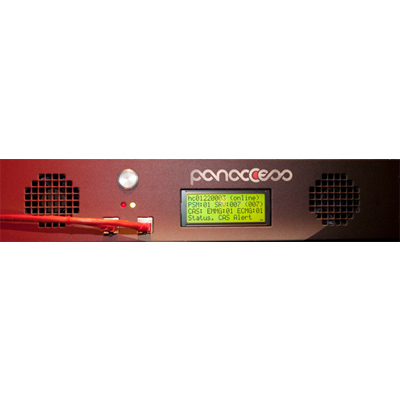
    KOLKATA: Panaccess, a German-headquartered company for CAS, SMS, billing and VoD, aims to promote CAS in India. The company is not only betting on business from the remaining phases i.e. III and IV, but is also approaching the multi-system operators (MSOs) in phase I and II.


    “There is good scope for CAS, SMS and billing in the next phases. And a few existing clients want to replace with our CAS and hence, we are approaching the MSOs in phase I and II along with newer ones,” informs Panaccess sales consultant GK Viswanath.


    “We have commissioned our conditional access system, subscriber management system and billing for a MSO in Pondicherry,” he answers, when asked about the work executed in the country.


    The company, which is slated to open a service centre in Bengaluru by April 2015, has already established its products and services in 32 countries across the world. It serves as a single window for a set of secured and revenue protected suite of solutions that complements and adds revenue streams to existing and new cable TV and DTH operations.


    After April, the company will start visiting all the major MSOs and plans to advertise a lot more as well. “We participate in all the major cable TV exhibitions etc,” he states.


    On the problems MSOs face with existing CAS system, he says, “They can resolve the problems by replacing with our CAS i.e. SMS and billing which are built in. Hence, there is no need for MSOs to go any anywhere else for these facilities. Apart from this, we also provide with solutions through broadband services.”


    In the coming months, the company, which currently employees around 15 people in the country, plans to recruit a few more.  “Next fiscal will see at least 10 for sales and 15 for technical and five for backend and five demonstrator appointments,” he says.


    On the extended deadline of cable TV digitisation in India from 2014 to 2016, he comments, “There are some people who had already started manufacturing STBs indigenously; they are the ones which have been affected by this decision.”


    “We can coordinate with the MSOs those who are planning to go for headends or STBs. We hope to capitalise the market early,” he concludes.


  • Star’s incentives to MSOs

    Star’s incentives to MSOs

    MUMBAI: The industry could now move to a whole new module of distribution, if Star India is able to successfully attract MSOs to its new formula of distribution.

     
    The national broadcaster has from today decided to give incentives to the multi system operators (MSOs) for carrying its channels. The move will empower the viewer and platforms, usher in a new era of transparency, and boost the entire digitisation eco-system.

     
    Star India, which over the next three to four days will talk to all the platform operators for getting the deals in place, hopes it see the light of the day soon.


    According to Star India CEO Uday Shankar, the platforms and subscribers have one goal: to save money, while the broadcaster’s aim is to ensure that its content is available to as many people as possible. “We want to create an alignment between both the goals and so have created an attractive incentive plan,” says Shankar.


    The broadcaster has decided to incentivise platform operators, if they meet the three criteria: Firstly, provide more Star channels on its platform, secondly. give it to as many subscribers as it can and thirdly. give easy access by placing the channels in the top LCN on its platform. “The greater the reach of the channel, the cheaper the content would become for the operator,” informs Shankar.


    So why come up with this incentive? Answers Shankar, “Earlier, RIO was the default price on which negotiations took place between the broadcaster and platform operator. Negotiations are a process of give and take. However, because of some of the issues that cropped up in the TDSAT, the Tribunal said that broadcasters must make non-discriminatory deals. But how do you do deals which is equal in a scenario when two parties are completely different, in terms of size, importance of market etc. Hence, we decided that we will offer our content only on RIO.”


    RIO for the first time has been made the trading currency for deals between the broadcaster (Star) and the platform. “And now, in order to make sure that costs for the platform and the subscribers remain in control and manageable, we have decided to give incentives to platforms that help us achieve our goal of maximum reach,” he says.


     “We have done two things. One, made RIO the trading currency and because it is the common currency, it is non-discriminatory and secondly, have created a very transparent alignment between Star’s objectives and the platforms’ goals,” he adds.


    The revised RIO will be in force for one year with digital platforms in DAS areas. And as per the DAS Act, the broadcaster has the right to audit the subscriber details provided by the platform. This will help Star ensure that the MSOs are complying by the figures they present while doing the deal. 


    The one big question now is will the MSOs accept the new system? “The concept has been proven by the DTH operators over the years. They do not sell everything to every customer and instead make sharp packages. The consumer picks the package which is what is offered to them. At a broadcaster level, this is what we are aiming at doing. I think this will work for MSOs as well, if they were to make the packages and sell them.”


    Shankar expects the module to take off soon. “The only way to have Star content on one’s platform is through RIO and so I am sure the MSOs will take this up.”


    The MSO, if accepts all the three conditions: Of taking as many channels, of providing it to all its subscribers and give it on a certain LCN, the incentives could add up to giving the platform a discount of up to 60 per cent.


    “We need to understand that not all the channels will be taken by everyone. So if we take that, then some channels will have 100 per cent penetration, while some may have 80 per cent or 60 per cent penetration and on top of that if you layer it with LCN incentives, then the total benefit to the platform will be very lucrative,” informs Shankar.


    The MSOs, with these incentives, can put the Star channels back in their existing packages.


    So do we see this becoming an industry norm? Says Shankar, “This is a pricing issue and one cannot work as a group on this. We are doing it because of a set of issues that came to us. There were too many litigations and as Star we are clear that we want to be totally transparent of how we do business.”


    Platforms that still opt out of the revised RIO will have the option to choose and take channels as per the original list price.


    Click here to read the full RIO


    Click here to read about the rate card

  • DEN to put Star channels on a la carte from November

    DEN to put Star channels on a la carte from November

    MUMBAI: It was first Hathway Cable & Datacom that complied with the Telecom Disputes Settlement Appellate Tribunal’s (TDSAT) order of putting Star India channels on a la carte, and now following it is multi system operator (MSO) DEN Networks.

    The MSO has, through a newspaper advertisement, informed its consumers that the Star channels will be removed from the packages and will be offered to subscribers on a-la-carte basis only. “The industry is moving towards a-la-carte channels and so are we. As per the regulation, we have to inform our consumers 15 days in advance before switching off a channel and putting it on a-la-carte. This is what we are doing,” says a source from the company.

    The advertisements have been issued in two newspapers in the DAS notified areas. The ad reads: “The Hon’ble TDSAT has upheld the affidavit by Star India Pvt Ltd and has allowed Star TV to offer its channels to us only on a-la-carte basis. In compliance to this order of the Tribunal and as per Star’s demand, we are being forced to remove the Star channels from our packages and offer them to subscribers only on a-la-carte basis and consequently all our packages are being changed.”

    The ad further says: “We deeply regret the inconvenience caused to our esteemed viewers and solicit your co-operation for due legal compliance. Please contact your local cable operator for your revised package details as well as to continue availing the Star channels of your choice on a-la-carte basis.”

    While Den has started informing the consumers with newspaper advertisements, it will also run TV scrolls to inform the subscribers of the changes in the packaging.

     The Star channels will be switched off from first week of November, post which Den subscribers will have to call the cable operator to be able to view the Star channels.


  • Citizens’ Charter of MIB makes commitments for ensuring certain services

    Citizens’ Charter of MIB makes commitments for ensuring certain services

    NEW DELHI: The Information and Broadcasting Ministry today undertook to facilitate sustained annual growth rate of 13 percent for the media and entertainment sector and ensure free flow of information to the public and safeguard freedom of press and media.


    In a Citizen’s Charter released by it, the Ministry also said the aim was to effectively disseminate information on the policies, programmes and achievements of government using emerging technologies, promote development of broadcasting industry in India; strengthen the public service broadcaster and work towards universal digitisation of broadcasting by 2017.


    The aim was also to expand FM radio network to all cities of 100,000 and above by 2014-15 and community radio service for empowering local communities.


    The Ministry undertook to create a policy framework for the development of value based content for healthy entertainment of people of all ages; and restore, digitalise, preserve and enhance public access to the archival wealth of films, video and audio resources.


    It would support digital conversion of Indian films by 2016-17 and upscale human resources development and set up centers of excellence for the media and entertainment sector.


    The Charter not only contains the names and contact details of officers concerned but also the maximum time limit for various activities being handled by it, documents required and the entry fee. It also includes details of service standards, number of months to be taken for various activities, and the addresses of media units.  


    The Ministry said the aim was to create an enabling environment for sustained growth of media and entertainment sector, facilitate value based wholesome entertainment and effectively disseminate information on government policies, programmes and achievements.


    The services mentioned in it include issue of Issue of license for providing DTH services to prospective licensee, Issue of License to Multi System Operators, Issue of license for providing HITS services to prospective licensee, Registration of Television Rating Points (TRP) Agencies to operate in India, Setting up teleports by TV Channels for up linking/ down linking, Issue of permission for Up linking/ Down linking of TV Channels uplinked from India, Issue of Permission for Down linking of TV Channels uplinked from Abroad.


    The details have been placed on the website of the Ministry mib.nic.in.