Tag: MSO

  • Calcutta HC extends Digicable Comm’s interim order till case disposal

    Calcutta HC extends Digicable Comm’s interim order till case disposal

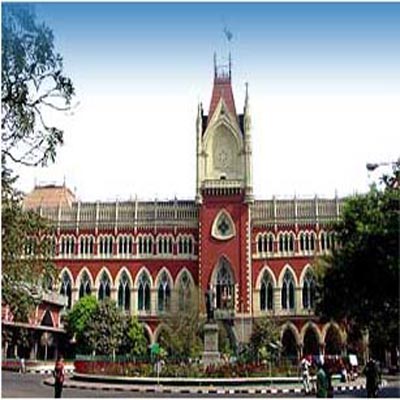
    KOLKATA: Granting relief to Digicable Comm, the Calcutta High Court has extended the interim order till the disposal of the case.


    Earlier too, the Calcutta High Court had put the stay order on the cancellation of the registration of Kolkata-based multi-system operator (MSO) till 6 April, 2015, citing that “Digicable Comm, having been in business for quite some time and would suffer irreparable loss and injury, unless appropriate ad-interim protection is granted to them.”


    Speaking to Indiantelevision.com, DigiCableComm Services VP – operations & technology Lokesh Agarwal said, “Our matter was listed in the Hon’ble High Court under Hon’ble Justice I.P. Mukerji, with regard to DigiCable Comm DAS license for Kolkata and Howrah. Interim order already granted is extended till the disposal of the case.”


    It should be noted that in July 2014, the Ministry of Information and Broadcasting (MIB) had cancelled the registration of Digicable Comm. Services.


    Digicable Comm, a joint venture (JV) between Digicable (51 per cent) and Kolkata-headquartered Multicar Group (49 per cent) was formed in the year 2009, to gain the foothold in the West Bengal market.


    Digicable Comm was always hopeful that after appealing to the Ministry of Home Affairs (MHA) and moving to the High Court, the decision would be in favour of the MSO. “We are happy to get the stay order extended from the High Court. Slowly we will expand in the region and are consolidating,” added Agarwal.


    MHA had cancelled the company’s permanent registration on 18 July, 2014 due to denial of security clearance.


    “Now we will do our best and expand in West Bengal,” Agarwal signed off.


  • 160 MSOs get 10-year licences under DAS for specified areas; 27 denied permission

    160 MSOs get 10-year licences under DAS for specified areas; 27 denied permission

    NEW DELHI: With addition of two more multi-system operators (MSO) from Sikkim and Bihar, the total number, who have been granted permanent registration for 10 years to operate the digital addressable system during the last two months has gone up to 158 as compared to 142 by December-end.


     Most of these MSOs had been given provisional permission earlier. Thus five more MSOs have been granted permission after 5 March till 25 March.


     The MSOs, who have received permission after 5 March are Siti Maurya Cable Network Pvt. Ltd for areas in all districts in the state of Bihar except Madhepura and Arawal; Sikkim Digital Network for Gangtok city and Kabi, Phodong, Mangan, Chunthang, Lachen, Lachung, Ranka, Ranipool, 32 Mile, Singtam, Central Pandam, Namthang, Majitar, Rangpo, Duku, Pakyong, Rorathang, Rhenock, Rongli Aritar, Dalapchand, Legship, Geyzing, Pelling, Tasiding, Yuksom, Soreng, Dentak, Reshi, Sombaria, Daramdin, Melli, Bermoik, Temi, Tarku, Namchi, Jorethang and Romang; International Cable Network for Bhojpur, Buxar and Rohtash; SaiStar Digital Media Private Limited for Ahmedabad, Rajkot, Surat, and Vadodara under Phase II, all other areas under Phase III and Phase IV; and Maharaja Entertainment for pan India in all Phases of DAS.


    The list of MSOs, who have been refused permission as on 28 February has gone up to 27 from 26 with one more MSO being denied permission. Some of those in the cancelled list applied as early as March 2013.


    MSO sources, however, said that the approved list was in addition to the 140 whose names had been approved earlier in March last year.


    The Ministry website mib.nic.in has listed the areas and the date from which the MSOs have been given permission.


  • I&B asks stakeholders to arrive at consensus on difficult issues for successful digitisation

    I&B asks stakeholders to arrive at consensus on difficult issues for successful digitisation

    NEW DELHI: Information and Broadcasting Ministry (I&B) additional secretary J S Mathur, who heads the Task Force for Phase III and IV of Digital Addressable Systems (DAS) for cable television has urged all stakeholders to come together and resolve issues, if targets have to be met.


    Noting in the sixth meeting held on 13 March that only seven out of 100 multi-system operators (MSOs) had given the seeding plans for Phase Ill areas.


    The data provided by them indicated that about 3.1 million set top boxes had been seeded by them with about 550,000 STBs in their stock and about 2.35 million STBs under orders of purchase. He remarked that the seeding so far was very low vis-a-vis the target.


    He said, “Each day counts towards progress in digitisation.” He also said that progress would be slow without public awareness campaign by the stakeholders.


    He said there was lack of mutual connect between broadcasters and MSOs with each stakeholder wanting to maximize self interests. There was need for coming to a consensus.


    He added that the data on subscription revenue and carriage fee from the Indian Broadcasting Foundation and News Broadcasters Association was still awaited, despite assurances.


    He emphasised that broadcasters have to contribute by mounting awareness campaign on their channels as was done by them during Phase I and Phase II and the MSOs have to contribute in this campaign. He said broadcasters should start a dialogue with MSOs immediately.


    He welcomed the initiative taken by Telecom Regulatory Authority of India (TRAI) to hold a meeting with broadcasters and MSOs to resolve the issue of interconnect agreements.


    However, the stakeholders should themselves get their act together and put in their utmost effort to ensure that such issues do not come in the way of achieving the goal of digitisation.


    He said that as pointed out by some members of the Task Force, digitisation has begun to benefit all stakeholders. Activity on the ground needs to be accomplished from now itself as it is not a matter that can be put in place overnight.


    Representative of MSOs said there were issues of content costing, due to which they were finding it difficult to plan digitisation in new areas. Seeding plans can be firmed up by MSOs only after knowing content cost. Till then, the MSOs can only give their seeding projections instead of seeding plans.


    They also stressed that revenue from Phase Ill and Phase IV areas is about 20 to 30 per cent of the total revenue from the country. So content cost in Phase Ill and Phase IV areas cannot be same as that in Phase I and Phase II areas and this has to be taken into account by all stakeholders.


    MSOs also complained that broadcasters were not entering into interconnect agreements with the MSOs for Phase Ill areas.


    Unless the input cost is known, MSOs cannot educate the consumers about the rates and there are issues of local taxation levied by some State Governments apart from local cable operators switching over to analogue when the digital signal to them is cut off by the MSO.


    Broadcasters’ representatives on the other hand said MSOs had not approached the broadcasters for entering into interconnect agreements in new areas. The broadcasters felt that this was because MSOs do not have concrete plans.


    Seeding was done by MSOs in Phase I and Phase II without first entering into interconnect agreements with broadcasters and this should not be an issue now, some of the broadcasters said.


    They claimed that channel prices had gone up due to technical upgradation from SD to HD, but there had been no increase in the advertisement rates.


    A TRAI representative said that according to a TDSAT judgment, MSO/LCO providing cable TV services were free to provide digital cable service in new areas unless it trespasses other areas. He impressed upon the broadcasters to enter into interconnect agreements with MSOs who approach them for content in Phase Ill and Phase IV areas.


    Representative of consumer forums mentioned that pricing is the main issue which the consumers are facing. He added that consumers should know the price before he switches over to digital.


    Representative  of  CEAMA  stated  that  they  approached  as  many  MSOs  as possible to clear their doubts about indigenous set top boxes. However the response from the MSOs has not been encouraging. He reiterated that they have the capacity to meet the requirements of Phase Ill and Phase IV.


    A representative of the Uttar Pradesh Government mentioned that CAF forms should be filled by the MSOs before changing to digital mode in Phase Ill and Phase IV areas. He added that the State Government was not having complete seeding data of Phase II cities.


    The representative of Jammu and Kashmir wanted consumers to be informed about the set top box price. 
  • Govt earns Rs 7.41 crore as processing fee from MSOs since 2011

    Govt earns Rs 7.41 crore as processing fee from MSOs since 2011

    NEW DELHI: The Government has earned Rs 7.41 crore as processing fee from multi system operators from April 2011, the Lok Sabha was informed on 20 March.


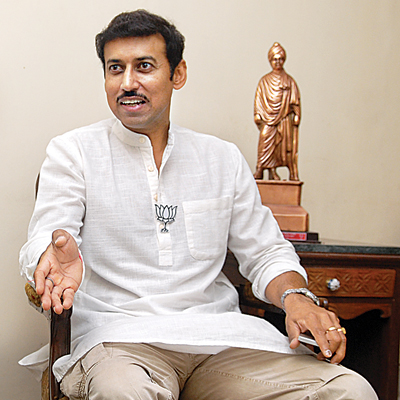
    Minister of State for Information and Broadcasting Rajyavardhan Rathore said a process fee of Rs 1 lakh was collected from MSOs at the time of submission of application for registration for providing digital addressable system.


    A sum of Rs 4.79 crore was earned till 27 January this year during 2014-15 as processing fee from MSOS.


    In comparison, the processing fee received in previous years was Rs 79 lakh in 2013-14, Rs 1.8 crore in 2012-13, and Rs 3 lakh in 2011-12.


    In addition, some states have levied entertainment tax collected directly by them, and MSOs also have to pay service tax and any other applicable taxes to the central government, the Minister said.


  • SitiCable East eyes 2 lakh broadband connections by FY16

    SitiCable East eyes 2 lakh broadband connections by FY16

    KOLKATA: SitiCable East, a cable TV multisystem operator (MSO), which launched ‘SitiBroadband’ two years ago, aims to reach two lakh homes in the eastern region including West Bengal, Jharkhand, Bihar and Assam by the end of current fiscal 2015-16. It should be noted that the MSO, at present, provides broadband services to more than 60,000 homes.


    Additionally the company will also be looking at creating awareness about its broadband services via a campaign. “We shall inform prospective customers through various activities. We will organize BTL activities and let people know through our distribution network and we shall put up hoardings sooner,” said Siticable Kolkata director Suresh Sethiya.


    “We have already invested in broadband. In a digital addressable era, broadband and VAS will become an important differentiated offering. We are upbeat about our penetration and growth in eastern region as our combo pack will be a value addition,” he added.


    Last year, when it was launched, the MSO had a cable customer base of around 12.5 lakh in West Bengal. SitiCable was eyeing 10 per cent of the cable connection for SitiBroadband by providing a combo pack and value addition to the customers in the first year.


    Sethiya expressed interest in developing it as a second major revenue source as it has more direct control over customers and the company can explain about the service as well.


    An Ethernet cable carries the broadband signals between modem, router, computer, and other wired Internet-capable devices. 


    Namit Dave a cable analyst said that broadband and value-added services, which suppressed revenue streams so far will get a major boost as the country advances towards the complete era of digitisation of cable TV. The MSOs are rolling out packages on a major scale.


    While another analyst said that broadband is a very good business now with less investment and promising higher revenue, SitiCable will thread a new path in a big way.

  • Ortel IPO closes; goes through by a whisker

    Ortel IPO closes; goes through by a whisker

    MUMBAI: It was meant to be a test of whether investors have confidence in the media – and more specifically in India’s relatively nascent cable TV sector. And the verdict is that while retail and HNI investors don’t, institutional investors definitely do.


    We are referring to the Ortel Communications IPO which closed today. The regional cable TV MSO which approached the market to raise funds for its growth plans, said in a statement, quoting a Kotak Mahindra Capital spokesperson: ““The Ortel IPO has been successfully closed today. Ortel has successfully raised its entire primary capital requirement as stated in the IPO Red Herring Prospectus, along with providing partial exit to New Silk Route (NSR). The QIB segment has been fully subscribed with participation from  Mutual Funds and Insurance companies.The net under subscription in the HNI and Retail segments will reduce the offer for sale component by NSR.”


    Simply translated the latter part of that statement means that NSR – its private equity investor – had decided to cut back on the amount of shares it was offering to the public.


    At the time the IPO commenced with the price band at Rs 181-200, 12 million shares were on offer for investors. Six million of these were coming from the NSR stable, while Ortel was issuing another six million freshly. With Kotak Mahindra Capital as the issue manager, Ortel managed to rope in  Axis Mutal Fund and ICICI Prudential came in as anchor investors. Both picked up 2.55 million shares (0.9 million to Axis and 16.55 million by ICCI) for Rs 46.2 crore at the lower range of the price band.


    That left about 9.45 million shares on offer to qualified instituitional bodies (QIBs) and retail/HNI investors. Bids were received for 7.12 million shares of these by day three of the issue. Thus the public offer was subscribed up to 0.75 time. Overall,  9.68 million shares, including the anchor component,  were lapped up totally or 81 per cent of the issue. The QIBs totally subscribed to what was available for them.


    NSR, which was making a secondary sale, decided to lop off the the  shares it was selling 3.67 million, meaning only 61 per cent of its offer was subscribed. It was aiming to raise Rs 108-120 crore through the offfer.


    Ortel, on its part, was was looking at raising  Rs 120 crore through the fresh issue.


    The Kotak Mahindra spokesperson told indiantelevision.com that the retail investors don’t really understand the potential of cable TV while institutional investors do. “Hence, the QIB portion has been totally subscribed. Ortel has managed to raise all the growth capital it needs for the next two to three years,” he said. “Hence, retail investors who missed this IPO will have to opt for secondary market purchases.”


    Estimares are that Ortel would end up raising around Rs 175 crore crore through the IPO. But the final tally totted up to Rs 175 crore-odd, according to Press Trust of India reports.

  • SN Sharma joins Reliance Jio

    SN Sharma joins Reliance Jio

    MUMBAI: It was a shocker when the news of multi system operator (MSO) Den Networks CEO SN Sharma quitting the company broke. Now, after months of speculation about his next move, Sharma has made the decision.


    The man credited with creating one of the biggest MSO network, Den Networks, will now be looking into the day to day operations of Reliance Jio. Confirming the news to Indiantelevision.com, Sharma said, “Yes, I have joined Reliance Jio.”


    Reporting into Reliance Jio CEO K. Jayaraman, Sharma will be an integral part of the top management. 


    Sharma joined office starting 23 February but whether he will continue operating from Delhi, will be decided at a later stage.


    With Reliance Jio awaiting approvals for the pan India MSO licence, the company is rapidly strengthening its team. 


    During his stint at Den Networks, Sharma’s vision of growth through consolidation and digitisation had laid the foundation for the company. He also spearheaded Den Networks’ rapid growth with his visionary leadership and execution abilities. He was also the driving force behind taking the company into the digital era.


    He has nearly three decades of experience during which he has been associated with the electronic media industry for over 20 years.

  • MSOs, LCOs working towards increasing broadband reach: I&B

    MSOs, LCOs working towards increasing broadband reach: I&B

    NEW DELHI: Officials in the Information and Broadcasting Ministry said that several multi-system operators (MSOs) and local cable operators (LCOs) were already helping in increasing the reach of broadband throughout the country.


    However, these officials told Indiantelevision.com that they were unaware of any approach to the Ministry by the Department of Telecom (DoT) to seek the help of MSOs and LCOs for this purpose.


    They agreed that using LCOs would help as this segment had the last mile connectivity all over the country. In any case, it was felt that MSOs and LCOs – being private businesses – could be approached directly by the DoT.


    It was stated by LCO and MSO sources that several LCOs were already involved in the business of broadband penetration in addition to television. Furthermore some MSOs and LCOs already had licences for this purpose. One MSO said that the DoT had in fact already devised different categories of licensing for such purposes.


    The Broadband Policy 2004 had also suggested that cable TV network be used as a franchisee network of the service provider for provisioning broadband services, the official added.


    Some MSOs and LCOs have held a meeting with DoT in this connection, and sought certain facilities. 


    The government plans to provide broadband connectivity across the country and it has to work on many fronts, the official said adding that one is National Optical Fibre Network (NOFN), which will cover villages, and the other will be to ensure Internet connectivity in cities and small towns.


    The government plans to utilise Universal Service Obligation Fund to provide incentives to ensure coverage in such areas through viability gap funding, DoT officials said. 

  • Subscription rates in DAS phase III & IV expected to be half of that in first two phases

    Subscription rates in DAS phase III & IV expected to be half of that in first two phases

    NEW DELHI: The subscription revenue from phase III and IV areas of Digital Addressable System (DAS) is expected to be between 20 to 30 per cent as compared to 70 to 80 per cent from phase I and phase II areas.


    Therefore, channel pricing in phase I and II areas need to be decided for areas under phase III and phase IV so that multi-system operators can plan operation in these areas.


    This was stated during the fifth Task Force meeting on phase III and IV held recently under the chairmanship of Information and Broadcasting Ministry additional secretary J S Mathur and attended among others by DAS adviser Yogendra Pal.


    Pal informed the meeting that while the centre had sought from all states and union territories (UT) the district wise data of urban areas to be covered in phase III with number of households, only Chhatisgarh and Uttar Pradesh had responded.


    Similarly, only around 15 states and UTs had responded to the query about nodal officers, both at State level and district level.


    Only Gujarat had responded to the query about nomination of one LCO association from each State and UT for the LCO sub-group.


    The states of Maharashtra and Andhra Pradesh are still to respond to the query about nomination of a local cable operator association to the Task Force.


    Mathur directed that copies of the letters written to State Governments in this regard may be provided to the nodal officers present in the meeting to expedite the pending nominations/data.


    Referring to procurement plans and stock of Set Top Boxes (STB) requirements of phase III, the MSOs said they had limited inventory of STBs. Procurement of STBs is taking place according to earlier orders and no new orders have been placed by the national MSOs either with foreign suppliers or indigenous STB companies.


    The MSOs stated that they are making arrangements for finances for procurement of STBs for phase III. The position with regard to availability of funds would be clear by the end of February.


    At the outset, Mathur said digitisation in phase I and II has been possible due to active cooperation and support of State Governments.


    A Representative of Consumer Electronics and Appliances Manufacturers Association stated that they had called a meeting with MSOs in December 2014 but the response was not good. None of the major MSOs attended this meeting. He mentioned that indigenous STB manufacturers are ready to discuss all issues with MSOs anywhere and anytime.


    Mathur advised the MSOs to have a meeting with indigenous STB manufacturers to sort out all the issues. He said the Ministry was also planning to hold a meeting with the Small Industries Development Bank of India (SIDBI) on the demand of long-term financing.


    When MSOs raised the difficulty of signing agreements with broadcasters, a representative of the Telecom Regulatory Authority of India (TRAI) stated that broadcasters cannot deny signal to MSOs once they are DAS compliant. He suggested MSOs should make a formal written request to the broadcasters for the signal according to the regulations. He added that broadcasters should enter into agreements with MSOs for distribution of content without waiting for the cutoff date.


    A representative of a consumer forum stated that computerized billing was not happening in phase I and II areas. He added that CAF forms should be filled before installation of an STB.


    For publicising the extension in date for applying for MSO registration for operation in phase III areas, it was suggested that broadcasters run a scroll on their channels. It was also suggested that MSOs download a video spot made by the Ministry and play it on their local channels.


    The MSO representatives were told to share the data of existing MSOs operating in analogue regime with the Ministry. The representative of ASSOCHAM wanted that the broadcasters should be apprised for the same.


    Regarding publicity campaign, Joint Secretary (Broadcasting) R Jaya said all stakeholders must contribute in spreading awareness about ongoing digitisation in the country. She suggested MSOs should run audio visual ads on their local channels. She also suggested spreading awareness through handbill or printed ads on monthly bills issued by LCOs to the consumers. She called upon broadcasters to plan publicity campaign on their channels.


    FICCI, Cll and ASSOCHAM were asked to draw up a plan for workshops for public awareness campaign.


    Mathur re-emphasized the need to mount an awareness campaign by all stakeholders particularly the broadcasters. He also asked all the MSOs to begin discussions with indigenous STB manufacturers to meet the deadlines of phase III of December 2015 and phase IV of December 2016.

  • Q3-2015: Hathway reports 2 per cent y-o-y revenue growth

    Q3-2015: Hathway reports 2 per cent y-o-y revenue growth

    BENGALURU: Indian multi system operator (MSO) Hathway Cable and Datacom Limited (Hathway) reported 1.9 per cent y-o-y growth in Q3-2015 with Total Income from Operations (TIO) of Rs 239.14 crore as compared to the Rs 234.78 crore but was 9.2 per cent lower than the Rs 263.51 crore in Q2-2015.


    The company reported a higher loss of Rs 58.05 crore in Q3-2015 than the loss of Rs 36.86 crore in the corresponding year ago quarter and the loss of Rs 39.26 crore reported in Q2-2015.


    Note: 100,00,000 = 100 lakh = 10 million = 1 crore


    Hathway’s EBIDTA calculated based on the figures submitted by the company (without other income) fell to Rs 24.58 crore (10.3 per cent of TIO) in the current quarter as compared to the Rs 36.74 crore (15.7 per cent of TIO) in Q3-2014 and also fell when compared to the Rs 40.03 crore (15.2 per cent of TIO) in the previous quarter.


    Hathway’s income from operations consists mainly of subscription income from cable TV and broadband business, carriage and placement business, advertisement income, activation income from STB and other operating income.


    In Q3-2015, the company’s cable business was 10.8 per cent lower at Rs 99 crore versus the Rs 111 crore in the previous quarter, placement income was down 8 per cent to Rs 75.8 crore from Rs 82.4 crore in Q2-2015, activation business at Rs 7.2 crore was less than a third of the Rs 22.2 crore in the immediate trailing, while broadband income, the only exception, was up 13 per cent at Rs 51.3 crore in the current quarter from Rs 45.4 crore in Q2-2015. The company says that placement revenues were affected due to content related issues in the current quarter that have since been resolved with the broadcasters.


    Let us look at the other figures reported by Hathway:


    Total Expenditure (TE) in Q3-2015 at Rs 274.39 crore (114.7 per cent of TIO) was 17.6 per cent more than the Rs 254.03 crore (108.2 per cent of TIO) in Q3-2014 and was almost same as the Rs 274.27 crore (104.1 per cent of TIO) in Q2-2015.


    A major fraction of TE is the pay channel cost for Hathway. The company’s pay channel cost in Q3-2015 at Rs 94.04 crore (39.3 per cent of TIO) was 12.3 per cent more than the Rs 83.72 crore (35.7 per cent of TIO) in Q3-2014 and was 2.9 per cent lower than the Rs 96.81 crore (36.7 per cent of TIO) in the immediate trailing quarter.


    The company reported 6.9 per cent higher depreciation and amortization expense (depreciation) in Q3-2015 at Rs 59.82 crore (25 per cent of TIO) versus the Rs 55.98 crore (23.9 per cent of TIO) and 17.8 per cent more than the Rs 50.78 crore (19.3 per cent of TIO) in Q2-2015.


    Hathway’s finance cost in Q3-2015 at Rs 26.86 crore (11.2 per cent of TIO) was 19.5 per cent more than the Rs 22.48 crore (9.6 per cent of TIO) and 11.6 per cent lower than the Rs 30.39 crore (11.5 per cent of TIO) in Q2-2015.


    Employee Benefit Expense (EBE) in Q3-2015 was Rs Rs 13.96 crore, in Q3-2014 EBE was Rs 13.79 crore and in Q2-2015 it was Rs 16.03 crore.


    While Hathway’s cable universe subscription numbers and cable paying subscribers remained stagnant at 1.17 crore  and 64 lakh respectively in Q3-2015 as compared to Q2-2015, Hathway has seeded 70000 set top boxes in Q3-2015, taking its digital subscription base to 85 lakh. Further, the company’s broadband home passed and broadband subscribers increased by 5000 and 10000 to 2 lakh and 4.3 lakh respectively, in Q3-2015 as compared to the previous quarter. Hathway also informs that it has about 600,000 STB’s in stock and plans to seed them at a rapid rate.


    Earlier, Hathway had informed BSE that the Board of Directors of the Company at its meeting held on 13 November, 2014, inter alia, has considered and approved the subdivision of face value of Equity Shares into Equity Shares of smaller amount than is fixed in the Memorandum of Association; i.e. to subdivide 1(One) equity share of Rs 10/- each to 5 (Five) equity shares of Rs 2/- each, subject to approval of shareholders.