Tag: MSO
-

MIB grants 45 provisional licences to MSOs in final fortnight of 2015 to push DAS Phase III
NEW DELHI: With the deadline for Phase III of Digital Addressable System (DAS) over, a new list issued on 2 January, 2016 showed another 45 multi system operators (MSOs) had been given provisional licences after the last list issued up to 15 December.The Information and Broadcasting Ministry website did not display the number of permanent licensees, indicating that the number remains at 230 as it has remained since 20 November.With the latest list, the number of provisional and permanent licensees has finally crossed 600 to reach 612 from 567 on 15 December, 2015.The pace appears particularly tardy considering that the Home Ministry had over six months earlier announced that it was aiming to do away with security clearances for MSOs. However, I&B Ministry sources told Indiantelevision.com that nothing had been received in writing in this regard from the Home Ministry.The number of MSOs was 567 in mid-December, 553 by 24 November and 470 earlier in November, but this increase was merely in those who have provisional licences.The sources said many MSOs holding provisional licences had not completed certain formalities relating to shareholders and so on. -

DAS Phase III: Govt. insists 76% STB seeding; stakeholders claim huge shortage
NEW DELHI: The Government has claimed that the percentage achievement of coverage of Digital Addressable System (DAS) Phase III so far is 76 per cent, even as reports from multisystem and local cable operators in various states alleged there was huge shortage of set top boxes.In fact, the 13th Task Force meeting – the last to be held before the deadline of 31 December – was told that the percentage achievement was 86.25 if Tamil Nadu that has some legal and other issues is excluded. The meeting was told there were only 405 zero seeding areas till the last report.But reports from MSOs and LCOs to Indiantelevision.com from various parts of the country including Maharashtra, Madhya Pradesh and West Bengal said there is acute shortage of set top boxes (STBs) and indicated under 50 per cent seeding.In the 13th Task Force meeting presided over Special Secretary J S Mathur, Joint Secretary (Broadcasting) R Jaya said the number of urban areas to be digitised in Phase lll after updation of 27 States/UTs is 6016. While changes had been made in some urban states on the basis of reports from some state governments and union territories, comments were still awaited from the States/UTs of Maharashtra, Karnataka, Bihar, Tamil Nadu, Lakshdweep and Dadra Nagar Haveli.Out of the 685 areas including West Bengal (where 280 areas were removed soon after the Task Force meeting), 450 areas had less than 1000 TV households and 226 from 1000 to 5000 TV households.Jaya said out of 510 MSOs registered for Phase lll areas as on the date of the meeting, only 190 MSOs are entering seeding data in the Management Information System (MIS). A total of 135 MSOs have still not logged into MIS and 185 MSOs have logged but have not reported any seeding. She said the Ministry had granted 567 registrations so far. Ninety applications are under process and 35 applications are pending clarifications. Affidavits are awaited from 170 applicants. About 100 applications were received in November and December.She said the Home Ministry in July 2015 decided that no security clearance was deemed for issue of registration to MSOs. Since this would involve amendment in the rules, till that time, provisional registrations are being issued by the Ministry. The Joint Secretary further mentioned that the applications are still being received and in some cases the registrations are pending for want of documents. She also mentioned that as informed in the PowerPoint presentation made at the meeting, the MSO dark areas were minimal.A Toll free facility has been operational for the last two months and an average of about 500 calls are being received every day over the last 10 days.About 400 officers from AIR and Doordarshan have been nominated to inspect the headends of MSOs and in this regard inspection reports have already been received from 50 officers.Shortage of STBs and their delivery and pending interconnect agreements with broadcasters as reported by some MSOs, were also mentioned. It was informed that requests had been received from Uttarakhand, Andhra Pradesh and Maharashtra and some MSOs for extension in cut-off date for Phase lll of digitisation.It was also pointed out that seeding data received from direct to home (DTH) operators was based on PIN codes of places. DTH operators were requested to confirm their data as per the urban areas notified by the Ministry to confirm correct seeding status in Phase lll areas.The representative of DTH mentioned that they have at present 16 million active set top boxes and another two million STBs, which shall be activated soon after the 31 December timeline in Phase lll areas. He added that apart from this, four million STBs are catered to by DD Freedish and another eight million by digital cable. He said the the seeding data for each notified phase lll urban area would be sent very shortly. He stated that the data for seeding of 16 million STBs may be taken.It was decided that the seeding data may be accepted. Jaya said the data for two million STBs to be activated after the cut-off date shall however be included only after report of their activation is finally received.A representative of Ortel Communications mentioned that due to component shortage with STB manufacturers, the delivery of STBs ordered by them is affected despite advance payment made by them. He added that they have seeded 30 per cent of STBs so far and have a stock of about 20 per cent.Mathur said the notification for the cut-off date for Phase lll had been issued on 11 September, 2014, which was more than a year ago. Further, several awareness campaigns, Task Force and MSO sub-group meetings and orientation workshops for the State and district Nodal officers have been held during this period. In addition concerned officials of the State Governments including the Chief Secretaries have been sensitised from time to time on the importance of the initiative. Hence there was no case whatsoever to consider any extension in the cut-off date.On a query by the Indian Broadcasting Foundation (IBF) representative about 700 MSOs have single headend for both final phases, Jaya said an advisory was issued to all registered MSOs informing them that in case they have a single control room for Phase lll and Phase lV areas, they must take separate lRDs from broadcasters for taking digital signals in Phase lll areas and analogue signal in Phase lV areas.A representative of the Telecom Regulatory Authority of India (TRAI) said it was made clear in all meetings that analogue signals can not be transmitted in Phase lll areas after 31 December, 2015. MSOs and broadcasters were required to make arrangements in advance for feeding Phase lll and Phase lV areas. He added that as per the interconnect regulations analogue transmission is permitted in Phase lV areas and MSOs and broadcasters should find a technological solution to the problem of segregating the feeds from the same control room.When the IBF representative apprehended piracy problems in Phase lll areas, he was told the broadcasters must take action as per the law against those indulging in piracy. He was told that it is their responsibility to ensure that analogue signals are not transmitted in Phase lll areas without affecting transmission of analogue signals in Phase lV areas.He was also told that the Ministry will write to all State/UT Governments to take action against those violating the law. Jaya remarked that broadcasters have to cancel the agreements entered by them for analogue signals in Phase lll areas.The Maharashtra government representative said difficulties have been reported from the field in implementing digitisation in the state within the timelines.The Maharashtra Cable Operators Federation representative said about 60 per cent areas in Maharashtra are not served by the national MSOs. He said about one million STBs are to be seeded, which is not possible. He added that 40 registrations are pending to be issued by Ministry.A representative of consumer organisation Savera said consumers were facing difficulties in redressal of their complaints from the MSOs/LCOs, and suggested the Consumer Affairs Ministry be added for redressal of the complaints. He also suggested that the Ministry may hold workshops on cable TV digitisation in all districts for awareness of the consumers. He was told that 11 workshops were held by Ministry for implementation of Phase lll and similar workshops have been planned to be held in Phase lV also. Besides, five advertisements on separate dates were issued in newspapers pan-India and both News and general entertainment channels (GECs) have been carrying ads and scrolls accordingly for information of all. -

DAS Phase III: Govt claims 75% STB seeding; MSOs claim 50% across India
NEW DELHI: Even as the Government claimed total success in the switchover to Phase III of Cable TV Digitisation from today (1 January, 2016), there were reports from various multi system operators (MSOs) in different parts of the country who complained of shortage of set top boxes (STBs).An MSO in a city that came under Phase II in Madhya Pradesh told Indiantelevision.com that he had received frantic calls from some MSOs wanting STBs.Similarly, an LCO in Mumbai said that he had received similar calls from other parts of Maharashtra. He claimed that there was just around 50 per cent seeding across the country.The Hyderabad High Court has already extended the Digital Addressable System (DAS) deadline for two months in Andhra Pradesh and Telengana.Meanwhile, the 13th meeting of the Task Force was told on 30 December that more than 75 per cent seeding of STBs had been acomplished.Describing the progress as “very positive,” an official release today noted that seeding has taken place in most of the notified urban areas with STBs, while the seeding-dark area were only around 400 out of more than 6000 urban areas, many of which had population below 1000 while the rest were in areas having population of less than 5000.The seeding figures as shared in the meeting indicated a high level of seeding in the country, to the extent of more than 75 per cent, excluding Tamil Nadu where certain legal matters have restricted the process of digitisation. This figure was expected to be higher when all the registered MSOs provide their final figures.Broadcasters were advised to ensure that no analogue signals are transmitted in Phase III areas after 31 December but without affecting analogue signals in Phase IV areas.
It was unanimously decided at the meeting presided over by Special Secretary J S Mathur that looking to the positive outcome of the Digitisation Phase III exercise and the fact that the notification for the cut-off date for phase III was issued more than a year ago, there was absolutely no requirement for extension of the cut-off date.
The Task Force, where Joint Secretary (Broadcasting) R Jaya and Adviser Yogendra Pal were present, noted that various awareness campaigns, Task Force and MSO sub-group meetings and orientation workshops for the state and district Nodal officers have been held during this period. A multilingual toll free helpline (1800 180 4343) has also been made operational. -

“Our strategy is clear, we are ready to associate with everybody but we won’t compromise with our transparency:” Tony D’Silva
For Hinduja’s Headend In The Sky (HITS) platform – NXT Digital, which was launched earlier this year, the journey so far has been about tussling it out. From procuring the requisite license from the Ministry of Information & Broadcasting (MIB) to getting broadcasters on board, for NXT Digital, it was no mean feat. Focusing on phase III and IV areas of Digital Addressable System (DAS), the venture has made it very clear that they mean business and are here for the long haul.
Led by Grant Investrade managing director Tony D’Silva, the venture is investing heavily in order to achieve the goals that have been set. With an aim to spread its network pan India, NXT Digital has deployed teams on ground to reach out to operators. Speaking to Indiantelevision.com’s Anirban Roy Choudhury, D’Silva speaks about the roadmap ahead for NXT Digital, the recent deal with Zee Entertainment Enterprises as well as India’s cable digitisation drive. D’silva makes no bones about the fact that the company is ready to associate with anybody but will not compromise with its transparency.
Read on:
How did the industry respond to the launch of NXT Digital?
The launch of NXT Digital has been very well received by most markets across the country. Initially people were skeptical about what this system was all about. There was a lot of negative publicity in the market spread by people with various vested interests saying that we would face the same problems that Jain HITS faced. I think we have been able to overcome that gradually. And now we believe that we are a platform to stay. We have made substantial investment and have the financial support to invest more.
What do you think has been the biggest achievement so far for NXT Digital?
The most important achievement is the fact that we have successfully signed all the broadcasters. The deal with broadcasters is for both active and passive services (with exception of Zee), which is a greater achievement. Now I think we have started to move faster. Initially the progress was a little slow because there was a lot of confusion in the market as what will be the last date of DAS Phase III. However, now that there is clarity on the final date, the demand has seen a substantial growth in terms of COPE mini headend systems and set top boxes (STBs).
When you speak about demand, is there any particular region where you are witnessing the demand or is it pan India?
It is indeed pan India. In fact, we are observing a huge demand in phase I and II areas. But considering our decision to not disturb the existing ecosystem, we have decided to focus on phase III and IV markets only as of now. That said, we will review the model whenever needed.
How robust is your infrastructure to meet the growing demand?
We built our infrastructure for a particular demand but we have gone well beyond that demand and hence we have to now re-build our infrastructure. And that’s exactly what we will do to meet the demand.
Infrastructure will certainly not be a problem as far as NXT Digital is concerned. We are evaluating various options when it comes to STBs. DAS Phase IV will have a different affording power as compared to phase III and keeping the diversity in mind, we plan to offer a variety of options when it comes to STBs. By next year we will add one or two more transponders too.
How do you plan to ensure cordial reach out to the operators?
We reach out to the operators through various print, digital mediums, live roadshows etc. Moreover we have an on-ground team, which interacts with the operators. I think the proof of the pudding is in the eating. Once cable operators as well as the market have seen our services, there will automatically be a level of satisfaction and confidence and then they will be our ambassadors.
What’s your take on pricing when it comes to DAS Phase III and IV?
The content pricing is a function of broadcasters. We follow a business model where we don’t make any money from content. We don’t want to make money from content. The lower the broadcaster gives us, the lower we offer to our operators. Broadcasters unfortunately don’t see a difference between Phase III and Phase IV even though we have been repeatedly appealing to them because there is a clear difference in Average Revenue Per User (ARPU) in the two regions. I think it’s the function of authority overseeing the digitisation process to ensure the fact that the price quoted is fair for the entire ecosystem.
Is there a clear enough revenue model?
I think there should be a differentiation in the markets, or another way to look at it is to see what you can afford and pay for it. But I don’t know if the second one is a right option at this stage. And the reason I say at this stage is because the consumer is used to a kind of model and suddenly you cannot give him another rationale and logic. The transition needs to happen after following a logical approach and that is something that I firmly believe in. You cannot bring in a change by being harsh on the end consumers.
How many operators has NXT Digital signed with so far? Are you happy with the number?
We are very close to touching the 500 mark and I am very happy with the number. The number will go up substantially as we come closer and closer to the D-Day. There are a huge number of people who are still trying to figure out the best way forward. The main reason why operators held back was because they were insecure about us not having all the content. After getting Zee on board that problem has been addressed and now we will certainly see the demand going up.
The other problem that we faced in the initial stages was our broadcaster friends campaigning against us. They went on to many operators and mis-informed them saying NXT Digital will also be on the same track as Jain HITS as we will not provide them the content. I think we have proved that these were just rumours and hence they don’t count anymore.
What’s your take on the entire digitisation process?
Not all operators are equipped with higher education and hence they do not understand the actual meaning of digitisation. Digitisation does not mean putting a digital head-end and STBs but it is also about managing the backend, packaging and bundling. On the other hand, there are a lot of smart, intelligent Chinese vendors all around laying the trap and there are a good number of operators falling in that trap maybe because of the government pressure or lack of understanding.
The other thing I have been telling the government is that when you look at regulation per se, the entire onus of implementing digitisation lies on the MSO. However, we are forgetting that a very important part of the process is the local cable operator (LCO), who is delivering the signal to the end consumer. Therefore billing, receipt collection, ensuring quality, consciousness and other on-ground responsibilities should remain with the LCO.
The government needs to understand that unlike many other countries, India is not a homogenous market. On a single street you will find slums and multi-storeyed apartments, which are both are consuming content. The LCO cannot go with a fixed price because it will be more than some or less than some. Moreover, he will also have to pay service tax on it. The concept of billing needs to be realistic and practical. There are a lot of things that need to be addressed if we really want to digitise the country.
You are also providing local channel facility, which is something that lacks on DTH. Who takes the responsibility of the content put on those channels?
We have a mechanism through which operators can have as many as eight – sixteen local channels. The benefit is that they are all encrypted and hence piracy is taken care of. We are clear with the operator that whatever content is put up, should follow the Cable Act. If the operator airs pirated content or breaches the law, the broadcasters can inform us and we will switch off signals. We have the power to switch off, which other MSOs don’t and that’s another advantage that we have. We have to understand one thing that the COPE belongs solely to the operator and therefore the liability of whatever is inserted through that COPE is on him.
Can DD Freedish capitalise on the on-ground chaos? If there is a blackout, people may just move to DD Freedish?
DD Freedish is also like any other DTH platform. I don’t think it meets consumer requirements. The consumer knows what he wants to watch. Setting up a DD Freedish and buying an STB is similar investment. It’s just that there is no subscription fee attached to DD Freedish but it has its limitations when it comes to number of channels. And not only channels, the exposure that we offer is far beyond, be it international with global channels, local channels or value added services. So we are far ahead of a platform like DD Freedish and we are not bothered by it.
You had all major broadcasters on board except Zee. How was your experience inking the deal with Zee?
A deal that took four months to be signed cannot be called a smooth one. We went to the MIB, the Telecom Regulatory Authority of India (TRAI) and then eventually tussled it out at the Telecom Disputes Settlement and Appellate Tribunal (TDSAT). For many years now we have been requesting TRAI to come up with a standard Interconnect Agreement (ICA). There are so many operators across the country who cannot even afford to go to the TDSAT. It’s not an easy process; he has to come to Delhi, hire a lawyer and it needs a lot of financial backup. The deal signing with Zee was a learning experience for me. It was a case of dealing with people who say something and do something totally different. It was a clear case of mis-interpretation of law.
What is the way forward for NXT Digital?
Value added services are important to ensure growth and now we are focusing aggressively on that front. I want to make one thing very clear, which is that the Hinduja Group will fight this till the very end. We are not going to be tempered over by anybody in this industry. If there is a genuine problem or concern, we are more than happy to sit and discuss. At the same time, no matter what, we will not be stepped on for nothing. I firmly believe that the whole is always bigger than the individual. If we have all the broadcasters with us and one against, there has to be some vested interest. Our strategy is clear, we are ready to associate with everybody for business or betterment of the industry but we won’t compromise with our transparency.
-

TDSAT declines MP MSOs’ petitions for Star India signals
NEW DELHI: The Telecom Disputes Settlement and Appellate Tribunal (TDSAT) has declined separate petitions by Gwalior’s S R Digital and Ujjain’s Surbhi Diginet through which they had sought the signals of Star India.
TDSAT chairman Justice Aftab Alam and members Kuldip Singh and B B Srivastava, Iisting the matter for 20 January, gave Star India three weeks to file its reply. The two multi-system operators (MSOs) would file rejoinders in two weeks thereafter.
In similar petitions, the two MSOs had alleged that they had signed memorandums of understanding with Star India and also an agreement.
Counsel Vineet Bhagat for both MSOs submitted that despite executing an MoU and an agreement, Star India had provided boxes of only five channels. However, Star India had not activated the same. It was further alleged that Star India had not provided boxes of the remaining channels.
In view of this, the petitioner MSOs wanted that Star India should be directed to activate boxes of the five channels and provide the remaining boxes and activate them.
Arguing for Star India, counsel Arjun Natarajan said the broadcaster had not entered into any MoU and/or agreement with S.R. Digital and/or Surbhi Diginet. Therefore, there was never any occasion for SIPL to either hand over boxes or to activate them.
He also said that the MoUs and agreements filed with the petitions contained no signatures on behalf of Star India.
He added that there is no pleading in the petitions that counter-signed copies of MoUs and/or agreements have been withheld by Star India.
He added that S R Media is a collection agent of Star India and therefore it might have access to Star India’s stamp papers, IRDs etc and alleged that S R Media had colluded with S R Digital and Surbhi Diginet.
-

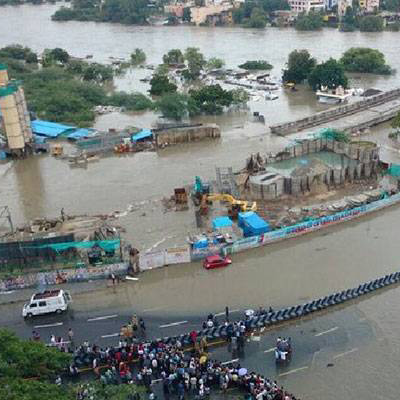
Tamil Nadu cable TV industry incurs Rs 25 crore loss due to floods
MUMBAI: ’Twas Mother Nature’s fury at full throttle when the state of Tamil Nadu was flooded by the heaviest rainfall it has been privy to in the last century. Many lives were lost even as over three lakh people became homeless.
While the southern state is slowly inching back to normalcy from the unprecedented rains and floods, which engulfed whatever came in its way, the natural disaster had a massive impact on the media and entertainment industry as well. The entire cable TV ecosystem was brutally affected by the calamity. It may be recalled that for the last couple of weeks, the Broadcast Audience Research Council (BARC) India hasn’t received television ratings data from the region too.
In the light of this disaster, a senior cable federation member from Chennai estimates the overall loss suffered by the cable industry to be close to Rs 25 crore. “We have done an on-ground survey and after a thorough analysis, we came to the estimate. Local cable operators (LCOs) will have to bear the majority of the loss as most of the fibre amplifier devices, which were damaged belong to them,” he adds.
While industry body ASSOCHAM estimated the overall financial loss from the torrential rains and floods in Tamil Nadu to be in excess of Rs 15,000 crore, the Rs 25 crore loss to the cable industry may even be a conservative one. The on-ground reality indeed paints a grim picture.
“Thousands of fibre amplifiers got affected. The LCOs are trying their level best to restore services but the damage is so massive that it will take at least a week or 10 days more to get things back on track,” added a senior official from the cable fraternity.
A fibre amplifier, which is located in the operating room of cable operators, costs around Rs 3500 and a large number of them were totally destroyed as they immersed in the flood water. Fortunately, no instance of head-end damaged could be traced.
An independent multi system operator (MSO), who was also affected by the natural calamity, said, “The head-ends are generally placed at a good height and hence they got saved. But my transmitter is totally damaged. The flood has damaged cable operations brutally, and to restore services it will take me more than 15 days at least.”
“The transmitter costs Rs 50,000 and I have to invest in a new one,” he adds.
The other equipment that was damaged in the flood and needs serious investment is Erbium Doped Fiber Amplifier (EDFA), which is an optical repeater device used to boost the intensity of optical signals being carried through a fiber optic communications system. “I need to invest Rs 1.5 lakh in my EDFA and there are many other such operators who will have to change their EDFA,” said an LCO.
While some equipments may be under warranty, it is unlikely that the warranty applies in the case of natural disasters. A looming question is also that of insurance. All said and done, many LCOs and MSOs affected severely by the flood will have to bend over backwards in order to get their system back on.
-

Reliance Jio to soft launch with two lakh ‘privileged’ subscribers
MUMBAI: Mukesh Ambani’s Reliance Jio Infocomm is all set to soft launch its telecom services brand Reliance Jio on 28 December, 2015 by handing out two lakhs cards to hand-picked ‘privileged’ people as a part of the launch.
It may be recalled that Indiantelevision.com was the first to report that Reliance Jio would soft launch on the eve of Dhirubhai Ambani’s birth anniversary (28 December) this year.
Reliance Jio has been running test signals from a month now wherein the company’s employees have also been availing the services.
A senior Reliance Jio official on condition of anonymity told Indiantelevision.com, “We will analyse the performance of our services over the next two months and a consumer base of two lakh is robust enough for that. After thorough analysis, we will do our commercial roll-out by March 2016.”
The official added, “Our price package will be way lower than what is available in the market at this stage. We are entering a market where we want to have the largest number of subscribers and we will do that by providing the best services at the lowest price.”
With a pan India MSO (multi-system operator) license under its belt, Reliance Jio is also in talks with both broadcasters and cable operators for their cable TV services. “By next month we will start signing deals. The technology is already in place and now we will focus on content deals. The work on cable TV front is also progressing at a good pace and by April we plan to start with 20 cities,” informed the official.
Launching in a highly competitive market with multiple players, be it in the telecom or the cable space, it now remains to be seen how Reliance Jio’s pricing and service offerings are a notch above the rest.
-

TDSAT directs Canara Star to settle disputes with Star India
NEW DELHI: Bangalore’s Canara Star has been asked by the Telecom Disputes Settlement and Appellate Tribunal (TDSAT) to intimate Star India whether it admits the SMS reports submitted by the broadcaster for the period 2014 to January 2015.
The common order by the Tribunal on three petitions including one by Star India against Canara Star claiming recovery dues of about Rs 3 crore pertaining to the MSO’s operations in Digital Addressable System (DAS) area of Bangalore said this was subject to the two parties failing to arrive at a final settlement.
Listing the matter for 14 January, 2016 the Tribunal also asked Canara to produce its bank statements and materials to show payments made by it towards invoices raised by Star India based on Canara’s SMS reports.
Canara, which has allegedly sold off its business to another MSO called All Digital, will produce its deed of transfer of establishment to All Digital, which was made a party in the petition filed by Star India.
The other two petitions are by Canara Star challenging disconnection notices issues by Star India for analogue areas of Kumta and Bhatkal.
Star India counsels Kunal Tandon and Arjun Natarajan produced the SMS reports on the basis of which it had billed Canara Star.
Star India argued that Canara cannot withhold payments to it for invoices, which were raised by the broadcaster on the basis of Canara Star’s SMS reports.
Canara Star’s counsel Jayant Mehta asked for one final opportunity to settle the disputes.
All the three matters had been before the mediator from early August till mid November but no settlement could be arrived at.
-

MIB awards 14 new provisional MSO licences; no new permanent license
NEW DELHI: Despite the Phase III deadline for Digital Addressable System (DAS) barely two weeks away and the Government’s assertions over this past weekend, the Ministry of Information & Broadcasting (MIB) has granted provisional licences to 14 multi-system operator (MSOs).
However, as per the updated list, the MIB has not granted any new permanent MSO license.
With this, the number of 10-year (permanent) registrations for MSOs remains 230 and the total has only risen by 14 to 567 by including the 337 which got provisional clearance (till 15 December, 2015).
According to the list put on the MIB’s website, Kal Cables of Chennai and Digi Cable Network of Mumbai remain on the cancellation list. Scod 18 Networking Pvt Ltd of Mumbai has also been refused security clearance while SR Cable TV of Bangalore has shut down its business.
The MIB has granted provisional registration to DEN Networks’ Nashik subsidiary DEN Discovery Digital Network for Maharashtra.
On the other hand, Extreme Teleconnect has received pan-India licence. Other MSOs that were granted provisional licences for various districts are: Hindupur Cable TV Operators Welfare Association, RK Digital Cable Service, Srisivakami Amman Cable TV System, Shri Shyam Baba Cable Network, Raj Cable Network, Lonar Cable Network, Srivi Communication, Matarani Cable TV Network, Kulasekharam Television Network, Victoy Digital Network, Jajpur Digital Network Services and Treeshakti Cable Network.
The pace appears particularly sluggish considering that the Home Ministry had announced over five months ago that it was aiming to do away with security clearances for MSOs.
MIB sources told Indiantelevision.com that nothing had been received in writing in this regard from the Home Ministry.
The number of MSOs was 553 by 24 November, having risen from 470 earlier in November, but this increase was merely in those who had provisional licences.
Considering the warning to broadcasters not to give digital signals to unregistered MSOs, the completion of DAS in urban areas by the end of this month appears to be a mammoth task.
The number of provisional licences has also slowed down, considering it had risen from 246 on 10 November to 323 by 24 November (an increase of 77) and has now risen by eleven to 337.
Only three MSOs who had provisional licences have got permanent licence since September this year. Three provisional licensees have been permitted to change their area of operation. Thirteen permanent licensees have been allowed over the past few months to change their areas, of which one has been allowed to add more areas.
The source said many MSOs holding provisional licences had not completed certain formalities relating to shareholders and so on.
-

AIR/DD engineers to inspect MSO set-ups for DAS; b’casters asked to stop signals to unlicensed MSOs
NEW DELHI: Broadcasters have been asked to ensure that signals should not be made available to those multi-system operators (MSOs), who have not received registration from the Ministry of Information and Broadcasting (MIB) and who do not provide digital encrypted signals in Digital Addressable System (DAS) Phase III areas from the cut off date of 31 December.
This was conveyed at a meeting convened by the MIB with over 120 MSOs, which was held prior to a meeting of the Task Force over the weekend for the third phase of DAS.
The Ministry has deployed engineers from All India Radio and Doordarshan to inspect the technical set ups of MSOs.
The status of digitisation and stock & supply position of set top boxes (STBs) was also reviewed and all stakeholders were requested to ensure that seeding of STBs is completed in Phase III areas by 31 December so that consumers do not face any difficulty due to stoppage of analogue signals.
In the 12th Task Force meeting held over the weekend presided over by its chairman and Ministry Special Secretary J S Mathur and Joint Secretary (Broadcasting) R Jaya, broadcasters were advised to increase the frequency of publicity on cable TV digitisation and to ensure that it is carried by all the approved TV channels.
While a public awareness campaign is being carried by all stakeholders; the meeting was told that the multilingual Toll Free Helpline and 12 Regional Units are operational.
The government has updated the list of urban areas to be covered in Phase III for 24 States & Union Territories after comments from State/UT Governments.
In response to the concerns raised by some of the stakeholders about delay in signing of interconnection agreements between Broadcasters and some MSOs, it was decided that these MSOs may furnish the details of pending cases to the Telecom Regulatory Authority of India (TRAI) by the middle of this month for holding immediate meeting with Broadcasters.
As was earlier reported by Indiantelevision.com, TRAI will hold a meeting with stakeholders on 18 December to iron out any problems in this regard.
In the meeting with MSOs, it was emphasised that MSOs must carry public awareness campaign on cable TV digitisation on their local channels and by distribution of leaflets, holding meetings and putting kiosks etc.
A demo of the MIS system, which has been deployed to collect seeding data of STBs online from all operators, was also made.
MSOs who have not started feeding the seeding data in MIS were advised to start immediately and update it regularly.
It was informed that multilingual Toll Free Telephone Number 1-800-180-4343 to answer queries of stakeholders, including consumers, for seamless transition to digitisation is already operational and they were advised to publicise it.
As was reported earlier, all stakeholders were told categorically that there would be no extension of the deadline for Phase III and analogue signals should be switched off from 1 January, 2016 in all urban areas of the country. The final phase covering the rest of India will be completed by 31 December, 2016.
TRAI had earlier asked all stakeholders to apprise it by 28 October of any problems arising out of finalising agreements amongst various stakeholders.