Tag: MSO

  • TDSAT directs Karnataka MSO to pay monthly subscription pending dispute with Star India

    TDSAT directs Karnataka MSO to pay monthly subscription pending dispute with Star India

    NEW DELHI: The Telecom Disputes Settlement and Appellate Tribunal (TDSAT) has directed Karnataka based multi system operator (MSO) V4 Media to make payment of the monthly subscription fee at the rate of the last invoice raised by Star India until settlement of their dispute.

    TDSAT chairman Aftab Alam and members Kuldip Singh and B B Srivastava listed the matter for 2 March and asked V4 Media counsel V Subrahmaniam to file the position about ownership pattern of the MSO.

    Earlier, the parties had been negotiating for entering into a fresh agreement. According to Subrahmaniam, the negotiation was not making any headway because Star India insisted on a 10 per cent increase in the subscriber base over the last agreement.

    V4 Media, however was unable to accept the demand and according to Subrahmaniam, there was no actual increase in the MSO’s subscriber base.

    Subrahmaniam also informed there was a split in the partnership firm V4 Media and after the split, the two sides also split up the earlier subscriber base.

    She submitted that she would file the deed under which the partnership was reconstituted and the current SLR of the V4 Media following the reconstitution at Star India’s Mangalore office. On receipt of this, Star would then inform the Tribunal about its stand in the matter.
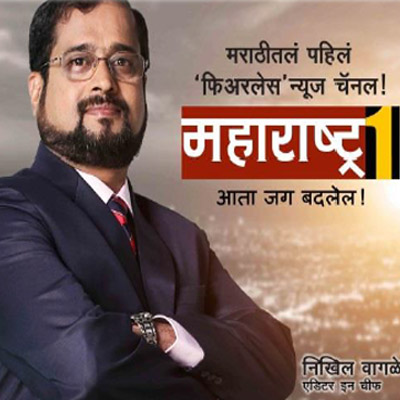
  • Marathi news channel Maharashtra 1 set to beam on Tata Sky

    Marathi news channel Maharashtra 1 set to beam on Tata Sky

    MUMBAI: The Nikhil Waghle led 24×7 Marathi news channel Maharashtra 1, which started its service in September last year, is all set to hop on to the Tata Sky direct to home (DTH) platform.

    Tata Sky will be the first DTH platform that the channel will mark its presence on. 

    Maharashtra 1 will be a free-to-air channel available on channel number 802.

    “We are currently present on all the multi-system operators (MSOs) except UCN Nagpur. Now with a presence on Tata Sky, we have made a move towards DTH. We decided to go ahead with Tata Sky because it’s a premium platform and fits the bill for a premium channel like ours,” said a channel official.

  • Marathi news channel Maharashtra 1 set to beam on Tata Sky

    Marathi news channel Maharashtra 1 set to beam on Tata Sky

    MUMBAI: The Nikhil Waghle led 24×7 Marathi news channel Maharashtra 1, which started its service in September last year, is all set to hop on to the Tata Sky direct to home (DTH) platform.

    Tata Sky will be the first DTH platform that the channel will mark its presence on. 

    Maharashtra 1 will be a free-to-air channel available on channel number 802.

    “We are currently present on all the multi-system operators (MSOs) except UCN Nagpur. Now with a presence on Tata Sky, we have made a move towards DTH. We decided to go ahead with Tata Sky because it’s a premium platform and fits the bill for a premium channel like ours,” said a channel official.

  • Q2-2016: Hathway YoY revenue up 25.6%

    Q2-2016: Hathway YoY revenue up 25.6%

    BENGALURU: Indian multi system operator (MSO) Hathway Cable and Datacom Limited (Hathway) reported 25.6 per cent YoY growth in standalone Total Income from Operations (TIO) in Q3-2016 (quarter ended 31 December, 2015, current quarter) at Rs 300.43 crore as compared to Rs 239.15 crore and 9.6 per cent more than the Rs 270.03 crore in Q2-2016.

    Note: 100,00,000 = 100 lakh = 10 million = 1 crore

    All numbers in this report are standalone unless stated otherwise.

    The company’s EBIDTA (excluding other income) in Q3-2016 more than doubled (by 2.02 times) YoY to Rs 49.81 crore (16.6 per cent margin) as compared to Rs 24.58 crore (10.3 per cent margin) and increased 45.8 per cent QoQ as compared to Rs 34.15 crore (12.5 per cent margin) in the immediate trailing quarter.

    Subscription numbers, broadband, activation and placement revenue

    Hathway says that its consolidated set top box (STB) deployment reached 96 lakh subscribers (Q3-2016 addition eight lakh) as on 31 December, 2015 and that 80 per cent of its cable universe is digitised.

    Hathway consolidated broadband subscribers increased by 50,000 in Q3-2015 to 5.67 lakh.

    Cable TV subscription revenue in Q3-2016 increased 9.1 per cent YoY to Rs 108  crore as compared to Rs 99 crore and was almost flat (increased by less than 0.5 per cent) QoQ as compared to Rs 107.5 crore.

    Broadband subscription revenue in the current quarter increased 53.4 per cent YoY to Rs 78.7 crore as compared to Rs 57.7 crore and increased 9.5 per cent QoQ as compared to Rs 57.7 crore.

    Activation revenue in Q3-2016 more than tripled (3.1 times) YoY to Rs 22.3 crore as compared to Rs 7.2 crore and was almost fivefold (4.7 times) of the Rs 4.5 crore in Q2-2016.

    Placement revenue increased 8.4 per cent in the current quarter to Rs 82.2 crore as compared to Rs 75.8 crore in the corresponding prior year quarter, but declined 3.1 per cent as compared to Rs 84.8 crore in Q2-2016.

    ARPUs

    Net of taxes cable ARPU in Digital Addressable System (DAS) Phase I was Rs 102 and Phase II was Rs 83 as compared to Rs 100 and Rs 80 respectively in the immediate prior quarter.

    Hathway broadband standalone ARPUs increased 3.8 per cent QoQ from Rs 658 to Rs 683.

    Let us look at the other numbers reported by Hathway 

    Hathway’s standalone Total Expenditure in Q3-2016 increased 14.5 per cent YoY to Rs 314.27 crore (104.6 per cent of TIO) from Rs 274.39 crore (114.7 per cent margin) and increased 4.3 per cent from Rs 301.40 crore (110 per cent of TIO) in Q2-2015.

    Standalone Pay Channel cost in Q3-2016 increased 11.3 per cent to Rs 104.64 crore (34.8 per cent of TIO) from Rs 94.04 crore (39.3 per cent of TIO) and increased 6.5 per cent from Rs 98.27 crore (35.9 per cent of TIO) in Q2-2016.

    Employee Benefit Expense in Q3-2016 increased 37.4 per cent YoY to Rs 19.19 crore (6.4 per cent of TIO) from Rs 13.96 crore (5.8 per cent of TIO) in Q3-2015 and increased 6.4 per cent from Rs 17.83 crore (6.5 per cent of TIO) in Q2-2016.

  • Q2-2016: Hathway YoY revenue up 25.6%

    Q2-2016: Hathway YoY revenue up 25.6%

    BENGALURU: Indian multi system operator (MSO) Hathway Cable and Datacom Limited (Hathway) reported 25.6 per cent YoY growth in standalone Total Income from Operations (TIO) in Q3-2016 (quarter ended 31 December, 2015, current quarter) at Rs 300.43 crore as compared to Rs 239.15 crore and 9.6 per cent more than the Rs 270.03 crore in Q2-2016.

    Note: 100,00,000 = 100 lakh = 10 million = 1 crore

    All numbers in this report are standalone unless stated otherwise.

    The company’s EBIDTA (excluding other income) in Q3-2016 more than doubled (by 2.02 times) YoY to Rs 49.81 crore (16.6 per cent margin) as compared to Rs 24.58 crore (10.3 per cent margin) and increased 45.8 per cent QoQ as compared to Rs 34.15 crore (12.5 per cent margin) in the immediate trailing quarter.

    Subscription numbers, broadband, activation and placement revenue

    Hathway says that its consolidated set top box (STB) deployment reached 96 lakh subscribers (Q3-2016 addition eight lakh) as on 31 December, 2015 and that 80 per cent of its cable universe is digitised.

    Hathway consolidated broadband subscribers increased by 50,000 in Q3-2015 to 5.67 lakh.

    Cable TV subscription revenue in Q3-2016 increased 9.1 per cent YoY to Rs 108  crore as compared to Rs 99 crore and was almost flat (increased by less than 0.5 per cent) QoQ as compared to Rs 107.5 crore.

    Broadband subscription revenue in the current quarter increased 53.4 per cent YoY to Rs 78.7 crore as compared to Rs 57.7 crore and increased 9.5 per cent QoQ as compared to Rs 57.7 crore.

    Activation revenue in Q3-2016 more than tripled (3.1 times) YoY to Rs 22.3 crore as compared to Rs 7.2 crore and was almost fivefold (4.7 times) of the Rs 4.5 crore in Q2-2016.

    Placement revenue increased 8.4 per cent in the current quarter to Rs 82.2 crore as compared to Rs 75.8 crore in the corresponding prior year quarter, but declined 3.1 per cent as compared to Rs 84.8 crore in Q2-2016.

    ARPUs

    Net of taxes cable ARPU in Digital Addressable System (DAS) Phase I was Rs 102 and Phase II was Rs 83 as compared to Rs 100 and Rs 80 respectively in the immediate prior quarter.

    Hathway broadband standalone ARPUs increased 3.8 per cent QoQ from Rs 658 to Rs 683.

    Let us look at the other numbers reported by Hathway 

    Hathway’s standalone Total Expenditure in Q3-2016 increased 14.5 per cent YoY to Rs 314.27 crore (104.6 per cent of TIO) from Rs 274.39 crore (114.7 per cent margin) and increased 4.3 per cent from Rs 301.40 crore (110 per cent of TIO) in Q2-2015.

    Standalone Pay Channel cost in Q3-2016 increased 11.3 per cent to Rs 104.64 crore (34.8 per cent of TIO) from Rs 94.04 crore (39.3 per cent of TIO) and increased 6.5 per cent from Rs 98.27 crore (35.9 per cent of TIO) in Q2-2016.

    Employee Benefit Expense in Q3-2016 increased 37.4 per cent YoY to Rs 19.19 crore (6.4 per cent of TIO) from Rs 13.96 crore (5.8 per cent of TIO) in Q3-2015 and increased 6.4 per cent from Rs 17.83 crore (6.5 per cent of TIO) in Q2-2016.

  • MIB grants provisional licence to 13 MSOs in February taking total to 695

    MIB grants provisional licence to 13 MSOs in February taking total to 695

    NEW DELHI: With 13 more multi-system operators (MSOs) getting provisional licences in the week between 2 – 8 February, 2016, the total number of MSOs operating in the country has risen to 695 including 231, which have permanent (10-year) licences.

    According to list released on 2 February, the number of provisional licences was 451, which went up to 464 by 8 February.

    The Ministry of Information and Broadcasting (MIB) had by 12 January cancelled the licences of 26 MSOs and closed their cases.

    According to the list issued today, the areas of operation of some of the MSOs have been revised or amended.

    Of the new licensees, only one provisional MSO is from the northeast – Mizoram – while the rest are from Maharashtra, Gujarat, Telangana, Andhra Pradesh and Chhatisgarh.

    With the Home Ministry directive about doing away with security clearances for MSOs not being communicated in writing to the MIB, the pace remains slow.

    The permanent licence issued to Kal Cable of Chennai had been cancelled on 20 August, 2014 but this cancellation was set aside by Madras High Court on 5 September the same year. However, Kal Cable’s name continues to be in the cancelled list – presumably because the cases are still pending. 


    Sources said many MSOs holding provisional licences had not completed certain formalities relating to shareholders and so on.

  • MIB grants provisional licence to 13 MSOs in February taking total to 695

    MIB grants provisional licence to 13 MSOs in February taking total to 695

    NEW DELHI: With 13 more multi-system operators (MSOs) getting provisional licences in the week between 2 – 8 February, 2016, the total number of MSOs operating in the country has risen to 695 including 231, which have permanent (10-year) licences.

    According to list released on 2 February, the number of provisional licences was 451, which went up to 464 by 8 February.

    The Ministry of Information and Broadcasting (MIB) had by 12 January cancelled the licences of 26 MSOs and closed their cases.

    According to the list issued today, the areas of operation of some of the MSOs have been revised or amended.

    Of the new licensees, only one provisional MSO is from the northeast – Mizoram – while the rest are from Maharashtra, Gujarat, Telangana, Andhra Pradesh and Chhatisgarh.

    With the Home Ministry directive about doing away with security clearances for MSOs not being communicated in writing to the MIB, the pace remains slow.

    The permanent licence issued to Kal Cable of Chennai had been cancelled on 20 August, 2014 but this cancellation was set aside by Madras High Court on 5 September the same year. However, Kal Cable’s name continues to be in the cancelled list – presumably because the cases are still pending. 


    Sources said many MSOs holding provisional licences had not completed certain formalities relating to shareholders and so on.

  • Court orders Star to maintain feed, gives InCable 2 days to clear outstandings

    Court orders Star to maintain feed, gives InCable 2 days to clear outstandings

    First it was ESPN Star Sports. Today it was the turn of Star India to get drawn into a legal spat with the Hinduja Group’s InCable Network in Mumbai. The Bombay High Court today ruled on an application moved by the MSO that the existing consent agreement would remain binding on both parties till its expiry on 30 June 2002.

    The HC gave its ruling after InCable moved it to restrain Star India from switching off its feed for the MSO’s not having signed on to the new subscription regime that went into effect from 1 January. According to a notice that was served on InCable on 21 January, that was to expire at midnight, Star had the option of switching off its feed to the biggest MSO in Mumbai if it failed to sign on to the new rates of Rs 40 for the network’s seven channels. InCable has been paying at the rate of Rs 28.50 for all Star channels.

    While the court disallowed Star from switching off, it ordered InCable to pay the broadcaster Rs 16 million within two days for three months in outstanding subscription dues that is still owed to the network for the months of October, November and December 2001.

    The court, while ruling that InCable would continue to pay Star at the rates agreed to in their consent agreement, ordered that the balance remaining as the difference with Star’s new rate structure would have to be deposited with the court by the 10th of every month. The HC left the issue of the new subscriber regime to be resolved through arbitration.

    InCable’s case is that there is a consent agreement in place that is binding on both parties till 30 June 2002. Speaking for the MSO, Ashok Mansukhani, executive V-P, corporate services, HTMT, said the agreement that was signed last year stipulates that there is to be a gradual upward revision of connectivity. From a connectivity of 135,000 when the deal was signed in July it was upped to 150,000 from January and will again be raised to 165,000 effective March 2000, Mansukhani said.

    Mansukhani pointed out that for the cable industry, rate and connectivity were both seen as a component of price. Since InCable had increased connectivity there was no justification in Star’s implementing its new rate regime was what was argued in court, he added.

    “A gradual upward revision is what we are asking from pay channels until the addressable era becomes a reality,” Mansukhani declares.

  • Court orders Star to maintain feed, gives InCable 2 days to clear outstandings

    Court orders Star to maintain feed, gives InCable 2 days to clear outstandings

    First it was ESPN Star Sports. Today it was the turn of Star India to get drawn into a legal spat with the Hinduja Group’s InCable Network in Mumbai. The Bombay High Court today ruled on an application moved by the MSO that the existing consent agreement would remain binding on both parties till its expiry on 30 June 2002.

    The HC gave its ruling after InCable moved it to restrain Star India from switching off its feed for the MSO’s not having signed on to the new subscription regime that went into effect from 1 January. According to a notice that was served on InCable on 21 January, that was to expire at midnight, Star had the option of switching off its feed to the biggest MSO in Mumbai if it failed to sign on to the new rates of Rs 40 for the network’s seven channels. InCable has been paying at the rate of Rs 28.50 for all Star channels.

    While the court disallowed Star from switching off, it ordered InCable to pay the broadcaster Rs 16 million within two days for three months in outstanding subscription dues that is still owed to the network for the months of October, November and December 2001.

    The court, while ruling that InCable would continue to pay Star at the rates agreed to in their consent agreement, ordered that the balance remaining as the difference with Star’s new rate structure would have to be deposited with the court by the 10th of every month. The HC left the issue of the new subscriber regime to be resolved through arbitration.

    InCable’s case is that there is a consent agreement in place that is binding on both parties till 30 June 2002. Speaking for the MSO, Ashok Mansukhani, executive V-P, corporate services, HTMT, said the agreement that was signed last year stipulates that there is to be a gradual upward revision of connectivity. From a connectivity of 135,000 when the deal was signed in July it was upped to 150,000 from January and will again be raised to 165,000 effective March 2000, Mansukhani said.

    Mansukhani pointed out that for the cable industry, rate and connectivity were both seen as a component of price. Since InCable had increased connectivity there was no justification in Star’s implementing its new rate regime was what was argued in court, he added.

    “A gradual upward revision is what we are asking from pay channels until the addressable era becomes a reality,” Mansukhani declares.

  • DAS: TRAI to hold open house with MSOs, LCOs on draft interconnect agreement

    DAS: TRAI to hold open house with MSOs, LCOs on draft interconnect agreement

    NEW DELHI: Having received inputs from stakeholders and also directives from Courts to expedite the matter, the Telecom Regulatory Authority of India (TRAI), on 28 January, will hold an Open House meeting on the draft model and standard interconnection agreements between multi-system operators (MSOs) and local cable operators (LCOs) for digital addressable system (DAS).


    The regulator had issued a consultation paper on 9 December on the issue and asked for comments and counter-comments on 31 December and 7 January respectively.


    The meeting will be held at the PHD Chamber building in south Delhi.


    The paper was aimed at reducing disputes and ensures that the regulations for pacts between MSOs and LCOs can only be entered into on the basis of interconnect agreements.


    The interconnection regulation further provides that the interconnection agreement between the MSO and its linked LCO shall have the details of various activities rendered by LCO and MSOs, and the revenue settlement between the parties for these services. The regulatory framework applicable for DAS also provides that the revenue share between LCO and MSO shall be determined by mutual agreement. In case the MSO and the LCO fail to arrive at mutual agreement, TRAI has mandated the subscription revenue share between the MSO and the LCO as a fall back arrangement.


    The model is the outcome of interactions with MSOs and LCOs in various parts of the country between January and October last year, with the objective of enhancing awareness about the regulatory framework among stakeholders and to assess the compliance of the regulatory framework.