Tag: MSO

  • Delay in Phase III monetisation likely to disturb profitability of MSOs: ICRA

    Delay in Phase III monetisation likely to disturb profitability of MSOs: ICRA

    MUMBAI: In the cable TV space, in the current fiscal the revenue growth of multiple system operators (MSOs) will remain sensitive to regulatory changes, says ICRA. While lifting of stay orders and consequent discontinuation of analog signals in Phase III markets will remain a key subscription revenue growth driver, any extension with respect to Phase IV deadline (beyond December 31, 2016) will impact the activation revenues.

    With an estimated population of over 60 million households in Phase IV markets, cable TV players do not anticipate any extension in Phase IV deadline. However, the implementation is expected to be along the experience of Phase III, with analog signals being discontinued in a phased manner. Of the analog population in Phase III and Phase IV markets, residual analog subscriber base amongst the top three MSOs stood at ~9.5 million subscribers only (as on March 31, 2016), against a total analog population of over 6 0 million in the country, indicating healthy growth opportunities for DTH operators and regional MSOs. In this direction, DTH operators have introduced lower priced vanilla STBs and channel packages to tap the opportunity in Phase IV markets; however, DD Free Dish is also expected to emerge as a key player in Phase IV, given the price sensitive nature of subscribers.

    “Over the last few years, market leaders in the cable TV space have adopted an inorganic growth strategy for entering new geographies and increasing their subscriber universe, consolidation in the cable TV space is expected to continue as MSOs look at further strengthening their market position in their respective geographies,” says ICRA Ratings SR GVP Subrata Ray.

    While the overall placement revenues are expected to remain buoyant, driven by new channel launches and the inclusion of tier II and tier III markets in audience measurement metrics; some correction on account of the change in the nature of content deals (net of placement revenues) with larger broadcasting networks is anticipated. While the subject of discontinuation of analog signals in Phase III markets remains under litigation, monetisation of the Phase III markets is expected to get deferred by nearly a year before the benefits of the healthy STB seeding, achieved in Phase III markets, start percolating.

    “In view of the potential delays in Phase III monetisation, ability of the MSOs to improve cost efficiencies and ARPUs from Phase I and Phase II markets remains crucial to support the profitability metrics in the current fiscal,” says Ray.

    During this transition phase, the cash accruals of MSOs are expected to improve gradually as incremental capex requirements are likely to remain low.

    “The capex outlay of MSOs over the medium term will be driven towards achieving higher broadband penetration in identified markets; investments in LCO management and improving penetration of value-added services such as HD channels and Video-on-Demand in digitised markets. In addition, replacement capex for STBs seeded in Phase I and Phase II markets will also drive the investment requirements of MSOs over the medium term,” adds Ray.
  • S.N. Sharma quits  Reliance

    S.N. Sharma quits Reliance

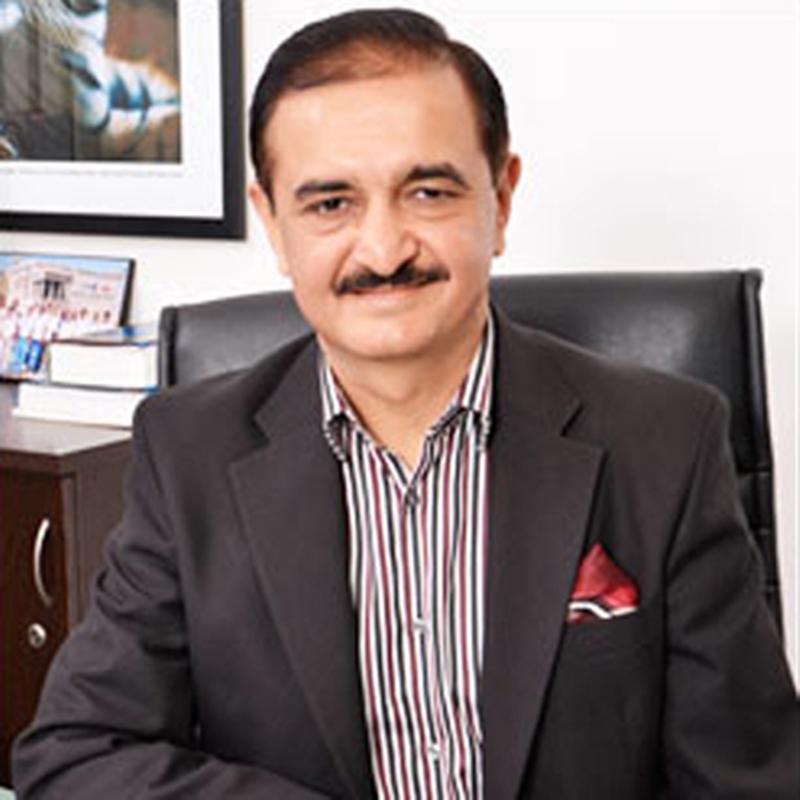
    MUMBAI: Cable distribution veteran SN Sharma has quit Reliance Jio, a subsidiary of Mukesh Ambani promoted Reliance Industries Ltd (RIL).

    Sources in RIL confirmed that Sharma has put in his papers last week.

    Sharma had joined RIL’s media-cum-telecom venture Reliance Jio in 2015  and was brought on board to lead the cable distribution business of the organisation.

    RIL, which through a subsidiary company has a licence to operate as an MSO, had also brought in former Hathway Datacom chief executive K. Jayaraman to head its distribution business and Sharma reported into him.

    As part of  Reliance Jio, Sharma and Jayaraman were entrusted to build a business plan for distribution of TV channels owned by Reliance that were managed under Network18 Media and Investments Ltd.

    With an experience of more than 20 years in electronic media and cable distribution, Sharma is credited with playing a crucial role in building thw Sameer Manchanda-promoted Den Networks and Rahejas-owned Hathway.

    RIL, which owns and controls the Network18 group that operates a clutch of TV channels, has widespread interest in media, telecom, petroleum and energy sectors.

    Through its subsidiary TV18 Broadcast Limited, the group operates news channels CNBC-TV18, CNBC Awaaz, CNBC Bajar, CNBC-TV18 Prime HD, CNN-News18, IBN7, ETV channels, IBN-Lokmat (a Marathi regional news channel in partnership with the Lokmat group), apart from the newly-launched  FYI TV18.

    TV18 also operates a joint venture with Viacom, called Viacom18, which houses a portfolio of popular entertainment channels like Colors, Colors HD, Colors Infinity, Rishtey, MTV India, MTV Indies, Comedy Central, Vh1, Nick, Sonic, Nick Jr, Teen Nick and Viacom18 Motion Pictures.

  • S.N. Sharma quits  Reliance

    S.N. Sharma quits Reliance

    MUMBAI: Cable distribution veteran SN Sharma has quit Reliance Jio, a subsidiary of Mukesh Ambani promoted Reliance Industries Ltd (RIL).

    Sources in RIL confirmed that Sharma has put in his papers last week.

    Sharma had joined RIL’s media-cum-telecom venture Reliance Jio in 2015  and was brought on board to lead the cable distribution business of the organisation.

    RIL, which through a subsidiary company has a licence to operate as an MSO, had also brought in former Hathway Datacom chief executive K. Jayaraman to head its distribution business and Sharma reported into him.

    As part of  Reliance Jio, Sharma and Jayaraman were entrusted to build a business plan for distribution of TV channels owned by Reliance that were managed under Network18 Media and Investments Ltd.

    With an experience of more than 20 years in electronic media and cable distribution, Sharma is credited with playing a crucial role in building thw Sameer Manchanda-promoted Den Networks and Rahejas-owned Hathway.

    RIL, which owns and controls the Network18 group that operates a clutch of TV channels, has widespread interest in media, telecom, petroleum and energy sectors.

    Through its subsidiary TV18 Broadcast Limited, the group operates news channels CNBC-TV18, CNBC Awaaz, CNBC Bajar, CNBC-TV18 Prime HD, CNN-News18, IBN7, ETV channels, IBN-Lokmat (a Marathi regional news channel in partnership with the Lokmat group), apart from the newly-launched  FYI TV18.

    TV18 also operates a joint venture with Viacom, called Viacom18, which houses a portfolio of popular entertainment channels like Colors, Colors HD, Colors Infinity, Rishtey, MTV India, MTV Indies, Comedy Central, Vh1, Nick, Sonic, Nick Jr, Teen Nick and Viacom18 Motion Pictures.

  • TDSAT directs MSO to pay Rs 40 lakh to ZEEL within a week, stays disconnection

    TDSAT directs MSO to pay Rs 40 lakh to ZEEL within a week, stays disconnection

    NEW DELHI: Darsh Digital Network Ltd has been directed by the Telecom Disputes Settlement and Appellate Tribunal to pay Rs 40 lakh to Zee Entertainment Enterprise Ltd within ten days.

    Staying the disconnection notice by ZEEL, the broadcaster was yesterday directed to file it’s reply on issues which includes the issue of refund of amount paid by the MSO towards the 27.5 percent hike.

    (The Tariff order relating to the hike has since been withdrawn by the Telecom Regulatory Authority of India.)

    Member B B Srivastava listed the matter to come up on 17 August and asked the MSO to pay Rs 60 lakhswithin four weeks of payment of the first instalment.

    Darsh Diigital was also directed that to continue to make payment towards monthly subscription upon issuance of invoices.

  • TDSAT directs MSO to pay Rs 40 lakh to ZEEL within a week, stays disconnection

    TDSAT directs MSO to pay Rs 40 lakh to ZEEL within a week, stays disconnection

    NEW DELHI: Darsh Digital Network Ltd has been directed by the Telecom Disputes Settlement and Appellate Tribunal to pay Rs 40 lakh to Zee Entertainment Enterprise Ltd within ten days.

    Staying the disconnection notice by ZEEL, the broadcaster was yesterday directed to file it’s reply on issues which includes the issue of refund of amount paid by the MSO towards the 27.5 percent hike.

    (The Tariff order relating to the hike has since been withdrawn by the Telecom Regulatory Authority of India.)

    Member B B Srivastava listed the matter to come up on 17 August and asked the MSO to pay Rs 60 lakhswithin four weeks of payment of the first instalment.

    Darsh Diigital was also directed that to continue to make payment towards monthly subscription upon issuance of invoices.

  • MSOs to display details of nodal officers on their websites and inform linked LCOs

    MSOs to display details of nodal officers on their websites and inform linked LCOs

    NEW DELHI: All multi system operators have been directed by the Telecom Regulatory Authority of India (TRAI) to display details of their nodal officers on their website, to ensure smoother coordination..

    In a letter, TRAI also asked the MSOs to inform their linked local cable operators for ease of business and to reduce disputes.

    The Telecommunication (Broadcasting and cable services) Interconnection (Digital Addressable Cable Television Systems) Regulations 2012 requires that no Multi System Operator shall make available signals of TV channels to any linked local cable operator without entering into a written interconnection agreement. Further it also requires that each & every transaction between the MSO & its linked LCOs must be in writing.

    The Communications and Information Technlogy Ministry saud in a press note that it had been brought to the notice of TRAI that the authorized representatives or nodal persons of MSOs are either inaccessible. Furthermore, they sometimes issue hand written transaction notes to LCOs without any specific authorization and company seal / stamp which is not in line with the regulations in this regard.

    These practices also give rise to disputes as LCOs are not sure whether the contact person is authorized by respective MSO or not.

    All MSOs have been directed to declare their nodal officers, who must be easily accessible to LCOs, physically as well as through Email/ mobile, so that they can interact with each other and resolve their issues in time bound manner.

  • MSOs to display details of nodal officers on their websites and inform linked LCOs

    MSOs to display details of nodal officers on their websites and inform linked LCOs

    NEW DELHI: All multi system operators have been directed by the Telecom Regulatory Authority of India (TRAI) to display details of their nodal officers on their website, to ensure smoother coordination..

    In a letter, TRAI also asked the MSOs to inform their linked local cable operators for ease of business and to reduce disputes.

    The Telecommunication (Broadcasting and cable services) Interconnection (Digital Addressable Cable Television Systems) Regulations 2012 requires that no Multi System Operator shall make available signals of TV channels to any linked local cable operator without entering into a written interconnection agreement. Further it also requires that each & every transaction between the MSO & its linked LCOs must be in writing.

    The Communications and Information Technlogy Ministry saud in a press note that it had been brought to the notice of TRAI that the authorized representatives or nodal persons of MSOs are either inaccessible. Furthermore, they sometimes issue hand written transaction notes to LCOs without any specific authorization and company seal / stamp which is not in line with the regulations in this regard.

    These practices also give rise to disputes as LCOs are not sure whether the contact person is authorized by respective MSO or not.

    All MSOs have been directed to declare their nodal officers, who must be easily accessible to LCOs, physically as well as through Email/ mobile, so that they can interact with each other and resolve their issues in time bound manner.

  • TDSAT directs Star India to restore signals to MSO on payment of first of two Installments

    TDSAT directs Star India to restore signals to MSO on payment of first of two Installments

    NEW DELHI: City Digital Network has been directed by the Telecom Disputes Settlement and Appellate Tribunal tp pay a sum of Rs 3.5 lakh in two installments to Star India by the end of this month.

    Member B B Srivastava said the signals to the MSO will be restored on payment of the first installment of Rs one lakh by 24 June 2016.

    In his order of 22 June 2016, he said that the second instalment installment of Rs 2.5 lakh will be cleared a week thereafter.

    He also directed the parties to meet at a mutually convenient date to resolve differences and work on a new interconnect agreement.

    Listing the matter for 18 July, he said the matter of transmission of digital signals would be taken up then.

  • TDSAT directs Star India to restore signals to MSO on payment of first of two Installments

    TDSAT directs Star India to restore signals to MSO on payment of first of two Installments

    NEW DELHI: City Digital Network has been directed by the Telecom Disputes Settlement and Appellate Tribunal tp pay a sum of Rs 3.5 lakh in two installments to Star India by the end of this month.

    Member B B Srivastava said the signals to the MSO will be restored on payment of the first installment of Rs one lakh by 24 June 2016.

    In his order of 22 June 2016, he said that the second instalment installment of Rs 2.5 lakh will be cleared a week thereafter.

    He also directed the parties to meet at a mutually convenient date to resolve differences and work on a new interconnect agreement.

    Listing the matter for 18 July, he said the matter of transmission of digital signals would be taken up then.

  • TRAI urged to ensure signals to LCOs not disrupted following withdraw its hike-linked tariffs

    TRAI urged to ensure signals to LCOs not disrupted following withdraw its hike-linked tariffs

    NEW DELHI: Following the decision of the Telecom Regulatory Authority of India to withdraw its hike-based tariff orders of 27.5 per cent, the reguator has been urged to issue orders asking multisystem operators not to disconnect the signals received by last mile networks (LCO) during this crucial period of observing the tariff and arrears adjustment period (TAAP).

    The regulator has also been urged to ask MSOs to to make any package alterations, activations or deactivations in set top boxes for the smooth adjustment of the increase / hike made payable by LCOs from 1 April 2014 till 30 June 2016.

    In a detailed letter to TAI Chairman R S Sharma, both National Cable and Telecommunication Association and Cable Operators Federation of India has said that a similar direction may be given to the Pay TV Broadcasters and they be directed to bring back the tariff as existing on 31 March 2014.

    In the pre-paid MSO business model, adequate credit should be maintained by the MSO in the system during this period of our observing TAAP, for the adjustment of the increase / hike made payable by us from 1 April 2014 till 30 June 2016.

    The two organizations have also said that in case of any discrepancy or for reconciliation of accounts by the MSO, if needed, Rendition of the “Separate Accounts “kept be made in order to ascertain the discrepancy and reconciliation of the accounts.
    The letter by NCTA President Vikki Choudhry and COFI President Roop Sharma have pointed out that the regulator had itself withdrawn its tariff-linked tariff orders in the light of the Telecom Disputes Settlement and Appellate Tribunal setting aside the two orders which had allowed for one installment of 15% from 1 April 2014 and the second hike of 12.5% allowed both at the retail and wholesale levels from 1 January 2015.

    In view of the TDSAT order and subsequent withdrawal of the orders, there is an immediate need to adjust the increased payments if made by the subscribers to the LCOs, LCOs to the MSOs and MSOs to the broadcasters.

    “This TAAP observed to adjust our rightful and legitimate arrears due, upon the MSO, should not be construed as a default in payment or non-payment of agreed / negotiated / invoiced payments due, under an interconnection agreement entered with the MSO in any manner whatsoever or otherwise. Statutory payment obligations towards applicable Entertainment Tax and Service Tax will continue to be fulfilled as is, during this period of observing TAAP by the stakeholders”, the letter said.

    The last mile LCOs will also enclose a copy of the last paid invoice / bank statement of the payments made / released to the respective MSO in order to also certify that there are no outstanding dues payable on them as on date.