Tag: MSO

  • Hearing of DAS cases in Delhi HC put off to Oct

    Hearing of DAS cases in Delhi HC put off to Oct

    NEW DELHI: The hearing of the first bunch of cases relating to the stay orders on Phase III of Digital Addressable System has been adjourned by the Delhi High Court to 5 October as the court did not assemble after the lunch break.

    The cases were listed before Justice Sanjeev Sachdeva, who is also scheduled to hear on 13 September three more cases including that of Home Systems Pvt Ltd of Mumbai and another by Digiana Pvt Ltd which have been transferred to the Court.

    The application by the Indian Broadcasting Foundation (IBF) for being impleaded in the case also did not come up for hearing. However, it is expected that this may be mentioned on 13 September.

    Some of the cases scheduled for hearing today included the Rohtak Cable Operators’ Association, Andhra Pradesh MSOs Welfare Federation, Multi System Operators’ Welfare Association, Sai Big Star Welfare Association, Sree Devi Digital Systems, Federation of Telangana MSO, DEN Manoranjan Satellite, Victory Digital, Sri Chowdeshwary Cable Network, Shyam Baba Cable Network, Panchajanya Media, Bharat Digital Cable Network, Nashik Zilla Cable Operators Association, Bhima Riddhi Digital Services and Yogesh Cable Networks.

    A total of 62 cases had been filed by multi-system operators (MSOs) in various courts for extension in the deadline of Phase lll. Of these, 12 cases had been disposed of by respective courts and three cases had been withdrawn by the petitioners.

    In the 16th Task Force meeting, the Information and Broadcasting Ministry (MIB) had for the first time admitted that the Law Ministry had observed that the order passed by the Andhra Pradesh High Court staying Phase III “appears to have all lndia applicability”.

    (The Ministry had sought this opinion in view of the Bombay High Court making a reference to the Kusum Ingots case which had said that if one high court gives an order, others can give similar orders if similar circumstances exist. indiantelevision.com had reported in January this year that the MIB had told the Punjab and Haryana high court that it had ‘decided not to press the requirement of having a STB as for now till the decision of the cases which are pending before various other high courts’).

    The meeting had been told that there were no cases in twenty states but the MIB was not in a position to issue orders in view of the advice given by the law ministry.

    Earlier, the Indian Broadcasting Foundation had withdrawn its petition after the Supreme Court said that the order of the Bombay High Court did not imply any pan-India stay.

    Cases are pending in the High Courts of Bombay, Hyderabad (with separate petitions for Telengana and Andhra Pradesh), Allahabad, Assam, Odisha, and Chhattisgarh for the entire states, apart from Tamil Nadu where prolonged legal cases have been pending since Phase I.

    In Karnataka, three individual stakeholders got stay orders in Mangalore and Mysore areas while there is no state-wide stay.
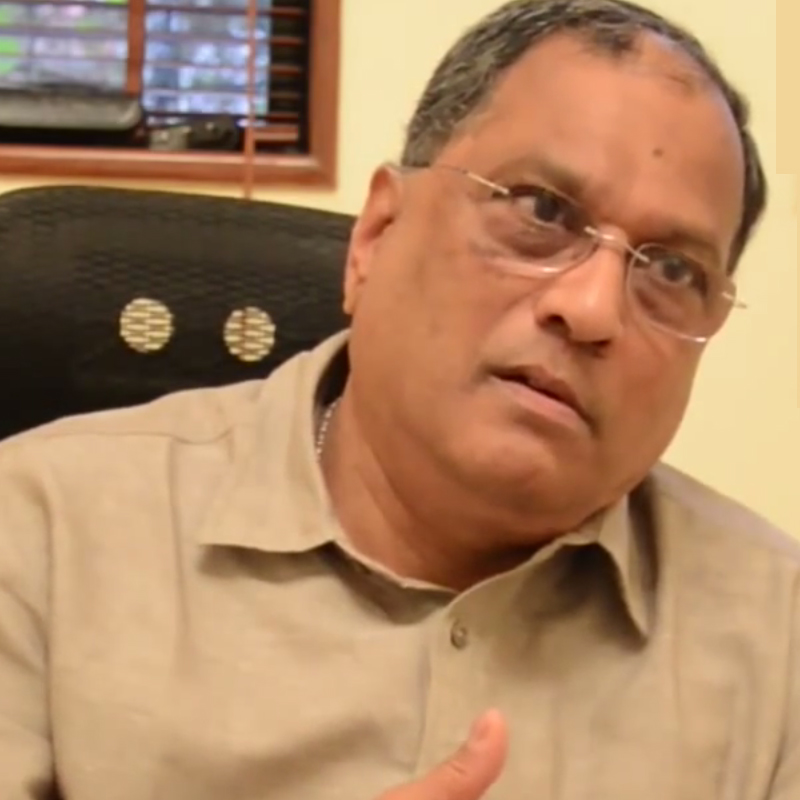
  • What’s troubling HITS man Tony D’Silva?

    What’s troubling HITS man Tony D’Silva?

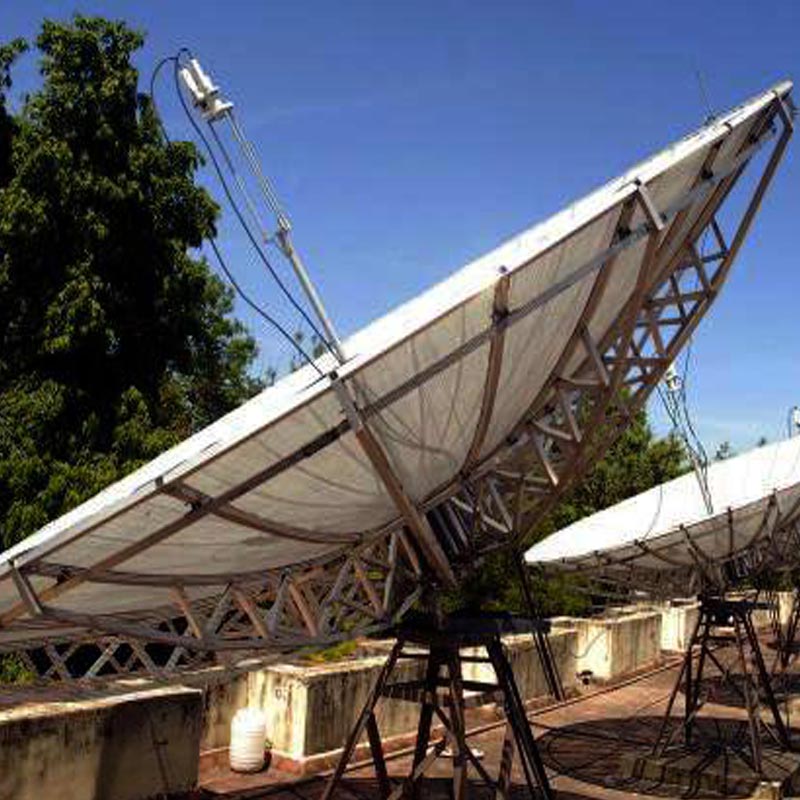
    MUMBAI: When the Hindujas announced their intentions to set up their Headend in the sky (HITS) platform to service cable dark phase III and phase IV– years ago, the project’s head – cable TV veteran Tony D’Silva – was highly excited. HITS would allow the company – Grant Investrade Ltd (GIL) – to beam out the 800 or so Indian TV channels to homes in towns and villages where setting up new or upgrading to expensive digital head ends was not viable or feasible.

    There were regulatory hurdles initially but the venture finally got off the ground last year much in advance of the DAS Phase III deadline of 31 December 2015. Tony went around marketing the project with great gusto, reaching out to cable ops in the hinterlands, got the Hindujas, the owners, to invest.

    There was interest from cable operators in almost all the areas that the product was demonstrated. The project looked very much viable as it gave cable operators a steady source of income without having to invest much in hardware and just servicing their existing subscribers.

    Then came the spate of cases in the courts of various states, and Phase III came to a grinding halt (it is now pending the decision from the Delhi high court which is expected in the next week). Analogue signals were not switched off in many parts of the country and Tony was in a bit of a fix. As are many other chieftains in MSOs like DEN and Hathway, which have reported very bloodied and battered results in Q1 2017.

    And Tony is a troubled man. Not just for that reason. He says he expects the court to rule justly in favour of digitization of the cable TV sector. However, he is not clear how many more court cases will be filed to stymie Phase III and Phase IV.

    Tony’s woes are mainly because he has been unable to strike viable content deals with some broadcasters.

    “It’s very unfair,” he states. “Some of the major broadcasters are asking the digital package price from me, but they continue to be okay with analogue pricing from cable operators in the very same phase III areas. How will I be able to offer them a digital package price to them when they are getting the same channels at analogue rates? Why will cable operators accept my superior quality digital offering? Why will an MSO and LCO agree to pay for digital services when they are also paying for analogue- that is double the price. These are questions broadcasters need to understand.”

    Another point that Tony would like to make is that broadcasters had refrained from charging any special digital rates in phase I and II areas until the cutoff dates. “We are a pure digital platform; but we are looking at serving in the now-analogue areas more,” he says.

    Tony would like to make an appeal to broadcasters and the regulator to stop charging digital package rates from him and analogue package rates from cable ops. “We are the new kid on the block and we are really aiding the spread of cable TV digitization in very difficult to reach areas of the country. I would beseech the community to give us a fair content deal at analogue rates until the analogue switch off commences. We are very open to pay digital rates once digital is switched on.”

    He goes on to point out that HITS is definitely going to help the pay TV broadcast sector get revenues in their coffers which are hitherto difficult-to-access as digitization gains in strength. “But allow us to run a feasible business first,” he says.

    Hopefully, broadcasters and the regulators will see reason in his plea.

    Meanwhile, the HITs platform is continuing with its game plan of merging GIL with IMCL – the hitherto cable TV MSO arm of the group. The company has informed the ministry of information & broadcasting about its merger intentions and has also approached the High court about the same.

    Then, over the past year or so, IMCL or Incable, has shut down or exited or bought joint ventures MSO headends where they had very little control over the operations. “We are down to about two and a half million paying cable TV customers and most of them are on a wholesale pre-paid model, so we are doing fine there,” says Tony. “The next few months are going to be very crucial. I am hopeful of things getting better,” he adds with a note of optimism.

  • What’s troubling HITS man Tony D’Silva?

    What’s troubling HITS man Tony D’Silva?

    MUMBAI: When the Hindujas announced their intentions to set up their Headend in the sky (HITS) platform to service cable dark phase III and phase IV– years ago, the project’s head – cable TV veteran Tony D’Silva – was highly excited. HITS would allow the company – Grant Investrade Ltd (GIL) – to beam out the 800 or so Indian TV channels to homes in towns and villages where setting up new or upgrading to expensive digital head ends was not viable or feasible.

    There were regulatory hurdles initially but the venture finally got off the ground last year much in advance of the DAS Phase III deadline of 31 December 2015. Tony went around marketing the project with great gusto, reaching out to cable ops in the hinterlands, got the Hindujas, the owners, to invest.

    There was interest from cable operators in almost all the areas that the product was demonstrated. The project looked very much viable as it gave cable operators a steady source of income without having to invest much in hardware and just servicing their existing subscribers.

    Then came the spate of cases in the courts of various states, and Phase III came to a grinding halt (it is now pending the decision from the Delhi high court which is expected in the next week). Analogue signals were not switched off in many parts of the country and Tony was in a bit of a fix. As are many other chieftains in MSOs like DEN and Hathway, which have reported very bloodied and battered results in Q1 2017.

    And Tony is a troubled man. Not just for that reason. He says he expects the court to rule justly in favour of digitization of the cable TV sector. However, he is not clear how many more court cases will be filed to stymie Phase III and Phase IV.

    Tony’s woes are mainly because he has been unable to strike viable content deals with some broadcasters.

    “It’s very unfair,” he states. “Some of the major broadcasters are asking the digital package price from me, but they continue to be okay with analogue pricing from cable operators in the very same phase III areas. How will I be able to offer them a digital package price to them when they are getting the same channels at analogue rates? Why will cable operators accept my superior quality digital offering? Why will an MSO and LCO agree to pay for digital services when they are also paying for analogue- that is double the price. These are questions broadcasters need to understand.”

    Another point that Tony would like to make is that broadcasters had refrained from charging any special digital rates in phase I and II areas until the cutoff dates. “We are a pure digital platform; but we are looking at serving in the now-analogue areas more,” he says.

    Tony would like to make an appeal to broadcasters and the regulator to stop charging digital package rates from him and analogue package rates from cable ops. “We are the new kid on the block and we are really aiding the spread of cable TV digitization in very difficult to reach areas of the country. I would beseech the community to give us a fair content deal at analogue rates until the analogue switch off commences. We are very open to pay digital rates once digital is switched on.”

    He goes on to point out that HITS is definitely going to help the pay TV broadcast sector get revenues in their coffers which are hitherto difficult-to-access as digitization gains in strength. “But allow us to run a feasible business first,” he says.

    Hopefully, broadcasters and the regulators will see reason in his plea.

    Meanwhile, the HITs platform is continuing with its game plan of merging GIL with IMCL – the hitherto cable TV MSO arm of the group. The company has informed the ministry of information & broadcasting about its merger intentions and has also approached the High court about the same.

    Then, over the past year or so, IMCL or Incable, has shut down or exited or bought joint ventures MSO headends where they had very little control over the operations. “We are down to about two and a half million paying cable TV customers and most of them are on a wholesale pre-paid model, so we are doing fine there,” says Tony. “The next few months are going to be very crucial. I am hopeful of things getting better,” he adds with a note of optimism.

  • MSOs urged to buy domestic set top boxes as there is no shortage

    MSOs urged to buy domestic set top boxes as there is no shortage

    NEW DELHI: Reiterating that there was no scarcity of digitally addressable set top boxes and the cut-off date of the final phase was fast approaching, Information and Broadcasting Additional Secretary Jayashree Mukherjee has urged multi system and local cable operators to place orders with domestic manufacturers.

    She has also also said that the broadcasters should develop their own AV Spots and start using these by 30 Septemberr 2016 and start a scroll on their channels to mount publicity campaign about digital addressable system.

    Chairing the 17th meeting of the DAS Task Force, Mukherjee agreed with a suggestion that an advisory may be issued by the Ministry to all MSOs to carry public awareness campaign on their local channels also.

    She said considering that the cut-off date of 31 December 2016 was fast approaching, the State Nodal Officers were requested to take help of the Assistant project Directors of Regional Units to implement complete digitization in their States and carry out regular monitoring of the progress at the State as well as District level, preferably on weekly basis.

    She said the schedule of the meeting planned at State level may be sent to the Ministry so that if required, the Ministry’s representative can also be present in some of these meetings.

    She also felt that the Ministry should regularly release Press Notes/Press Releases on the status of Cable TV Digitization.

    At the meeting held on 31 August 2016, Mukherjee, representatives of Telangana, Uttar Pradesh, Uttarakhand, Haryana, Jammu and Kashmir, Karnataka, Jharkhand, Punjab, Bihar, Rajasthan and West Bengal gave details of the progress of implementation of digitization in phase lll and measures being undertaken by them to implement the last phase of digitization in their respective States.

    Almost all of them said they were holding regular meetings to monitor the progress and are trying to resolve the issues with stakeholders in order to achieve the target of compfete digitization by the cut-off date.

    However, the Chairperson observed that more action was required to be taken by the Nodal Officers of UP, Bihar and Karnataka.

    Considering that there were around 6000 MSOs operating in the country but only about 1300 had applied for MSO registration to the Ministry, the broadcasters were requested to ask the MSOs with whom they have interconnect agreements but who have not applied for MSO registration wherher they were interested to work as MSO in the DAS notified area failing which they would not be able to act as MSO after the cut-off date.

    The representative of Sony mentioned that they have interconnect agreements with about 1500 MSOs,out of which 1101 have not applied to the Ministry for MSO registration. He confirmed that these MSOs have been advised to apply for MSO registration if they want to continue as MSO in DAS notified areas.

    The representative of Star also mentioned that they have issued similar letters to their MSOs who have not taken MSO registration from the Ministry.

    The Indian Broadcasting Foundation representative was requested to ensure that the similar action is taken by all other members of the IBF and also to supply the list with their e-mail addresses, including those from Sony, to the Ministry so that the Ministry can also write to them.

    The representative of CEAMA said they are not getting sufficient orders of STBs from the big players, though they have enough stock of STBs.

    Joint Secretary (Broadcasting) Sanjay Murthy said an issue of setting up of grievance redressal mechanism at national level for MSOs, LCOs and consumers was discussed with the representatives of broadcasters a few days back. He wanted to know the status of setting up of such a system. The representative of IBF said it was working on it and would submit a proposed plan by 10 September 2016 to the Ministry.

    While reviewing the progress of the court cases pending in Delhi High Court with regard to cut off date of phase lll digitization, the representative of IBF said it had filed an application in the Hon’ble Delhi High Court to implead them in these cases.

    Regarding the public awareness campaign, the representative of the IBF said its members have already started the public campaign using 2 AV Spots provided by the Ministry. He also said scrolls are being planned by their members. The Chairperson emphasized the need for IBF members to develop their own AV Spots as had been done on earlier occasions.

    Also read:

    DAS Phase IV: IBF asked to up campaign in addition to MIB ads

  • MSOs urged to buy domestic set top boxes as there is no shortage

    MSOs urged to buy domestic set top boxes as there is no shortage

    NEW DELHI: Reiterating that there was no scarcity of digitally addressable set top boxes and the cut-off date of the final phase was fast approaching, Information and Broadcasting Additional Secretary Jayashree Mukherjee has urged multi system and local cable operators to place orders with domestic manufacturers.

    She has also also said that the broadcasters should develop their own AV Spots and start using these by 30 Septemberr 2016 and start a scroll on their channels to mount publicity campaign about digital addressable system.

    Chairing the 17th meeting of the DAS Task Force, Mukherjee agreed with a suggestion that an advisory may be issued by the Ministry to all MSOs to carry public awareness campaign on their local channels also.

    She said considering that the cut-off date of 31 December 2016 was fast approaching, the State Nodal Officers were requested to take help of the Assistant project Directors of Regional Units to implement complete digitization in their States and carry out regular monitoring of the progress at the State as well as District level, preferably on weekly basis.

    She said the schedule of the meeting planned at State level may be sent to the Ministry so that if required, the Ministry’s representative can also be present in some of these meetings.

    She also felt that the Ministry should regularly release Press Notes/Press Releases on the status of Cable TV Digitization.

    At the meeting held on 31 August 2016, Mukherjee, representatives of Telangana, Uttar Pradesh, Uttarakhand, Haryana, Jammu and Kashmir, Karnataka, Jharkhand, Punjab, Bihar, Rajasthan and West Bengal gave details of the progress of implementation of digitization in phase lll and measures being undertaken by them to implement the last phase of digitization in their respective States.

    Almost all of them said they were holding regular meetings to monitor the progress and are trying to resolve the issues with stakeholders in order to achieve the target of compfete digitization by the cut-off date.

    However, the Chairperson observed that more action was required to be taken by the Nodal Officers of UP, Bihar and Karnataka.

    Considering that there were around 6000 MSOs operating in the country but only about 1300 had applied for MSO registration to the Ministry, the broadcasters were requested to ask the MSOs with whom they have interconnect agreements but who have not applied for MSO registration wherher they were interested to work as MSO in the DAS notified area failing which they would not be able to act as MSO after the cut-off date.

    The representative of Sony mentioned that they have interconnect agreements with about 1500 MSOs,out of which 1101 have not applied to the Ministry for MSO registration. He confirmed that these MSOs have been advised to apply for MSO registration if they want to continue as MSO in DAS notified areas.

    The representative of Star also mentioned that they have issued similar letters to their MSOs who have not taken MSO registration from the Ministry.

    The Indian Broadcasting Foundation representative was requested to ensure that the similar action is taken by all other members of the IBF and also to supply the list with their e-mail addresses, including those from Sony, to the Ministry so that the Ministry can also write to them.

    The representative of CEAMA said they are not getting sufficient orders of STBs from the big players, though they have enough stock of STBs.

    Joint Secretary (Broadcasting) Sanjay Murthy said an issue of setting up of grievance redressal mechanism at national level for MSOs, LCOs and consumers was discussed with the representatives of broadcasters a few days back. He wanted to know the status of setting up of such a system. The representative of IBF said it was working on it and would submit a proposed plan by 10 September 2016 to the Ministry.

    While reviewing the progress of the court cases pending in Delhi High Court with regard to cut off date of phase lll digitization, the representative of IBF said it had filed an application in the Hon’ble Delhi High Court to implead them in these cases.

    Regarding the public awareness campaign, the representative of the IBF said its members have already started the public campaign using 2 AV Spots provided by the Ministry. He also said scrolls are being planned by their members. The Chairperson emphasized the need for IBF members to develop their own AV Spots as had been done on earlier occasions.

    Also read:

    DAS Phase IV: IBF asked to up campaign in addition to MIB ads

  • TDSAT permits MSO defaulter to clear decretal dues by mid-November 2016

    TDSAT permits MSO defaulter to clear decretal dues by mid-November 2016

    NEW DELHI: ACME Digicom Pvt. Ltd. MD Raj Kumar Mishra, against whom the Telecom Disputes Settlement and Appellate Tribunal had on 12 July 2016 issued bailable warrant of arrest has finally appeared and given a cheque for Rs three lakh in a petition by decree holder SITI Cable Network Limited [Successor in interest of Wire & Wireless {India) Ltd].

    Mishra also told Member B B Srivastava on 22 August that he should be given time till 15 November 2016 to clear the decretal amount in full.

    Directing the matter to be listed for 21 November 2016, the Tribunal asked Mishra to file an affidavit after liquidating the entire balance and to be present before the Tribunal on the next date.

    In the hearing on 12 July 2016, Siti Cable Counsel Tejveer Bhatia had said that pursuant to the order dated 19 April 2016, one cheque for Rs two lakhs was encashed. However, two cheques dated 30 May 2016 and 30 May 2016 for Rs.4 lakhs each have not been honoured by the bank.

    He had submitted that the outstanding was still to the tune of Rs 40 lakhs.

    The Tribunal had issued the arrest warrant after noting that “his (Mishra’s) conduct all along has been in the form of resiling from the commitment made.

  • TDSAT permits MSO defaulter to clear decretal dues by mid-November 2016

    TDSAT permits MSO defaulter to clear decretal dues by mid-November 2016

    NEW DELHI: ACME Digicom Pvt. Ltd. MD Raj Kumar Mishra, against whom the Telecom Disputes Settlement and Appellate Tribunal had on 12 July 2016 issued bailable warrant of arrest has finally appeared and given a cheque for Rs three lakh in a petition by decree holder SITI Cable Network Limited [Successor in interest of Wire & Wireless {India) Ltd].

    Mishra also told Member B B Srivastava on 22 August that he should be given time till 15 November 2016 to clear the decretal amount in full.

    Directing the matter to be listed for 21 November 2016, the Tribunal asked Mishra to file an affidavit after liquidating the entire balance and to be present before the Tribunal on the next date.

    In the hearing on 12 July 2016, Siti Cable Counsel Tejveer Bhatia had said that pursuant to the order dated 19 April 2016, one cheque for Rs two lakhs was encashed. However, two cheques dated 30 May 2016 and 30 May 2016 for Rs.4 lakhs each have not been honoured by the bank.

    He had submitted that the outstanding was still to the tune of Rs 40 lakhs.

    The Tribunal had issued the arrest warrant after noting that “his (Mishra’s) conduct all along has been in the form of resiling from the commitment made.

  • Hathway Cable to debut Divine during Ganesh Utsav

    Hathway Cable to debut Divine during Ganesh Utsav

    MUMBAI: DTH service providers have been providing spiritual services to their subscribers for quite some time now. As have cable operators and MSOs who switch on coverage of local poojas during religious festivals and periods.

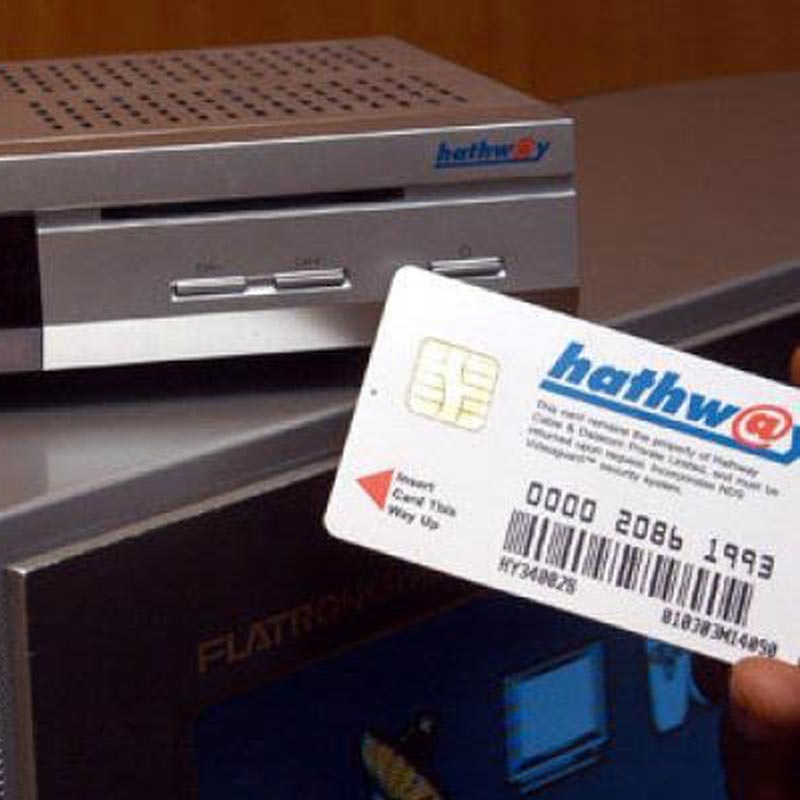
    Now here is national cable TV MSO Hathway Cable & Datacom that is all set to launch a spiritual channel come1 September during the festival of Lord Ganesh which is predominantly celebrated in Maharashtra.

    Called Divine, it is to be available on channel 47 on its cable TV network nationally.

    Divine will to operate throughout the year and will be focused on broadcasting live events around religious festivals and on licensed content. Hathway has a bank of licensed spiritual content, which will form the major programming content post-Ganpati Utsav.

    “We have no restrictions on the kind of programmes we will telecast tomorrow ourselves. We intend to bring to viewers fine spiritual content,” says Hathway Cable & Datacom general manager- marketing & communications Akhil Rampal.

    Divine is launching around Ganpati Utsav, therefore initially it will have round the clock live coverage of pandals from Mumbai and outside. Live aartis and darshans are going to be part of the programming strategy.

    “We are attempting to re-brand spiritual content and innovate on how it conventionally is delivered to viewers,” adds Rampal.

    Though not many advertisers have yet signed on to advertise on the channel, at the time of writing, the idea is to reach out to the community of regional local advertisers which are already on the cable TV network.

    Hathway will be rolling out a campaign to push the channel around its launch. It hopes many viewers will tune in to listen to the shouts of Ganpati Bappa Morya.

    It’s over to the elephant God to oblige.

  • Hathway Cable to debut Divine during Ganesh Utsav

    Hathway Cable to debut Divine during Ganesh Utsav

    MUMBAI: DTH service providers have been providing spiritual services to their subscribers for quite some time now. As have cable operators and MSOs who switch on coverage of local poojas during religious festivals and periods.

    Now here is national cable TV MSO Hathway Cable & Datacom that is all set to launch a spiritual channel come1 September during the festival of Lord Ganesh which is predominantly celebrated in Maharashtra.

    Called Divine, it is to be available on channel 47 on its cable TV network nationally.

    Divine will to operate throughout the year and will be focused on broadcasting live events around religious festivals and on licensed content. Hathway has a bank of licensed spiritual content, which will form the major programming content post-Ganpati Utsav.

    “We have no restrictions on the kind of programmes we will telecast tomorrow ourselves. We intend to bring to viewers fine spiritual content,” says Hathway Cable & Datacom general manager- marketing & communications Akhil Rampal.

    Divine is launching around Ganpati Utsav, therefore initially it will have round the clock live coverage of pandals from Mumbai and outside. Live aartis and darshans are going to be part of the programming strategy.

    “We are attempting to re-brand spiritual content and innovate on how it conventionally is delivered to viewers,” adds Rampal.

    Though not many advertisers have yet signed on to advertise on the channel, at the time of writing, the idea is to reach out to the community of regional local advertisers which are already on the cable TV network.

    Hathway will be rolling out a campaign to push the channel around its launch. It hopes many viewers will tune in to listen to the shouts of Ganpati Bappa Morya.

    It’s over to the elephant God to oblige.

  • TDSAT directs Sun will continue signals to CK Cable but asks MSO to pay Rs 19.25 lakh

    TDSAT directs Sun will continue signals to CK Cable but asks MSO to pay Rs 19.25 lakh

    NEW DELHI: Even as it said that the protection granted regarding the supply of signals shall continue, the Telecom Disputes Settlement and Appellate Tribunal directed CK Cable Network Pvt Ltd to make an on account payment of Rs 19,25,000 to Sun Distribution Services Pvt. Ltd within a period of three weeks from the date of order.

    Member B B Srivastava said that in addition the MSO will continue to pay the monthly subscription fee at the rate of Rs 3 lakh per month against invoices raised by Sun Distribution on the basis of agreement for the month of August 2016 and onwards till the final disposal of the matter.

    Listing the matter for 28 September 2016, the Tribunal in its order of 12 August 2016 said these payments would be without prejudice to the rights and contention of either parties; and shall be subject to final decision of the Tribunal.

    The Tribunal also directed that the MSO would provide a list of operators who were with him till September 2015 as well as the list of operators who have left his network till date along with the dates when they left. Similarly, the reduction in the number of subscribers with regard to each operator shall also be indicated. This shall be furnished By CK Cable to Sun Distribution within three weeks from the date of order.

    On receipt of the list, Sun Distribution will immediately communicate the date and time for joint survey to the petitioner and the same would be concluded not later than three weeks from the date of receipt of the list.

    During arguments, Sun Distribution counsel Abhishek Malhotra claimed that the MSO owed Rs 38,47,855.21 but this was contested by CK Cable counsel V Deenadayalan who has that the amount payable was only Rs 5,44,390.68.

    The miscellaneous application had been filed by Sun Distribution on the ground that it had followed the earlier order of the Tribunal and continued to supply signals, the MSO had defaulted.

    Deenadayalan drew the attention of the Tribunal to the order dated 1 June 2016 whereby it was clearly directed that since the respondent had not agreed to the reduction in the number of connections shown in the tabular chart handed over by the petitioner and there was a need for joint survey, the two sides will carry out a joint survey on a date and time indicated by the respondent to the petitioner. It was also clarified that the responsibility to initiate and conclude the joint survey will rest solely with Sun Distribution.