Tag: MSO

  • Bihar govt trebles cable TV entertainment tax to Rs 50

    Bihar govt trebles cable TV entertainment tax to Rs 50

    MUMBAI: Even as the government is working on subsuming entertainment and other incidental taxes into a goods and service tax (GST) which would be around 18 per cent, cable TV subscribers in Bihar are about to be delivered a blow to their wallets. A couple of days ago, the state’s cabinet stamped its approval on a proposal to hike entertainment tax from Rs 15 to Rs 50 per subscriber.

    That’s a 200-plus per cent escalation, and it places the state amongst the top entertainment tax-levying states in India. According to earlier statistics released by the Telecom Regulatory Authority of India (TRAI), Bihar accounts for about three per cent of the cable TV subscribers in India. That means the state has anywhere between two million and three million subs.

    According to data released by cable TV tracking firm Chrome Data, Bihar had achieved only 68 per cent digitization by February 2016. Additionally, TV viewers in the state had been opting for DTH, rather than cable with the DTH subscriber base, jumping 32 per cent in just one month, following the imposition of digitization. Estimates are that only the city of Patna has a 400,000 cable TV subscribers.

    Currently, TV viewers’ cable bills are anywhere between Rs 250 and Rs 350 per month for their cable TV connection. With the Rs 50 entertainment tax levy, cable TV MSOs are expecting these to rise to between Rs 300 and Rs 400.

    The Times of India has stated that the Bihar government is taking this step to plug the revenue gap that has sprung up following the imposition of prohibition. It says the government had a shortfall of Rs 5,000 crore. Additionally, the commercial taxes department has been set a tax collection target of Rs 22,000 crore for fiscal 2016-2017. And, of course, cable TV is an easy target.

    However, with disclosures from the fragmented cable TV trade being as they are, observers wonder whether the tax hike will yield the desired results.

  • ‘Broadcasters could consider different pricing for rural-urban subscribers’

    ‘Broadcasters could consider different pricing for rural-urban subscribers’

    When DEN Networks promoter Sameer Manchanda set up the national MSO in 2007, one of the key professionals on his team, which was led by CEO Anuj Gandhi, was the cable TV veteran S.N. Sharma. The trio quickly ramped up the company and took it to national level status.  Gandhi then moved on in 2010 to join Network18. And, Sharma who was the president (operations), was promoted as the CEO a year or so later.

    He continued with the company, expanding it nationally, and seeing it through the first two phases of digitization before departing in 2015 to get on board India’s biggest and most funded  startup  — the Mukesh Ambani-backed Reliance Jio.  A former McKinsey professional Pradeep Parameswaran was roped in to lead the company in his place.

    Sharma, meanwhile, at Jio, worked on planning and building the team for company’s foray into cable TV along with another cable TV veteran K. Jayaraman.

    Then, in July 2016, Sharma made a sudden about-turn and decided to return to DEN Networks, a move that raised the eyebrows of many but cheered many in the trade. For he is known for his relationships and his deep understanding of how cable TV should be run in the Indian context.

    Sharma was one of the key notes at indiantelevision.com’s Eleventh India Digital Operators Summit 2016 which concluded over the weekend at the Leela Hotel in south Goa. He had a one-on-one conversation with Indiantelevision.com Founder, CEO  & Editor in chief Anil Wanvari. Read on to get some insights into what is going on at DEN and with Sharma. Excerpts from the conversation:

    Why did you leave DEN in the first case, join Reliance and then why did you choose to come back?

    Having been into the cable industry for over 20 plus years, I thought, let me do something else. And, that’s why I moved to Reliance. Basically, I wanted to roll out fibre to the home (FTTH) over there. It would have been a great experience and learning (I thought). And it was, indeed. I learnt a lot in the short span of one and a half year. It was a wonderful learning that I brought in to my personality.

    But then, there was a call from my previous employer DEN, my friend Sameer.  I am one of the co-founders of DEN Network. And, I requested my employers at Reliance if I could leave. And they were kind enough to let me go back. It was more of an emotional decision than a professional one. All my learnings that I have had  at Reliance, I am
    sure, will help me learn to drive DEN in a better manner,in a positive direction in time to come.

    What are the challenges you are facing?

    The challenge as we all know is primarily monetization.  We started seeding boxes in 2010, now it is 2016. DAS came in 2012. And “hote hote” (by and by) it became 2013. Phase I and II happened quickly.

    There is a lag in monetization. Of course, we all can understand and you will appreciate that an industry which evolved since 1990, almost 30 year old industry, it  takes time for things to change. And, we took tiny, baby steps to monetize it.  But now, the time has come the boxes seeded in 2010 have almost lived their life and new technology is coming in. So my prime task is to see to it that we augment the process of monetization.

    The other challenge that I face immediately which I am working very aggressively on is to reduce the cost. We all know that Phase III digitization got into  a confused state, with boxes having got seeded, and the courts intervening.  Analogue signal has also been taken away from many of us. The MIB says 93 per cent  of digitization has happened. So the monetization process also has to start. But, in the bargain, we have already incurred some expenditure.  And unless I start recovering my revenue, the journey will be difficult.

    This time, in a short span of one and a half month, I addressed my cable TV partners, my business partners and my associates in a very transparent manner. We had a discussion – a whole day discussion wherein I shared with them my experiences with the telco. I shared with them the upcoming technology. I told them there is a change. The technology is not going to spare them.  We all used to think that last mile …last mile. But, my subscriber is not bound by last mile. My biggest threat today is the handset that I carry. The viewing habits are changing. Technology is bringing other alternatives. For the same viewer  who used to be watching their services. It is high time they realized it and accepted this change. And, they all agreed. I was surprised. It was a very open, frank and to-the-point discussion. I told them if we are willing to change, if we are willing to adopt, life will be there for us, otherwise the journey is going to be difficult. Everybody is cooperating. We hope to see a very good upside as far as collections are concerned.

    Third is making the LCOs, our partners realize the pains we are going through.  And, make them see the technology.

    And fourth is we have started conducting sessions with cable TV operator to sensitise them with the consumers. Like the regulator also said: Don’t force things on the consumer. He is in no mood. So the approach has to be friendlier than earlier. We have to change the face of our representative visiting the home of the subscriber. The
    presentation of our package has got lost.  We brought in a digital set-top box, we invested in that. But, we forgot in the process that we had not changed our face to the consumer. The cable TV operators accepted that we need to bring in a lot of ethics and discipline in that part.  You will see our representatives wearing uniforms. Uniform could be ours or the LCO’s.  It has to be in a presentable form. Today, if you are visited by a courier boy, the way he  is approaching is different.

    I am sure the cable TV operators will comply.

    Where are you reducing costs?

    Our priority early on was to penetrate the market, you increase your reach and when you penetrate certain areas, those can be reached through fibre or through links from telcos. After some time, you realize that you have spent an X amount in reaching an area and you have seeded 50 boxes. It does not make sense to you. So, you need to make a quick decision. You retract, you save money on that. Or you go to another MSO who is reaching the same area  and he has done it using a different pipe. And, he has 50,000 subscribers. So, I would tell him, why don’t we share the pipe. That process (of sharing)  has already started.  Then, we have started sharing the infrastructure also in another manner, in terms of content. If a competitor has a pipe serving more subscribers in the same area than I have less or vice-versa, I am open to sharing the pipe with the competitor. This is helping reduce costs. We have started sharing local content with cable operators. The cable operator has local content with him. So, instead of spending separately on the same content, we have started sharing that content too. Then, there are usual steps — reduction of manpower, to hire on a temporary basis, and cutting down the day-to-day expenses.

    Where are you getting your maximum margins?

    You see we have largely been a phase III player.  We have seeded 5.5 million in phase III, and 3-4 million are to go in phase IV. Of the 13 million subscribers, we have seeded 9-9.5 million. My upside will come from revenues of phase III boxes, which were yielding Rs 10-20. We have already crossed a milestone of Rs 40- 45 revenues, By December-end, it will touch  Rs 75 plus — that is a 45 per cent growth. Phase I is likely to give us 15-20 per cent.

    Who is going to get you this money – LCOs or the customer?

    You see the mood is set.  In the exercise, baby steps were taken to augment phase I revenues. It took us four years.  Phase III customer is also aware.  All studies and research show us is that the  buyingcapacity is there,  paying capacity is there too. HD is another example.  Around 70 per cent of TVs are HDTVs going into to Phase III
    areas. As it is for me to perform and deliver, I need my costs to be under control.  On the whole, we have also become very cost-conscious. We want our pie of the revenue.

    The cable sector has been bashed red and blue and cable TV bottomlines are stained with red ink? When will it turn around?

    You will see by Q3 end there should be an upside.

    You are very strong up north. Are you strengthening that or are you expanding into newer territories?

    As of now, my focus is to strengthen where we are. I have 13 million subscribers, I am happy to be limited where we are. As we start seeding boxes, it might go to 15 million as we deliver. I want to have a positive bottomline. I want a fair share of revenue. I want to move towards an era where sharing of revenues has be settled. As of now, there is always a dilemma, am I to stand by the TRAI that cable operators should get 35 per cent of revenue. The fact of the matter is that today we are receiving 35 per cent, and he is getting 65 per cent.

    I am very much focused that let’s first  set it right. It will take time and over few months. But, I see that over the next 12 months, this will move towards 50:50. And then, as we move forward, and add more values in the system, I am sure the operator will also get to earn  more through us if he wants to stay with us and be part of the journey.  If he says, he does not want to do broadband with, that’s his choice. If that arises, then we might go direct or we have leave that with him. I am very focused that instead of spreading thinly, focus where you, monetize it well. Settle a good business model. A good business case.  Business will follow.

    LCOs’ insecurity is less than earlier. Your comments.

    You can’t help it. Even MSOs. Nobody is secure. Times are changing. We have to adapt. You can’t ignore the technolgy. If I don’t change, just because my fellow LCO has not, and even I don’t, that’s a folly. Today, in  a matter of time, we started broadband. We have tested a broadband formula. We have close to 125,00 subscribers. We did this with a focused mind in Delhi and Kanpur. To test how the technology behaved, how the arithmetic works here. Now we find that, with 15-17 per cent of penetration, the project is breaking even. Now, anything added into it, is your upside.  The LCOs who are willing to work with us are very happy as they march around with us. And also, there is a learnin that the normal consumer is consuming 40 GB of internet at a speed of 10 mbps at a price of Rs 800. Broadband consumption is rising fast, 5 GB has gone to 10, and 20 GB has gone to 40 GB. Putting in everything into perspective, the cost is Rs 10 per GB.  Next year, I am sure it will be 100GB. And the speed will touch 50 MBPs. In such a scenario, if  I don’t move, somebody else will move.

    You must be happy Goldman Sachs invested but it was a discount to its earlier price, actually a deep discount What’s the way forward on the investment?

    It’s a subjective analysis . But, you should say that this proves that there is strength in the business model of DEN.

    On broadband there will be an increased investment going in. And besides broadband, we are incorporating OTT and value added services.

    So what’s the way forward on the pay TV market, with 31 December coming up?

    We are looking at it wholly. The boxes are going at a good speed. We are not really pushing. My focus is on getting Phase I, II III right. Once that business model is set in place, everything will also.  It is a matter of time, the  pull should come from the consumer, from the LCO. If he is willing to work with me. In the earlier case, in Phase I and II, we were subsiding the boxes. Today, it is a pure business case. This my product. You want to do business with me, please do.

    How can broadcasters assist the process of digitization till the tariff order comes out?

    There was a time when broadcasters used to have dual pricing policy. For rural, it was lower, and for urban, higher.  Now, that we have invested and are investing, all of a sudden  they have foregone  that policy of theirs, which they were following in analogue, and still they are following in some places even today. The moment we seed STBs in phase III, they start charging digital rates. I would urge broadcasters too relook at this.
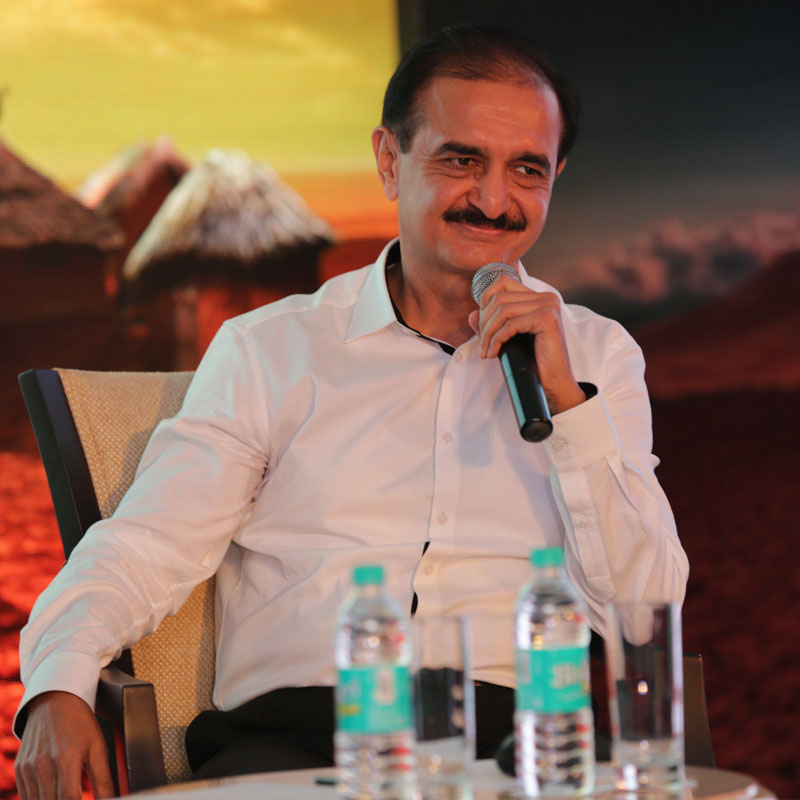
  • ‘Broadcasters could consider different pricing for rural-urban subscribers’

    ‘Broadcasters could consider different pricing for rural-urban subscribers’

    When DEN Networks promoter Sameer Manchanda set up the national MSO in 2007, one of the key professionals on his team, which was led by CEO Anuj Gandhi, was the cable TV veteran S.N. Sharma. The trio quickly ramped up the company and took it to national level status.  Gandhi then moved on in 2010 to join Network18. And, Sharma who was the president (operations), was promoted as the CEO a year or so later.

    He continued with the company, expanding it nationally, and seeing it through the first two phases of digitization before departing in 2015 to get on board India’s biggest and most funded  startup  — the Mukesh Ambani-backed Reliance Jio.  A former McKinsey professional Pradeep Parameswaran was roped in to lead the company in his place.

    Sharma, meanwhile, at Jio, worked on planning and building the team for company’s foray into cable TV along with another cable TV veteran K. Jayaraman.

    Then, in July 2016, Sharma made a sudden about-turn and decided to return to DEN Networks, a move that raised the eyebrows of many but cheered many in the trade. For he is known for his relationships and his deep understanding of how cable TV should be run in the Indian context.

    Sharma was one of the key notes at indiantelevision.com’s Eleventh India Digital Operators Summit 2016 which concluded over the weekend at the Leela Hotel in south Goa. He had a one-on-one conversation with Indiantelevision.com Founder, CEO  & Editor in chief Anil Wanvari. Read on to get some insights into what is going on at DEN and with Sharma. Excerpts from the conversation:

    Why did you leave DEN in the first case, join Reliance and then why did you choose to come back?

    Having been into the cable industry for over 20 plus years, I thought, let me do something else. And, that’s why I moved to Reliance. Basically, I wanted to roll out fibre to the home (FTTH) over there. It would have been a great experience and learning (I thought). And it was, indeed. I learnt a lot in the short span of one and a half year. It was a wonderful learning that I brought in to my personality.

    But then, there was a call from my previous employer DEN, my friend Sameer.  I am one of the co-founders of DEN Network. And, I requested my employers at Reliance if I could leave. And they were kind enough to let me go back. It was more of an emotional decision than a professional one. All my learnings that I have had  at Reliance, I am
    sure, will help me learn to drive DEN in a better manner,in a positive direction in time to come.

    What are the challenges you are facing?

    The challenge as we all know is primarily monetization.  We started seeding boxes in 2010, now it is 2016. DAS came in 2012. And “hote hote” (by and by) it became 2013. Phase I and II happened quickly.

    There is a lag in monetization. Of course, we all can understand and you will appreciate that an industry which evolved since 1990, almost 30 year old industry, it  takes time for things to change. And, we took tiny, baby steps to monetize it.  But now, the time has come the boxes seeded in 2010 have almost lived their life and new technology is coming in. So my prime task is to see to it that we augment the process of monetization.

    The other challenge that I face immediately which I am working very aggressively on is to reduce the cost. We all know that Phase III digitization got into  a confused state, with boxes having got seeded, and the courts intervening.  Analogue signal has also been taken away from many of us. The MIB says 93 per cent  of digitization has happened. So the monetization process also has to start. But, in the bargain, we have already incurred some expenditure.  And unless I start recovering my revenue, the journey will be difficult.

    This time, in a short span of one and a half month, I addressed my cable TV partners, my business partners and my associates in a very transparent manner. We had a discussion – a whole day discussion wherein I shared with them my experiences with the telco. I shared with them the upcoming technology. I told them there is a change. The technology is not going to spare them.  We all used to think that last mile …last mile. But, my subscriber is not bound by last mile. My biggest threat today is the handset that I carry. The viewing habits are changing. Technology is bringing other alternatives. For the same viewer  who used to be watching their services. It is high time they realized it and accepted this change. And, they all agreed. I was surprised. It was a very open, frank and to-the-point discussion. I told them if we are willing to change, if we are willing to adopt, life will be there for us, otherwise the journey is going to be difficult. Everybody is cooperating. We hope to see a very good upside as far as collections are concerned.

    Third is making the LCOs, our partners realize the pains we are going through.  And, make them see the technology.

    And fourth is we have started conducting sessions with cable TV operator to sensitise them with the consumers. Like the regulator also said: Don’t force things on the consumer. He is in no mood. So the approach has to be friendlier than earlier. We have to change the face of our representative visiting the home of the subscriber. The
    presentation of our package has got lost.  We brought in a digital set-top box, we invested in that. But, we forgot in the process that we had not changed our face to the consumer. The cable TV operators accepted that we need to bring in a lot of ethics and discipline in that part.  You will see our representatives wearing uniforms. Uniform could be ours or the LCO’s.  It has to be in a presentable form. Today, if you are visited by a courier boy, the way he  is approaching is different.

    I am sure the cable TV operators will comply.

    Where are you reducing costs?

    Our priority early on was to penetrate the market, you increase your reach and when you penetrate certain areas, those can be reached through fibre or through links from telcos. After some time, you realize that you have spent an X amount in reaching an area and you have seeded 50 boxes. It does not make sense to you. So, you need to make a quick decision. You retract, you save money on that. Or you go to another MSO who is reaching the same area  and he has done it using a different pipe. And, he has 50,000 subscribers. So, I would tell him, why don’t we share the pipe. That process (of sharing)  has already started.  Then, we have started sharing the infrastructure also in another manner, in terms of content. If a competitor has a pipe serving more subscribers in the same area than I have less or vice-versa, I am open to sharing the pipe with the competitor. This is helping reduce costs. We have started sharing local content with cable operators. The cable operator has local content with him. So, instead of spending separately on the same content, we have started sharing that content too. Then, there are usual steps — reduction of manpower, to hire on a temporary basis, and cutting down the day-to-day expenses.

    Where are you getting your maximum margins?

    You see we have largely been a phase III player.  We have seeded 5.5 million in phase III, and 3-4 million are to go in phase IV. Of the 13 million subscribers, we have seeded 9-9.5 million. My upside will come from revenues of phase III boxes, which were yielding Rs 10-20. We have already crossed a milestone of Rs 40- 45 revenues, By December-end, it will touch  Rs 75 plus — that is a 45 per cent growth. Phase I is likely to give us 15-20 per cent.

    Who is going to get you this money – LCOs or the customer?

    You see the mood is set.  In the exercise, baby steps were taken to augment phase I revenues. It took us four years.  Phase III customer is also aware.  All studies and research show us is that the  buyingcapacity is there,  paying capacity is there too. HD is another example.  Around 70 per cent of TVs are HDTVs going into to Phase III
    areas. As it is for me to perform and deliver, I need my costs to be under control.  On the whole, we have also become very cost-conscious. We want our pie of the revenue.

    The cable sector has been bashed red and blue and cable TV bottomlines are stained with red ink? When will it turn around?

    You will see by Q3 end there should be an upside.

    You are very strong up north. Are you strengthening that or are you expanding into newer territories?

    As of now, my focus is to strengthen where we are. I have 13 million subscribers, I am happy to be limited where we are. As we start seeding boxes, it might go to 15 million as we deliver. I want to have a positive bottomline. I want a fair share of revenue. I want to move towards an era where sharing of revenues has be settled. As of now, there is always a dilemma, am I to stand by the TRAI that cable operators should get 35 per cent of revenue. The fact of the matter is that today we are receiving 35 per cent, and he is getting 65 per cent.

    I am very much focused that let’s first  set it right. It will take time and over few months. But, I see that over the next 12 months, this will move towards 50:50. And then, as we move forward, and add more values in the system, I am sure the operator will also get to earn  more through us if he wants to stay with us and be part of the journey.  If he says, he does not want to do broadband with, that’s his choice. If that arises, then we might go direct or we have leave that with him. I am very focused that instead of spreading thinly, focus where you, monetize it well. Settle a good business model. A good business case.  Business will follow.

    LCOs’ insecurity is less than earlier. Your comments.

    You can’t help it. Even MSOs. Nobody is secure. Times are changing. We have to adapt. You can’t ignore the technolgy. If I don’t change, just because my fellow LCO has not, and even I don’t, that’s a folly. Today, in  a matter of time, we started broadband. We have tested a broadband formula. We have close to 125,00 subscribers. We did this with a focused mind in Delhi and Kanpur. To test how the technology behaved, how the arithmetic works here. Now we find that, with 15-17 per cent of penetration, the project is breaking even. Now, anything added into it, is your upside.  The LCOs who are willing to work with us are very happy as they march around with us. And also, there is a learnin that the normal consumer is consuming 40 GB of internet at a speed of 10 mbps at a price of Rs 800. Broadband consumption is rising fast, 5 GB has gone to 10, and 20 GB has gone to 40 GB. Putting in everything into perspective, the cost is Rs 10 per GB.  Next year, I am sure it will be 100GB. And the speed will touch 50 MBPs. In such a scenario, if  I don’t move, somebody else will move.

    You must be happy Goldman Sachs invested but it was a discount to its earlier price, actually a deep discount What’s the way forward on the investment?

    It’s a subjective analysis . But, you should say that this proves that there is strength in the business model of DEN.

    On broadband there will be an increased investment going in. And besides broadband, we are incorporating OTT and value added services.

    So what’s the way forward on the pay TV market, with 31 December coming up?

    We are looking at it wholly. The boxes are going at a good speed. We are not really pushing. My focus is on getting Phase I, II III right. Once that business model is set in place, everything will also.  It is a matter of time, the  pull should come from the consumer, from the LCO. If he is willing to work with me. In the earlier case, in Phase I and II, we were subsiding the boxes. Today, it is a pure business case. This my product. You want to do business with me, please do.

    How can broadcasters assist the process of digitization till the tariff order comes out?

    There was a time when broadcasters used to have dual pricing policy. For rural, it was lower, and for urban, higher.  Now, that we have invested and are investing, all of a sudden  they have foregone  that policy of theirs, which they were following in analogue, and still they are following in some places even today. The moment we seed STBs in phase III, they start charging digital rates. I would urge broadcasters too relook at this.
  • Eleventh IDOS to commence in Goa today

    Eleventh IDOS to commence in Goa today

    GOA: The 11th Indian Digital Operators Summit (IDOS 2016) is slated to be flagged off today evening – 30 September — at south Goa’s prestigious Hotel Leela. India’s largest gathering of India’s broadcast, distribution, investment, technology players and the regulators is happening at a time when the industry is grappling with issues related to the government mandated digital addressable system (DAS) which seeks to digitize India’s 100-million viewer strong cable TV ecosystem.

    While two phases of DAS have been progressing gradually, the third phase has been stalled awaiting a decision from the Delhi high court. The logjam despite, the countdown to the fourth phase deadline of 31 December 2016, has commenced.

    It’s challenging times for the whole video distribution ecosystem. OTT live streaming and VOD platforms, telco companies are all marching into what was traditionally a broadcaster, cable TV operator’s or DTH or HITS operator’s turf. And, though they are yet to come up with robust business models, some of them have deep pockets. DTH players, on the other hand, are beginning to bear the fruits of their early investments in delivering quality, transparent services across India.

    Churn rates are stable, and, in fact, the subscriber numbers for many of these players are rising.

    A large part of the smaller cable TV community — especially in phase III and phase IV – is fragmented, undercapitalised and is fearful for its future and, in some areas, is resisting digitisation. Larger MSOs have brought in some organization to the ground in phase I and phase II over the past few years and will continue doing so as the years pass by, even in the interiors. Niggling issues such as interconnection and tariff agreements, carriage fees with broadcasters continue to seek resolution.

    Free to air DTH services such as DD FreeDish serve the needs of some of the viewers in the heartlands. And HITs platforms are waiting on the sidelines and are hoping to plug the infrastructure gap for delivering video signals to the undercapitalized cable operators in the phase III and phase IV areas.

    The regulators, the Telecom Regulatory Authority of India and the ministry of information and broadcasting, are seeking to put in place a regulatory framework which would fuel DAS nationally, keeping everyone’s interests in mind.

    “It is against this backdrop that IDOS 2016 is being held,” says Indiantelevision.com founder, CEO & editor in chief Anil Wanvari.

    “Over the years it has proved to be a fertile ground for moving the needle on distribution further. We hope this year’s DAS will also help in supporting the progress.”

    Among the major speakers at IDOS are: DEN Networks CEO SN Sharma, Prasar Bharati CEO Jawahar Sircar, Hathway Cable CEO Jagdish Kumar, Times Television Network CEO M.K. Anand, Sony Pictures Networks India executive vice president and head – digital business, Uday Sodhi, Indusind Media CEO Tony D’Silva, Walt Disney Co India vice president Nikhil Gandhi, Asianet Satellite Communications president & COO G.

    Sankaranarayana, India Cast EVP Amit Arora, Ortel Communication CEO Bhibhu Rath, CastleMedia executive director Vynsley Fernandes, Reliance BIG TV business head Vivek Garg, GTPL COO Shaji Matthews, Akamai head of mobile strategy Vijay Kolli and regional vice president, media sales Sid Pisharoti, Chrome Data CEO Pankaj Krishna, and TRAI adviser Sunil Kumar Gupta.

    The conference will end on 1 October late evening.

    Among the partners who have come forward to support IDOS 2016 are:
    Walt Disney Co India (Title Partner); Discovery India (Summit Partner), Elemental and Hathway (Associate Partner), Akamai Technologies (CDN Partner), Friends MTS, Sony Pictures Network and Zee Distribution Networks (Support Partners), SES (Name Badge Partner), and IndiaCast (LanYard Partner).

  • Eleventh IDOS to commence in Goa today

    Eleventh IDOS to commence in Goa today

    GOA: The 11th Indian Digital Operators Summit (IDOS 2016) is slated to be flagged off today evening – 30 September — at south Goa’s prestigious Hotel Leela. India’s largest gathering of India’s broadcast, distribution, investment, technology players and the regulators is happening at a time when the industry is grappling with issues related to the government mandated digital addressable system (DAS) which seeks to digitize India’s 100-million viewer strong cable TV ecosystem.

    While two phases of DAS have been progressing gradually, the third phase has been stalled awaiting a decision from the Delhi high court. The logjam despite, the countdown to the fourth phase deadline of 31 December 2016, has commenced.

    It’s challenging times for the whole video distribution ecosystem. OTT live streaming and VOD platforms, telco companies are all marching into what was traditionally a broadcaster, cable TV operator’s or DTH or HITS operator’s turf. And, though they are yet to come up with robust business models, some of them have deep pockets. DTH players, on the other hand, are beginning to bear the fruits of their early investments in delivering quality, transparent services across India.

    Churn rates are stable, and, in fact, the subscriber numbers for many of these players are rising.

    A large part of the smaller cable TV community — especially in phase III and phase IV – is fragmented, undercapitalised and is fearful for its future and, in some areas, is resisting digitisation. Larger MSOs have brought in some organization to the ground in phase I and phase II over the past few years and will continue doing so as the years pass by, even in the interiors. Niggling issues such as interconnection and tariff agreements, carriage fees with broadcasters continue to seek resolution.

    Free to air DTH services such as DD FreeDish serve the needs of some of the viewers in the heartlands. And HITs platforms are waiting on the sidelines and are hoping to plug the infrastructure gap for delivering video signals to the undercapitalized cable operators in the phase III and phase IV areas.

    The regulators, the Telecom Regulatory Authority of India and the ministry of information and broadcasting, are seeking to put in place a regulatory framework which would fuel DAS nationally, keeping everyone’s interests in mind.

    “It is against this backdrop that IDOS 2016 is being held,” says Indiantelevision.com founder, CEO & editor in chief Anil Wanvari.

    “Over the years it has proved to be a fertile ground for moving the needle on distribution further. We hope this year’s DAS will also help in supporting the progress.”

    Among the major speakers at IDOS are: DEN Networks CEO SN Sharma, Prasar Bharati CEO Jawahar Sircar, Hathway Cable CEO Jagdish Kumar, Times Television Network CEO M.K. Anand, Sony Pictures Networks India executive vice president and head – digital business, Uday Sodhi, Indusind Media CEO Tony D’Silva, Walt Disney Co India vice president Nikhil Gandhi, Asianet Satellite Communications president & COO G.

    Sankaranarayana, India Cast EVP Amit Arora, Ortel Communication CEO Bhibhu Rath, CastleMedia executive director Vynsley Fernandes, Reliance BIG TV business head Vivek Garg, GTPL COO Shaji Matthews, Akamai head of mobile strategy Vijay Kolli and regional vice president, media sales Sid Pisharoti, Chrome Data CEO Pankaj Krishna, and TRAI adviser Sunil Kumar Gupta.

    The conference will end on 1 October late evening.

    Among the partners who have come forward to support IDOS 2016 are:
    Walt Disney Co India (Title Partner); Discovery India (Summit Partner), Elemental and Hathway (Associate Partner), Akamai Technologies (CDN Partner), Friends MTS, Sony Pictures Network and Zee Distribution Networks (Support Partners), SES (Name Badge Partner), and IndiaCast (LanYard Partner).

  • MIB, TRAI to examine DAS Phase III interconnect issues

    MIB, TRAI to examine DAS Phase III interconnect issues

    NEW DELHI: Multi-system operators and local cable operators were yesterday assured by senior officials of the Ministry of Information and Broadcasting (MIB) and the Telecom Regulatory Authority of India  (TRAI) that contentious issues relating to interconnect agreements of Phase III of digitisation would be resolved.

    In a meeting held under the chairmanship of MIB additional secretary Jayashree Mukherjee, the MSOs and LCOs presented problems being faced by them.

    Primarily, the issues arise in the areas switching from analogue to digital addressable system and where the MSOs and LCOs have to sign fresh interconnect agreements with broadcasters.

    In the last meeting of the DAS Task Force on 31 August 2016, it was stated that the broadcasters should request the MSOs with whom they have interconnect agreements but who have not applied for MSO registration whether they were interested to work as an MSO in DAS-notified area failing which they would not be able to act as an MSO after the cut-off date.

    MIB was told that there are around 6,000 MSOs operating in the country, but only about 1,300 had applied for the MSO registration.

    The Indian Broadcasting Foundation (IBF) representative was requested to ensure that similar action is taken by all members of the organisation and also that a list of member-boradcasters with their e-mail addresses is sent so that MIB  could also write to them.

    ALSO READ:

    What really happened at the 16th DAS Task Force meeting

    TRAI may moot MRP for bouquet TV channels; no price cap on unbundled premium products

  • MIB, TRAI to examine DAS Phase III interconnect issues

    MIB, TRAI to examine DAS Phase III interconnect issues

    NEW DELHI: Multi-system operators and local cable operators were yesterday assured by senior officials of the Ministry of Information and Broadcasting (MIB) and the Telecom Regulatory Authority of India  (TRAI) that contentious issues relating to interconnect agreements of Phase III of digitisation would be resolved.

    In a meeting held under the chairmanship of MIB additional secretary Jayashree Mukherjee, the MSOs and LCOs presented problems being faced by them.

    Primarily, the issues arise in the areas switching from analogue to digital addressable system and where the MSOs and LCOs have to sign fresh interconnect agreements with broadcasters.

    In the last meeting of the DAS Task Force on 31 August 2016, it was stated that the broadcasters should request the MSOs with whom they have interconnect agreements but who have not applied for MSO registration whether they were interested to work as an MSO in DAS-notified area failing which they would not be able to act as an MSO after the cut-off date.

    MIB was told that there are around 6,000 MSOs operating in the country, but only about 1,300 had applied for the MSO registration.

    The Indian Broadcasting Foundation (IBF) representative was requested to ensure that similar action is taken by all members of the organisation and also that a list of member-boradcasters with their e-mail addresses is sent so that MIB  could also write to them.

    ALSO READ:

    What really happened at the 16th DAS Task Force meeting

    TRAI may moot MRP for bouquet TV channels; no price cap on unbundled premium products

  • VXL and linked LCOs barred from receiving signals from any other MSO

    VXL and linked LCOs barred from receiving signals from any other MSO

    NEW DELHI: VXL Digital has been restrained by the Telecom Disputes Settlement and Appellate Tribunal from receiving signals from Indian Cable Net Company Ltd or any other MSO.

    In a petition filed by VXL against Star India, TDSAT member B B Srivastava also restrained ICNCL and other MSOs from supplying signals to the petitioner and shareholder LCOs.

    TDSAT said the alleged arrangement of migration to another MSO by continuation of the use for facility of CAS and SMS on the previous MSO “appears prima-facie unusual and not in consonance with interconnect regulations”.

    However, TDSAT, in its order of 14 September 2016, said VXL will be at liberty to move an application for vacation and I or modification of the restraint order.

    Star India counsel Saurabh Srivastava submitted that, through an affidavit, it had been clearly admitted by VXL that nine local cable operators who are shareholders in VXL are receiving signals from ICNCL, and VXL had agreed to extend the facility of CAS and SMS for ensuring uninterrupted services to the consumers.

    It was also mentioned that their shareholder LCOs would be transferring shares of VXL to ICNCL to overcome any roadblock. This arrangement had been agreed to by the petitioner company in the letter of 28 July 2016.

    Also read:  TDSAT forbids VXL Digital to receive signals from any MSO after dispute with Indiacast

  • VXL and linked LCOs barred from receiving signals from any other MSO

    VXL and linked LCOs barred from receiving signals from any other MSO

    NEW DELHI: VXL Digital has been restrained by the Telecom Disputes Settlement and Appellate Tribunal from receiving signals from Indian Cable Net Company Ltd or any other MSO.

    In a petition filed by VXL against Star India, TDSAT member B B Srivastava also restrained ICNCL and other MSOs from supplying signals to the petitioner and shareholder LCOs.

    TDSAT said the alleged arrangement of migration to another MSO by continuation of the use for facility of CAS and SMS on the previous MSO “appears prima-facie unusual and not in consonance with interconnect regulations”.

    However, TDSAT, in its order of 14 September 2016, said VXL will be at liberty to move an application for vacation and I or modification of the restraint order.

    Star India counsel Saurabh Srivastava submitted that, through an affidavit, it had been clearly admitted by VXL that nine local cable operators who are shareholders in VXL are receiving signals from ICNCL, and VXL had agreed to extend the facility of CAS and SMS for ensuring uninterrupted services to the consumers.

    It was also mentioned that their shareholder LCOs would be transferring shares of VXL to ICNCL to overcome any roadblock. This arrangement had been agreed to by the petitioner company in the letter of 28 July 2016.

    Also read:  TDSAT forbids VXL Digital to receive signals from any MSO after dispute with Indiacast

  • DEN seeks Goldman Sachs investment nod from shareholders

    DEN seeks Goldman Sachs investment nod from shareholders

    MUMBAI: Leading Indian multisystem cable TV operator (MSO) DEN Networks –promoted by Sameer Manchanda- which got its board’s nod to issue another 1.58 crore shares at a price of Rs 90 per share to existing investor Goldman Sachs is now seeking shareholder approval for the same through an extraordinary general meeting to be held on 14 October 2016.

    DEN says it will be issuing the preferential shares to Goldman Sachs affiliate firms Broad Street Investments (Singapore) Pte Ltd and MBD Bridge Street 2016 Investments Pte Ltd. The former will subscribe to 1.30 crore shares taking its holding to 4.18 crore shares. Constituting 21.6 per cent of Den Networks equity. The latter will mop up 28.24 lakh shares and a first time investor in DEN its holding will be at 1.46 per cent.

    Once completed the preferential share issue will see the promoters’ shareholding falling from 28.52 per cent to 26.19 per cent; corporate bodies from 11.53 per cent to 10.59 per cent; institutional investors from 22.20 to 20.39 per cent; private corporate bodies from 7.30 per cent to 6.71 per cent and finally the holding of foreign bodies will jump from 22.93 per cent to 29.21.

    DEN Networks has said it will use the $21 million funds to pare down its debt from Rs 852 crore in June 2016 and also expand its broadband business through its subsidiary. The company’s debt stood at Rs 895 crore in March 2016 and at Rs 930 crore in March 2015. Between 31 March 2016 and June 2016, DEN Networks raised Rs 89 crore in debt and repaid Rs 132 crore.