Tag: MSO

  • DEN readies Android-based STB for Feb launch

    DEN readies Android-based STB for Feb launch

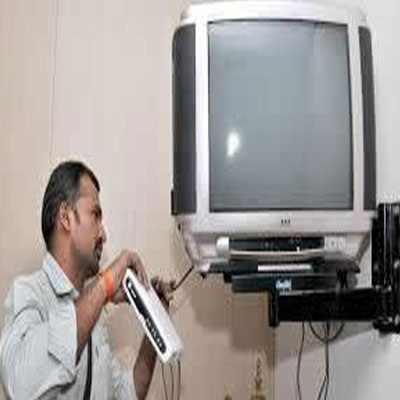
    MUMBAI: Multi-system operator (MSO) DEN is all set to revamp its old hybrid set top box (STB) into a smart STB. The new STB will support 4k HD as well as internet access. 

    A trial for the same is already in process is what DEN Networks CEO SN Sharma informed analysts. He added that the revamped STBs have been planted across the country and the response so far from the subscribers has been good. The trial will go on till February and the prices will be announced during the middle of the month itself. 

    The MSO is also in talks with two Indian broadcasting giants, Star and Zee. It also renewed deals with Sony and IndiaCast in 2017 for a span of two years.

    DEN, which has 13 million cable audience and 8.4 million active subscribers, is also planning to grow its broadband business. The company will be sharing its plan by the end of financial year 2017-18. DEN currently has a net subscriber base of 2.15 lakh with 60 per cent active subscribers. 

    Currently in only 10 select cities across 4 states of the country, MSO has plans to stretch in more 10 cities. 

    DEN Networks CFO Rajesh Kaushal predicted that the future expenditure will be more in broadband and less in cable, as most of the boxes are already lifted and the subsidy is very less on it. 

    DEN previously spent Rs.11 crore for seeding in the existing 10 cities and for expanding to more 10 cities the cost will be around Rs.10 crores.

  • Den Networks buys 51% in VBS Digital

    Den Networks buys 51% in VBS Digital

    MUMBAI: Multi-system operator Den Networks Ltd (Den) has acquired 51 per cent stake in cable televison distributor VBS Digital Distribution Network Pvt Ltd (VBS Digital) for Rs 2.64 crore in cash. According to Den’s release to the Bombay Stock Exchange, the deal will strengthen the company’s cable TV network in Uttar Pradesh.

    Den provides cable TV distribution and broadband services in 13 states, including Delhi, Uttar Pradesh, Karnataka, and Maharashtra. Incorporated in 2015, VBS Digital posted revenue of Rs 5.82 crore in the financial year ended March 31, 2017.

    Promoters and Goldman Sachs together hold about 61.28 per cent stake in Den. In June 2017, Den had sold its entire stake in TV merchandise channel Macro Commerce Pvt Ltd to focus on the core business.

    Also read:

    Higher subscription & activation lead Den’s turnaround in Q2

    DEN Networks tops as most attractive Cable TV brand: TRA Research

    Nakul Chopra is new BARC chairman

  • Ortel takes on competition with new broadband plans

    Ortel takes on competition with new broadband plans

    MUMBAI: Taking a big step towards recovery, battered cable television and broadband services company Ortel Communications Limited (Ortel) has unveiled its new unlimited data plans starting from Rs 99 per month.

    Ortel, with its operations focused in Odisha, Chhattisgarh, Andhra Pradesh, Telengana, West Bengal, and Madhya Pradesh, has been a trendsetter in offering customer-centric broadband plans in accordance to the ever-changing internet ecospace in India. With its new range of unlimited plans, the company has taken the big telecom players head-on.

    The Rs.99 plan has 500 MB data limit per day @ 2Mbps, although the customer can continue browsing even after reaching the daily limit, at post FUP speed. The New Unlimited FUP Broadband Plans also have options of 1 GB daily data limit at Rs.129 per month and a multi-month package at Rs.349 wherein subscribers can enjoy 1 GB data per day at 2 Mbps speed for 3 months. These plans would cover the needs of first time users, social networking users and the price sensitive segment.

    The ‘Below 100’ plan would also enable Ortel to increase the penetration of internet ready home passes which are already available in most of the markets where it operates. With the proliferation of smartphones and other smart internet devices, consumers can use the same devices to connect to Ortel Home Wi-Fi solutions at a cheaper price and better in house speeds. The plans directly compete with the Telecom Players who offer 3G and 4G on Mobile Devices. Customers also have the option of free installation if Multi Month Subscription is paid in advance. Broadband would become more of a utility than luxury and the plans would make right to broadband access closer to reality.

    Ortel had already withdrawn the plans below 1 Mbps in the month of April 2017. With the launch of new plans, it has now withdrawn all the plans below 2 Mbps. It has introduced Unlimited FUP plans in the speed range of 5 Mbps, 10 Mbps, 20 Mbps, 50 Mbps and 100 Mbps with monthly data limits ranging from 40 GB to 1 Terabyte at very affordable price points.  

    Commenting on the development Ortel Communications president and CEO Bibhu Prasad Rath said, “Looking at the huge data consumption that is taking place in the country today, we have decided to take full advantage of this opportunity and therefore launched Unlimited Data Plan at just Rs. 99 per month. We are already providing high data limits to our customers, but now with the aggressive pricing which is even better than most of the telecom players, we aim to provide an excellent value for money to our subscribers. The objective is to increase the overall average data consumption of customers from 18 GB to 100 GB per month at pocket friendly prices.”

    Ortel is the first MSO and ISP to offer wireless broadband service at public places for its wired broadband subscribers without any additional  WiFi  Hotspot  access  charges.  Ortel Communications is a pioneer in providing convergence communication services in the country. It has revolutionized the entertainment and broadband technology in India. It has always been the Company’s  vision  to  provide  Cable  TV  and  Data  Service  on  a  single  cable  platform  to households. The Company has invested in laying its own network with reverse path compatibility making it capable of providing Triple play services including broadband and VoIP services with enormous advantages and superiority in the network. Ortel provides connection to customers directly and has full control over its ‘last mile’ network.

    Also read:

    Multiple challenges weaken Ortel numbers in second quarter

    MSO Ortel strengthens digital payment services

    Ortel elevates Satyanaryan Jena as CFO as Manoj Kumar Patra resigns

  • Government to once again make MHA clearance compulsory for MSOs?

    Government to once again make MHA clearance compulsory for MSOs?

    MUMBAI: Are there more regulatory controls coming on the cable TV industry? If reports emerging in the media (The Asian Age) are to be believed, then they probably are. According to the newspaper, every multisystem operator (MSO) which is licensed with the ministry of information & broadcasting (MIB), will now have to also seek the ministry of home affairs’ security (MHA’s) clearance. A notification to this effect is being planned and passed by the Narendra Modi government.

     Hitherto, broadcasters and satellite service providers had to go through this procedure. MSOs could just get a licence from the post office to operate in the country, following which they had to get a digital licence from the MIB. The security clearance from the MHA requirement was discontinued a couple of years ago to speed up the  pace of cable TV digitalisation.

     The newspaper says the government was forced to take such a step for MSOs as well because the MIB had received complaints that several cable TV operators are continuing to retransmit channels which showed content that was potentially harmful to the nation’s security and was deemed as objectionable.

     The government is seeking to make it compulsory for MSOs to get annually vetted by the central intelligence and government security agencies to prevent this from occurring.

     No confirmation, from the MIB or government sources, was available at the time of writing this report.

  • STB import duty doubled to 20%

    STB import duty doubled to 20%

    NEW DELHI: In a fresh bid to boost domestic production under the Make in India project, the Indian government has increased the import duty on set-top boxes (STBs) to 20 per cent, including a host of other electronic items such as TVs sets and smartphones.

    The duty hike from 10 per cent could impact the ongoing digitisation of TV services in India. Experts and stakeholders in the country’s broadcast and cable industry are still assessing the directive, including the fact whether the move is aimed at arresting imports from China.

    A ministry of finance notification dated 14 December 2017 stated the federal government was “satisfied” that the import duty on certain goods, including electronics, should be increased as “circumstances exist” that render it “necessary to take immediate action”.

    Though officially over, India’s digitisation of TV services is still a work in progress with many big MSOs admitting in private that the last and fourth phase is still far from over.

    A cable industry source highlighted that India’s DTH operators annually import about 10 million STBs, while an additional 20 million boxes approximately would still be needed to fully cover areas falling under phase IV of digitisation.

    While many India companies, including big companies like the Hero group, are manufacturing and/or assembling STBs in India, the supply, according to industry sources, isn’t enough to meet the demand. It is also expected that whenever the next round of survey is undertaken, the total number of TV homes in India would increase much beyond the figure of 183 million (as indicated by BARC India).

    Will this increase in import duty also up the cost of STBs for consumers via a mixed business model of rentals and outright purchase of the product? It’s still not clear.

    An industry source, however, said whether this government move would give a fillip to domestic manufacturing is not yet known. Most Indian DTH operators have already started importing STBs from countries like Thailand and Vietnam to take advantage of an ASEAN (Association of Southeast Asian Nations) trade pact, which is aimed at lowering trade barriers and help economic growth in general.

    STBs can be now imported by Indian companies from ASEAN countries at very low tax rate that is in the range of 2-3 per cent, the source elaborated.

    ALSO READ:

    Budget 2016: STBs exempt from basic customs duty

    DAS: Even official figures show digitization is incomplete

    DAS phase IV pace slack; MIB to make Indian STB makers


  • TRAI orders broadcasters to remove analogue RIOs from website

    TRAI orders broadcasters to remove analogue RIOs from website

    MUMBAI: The Telecom Regulatory Authority of India (TRAI) has ordered cable TV service providers to stop displaying any reference interconnect offers(RIO) for analogue platforms.

    Broadcasters have been warned not to show any analogue RIO on its site and also refrain from making direct or indirect offers to allow their TV signals to be shown on analogue cable TV networks. MSOs have been told not to entertain any unencrypted signals on their cable TV networks.

    The TRAI has taken note of some broadcasters who have been avoiding this and continue to display analogue RIOs. “TRAI has written letters to such broadcasters individually whose analogue RIOs were found on websites,” it said.

    The necessity of the order is because 31 March 2018 is the last date for implementing Phase IV of the digital addressable cable TV systems (DAS) after which only digital encrypted signals can be carried in the country. Carrying unencrypted signals after this date will be a violation of Section 4A of the Cable Television Network (regulation) Act 1995.

  • After telecom, Jio to bite into broadband and TV

    After telecom, Jio to bite into broadband and TV

    MUMBAI: After disrupting the telecom sector, Muskesh Ambani led Reliance Jio is now heading towards the fixed broadband and television space.

    The company will launch high speed fibre to the home (FTTH) broadband in more than 30 cities early next year, to offer TV as well as internet to subscribers, it is learnt.

    As reported by Business Standard, Jio has mapped out a plan to address over 100 million TV households across these cities, including tier II and III, by ensuring dense fibre presence for last-mile connectivity to homes. In the first phase itself, at least 50 million households will be offered the service, according to sources in the know.

    Jio has already spread out over 300,000 kilometres of optic fibre (half of which is through a long-term contract with Anil Ambani’s Reliance Communications).

    In his annual speech, Reliance Industries chairman Mukesh Ambani indicated that Jio was on track to offer high-speed broadband services. The infrastructure was in place and it would be the next big monetisation opportunity for the company, he had said.

    According to the news report, Jio is expected to woo customers with premium offers such as ultra-high speed of up to 1 gigabit per second. The set-top box, as part of the package, will be a home entertainment hub – offering TV channels, high-end gaming and video on demand, among others.

    Jio is eyeing an average revenue per user of around Rs 1000 to Rs 1500 per month from subscribers (which includes internet and TV), as their usage of data goes up, a source said.

    Trials are being conducted in Mumbai and Delhi with only internet services at speeds of 100 megabits per second and 100 gigabytes of data free of cost. It is providing a special router, which connects multiple devices at a refundable deposit of Rs 4500. With a multi-service operator (MSO) licence in place, it will also offer TV services.

    Representatives of conventional TV industry cite numbers to back their claim that this is a tough game. While there are 180 million TV households in the country, subscribers fork out an average of only Rs 300- 400 a month for as many as 400 to 500 channels currently, they say.

    Competitors also say that currently, only three million subscribers cough up over Rs 1000 for high-speed broadband internet and only two million rustle up a similar amount per month for DTH or cable. So, the market that Jio is looking to address is currently niche and a small one.

    “Deploying FTTH is an expensive business and obviously Jio is making large investments. So, they have to get an adequate return on their investments. They might offer free broadband like they are doing currently and as they did earlier in the mobile space,” said a top industry executive to BS. But they will have to increase tariffs to make money and that might not translate into mass adoption.

    If the experiment succeeds, the number of households with TV and broadband, currently growing very slowly, could just explode, he said.

  • Post-DAS, tardy MSO registrations in six months, 14 new additions

    Post-DAS, tardy MSO registrations in six months, 14 new additions

    NEW DELHI: Despite the fact that it is more than six months since the country adopted digital addressable system (DAS) for cable television, the number of multi-system operators (MSOs) has risen by meagre 14 over the last two months to reach 1469 as on 30 September 2017.

    This total reflects poorly against figures given by the ministry of information and broadcasting (MIB) before the DAS Task Force that there are 6,000 MSOs in India.

    The total at the end of July was 1455. In the latest list put on its website on Tuesday, the ministry has noted the cancellation of Live Satellite in Maharashtra. Early this year, the government had said all provisional multi-system operators will be deemed as having regular licence. 

    Unlike last time, there is no separate list of MSOs who have gone to court like Godfather Communication Pvt Ltd of Punjab judgment in the case of which was expected at September-end or of the Tamil Nadu Arasu TV Corporation which has been given time till this week to prove it has switched off analogue signals. The MSO had claimed to have gone digital on 1 September.

    MIB officials had earlier this year told indiantelevision.com that it had been made clear that the provisional licence was subject to the Centre taking a final decision on the recommendation of the Telecom Regulatory Authority of India that no government owned body should be permitted in the field of running or distributing television channels.  TRAI had in 2008, 2012 and 2014 held that state governments and political parties should not be permitted to own TV channels or distribution channels.

    There is a no list of cancelled MSOs or those whose cases have been closed. The figures revealed on 3 August until July-end had given a list of 63 MSOs whose licences were cancelled or cases closed.

    Faced with just less than one month to go before total switch-off of analogue signals, the Government had on 6 March 2017 decided to treat all MSOs as permanent but with condition that the period of ten years commences from the date they got registered as provisional MSOs.

    However, if the continuation of registration of any MSO is at any time found to be or considered detrimental to the security of the State then the registration so granted is liable to be cancelled/suspended, the order placed on the MIB specified. All other terms and conditions depicted in the provisional registration letters will continue to apply.

    Earlier, on 27 January 2017, it had been decided that all registered MSOs are free to operate in any part of the country, irrespective of registration for specified DAS notified areas granted by MIB.

    However, they have to submit the details of headend, SMS, subscribers list and a self-certificate that they are carrying all the mandatory TV Channels, within six months from date of issuance of MSO registration, to MIB, failing which the MSO registration is liable to cancelled/suspended.

    Hence, all deemed regular registered MSOs also are required to submit the details to the Ministry within six months. The ministry list also contains full details of ownership and date of permission including contact details of the MSOs.

    Also read :

    Including Arasu, total number of MSOs goes up to 1376, to ensure DAS implementation

    37 new MSOs in 45 days takes total to 1421, seven among 59 cases sub-judice

    Godfather, Kal, Digi Cable & Intermedia licence cancellation stayed, 50 ‘pan-India’ MSOs’ op area changed


  • TN advisory: LCO licences may be cancelled if they bully Arasu subs into buying STBs

    TN advisory: LCO licences may be cancelled if they bully Arasu subs into buying STBs

    MUMBAI: A Tamil Nadu state advisory has informed subscribers of Arasu Cable not to pay money to the local cable operators (LCOs) for set-top boxes (STBs) which are actually being provided to all for free.

    Arasu Cable, as per a state government statement, is the only state-owned undertaking in the country to offer free STBs combined with internet services and digital cable TV, and a three-year warranty.

    Indiantelevision.com had reported that Arasu Cable (TACTV), which had early in September, claimed to have gone digital, was on 25 September asked to “confirm that you have already switched off analogue signals and are carrying only digital encrypted signals on your cable TV network.” In a letter to TACTV, sent by the ministry of information and broadcasting (MIB), the multi-system operator (MSO) was asked to reply within 10 days of issuance of the letter, “failing which your registration is likely to be suspended/revoked.”

    The state advisory, meantime, now has also cautioned subscribers of Tamil Nadu Arasu Cable TV Corporation (TACTV) against buying the STB from private dealers, the Times of India reported. If the LCOs were found to be bullying subscribers into paying for STBs, their licence could be cancelled, the state government has warned.

    The advisory has urged subscribers to report cases where LCOs had asked them to buy STBs from private dealers through the Arasu cable helpline.

    The state government had, a month ago, begun distribution of free STBs among Arasu subscribers. Chief minister Edappadi K Palaniswami had launched the service through the government-owned enterprise after inaugurating MPEG-4 upgraded control room for digital signal transmission.

    Arasu’s approximately 70 lakh subscribers would have access to around 180 channels in digital mode. There will be four packages with monthly subscription between Rs 125 and Rs 275 with option of both free and paid channels.

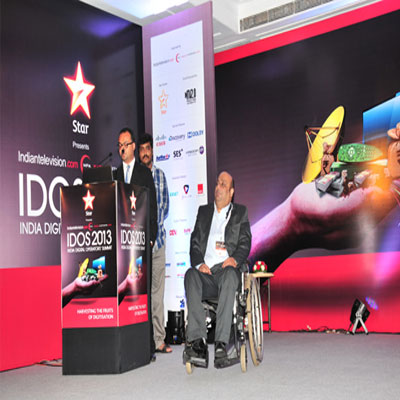
  • IDOS 2017: Cable TV sector needs more collaborative broadcasters, say MSOs

    IDOS 2017: Cable TV sector needs more collaborative broadcasters, say MSOs

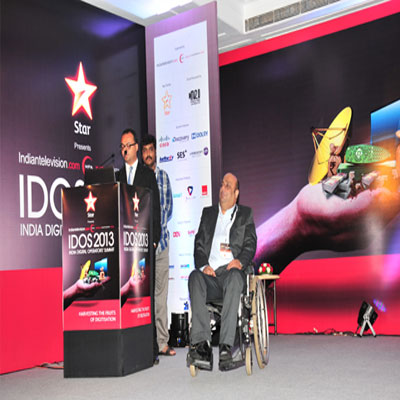
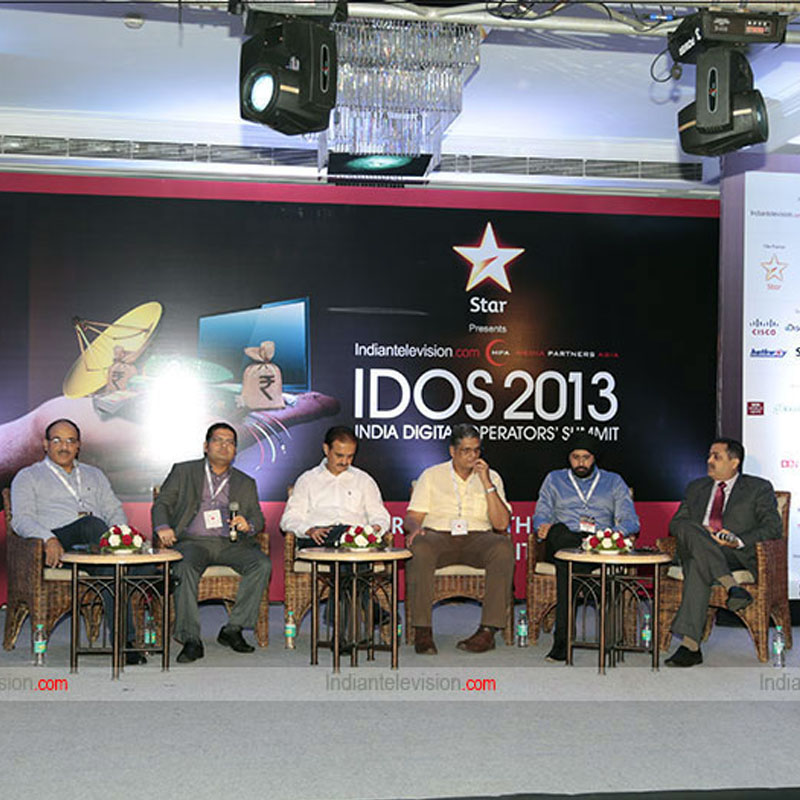
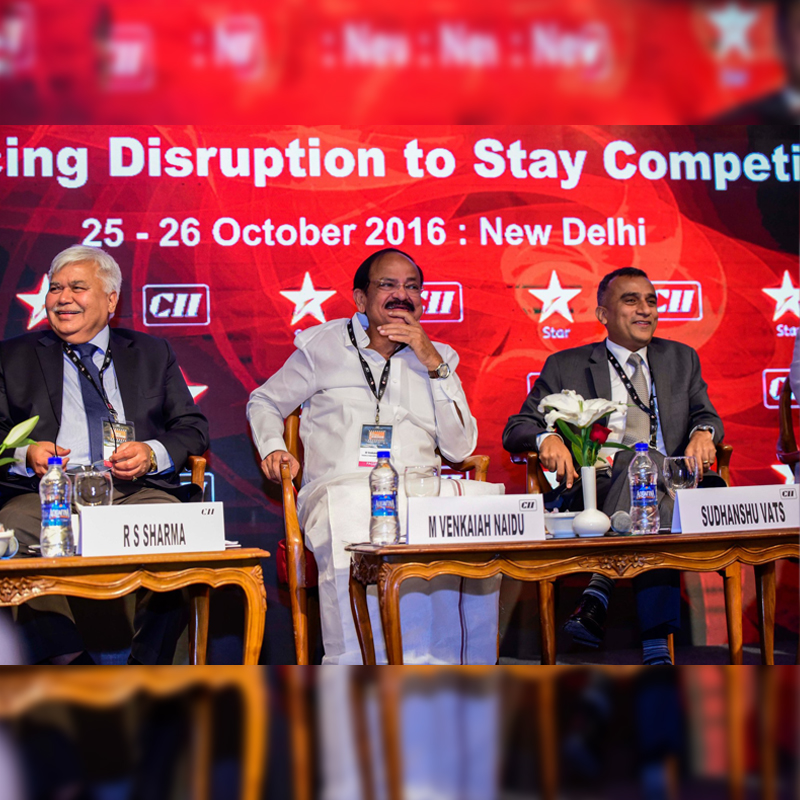
    NEW DELHI: Even as the multi-system operators and cable operator are doing their bit to aid digitisation, broadcasters need to participate more in the process which officially has been completed. They need to be more transparent and supportive of the distribution platform operator — in this case the MSO and cable TV operator — and not be like a tax collector always asking for more.

    This was the general view of both, S N Sharma of Den and Ashok Mansukhani of Incable in a discussion in ‘The Indian MSO: Redefining the raison’etre’, who also said it was only now that the MSO was beginning to monetise almost five years after digital addressable system was first launched.

    Furthermore, the broadcasters were still free to fund the business as they wanted, and, as Sharma put it, there are only two laws that control the broadcaster – the Programme and Advertising Codes and the Cable Television Networks (Regulation) Act 1995. Thus, there is virtually no regulation for the broadcaster, Sharma said.

    Both, Sharma and Mansukhani agreed that MSOs and even LCOs had put in a lot of effort to get DAS off the ground — that too in a period of four to five years, which is unprecedented globally.

    “The DAS regulation was brought in for transparency and to allow everyone to have a fair share of the huge subscription revenues that viewers were paying to watch cable TV,” said Sharma. “But, the sad part is that broadcasters are constantly asking for rate increases of 24 per cent or so without even asking if it were possible,” added Mansukhani.

    They said that it would be better if the broadcasters were to communicate rate increases to viewers and invest in promoting that, rather than expecting MSOs who are just about recovering from the hangover of the huge investments they have put into DAS as well as getting robust systems and processes in place. “Also, we are not equipped or have the creative mindset to communicate this effectively for all channels,” agreed both Sharma and Mansukhani.

    Rather than going to courts to stall the TRAI tariff order, they said, broadcasters could collaboratively work with the DPOs to take DAS on to the next level. “Neither the government nor the regulator has been able to do anything,” they said.

    “We have our own troubles, recouping our investments to bring back profitability into the cable TV sector, as well as dealing with piracy and leakages which broadcasters take time to check and stop because they have procedures to follow,” said Sharma.

    Mansukhani disagreed with Indiantelevision.com founder, CEO and editor-in-chief Anil Wanvari that the cable TV sector will not be in a position to manage complicated skinny a la carte bundles for the millions of customers that it serves. “Our backends are ready,” he said. “Our SMS, billing and KYC of the customers is in place,” he said. “We are just waiting for the (court) order to come through.”

    He opined that the industry would ultimately survive the changes, and he was also confident that the cable industry was ready to adapt to any new technology.
    To a question about monetisation, Sharma said the MSOs were not beginning to reap the monetary benefits of Phase I. Even the DTH industry was beginning to break even only now, more than a decade after it was launched.
    Mansukhani said he was happy that the Hinduja’s headend in the sky (HITS) NXTDigital was reaching 1.5 million consumers. But, the need was to break even as early as possible and “giving a dividend to my shareholders.”

    But, he stressed the need to keep the dialogue open with the LCOs who are the ones dealing with the consumer. Consumer connect has to continue. He regretted that the level playing field that he had hoped to get from the government has never came.

    Both Mansukhani and Sharma agreed that, though the government had not made a difference between the urban and rural viewers, this was necessary if there has to be penetration in rural areas. Otherwise, they would go to Doordarshan’s FreeDish.

    Sharma said his company was soon launching a device that would not be internet-based and could be used for all gadgets including mobiles, TV, tabs, and so on.

    Mansukhani said that it was clear that the MSO will have to graduate from being a TV MSO to a multi-screen MSO.