Tag: MSMEs

  • MSMEs play a pivotal role, contributing around 30% to the country’s GDP: Sandeep Juneja

    MSMEs play a pivotal role, contributing around 30% to the country’s GDP: Sandeep Juneja

    Mumbai: In recent years, there has been a growing global emphasis on sustainability and reducing carbon footprints. Businesses across all sectors are facing pressure from consumers, governments, and environmental organisations to adopt greener practices. DHL Express recognises its role in this shift and has committed to mitigating its environmental impact through the Go Green initiative.

    Indiantelevision caught up with DHL Express India VP – Sales and Marketing, Sandeep Juneja, who talked about the strategy behind launching Go Green and Go Trade initiatives in line with the evolving needs and preferences of cross-border customers and much more.

    Edited excerpts

    Could you elaborate on the objectives and key components of the Go Trade initiative?

    In recent years, micro, small, and medium enterprises (MSMEs) have emerged as significant contributors to the global economy. In India, MSMEs play a pivotal role, contributing around 30 per cent to the country’s GDP, 48 per cent to exports, and employing over 110 million people. However, despite the opportunities presented by e-commerce, many MSMEs face challenges when it comes to reliably shipping their products to customers worldwide, particularly for those in developing countries. International shipping complexities, such as customs procedures, can be overwhelming, and inefficient import and export processes often hinder their growth. This is where our GoTrade program plays a crucial role.

    GoTrade is an initiative to foster international trade and promote sustainable and inclusive economic growth by empowering MSMEs to engage in cross-border commerce. Leveraging our expertise in logistics, customs, and trade, the program seeks to educate MSMEs on the strategic advantages of global trade and equip them with the necessary tools to access international markets. As a global trade facilitator with a presence in over 220 markets and territories, our objective with GoTrade is to integrate MSMEs into the larger narrative of globalisation. Through this, we have been able to train over 6,400 MSMEs globally (since launch of GoTrade in 2020).

    To achieve our objective, we collaborate with governments and international organizations to streamline border processes and enhance cross-border trade for MSMEs in developing countries. For instance, we partner with stakeholders like the German Federal Ministry for Economic Cooperation and Development to improve e-commerce platforms in Africa and promote digital customs and trade processes. Through ongoing projects with the governments of Rwanda and Germany, we raise awareness about e-commerce and train Rwandan SMEs to establish online businesses and shipping products internationally. In cooperation with the Global Business School Network, we empower SMEs through a fellowship program that teaches the value of cross-border trade and the skills needed to navigate the global marketplace.

    In India, we have signed an MoU with the Directorate General of Foreign Trade (DGFT), initiating a collaboration to facilitate capacity-building sessions, training, and workshops across 76 districts in three phases. This collaboration aims to equip Indian MSMEs with the necessary tools and knowledge to thrive in the international e-commerce market.

    Additionally, GoTrade actively supports the implementation of the Trade Facilitation Agreement (TFA) by collaborating with WTO Member Countries, particularly those requiring external support. This involves establishing national trade facilitation committees that include key stakeholders from the public sector, such as customs and trade ministries. Through these committees, we closely work with governments to develop policies and practices that drive sustainable economic growth, ensuring seamless integration of TFA reforms into national trade frameworks.

    The GoTrade program aims to empower MSMEs to participate in international trade, supporting their growth and contributing to sustainable economic development. By collaborating with governments and organizations, streamlining border processes, and leveraging our expertise, we help MSMEs overcome barriers and connect with the global market.

    How does this program specifically benefit Indian SMEs, and what feedback have you received from participants?

    India is a developing economy with huge potential for MSME backed economic growth. At present, there are a total of 633.9 lakh registered MSMEs in India providing 7.56 lakh employment opportunities. Indian SMEs can gain a lot from the GoTrade program as it allows them to grow their presence and tap into international markets.

    Through GoTrade, DHL recently partnered with the Directorate General of Foreign Trade (DGFT) of the Ministry of Commerce and Industry, Government of India, to empower MSMEs to gain a strong foothold in the international market. This collaboration leverages GoTrade’s expertise alongside the Indian government’s focus on identifying and nurturing export potential across various districts.

    Moreover, these strategic partnerships have facilitated outreach events, onboarded new exporters, and empowered MSME producers to venture into cross-border e-commerce sales, furthering India’s ‘District as Export Hub’ initiative. Outreach events also include the recently concluded Bengaluru export summit, the Ahmedabad e-commerce export summit and even the Hyderabad e-commerce export summit. These events follow a single rule of thumb – “help me, help you”. Participating in these events, we can reach exporters and entrepreneurs from the deep hinterlands of the country along with those from the tier 1 cities.

    Apart from the MoU with the DGFT, we also extend a helping hand to MSMEs through other associations such as the Gem and Jewellery Export Promotion Council (GJEPC), Engineering Export Promotion Council of India (EEPC India) etc.

    We are proud of the work we have been doing to promote India and its MSMEs to the world, helping these enterprises become globally recognised brands. However, our partners too love doing business with us. The recently launched ‘Logistically Speaking’ series records our MSME customers’ journeys from when they began as a micro-enterprise, their growth within the Indian market, their goals to take their businesses cross-border and their relationship with DHL. The feedback has been phenomenal. From customers understanding the importance of having a good logistics partner who will represent their brand to the end customer, to customers who have been able to significantly grow their business cross-border through our expertise and product portfolio; we are proud to be their provider of choice, helping them scale their businesses to new levels and bring India to the world.

    How do you decide which sports partnerships or sponsorships to pursue? Can you discuss a particular sports marketing campaign that significantly strengthened DHL Express’ brand connect?

    When making decisions about sports partnerships or sponsorships, we prioritize the visibility that our brand will receive. It is essential to ensure that our target audience sees and recognizes our brand, and sports or event marketing is instrumental in achieving this goal. Additionally, I also consider the emotional connection between the sport and its fans. For instance, cricket holds immense cultural significance in India and is celebrated as a national passion. The Indian Premier League (IPL) is revered as one of the biggest tournaments in the country and is possibly celebrated on par with some of our biggest festivals. Given this context, our partnership with the Mumbai Indians is an obvious choice, as it allows us to tap into the deep emotional bond that fans have with the team and the sport. Moreover, the collaboration allows customers to connect the sponsorship with our values. By associating with sports that embody qualities like speed, passion, team spirit, and a can-do attitude, customers develop trust in the brand and recognize our commitment to excellence.

    Globally, our partnerships with Formula 1, Formula E, the HSBC World Rugby Sevens series, ESL, MotoGP, and Manchester United or even being Coldplay’s official logistics provider, give us significant exposure as well as relaying our brand capabilities. For example, as an express logistics player, we could showcase DHL’s capacity and dedication to sustainability through the partnership with Formula E, where we transported 415 tons of freight per race.

    This goes beyond just increased brand awareness. It allows us to connect with fans on a deeper level. We position ourselves as the “team behind the team,” the silent force that facilitates success – not just on the field, but also in the business world through our efficient logistics solutions.

    How do you plan to integrate digital and traditional marketing efforts to reach your target audience?

    It is important to recognize that a well-rounded marketing strategy requires a balanced mix of traditional and digital marketing methods. Therefore, in each project, we strategize how to fuse these two forms of marketing to maximize our reach. A great example is our partnership with the Mumbai Indians cricket team.

    This collaboration has allowed us to leverage traditional marketing channels through sports sponsorship, visible branding on player jerseys, billboards, and press releases. These traditional mediums offer widespread and tangible visibility for our brand.

    In parallel, we executed an engaging digital marketing campaign. This included creating entertaining social media content such as player interviews and interactive games, which presented a more personable and entertaining aspect of our collaboration. This online campaign not only entertained fans but also provided them, along with our customers and target audience, with a closer look at their favourite cricket players.

    By combining these traditional and digital marketing efforts, we were able to create a comprehensive marketing strategy that broadened our visibility while engaging our audience on multiple levels. We strive for this synergy between traditional and digital mediums in each of our marketing projects.

    What are the main challenges Indian SMEs face when entering the global marketplace, and how do you address these challenges?

    Globally, MSMEs encounter substantial hurdles when navigating the intricacies of international trade. These challenges can range from complex customs procedures, limited knowledge about export and international trade rules, to inadequate staffing and financial resources, all of which can restrict their entry into worldwide markets. This is a common scenario for Indian MSMEs trying to expand their business globally as well.

    Acknowledging these obstacles, DHL Express has designed an extensive array of digital solutions. These tools facilitate MSMEs and startups to easily set up an account at any time and from any location, kickstarting their global sales. The solutions help from the planning stage to after-sales, enabling MSMEs to simplify cross-border trade operations, decrease costs, and boost operational efficacy, ultimately fostering growth and competitiveness on a global scale.

    A tool like My Global Trade Services (myGTS) is particularly beneficial to sellers in their business strategy development phase. As a free, online, self-service pre-shipment planner, companies can identify the correct Harmonized System (HS) codes to categorize products for shipping. It also offers preliminary data on existing free trade agreements between the source and target countries. This information gives sellers a transparent understanding of the associated costs, enabling effective product pricing. When the business is prepared to make the leap, they can open a DHL account from anywhere and at any time. The setup is also accessible to startups and individual shippers lacking a credit history.

    DHL’s modular logistics platforms, driven by API, connect businesses, carriers, shippers, and customers in a streamlined and integrated manner. This provides efficient, cost-effective options for tracking and billing orders.

    DHL Express Commerce, integrating DHL Express shipping services with numerous e-commerce platforms, aids businesses in automating shipment creation and managing the fulfillment process. This feature is particularly useful for sellers needing to efficiently ship multiple orders.

    Visibility of the shipment journey is beneficial for companies as a proactive measure to minimize delays. Track & Trace offers accurate shipment tracking across the DHL Express network. Additionally, On Demand Delivery allows the shipper and recipient to customize their delivery preferences, reducing the likelihood of undelivered shipments and enhancing the customer experience.

    With DHL Pass, customers can access DHL online services using a single login. The provision of multi-factor authentication offers customers a seamless and secure digital experience. This feature is progressively being implemented worldwide.

    What are some of the biggest trends you foresee in the logistics industry over the next five years?

    The logistics industry is on the cusp of significant transformation over the next five years, driven by emerging trends that emphasize sustainability, globalisation, e-commerce, technological advancements, and supply chain diversification.

    1   Globalisation: Globalisation is here to stay, and logistics remains a key enabler. As reported in the DHL Global Connectedness Report 2024, global connectedness reached a record high in 2022 and remained close to that level in 2023. The resilience and growth of international flows of trade, capital, information, and people in the face of recent crises strongly rebuts the notion that globalisation has gone into reverse.

    2   Sustainable Logistics: Environmental sustainability is at the top of everyone’s agenda. Some of the key topics are decarbonization, alternative energy solutions, circularity, and environmental stewardship. At DHL Express, a key priority is leveraging Sustainable Aviation Fuels (SAF) to inset Scope three emissions. . Attention and investments towards e-cargo planes may also grow.

    3   Technology: To meet escalating consumer demand, companies must embrace automation and efficiency technologies, focusing on indoor mobile and stationary robots. These innovations support ground staff, revolutionizing logistics through collaborative robots. Imagining logistics without automation seems implausible. Furthermore, integrating drone deliveries addresses last-mile inefficiencies, mitigates traffic bottlenecks, reduces emissions, and satisfies the growing consumer demand for on-demand, instant delivery.

    4   E-commerce: E-commerce is a huge driver of parcel volumes and new last-mile services that better serve customer demands. E-commerce represents one of the chief opportunities for logistics companies.

    5   Supply chain diversification: Diversification will significantly impact globalized supply chain networks in the next five to ten years. As the Global Connectedness Report stated, globalization is far from dead. The prospects for future trade growth are surprisingly upbeat, despite the recent shockwaves caused by a global pandemic, geopolitical crises, natural disasters, and patterns of protectionism. These events have put pressure on the business world to reimagine supply chains – to take a new path of resilience rather than receding from the global stage. The answer: supply chain diversification. Supply chain diversification means developing flexibility and redundancy to minimize risk and increase agility. Working with multiple suppliers is one way to achieve it. Another way is to expand and reimagine manufacturing and distribution networks. Yet another is using redundant and multimodal logistics solutions.

  • Protium’s #VocalForLocal Diwali campaign highlights small businesses

    Protium’s #VocalForLocal Diwali campaign highlights small businesses

    Mumbai: As Diwali, the festival of lights, approached, Protium reaffirmed its commitment to the #VocalForLocal campaign, carrying forward the spirit that has ignited positive change over the past years. The campaign’s essence revolved around the idea of encouraging individuals to embrace and support local businesses, with a special focus on micro, small, and medium enterprises (MSMEs), the backbone of our nation’s economy.

    Launched on 8 November, Protium’s Diwali campaign seeked to rekindle the spirit of supporting local businesses, a concept that has gained momentum in recent years. The campaign kickstarted with a heartwarming video featuring a young girl making a conscious choice to shop at a local shop named “Diwali Chirags” instead of visiting malls or opting for big retail chains. This action not only echoed the campaign’s message from the previous year but also served to underscore the powerful impact of individual choices on the livelihoods of local vendors. It aimed to inspire individuals to prioritize local businesses, fostering a deeper connection to the community, especially during festive seasons.

    Protium, an advocate for MSMEs, is guided by a strong moral compass to support small businesses, which often grapple with the challenges posed by intense competition and the allure of more expensive alternatives. The core objective of the #VocalForLocal campaign was to empower and boost these enterprises by driving business in their direction. Protium’s Diwali campaign culminated in a fun celebration in which employees from across the organisation gathered to revel in the festival of lights, fostering a sense of community and support for small businesses. The highlight of the festivities was a vibrant Diwali Mela organized by the employees which echoed the campaign theme and showcased a diverse array of products and crafts, emphasizing the richness and uniqueness of offerings by local enterprises and artisans. This resounding success of the campaign underscored Protium’s commitment to the #VocalForLocal principles, emphasizing that collective efforts truly empower small businesses and fortify our local economy.

    The Diwali campaign symbolised Protium’s commitment to nurturing local businesses, fostering community support, and igniting a sense of responsibility towards sustaining our economy at the grassroots level. In line with this commitment, Protium has chosen to lead by example. For their in-house decorations, they consciously opted to shop from local establishments. In doing so, Protium embraces the philosophy of “being the change they wish to see in the world.” Protium believes that every small step contributes to the larger movement of supporting local enterprises and fostering a resilient, interconnected community.

    This Diwali, Protium encouraged everyone to join the #VocalForLocal movement yet again and take a step towards supporting local businesses, not only during the festive season but as an enduring commitment. The brand believes that together, we can illuminate the path for small businesses to thrive and make our nation’s economy even stronger.

  • WhatsApp India supports small businesses to go digital; unveils #SMBSaathi Utsav

    WhatsApp India supports small businesses to go digital; unveils #SMBSaathi Utsav

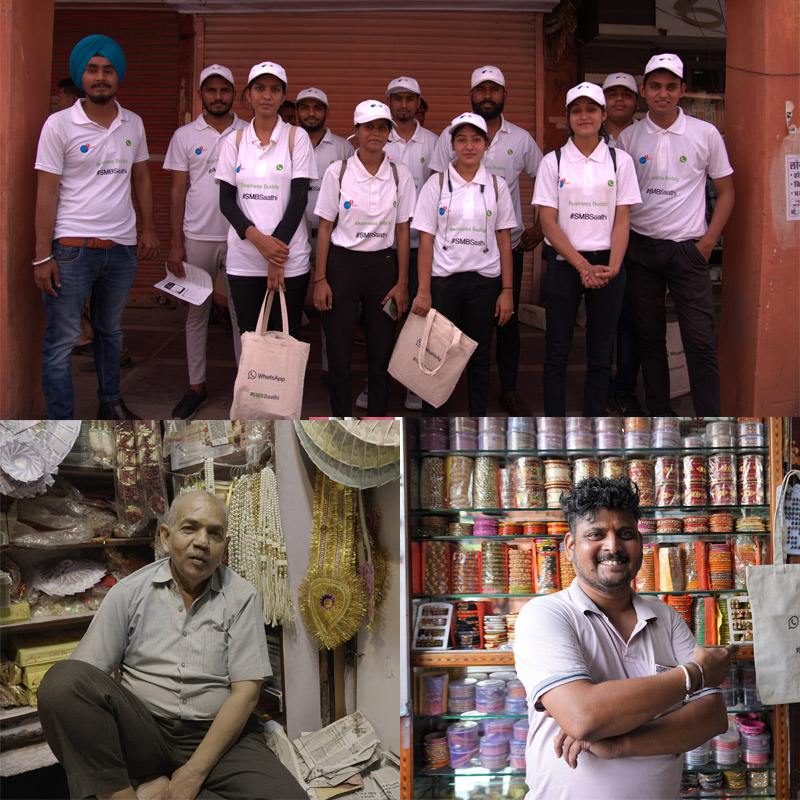
    Mumbai: WhatsApp India on Tuesday unveiled #SMBSaathi Utsav, a programme aimed at supporting small businesses in adopting digital tools like the WhatsApp Business App to conduct their operations. The goal of this programme, which was launched in partnership with Josh Talks, is to educate and assist small businesses in realising their full potential through WhatsApp.

    #SMBSaathi Utsav has kicked off with a pilot in Jaipur’s Johri Bazaar and Bapu Bazaar where 500+ small businesses are being trained on various aspects of running their business online. 

    India is home to approximately 63 million MSMEs (micro, small and medium enterprises) accounting for 30 per cent of the country’s GDP (gross domestic product) and employing over 110 million people at present. During the pandemic, these businesses were severely affected witnessing a 20-50 per cent decline in their overall earnings. One of the major reasons behind this fall was the lack of market access. To help these businesses revive from this downturn, WhatsApp launched the #SMBSaathi initiative earlier this year. The #SMBSaathi Utsav is the second phase of the #SMBSaathi campaign. 

    The initiative showcased inspiring stories of business owners across India who pivoted to digital ways of doing business during the pandemic. For many of these businesses, WhatsApp was their first digital gateway and an easier & more effective alternative to building and maintaining a website. 

    Businesses across sectors such as traditional arts and handicrafts, jewellery, fashion and apparel, food and beverage outlets and several others are being trained on using the various features of the WhatsApp Business App and are being guided on how they can market their product to the right audiences.

    WhatsApp India head Abhijit Bose said, “We are excited to launch the #SMBSaathi and #SMBSaathi Utsav, programmes that are dedicated to India’s small business community. Small businesses are the backbone of our economy and technology has the potential to further boost their business. During the pandemic, we saw several small business owners thriving by using simple platforms such as WhatsApp Business App to stay connected with their customers. A small beauty salon in suburban Mumbai used WhatsApp Business App to keep her regular customers engaged through the lockdown, a dhaba owner in Gurgaon, is directly connecting with his customers using WhatsApp Business App thus driving an overall efficiency in his operations and reaching newer markets. Examples such as these are a testament to the fact that India’s small business owners have the ambition, passion and creativity to leverage simple and reliable technologies. We are committed to finding new ways of increasing awareness about simple digital tools for businesses to support and celebrate the spirit of entrepreneurship and innovation in India.”

    Jaipur’s Rupam Jewellers owner Arvind Sharma said, “I always thought that taking my business online would be a difficult and tedious process. As small business owners, we have earlier focused only on the traditional ways of doing business. However, the pandemic taught us that it is important to innovate and find new ways of running our business on digital platforms as that is where the audience is today. WhatsApp plays a very important role in our everyday communication with our regular customers and now with my business digitally available on the WhatsApp Business App, it will become a lot easier to connect with newer customers and service them quickly.”

  • Kiranas, MSMEs hop onto e-commerce with Flipkart Wholesale app in 2020

    Kiranas, MSMEs hop onto e-commerce with Flipkart Wholesale app in 2020

    NEW DELHI: Over a million small retailers in the country and hundreds of MSMEs continued to repose their faith on online platforms and digitisation as the entire retail ecosystem opts for e-commerce as a mode of doing business during the challenging times of the pandemic. Flipkart Group’s B2B businesses — Flipkart Wholesale and Best Price cash-and-carry stores — have witnessed an increased uptake of e-commerce in 2020.

    Flipkart Wholesale, the digital B2B marketplace of India’s homegrown Flipkart Group which was launched in September, and 29 Best Price modern wholesale stores enabled growth and prosperity for small kiranas by offering a wide range of selections at great prices.

    Flipkart Wholesale and Walmart India SVP & head Adarsh Menon said, “As India’s leading omni-channel B2B marketplace, we strive towards making e-commerce inclusive for every small kirana and drive growth for every MSME in the country. As the entire retail ecosystem was grappling with unprecedented challenges posed by the pandemic, suppliers and buyers came together seamlessly to unlock the potential of technology and e-commerce. At Best Price, during the lockdown, we encouraged members to place orders on our e-commerce platform and have products delivered to them. We also launched a revamped Best Price app and website and saw order volumes surge through our e-commerce channels. Our members adapted very quickly to ordering online and we believe this trend will continue going forward. Flipkart Wholesale, launched in September, has also seen tremendous success from retailers who can now order fashion products just at the touch of a button. We have consistently worked towards creating an ecosystem that serves kiranas’ growing needs and helping Indian MSMEs access the pan-India market more effectively and we will step up our efforts in the coming year as well.”

    Future is Digital 

    Flipkart Wholesale app which currently offers fashion products — clothing, footwear and accessories — to retailers across 23 cities has also just launched the grocery category in NCR on its platform.

    Fashion retailers, who were not able to travel to fashion hubs for sourcing products in the aftermath of Covid2019, came on board Flipkart Wholesale which is a one-stop destination for a wide selection of men’s wear, women’s wear, kidswear and footwear from hundreds of suppliers across all the fashion mandis of India such as Jaipur, Kolkata, Mumbai, Kanpur, Delhi, Surat, Agra, Tirupur, among others.

    Flipkart Wholesale has already recorded 50% month-on-month growth in fashion category suppliers and enabled 2.5 lakh listings on its platform since its launch, delivering a major boost to MSMEs in the country and helping realise the Atmanirbhar Bharat dream.

    Bharat Retailers opt for E-commerce 

    Within just a few months of its launch, Flipkart Wholesale app has become a runaway success with 90% month-on-month growth in transactions on its platform. Encouraging trends have emerged from retailers in small towns who have taken onto e-commerce as a preferred mode to do business at ease. Infact, one in every five customers on Flipkart Wholesale is from tier 2 or tier 3 cities.

    Through the year, Best Price cash-and-carry business worked closely with its supplier partners on transportation and logistics and significantly ramped up e-commerce and delivery capabilities to ensure members could order and receive products conveniently amidst the pandemic. As a result, its e-commerce channels saw a significant uptick.

    E-commerce adoption by Best Price members grew over 10X across 29 stores, with smaller towns such as Meerut, Kota, Guntur, Rajahmundry, Aurangabad, Karimnagar, Amravati and Vijayawada accounting for a large part of the e-commerce traction at Best Price, which signals a surge in Bharat transacting online.

    Kirana is King 

    Flipkart Wholesale app saw 75% month-on-month growth in customer base since launch in September. This growth is the affirmation of the trust that kiranas place with e-commerce and the potential it has to enable convenience, value for products, reach and selections, thus helping small businesses thrive.

    Despite the challenging business environment posed by the pandemic, Best Price launched a new store in October in Tirupati to cater to kiranas and small businesses. The newly launched store in Tirupati is Best Price’s 29 store in the country where it is present across nine states, and serves kiranas, offices and institutions, and hotels, restaurants and caterers (HORECA) through a membership model. The launch of the new Tirupati store further ensured that the retail ecosystem has a safe and robust omnichannel option for retailers who are constantly looking for avenues for business continuity.

    MSME Champions 

    Best Price’s suppliers, most of which are MSMEs, showed exemplary entrepreneurship amidst the pandemic and created opportunity out of adversity. 

    Shree Shakti Enterprises director Rahul Bajaj who has been selling kitchenware to Best Price stores for the last decade, pivoted to manufacturing hands-free sanitiser dispensers and hand wash stations at a time when the outbreak had just started. Best Price helped this supplier during the product building stage through insights on technical feasibility and commercial viability. Sarangi Creations' Babita Gupta who sells bed sheets and pillowcases to Best Price stores, pivoted to selling cotton masks during the lockdown using surplus cloth she had at her factory. Ananth Sagar of Sagar Asia Pvt, a ladder supplier, pivoted to building disinfection tunnels and Covid2019 testing booths and supplied these to local hospitals. Flipkart Wholesale’s connection with the retail ecosystem helped several MSMEs become atmanirbhar (self-reliant) despite challenges posed by the pandemic.

  • Paisabazaar.com supports MSMEs with new brand film

    Paisabazaar.com supports MSMEs with new brand film

    MUMBAI: Paisabazaar.com has announced the launch of its new brand film, ‘We will come out stronger’. The film is dedicated to India’s MSME sector, which has been severely impacted by Covid2019 induced lockdown.

    The film focuses on small and medium-sized businesses, with the key message that Paisabazaar.com, along with the entire country, stands united with them in these challenging times.

    Paisbazaar.com, which works with 25+ lending partners to offer loans to the self-employed, says it will continue to innovate and participate in conversations with the regulator and other stakeholders to introduce stronger and easier lending solutions for the business community, especially in light of the current crisis. The fintech is already working on building end-to-end digital capabilities that would ease lending for MSMEs as well as salaried customers.

    Paisabazaar.com CEO and co-founder Naveen Kukreja said, “The MSME segment contributes around 30 per cent of India's GDP and is an integral part of the country's ecosystem. We have been working with our Bank and NBFC partners to make access to credit simpler and more convenient for India’s businesses. We have had millions of conversations with self-employed customers from all over the country in the last few years and are aware of their resilience. Through the film, we want to send out the message that together all of us would come out of these tough times stronger.”
    The film is in line with Paisabazaar.com’s brand philosophy ‘Paison Se Badhkar’ and has already garnered over 2.7 million views in less than a week.

    Paisabazaar.com CMO Sai Narayan said, “As one of India’s most trusted and popular consumer brands in financial services, our message to customers is that Paisabazaar.com will always be there for you – with the right product and the right advice. Our relationship with customers is beyond loans and money, it’s about life-long trust. In these challenging times, we wanted to show solidarity with our self-employed customers, through this film.”

    Follow Tellychakkar for the consumer facing news & entertainment


  • IndiaMart targets revenue of Rs 2000 crore by 2020; tots 1 lakh customers

    IndiaMart targets revenue of Rs 2000 crore by 2020; tots 1 lakh customers

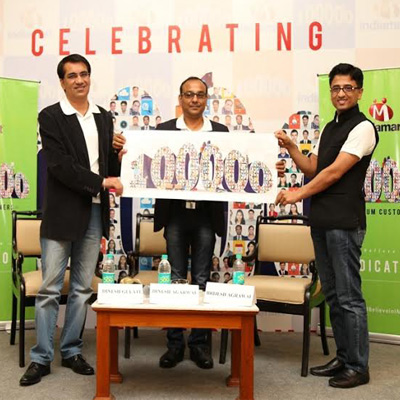
    MUMBAI: Online market place IndiaMart has accomplished one lakh premium customers on its online platform and is looking at net revenues of Rs 2000 crore by the year 2020.


    IndiaMart director Dinesh Gulati said, “We have recalibrated our strategy to enhance our focus on the big businesses. This will lend a fillip to our vision of IndiaMart 2.0, wherein we are looking at net revenue of Rs 365 crore in 365 days this year and take it to Rs 2000 crore by 2020. With our Big Brands initiative, we are moving from the motto of ‘More buyers, More Sellers and More Business’ to ‘Big Buyers, Big Sellers and Big Business.’ We are now focusing to cater to the procurement needs of bigger businesses and bigger orders.”


    IndiaMart’s big brands programme, an integral part of vision 2.0, will be a major growth area for the online marketplace, which initially built the Rs 200 crore businesses by catering to small and medium enterprises. Currently, IndiaMart has about one crore buyers, 15 lakh suppliers, 3.5 crore products listed on its platform.


    From April 2006, with about 10,000 premium customers online, the journey to 50,000 till July 2014 was painstaking, what with economic slowdown and inflation dogging businesses. Since April 2014, the paid-customer size saw a steep and steady twin-fold rise. Regular and timely innovative adaptations enabled IndiaMart harness the advantages of rising internet penetration & proliferation of smart devices. The milestone is best described a phenomenon never seen before in the e-commerce ecosystem.


    IndiaMart founder and CEO Dinesh Agarwal added, “I am extremely pleased to announce the milestone and I would like to thank everyone associated with us who have helped us reach this important landmark. 100,000 premium customers marks a watershed moment in our journey to become the undisputed e-marketplace leader. We will continue to innovate and grow to serve our customers in newer and better ways.”


    IndiaMart has been empowering MSMEs and unrelenting in innovating to add to their customers’ profitability. The brand is recognised for its pioneering role in the Internet business for inclusive growth and has mentored over two million MSMEs across India since its launch in 1996.