Tag: MSM

  • Sony Pal to bring curtains down on existing shows

    Sony Pal to bring curtains down on existing shows

    MUMBAI: The media industry is abuzz with rumours. And the target this time around is Sony Pal, the newly launched channel from the Multi Screen Media (MSM) stable. If rumours are to be believed, the channel, which went on air on 1 September 2014, has already sent notices to producers and actors of the existing shows to wrap up by 13 February.


    When quizzed about the rumours, Sony Pal and Sab TV senior EVP and business head Anooj Kapoor told Indiantelevision.com, “We are currently drafting a press release, and the official statement will come in the morning. You will know the exact status then.”


    As reported earlier by Indiantelevision.com, the channel had said that it would be revamping its content owing to the failure of a few of its shows, which did not connect with its target audience. By the end of December, Sony Pal was airing only four shows, of the nine that it had launched with.  


    The nine offerings were Simply Baatein produced by GR8 Entertainment and anchored by Raveena Tandon, Dil Hain Chota Sa Choti Si Asha, produced by SOL Productions and hosted by Ragini Khanna and Jay Soni, Shashi Productions’ Ek Rishta Aisa Bhi, Miloni Films’ Khushiyon Ki Gullakh Aashi, Singhasan Battisi by Creative Eye, Pia Basanti Re by Rashmi Sharma and Pawan Kumar, Tum Sath Ho Jab Apne produced by Sphere Origins, Sister Didi by DJ’s Creative Unit and Yeh Dil Sun Raha Hain by Balaji Telefilms.

     
    The channel had slashed its three and a half hours of original content to two hours starting from primetime 7.30 pm to 9.30 pm. The current running shows include Yeh Dil Sun Raha Hain, Singhasan Battisi, Ek Rishta Aisa Bhi and Sister Didi.


    A producer on condition of anonymity said, “Yes, the channel is undergoing a revamp and it will be back with new shows, post the Indian Premiere League.”


    Many in the industry feel that Sony Pal was unable to differentiate its content from the network’s flagship channel – Sony Entertainment Television. “The channel could come back with a more segmented content with a hope to catch viewers’ attention,” added a media planner. 


    Kapoor, in an earlier interview to this website, had said, “When we went out checking with our core TG (women GEC viewers) to what they found right and not right with the channel in terms of content, the consumers came up with very interesting answers which threw some pointers on what core corrections were required.”

     
    “We are soon going to come back in the same slots, which have been shut down with new programmes in terms of dailies and with consumer feedback on-board. Hopefully, this time around we will go to the next level. We are going to come back with exact consumer expectations as they have articulated after viewing the channel,” he had said. 


    Rumours are also rife that post the revamp, Sony Pal could move from being a pay channel to becoming a free to air channel. 

  • Goldmines Telefilms’ Manish Shah denies hanky-panky deals with Sony India

    Goldmines Telefilms’ Manish Shah denies hanky-panky deals with Sony India

    MUMBAI: It seemed to be a day no different than any other for Goldmines Telefilms director Manish Shah as he got ready to go to his office in a rather non-descript building in the suburb of Goregaon west in Mumbai. At around 9 am, the film syndication specialist got a call from someone he knew that he had been mentioned in a newspaper report about alleged business malpractices at Sony India’s MSM network. It intrigued him but not enough to pull him away from his daily schedule of placing calls to clients and to broadcasters about the films he had acquired and wanted to pitch to them.


    Then he got a call from us at Indiantelevision.com requesting to meet him. He agreed but wanted an hour and a half to himself before speaking to us. He ordered a few copies of the newspaper and spent time reading the Bloomberg report over and over again until we arrived. The Bloomberg report stated that Sony Corp was investigating possible irregularities in business dealings following an anonymous email to Sony Pictures Television world wide networks president Andy Kaplan. The letter, which reached Kaplan on 6 October, stated that “the head of MSM’s motion-pictures unit was colluding with an agent to raise the cost of movies that Sony bought to air on TV by as much as 35 per cent in return for kickbacks.”


    And that agent was Manish Shah, who was once a television producer of both Gujarati and Marathi shows for channels such as Alpha Marathi (part of the Zee group), ETV Gujarati and Hungama before finding his mettle in buying and selling film rights to broadcasters and building a business in excess of Rs 100 crore. He hit jackpot with the regional films he acquired and dubbed them in Hindi, paying attention to creative detail.


    Shah welcomed us in offered us a cup of coffee and then began speaking his mind, pooh-poohing the allegations made against him. Said he, “The allegations are absolute crap. There is no question about us being favoured or dealing in kickbacks. Rajani was an extremely tough negotiator; in fact she would hammer down my prices when I started doing business with Sony in 2004. So what are they talking about me being offered inflated prices in exchange for kickbacks? I meet Sneha only rarely; there was a time when I met her more often. But I meet the folks at Star India more for the film titles I own.”


    Shah pointed out that Sony Entertainment – though a good client – is not amongst his biggest. “Last year Sony bought Rs 10 crore worth movies from me, UTV bought Rs 14 crore movies, while Star bought Rs 16 crore of movies. So what are you talking about? Last year Sony bought just three movies from me.”


    He added, “I don’t know where this has all come from. Sony is investigating the matter, let them do that. I can only say that if any broadcaster has to look at the return on investment, my movies give the maximum ROI. Whether it is for Star, or UTV or Sony.”


    Shah furnished tables and charts, which showed that close to 50 per cent of the FPC on Max was occupied by Goldmines syndicated films for about five days each week. “But it is these movies that are working for the channel and the network, giving them a good return on their investment. I know what works and the regional language films, which have a lot of action, humour and entertainment work. And I have given a substantial number of films to Sony, but my prices have been hammered by the acquisition people,” he said.


    For Shah it is a clear business model. “I buy the movie, which gets the rating or is successful and then offer it to broadcasters for satellite rights whether it is Zee, Star, Colors or Sony. Whoever gives me the best deal, I offer the movie to them,” he proffered.


    His company has been working with Sony and Zee since 2004, with Doordarshan since 2005 and with Star since 2006. “Once I have the rights, I am the owner of the movie and so I decide who will get it based on price,” he said. “But this process does not involve kickbacks at all so how can I get kickbacks? Broadcasters today are smart and they know which movie will work for them and they want it at the best price. I totally deny any of allegations that have been made against me.”

  • Major Indian channels removed from Chitram TV app

    Major Indian channels removed from Chitram TV app

    NEW DELHI: In a major break-through sending a strong message to organised pirates of content in the digital space, certain members of Indian Broadcasting Foundation (IBF) have succeeded in their efforts to remove their channels from the recently launched android and iOS applications of Chitram TV on Google Play and Apple’s App Store.


    Chitram TV is an IPTV/OTT service provider, which has been illegally broadcasting the signals of the Indian origin channels: MSM (Sony), Zee, Star, Viacom18 and certain other regional Indian television networks, which are members of IBF for quite some time. Recently, Chitram TV launched its mobile application on android and iOS devices in an attempt to widen its distribution and reach. The broadcasters took up the issue of Chitram’s illegal broadcast and Apple and Google have now removed the app from their iOS and Android platforms. This is a major victory for the members of IBF in their fight against online piracy, according to an IBF spokesperson.


    Indian broadcasters, who have joined hands to collectively fight digital piracy, are considering initiating legal proceedings against Chitram TV and other pirate platforms in multiple jurisdictions outside. None of the members of IBF (viz. MSM (Sony), Zee, Star and Viacom18) has authorised Chitram TV to carry their channels on any media platform let alone digital.


    IBF said it understands that Chitram TV continues to distribute the Indian channels via IPTV/OTT particularly outside India. IBF members have buckled up to fight the pirates like Chitram TV to preserve the integrity of their channels and content.


    With the rapid advent of technology enabling the dissemination of content across digital platforms, there are enormous revenue opportunities for broadcasters and other content owners. The Indian channels, which are available in more than 100 countries around the world, are extremely popular amongst the South Asian diaspora. 


    All of these channels have launched their own digital platforms and mobile apps but piracy has been a major stumbling block in revenue monetisation. Isolated efforts of the broadcasters could have achieved little. Now that the Indian broadcasters stand united, their efforts will provide a greater impetus in the global effort to combat digital piracy.


  • Sony Six to telecast Australian Open live from 19 January

    Sony Six to telecast Australian Open live from 19 January

    MUMBAI: Sony Six is set to telecast the Grand Slam of Asia Pacific region, the Australian Open, in India for duration of five years. The channel will exclusively telecast all the matches of the tournament live from 2015 till 2019.  Having shown ATP tournaments earlier, this will be Six’s first entry into broadcasting a Grand Slam event.


    Commenting on the development, MSM CEO NP Singh said, “Over the years, the Australian Open has established itself as one of the most watched tennis grand slams across the world. Going by the strong equity that the sport enjoys, we are committed to expand the distribution of the tournament further and thereby strengthen our position in the market.”


    Six EVP and business head Prasana Krishnan commented, “The tournament is seen as a season opener which sets the context for all tennis competitions that follow during the rest of the calendar year. Needless to say, we are proud to have this prestigious event as part of our bouquet of international sports content.”


    The Open is held annually over the last fortnight of January in Melbourne Australia. First held in 1905, the tournament is chronologically the first of the four Grand Slam tennis events of the year. The tournament features men’s and women’s singles; men’s, women’s, and mixed doubles and junior’s championships; as well as wheelchair, legends and exhibition events. Since 1988, the tournament has been played on hard courts at Melbourne Park.


    Tennis Australia CEO and Australian Open Tournament director Craig Tiley said, “I’m delighted that we are partnering with MSM in India for the Australian Open. MSM presented a compelling proposition and demonstrated a commitment to promote the event and the sport of tennis in India cementing our position as the Grand Slam of the Asia-Pacific.”

  • 2014: A year of de-aggregation

    2014: A year of de-aggregation

    2014 was a year when the Telecom Regulatory Authority of India (TRAI) issued, as many said, the ‘death warrant’ for the powerful aggregators. The year started with the regulator throwing the ‘big bomb’ on the channel aggregators by introducing the ‘de-aggregation paper’. The paper clearly stated that the broadcaster appointed content aggregators could not mix and bundle channels from different networks before signing deals with the distribution platforms.

    With the regulation, the once content aggregators were given a new name, that of ‘agents’ who would carry out the deals ‘on behalf of’ the broadcaster. TRAI gave the aggregators six months to dismantle operations, or realign as agents. As part of the regulation, it was the broadcasters who could now sign deals with the distribution platforms either directly or through agents, who could only work on behalf of the broadcaster and not bundle channels from different networks. The regulation came as a shock as it curbed the power of aggregators Media Pro, IndiaCast UTV Media Distribution and TheOneAlliance.

    Soon after, aggregators started disintegrating. MediaPro, the JV between Star Den and Zee Turner was the first to announce its separation. Thereafter, both of them began distributing on their own. Zee Network created a separate distribution entity called Taj Television which would also act as agents for Turner channels. MediaPro CEO Gurjeev Singh Kapoor headed off to handle Star India’s international business while COO Arun Kapoor became CEO of Taj. Soon after this, MediaPro terminated its alliance with NDTV, MGM and MCCS.

    The next in line to break up was IndiaCast UTV, the JV between Network 18 (TV18) and UTV. The last to do so was TheOneAlliance (a JV between MSM and Discovery) which has already announced its decision to break away but will formally happen only on 1 January 2015. Meanwhile IndiaCast will act as an agent for UTV as well as Epic TV channel, while MSM and Discovery will be setting up their own operations.

    While on one hand broadcasters were figuring out how they could deal with the new clause from TRAI, on the other hand distribution issues were being fought in the Telecom Disputes Settlement Appellate Tribunal (TDSAT). The fiercest of them was between Hathway Cable & Datacom and Star India/Taj Television that lasted for nearly seven months.

    The first accusation was from Star when it stated that Hathway had removed its sports channels and placed them as a separate pack. Zee Network was nearing the end of its deal with Hathway and wanted to re-negotiate it with the MSO. Hathway failed to reply on time, leading to disconnection of signals from the broadcaster. Thereby, the MSO took Zee to court.

    After long hearings between the three parties, the two cases got combined and it was settled that till the time the case does not come to an end, Hathway would pay Star and Zee at the rate of Rs 23 and Rs 21.5 cost per subscriber (CPS) basis for their entertainment channels and Rs 4 CPS for Star’s sports channels. The last verdict of the hearing came as the TDSAT directed Hathway to enter into RIO agreements with Taj Television and Star India for the DAS markets.

    When everyone thought that the case would come to an end, Hathway went to TDSAT once again claiming that there would be partiality in providing RIO rates to various platform operators. The case came to an end with Star India coming forth and stating that it would only be executing RIO deals for DAS markets with all distribution platforms from 10 November. Though Taj Television had also been ordered to get into a RIO deal with Hathway, the broadcaster later on signed a CPS (carriage) deal.

    The year’s ending saw much discussion on Star’s incentives that were being provided on the basis of channel penetration, reach and channel placement. While most MSOs vehemently protested against the new RIO at first, in the end they took up the channels on incentive basis and created new packs. Most MSOs decided to put the popular channels on the base pack and give the remaining as separate packs, in higher packs or as a-la-carte.

    The year also saw a rise in the carriage fees, which according to many has risen by 20-25 per cent for niche and news channels.

  • Done my bit at AXN, says Sunil Punjabi

    Done my bit at AXN, says Sunil Punjabi

    MUMBAI: In 2012, AXN Network had created a new position to focus on one of its fast-growing markets, leading it was Sunil Punjabi.

    However, Punjabi has decided to move on from the network as AXN Networks India business head and Multi Screen Media EVP. Confirming the news to Indiantelevision.com, Punjabi whose last day in the network is 15 December says, “I thought it was time to move on as I think I have done my bit here. Today AXN is at a good place.”

    In a move to kill piracy, he can be credited for showcasing some programmes like ‘Sherlock’, ‘Top Gear’ and ‘Orphan Black’ in the same week of their UK/ US releases.

    Punjabi , who was based in Mumbai, was responsible for overseeing the day-to-day management of the channel, with the development of business opportunities and channel equity. In May this year, MSM named Pix EVP and business head Saurabh Yagnik as head of the English channels which meant Punjabi was reporting to Yagnik.

    Prior to AXN, Punjabi was CEO at multiplex company Cinemax and also headed the film production and distribution strategy at Fox Star Studios India for two years.

    On his next move, he says, “I have always been on a run. But will take a break till New Year.”


  • Sony Six’s on-ground activities push NBA’s viewership

    Sony Six’s on-ground activities push NBA’s viewership

    MUMBAI: If numbers are to be believed then basketball has started getting its due in the cricket-crazy country.

     The National Basketball Association (NBA) is seeing its popularity levels scale upwards on television thanks to a wide on-ground marketing push. Sony Six, which broadcasts the NBA action, has seen a 70 per cent increase in its viewership this season, claims the channel. When asked about the reasons behind the same, the channel’s business head Prasana Krishnan says, “One, the overall penetration and popularity of the game is increasing in India.  Two, our on-ground marketing initiatives in 16 cities, which propelled this growth. We have been marketing the brand and product intensively.”

    NBA India and Multi Screen Media (MSM) had signed a three year television agreement beginning 2012.

    NBA India, this year, launched its on ground activity, the NBA JAM in 16 cities. The event which took place from 22 September to 6 December featured a 3 on 3 tournament format, which had more than 3,000 teams participating. The tournament also saw more than 600 colleges participating. The 16 cities included Chennai, Guwahati, Kochi, Lucknow, Jaipur, Nagpur, Bangalore, Kolkata, Chandigarh, Ahmedabad, Bhubaneswar, Delhi, Indore, Hyderabad, Pune and Mumbai. In Mumbai, celebrity Neetu Chandra was roped along with the Sacramento Kings dance team, who were flown in from the US to entertain fans during the event.

    Krishnan says that one of the key learning’s for the channel from this season was that it witnessed a growth in southern markets. “Last year, we visited only Bangalore and Hyderabad. This year, besides these two, we also visited Kochi and Chennai where these markets have improved. So have also interior markets, like Jaipur, Indore, Lucknow, Chandigarh etc.” Krishnan informs.  It was also the core marketing proposition of the channel during the launch this year.

    The business head opines that the potential for continued growth in non-cricket sports properties is very high and the challenge ahead for the channel would be to continue the momentum. He feels that the biggest challenge ahead can be transformed into the biggest opportunity which is to make the sport better entrenched and bigger in the country.

    Speaking on this success of the new found sport, Group M ESP national director- entertainment sports and live events Vinit Karnik says, “After football, if there is a low hanging fruit, it is basketball. This is because most schools in India have had a basket, if not a proper court.  It is one of the most sampled sports at the school level but since for a long time nothing concrete was organised for players in the country, the game never got its dues. But with NBA and its 3 by 3 format, these schools and colleges will bring the sport back in lime light and the potential is set to grow.”


  • TS Panesar joins Hathway

    TS Panesar joins Hathway

    MUMBAI: TS Panesar, who recently quit Star India as EVP distribution has joined Hathway Cable & Datacom as head-video business.  

    Confirming the news to indiantelevision.com, Panesar, who had a few options to choose from, says, “Distribution has a long way to go and with Hathway leading the way, I think it’s a sector with a bright future.”

    As for the plans for the multi system operator (MSO) Panesar, who joined the company on 8 December, says it’s too early to comment.

    Hathway which has two verticals: broadband and video, created the new portfolio for head-video starting today. “Yes, Panesar has joined Hathway to head the video segment. In his new role he will look after carriage, subscription and placement,” informs Hathway Cable & Datacom MD and CEO Jagdish Kumar.   

    “He will help us grow the video business,” adds Kumar.

    Panesar had been entrusted with the responsibility of handling distribution for national DTH and digital addressable systems (DAS) earlier this year when the JV between Star and Zee- MediaPro was broken. He was earlier ESPN Software India VP for affiliate sales.


  • Sania Mirza gets set to ‘bond’ on Sony Pix

    Sania Mirza gets set to ‘bond’ on Sony Pix

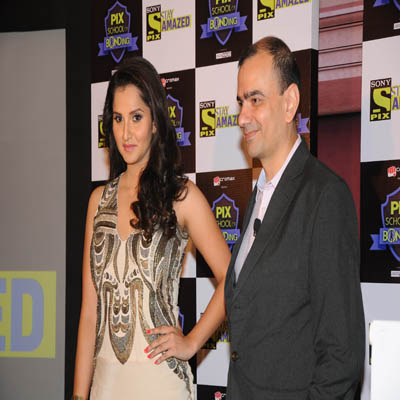
    MUMBAI:  ‘The name is Bond, James Bond’ is one of Hollywood’s most iconic dialogues, and so has been the Bond franchise. Not surprisingly, it has collected $ 4.1 billion at the box office and still counting. And while the property has been showcased time and again on English movie channels, Sony Pix has taken a step ahead and roped in tennis player Sania Mirza, who launched the franchise as a trainer for the channel’s Pix School of BONDing.


    Explaining the initiative to showcase the 50 year old property, Sony Pix and AXN EVP and business head Saurabh Yagnik says that in order to sustain Bond’s relevance the channel wanted to create a disruptive and differentiated viewer proposition. “While Bond is synonymous with gadgets, gizmos and girls, these three are transient and keep changing throughout the movies. But the most consistent part is the evergreen Bond attitude. We, therefore, decided to come up with a campaign that would be able to grab attention,” he adds. The campaign is primarily targeted towards the younger audiences.


    The channel deliberated for three months before conceptualising the campaign and roped in Mirza for her iconic personality, her resonance with young audiences and the fact that she is a self confessed die-hard James Bond fan.


    It wanted to portray Bond’s attitude and desirability through the eyes of a woman. As a trainer at the Pix School, Mirza will be seen giving tips on how men should woo their way to a woman’s heart. Starting on 22 November, the 23 Bond titles will be shown for the next 12 weeks (three months) every Saturday at 7 pm and 9 pm. The tennis ace will be providing nine to 12 lessons, each of one to two minute duration. These capsules will be showcased during the telecast of the movies.


    To promote the campaign, three TV promos have been shot at the Filmistan Studio by an in-house team. These are being promoted on all channels of the MSM network. Short snippets like The 23 Bond Villains of All Time and 23 Best Bond Cars of all Time have also been created. Bond memes are being circulated on WhatsApp. A six-city print campaign has been launched where publications are running contests wherein winners will be able to meet Mirza in person. 


    Pix marketing vice president Neville Bastawalla talking about the marketing campaign says, “This is the biggest ever campaign done in the English category. We currently have a 12 per cent engagement rate on social media versus our nearest rival which has a five per cent engagement rate. We, therefore, through digital contests and the live chats wanted to leverage our fans with that of Mirza’s.”


    Pix has 47.9k followers on Twitter while Mirza has 2.13 million. On Facebook Mirza’s official page currently has 7,698,051 likes while Pix has 2,155,451.


    Micromax has come on board as the presenting sponsor. Maruti Suzuki Alto K10 is the powered by sponsor while the associate sponsors are Quikr, Titan Skinn, 99acres.com, Nutrilite by Amway and Crizal by Essilor.


    Yagnik says that with the campaign he expects a jump of 20 to 30 per cent in viewership for the channel, which has seen a growth of 25 per cent in the category for this year, so far.


    The 23 Bond films that will be showcased are Dr No, From Russia With Love, Goldfinger, Thunderball, You Only Live Twice, On Her Majesty’s Secret Service, Diamonds are Forever, Live and Let Die, The Man with the Golden Gun,The Spy who Loved Me, Moonraker, For Your Eyes Only, Octopussy, AView To A Kill, The Living Daylights, License to Kill, Goldeneye, Tomorrow Never Dies, The World Is Not Enough, Die Another Day, Casino Royale, Quantum of Solace and Skyfall.

  • Pressure of work before HC leads to adjournment of ad cap hearing to 21 January

    Pressure of work before HC leads to adjournment of ad cap hearing to 21 January

    NEW DELHI: The ad cap case has been adjourned yet again – this time to 21 January – in view of a large number of pending cases before the High Court.

     
    During the last hearing on 25 September, News Broadcasters Association counsel Nisha Bhambani had sought adjournment in view of the senior counsel S Ganesh not being in Delhi.

     
    Earlier on 15 July, the Court had adjourned the case as the final hearing of the bunch of petitions challenging the ad cap sort to be imposed by TRAI as the authority had not finalised its rejoinder.

     
    The case had been previously heard in the High Court on 17 December last year and 13 March this year.

     
    While TRAI had earlier given an assurance that it would not take any action against any channel pending the petition, the Court had at the regulator’s instance directed that all channels keep a record of the advertisements run by them.

     
    The NBA had challenged the ad cap rule, contending that TRAI does not have jurisdiction to regulate commercial airtime on television channels.

     
    Apart from the NBA, the petition have been filed by Sarthak Entertainment, Pioneer Channel Factory, E24 Glamoru, Sun TV Network, TV Vision, B4U Broadband, 9X Media, Kalaignar, Celebrities Management, Eanadu Television and Raj Television.

     
    The news and regional broadcasters fear that the capping of commercial airtime will curtail their ad revenues. They also argue that the ad cap must be brought only after the benefits of cable TV digitisation start kicking in.

     
    Earlier this year, the Court also granted interim relief to Hyderabad-based MAA Television Network against the ad cap regulation. However, the court had also observed that the cap on advertisements is a ‘reasonable exercise’.

     
    Four major broadcast networks—Star India, Zee Entertainment, Multi Screen Media and TV18 Group—are following the regulations.