Tag: MSM

  • IPL ex-chief Lalit Modi to be extradited from UK

    IPL ex-chief Lalit Modi to be extradited from UK

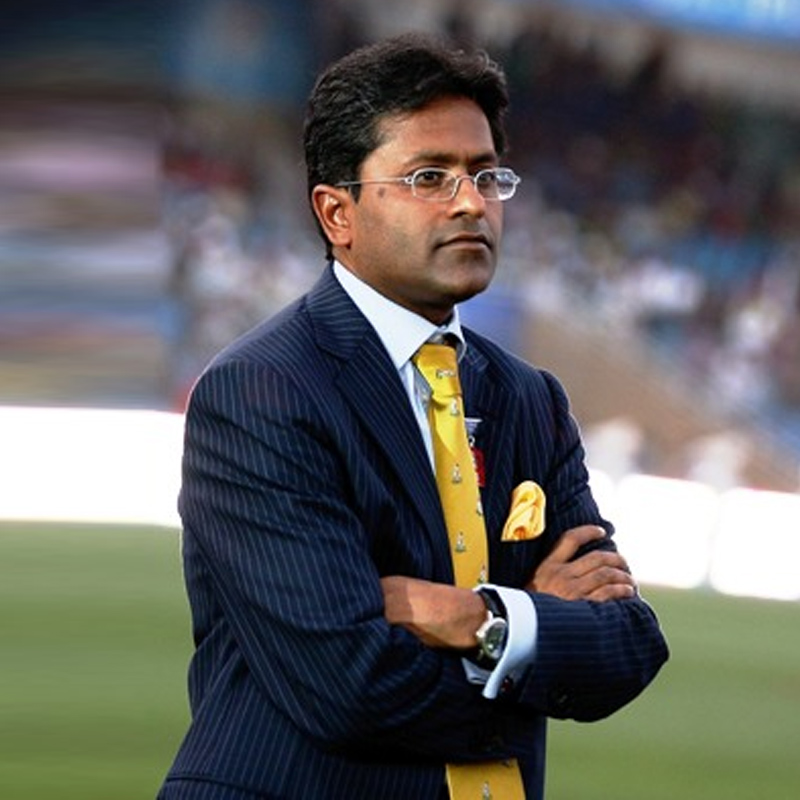
    MUMBAI: A special court in Mumbai yesterday allowed the Indian law-enforcement authorities to extradite from the United Kindom Lalit Modi, the creator of highly-successful Indian IPL franchise which was recently in news for potentially fetching BCCI Rs 4500 crore in telecast rights.

    The PMLA court permitted the Enforcement Directorate (ED) to send a Letter of Request (LR) to government in the UK for execution of a non-bailable warrant against the former IPL commissioner, and his transfer to India for facing probe in a money-laundering case.

    The ED is investigating a case against Modi in connection with a 2008 deal between World Sports Group (WSG) and Multi Screen Media (MSM) for IPL television rights to the tune of Rs 425 crore. The BCCI had registered a case in Chennai in this connection, followed by a case by the ED under the Foreign Exchange Management Act (FEMA). The directorate is probing Modi for misappropriation of funds from IPL during his tenure.

    The agency had on 8 November sought necessary steps to be taken by the competent authorities in the UK for locating him. The Prevention of Money Laundering Act (PMLA) court permitted the prayer. “The LR order will now be sent to the External Affairs Ministry, which will forward it to the competent authority in England for further action,” said special ED counsel Hiten Venegoankar.

    So far, three LRs had been issued against Modi by the same court to authorities in Mauritius, Singapore, and the UAE. The court had, on August 6 last year, issued an NBW (non-bailable arrest warrant) against the high-profile former IPL boss who was believed to be in the UK.

  • IPL ex-chief Lalit Modi to be extradited from UK

    IPL ex-chief Lalit Modi to be extradited from UK

    MUMBAI: A special court in Mumbai yesterday allowed the Indian law-enforcement authorities to extradite from the United Kindom Lalit Modi, the creator of highly-successful Indian IPL franchise which was recently in news for potentially fetching BCCI Rs 4500 crore in telecast rights.

    The PMLA court permitted the Enforcement Directorate (ED) to send a Letter of Request (LR) to government in the UK for execution of a non-bailable warrant against the former IPL commissioner, and his transfer to India for facing probe in a money-laundering case.

    The ED is investigating a case against Modi in connection with a 2008 deal between World Sports Group (WSG) and Multi Screen Media (MSM) for IPL television rights to the tune of Rs 425 crore. The BCCI had registered a case in Chennai in this connection, followed by a case by the ED under the Foreign Exchange Management Act (FEMA). The directorate is probing Modi for misappropriation of funds from IPL during his tenure.

    The agency had on 8 November sought necessary steps to be taken by the competent authorities in the UK for locating him. The Prevention of Money Laundering Act (PMLA) court permitted the prayer. “The LR order will now be sent to the External Affairs Ministry, which will forward it to the competent authority in England for further action,” said special ED counsel Hiten Venegoankar.

    So far, three LRs had been issued against Modi by the same court to authorities in Mauritius, Singapore, and the UAE. The court had, on August 6 last year, issued an NBW (non-bailable arrest warrant) against the high-profile former IPL boss who was believed to be in the UK.

  • HD channel boom imperative despite high television costs: Chrome Data’s Pankaj Krishna

    HD channel boom imperative despite high television costs: Chrome Data’s Pankaj Krishna

    MUMBAI: With digitization, the HD wave is not only hitting the Hindi general entertainment channels, but regional channels as well.  The HD channel boom began in 2015, with several broadcasters launching new HD channels or HD versions of their existing SD channels.

    According to Chrome Data Analytics & Media, with a 6-7 million (60-70 lakh) subscriber base and a 50 per cent year-on-year on growth in market size, the path of high definition may be a step in the right direction for broadcasters.

    Amongst others, even the infamous OTT platform Netflix, offers a package for Rs.650 with HD viewing to cater to high-end consumers, being one of the key reasons that the C&S industry is increasingly using non-linear modes of television.

    The overall landscape of the industry has benefitted with the introduction of HD channels as an increase in HD penetration can be seen as a driver for subscription revenue growth.

    Subscription revenue is expected to grow at a CAGR of 19 per cent to Rs 203 billion  (Rs 20,300 crore) driven by an increase in the declared subscriber base in DAS phase 3 and 4, increasing subscription revenue collected on ground due to channel packages and an increase in HD penetration.

    HD channels were first ad-free and solely dependent on subscription revenue, however, with time these channels have decided to monetise through introducing HD channel feeds separately for advertising revenues.

    Since the beginning of the year, several broadcasters have launched the HD version of their existing channels. After dissolving the 50:50 joint venture with Star India in 2012, Disney sports broadcaster ESPN had joined hands with Multi Screen Media (MSM) to launch two sports channel in India – Sony ESPN and Sony ESPN HD on 17 January.  Just a few days later, Times Network rolled out the HD feed of its English entertainment channel Romedy Now on 15 February.

    Viacom 18 also launched the HD feed of its music channel VH1 on 20 Feb.  In line with broadcasters tapping the high-definition space, Viacom 18 also geared up to launch its existing regional GECs (Colors Marathi, Colors Bangla and Colors Kannada), despite already having 5 HD channels currently on-air.

    Star India has successfully launched the HD feed of three of its regional SD channels, Star Jalsha and Star Jalsha Movies in HD (Bangla) with the Marathi GEC Star Pravah.

    Not only Hindi GECs or regional GECs, but now news channels have got onto to the HD wave.  On 17 April this year, ITV Network launched its English news channel NewsX in HD feed.

    Chrome Data Analytics & Media founder and CEO Pankaj Krishna explained, “The HD channel boom is imperative. The shift from standard to high definition is as organic as going from black and white to colour television. The cost of producing HD content has already been incurred, but the barrier to scale up lies in the hardware – procuring HD televisions is relatively expensive today. However, this is a cost which is already coming down and will further come down exponentially over the years, enabling more and more consumers to gain access to HD channels.”

    This ties in with the fact that rate for such channels is higher, seeing the nature of viewers of HD content. Thus, both subscription and advertising revenue have been impacted positively. While DTH operators are reaping the benefits of revenue growth owing to the ARPU and increased subscriber base with 15 percent of HD subscribers using DTH to view HD content, the only hurdle would be for MSOs to improve their marketing skills and upsell packages that constitute HD channels so that subscribers move to these packs.

    The realm that is high-definition brings along with it several benefits and certain challenges for stakeholders with more networks taking the leap to enter the market, hence changing the face of the quality of television content we watch today. 


  • HD channel boom imperative despite high television costs: Chrome Data’s Pankaj Krishna

    HD channel boom imperative despite high television costs: Chrome Data’s Pankaj Krishna

    MUMBAI: With digitization, the HD wave is not only hitting the Hindi general entertainment channels, but regional channels as well.  The HD channel boom began in 2015, with several broadcasters launching new HD channels or HD versions of their existing SD channels.

    According to Chrome Data Analytics & Media, with a 6-7 million (60-70 lakh) subscriber base and a 50 per cent year-on-year on growth in market size, the path of high definition may be a step in the right direction for broadcasters.

    Amongst others, even the infamous OTT platform Netflix, offers a package for Rs.650 with HD viewing to cater to high-end consumers, being one of the key reasons that the C&S industry is increasingly using non-linear modes of television.

    The overall landscape of the industry has benefitted with the introduction of HD channels as an increase in HD penetration can be seen as a driver for subscription revenue growth.

    Subscription revenue is expected to grow at a CAGR of 19 per cent to Rs 203 billion  (Rs 20,300 crore) driven by an increase in the declared subscriber base in DAS phase 3 and 4, increasing subscription revenue collected on ground due to channel packages and an increase in HD penetration.

    HD channels were first ad-free and solely dependent on subscription revenue, however, with time these channels have decided to monetise through introducing HD channel feeds separately for advertising revenues.

    Since the beginning of the year, several broadcasters have launched the HD version of their existing channels. After dissolving the 50:50 joint venture with Star India in 2012, Disney sports broadcaster ESPN had joined hands with Multi Screen Media (MSM) to launch two sports channel in India – Sony ESPN and Sony ESPN HD on 17 January.  Just a few days later, Times Network rolled out the HD feed of its English entertainment channel Romedy Now on 15 February.

    Viacom 18 also launched the HD feed of its music channel VH1 on 20 Feb.  In line with broadcasters tapping the high-definition space, Viacom 18 also geared up to launch its existing regional GECs (Colors Marathi, Colors Bangla and Colors Kannada), despite already having 5 HD channels currently on-air.

    Star India has successfully launched the HD feed of three of its regional SD channels, Star Jalsha and Star Jalsha Movies in HD (Bangla) with the Marathi GEC Star Pravah.

    Not only Hindi GECs or regional GECs, but now news channels have got onto to the HD wave.  On 17 April this year, ITV Network launched its English news channel NewsX in HD feed.

    Chrome Data Analytics & Media founder and CEO Pankaj Krishna explained, “The HD channel boom is imperative. The shift from standard to high definition is as organic as going from black and white to colour television. The cost of producing HD content has already been incurred, but the barrier to scale up lies in the hardware – procuring HD televisions is relatively expensive today. However, this is a cost which is already coming down and will further come down exponentially over the years, enabling more and more consumers to gain access to HD channels.”

    This ties in with the fact that rate for such channels is higher, seeing the nature of viewers of HD content. Thus, both subscription and advertising revenue have been impacted positively. While DTH operators are reaping the benefits of revenue growth owing to the ARPU and increased subscriber base with 15 percent of HD subscribers using DTH to view HD content, the only hurdle would be for MSOs to improve their marketing skills and upsell packages that constitute HD channels so that subscribers move to these packs.

    The realm that is high-definition brings along with it several benefits and certain challenges for stakeholders with more networks taking the leap to enter the market, hence changing the face of the quality of television content we watch today. 


  • TDSAT rejects IBF plea for more time to sign RIOs with NSTPL saying HITS players get equal status with pan-India MSOs

    TDSAT rejects IBF plea for more time to sign RIOs with NSTPL saying HITS players get equal status with pan-India MSOs

    NEW DELHI: An application by the Indian Broadcasting Foundation seeking extension of time for its members to sign reference interconnect offers agreements with the Noida Software Technology Park Ltd (NSTPL)  has been turned down by the Telecom Disputes Settlement and Appellate Tribunal.  

    In a landmark judgment expected to have far reaching consequences on the Indian broadcasting industry, TDSAT had on 7 December last said that headend-in-the-sky (HITS) players should be treated on the same level as pan-India multi-system operators (MSOs) for commercial purposes.

    In its judgment on a petition filed by the NSTPL against Media Pro and others, the tribunal said its judgment would come into effect from 31 March 2016 by which time it hoped that the relevant reference interconnect offers will be revised wherever necessary.

    Apart from the IBF, some television channels had also filed applications seeking an extension, and the tribunal had addressed certain questions to the Telecom Regulatory Authority of India in this connection.

    In its order, chairman Aftab Alam and members Kuldip Singh and B B Srivastava said after hearing TRAI counsel Saket Singh on the questions addressed to the authority, “We take it to mean that TRAI does not wish any extension of the suspension of the judgment”.

    Answering the main of the four questions, Singh had told the Tribunal that the consultation paper dated 29 January 2016 under the caption ‘Tariff issues relating to TV services’ was part of an ongoing process which is undertaken by TRAI from time to time based on its assessment of the relevant issues in the sector. The exercise is undertaken independently though it may cover some of the issues highlighted in the tribunal’s judgment dated 7 December.

    The tribunal also noted that though the IBF had made the application for extension, it was ‘apparent’ from the hearings that took place on the previous dates that some of the major broadcasters ‘have divergent views not only inter-se but also at variance with the position taken the foundation in as much as none of the broadcasters has asked for any extension of the period of suspension of the judgment.’ The extension of the suspension of the judgment was primarily sought on the plea that following the judgment, TRAI had issued a consultation paper that intends to review the regulatory framework for the broadcasting sector.

    Naming the broadcasters – Star India, Taj TV, IndiaCast, and MSM who are all members of IBF, the tribunal said” “it appears that at least on the issue of enforcement or further suspension of the judgment, the foundation is not in a position to represent the collective views of all its members. We, therefore, see no reason to entertain the application on behalf of the foundation for any further suspension of the judgment.The application is turned down.” The tribunal directed the remaining cases in the batch to come up on 8 April.

    Expectedly, the judgment will also help the Hinduja Group’s HITS platform NXT Digital, which entered into the fray earlier this year.

    In the judgment of 7 December, the Tribunal had directed both Star and Taj, as well as the other broadcasters who have joined the proceedings as intervenors to issue fresh RIOs in compliance with the Interconnect Regulations, as explained in the judgment within one month from the date this order becomes operational and effective. It had said it would be then open to NSTPL to execute fresh interconnect agreements with Star and Taj, and with any other broadcasters on the basis of their respective RIOs or on negotiated terms within the limits.

    The tribunal said: “It is difficult to see a HITS operator as different from a pan-India MSO and in our considered view a HITS operator, in regard to the commercial terms for an interconnect arrangement has to be taken at par with a pan-India MSO and must, therefore, receive the same treatment.”

    The tribunal had noted that Star and Taj will have to execute fresh interconnect agreements with the petitioner within two weeks from the date of issuance of their fresh RIOs. The agreement with Star would relate back to 30 October 2015 and with Taj to 30 June 2015. The issuance of the fresh RIOs by the broadcasters will also give right to other distributors of channels with whom the broadcasters may be in interconnect agreement to have their agreements modified in terms of clause 13.2A.7.

    NSTPL had executed an RIO based agreement with Media Pro. At that time, it did not complain before the tribunal that it was being forced into the RIO based agreement even though it had ample opportunity to do so as the Media Pro application was pending before the tribunal. Later on, after Media Pro ceased to be an agent of the broadcasters, NSTPL, even after filing the present petition, signed RIO based agreements with both Star and Taj. The agreement with Star was for the period upto 30 July, 2015 and the two agreements with Taj were upto 31 March, 2015.

    The Tribunal had also said that NSTPL must therefore be held bound by those agreements till the periods of those agreements and further, three months beyond that in terms of clause 8 of the Interconnect agreement. After those dates (29 October in case of Star and 30 June in case of Taj) the arrangement will be governed by the fresh agreements.

  • TDSAT rejects IBF plea for more time to sign RIOs with NSTPL saying HITS players get equal status with pan-India MSOs

    TDSAT rejects IBF plea for more time to sign RIOs with NSTPL saying HITS players get equal status with pan-India MSOs

    NEW DELHI: An application by the Indian Broadcasting Foundation seeking extension of time for its members to sign reference interconnect offers agreements with the Noida Software Technology Park Ltd (NSTPL)  has been turned down by the Telecom Disputes Settlement and Appellate Tribunal.  

    In a landmark judgment expected to have far reaching consequences on the Indian broadcasting industry, TDSAT had on 7 December last said that headend-in-the-sky (HITS) players should be treated on the same level as pan-India multi-system operators (MSOs) for commercial purposes.

    In its judgment on a petition filed by the NSTPL against Media Pro and others, the tribunal said its judgment would come into effect from 31 March 2016 by which time it hoped that the relevant reference interconnect offers will be revised wherever necessary.

    Apart from the IBF, some television channels had also filed applications seeking an extension, and the tribunal had addressed certain questions to the Telecom Regulatory Authority of India in this connection.

    In its order, chairman Aftab Alam and members Kuldip Singh and B B Srivastava said after hearing TRAI counsel Saket Singh on the questions addressed to the authority, “We take it to mean that TRAI does not wish any extension of the suspension of the judgment”.

    Answering the main of the four questions, Singh had told the Tribunal that the consultation paper dated 29 January 2016 under the caption ‘Tariff issues relating to TV services’ was part of an ongoing process which is undertaken by TRAI from time to time based on its assessment of the relevant issues in the sector. The exercise is undertaken independently though it may cover some of the issues highlighted in the tribunal’s judgment dated 7 December.

    The tribunal also noted that though the IBF had made the application for extension, it was ‘apparent’ from the hearings that took place on the previous dates that some of the major broadcasters ‘have divergent views not only inter-se but also at variance with the position taken the foundation in as much as none of the broadcasters has asked for any extension of the period of suspension of the judgment.’ The extension of the suspension of the judgment was primarily sought on the plea that following the judgment, TRAI had issued a consultation paper that intends to review the regulatory framework for the broadcasting sector.

    Naming the broadcasters – Star India, Taj TV, IndiaCast, and MSM who are all members of IBF, the tribunal said” “it appears that at least on the issue of enforcement or further suspension of the judgment, the foundation is not in a position to represent the collective views of all its members. We, therefore, see no reason to entertain the application on behalf of the foundation for any further suspension of the judgment.The application is turned down.” The tribunal directed the remaining cases in the batch to come up on 8 April.

    Expectedly, the judgment will also help the Hinduja Group’s HITS platform NXT Digital, which entered into the fray earlier this year.

    In the judgment of 7 December, the Tribunal had directed both Star and Taj, as well as the other broadcasters who have joined the proceedings as intervenors to issue fresh RIOs in compliance with the Interconnect Regulations, as explained in the judgment within one month from the date this order becomes operational and effective. It had said it would be then open to NSTPL to execute fresh interconnect agreements with Star and Taj, and with any other broadcasters on the basis of their respective RIOs or on negotiated terms within the limits.

    The tribunal said: “It is difficult to see a HITS operator as different from a pan-India MSO and in our considered view a HITS operator, in regard to the commercial terms for an interconnect arrangement has to be taken at par with a pan-India MSO and must, therefore, receive the same treatment.”

    The tribunal had noted that Star and Taj will have to execute fresh interconnect agreements with the petitioner within two weeks from the date of issuance of their fresh RIOs. The agreement with Star would relate back to 30 October 2015 and with Taj to 30 June 2015. The issuance of the fresh RIOs by the broadcasters will also give right to other distributors of channels with whom the broadcasters may be in interconnect agreement to have their agreements modified in terms of clause 13.2A.7.

    NSTPL had executed an RIO based agreement with Media Pro. At that time, it did not complain before the tribunal that it was being forced into the RIO based agreement even though it had ample opportunity to do so as the Media Pro application was pending before the tribunal. Later on, after Media Pro ceased to be an agent of the broadcasters, NSTPL, even after filing the present petition, signed RIO based agreements with both Star and Taj. The agreement with Star was for the period upto 30 July, 2015 and the two agreements with Taj were upto 31 March, 2015.

    The Tribunal had also said that NSTPL must therefore be held bound by those agreements till the periods of those agreements and further, three months beyond that in terms of clause 8 of the Interconnect agreement. After those dates (29 October in case of Star and 30 June in case of Taj) the arrangement will be governed by the fresh agreements.

  • Hotstar.com’s Ajit Mohan targets 100 million digital viewers this IPL

    Hotstar.com’s Ajit Mohan targets 100 million digital viewers this IPL

    MUMBAI: Star India has long presented itself as undisputed disruptor when it comes to the Indian media and entertainment industry. The disruption wave does not look like settling down any too soon. Star India digital head and president Ajit Mohan is now chasing history: something that The Facebook achieved in early 2015 and India’s largest telco Airtel got to in 2009.

    “Our objective is to reach out to 100 million users this IPL for our digital streaming services,” says Mohan with a smile on his face.

    Star India started the online streaming of cash rich Indian Premier League (IPL) in 2014. The matches were streamed on Starsports.com and as per Mohan’s analysis over 21 million people logged on to watch the action on their hand held devices.

    A year later, Star India invested a whopping Rs 302.02 crore to outbid then Multi Screen Media or MSM (now Sony pictures Networks or SPN) and Times Internet (TI) bid to acquire the streaming rights for three more years.

     “The reach doubled and we got to over 42 million viewers. Not only that we also witnessed a significant traction when it came to time spent watching,” discloses Mohan.   

    Complementing Star’s unfettered digital disruption is the improving bandwidth condition in India. The affluent metro youth who are considered to be the biggest spenders and are always engaged with their hand held smart devices. It is these mobile natives that Hotstar is targeting this year.

    “The audience we cater to is what makes Hotstar an attractive platform for advertisers. The response we got so far for IPL is overwhelming and we are extremely happy with it. We are selling as per slots exactly how it happens on television,” avers Mohan.

    The digital innovation of Murdoch’s media conglomerate has roped in nine brands so far. Flipkart, Volini, Raymond, Axe have come on board as sponsors, while the other large advertisers include Lloyd, Hindware, Hero Fincorp, Airtel and Amazon.

    “The metro is either working or returning back by the time IPL matches start and hence the streaming service is the go-to for cricket lovers. Moreover, with 3G getting better and 4G coming in, the infrastructure is also looking good so the streaming service is becoming more useful,” explains Madhouse COO Milind Pathak.

    The growth of Hotstar continues unabated as per Mohan, especially its reach. It was at just two per cent of TV a year back. Today, Mohan, says it has multiplied manifold. “Hotstar has already reached 40 to 45 per cent of television audiences,” he points out. “I believe more than compete with TV, what we are doing is adding another screen and forming a consumer habit which is a great benefit for the industry.”

    The leapfrogging numbers are not only because of the sacks full of dollars being spent on content, but also on account of an aggressive marketing overdrive. Captain of the Indian cricket team M S Dhoni promotes the platform. And for IPL the media house signed on with ad creative power house Lowe Lintas to unleash a cutting edge campaign.

    “With our analysis we found out that affluent male youth in metros are the ones who spend most of the time on their mobile phones and our creative is targeted at them. Also there is a perception that Indian youth are selfish and stay by themselves which is not totally true and that’s why it has the tagline Screen Chota hai magar Dil bada,” says Mohan.   

    The promotional spots focuses on youth and their connection with community. It shows that although they are always in their own world, but whenever needed they become an active part of the society.

    Last year Starsports.com streamed the matches along with Hotstar, “This year also we will continue to stream the action on both the platforms. The rights that we have are for a five minute delayed stream; an addition that we have this year is the fact that both Hindi and English commentary will be available for audiences to enjoy,” reveals Mohan.

    Digital is still perceived as an ancillary consumption medium, mainly for snacking and for small pieces of content, not long form.  Mohan believes Hotstar is paving many a pioneering path. “We broke all such myths, we proved the perception wrong,” he says with a wide grin. “One more wrong notion that we tore apart was that India was not ready for a premium OTT platform. With the time spent on OTT that we witnessed in the past and the way it is increasing now, I must say that the platform is only going to get bigger.”

  • Hotstar.com’s Ajit Mohan targets 100 million digital viewers this IPL

    Hotstar.com’s Ajit Mohan targets 100 million digital viewers this IPL

    MUMBAI: Star India has long presented itself as undisputed disruptor when it comes to the Indian media and entertainment industry. The disruption wave does not look like settling down any too soon. Star India digital head and president Ajit Mohan is now chasing history: something that The Facebook achieved in early 2015 and India’s largest telco Airtel got to in 2009.

    “Our objective is to reach out to 100 million users this IPL for our digital streaming services,” says Mohan with a smile on his face.

    Star India started the online streaming of cash rich Indian Premier League (IPL) in 2014. The matches were streamed on Starsports.com and as per Mohan’s analysis over 21 million people logged on to watch the action on their hand held devices.

    A year later, Star India invested a whopping Rs 302.02 crore to outbid then Multi Screen Media or MSM (now Sony pictures Networks or SPN) and Times Internet (TI) bid to acquire the streaming rights for three more years.

     “The reach doubled and we got to over 42 million viewers. Not only that we also witnessed a significant traction when it came to time spent watching,” discloses Mohan.   

    Complementing Star’s unfettered digital disruption is the improving bandwidth condition in India. The affluent metro youth who are considered to be the biggest spenders and are always engaged with their hand held smart devices. It is these mobile natives that Hotstar is targeting this year.

    “The audience we cater to is what makes Hotstar an attractive platform for advertisers. The response we got so far for IPL is overwhelming and we are extremely happy with it. We are selling as per slots exactly how it happens on television,” avers Mohan.

    The digital innovation of Murdoch’s media conglomerate has roped in nine brands so far. Flipkart, Volini, Raymond, Axe have come on board as sponsors, while the other large advertisers include Lloyd, Hindware, Hero Fincorp, Airtel and Amazon.

    “The metro is either working or returning back by the time IPL matches start and hence the streaming service is the go-to for cricket lovers. Moreover, with 3G getting better and 4G coming in, the infrastructure is also looking good so the streaming service is becoming more useful,” explains Madhouse COO Milind Pathak.

    The growth of Hotstar continues unabated as per Mohan, especially its reach. It was at just two per cent of TV a year back. Today, Mohan, says it has multiplied manifold. “Hotstar has already reached 40 to 45 per cent of television audiences,” he points out. “I believe more than compete with TV, what we are doing is adding another screen and forming a consumer habit which is a great benefit for the industry.”

    The leapfrogging numbers are not only because of the sacks full of dollars being spent on content, but also on account of an aggressive marketing overdrive. Captain of the Indian cricket team M S Dhoni promotes the platform. And for IPL the media house signed on with ad creative power house Lowe Lintas to unleash a cutting edge campaign.

    “With our analysis we found out that affluent male youth in metros are the ones who spend most of the time on their mobile phones and our creative is targeted at them. Also there is a perception that Indian youth are selfish and stay by themselves which is not totally true and that’s why it has the tagline Screen Chota hai magar Dil bada,” says Mohan.   

    The promotional spots focuses on youth and their connection with community. It shows that although they are always in their own world, but whenever needed they become an active part of the society.

    Last year Starsports.com streamed the matches along with Hotstar, “This year also we will continue to stream the action on both the platforms. The rights that we have are for a five minute delayed stream; an addition that we have this year is the fact that both Hindi and English commentary will be available for audiences to enjoy,” reveals Mohan.

    Digital is still perceived as an ancillary consumption medium, mainly for snacking and for small pieces of content, not long form.  Mohan believes Hotstar is paving many a pioneering path. “We broke all such myths, we proved the perception wrong,” he says with a wide grin. “One more wrong notion that we tore apart was that India was not ready for a premium OTT platform. With the time spent on OTT that we witnessed in the past and the way it is increasing now, I must say that the platform is only going to get bigger.”

  • TDSAT reiterates need for agreements to be able to claim payment from MSOs/LCOs even as it allows eight recovery cases

    TDSAT reiterates need for agreements to be able to claim payment from MSOs/LCOs even as it allows eight recovery cases

    New Delhi: The Telecom Disputes Settlement and Appellate Tribunal has allowed nine recovery petitions by MSM Discovery Pvt Ltd amounting to Rs 31,279,060 even as it reiterated the legal position that no dues can be claimed in cases where there is no agreement in place between the distributor/broadcaster or multisystem operator/local cable operator.

    But the Tribunal noted that seven of the cases related to a period when three months period was permitted for negotiations.

    In seven of the cases, the Tribunal allowed the petitions for recovery of amounts totaling Rs 28,344,942 with interest at eleven per cent from the dates when these became due till the recovery.

    The seven are Gurgaon Digital Network Pvt. Ltd, Maruti Charita Cable Network, Jai Maa Kali CableNetwork, Manoranjan Cable Network, Skyline Network, Site Entertainment Pvt Ltd, and Bareilly City Cable Network.

    The Tribnnal said the the petitioner had duly proved its case by leading cogent oral and documentary evidences that remain unrebutted. There is, therefore, no reason not to accept itscase in those cases.

    Interestingly, all the cases were heard and decided by Chairman Aftab Alam and members Kuldip Singh and B B Srivastava ex parte as no one appeared for any of the ten petitioners.

    In the case of Irani Cable Network Pvt Ltd and Rathore Media Network amounting to a total of Rs 2,934,118, the disconnection had taken place before the end of agreement for non-payment of subscription and the Tribunal accepted the evidence given by the witnesses for MSM Discovery.

    The Tribunal dismissed the case against Peptech Cable of Chatarpur as it noted that though on thedate of disconnection, the petitioner had dues amounting to Rs.410,130, the dues were nil on thedate of expiry of the agreement as also on the date three months beyond the expiry of theagreement..

  • TDSAT reiterates need for agreements to be able to claim payment from MSOs/LCOs even as it allows eight recovery cases

    TDSAT reiterates need for agreements to be able to claim payment from MSOs/LCOs even as it allows eight recovery cases

    New Delhi: The Telecom Disputes Settlement and Appellate Tribunal has allowed nine recovery petitions by MSM Discovery Pvt Ltd amounting to Rs 31,279,060 even as it reiterated the legal position that no dues can be claimed in cases where there is no agreement in place between the distributor/broadcaster or multisystem operator/local cable operator.

    But the Tribunal noted that seven of the cases related to a period when three months period was permitted for negotiations.

    In seven of the cases, the Tribunal allowed the petitions for recovery of amounts totaling Rs 28,344,942 with interest at eleven per cent from the dates when these became due till the recovery.

    The seven are Gurgaon Digital Network Pvt. Ltd, Maruti Charita Cable Network, Jai Maa Kali CableNetwork, Manoranjan Cable Network, Skyline Network, Site Entertainment Pvt Ltd, and Bareilly City Cable Network.

    The Tribnnal said the the petitioner had duly proved its case by leading cogent oral and documentary evidences that remain unrebutted. There is, therefore, no reason not to accept itscase in those cases.

    Interestingly, all the cases were heard and decided by Chairman Aftab Alam and members Kuldip Singh and B B Srivastava ex parte as no one appeared for any of the ten petitioners.

    In the case of Irani Cable Network Pvt Ltd and Rathore Media Network amounting to a total of Rs 2,934,118, the disconnection had taken place before the end of agreement for non-payment of subscription and the Tribunal accepted the evidence given by the witnesses for MSM Discovery.

    The Tribunal dismissed the case against Peptech Cable of Chatarpur as it noted that though on thedate of disconnection, the petitioner had dues amounting to Rs.410,130, the dues were nil on thedate of expiry of the agreement as also on the date three months beyond the expiry of theagreement..