Tag: Mrinal Kulkarni

  • Big FM concludes ‘Big Marathi Bioscope with Subodh Bhave’ season 2

    Big FM concludes ‘Big Marathi Bioscope with Subodh Bhave’ season 2

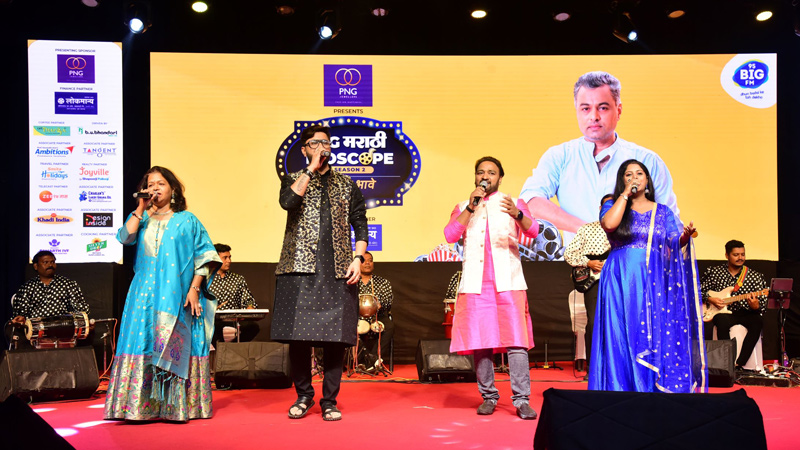
    Mumbai: The ever-evolving history of Marathi cinema, its anecdotes, interesting trivia and many more timeless moments have captivated the audiences over time. In a grand celebration of its rich legacy, BIG FM, one of the leading radio networks in the country, culminated the season two of its highly acclaimed show ‘BIG Marathi Bioscope with Subodh Bhave’ with a spectacular on-ground event. Held on 10 September, in Pune, the event was graced by renowned names from the Marathi industry such as Mrinal Kulkarni, Vaibhav Tatwawadi, Suvrat Joshi, Hrishikesh Joshi, Gayatri Datar, Alok Rajvade and many more along with the show’s host Subodh Bhave.

    BIG Marathi Bioscope with Subodh Bhave season 2 took listeners on an exciting journey of captivating narratives, iconic moments and legendary stars that have defined Marathi cinema. Hosted by Subodh Bhave, the event provided listeners with the chance to not only hear but also watch the magic of Marathi cinema unveil. It offered a unique blend of celebration and nostalgia to the audiences, forging a meaningful connection with them. Bringing together stars from the Marathi industry, Mrinal Kulkarni shared engaging anecdotes and insights into Marathi cinema’s evolution over the decades. The evening’s glamour quotient soared as special guests Suvrat Joshi, Gayatri Datar, Vaibhav Tatwawadi, Hrishikesh Joshi and Alok Rajvade took the stage and joined in the celebrations. Interacting with his fans and RJs of BIG FM, Subodh Bhave also shared his experience of being part of the show and the amazing response it has garnered.

    Speaking about the same, BIG FM COO Sunil Kumaran said, “Reflecting on the incredible journey of BIG Marathi Bioscope with Subodh Bhave, a show that has truly touched hearts, we are delighted by the overwhelming response it has garnered. This show has been a heartfelt tribute to the illustrious Marathi film industry, a testament to its timeless narratives and exceptional talents. The on-ground event was a celebration, providing our listeners with the opportunity to actively become a part of the entire experience. We eagerly look forward to the next chapter, filled with the promise of more vibrant narratives and extraordinary moments.”

    Actor and host, Subodh Bhave said, “The show has been a tribute to the incredible world of Marathi cinema and drama, and I am truly humbled by the love and support it has received from our audience. We’ve celebrated the iconic moments, shared the stage with remarkable personalities from the industry, and most importantly, forged a strong bond with our listeners. As we culminate Season 2 with this on-ground event on a high note, I would like to extend my gratitude to BIG FM for curating a show that celebrates the magic of Marathi cinema.”

    The event was marked by interactive segments that engaged the audience in delightful ways. Subodh Bhave played fun contests, trivia quizzes and games, ensuring the evening was high on engagement and entertainment. There were also powerpact performances on marathi medley songs by the popular band Melody Makers. The grand event of ‘BIG Marathi Bioscope with Subodh Bhave’ season 2 brought together film stars and passionate fans, all united in their love for Marathi cinema’s timeless magic. The show is in partnership with PNG Jewellers as the presenting partner and Lokmanya Multipurpose Co-op Society Ltd as the finance partner. The event will be broadcasted on the leading regional news channel Zee 24 Taas.

  • Mrinal Kulkarni joins Planet Marathi’s board of founders

    Mrinal Kulkarni joins Planet Marathi’s board of founders

    Mumbai: Film and television actor-director Mrinal Kulkarni has joined Planet Marathi OTT as part of its board of founders.

    “Kulkarni is aligned with Planet Marathi OTT’s vision as she comes with a mission to take Marathi web and OTT content to new heights,” said the statement.

    Kulkarni has decades of experience in both Hindi and Marathi entertainment and is known for numerous roles in hits like Avantika, “Yellow”, “Farzand”, “Ye Re Ye Re Paisa” to name a few. She has written films like “Rama Madhav”, “Prem Mhanje Prem Mhanje”, “Prem Asta”, and “Ti and Ti”. She is most fondly recalled as Indian TV’s famous character ‘Sonpari’.

    Kulkarni was recently seen on screen in “The Kashmir Files”. She has worked across genres and content formats and is one of the most talented professionals in the Indian entertainment industry.

    “It gives me great pleasure to assume this honourable position. I understand the great responsibility which comes with this role,” said Mrinal Kulkarni. “Web content is a great space to showcase the potential and power since it is a global platform with few barriers. I applaud the Planet Marathi OTT team for setting high benchmarks, not settling for less and creating new avenues for the Marathi web space. With my new role, I am glad I will be able to share my ideas and experience to take forward the platform’s efforts. It brings me great pleasure to say, we are poised for the next level in the OTT space.”

    “We are excited to have an industry veteran and expert like Mrinal Kulkarni onboard,” said Planet Marathi OTT producer and founder Akshay Bardapurkar. “With Mrinal joining us, we have upped the level of great expertise we have in our team. Mrinal embodies a sharp sense of business, innovation and craft, which is much needed in the OTT space. Her experience and vision will add to our mission of taking Marathi content to the world. She staunchly believes in the potential of Marathi content and it is an honour to have a powerhouse like her as a part of the Planet Marathi family.”

    Kulkarni begins her role starting from June along with other board of founders at Planet Marathi OTT.

    Singapore-based Vistas Media Capital is an investor in Planet Marathi OTT.

  • Eros to co-produce Marathi film with Ravi Jadhav

    Eros to co-produce Marathi film with Ravi Jadhav

    MUMBAI: Eros International has joined hands with Ravi Jadhav Films to co-produce a Marathi movie titled &.


    An emotional family drama, & is being directed by Prakash Kunte, who has earlier directed Coffee Ani Barach Kahi.


    The new film is a touching tale of a family caught in the whirlpool of emotions; a dilemma to choose between the mind and the heart.


    Eros International producer Krishika Lulla says, “We are happy to be associating with one of the finest film makers from the Marathi film industry, Ravi Jadhav for the upcoming movie &. We at Eros, believe that Marathi entertainment is witnessing a continual growth and the audiences are now open to new and fresh concepts and by joining hands with leading film makers like Ravi Jadhav and Prakash Kunte, we only want to strengthen this thought further.”


    Jadhav added, “& is a heartwarming tale of the complicated human relationships between a mother and daughter and a son and the father. The title, aptly named so defines the connection between the myriad of emotions of individuals and how that affects their life further on. It is an absolute pleasure to be associated with Eros International, who have shown belief in my vision and my content.”


    The movie features Mrinal Kulkarni, Siddharth Menon, Shivani Rangole and Indraneil Sengupta, who now makes his foray into Marathi entertainment. The film is set to go on floors on 5 November, 2015 in Mumbai.

  • Anupam Kher’s Marathi film debut to release on 12 April

    Anupam Kher’s Marathi film debut to release on 12 April

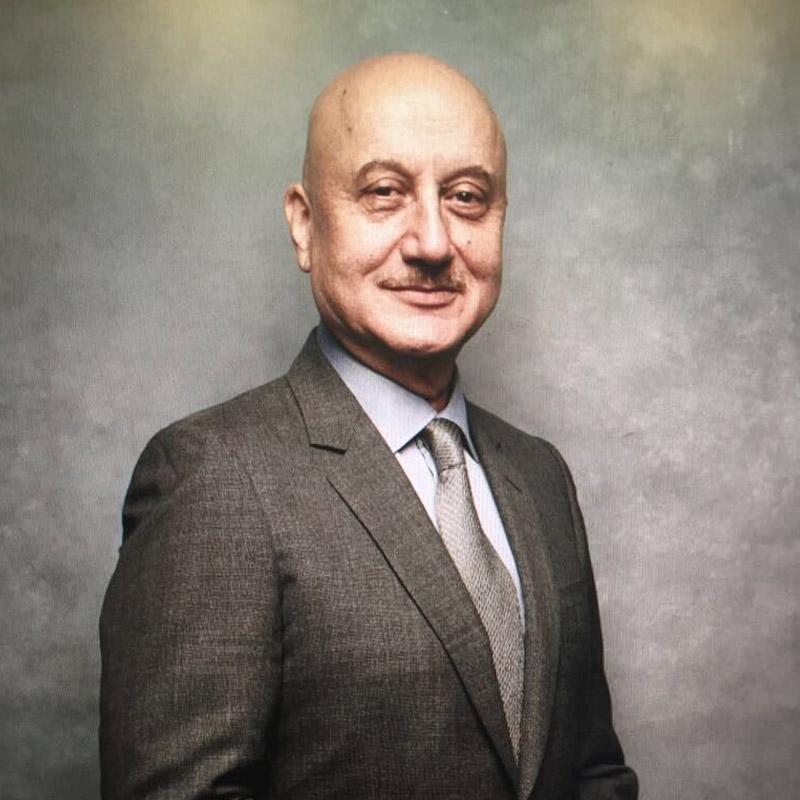
    MUMBAI: Anupam Kher makes his debut in Marathi films with director Pramod Joshi’s Kashala Udyachi Baat. The film has also been made in Hindi titled Chhodo Kal Ki Batein.

    Kher essays the role of a bind man in the film that shows the journey of an IT professional from his workaholic stage where he always craves for more, to a stage where he is satisfied and content and living the present.

    During this journey he comes across a charismatic blind man who makes him understand the importance of living life wholeheartedly. The film is a feel good cinema suiting all ages.

    Talking of his role, the 56-year-old Kher said: “When you play the role of a physically disabled or differently-abled person, you discover how brilliantly people who are differently-abled live their lives.”

    Written and directed by Pramod Joshi, the film stars Sachin Khedekar and Mrinal Kulkarni in the lead.

    The film is slated for release on 12 April.

  • ‘Acting is  self-expression but you also add something to it’

    ‘Acting is self-expression but you also add something to it’

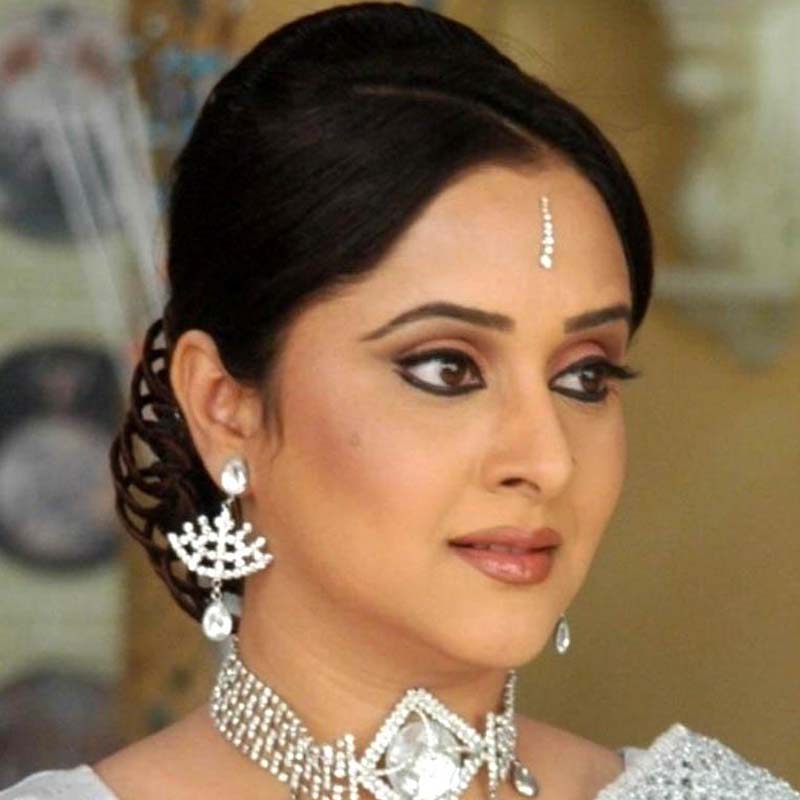
    Be it as a historical character of a bygone era or today’s contemporary women, actress Mrinal Kulkarni has etched a place for herself with selective, yet substantial roles.

    In the past, Mrinal has portrayed the daring young Maratha queen Ramabai, in Swami, and Devi Ahilyabai Holkar, a legendary queen of Indore who left an lasting impression as a good administrator after looking after her kingdom for nearly 44 years, in Sanjay Khan’s Great Maratha. She also played central roles in Meerabai andNoorjahan.

    Mrinal’s initial tryst with television was pure chance, where talent met opportunity. It was during a college annual gathering that Shrikant Moghe, an eminent actor-director (Marathi) spotted Mrinal while she was performing. He immediately offered her the role of Ramabai. Mrinal was only 17 then.

    Acting apart, Mrinal continued her studies and went on to pursue a Masters in Linguistics from Poona University. Soon after graduating she married her long time friend and it was goodbye arc lights for the next three years.

    She marked her second coming in television with Great Maratha. She has also acted in a few Marathi movies, the more recent being Jodidar, a social film that dealt with the marital relationship where she plays a double role, not of twin sisters separated in childhood, but of two modern women.

    Currently, Mrinal is doing a range of roles and is seen on all the main Hindi channels – Khel (Sony), Son Pari(Star Plus), Sambhandh (SabeTV), Draupadi (Sahara) and will soon be seen again on Zee, which is set to show re-runs of Hasretein, Sparsh and Teacher from August-end.

    While in Son Pari – a fantasy serial for children – she plays fairy godmother, in Sambhandh she enacts the role of women who drifts away from her husband and children in pursuit of success. In Khel she plays a daughter eager to seek love from her estranged father who is a successful businessman and unaware that she is his daughter. However, it is in Draupadi that Mrinal has full scope for histrionics as she essays a complex character (wife of the five Pandavs) from the woman’s perspective.

    Indiantelevision.com’s correspondent Harsha Khot met the actress to get a glimpse of what Mrinal Kulkarni is like.

    Excerpts from the interview:

    What pulled you back into acting?
    My son was just two years old when I received a call saying Sanjay Khan was keen to meet me regarding a role in a historical serial. Being with my family meant more so I wasn’t too keen on acting and informed them accordingly. But after much insistence we met. Despite my reservations, he casually asked if given a choice to essay Ahilyabai Holkar and Mahaji Scindia’s wife which character would I prefer to do. Ahilyabai Holkar I replied without a second thought because I had already played Ramabai and did not want repeat the role.

    He seemed quite impressed with the answer and right away asked me to do the role. The shoot was at Jaipur in Rajasthan and with a two-year old son I was very reluctant to sign on. He assured me that all the comfort on the sets would be looked after, especially as regards my son. So after much persistence I agreed to do the role. And it was while doing Great Maratha that the I felt a fresh spark for acting.

    Did your background help?
    Both my parents are professors at Poona University. And my grandfather was a novelist. Being born into a culturally rich background, acting, singing, dance and painting, among others, were inculcated as things one should know.

    ‘Today, even the scripts gets changed at times, so what eventually matters is a good banner, and good team spirit and rapport between a good director, writer and yourself.’

    What do you look for before agreeing to do a role?
    As an artiste I look forward to doing a variety of roles. But with so many channels, almost everything has already been shown. When a production team approaches me with a story idea of a new serial, they always say that they have got something new. But often I feel that the different role that they promise is not possible all the time. Almost all the themes have been explored and there is very little room left to do something new and different. So now what matters is how differently the serial is treated, how it is portrayed. Today, even the scripts gets changed at times, so what eventually matters is a good banner, and good team spirit and rapport between a good director, writer and yourself.

    It gets very dicey when the writer or director gets changed. So I strongly feel that one has to be sincere regardless of other things and be dedicated and put in good effort.

    When I take up a role I don’t mind the length of the role as long it is significant enough. For instance I portrayed a slightly aggressive character of “Asmita” in Hasretein, a serial based on a Marathi novel calledAdhantari. The book has just a brief mention of “Asmita”. It only mentions that her husband, despite her being beautiful and very attractive, falls in love with another women. This role was to span 10-12 episodes only. Yet I took it up.

    What is your approach to essaying a character?
    In the initial stages, a rough outline of the character is sketched. If I know how the character is going to develop I just have to match it. There are quite a few changes made in the character, as per the channel’s demands, as per the popularity demands, an actor may want to leave, so you have to adjust accordingly and prepare for any changes.

    No doubt it requires thinking. But if you grow as an artiste it comes naturally to you. It comes from observing people around you, talking to them and how you perceive things. To portray a victim of rape, it needn’t at all mean that you get a taste of it to project it as close and realistically as possible.

    So as you grow you become more observant and receptive. Suppose you notice someone’s peculiar ways and mannerism it gets stored in your mind. Later on you pick and choose what is suitable while sketching out a character. You have to give it a try. It may work or it may not.

    For instance the whole team was so excited about Jootha Sach. We had to wear white wigs and unglamorous make-up. Since most of us were from theatre this experiment was very exciting. The serial begins with us at a ripe old age and then takes a leap back to our youth. We thought audiences would really like it since it was so different but no, it didn’t go down well at all (laughs). So such things too, happen.

    ‘Acting is a never-ending process. You should never get contented.’
    _________

    What is your approach to essaying a given character? Do you do any sort of research or homework before you come on the floor?
    Yes. While portraying Draupadi I felt the need to read up about her. The character is from Mahabharat, an epic written by Maharishi Vyas. Every line is said in context to something and has a meaning, especially the scene when Draupadi gets married to five men. She never wanted to marry five men. She was so beautiful and intelligent herself. She was called sarva kala parangat a multi talented girl. Why would such a gifted person want to marry five men. It really isn’t a joke to marry five men!

    Since the Mahabharat is originally written in Sanskrit it was not possible to read through it but there are translations which were of immense help. I went through Pratibha Rai’s Draupadi, and there are various other books written on the Pandav’s so that I could get an idea of what their personality was like. I also read up on Krishna who plays a major role on Draupadi’s life. Then there are a few books written in Marathi. So I try and find out what people had to say.

    Then for Meera my director had asked if I believed in God. I told him that I didn’t believe in God but I believe in humanity. I mean devotion to humanity is understandable, but devotion to an idol for nearly 50 years I just could not relate to. So we went to the Rajneesh Ashram (in Pune). Rajneesh has devoted eight cassettes only to Meera. Each cassette’s duration was one-and-a-half hours long. I was taken aback by the level of Meera’s devotion to Krishna.

    In Dr Babasaheb Ambedkar, I was playing a role of a person (DR Ambedkar’s second wife) who is still alive at 83. I was so excited and had so many questions to ask but I hardly got to speak to her. Still, I thought I portrayed the character well and was very happy with it. But when Mrs Ambedkar saw the scenes she was unhappy with it and so most of the scenes that I thought were good had to be chopped. I was a little upset about it … but it’s okay.

    Like in Sparsh we had a bound script which was very helpful. But again every time getting a script in advance is not important. Acting should not be rigid but a natural and continuous process. Once you get the feel of the character then all you need is to get the dialogues in hand. Like for instance even now I haven’t been able to imagine what must have gone through Draupadi’s mind while going to each of her husbands … it’s no joke.

    But television has got it’s own limitation. No matter how poor a background the character comes from the sets are shot in a bungalow. If the location shown is a bank even then it has to be shot in a bungalow simply because you need space for the camera to move properly. So these things have to be taken into consideration. Acting is a never-ending process. You should never get contented.

    ‘When I portray a character people should feel that yes this is what must have happened.’

    What does acting mean to you?
    Acting is self-expression but you also add something to it. You add people’s views to it. This is a borrowed knowledge that you give to people, it is not something you have experienced. When I portray a character people should feel that yes this is what must have happened. It is said that an actor lives many characters in one life. It is much more dramatic. The time gap shrinks on the screen. Say the age of the character sketched ranges over 20 years, and this has to be shown within a span of a year. To essay these 20 years you have to match the emotions or draw the emotions from real life.

    So in this process you grow as a person a little more. You tend to get more sensitive, and I believe this is a major plus point.

    Commercially Hasretein was very popular. But I really had to struggle with the character. Since “Asmita’s” character was negative. She was beautiful yet her husband neglects her and goes for another women, so she seeks vengeance. Pulling hair, passing negative marks was part of that character which I would find very amusing and funny and would often tell my director that this really isn’t the way to show “Asmita”. It was very hard to portray, because I played something that didn’t belong to me but I could portray that. But then the character got a tremendous response, and it was stretched over 200 episodes and people enjoyed watching it.

    Meera was very close to my heart somehow. Even though while playing the role I would often have to assure myself “this is not happening to me.”

    Any good director that you’ve worked with?
    Ved Rahi. He is a Kashmiri poet and writes beautifully. He has a literature background.

    The thing about directors who are also writers is that there’s depth in them, in the way they perceive the characters. And it always helps working with a director who is also a writer because they are very clear about the character that is to be portrayed. Ravi Rai and Imtiaz Khan are also good directors.

    What qualities in a director bring out the best in you?
    I need assurance. I need to be told whether or not the character I play is on the right path. Otherwise I begin to feel uneasy. On the sets there has to be a common connectivity that binds everything together. To avoid people, co-actors, or anything from meandering from the main storyline there should be someone with a sharp mind to keep a tab on things. It is like everything is bound with a rope so in case someone meanders, the director can spot it and set it right. Working with such a director certainly helps.

    Any work that you weren’t happy with?
    There are a few projects that I felt were my mistakes. Fortunately most of them wound up very early. It so happens that when you get the outline of a story and a good character. It excites you. But… when the script comes to you there is something amiss … further on with changes and other things it is all very hotchpotch but by then it’s too late to walk out.

    But all that matters is do your work properly and sincerely, yet learn to be sound. Even a God like Ram made mistakes.

    Have we seen the best of Mrinal as yet?
    I don’t know. But there is much more work to do. I have been very keen that I shouldn’t repeat any role – get-up wise, script wise and looks wise. One serial, one get-up. Like for Sparsh I have cut my hair while forDraupadi it’s two hours of make-up being done. So you should experiment with yourself wherever possible.

    What kind of roles wouldn’t you want take up?
    No bar at all. But I want to do a completely non-glamorous role.

    Any fine actress on television?
    Shefali (Shah) is good. She is not seen enough though, I don’t know why, but she is good. Then Pallavi Joshi, Renuka Sahane, a lot of new faces on television act well, I just don’t know their names. They are very sensitive. Pallavi is a good actress but somehow I feel her talents are yet to be explored properly.

    What inspires you?
    Good work, as in a good painting, a book… it gives you a high.

    About your role in Marathi film Jodidaar? How was your experience playing a double role?
    The script was very neat and clear which helped a lot. Both characters were contemporary. I was very keen to do it. While one character is a divorcee and a mother of a child, the other has a family and at the same time works.

    What is lacking in the second woman was since she a working mother and also had to do household chores she had an unkempt look about her. While the other women was fairly well off and since she had enough time in hand to take care of herself, the husband is attracted to her.

    You’ve acted in Marathi and Hindi serials, did you have to work on you voice?
    I had to work on my Hindi. The thing about people speaking in Marathi and Punjabi is they tend to have a heavy accent. So to get the Hindi pronunciation right I approached Mr Khan, a professor in Poona University, and requested his help to get my diction right. For two months I would read aloud for two hours each day. That helped me. Till date nobody ever has had a problem with my pronunciations.