Tag: Mplan

  • Onam delivers a little below market expectations; national advertisers go big on spending

    Onam delivers a little below market expectations; national advertisers go big on spending

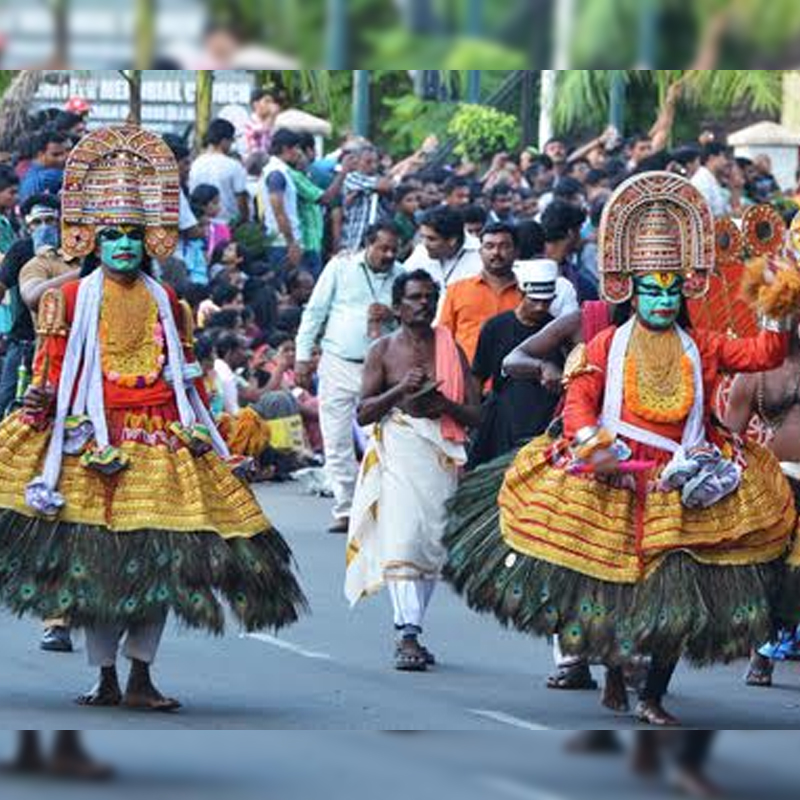
    NEW DELHI: The merging of age-old agrarian myths and traditions with the commercial realities of today, the festival of Onam is a happy celebration for the Malayalis and businesses encashing their festivities. Historically, the festival acts as a hotbed of ad spends, consumer-friendly deals, the launch of new products, and flared up sales. It’s close proximity to the wedding season which also makes it a big opportunity for the advertising and the marketing industry to cash on. 

    However, for the past two years, the deadly floods washing the thin strip of land in the southwestern edge of India have also been drowning the great marketing fiesta it used to be. This year, while the rains were friendly, the ongoing Covid2019 crisis acted as a dampener to the celebrations.

    Albeit, if the insiders are to be believed, the festival has led the industry to raise its head a little above the sad water. Indiantelevision.com had extensively covered in a series of stories, and also in an exclusive one-day-long virtual conclave how Kerala ad market is pinning its hope on Onam to bring some respite to its dwindling cash reserves and the latest update is that it might have managed to achieve 50-70 per cent of what was expected out of it. 

    MPlan CEO Parag Masteh shares while the national advertisers went big on spends during Onam, local advertisers were very conscious of the spending and preferred staying away from making any big investments. This is also why the local agencies couldn’t soak in the benefits of the festival. However, it surely brought some respite from the lull of the previous months. “If I compare with the last month, our cash registers witnessed a hike of 15 per cent from the previous month,” he noted. 

    Nestle Milkmaid recently launched a campaign #SpreadSweetness around Onam. The brand rolled out a 30-second ad film with the cast of one “Vanambaadi”, a popular TV series of the region. The film showcases the famous mother-daughter duo discussing the excitement during the 10 days of Onam starting from Atham to Thiruvonam.  

    Nestle India director Vineet Singh said, “As part of the initiative, NestlĂ© Milkmaid is sharing 10,000+ bowls of payasam with the less privileged and we encourage people to do their own act of kindness, by pledging and sharing a bowl of Payasam with someone who needs it. We hope you will visit http://createsweetstories.in/ and spread joy and sweetness and create delightful experiences for the underprivileged.”  

    Another major FMCG player Marico also launched a digital campaign #ThankYouNurses honouring the unparalleled spirit of nurses across the country. The campaign salutes the brave warriors and provides a platform for all Indians celebrating Onam to come forward and express their gratitude for the nurses through their Pookalams, a popular floor decoration with flowers which is an integral part of Onam celebrations.

    Marico chief marketing officer Koshy George said, “As India continues its fight against the pandemic, we wanted to honour the nurturing spirit and tireless efforts of the nurses who have ensured millions of COVID survivors are with their families this festive season. Parachute Advansed Gold stands for care and nurturance and has a deeper connect with the consumer larger than just hair. With this heartwarming ode, Parachute Advansed Gold aims to not only salute them, but also encourages every individual to remember them and dedicate their pookalams to the unparalleled spirit of these warriors”  

    Amplifi EVP Chandra P Dobhal adds that for national advertisers, the purpose of advertising is not just sales but for a broader perspective of brand building as well. That’s why they continued advertising. “Smaller, local brands don’t have that big budgets. I won’t say that they weren’t advertising at all but they were conscious of where they were putting their money. Also, it seems they don't want to be the reason for the spread of covid2019 and don't want their shops to be crowded.”

    He also mentions that surprisingly there was an uptick in the ad spends by local advertisers at the end of July and the first week of August. However, they started pulling back mid-August. 

    As per the TAM Adex data published in reports, the print medium witnessed 280 per cent rise in ad volumes in July 2020 as opposed to April 2020 in Kerala market. Further, more than 180 categories, over 1,400 advertisers, the region saw an upsurge of advertisements as more than 1600 brands started to advertise on the print medium. Similarly, ad volumes on television in Kerala witnessed 102 per cent rise in the same period. With more than 160 categories, over 320 advertisers, and 540 brands advertising on television platforms, the market saw an upsurge of advertisements as top 10 advertisers contributed to almost 50 per cent of the ad volume share of advertising on Kerala TV channels.

    Maitri Advertising MD Raju Menon notes that one of the reasons for local advertisers staying away from the festival was the weekend lockdown that was mandated in the state. “Local advertisers felt they will not get any benefit from advertising if the consumers can’t reach their shops. There was no RoI they could see given the lockdown restrictions and also keeping in mind the safety concerns.” 

    Another reason that Menon mentions for local advertisers saving ad money is the positive consumer sentiment, “Many local players were also saying that we are getting consumers even without advertising, why should we spend money then?” 

    The expectation from Onam was that more categories will start advertising during the period, but that did not really happen.

    Masteh shares, “The categories that were active during the previous months were pretty much the ones who were advertising. Healthcare kept spending big, gold retail started spending, and some other categories like FMCG and white goods kept spending.”

    Menon adds, “Local retailers were conscious of their ad spends but white goods and FMCG were fairly active during the period. It is also because these were industries where consumers are actively spending.” 

    On the other hand, Fourth Dimension Media Solutions CEO Shankar B feels that while Onam might not have been able to help the market recover fully, it has certainly set the ball rolling. 

    Dobhal quips, “I am hoping that at the overall level the ad spends would be much closer to what it was last year. The best part is that schemes and discounts on products are being extended, especially keeping the limited footfalls in the market due to time restrictions for keeping the shops open. Hence it is expected that advertisers to support their channel partners will let their activities go in September too! The positive in all this is that advertisers will now spread their activity for a longer period rather than planning for a few dates or weeks before the main festival.” 
     

  • TV ad volumes up; next challenge is lag between inventory & advertisers

    TV ad volumes up; next challenge is lag between inventory & advertisers

    NEW DELHI: Battling through a rough quarter with, television advertising is once again gaining momentum. As per a recent TAM AdEx data, the month of June 2020 witnessed an uptick of 46 per cent in ad volumes as compared to May 2020 and even the advertising duration picked up by 8000 hours as compared to the last month. While this looks like a positive trend indicating a better future for the TV industry, industry insiders feel that the medium has to still battle certain issues to get back to its older glory.

    Grapes Digital COO Shradha Agarwal shares that this increase in ad volumes is also because of the reason that certain slots for the spring-summer category were pre-booked by brands and those took up the ad slots as new programming began on certain genres. 

    “I have one client who had invested around Rs 2 crore for a big-budget campaign on television but before it could go on-air the lockdown happened. Now, as per the advertiser, they could not get their TV campaign cost back but instead got an option to put the campaign on hold, and that can be run later,” she notes. 

    As per mPlan CEO Parag Masteh most of the investments that television is enjoying today is from new investors and certain categories like healthcare and FMCG while big brands have still their marketing budgets slashed below 50 per cent. 

    “The current growth can be attributed to panic buying by certain categories and eventually digital is going to come up as a big challenge for television,” he insists. 

    As per TAM AdEx data, eight out of the top ten categories were from FMCG, including baby foods, vanishing creams, and artificial sweeteners. 

    Makani Creatives MD and co-founder Sameer Makani agrees that digital platforms like OTT will come up as a big challenge to television going ahead, “As brands are shifting their modes of communication from offline to online to broadcast, it may take time for TV ads to follow a smooth road. As digital advertising is cheaper as compared to others, it consumes the maximum share of advertising. 2020 has changed the strategies and approach of every advertiser and marketer and has forced them to increase the frequency of advertising.”

    The Media Ant co-founder Samir Chaudhary doesn’t think that digital will take TV's place anytime soon but as new shows come up, the medium is going to face big issues with the lag in inventories and advertisers eager to invest into television. 

    “As things normalise, other media will start getting their share back, and certainly TV will become stronger. But as ad inventories will go up with new content coming, there is going to be a lag in filling them up as (advertisers’) businesses will take another two to three months time to get back on their feet.” 

    He added that the only solution to this problem is what most channels are doing already, slashing inventory prices and offering discounts to advertisers. 

  • Kannada news channels clocked 10% hike in ad revenues during Covid2019 period

    Kannada news channels clocked 10% hike in ad revenues during Covid2019 period

    NEW DELHI: While most of the markets witnessed a slump in ad revenues across genres on television, Kannada news market was surprisingly on an upward spree during the past three months. While the overall Kannada market witnessed a dip of close to 72 per cent, compared to April-June 2019, when the overall ad spends were Rs 145 crore, news genre maintained a steady hold on advertising revenues, data in the possession of Indiantelevision.com reveals. 

    The Media Ant co-founder Sameer Choudhry tells Indiantelevision.com that the news genre witnessed an increase of about 10 per cent during the lockdown period. 

    Sharing an in-depth data, Vizeum Chennai associate general manager R Kumaran revealed that as compared to the same period in 2019, the ad revenues for Kannada news channels grew 18 per cent in April’20, 20 per cent in May’20, and 15 per cent in June’20. 

    mPlan CEO Parag Masteh attributes this growth to the increased news consumption in the state during the lockdown. He shares with us, “The audience in the state of Karnataka is more educated and even before Covid2019, the viewership on news channels used to give tough competition to other genres including the GEC. The number accelerated more in the Covid2019 times as the need for information grew more.”

    As per BARC+Nielsen weekly report on consumption trend during the lockdown, in week 20 (starting May 16), the growth in viewing minutes for Kannada news channels was a whopping 148 per cent. 

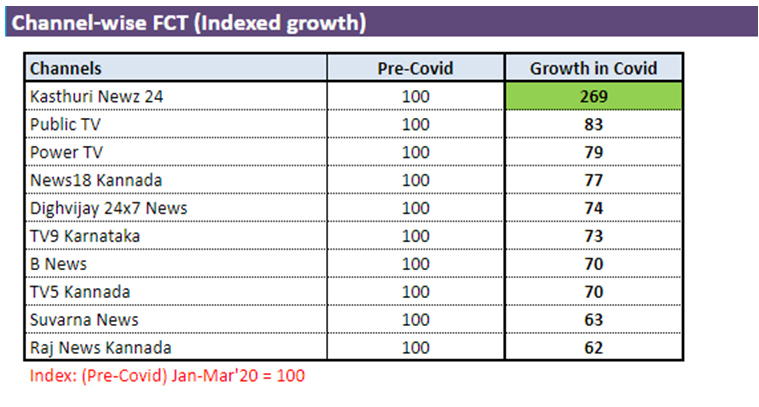
    While the ad revenues were scaling up for news channels during the past three months, as per TAM AdEx data, apart from Kasthuri News 24, which recorded a 15 per cent increase in the count of advertisers too, none of the other news channels witnessed positive growth. Overall, there was a 33 per cent drop in the tally of advertisers. 

    However, during the Covid2019 period, the numbers kept growing month-on-month. While comparing the count of advertisers in June’20 and April’20, TAM AdEx witnessed a 19 per cent growth, reveals the TAM AdEx data. 

    Masteh states that these numbers will continue to grow if the Covid2019 numbers stay on the lower margin in the state during the coming months. “However, with GECs slowly claiming their stake back, we can witness slight dips in the ad revenues on news channels, but the growth will remain upward if the pandemic remains contained.” 

    Kumaran adds, “In Karnataka, retail clients have started spending from June onwards compared to pre-Covid2019 on TV (across genre) followed slowly by other regional/national clients. If continues in July–Aug, Karnataka market will see more ad spend if relaxation continues. The upcoming festive season of Dussehra and Diwali will expectedly revive the overall industry.” 
     

  • TV ad volumes on Kannada channels grow as Covid2019 situation improves

    TV ad volumes on Kannada channels grow as Covid2019 situation improves

    NEW DELHI: The third biggest contributor to south India’s ad space, amounting to Rs 5,000 crore in the year 2019 (as per TAM AdEx South Side Story), Karnataka is a crowded space when it comes to advertisers and marketers both. With the hub of digital agencies and regional offices of many mainline agencies in Bengaluru, the market is a very competitive one too. And going by the words of industry insiders, probably, the least impacted by Covid19 lockdown. 

    Mplan CEO Parag Masteh tells Indiantelevision.com that lesser number of Covid2019 cases in Karnataka, compared to other southern states, and a positive market sentiment helped the Kannada media companies maintain a steady grip on their advertising revenues. News and movies genres had an easy time, but there was a good dip in GEC numbers. 

    “Though the nationwide lockdown and advertisers’ reluctance to splurge forced the TV market to lessen the ad rates by almost 50 per cent, the cumulative loss is nowhere near to what markets like Kerala faced. They, in fact, managed to maintain their revenue cycle in place.” 

    The Media Ant co-founder Samir Choudhry reveals, “Overall there is a dip of more than 25 per cent in business (Kannada-language channels) in Q2 (April-June) vs Q1 (January-March).” 

    Karnataka ad market is one of those where television still holds a greater affinity than other media and it remained the same during Coid2019 period, too. In fact, TV news genre managed to gain business during the time as per industry experts.  

    Choudhry adds, “When it comes to Kannada markets, we have seen an increase of 10 per cent in the business when it comes to news channels. But yes, there was more than 30 per cent drop for the remaining genres during the Covid2019 period.” 

    As per Masteh’s prognosis, news genre might have managed to hold 40-45 per cent of its regular business. 

    If we look at the overall share of the television ad market, the advertiser sentiment seemed to be gradually increasing as the situation improved and fresh programming began. 

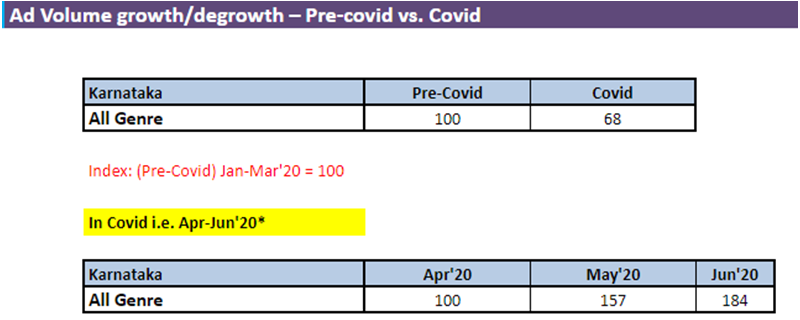
    As per data shared by TAM AdEx, while there was a 32 per cent drop in overall ad volume across genre during the Covid2019 period, the numbers increased month-on-month. Ad volumes surged by 57 per cent in May and 84 per cent in June over the month of April.

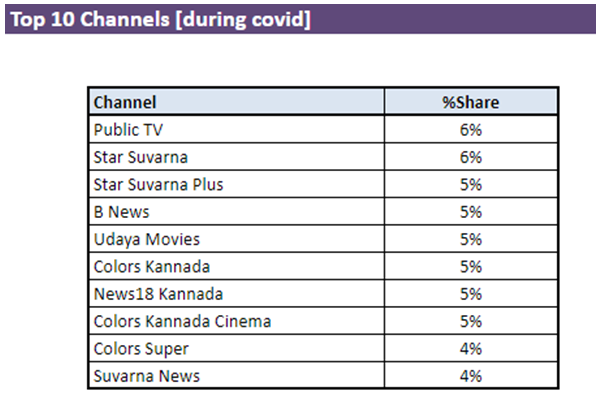
    The top 10 channels, which consist of four channels from news genre and three each from GECs and movie genre, amounted for 50 per cent of the advertising volume shares. Top brands included HUL, RB, Brooke Bond Lipton, Wipro and Colgate Palmolive, all big national-level advertisers.

    The biggest sufferer in the market has been print and OOH for very obvious reasons; distribution problem for print and lack of advertiser interest in case of OOH. As the market slowly starts moving to normal, print is expected to get its advertiser share back sooner than later, but for OOH companies the fight is going to be tough. Even with lockdown restrictions gradually lifting, the OOH players are forced to sell the ad space at 90 per cent lesser than their original prices. This is hardly able to help them survive and pay salaries, shares an industry insider. 

    The Kannada-language market has already started seeing positivity when it comes to ad volumes and revenues will follow soon. But that is not happening right now as per Choudhry. 

    Masteh believes that the situation will start improving for the media players by the end of August if the Covid2019 numbers remain on a downward trend and the peak doesn’t hit the state, as expected to happen in September-October.