Tag: MPA

  • DTH focus shifts to ARPU from subscriber numbers

    DTH focus shifts to ARPU from subscriber numbers

    MUMBAI: In the last six months, the direct-to-home (DTH) industry has faced lots of challenges. The industry saw big DTH players consolidate, shutting down of a player and fights between DTH operators and broadcasters.

    In the early days, customer acquisition was the key for most distribution platform operators but, currently, their eyes are set on cost-efficiencies.

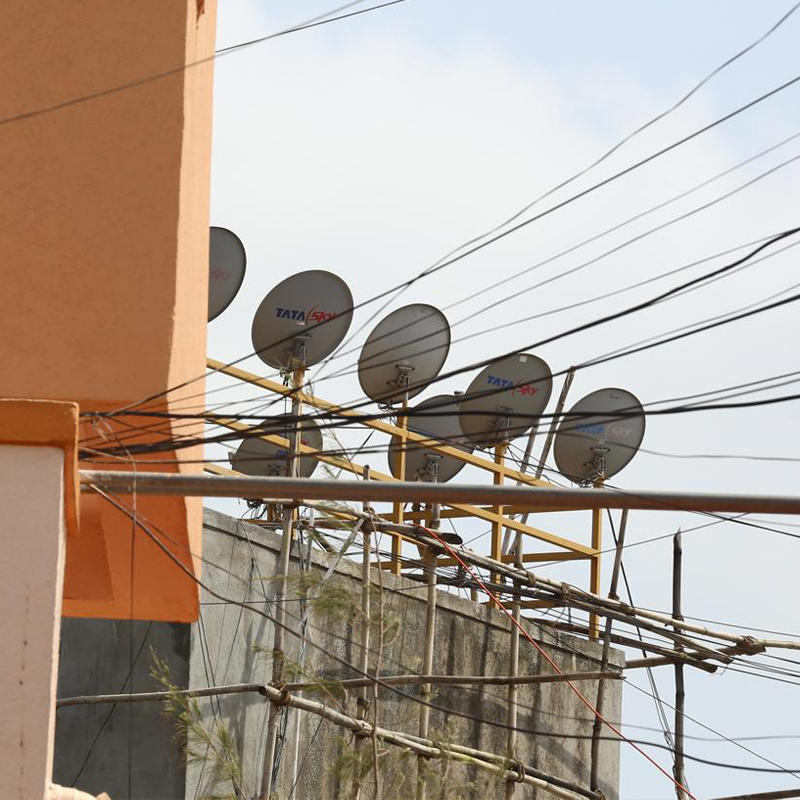
    An industry source tells Indiantelevision.com, “The biggest worry in the market right now is the elephant in the room, which is Reliance Jio. In the last three quarters, DTH growth has been very muted and is not growing as actively as it should have. The challenge for DTH players right now is pushing up the average revenue per user (ARPU) and push high definition (HD) subscription. Tata Sky, for instance, is pushing HD channels to 110 and trying to create HD packs. It is not trying to increase the subscriber base but planning towards increasing the ARPU.”

    Tata Sky came up with a Make My HD pack for as low as Rs 30 per month and a regional HD Access pack at Rs 50 per month for users subscribed to regional SD channels. The channel targeted the south market with a special pack at Rs 290. Dish TV campaigned for HD in all homes by removing the access fee on it and advertising a cost as low as Rs 169 per month (excluding taxes). Countering DD FreeDish, the oldest DTH player also introduced a free to air (FTA) pack with a price translating to Rs 32 a month.

    After more than a year of twists and turns, Dish TV and Videocon d2h are set to formalise a merger to create India’s largest DTH company valued at around $2.4 billion and the world’s second largest in terms of subscribers with 29 million, just behind AT&T’s DirecTV. According to the original plan, Dish TV shareholders will own 55.4 per cent in the combined entity, to be named Dish TV Videocon, while Videocon d2h shareholders will hold 44.6 per cent in the company.

    “After the deal, there will be group content deals since they are thrice strong with Dish TV, Videocon d2h and Siti Cable. If they go to the broadcaster for the content deal, the pricing leverage will be much higher,” the source adds.

    India accounted for 65 per cent of revenue for regional pay-TV channel groups in 2017, led by large local channel businesses owned and operated by 21st Century Fox, Sony and Viacom as per a Media Partners Asia (MPA) report.

    “The whole landscape is undergoing a change. The cable operators are facing many challenges and are punching back hard. They are focussing on growing ARPUs from the rural market in phase 3 and 4 and the subscriber base. ARPU in the rural market is still very low which is around Rs 40-45. If they make it equal to urban around Rs 70-75 with a subscriber base of 1 million, then also it will give them an extra Rs 35 million every month. So everyone is working on a strategy, but they are not saying it upfront,” the source points out.

    Videocon d2h saw ARPU at Rs 208 for Q3 2018 (September – December 2017), higher than the Rs 212 in the previous quarter. Dish TV’s ARPU stood at Rs 144 for the same quarter, lower than Rs 148 in the trailing quarter. The highest ARPU among listed companies was with Airtel Digital TV with Rs 233.x

    Dish TV CMD Jawahar Goel says that the industry is on the pay channels’ side. “The MSOs have different pricing in the market. Whereas for DTH it is a very steep charge and this is the reason for the shutdown of Reliance BIG TV,” he says.

    KCCL CEO Shaji Mathews says that if DTH had been launched in India in the year 1997 as envisaged by some of the leading media companies, cable TV would have been a minority player today. “Ever since its launch half a decade later, DTH thrived on the deficiencies in analog cable. Another decade later when digitisation commenced, again DTH pitched to take a share from cable and become the majority player. However, cable withstood the challenge and retained its position at the end of 2017,” he says.

    The scenario emerging is that of media players consolidating to face the challenge from telecom. However, Mathews says that in this fight, historically, cable TV has been the partner that media companies can rely upon. “The polarisation is evident from the exit of non-media Videocon and Rcom, though the latter has other reasons also,” he highlights.

    Media Partners Asia VP Mihir Shah shows two reasons for growth in the industry. “As BARC continues expanding its coverage, it has pushed up the value of rural reach for broadcasters, which today is primarily delivered through DTH. With this merger, the DTH market has consolidated with top three players accounting for 90 per cent share of the paying subscriber base. These two structural developments will improve DTH’s subscriber economics in the coming year,” he said. “Warburg Pincus’ investment in Airtel Digital last year and now Dish TV-Videocon d2h merger going through serves as a confident booster for the sector.”

    The active DTH subscriber base in India is over 50 million as of December 2017. Sun Direct is a major DTH player in the south holding about 40 per cent of the area. Southern subscribers also make up 97 per cent of its total. Sun Direct took up an HEVC media solution from Harmonic to increase its HD channel number to 80 recently.

    On 16 February, Star had issued a disconnection notice to Bharti Telemedia for non-signing of the subscription agreement, non-payment of subscription fees and non-submission of subscribers reports. However, even before the broadcaster gave effect to its disconnection notice, the DTH operator decided to temporarily discontinue Star India channels from its subscription packs from 8 March as it had not been able to arrive at mutually acceptable terms with the broadcaster.

    “Due to failure to arrive at mutually acceptable terms with Star India, with effect from 8 March 2018, all Star network channels will be temporarily discontinued from your packs,” the DTH operator informed its subscribers.

    In the latest update, the Telecom Disputes Settlement Appellate Tribunal (TDSAT) has asked Star India and Airtel DTH to negotiate and enter into an agreement. The tribunal also directed the DTH operator to pay all lawful dues in accordance with the agreement by the due date as indicated in Star’s letter dated 7 March, except the amount of Rs 9.8 crore.

    As competition within the industry as well as the fight for the pie continues with MSOs, DTH players will have to focus on giving value add at reasonable rates. Increasing ARPUs will also enable the red to turn black on the company balance sheet, which is what most of them are currently sweating about.

    Also read:

    TDSAT tells Airtel DTH, Star to negotiate

    Airtel Digital TV disconnects Star India channels

    Madras HC gives split verdict in Star India versus TRAI case

     

  • APOS 2018: speakers & themes unveiled for annual summit of local, regional & global leaders In media, entertainment & telecoms

    APOS 2018: speakers & themes unveiled for annual summit of local, regional & global leaders In media, entertainment & telecoms

    HONG KONG/SINGAPORE: Some of the biggest brands across the local, regional and global media, entertainment and telecommunications industries will participate at this year’s APOS summit, hosted by Media Partners Asia in Bali, Indonesia from April 24-26. APOS 2018 brings together key players across the value chain with a particular focus on how broadband connectivity is combining with local economies and ecosystems to transform prospects for the production, distribution and monetization of content, games and IP across Asia Pacific.

    Speaking about the line-up and the event’s themes, MPA executive director Vivek Couto said: “APOS 2018 brings together key brands and leadership striving to create, distribute, monetize and invest at scale across media, entertainment, telecoms and related sectors, as they forge new paths to value and enter into partnerships to drive engagement and share of spend.”

    Key speakers and themes at this year’s APOS summit include:

    Race To Scale: Local Challenges For Global Leaders
    Media, telecoms, entertainment and technology ecosystems are colliding across Asia Pacific, as the quest for local, regional and global scale picks up pace. APOS 2018 highlights the paths to value and partnerships that matter for global brands as they seek to drive engagement and share of spend across the diverse region and beyond.

    Confirmed speakers

    Bob Bakish, President & CEO, Viacom
    Uday Shankar, President, 21st Century Fox Asia
    JB Perrette, President & CEO, Discovery Networks International
    Ricky Ow, President, Turner International Asia Pacific
    Mahesh Samat, SVP & MD, The Walt Disney Company, South Asia
    Gina Brogi, President of Global Distribution, Twentieth Century Fox Television Distribution
    Sudhanshu Vats, Group CEO, Viacom18 Media 

    Broadband Economics: The Way Forward For Telcos
    Having opened up the broadband opportunity, Asia’s telcos now want a bigger piece of the pie. APOS 2018 weighs up the future for telcos in the region as they invest in content, partnerships, networks and services, seeking to ward off disruptors while chasing a bigger share of consumer spend.

    Confirmed speakers

    Somchai Lertsutiwong, CEO, AIS
    Ernest Cu, President & CEO, Globe
    William Yeung, CEO, HKBN
    Allen Lew, CEO, Optus
    Manuel Pangilinan, President & CEO, PLDT
    Ririek Adriansyah, President Director, Telkomsel 

    Streaming Dreams & Reality: Ambition, Growth, Competition 
    The next chapter is being written for premium online video in APAC. APOS will take a snapshot of the latest competitive dynamics and revenue opportunity in online video, as global, regional and local services size up prospects for growth, profitability and market leadership, as well as their appetite for risk.

    Confirmed speakers

    James Farrell, Head of Content, Amazon Prime Video Asia Pacific
    Ajit Mohan, CEO, Hotstar
    Peter Bithos, CEO, Hooq
    Kazufumi Nagasawa, HJ Holdings (Hulu Japan)
    Mark Britt, CEO & Co-Founder, Iflix Group
    Roma De, Director, Platform Products, Netflix
    Tony Zameczkowski, VP, Business Development, Netflix Asia
    Janice Lee, MD, PCCW Media (Viu)
    Jong-Won Kim, SVP & Head of Oksusu, SK Telecom
    Esther Nguyen, Founder & CEO, Pops Worldwide
    Fred Cheong, Group CEO, WebTVAsia
    Gaurav Gandhi, CEO, Viacom18 Digital Ventures (Voot) 

    Opportunities In Southeast Asia: Growth In Uncertain Times
    Despite volatility and uncertainty across many markets in Southeast Asia, local ecosystems continue to evolve, promising to enrich companies that can adapt. APOS 2018 picks out some key opportunities and the companies attempting to capitalize on them, while evaluating the impact of these changes on local investment, competition and monetization.

    Confirmed speakers

    Rohana Rozhan, Group CEO, Astro
    Carlo Katigbak, President & CEO, ABS-CBN
    Hary Tanoesoedibjo, Founder & Chairman, MNC Group
    Tham Loke Kheng, CEO, Mediacorp
    SK Cheong, Executive Director & GM, TVB

    The Evolution of Entertainment: Making New Stories Pay
    Studios and storytellers and that can keep audiences tuned in are in demand, as competition for consumer time intensifies. APOS 2018 looks at the different strategies production houses, broadcasters and online video services are taking to capture audience segments and maximize returns from their content bets.

    Confirmed speakers

    Ma Zhongjun, Chairman & President, Ciwen Media 
    Suyoung Lee, Director, JTBC
    Mark Linsey, Director, BBC Studios
    Joko Anwar, Independent TV & Film Director
    Wicky Olindo, Founder, TV & Film Producer, Screenplay Productions
    Ritesh Sidhwani, Film Director & Co-Founder, Excel Entertainment
    Michael MacMillan, Co-Founder & CEO, Blue Ant Media
    Sunil Samtani, Producer, Rapi Films
    Hyun Park, Co-Head, TV Production and Acquisitions, Korea, Warner Bros
    Jay Ji, CEO, Huayi Brothers Korea
    Hosi Simon, CEO, Vice Asia Pacific 

    The Investor View: Risks and Returns In Media
    Strategic, private equity and financial investors are making deep bets across telecoms, media and technology, helping fuel the next cycle of competition in content and distribution. APOS 2018 will highlight the thinking behind these decisions, globally, regionally and locally, with a particular focus on online video, payment infrastructure, and traditional film and TV.

    Confirmed speakers

    Li Ruigang, Founding Chairman & CEO, CMC
    Paul Aiello, MD, Emerald Media
    Deborah Mei, Partner & Co-Founder, Raine
    Nick Swierzy, Strategic Advisor to Group CEO, Axiata Group
    David Goldstein, Senior Advisor, TPG Capital 

  • Indian online video to grow to US 1.6 bn at 35 percent CAGR by 2022

    MUMBAI: Media Partners Asia (MPA) estimates that the Indian online video industry generated approximately US$ 230 million in total sales in 2016, and is on course to reach approximately US$340 million in 2017. MPA projects a 35 percent CAGR to 2022 as total industry sales top US$1.6 billion.

    Further, the MPA report entitled Asia Pacific Online Video & Broadband Distribution, says that the Asia Pacific online video market will scale to US$ 46 billion by 2022, with China contributing more than 75 percent. MPA indicates that online video revenues, including net advertising and subscription fees, will grow at a 21 percent CAGR across the region between 2017 and 2022, climbing from US$17.6 billion in 2017 to US$46 billion by 2022.

    Said Mumbai-based MPA Vice President Mihir Shah: “In 2016, Jio’s 4G launch intensified competition slashing mobile data prices. The currency demonetization initiative by the government, implemented towards the end of 2016, also helped spur a significant improvement in the digital payments infrastructure in the country. Both these events have served as catalysts for online video consumption and monetization. By 2022, SVOD will account for 17 percent of the online video market in terms of revenues. Online video consumption will remain dominated by YouTube with domestic challengers Hotstar and Voot performing robustly but in a distant second and third place, respectively.”

    China will continue to contribute the lion’s share of customers and revenues to the online video industry in Asia Pacific, garnering 85 percent of SVOD customers and 78 percent of online video sector revenues by 2022. Such growth and scale reflects: (1) Wide-scale investment in original and acquired OTT content, including early and exclusive windows; (2) A weak market for traditional pay-TV, creating an opportunity for premium content distribution and monetization through online video; (3) Steady improvements in broadband reach and infrastructure, as well as increased adoption of smart TVs and set-top boxes; (4) Consumer adoption of seamless payment systems, developed by the owners of some of the most popular online video services, who are also leveraging data analytics and bundling to create new cohesive new ecosystems for content, commerce and communication. China’s online video market is largely ad-supported but with subscription’s share of revenue hitting 33 percent in 2017 (compared to 18 percent in 2015 and 26 percent in 2016), prospects for a demand-driven subscription model remain bright.

    Japan, Australia, India, Korea and Taiwan will emerge as the markets ex-China with the most scale in online video revenues and distribution. This reflects robust payment infrastructure, including in India, along with the growth of advertising-funded platforms and the steady rise of premium, subscription-based platforms. Piracy and under-developed payment infrastructure will continue to limit growth across much of Southeast Asia although increased broadband penetration (led by mobile connectivity) positions telcos as key partners to drive online video revenues. Online video advertising, in particular, remains a scalable and vital opportunity in Southeast Asia while SVOD revenues will grow rapidly from a very low base.

    Said MPA executive director Vivek Couto: “Advances in telecoms and payment infrastructure continue to point the way forward for the online video sector in Asia Pacific, although business models and regulations continue to evolve in a sector that’s still nascent in most territories. Key trends are emerging: (1) Services anchored to nimble, robust and sustainable business models – built around strong execution and scalable content consumption – are rising to the top; (2) Access to local and Asian content is increasingly essential in almost all markets, while demand for recent windows for franchise-based Hollywood product is also robust. Demand for original content along with movies, kids content and sports is also becoming more important; (3) Content curation, packaging and pricing remain critical, along with brand equity. Telecom operators, which have been focused on either paid conversion or mass reach to drive value, are increasingly moving to tighter payment per consumption models in pursuit of ROI across key video partnerships; (4) The value of branded destinations will increase rapidly within the online video ecosystem as platforms and operators forge partnerships with broadcasters and content players; (5) Leading local and regional players ex-China will start to capitalize on a massive online video advertising opportunity, hitherto dominated in the main by YouTube.”

    According to MPA, the online video advertising pie in Asia Pacific will grow from under US$12 billion in 2017 to more than US$25 billion by 2022. Ex-China, this opportunity equates to US$7 billion by 2022 versus US$3 billion in 2017. YouTube and to some extent Facebook will remain dominant, with an average 75 percent market share of online video advertising between them ex-China by 2022, versus 85 percent in 2017. Japan, India and Australia, followed by Korea, will be the biggest online video ad markets after China over this period. In SVOD, consumer spend ex-China will accelerate from a low base as revenues reach ~US$3.1 billion in 2022 versus US$1.5 billion in 2017. Japan and Australia will account for a combined 55 percent of value by 2022 versus 68 percent in 2017. Southeast Asia’s contribution will climb rapidly from a mere 9 percent in 2017 to 15 percent by 2022. Indirect SVOD revenues, which reflect wholesale fees paid by telcos to online video platforms as part of bundling and integration agreements, will remain important in the medium term but become less significant longer-term. Even in the short-to-medium term, telecom operators are recalibrating their approach to ROI with a greater focus on payment per consumption models. Ex-China, SVOD indirect fees will grow from only US$110 million in 2017 to US$213 million by 2022. Average SVOD subscriber penetration of the population will only reach 9.8 percent in 2017. This should increase to ~19 percent by 2022 as total SVOD subs, including direct and indirect connections, scale from 341 million in 2017 to 676 million by 2022 (from 58 million to 102 million ex-China).

    Exponential growth of mobile internet connectivity, combined with a slow but steady transition to next-generation fixed broadband, will provide a significant boost to online video consumption, reach and monetization. According to MPA, data revenues across fixed and mobile networks in Asia Pacific are sizable at US$236 billion in 2017. These will reach US$318 billion by 2022, with the ex-China market size at ~US$175 billion by 2022 versus US$126 billion in 2017. Average mobile broadband penetration will reach 73 percent per capita by 2022 versus 59 percent in 2017, with some of the biggest growth coming from India, Indonesia, the Philippines, Thailand and Vietnam. Average fixed broadband penetration will grow steadily from 44 percent to 52 percent of households over 2017-22, with the focus increasingly on upgrading high-speed networks using fibre and next-generation cable technologies.

  • FICCI FRAMES: Legitimate screens, stricter laws, best practices for IPR

    MUMBAI: A National Intellectual Property Rights policy is a healthy prescription for the creative industry that seeks to provide an enabling framework for monetisation, protection and enforcement of copyright, but this can only succeed if there is robust law enforcement in addition to more punitive provisions.

    This was the gist of “Own, Convert and Protect Intellectual Property as a Driver of Innovation and Growth” at the FICCI FRAMES 2017.

    It is equally necessary for creative minds to understand their intellectual property rights globally, and constant amendment of relevant laws, apart from better co-ordination among all stakeholders in the media ecosystem.

    Solstrat Solution advisor S Rama Rao in his special address that set the tone of the discussion explained the difference between tangible and intangible assets such as intellectual property, which, he said was a human right with legal entitlement. He quoted Article 27 Para 3 of the United Nations Charter which underlined the significance of IP.

    However practically, the creative industry’s on lack of understanding of the value of IPR combined with inadequate enforcement mechanism and an inconsistent regulatory framework that stands in the way of the industry’s growth aspirations.

    Saikrishna & Associates senior partner Ameet Datta moderated a discussion where four participants gave their views on different aspects of IPR in India and globally.

    Among the leading lights of the industry who elucidated on the blueprint for translating policy into practice, the Paris-based International Federation of Film Producers Associations (FIAPF) chief representative Benoit Ginistry said a robust law-enforcement system needed to be in place to ensure intellectual property rights are protected.

    Lauding the Indian IPR laws, he said it was a positive step. Globally, he said, IP laws needed to be updated. Ratification and implementation of the laws was important, and technical performance measures (TPM) needed to be secured, he said.

    Ginistry suggested that one needed to protect investments and licences, and one needs to go beyond the copyright laws. India must join anti-piracy groups and campaigns in Europe, Japan and South Korea.

    Whether administrative measure or enforcement was vital to control IPR violation because of proliferation of streaming sites, MPA V-P Asia-Pacific Hank Baker half-jokingly commented that the world today does not allow the creator the leisure of creating and sharing creativity at will. “People are inclined to steal somebody else’s work,” Baker regretted.

    Appreciating the Indian government efforts and laws to protect IP, Baker said that around 42 countries were following “Best Practices” (also including site blocking and watermarking) in the creation and protection of IP. “The shelf life of a movie is a few weeks, but as soon as it is released, a cat and mouse game begins,” Baker complained. Decrying the existence of a transnational pirate network, he said that the ecosystem and the legal framework must be prepared to deal with any IP infringement.

    Baker was sad that the industry had never been as vulnerable as it was now. Censorship and limited number of screens to showcase new films were the other impediments. “People want to see when they want to see – no matter what,” Baker said matter-of-factly. There needs to be wider approach to support the industry.

    Reiterating the United States’s US$ 250 billion annual loss owing to violations, US consul-general to Mumbai Thomas L Vajda said IPR was a huge priority as the world was moving to a knowledge economy. Giving information about the formation of an IP working group two years ago, Vajda said US government was working with a number of state governments in India including Maharashtra towards protection of IPs. For the sake of IP protection, he said co-operation of different sectors was needed. “It’s not just the role of police to help protect IPs, different ministries must be involved in protect original content,” Vajda said.

    Vajda supported the ideas of spurring more innovation, protecting ideas and promoting more investments, but “a genuine intent is important.”

    Speaking about the protection of music IPs, Sony Music Entertainment president – India and Middle East Shridhar Subramaniam said IP laws had been gradually tweaked and a lot of finesse achieved. Although happy about the national policy and amendment to copyright laws in the last couple of years, Subramaniam said he was unhappy about the (monetary) value loss owing to violations by hiding behind safe harbour laws. The primary intent of the laws was to protect the interest of the creator, he added.

    Effectively checking piracy was a court-driven process, he said. Other measures that were being taken were blocking pirate sites and taking down rogue apps, Subramaniam said.

    The Sony Music executive recommended expanding the scope of licencing vis-à-vis radio, broadcasting and internet. He suggested trying and passing on benefits of innovation to the users. National registry and documentation help grow businesses, he felt, but lamented that there was no control over piracy originating from neighbouring markets.

    Music was tech-enabled consumption, Subramanian said, adding that there was a need to foster an environment of licencing. “Our input cost is not regulated,” he said. Although music legitimately belongs to the rights holders, some were using methods disguised as innovation. While ranking the federal states, Subramaniam opined, one could consider IP-friendliness as one of the primary criteria for selection.

  • FICCI Frames ’17: Maharashtra to form IP crime unit to fight online piracy

    MUMBAI: Well, well. The Indian media industry and the government are finally getting serious about content piracy. After Telangana Intellectual Property Crime Unit (TIPCU), Copyright Force and the government-mandated Copyright Board, Maharashtra state is all set to get Maharashtra Intellectual Property Crime Unit, which may be called MIPCU.

    Announcing the go-ahead for MIPCU, a body that would be a joint endeavor of the entertainment industry and the state government, Inspector General of Maharashtra Police (Cyber) Brijesh Singh (in the picture) said, however, the initiative would have to be backed by the industry players too in terms of resources to effectively fight cyber crime and online piracy.

    “I would want it to be set up under a public-private partnership model and want the industry to come forward and help me achieve this. I want the industry to come and tell me that this is what we need and we will then help them. There is a commitment from our side,” Singh said while delivering an address at FICCI Frames 2017 session themed `Decoding the Pirate Economy in Interconnected World: From Noise to Action.’

    Though Singh, who was also slightly skeptical of the losses in terms of revenue that were often quoted by the entertainment industry, said that if the industry was serious, so were the law enforcement agencies. Pointing out that it’s often seen that the film industry’s piracy concerns were “limited” to the first seven days of a film’s release, he added, “I think this issue needs us to be more serious. I want the industry to come to us to build this sustainable and long-term partnership.”

    Motion Pictures Association of America’s Indian unit (MPA) and the Film and Television Producers Guild of India have joined hands to fight the menace of online piracy. After discussing the idea of MIPCU with the chief minister of Maharashtra and MPA last month, the state government formally okayed formation of a unit to fight cyber crimes, especially online piracy. Offline offences regarding this issue will be dealt by the regular police units.
    The budget of this new proposed unit will depend on what kind of technology it plans to offer for a solution. The entire idea is to co-create a global facility, Singh later elaborated and added that the unit’s launch was dependent on the industry’s long-term commitment in terms of negotiating that space.

    Commenting on the proposal to form MIPCU, Viacom18 group general counsel Sujeet Jain said the entertainment and TV industry would back any such move as long as results were delivered irrespective of structures and modalities.
    Incidentally, some months back, as reported by indisntelevision.com, MPA, broadcasters and FICCI had joined hands to announce formation of Copyright Force to set agendas for effective safeguarding of Intellectual Property Rights (IPR) policy and engage with the government.

    To give an international perspective, TIPCU, Copyright Force and the proposed MIPCU have been seemingly inspired by the Police Intellectual Property Crime Unit (PIPCU) of the UK , which is a specialist national police unit dedicated to protecting the UK industries that produce legitimate, high quality, physical goods and online and digital content from intellectual property crime.

    PIPCU is operationally independent and launched in September 2013 with £2.56million funding from the Intellectual Property Office (IPO) of the UK government until June 2015. It was announced in October 2014 that PIPCU will receive a further £3 million from the IPO to fund the unit up to 2017. The unit is dedicated to tackling serious and organised intellectual property crime (counterfeit and piracy) affecting physical and digital goods (with the exception of pharmaceutical goods) with a focus on offences committed using an online platform.

    Also Read:

    Online pirates beware, Copyright Force on way

    Internet included in broadcasting for purpose of Copyright

    Telangana leads fight against online piracy in partnership with film industry

    FICCI keen on IPR awareness & enforcement to encourage innovation

    Internet included in broadcasting for purpose of Copyright


  • Share all World Cup, T-20 feeds with Prasar Bharati, rights holder told

    Share all World Cup, T-20 feeds with Prasar Bharati, rights holder told

    NEW DELHI: The telecast of all official one-day and Twenty-20 matches played by the Indian Men’s Cricket Team will henceforth have to be shared by the rights holder with the public broadcaster Prasar Bharati under the Sports Broadcasting Signals (Mandatory Sharing with Prasar Bharati) Act 2007.

    A Gazette notification issued on 22 October 2016 and placed on the Information and Broadcasting Ministry website today also states that this includes “such Test matches as are considered to be of high public interest by the Central Government.”

    In addition, the notification says this also includes semi-finals and finals of Men’s World Cup and International Cricket Council Championship Trophy will also figure among the the sporting events of national importance with respect to cricket.

    The notification has been issued by the Government under Section 2 (1) of the Act read with Rule 6(1) of the Sports Broadcast Signals (Mandatory Sharing with Prasar Bharati) Rules 2007. The notification issued by the joint secretary Anju Nigam, says this is in supersession of the notification of the Government of 23 August 2012.

    A Ministry source told indiantelevision.com that the notification had been issued in view of some cases filed earlier in the different courts and to avoid further litigation with regard to sharing the feed with All India Radio and Doordarshan with regard to cricket.Motion Pictures Association, MPA, Netflix, RedBull Media House, torrent, forensic watermarking, online piracy

  • Share all World Cup, T-20 feeds with Prasar Bharati, rights holder told

    Share all World Cup, T-20 feeds with Prasar Bharati, rights holder told

    NEW DELHI: The telecast of all official one-day and Twenty-20 matches played by the Indian Men’s Cricket Team will henceforth have to be shared by the rights holder with the public broadcaster Prasar Bharati under the Sports Broadcasting Signals (Mandatory Sharing with Prasar Bharati) Act 2007.

    A Gazette notification issued on 22 October 2016 and placed on the Information and Broadcasting Ministry website today also states that this includes “such Test matches as are considered to be of high public interest by the Central Government.”

    In addition, the notification says this also includes semi-finals and finals of Men’s World Cup and International Cricket Council Championship Trophy will also figure among the the sporting events of national importance with respect to cricket.

    The notification has been issued by the Government under Section 2 (1) of the Act read with Rule 6(1) of the Sports Broadcast Signals (Mandatory Sharing with Prasar Bharati) Rules 2007. The notification issued by the joint secretary Anju Nigam, says this is in supersession of the notification of the Government of 23 August 2012.

    A Ministry source told indiantelevision.com that the notification had been issued in view of some cases filed earlier in the different courts and to avoid further litigation with regard to sharing the feed with All India Radio and Doordarshan with regard to cricket.Motion Pictures Association, MPA, Netflix, RedBull Media House, torrent, forensic watermarking, online piracy

  • Online pirates beware, Copyright Force on way

    Online pirates beware, Copyright Force on way

    MUMBAI: Red alert for online pirates of TV content and movies. Copyright Force is on its way.

    In a move to fight online piracy, major broadcasters, studios and the recently set-up Telangana  Intellectual Property Crime Unit (TIPCU) are joining hands with Motion Pictures Association of America (MPA)’s Indian chapter for strengthening and effective implementation of regulations.  
    Tentatively named Copyright Force, the industry alliance’s main aim is to set an agenda on Intellectual Property Rights (IPR) policy and engage with the government.

    “When you talk about Digital India, the government will have to put out a strong message on curbing online piracy. There are just not enough teeth in existing laws to tackle online piracy. Hence, the industry is exploring an industry alliance to sensitise the government and judiciary of the issue,” Viacom18 general counsel Sujeet Jain explained to indiantelevision.com.

    Confirming the move Uday Singh, Managing Director-India, MPA, however, clarified the move was a positive one but needed more deliberations.

    The alliance is looking at getting broadcasting companies, studios and other industry organisations like MPA under one roof.

    “There are many organizations with larger objectives. The Copyright Force’s (or its formal version) sole purpose would be to push copyright issues,” Jain added.
    According to industry sources, initial exploratory meetings on the issue were attended by the likes of Viacom18, Star India, Walt Disney, Zee, Turner, Sony Pictures Networks, Sun TV Network, Eros International, Reliance and TIPCU.

    Earlier, speaking on the issue of Digital Content Economy and Robust Enforcement Model at an event organised by FICCI here today, Jain said, “You cannot fight online crime with offline measures. Online enforcement has to happen.”

    According to him, the Copyright Act and IT Act have to be updated so the issue of online piracy is addressed directly and helps the judiciary to properly interpret relevant laws to pass judgements on cases relating to online piracy.

    In recent time, the issue of piracy has gained currency in India with mostly film-makers taking John Doe orders in an effort to safeguard against online leaks of films before formal theatrical releases.

    However, the content industry feels such cases don’t properly address the growing menace of online piracy.

    But taking a leaf out of the UK’s PIPCU (Police Intellectual Property Crime Unit), run by City of London Police, the Telangana government has set up country’s first anti-piracy unit called Telangana Intellectual Property Crime Unit (TIPCU).

    The reason for TIPCU formation was effective lobbying by the Telugu Film Chamber of Commerce with the state government on behalf of the local film industry that is reported to have suffered losses in excess of Rs 361 crore because of online piracy.

    Telugu Film Chamber of Commerce honorary chairman, governing council, anti video piracy cell, Rajkumar Akella said, “As we have been witnessing in recent days, the problem of online piracy is most urgent. The greatest threat now has become the pre-movie release leakages. Without real time interventions from the government and the industry, it will go out of control.”

    According to him, TIPCU, an initiative brought to life by the Telangana government, the Telugu film industry and MPA India, was a very significant step. “The unit will be making optimum use of technology besides policy enforcement and outreach,” Akella added.

    MPA regional director, online content protection, Oliver Walsh said, “The Indian film and TV industry supports 1.8 million jobs which are at risk because of rising online content theft. The future of legitimate content delivery platforms depends on effective enforcement measures supported by Indian State governments.”

    Pointing out that TIPCU was a great example of a dedicated law enforcement unit to tackle organized online film piracy, Walsh said such an approach will go a long way in significantly reducing online infringement of films and television content. 

    Jain also pointed out that there is a need to develop dedicated digital courts in the country where the issue of online piracy is addressed exclusively.

  • Online pirates beware, Copyright Force on way

    Online pirates beware, Copyright Force on way

    MUMBAI: Red alert for online pirates of TV content and movies. Copyright Force is on its way.

    In a move to fight online piracy, major broadcasters, studios and the recently set-up Telangana  Intellectual Property Crime Unit (TIPCU) are joining hands with Motion Pictures Association of America (MPA)’s Indian chapter for strengthening and effective implementation of regulations.  
    Tentatively named Copyright Force, the industry alliance’s main aim is to set an agenda on Intellectual Property Rights (IPR) policy and engage with the government.

    “When you talk about Digital India, the government will have to put out a strong message on curbing online piracy. There are just not enough teeth in existing laws to tackle online piracy. Hence, the industry is exploring an industry alliance to sensitise the government and judiciary of the issue,” Viacom18 general counsel Sujeet Jain explained to indiantelevision.com.

    Confirming the move Uday Singh, Managing Director-India, MPA, however, clarified the move was a positive one but needed more deliberations.

    The alliance is looking at getting broadcasting companies, studios and other industry organisations like MPA under one roof.

    “There are many organizations with larger objectives. The Copyright Force’s (or its formal version) sole purpose would be to push copyright issues,” Jain added.
    According to industry sources, initial exploratory meetings on the issue were attended by the likes of Viacom18, Star India, Walt Disney, Zee, Turner, Sony Pictures Networks, Sun TV Network, Eros International, Reliance and TIPCU.

    Earlier, speaking on the issue of Digital Content Economy and Robust Enforcement Model at an event organised by FICCI here today, Jain said, “You cannot fight online crime with offline measures. Online enforcement has to happen.”

    According to him, the Copyright Act and IT Act have to be updated so the issue of online piracy is addressed directly and helps the judiciary to properly interpret relevant laws to pass judgements on cases relating to online piracy.

    In recent time, the issue of piracy has gained currency in India with mostly film-makers taking John Doe orders in an effort to safeguard against online leaks of films before formal theatrical releases.

    However, the content industry feels such cases don’t properly address the growing menace of online piracy.

    But taking a leaf out of the UK’s PIPCU (Police Intellectual Property Crime Unit), run by City of London Police, the Telangana government has set up country’s first anti-piracy unit called Telangana Intellectual Property Crime Unit (TIPCU).

    The reason for TIPCU formation was effective lobbying by the Telugu Film Chamber of Commerce with the state government on behalf of the local film industry that is reported to have suffered losses in excess of Rs 361 crore because of online piracy.

    Telugu Film Chamber of Commerce honorary chairman, governing council, anti video piracy cell, Rajkumar Akella said, “As we have been witnessing in recent days, the problem of online piracy is most urgent. The greatest threat now has become the pre-movie release leakages. Without real time interventions from the government and the industry, it will go out of control.”

    According to him, TIPCU, an initiative brought to life by the Telangana government, the Telugu film industry and MPA India, was a very significant step. “The unit will be making optimum use of technology besides policy enforcement and outreach,” Akella added.

    MPA regional director, online content protection, Oliver Walsh said, “The Indian film and TV industry supports 1.8 million jobs which are at risk because of rising online content theft. The future of legitimate content delivery platforms depends on effective enforcement measures supported by Indian State governments.”

    Pointing out that TIPCU was a great example of a dedicated law enforcement unit to tackle organized online film piracy, Walsh said such an approach will go a long way in significantly reducing online infringement of films and television content. 

    Jain also pointed out that there is a need to develop dedicated digital courts in the country where the issue of online piracy is addressed exclusively.

  • Indian Pay TV subscription to break Rs 10,000 crore barrier in 2016: MPA

    Indian Pay TV subscription to break Rs 10,000 crore barrier in 2016: MPA

    MUMBAI: It’s heartening news for many in the pay TV industry, the slow pace of digitalization, nothswithstanding.

    Subscription revenues for broadcasters in India from cable TV and DTH platforms are on course to cross the Rs 10,000 crore (US $1.5 billion) mark for by end 2016. That’s the prediction of Singapore-based industry research and analysis firm Media Partners Asia (MPA).

    On the whole, Asia Pacific Pay-TV And Broadband Markets 2016, predicts that
    India’s pay-TV industry is on course to generate $9.4 billion in sales this year.

    Of this, the pay TV channels will account for $4.9 billion in aggregate revenue in 2016, up 16 per cent year-on-year. (The rest of the $4.5 billion is revenue that accrues to cable TV and DTH, that is the platforms)

    The revenue mix is approximately 70:30, skewed in favor of ad sales. Maintaining strong future growth will require channel operators to manage several structural changes, including the increased importance of rural markets under BARC’s new TV measurement system, changing norms on channel pricing and the rise of OTT video services.

    Pay-TV channel advertising revenue should grow by 15 per cent this year, to reach US$3.4 billion, predicts MPA.

    Says MPA executive director Vivek Couto: “Future economic growth should remain strong, which will support solid gains in the pay-TV industry. Digitalising India’s 65 million analog subscribers remains a major opportunity for cable, DTH and other emerging pay-TV platforms. Digital cable has done well to attain a 30 per cent share in Phase III areas, which tend to be DTH strongholds. At the same time, changes in the distribution landscape, together with gaps in traditional pay-TV services, are fostering the growth of new platforms. While Reliance Industries has yet to unveil pricing and bundling plans for its broadband service R-Jio, the product could disrupt traditional pay-TV distribution in urban markets. Expanded TV ratings from BARC meanwhile, which gives a better picture of viewing in rural areas, has also helped Prasar Bharati’s Freedish gain traction in Phase III and Phase IV areas.”

    MPA says the future looks bright. The report says that India’s pay TV industry will grow sales at 9.a 2 per cent compounded annual growth rate (CAGR) between 2016 and 2021 to reach $14.5 billion in revenue by 2021, increasing thereafter to $18 billion by 2025.

    Total pay-TV subscribers are forecast to grow from 152 million this year to 183 million by 2025. Pay-TV penetration, including multiple subs in a home, should remain stable over 2016-25 at 80 per cent of TV homes, although digital pay-TV subs are projected to grow from 93 million to 129 million over the same period. MPA forecasts that 70 per cent of India’s pay-TV base will be digitalized by 2025.

    Ongoing cable digitisation will help facilitate a gradual increase in pay-TV monthly ARPUs, from US$3.3 in 2016 to US$4.5 in 2025, although this will be offset by the 30 per cent share of pay-TV subs still accruing to analog by 2025. Cable will remain pay-TV’s largest platform but its share of pay-TV subscribers is expected to decline, from 68 per cent in 2016 to 60 per cent in 2025, as DTH attracts the majority of new subs.