Tag: Mozilla

  • Synamedia joins Alliance for Open Media

    Synamedia joins Alliance for Open Media

    MUMBAI: The Alliance for Open Media (AOMedia) has announced that Synamedia, the world's largest independent video software provider, has joined at the promoter level.

    As a member of the Alliance, Synamedia will collaborate with AOMedia members, which include fellow leading internet and media technology companies, to advance open standards for media compression and delivery over the web. Synamedia's video network portfolio features video distribution, processing, and delivery services, and solutions to power premium quality broadcast and broadband video, create compelling live multi-screen experiences, enable software-defined video processing and unify operations.

    AOMedia members include industry leaders like Amazon, ARM, Cisco, Facebook, Google, Intel, Microsoft, Mozilla, Netflix, NVIDIA, Samsung Electronics, and Tencent.

    The availability of AOMedia Video Codec 1.0 (AV1), AOMedia's open-source, royalty-free video coding format is a significant milestone in the journey to deliver a next-generation video format. AV1 is interoperable, open, optimized for internet delivery and scalable to any modern device at any bandwidth. AV1 enables more screens to display the vivid images, deeper colours, brighter highlights, darker shadows, and other enhanced UHD imaging features that consumers and businesses have come to expect – all while using less data.

    "We're thrilled to join AOMedia. As customers make more intelligent use of virtualization and cloud, we see the adoption of AV1 as a way to further our own goals of enhancing online video streaming experiences for OTT at scale. We look forward to working alongside AOMedia members to open up new possibilities to use AV1 for royalty-free, cross-platform online video across a wide range of applications," said Julien Signes, senior vice president and general manager, video network at Synamedia.

    "We're excited to have Synamedia as our newest member, reflecting our joint commitment to increase the openness and interoperability of internet video," said Matt Frost, AOMedia vice president of communications and membership, and director at Google. "Synamedia brings to AOMedia a long history of live encoding and OTT delivery for major content distributors. We look forward to collaborating to improve the quality and availability of streaming video with AV1."

    Designed at the outset for hardware optimization, the AV1 specification, reference code, and bindings are available for toolmakers and developers to download here to begin designing AV1 into products. Specifically, the release of AV1 includes:

    Ø  Bitstream specification to enable the next generation of silicon

    Ø  Unoptimized, experimental software decoder and encoder to create and consume the bitstream

    Ø  Reference streams for product validation

    Ø  Binding specifications to allow content creation and streaming tools for user-generated and commercial video.

    Alliance for Open Media

    Launched in 2015, the Alliance for Open Media (AOMedia) was formed to define and develop media technologies to address marketplace demand for an open standard for video compression and delivery over the web. Board-level, Founding Members include Amazon, Apple, Arm, Cisco, Facebook, Google, Intel, Microsoft, Mozilla, Netflix, NVIDIA, Samsung Electronics, and Tencent. AOMedia's open-source, royalty-free, video codec AV1 is a significant milestone in the ability to deliver a next-generation video format that is interoperable, open, optimized for internet delivery and scalable to any modern device at any bandwidth.

  • Indian design should have its own identity: Michael Johnson at KDY 2016

    Indian design should have its own identity: Michael Johnson at KDY 2016

    JAIPUR: After building a functional formula or template, creative minds often challenge themselves by breaking out of the same mould. Michael Johnson, who set up the London-based design consultancy Johnson Banks, is a follower of this school of thought, because ‘why not?’

    After giving a good 10 years to designing for big name brands, Johnson had taken on the lack of proper branding in non-for-profit sector, and asked himself if design solutions can actually make a tangible difference in the field.

    Addressing a room full of graphic designers, artistes and branding professions at day one of Kyoorius Design Yatra 2016, Johnson asked if designs can really make a difference or it is a self satisfying and misplaced expectation.

    Johnson then went on to answer the question with a glimpse of his team’s works since they started off.

    The problem, Johnson said, lay in how graphic designers and advertising agencies handle non-for-profit work. “They treat it the same way old Catholic churches would treat indulgences: a little act of good will for their smooth sailing to heaven, or to pacify their conscience. They don’t do it to actually make it work.”

    After familiarising the audience with the idea of design solutions for non-for-profit organisations that actually helped them raise significant funds, Johnson titillated them with the idea of open source rebranding – to the point of sharing their design’s first draft in a public domain to be criticised by the world at large.

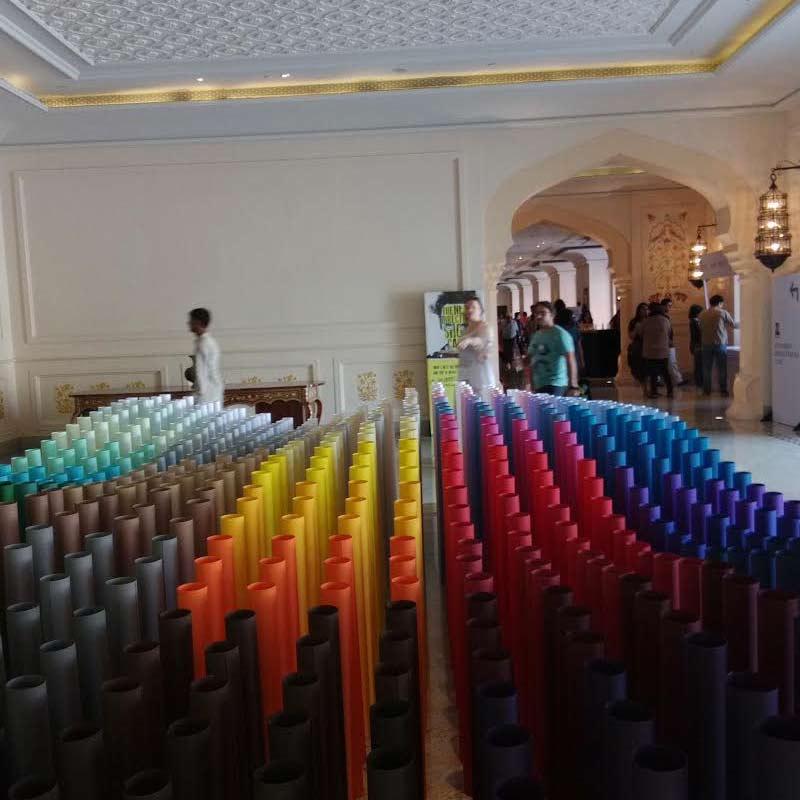
    For those who don’t know Johnson and his team at Johnson Banks has been invading many trade publishers’ headlines for its partnership with Mozilla to rebrand the company’s identity on a public domain.

    Later, speaking to indiantelevision.com, Johnson shared he had great expectation from the Indian design community to carve a unique identity; and a part of it brings him back to Kyoorius Design Yatra.

    Having participated in Kyoorius Designyatra first in its 9th edition, Johnson feels it has grown a great deal over the years “A proper design conference was very much a new concept in India back then. It was more of ‘famous designers presenting their works and the Indian counter parts lauding. It was obviously very appreciated but there was very little interaction, and engagement from the audience. And here we are, almost 10 years later and the property has grown so much. It has a clear theme that resonates very well with me. Instead of ‘here’s what I do’ presentation, speakers can talk about why they do what they do,” Johnson shared, adding that from his last year’s experience as a judge of Kyoorius Design Awards 2015, he could gauge that the design industry is being seriously taken in the country.

    But it’s not quite there yet, Johnson admitted.

    “It’s hard to track Indian designs in other markets. You hear big names from India in thr advertising circle but it gets a little tricky from design perspective,” he said.

    “I have often questioned why Indian design should be reflective of western works. Why can’t they do their own unique branding when India has such a vibrant culture to draw inspiration from? There is no need to copy the trends that the UK and the USA have been doing for the past 50 years,” he simply stated. Giving Indian designers the benefit of doubt he added that it could be the result of western works dominating the design industry for years and becoming a benchmark for the young Indian professionals joining in now.

    “I strongly believe that Indian design should have its own identity, much like the Japanese who have made a staunch distinction in their work that is world apart. I have started to see someone of that since the last time I was here, thus looking forward to the winning entries of this year’s Kyoorius Design Awards,” Johnson added in parted.

  • Indian design should have its own identity: Michael Johnson at KDY 2016

    Indian design should have its own identity: Michael Johnson at KDY 2016

    JAIPUR: After building a functional formula or template, creative minds often challenge themselves by breaking out of the same mould. Michael Johnson, who set up the London-based design consultancy Johnson Banks, is a follower of this school of thought, because ‘why not?’

    After giving a good 10 years to designing for big name brands, Johnson had taken on the lack of proper branding in non-for-profit sector, and asked himself if design solutions can actually make a tangible difference in the field.

    Addressing a room full of graphic designers, artistes and branding professions at day one of Kyoorius Design Yatra 2016, Johnson asked if designs can really make a difference or it is a self satisfying and misplaced expectation.

    Johnson then went on to answer the question with a glimpse of his team’s works since they started off.

    The problem, Johnson said, lay in how graphic designers and advertising agencies handle non-for-profit work. “They treat it the same way old Catholic churches would treat indulgences: a little act of good will for their smooth sailing to heaven, or to pacify their conscience. They don’t do it to actually make it work.”

    After familiarising the audience with the idea of design solutions for non-for-profit organisations that actually helped them raise significant funds, Johnson titillated them with the idea of open source rebranding – to the point of sharing their design’s first draft in a public domain to be criticised by the world at large.

    For those who don’t know Johnson and his team at Johnson Banks has been invading many trade publishers’ headlines for its partnership with Mozilla to rebrand the company’s identity on a public domain.

    Later, speaking to indiantelevision.com, Johnson shared he had great expectation from the Indian design community to carve a unique identity; and a part of it brings him back to Kyoorius Design Yatra.

    Having participated in Kyoorius Designyatra first in its 9th edition, Johnson feels it has grown a great deal over the years “A proper design conference was very much a new concept in India back then. It was more of ‘famous designers presenting their works and the Indian counter parts lauding. It was obviously very appreciated but there was very little interaction, and engagement from the audience. And here we are, almost 10 years later and the property has grown so much. It has a clear theme that resonates very well with me. Instead of ‘here’s what I do’ presentation, speakers can talk about why they do what they do,” Johnson shared, adding that from his last year’s experience as a judge of Kyoorius Design Awards 2015, he could gauge that the design industry is being seriously taken in the country.

    But it’s not quite there yet, Johnson admitted.

    “It’s hard to track Indian designs in other markets. You hear big names from India in thr advertising circle but it gets a little tricky from design perspective,” he said.

    “I have often questioned why Indian design should be reflective of western works. Why can’t they do their own unique branding when India has such a vibrant culture to draw inspiration from? There is no need to copy the trends that the UK and the USA have been doing for the past 50 years,” he simply stated. Giving Indian designers the benefit of doubt he added that it could be the result of western works dominating the design industry for years and becoming a benchmark for the young Indian professionals joining in now.

    “I strongly believe that Indian design should have its own identity, much like the Japanese who have made a staunch distinction in their work that is world apart. I have started to see someone of that since the last time I was here, thus looking forward to the winning entries of this year’s Kyoorius Design Awards,” Johnson added in parted.

  • Alcatel’s smartphone ‘Onetouch Fire C’ launches on Flipkart’s Big Billion Day Sale

    Alcatel’s smartphone ‘Onetouch Fire C’ launches on Flipkart’s Big Billion Day Sale

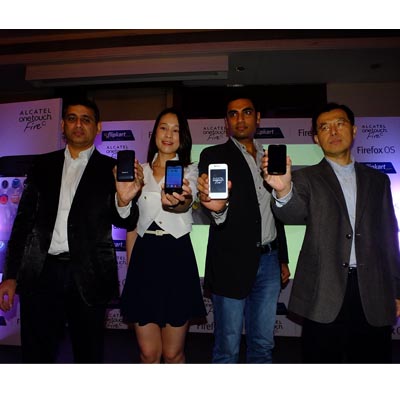
    BENGALURU:  A number of companies have said that they are working on the $20-25 smartphone for India. Alcatel Onetouch (Alcatel) has come in close with a smartphone that seems to have features that just about slot it into the smartphone category, a little above the features phone at a price of Rs 1990, or a little more than $30 – the ‘Onetouch Fire C’.


    The company is targeting first time users of smartphones that want to upgrade from the basic or the features phone in a very price sensitive market like India. The Onetouch Fire C will be available exclusively through Flipkart starting 6 October, or Flipkart’s Big Billion Day (Sale Day), for which the company has initiated a huge multimedia campaign. Flipkart feels that a lot of first time internet users will access the net on the Big Billion Day and hence push up sales of Onetouch Fire C. Flipkart has not planned a special campaign for individual products which include a Lenovo launch on 6 December 2014.


    However, Alcatel plans to push the Onetouch Fire C digitally for now, and through the print media sometime around Diwali. Its creatives are done globally, while media buying is through Ad Syndicate and Zenith Optimedia.


    “Even today, 71 per cent of market in India is feature phones, while 29 per cent is smartphones. Of that 29 per cent, between 30-40 per cent of the market is for the Rs 5000 or lower smartphone, and it is this market that we are targeting primarily with the Fire C,” said Alcatel Onetouch regional director APAC BU Praveen Valecha. The Onetouch Fire C is a 2G phone and the company is likely to come up with an upgraded low cost model sometime in November or December this year, which could have 3G or even 4G capability.


    “As a launch partner for Firefox OS, we know that our customers love its simple user interface and smooth navigation. We see a great deal of opportunity to bring these benefits to more consumers on a greater variety of devices at most affordable price and we are sure of success as it’s an innovative product selling on Flipkart, India’s largest e-commerce platform,” said Valecha.


    Here’s what a press release has to say about the Onetouch Fire C:


    Offering Firefox OS features at entry-level price; the Fire C is a pocket-sized smartphone that is designed to make sharing simple. Its 3.5” HVGA screen and 1 GHZ processor offer smooth and fast Firefox OS apps experience. Complete with mobile broadband and stereo FM radio RDS, the Fire C2G offers all of the features needed to capture, share and enjoy content. Firefox is totally a web HTML based OS which gives best user experience on-the-go. It constitutes marketplace and best adaptive applications search along with rich media and social messaging apps support. A unique dynamic UI will be a big plus for the phone.


    Key features include:

    Onetouch Fire C – 2G: OS version – Firefox 1.3, Compact, pocket friendly design,  3.5” HVGA display, dual sim, 1.0 GHz, 1.3 MP camera; Colour – bluish black and dark chocolate; Multilingual support – English, Bangla, Tamil and Hindi languages.

  • Mozilla CEO Brendan Eich steps down over political backlash

    Mozilla CEO Brendan Eich steps down over political backlash

    MUMBAI: One of Silicon Valley’s leading firms’ chief executive stepped down just days after his appointment, amid huge uproar on the internet that was sparked by employees who complained about his opposition to gay marriage.


    Brendan Eich resigned from Mozilla, the organisation behind the Firefox web browser, after intense criticism over a six-year-old, $1,000 donation he made in support of a 2008 California ballot initiative to ban gay marriage.


    Eich, who invented JavaScript and helped start Mozilla in 1998, was appointed as CEO in late March. After he was named, some Mozilla employees took to Twitter to call for his resignation. He then apologised for causing “pain” and made a commitment to promote equality for gay and lesbian individuals at Mozilla.


    In a blog post Thursday, Mozilla’s executive chairwoman, Mitchell Baker, apologised for Eich’s appointment, writing, “We have employees with a wide diversity of views. Our culture of openness extends to encouraging staff and community to share their beliefs and opinions in public… But this time we failed to listen, to engage, and to be guided by our community.”


    In a statement provided by Mozilla, Eich said: “I have decided to resign as CEO effective today, and leave Mozilla. Our mission is bigger than any one of us, and under the present circumstances, I cannot be an effective leader. I will be taking time before I decide what to do next.”


    In her blog post, Mozilla’s chairwoman Baker wrote: “While painful, the events of the last week show exactly why we need the Web. So all of us can engage freely in the tough conversations we need to make the world better.”


    Mozilla grew out of Netscape, the company behind the first popular Web browser Mosaic. Comprised of the nonprofit Mozilla Foundation and its taxpaying subsidiary, Mozilla Corp, the organisation develops open-source, free software with its own employees and a global community of third-party developers. It is best known for its Firefox Web browser, but maintains several other products including Bugzilla, which tracks online software bugs, and Firefox OS, a mobile operating system.

  • Mozilla to launch Firefox OS for mobile

    Mozilla to launch Firefox OS for mobile

    MUMBAI: Internet browser Mozilla previewed the first commercial build of its Firefox OS open mobile ecosystem and announced new operator rollout plans.

    The first wave of Firefox OS devices will be available to consumers in Brazil, Colombia, Hungary, Mexico, Montenegro, Poland, Serbia, Spain and Venezuela. Additional markets will be announced soon.

    Mozilla CEO Gary Kovacs said, “Firefox OS brings the freedom and unbounded innovation of the open Web to mobile users everywhere. With the support of our vibrant community and dedicated partners, our goal is to level the playing field and usher in an explosion of content and services that will meet the diverse needs of the next two billion people online.”

    Firefox OS smartphones are the first to be built entirely to open Web standards, enabling every feature to be developed as an HTML5 application. Web apps access every underlying capability of the device, bypassing the typical hindrances of HTML5 on mobile to deliver substantial performance. The platform’s flexibility allows carriers to easily tailor the interface and develop localised services that match the unique needs of their customer base.

    Mozilla is working with manufacturers Alcatel (TCL), LG and ZTE to build the first Firefox OS devices, with Huawei to follow later in the year, all powered by the Qualcomm Snapdragon™ mobile processors. In addition, Mozilla has signed strategic relationships with key content and service partners. Consumers will get a dynamic, rich and open smartphone experience that provides easy access to everything they love on the Web, including Facebook and Twitter integration, with a simple, fast interface and built-in cost controls.

    Seventeen operators spanning across the globe have committed to the open web device initiative. These include América Móvil, China Unicom, Deutsche Telekom, Etisalat, Hutchison Three Group, KDDI, KT, MegaFon, Qtel, SingTel, Smart, Sprint, Telecom Italia Group, Telefónica, Telenor, TMN and VimpelCom. Telstra is welcoming the Mozilla initiative as an opportunity to deliver an innovative mobile Web experience to their customers.