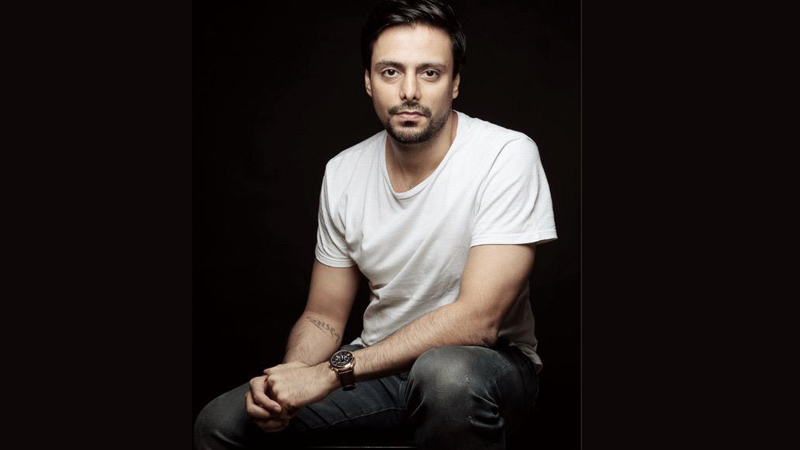
Tag: Moti Sagar

  • “Good storytelling transcends time and technology”: Akash Sagar Chopra

    “Good storytelling transcends time and technology”: Akash Sagar Chopra

    Mumbai: Sagar Pictures Entertainment is a market pioneer in the Mythological and Historical segment of the Indian programming industry. The company has delivered record-breaking Indian programming for over 20 years and has introduced trend-setting programming that has contributed to the growth and market share of leading Indian broadcasters. Sagar Pictures Entertainment is credited with producing record-breaking series and films that have accumulated over 143 billion minutes of watch time, representing 83 per cent of overall Hindi viewership across India, Southeast Asia, and the Middle East.

    For over a decade, Akash Sagar Chopra has played a pivotal role in the Indian Film and Broadcast Industry as an artist, filmmaker, showrunner, producer, and media executive. Delivering top-rated films and series, his transition into new-media programming utilizing media technologies focused on digital content production and distribution marked a significant change in Indian Media and Entertainment Landscape.

    Currently, he is leading an upcoming multimedia franchise. This franchise will feature films and series produced in collaboration with international visual effects and production partners, with a special focus on an adaptation of a popular Indian ‘Purana,’ created for IMAX 3D. As the current CEO and head of the Non-Fiction Wing of the Indian motion picture studio, media, and entertainment company Sagar Pictures Entertainment, his passion for documentary storytelling continues to drive the company’s vision for documentary originals and un-scripted content.

    Indian Television.com caught up with Chopra where he delved into the details of evolution of Sagar Pictures Entertainment, the storytelling landscape, regional cinema, literture, Ramayana and more…

    Edited excerpts

    On Sagar Pictures Entertainment adapting to the evolving landscape of the entertainment industry in India over the span of 70 years

    Sagar Pictures Entertainment is our new studio identity. The brand Sagar has seen quite a journey since the inception of the brand and banner back in 1954 by none other than my grandfather Ramanand Sagar, who wrote under the nom-de-plume ‘Sagar’. What many might not know is that this venture was officially born out of his love for storytelling after his stint at Gemini Studios. Fast forward to today, and I find myself at the helm of this legacy, alongside my father Moti Sagar, who established the brand ‘Sagar Pictures’ in 2008.

    Our journey has been nothing short of remarkable. From being primarily known for our cinematic endeavors, we’ve diversified into a dynamic media and entertainment company. Over the years, we have evolved, navigating the ever-changing landscape of the entertainment industry in India. We’ve now embraced new strategies, transitioning from traditional business-to-business models to a more direct-to-consumer approach, especially after the digital triumph of our National Award Winning feature film “1971”, helmed by Amrit Sagar.

    But amidst all the changes, one thing has remained constant: our commitment to storytelling. It’s in our DNA, rooted deeply in the literary heritage of Ramanand Sagar. We believe in the power of a good story, whether it’s told over three hours on the big screen or condensed into a 30-second reel on social media. It’s what connects us as humans.

    Good content in its root is evergreen, however, there is a generational switch in consumption and also its form. It’s inevitable and we are working towards creating content that is in pace with the shift. Even though the soul stays the same, the form has to be new, something we all resonate with. Our ambition is to take our texts and showcase them the same way we watched films from across the globe as we grew up, but without changing the soul. This material has to resonate in the heart.

    Hence, taking risks has always been part of our journey. My grandfather took a risk when he did the Ramayan on Doordarshan at the time. And with Sagar Pictures we’ve all pushed boundaries, producing over 25 TV shows in less than seven years, each one adding its own flavor to the rich tapestry of Indian entertainment while introducing so many trends in the motion picture sciences, being a first in the market. And while not every endeavor may have been a commercial success, we’ve never shied away from experimentation.

    At the heart of it all is the belief that good storytelling transcends time and technology. It’s a philosophy that has guided us through the years, even when the norms dictated otherwise. Take “1971”, for instance, a film that defied conventions with its lack of a heroine or item song. Today, it stands as a testament to our unwavering dedication to crafting narratives that resonate with audiences on a deeper level.

    So yes, our journey has been insightful, and it’s far from over. As we continue to navigate the ever-changing landscape of the entertainment industry, one thing remains clear: our passion for creating good cinematic experiences, and storytelling will always be at the forefront of everything we do.

    On the key factors that contributed to the immense popularity of Ramayana during the pandemic, particularly in comparison to other forms of entertainment

    I believe that the immense popularity of Ramayana during the pandemic can be attributed to its cinematic approach in presenting an epic body of literature. When the original series was made in 1987, television was a relatively new medium, and all the creators who worked on the series, including Ramanand Sagar, his sons, and series directors Moti Sagar and Anand Sagar, were all from the world of film and cinema.

    Their technique and ethics for creating something were cinematic in thought, and had equal amounts of passion, which resulted in the integrity and authenticity that it takes for any cinematic endeavour to be accomplished for a series like Ramayana. Ramanand Sagar, being an author and writer first, did not leave any stone unturned in his research and writing. He researched through five different versions of the text and showcased his prowess as a writer when he played with moral conflicts in his dialogues between conflicting characters. It was probably this cinematic charm in the ethos of the making of the series, which the entire cast and crew worked very hard to create, that made it so successful.

    Additionally, I believe that the series stayed true to the original material, which is often an area where many adaptations fail. When I saw the series again during the rerun of the pandemic, I realized that it was the right blend of writing, casting, direction, editing, music, and all departments that came together, working with each other in harmony on-screen. Also most importantly there was a genuine feeling of Bhakti for the subject amidst all the creators of the series. That resulted in the conviction. They weren’t trying to play to the gallery.

    The entire unit worked together for the love of the project and to create something with good creative intention, which is why the series is timeless. I think this is true not just for Ramayana, but also for any show that works perfectly together to tell a good story.

    On influence of regional cinema, literature, and culture shaping the storytelling approach of your company over the years

    I would use the term ‘Pan-Indian’ qualitative cinema, a good story told well, something that transcends the language barrier. Initially, when classics like Ramanand Sagar’s Ramayana or the Mahabharata were aired on Doordarshan, they were meticulously crafted by studios with a focus on authenticity rather than ratings. These texts require a certain understanding to be able to do justice to. However, with the advent of our series ‘Jai Shri Krishna’ on Colors TV post-2008, we observed many others following a trend of inclination towards a soap opera format, rather than retaining original philosophy of the texts.

    We try to highlight the importance of understanding the gravity of these texts and their impact on audiences. While television may have limitations due to the rat-race for ratings, contemporary mediums like movies and OTT platforms offer greater flexibility for authentic adaptations closest to the source material. We believe in studying these texts in the true academic spirit to grasp their philosophical depths and poetic essence.

    It’s crucial not to simplify our ancient texts as mere comic book fodder. Instead, they offer intense, spiritual narratives with unparalleled metaphors and poetic essence.

    Looking today at the power of regional cinema, it instills confidence in us, that truly the audiences want to watch good quality content. This is something we have strived for since 2007, with our feature ‘1971’. Today we see films like Kantara, Bhramayuagm, and Manjumal Boys. They exemplify the power of qualitative content, made with integrity and a true creative spirit, and their success is evident. This is what we also always strived for as creators.

    I would call it Pan-Indian Cinema. This concept of good content going across the language barrier plays a significant role in shaping our storytelling approach, reminding us to uphold the basic principles of script writing and feature film editing. These films, irrespective of their language, resonate across the nation due to their adherence to storytelling fundamentals. Thus, our company values the rich tapestry of pan-Indian cinema, literature, and culture, which infuses our narratives with depth and authenticity.

    On the success of Indian storytelling contributing to the rising global attention towards India’s entertainment industry

    The global acclaim for Indian storytelling, definitely has put India’s entertainment industry on the map. I’ve seen firsthand how our journey has evolved over the years. When we were premiering our documentary film in Milan and in The Hague (Netherlands), I held a workshop on the Indian M&E landscape and the first thing I said was that “we are now so much more than just a song and dance film format. Our country has truly produced greats. In the contemporaries, look at some of the films by Chaitanya Tamhankar and Amit Dutta. Such amazing work which has truly gone global.” everyone at the workshop were quite taken aback at the real reach of Indian story telling done well.

    If I take the Ramayan 1987 by Ramanand Sagar as a venture, then especially its 2020 broadcast surely caught the attention of Wall Street and others, which simply showed the reach of the next billion. The large and diverse and probably young 18-35 consumer who is now hungry for good quality Indian content. Again – honest content made with honesty and heart. This resonated in a billion hearts. This is what made it global.

    Our focus has always been on delivering stories that resonate deeply with audiences, stories that are authentic and meaningful. Whether it’s through timeless classics like “1971” or innovative new projects, we strive to uphold the values of integrity and creativity.

    As we navigate through the dynamic entertainment industry, I believe in staying true to our values while also embracing change. With each project, we aim to celebrate the rich diversity of our real Indian  ethos, through cinema and storytelling, promising a future filled with captivating content that speaks to audiences across the globe.

    On anticipating India’s storytelling industry

    Looking ahead, I foresee India’s storytelling industry continuing to play a pivotal role in shaping the global entertainment landscape. As someone deeply involved in this industry, I believe that our rich cultural heritage and diverse narratives will increasingly captivate audiences worldwide. With advancements in technology and changing audience preferences, I anticipate a blend of traditional storytelling techniques with modern innovations, creating a dynamic and immersive viewing experience.

    At Sagar Pictures Entertainment, we are committed to pushing boundaries and exploring new frontiers in storytelling. Whether it’s through groundbreaking films or engaging series, our aim is to showcase the depth and complexity of Indian narratives while resonating with audiences on a global scale. By staying true to our roots and embracing innovation, I believe that India’s storytelling industry will continue to evolve, leaving a lasting impact on the global entertainment landscape for years to come.

  • Rabba Main Kya Karoon: Just another wedding gone wrong

    Rabba Main Kya Karoon: Just another wedding gone wrong

    MUMBAI: Ever since films like Hum Aapke Hain Kaun and Monsoon Wedding succeeded at the box office, the Indian wedding has been a genre in Hindi films. You don’t need a story. You can collect a motley crowd and use all the colour and light you want when you make a wedding film.

    However, there has to be some excuse for a story. Here goes: Akash Chopra proposes to his childhood sweetheart, Tahira Kochhar. The wedding, following an engagement ceremony, is fixed. The guests and relatives start gathering and a festive atmosphere prevails all round. But Chopra is most thrilled when his elder brother and idol, Arshad Warsi, arrives. Warsi is Chopra’s mentor. Soon Warsi learns that Chopra has been a one-woman man and not only has he not indulged in chasing other women, he is still a virgin.

    Warsi has a theory that such a marriage can’t last and not cheating on one’s wife leads to a failed marriage. He decides to do something about the problem in three steps. He is determined not to send his brother to the altar a virgin man. He also plants on the wedding scene a girl who was interested in Chopra earlier to seduce him. Warsi keeps creating situations where Chopra would bump into her. This charade goes on while on the side the other characters’ traits are etched out in an effort to create funny situations.

    Producer: Moti Sagar.
    Director: Amrit Sagar Chopra.
    Cast: Akash Chopra, Arshad Warsi, Paresh Rawal, Raj Babbar, Shakti Kapoor, RiyaSen, Tahira Kocchar,
    Himani Shivpuri, Anuradha Patel,
    Tinu Anand, Navni Parihar

    .

    Raj Babbar is the eldest of the family and comes across as a ‘khadus tau’ until he confesses to almost going wayward. Tinnu Anand was a muscular hulk once upon a time but has reduced to looking like a walking stick because he is always scared of his wife, Himani Shivpuri. He will learn about something wrong he did years back. Paresh Rawal plays mind games with his wife, Sushmita Mukherjee, and keeps her hooked to drugs while he keeps flirting with young girls. Shakti Kapoor likes to chase girls too as his wife, Supriya Karnik, keeps nagging him about smoking. Then there is the pair of Rakesh Bedi and his wife, Navni Parihar, who married out of love but are seen bickering and fighting all the time. These are fillers to entertain you while Warsi tries his devices to rid Chopra of his virgin status.

    Finally, as expected, Warsi’s ploy backfires. Chopra’s marriage is called off as Kochhar catches him with the other girl. Warsi is foolhardy and bravely tells his wife how he was cheating on her all the time. There is no logic in Warsi’s confession to his wife except to create a little drama at the end. His wife walks out and so does Kochhar.

    Chopra does well while Kochhar is okay. Warsi is his usual self. Rest fill the bill. Musically, Bari Barsi…. And Muh meetha …have some lively moments. Direction is fair.

    Rabba Mai Kya Karoon may find some takers in the North. Its beginning has not been very encouraging.


    Chor Chor Super Chor: May just manage to steal a few smiles


    Producers: Ved Kataria, Renu Kataria.
    Director: K Rajesh.
    Cast: Deepak Dobriyal, Anshul Kataria, Priya Bathija, Alok Chaturvedi, Bramha Mishra, Paru Uma, Chandrahas Tiwari, Jagat Rawat, Anurag Arora, Nitin Goel, Avtar Sahani, MeghVarn Pant, ShrikantVerma, Tina, Kafil Ahemad.

    Tehelka magazine introduced India to sting operations and like all fads, soon filmmakers caught up with the idea too. They found ways to add sting operations to their scripts without always understanding the essence of a sting. Chor Chor Super Chor is a sort of Oliver Twist revisited, however, with an interesting concept.

    In a side alley of old Delhi, Shuklaji runs a photo studio. But that is just a façade for he actually controls a gang of young pickpockets and petty thieves. The boys have grown up under his care and are very loyal to him. One of the boys, Deepak Dobriyal, does not want to be part of such a way of life anymore and wants out. He tries to land jobs and finally gets one: to stand dressed as a Punjabi ‘samosa’ outside a savoury shop at one of the Delhi metro stations. In his earlier attempt to find a job, he has come across a girl, Priya Bathija, with whom he has fallen in love.

    As luck would have it, Bathija arrives at the same metro station everyday at a fixed time to go to her job. One day, Dobriyal sees her handbag being picked. She is stopped by the station security and asked to show her ticket or else pay a fine, both things she can not do since her ticket as well as money was lost with the bag. Dobriyal uses his clout with the security man and gets her out of this tricky situation. Dobriyal knows one of his own people took it. He retrieves her bag and returns it to her the next day. The ice is broken and Dobriyal now becomes her friend. She wants to know how he got her bag back and he owns up to knowing them. She convinces him to show her the gang in operation and the smitten Dobriyal duly obliges.

    Dobriyal starts dreaming of finding a house as he expects her to propose to him any moment. Instead what he gets is a solid shock. The TV is running a promo of a sting operation of a chain of pickpockets and how they operate in unison on one target. Dobriyal is the one on TV in a tell all session! Bathija was a TV reporter. She had fooled and used him. His pickpocket friends are also angry with him for giving them away. Dobriyal asks for seven days and the gang’s help to turn the tables on Bathija.

    Dobriyal plans a TV reality show of his own and first prank he plays is on the very owner of Bathija’s channel. He and his ‘team’ also involve their earlier victims who were caught on Bathija’s sting. Their show is ready. It is taken to Bathija’s boss. The result is, not only is the show approved it also leads to Bathija losing her job. The film carries a side track of the kidnap of a miser diamond merchant by one of the gang members who wanted to do something big instead of petty crimes his gang did every day. That track helps the film end on an action climax.

    The film ambles along initially but it starts getting interesting as it progresses and when the counter sting is happening. Direction is good. The performances are generally on the better side. With resources being limited, rest of the aspects are okay.

    Chor Chor Super Chor is fairly entertaining but has had a poor opening due to lack of face value and promotion.


    BA Pass: May just not pass at the box-office

    The title of this film suggests nothing about its content. In fact, it is irrelevant. In the quest to make shoestring budget movies, one of the genres independent makers opting for is sex. Last week we had Nasha about juvenile infatuation with a buxom teacher. This week we have BA Pass, a film about a nymphomaniac and her eye for a variety of lovers. It is based on a short story, The Railway Aunty by Mohan Sikka.

    Producer: Ajay Bahl.
    Director: Ajay Bahl.
    Cast: Shilpa Shukla, Shadab Kamal, Rajesh Sharma, Dibyendu Bhattacharya, Geeta Aggarwal.

    Shadab Kamal’s is a cursed family. When his parents die, his grandfather hands him over to his daughter (the boy’s bua), Geeta Aggarwal, to take care of him in Delhi, where she lives, so that he can finish his Bachelor of Arts degree. (It is a different matter that a BA does not mean much these days.) The reason to send a boy away from a house left with two girls and an old man makes no sense; the rest of the film does not either. Geeta, with her husband and a son, lives in the Railway Settlement and Kamal tries to fit in there.

    With only four hours to spend in college, Kamal has a lot of spare time on hand. Some of this he spends with an undertaker, Dibyendu Bhattacharya, and rest Geeta makes him spend running errands or doing household chores. It is during one kitty party that Shilpa Shukla, his aunt’s friend, notices the boy. She asks Geeta to send the boy over to her house to help with some errands. There is no way Geeta can say no since Shilpa’s husband is her husband’s boss.

    Right from his first visit, Shilpa initiates Kamal into sex and various ways to enjoy it. Her hunger for sex is insatiable. She helps him look more presentable and soon also introduces him to her other ‘needy’ friends. The boy has now turned into a regular gigolo and started making a lot of money. The arrangement works fine for all concerned. But, Shilpa’s wayward ways are whispered in ladies circles and have also filtered down to her husband, Rajesh Sharma, who decides to give her a surprise one day and drops in at home at an odd hour. Kamal had only come to give his life’s savings to Shilpa for safekeeping but she could not resist using his visit for one more act when Sharma enters.

    Kamal’s world turns upside down. Sharma makes sure he is thrown out of his bua’s house. His plans to rent a house and bring his sisters back from hostel are in limbo since all his earnings are with Shilpa. He takes shelter with Bhattacharya and also asks him to go get his money from Shilpa, which he fails to do. Kamal vows to get his money back and breaks into her house and ransacks it but the money is nowhere to be found. Shilpa enters, he brandishes his knife, but still there is no money. The scene gets tricky as Sharma is at the door threatening to break it down. Shilpa’s attempt to trick Kamal and frame him only results in his stabbing and killing her.

    Kamal can’t escape from the police for long and that is the tragic end to his life.

    One may call this film a bold one but what is its purpose? The film has neither a message nor any entertainment. Why is the boy so star-crossed that nothing ever goes right for him? Some people may enjoy the film till the sex scenes are enacted sans nudity; might as well because neither Shilpa nor Kamal has a body worth the full monty. Made economically, the film has neither pleasant moments nor pleasant visuals to offer, having been shot in down market parts of the capital. Dialogue is good, especially those penned for Shilpa.

    BA Pass has its chances at single screens in the North. Its content grossly limits its audience.