Tag: Monopoly

  • Internet should not become the monopoly of few, IT minister tells Rajya Sabha

    Internet should not become the monopoly of few, IT minister tells Rajya Sabha

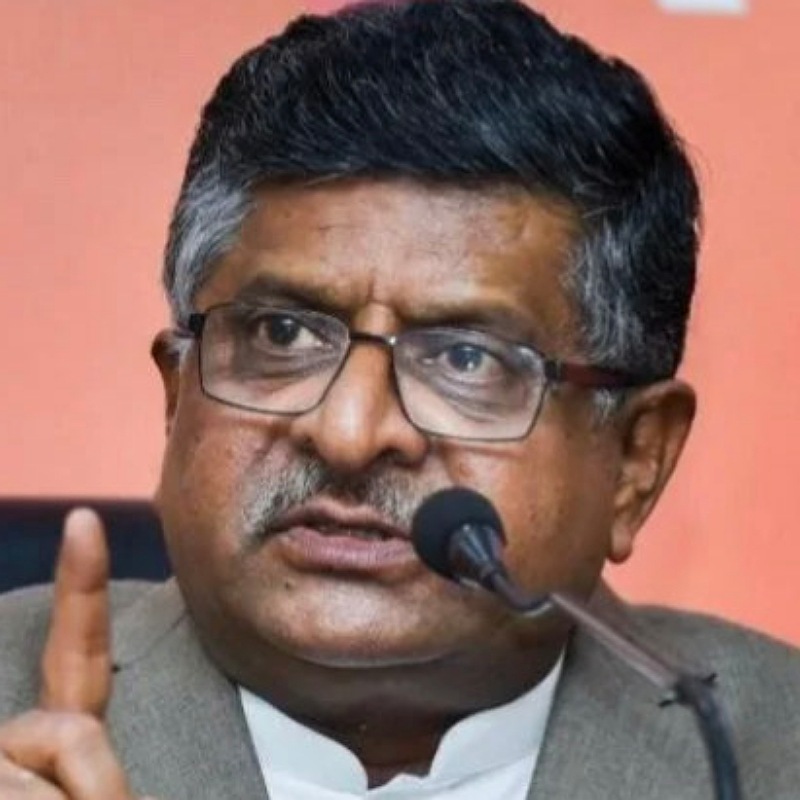
    New Delhi: Days after the government passed sweeping regulations for social media platforms, union information technology minister Ravi Shankar Prasad told the Rajya Sabha on Thursday that any attempt to create ‘imperialism of the internet' by a few companies would not be tolerated.

    Prasad was speaking during the question hour on the issue of the ban imposed on certain Twitter accounts. The NDA-led Centre was locked in a tussle with the social media giant over removal of certain accounts related to the ongoing farmers’ protests. Reiterating his earlier statements made in the Parliament, Prasad said the government welcomes dissent, but cannot allow misuse or abuse of social media.

    Responding to a question raised by Congress legislator G C Chandrashekhar on the issue of arrest of climate activist Disha Ravi in the 'toolkit' document case, Prasad said India is proud to have nearly 140 crore social media users. LinkedIn, WhatsApp, Twitter, Facebook have empowered ordinary Indians and they are free to do business in India, he maintained.

    "The government welcomes dissent. The issue is not of the use of social media, the issue is of abuse and misuse of social media. The Internet is a powerful invention of the human mind, but it should not become the monopoly of a few. We have taken a position, any attempt to create imperialism of the internet by few companies is not acceptable”, said the union minister, who had also told the Parliament on Wednesday that the IT ministry had no proposal to set up a regulator for social media.

    The Centre has recently notified Information Technology (Intermediaries Guidelines and Digital Media Ethics Code) Rules, 2021 which apply to Facebook, Twitter, Google, and others. The guidelines enable the setting up of grievance redressal mechanisms and make these platforms more pliable in assisting government agencies in the investigation as well as taking down unlawful or fake content. The guidelines also make it mandatory for these platforms to identify the originator of a message that authorities consider to be anti-national and against the security and sovereignty of the country.

    According to several experts, the laws though ‘well-intended’ could undermine the principles of open and accessible Internet and violate the right to privacy and free speech of users, particularly in the absence of robust data protection law.

  • MIB’s inter-ministerial committee considers TRAI recommendations on monopoly of cable TV services

    MIB’s inter-ministerial committee considers TRAI recommendations on monopoly of cable TV services

    MUMBAI: In the face of rising dominance of certain multi system operators (MSOs) and local cable operators (LCOs) in several states, Telecom Regulatory Authority of India (TRAI) had released recommendations on “Monopoly/Market dominance in Cable TV services” back in 2013. The regulatory body was requested by the Ministry of Information and Broadcasting (MIB) to provide its recommendations on this issue. Presently, the recommendations have been considered by MIB.

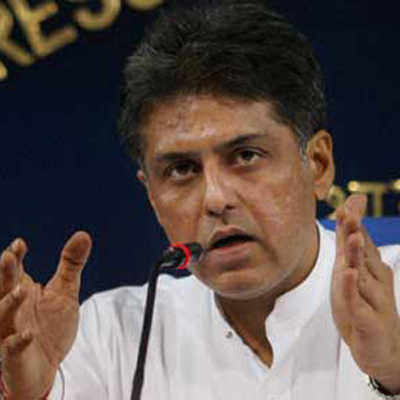
    Indian National Congress spokesperson Manish Tewari sought a response from MIB about status of the regulatory body’s recommendations, monopoly in cable TV services, reasons behind the government making recommendations to Competitions Commission of India (CCI)and whether this violated the TRAI act and also if the government agrees with TRAI on curbing monopolies.

    One of the TRAI recommendations included Herfindahl– Hirschman Index (HHI) to be used for measuring the level of competition or market concentration in a relevant market. Tewari also asked if the government has an issue with the recommendation while MIB responded that it has also been considered by the committee.

    MIB in its response also said that the acceptance of the recommendations have multi-dimensional implications, which requires consultation with various stakeholders. Moreover, it has also been added that no recommendation has been made to CCI in regards to that.

  • Hasbro, HBO join forces to introduce Monopoly: Game of Thrones

    Hasbro, HBO join forces to introduce Monopoly: Game of Thrones

    MUMBAI: Hasbro and HBO have joined forces for the launch of an all new edition of MONOPOLY: GAME OF THRONES. Inspired by the network’s popular series GAME OF THRONES, MONOPOLY: GAME OF THRONES has been launched which incorporates features from the show such as customized tokens, iconic properties and graphics within the game board.

    The MONOPOLY GAME OF THRONES Edition will also feature an Iron Throne card holder that plays the iconic theme song throughout gameplay. This is the first time ever that a music component has been incorporated into a Monopoly Board.

    With game tokens inspired by the honorary sigils of the Great Houses, MONOPOLY and GAME OF THRONES fans can set sail to Westeros. Players will travel around the board to buy, sell, and trade iconic locations from the Seven Kingdoms, building castles and holdfasts in their pursuit to rule the Iron Throne.

    “As the last season of the American fantasy drama show is set to air in April, we are excited to announce the launch of MONOPOLY: GAME OF THRONES edition in the country. From the board to tokens to the money, the entire setting and concept has been adapted from the show thus ensuring it transports the players into the world of Westeros through their favorite board game”, said  Bhavesh Somaya, Country Head, Hasbro India LLP

    The MONOPOLY: GAME OF THRONES Edition game is designed for fans aged 18 years and above. Priced at Rs 2999/-, it will be available at top retailers nationwide and on Amazon.in from March 2019.

    MONOPOLY is the world’s favorite family game brand and is enjoyed by more than 1 billion players in 114 countries across the globe. Fans can engage with the MONOPOLY brand across many platforms and formats world over including live events, fashion licensing, digital gaming, casino gambling, and more. Stay updated on the latest MONOPOLY brand news at Monopoly.com, Facebook.com/Monopoly, @HasbroNews on Twitter, and @Hasbro on Instagram. For more information on Hasbro gaming products visit, www.amazon.in/Hasbro.

  • TRAI may check broadcasters & distributors’ monopolistic behaviour

    TRAI may check broadcasters & distributors’ monopolistic behaviour

    NEW DELHI: The Telecom Regulatory Authority of India may intervene in case any monopolistic behaviour of significant market power (SMP) is observed or brought to its notice in future although it has decided not to regulate the market power at present.

    It said in its draft tariff orders that it will keep a watch on the developments after implementation of the new framework. It has noted that the monopolistic behaviour is well demonstrated by both, broadcasters as well as distributors of television channels. However, it says that it is prescribing a new framework for television broadcasting sector.

    In the consultation paper that has led to this draft, stakeholders had been asked to suggest whether there was a need to identify significant market powers. The stakeholders were also asked to suggest the criteria for classifying an entity as the a significant power.

    A majority of broadcasters felt that the issue of identifying SMPs was in the purview of the Competition Commission of India (CCI) and there was no need for TRAI to do so. They also said the CCI provides adequate safeguards for preventing anti-competitive behaviour. A few broadcasters however favoured the idea of SMP identification and have given suggestions on identifying SMPs.

    A few distributors of television channels submitted that there was no need to identify SMPs while the others believed that such a distinction be made. Some distributors suggested that vertically integrated entities in the distribution sector be subjected to additional regulations.

    Also read

    I&B ministry to take up cable TV monopoly recommendations

  • TRAI may check broadcasters & distributors’ monopolistic behaviour

    TRAI may check broadcasters & distributors’ monopolistic behaviour

    NEW DELHI: The Telecom Regulatory Authority of India may intervene in case any monopolistic behaviour of significant market power (SMP) is observed or brought to its notice in future although it has decided not to regulate the market power at present.

    It said in its draft tariff orders that it will keep a watch on the developments after implementation of the new framework. It has noted that the monopolistic behaviour is well demonstrated by both, broadcasters as well as distributors of television channels. However, it says that it is prescribing a new framework for television broadcasting sector.

    In the consultation paper that has led to this draft, stakeholders had been asked to suggest whether there was a need to identify significant market powers. The stakeholders were also asked to suggest the criteria for classifying an entity as the a significant power.

    A majority of broadcasters felt that the issue of identifying SMPs was in the purview of the Competition Commission of India (CCI) and there was no need for TRAI to do so. They also said the CCI provides adequate safeguards for preventing anti-competitive behaviour. A few broadcasters however favoured the idea of SMP identification and have given suggestions on identifying SMPs.

    A few distributors of television channels submitted that there was no need to identify SMPs while the others believed that such a distinction be made. Some distributors suggested that vertically integrated entities in the distribution sector be subjected to additional regulations.

    Also read

    I&B ministry to take up cable TV monopoly recommendations

  • Net Neutrality: Reactions from the consumers provide deep insights

    Net Neutrality: Reactions from the consumers provide deep insights

    NEW DELHI: Issues relating to OTT and net neutrality have been in the news for almost two years now and the Telecom Regulatory Authority of India (TRAI), which had earlier issued a paper on Over-the-top (OTT) apps, came out with a paper on Net Neutrality on 30 May 2016.

    TRAI’s frequent revisiting of the Net Neutrality issue highlights the fact that the regulator is under immense pressure from various stakeholders with diverse interests. TRAI had first issued a consultation paper over 18 months back and had also passed an order — hotly contested by telecom companies— banning differential pricing floated by some telcos recently, which had sounded the death gong for Facebook’s FreeBasic in India.

    However as the TRAI website is seen generally only by those in the broadcasting or telecom sectors, a brief summary of TRAI’s pre-consultation paper has been placed on the mygov.in so that the general public can react and send in their feedbacks.

    As a result, over 73,000 posts have already come on this site from the general public who have unanimously supported net neutrality. Some have gone to the extent of asking why TRAI or the government should ask this question.

    Though indiantelevision.com firmly believes that at times the debate in India over Net Neutrality has been shrill and has clouded real and serious aspects of neutrality, there are some interesting feedbacks as well that indicate how general Indians view Net Neutrality.

    public://image 1_0.JPG

    For example, one writer says: “TRAI focus should be broadband speed minimum 50MBps Download/ 25MBps Upload. There should be no pollution, so focus on fiber/copper with speeds of up to 10GBps (ten GBps) and ensure that latency is very low, connectivity is much better (speed and latency are different).”

    The same respondent points out that companies are offering 5GB on 4Mbps for high prices up to Rs 900 and data caps should be removed or have minimum of 1TBps. He has said that lease lines should be made affordable with customer support.

    Says another respondent: “I cannot imagine an India as net partial with a discriminatory telecom structure not letting me call my kin freely, surf net with discrimination. The Governments needs to recall and emulate Dr Ambedkar’s ideas, the esteemed voice of freedom and non-discrimination of free India.”

    Yet another individual says: “In the name of neutrality. Let us not stop access of net to one billion Indians. Many pay phone/net data bills (simply by transferring data) higher than electricity bills (which is consuming energy, which is costlier to produce). Let the government ensure that data service is affordable to all.”

    Another consumer says, “We want freedom to choose and not Internet Service Provider choosing for us. There is also stress on removing corruption which can be done by removing interest on security deposit, seven days extra charge after disconnection refund, towers on house and low heights.”

    Yet another respondent commented: “Without net neutrality, internet would go into the hands of people who can pay the ISPs to give their websites for cheaper price. This will hamper start-ups and other small players who cannot afford to pay the ISPs. For a thriving economy, it is important to have competing players in market. In the absence of net neutrality, this competition will be disrupted and monopoly will be established — which is not good for the consumers.”

    public://img2.jpg

    But the responses are not confined to just plain feedbacks, and some people have also tried to support their theories and assertions.

    A respondent has attached a presentation with diagrams to say,  “Internet traffic and congestion on network problem can be sorted out by dividing the network into logistic small segments. These small logic segments can have their unique set of protocols, which when connected with the large network enable it to tackle with security and cyber issues as well as enable the large network to tackle the Internet traffic and congestion issues.

    “The logical small segments should be designed and implemented in way so that they can be extended with the increase of customers as well as data demand on that network. The core of the large network can be designed/assembled in a way that its data limitations can be extended with demand (Same technique can be apply on the logistic small networks).”

    The person, who seems to have some understanding of technology and its functioning, adds that designing/assembling and implementation of smart networking system will lead to a major step for providing a standard Internet facility to the individuals, having fixed rate data plan with standard accessibility and speed of the Internet facility. The diagrams show one of a road where the light poles have small boxes to pass the Internet signal from one to the next.

    Incidentally, the original pre-consultation paper on net neutrality issued by TRAI on 30 May 2016 is available at http://www.trai.gov.in/Content/ConDis/20775_0.aspx  on the regulator’s website does not still have any comments uploaded on the issue.  The last date for submission of comments is 21 June 2016.

  • Net Neutrality: Reactions from the consumers provide deep insights

    Net Neutrality: Reactions from the consumers provide deep insights

    NEW DELHI: Issues relating to OTT and net neutrality have been in the news for almost two years now and the Telecom Regulatory Authority of India (TRAI), which had earlier issued a paper on Over-the-top (OTT) apps, came out with a paper on Net Neutrality on 30 May 2016.

    TRAI’s frequent revisiting of the Net Neutrality issue highlights the fact that the regulator is under immense pressure from various stakeholders with diverse interests. TRAI had first issued a consultation paper over 18 months back and had also passed an order — hotly contested by telecom companies— banning differential pricing floated by some telcos recently, which had sounded the death gong for Facebook’s FreeBasic in India.

    However as the TRAI website is seen generally only by those in the broadcasting or telecom sectors, a brief summary of TRAI’s pre-consultation paper has been placed on the mygov.in so that the general public can react and send in their feedbacks.

    As a result, over 73,000 posts have already come on this site from the general public who have unanimously supported net neutrality. Some have gone to the extent of asking why TRAI or the government should ask this question.

    Though indiantelevision.com firmly believes that at times the debate in India over Net Neutrality has been shrill and has clouded real and serious aspects of neutrality, there are some interesting feedbacks as well that indicate how general Indians view Net Neutrality.

    public://image 1_0.JPG

    For example, one writer says: “TRAI focus should be broadband speed minimum 50MBps Download/ 25MBps Upload. There should be no pollution, so focus on fiber/copper with speeds of up to 10GBps (ten GBps) and ensure that latency is very low, connectivity is much better (speed and latency are different).”

    The same respondent points out that companies are offering 5GB on 4Mbps for high prices up to Rs 900 and data caps should be removed or have minimum of 1TBps. He has said that lease lines should be made affordable with customer support.

    Says another respondent: “I cannot imagine an India as net partial with a discriminatory telecom structure not letting me call my kin freely, surf net with discrimination. The Governments needs to recall and emulate Dr Ambedkar’s ideas, the esteemed voice of freedom and non-discrimination of free India.”

    Yet another individual says: “In the name of neutrality. Let us not stop access of net to one billion Indians. Many pay phone/net data bills (simply by transferring data) higher than electricity bills (which is consuming energy, which is costlier to produce). Let the government ensure that data service is affordable to all.”

    Another consumer says, “We want freedom to choose and not Internet Service Provider choosing for us. There is also stress on removing corruption which can be done by removing interest on security deposit, seven days extra charge after disconnection refund, towers on house and low heights.”

    Yet another respondent commented: “Without net neutrality, internet would go into the hands of people who can pay the ISPs to give their websites for cheaper price. This will hamper start-ups and other small players who cannot afford to pay the ISPs. For a thriving economy, it is important to have competing players in market. In the absence of net neutrality, this competition will be disrupted and monopoly will be established — which is not good for the consumers.”

    public://img2.jpg

    But the responses are not confined to just plain feedbacks, and some people have also tried to support their theories and assertions.

    A respondent has attached a presentation with diagrams to say,  “Internet traffic and congestion on network problem can be sorted out by dividing the network into logistic small segments. These small logic segments can have their unique set of protocols, which when connected with the large network enable it to tackle with security and cyber issues as well as enable the large network to tackle the Internet traffic and congestion issues.

    “The logical small segments should be designed and implemented in way so that they can be extended with the increase of customers as well as data demand on that network. The core of the large network can be designed/assembled in a way that its data limitations can be extended with demand (Same technique can be apply on the logistic small networks).”

    The person, who seems to have some understanding of technology and its functioning, adds that designing/assembling and implementation of smart networking system will lead to a major step for providing a standard Internet facility to the individuals, having fixed rate data plan with standard accessibility and speed of the Internet facility. The diagrams show one of a road where the light poles have small boxes to pass the Internet signal from one to the next.

    Incidentally, the original pre-consultation paper on net neutrality issued by TRAI on 30 May 2016 is available at http://www.trai.gov.in/Content/ConDis/20775_0.aspx  on the regulator’s website does not still have any comments uploaded on the issue.  The last date for submission of comments is 21 June 2016.

  • Lionsgate inks movie output deal with Disney’s Buena Vista for Russia

    Lionsgate inks movie output deal with Disney’s Buena Vista for Russia

    MUMBAI: Reflecting its continued growth in a major international territory, Lionsgate has forged an output deal with Disney’s Buena Vista International (BVI), for distribution of its titles in Russia and the rest of the Commonwealth of Independent States (CIS).


    The agreement will kick off with Lionsgate’s revenge thriller Sicario this fall and will also encompass titles as: Francis Lawrence’s adventure fantasy, The Odyssey; the first live action Saban’s Power Rangers film; and the film adaptation of Hasbro’s Monopoly.


    “We’re thrilled to expand our relationship with Buena Vista International through this output agreement in a major territory with enormous upside. We’re pleased to continue building our BVI relationship with a powerful, commercially exciting slate loaded with blockbuster tentpoles, potential franchises and star-driven event films,” said Lionsgate Motion Picture Group co-chairs Patrick Wachsberger and Rob Friedman and Lionsgate International COO Andrew Kramer.


    “BVI’s stature, experience and tremendous track record coupled with Lionsgate’s diverse film portfolio promise significant upside for both companies. This new output agreement reflects our commitment to Russia and our continued emergence as a creative force in the global marketplace,” added Lionsgate EVP of international sales Crystal Bourbeau.


    Lionsgate previously teamed with BVI on Summit Entertainment label films including the Japanese release of the action thriller Red, the release of the Step Up franchise in Japan and the Spanish and Japanese releases of Source Code and Tree of Life. Most recently, both companies announced that they will be launching the fourth installment of the global blockbuster The Hunger Games franchise, The Hunger Games: Mockingjay – Part 2, on 19 November in Russia and CIS.

  • I&B ministry to take up cable TV monopoly recommendations

    I&B ministry to take up cable TV monopoly recommendations

    MUMBAI: The inter-ministerial committee in the information and broadcasting ministry (MIB) is likely to take up the Telecom Regulatory Authority of India’s (TRAI’s) recommendations on controlling monopoly/market dominance in the cable TV sector this week. These were released by the TRAI on 26 November 2013. This was revealed by MIB minister Manish Tewari to the Times of India (TOI) yesterday.


    According to the TRAI recommendations, a barometer known as the Herfindahl Hirschman Index (HHI) is to be used to measure monopoly of MSOs or cable TV service providers in a market which as defined as a state (with certain exceptions).


    The recommendations state that “the threshold value for any individual/group/entity contribution to the market HHI should be no more than 2500.”  According to the TOI report, this constitutes 50 per cent market share, the market being defined as a state.


    The TRAI recommendations further state that “any M&A among MSO(s) or between an MSO and LCO in a relevant market shall require the prior approval of the regulator. The decision on any proposal, complete in all aspects, shall be conveyed within 90 working days.”


    They go on to further add that in “the cases where any group’s contribution to HHI in a market is more  than 2500 as on the date of issue of guidelines, such legal entity/ ‘group’ shall take necessary remedial measures, within 12 months from the date of issue of guidelines, so as to limit  its ‘control’ in various MSO(s)/ LCO(s) in such a way that the  contribution to market HHI of that ‘group’ reduces to less than or equal to 2500.”


    Tewari told the TOI that the ministry was “seriously looking at introducing a cap on the market share of MSOs to stop monopolistic practices, whether due to political pressure or political ownership, to protect plurality and diversity of content.” 

  • Financial books of some Kolkata MSOs should be audited: Analysts

    Financial books of some Kolkata MSOs should be audited: Analysts

    KOLKATA: At a time when some multi-system operators (MSOs) in Kolkata are stuck in a legal battle with the government authorities over non-payment of taxes, city-based analysts feel that the financial books of some MSOs should be duly audited.

    “Some MSOs should be audited by the authorities as non-payment of taxes is causing loss to the state as well as central exchequer,” says a cable TV analyst Mrinal Chatterjee.

    Last year, in August 2013, Kolkata-based MSO Kolkata Cable & Broadband Pariseva Ltd (KCBPL) managing director Bijoy Kumar Agarwal was arrested for evading service tax payment to the tune of Rs 5.52 crore. Agarwal was arrested during a raid conducted by the service tax officials probing the alleged financial irregularities of the MSO.

    Says a local cable operator (LCO), “All these years, it was the LCOs who were held responsible for all the deeds and misdeeds. Now digitisation has helped in unfolding the truth that even the MSOs are resorting to unfair means to do their business. The government authorities must look into the matter seriously.”

    Trouble for operators in Kolkata seems to be intensifying. Before it was the Telecom Regulatory Authority of India (TRAI) and now they are being closely monitored by the tax inspectors, police authorities and even the judiciary.