Tag: Monisha Singh

  • UTV COO Varma quits; Monisha Singh rejoins as VP – TV content

    UTV COO Varma quits; Monisha Singh rejoins as VP – TV content

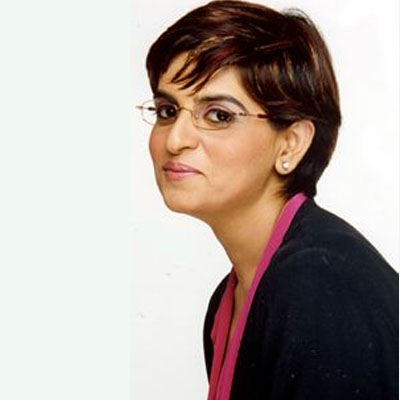
    MUMBAI: After a 14 month stint, UTV COO Vikas Varma has put in his papers and is currently serving his notice period. Former UTV creative director Monisha Singh, who put in her papers at the company in July last year, has returned to UTV as vice president – television content.

    When contacted by Indiantelevision.com as to the reason for his exit, Varma expresses, “It’s time to move out of production and join the broadcasters. The experience at UTV was a learning curve.”

    Varma said he was in conversation with many broadcasters, and is yet to make a final decision.

    As COO, Varma was roped in to guide the TV division’s business strategy and operations along with business development.

    Prior to UTV, Varma was formerly with Touché Communications as MD and has 16 years of advertising and entertainment expertise both in the brand building and advertising space.

    Varma has wide-ranging experience spanning 16 years in advertising and media and has worked with top ad agencies such as Frank Simoes Advertising, Madison Advertising and Touché Communications where he served as MD. He has been instrumental in strategising for and launching a number of durable, FMCG and entertainment brands during the course of his career.

    On the other hand, after quitting UTV, Singh joined Miditech as vice president programming and headed the production house’s fiction and entertainment division.

    An economics graduate and mass communications post graduate, Singh began her career with Ekta Kapoor’s Balaji Telefilms as a creative director at a time when India’s premier soap factory was still a fledgling production house.

  • Monisha Singh joins Miditech as VP programming

    Monisha Singh joins Miditech as VP programming

    MUMBAI: The cat is out of the bag. Former UTV creative director Monisha Singh, who called it quits at Ronnie Screwvala’s company last month, has joined the Alva brothers-promoted Miditech.

    Based in Mumbai, Singh will be heading Miditech’s fiction and entertainment division as vice-president programming. Additionally, Singh has also been inducted onto the Miditech board of the directors.

    For the 27-year-old Singh, today marked her first official working day at Miditech.

    Speaking exclusively to indiantelevision, Miditech CEO Nikhil Alva offered, “We are very serious about expanding in the fiction and entertainment space. Monisha Singh’s appointment is just one indicator of that intent.”

    As part of the expansion plan, Miditech has already shifted to larger offices in Mumbai’s Andheri East suburb. Besides that, the production house is also setting up a separate state of the art post production studio in Andheri East, which should be up and running in a month’s time, Alva says.

    Singh’s is just among the more higher profile appointments that Miditech is in the middle of undertaking. Alva says that from the present staff strength of 30-35 in Mumbai, it will go up to around 60 in the next two months.

    Singh, an economics graduate and mass communications post graduate, began her career with Ekta Kapoor’s Balaji Telefilms as a creative director. This was when India’s premier soap factory was still a fledgling production house.

  • Monisha Singh calls it a day at UTV

    MUMBAI: UTV creative director Monisha Singh has called it quits.

    As of today, she is no longer an employee of UTV. The 27-year old Singh put in her papers yesterday, reliable sources have confirmed to indiantelevision.com.

    When contacted for an official response, UTV COO Vikas Varma, however, denied Singh had resigned, stating, “As of today she is on a month’s leave, and has not put in her papers.” Singh was unavailable for comment.

    It was not too long ago that the expectation in industry circles was that Singh would become programming head of Hungama (UTV’s kid’s channel slated for a mid-August launch). However, Shalini Rawla (earlier V-P with Contract Advertising) was ultimately entrusted with the charge.

    An economics graduate and mass communications post graduate, Singh joined UTV as creative director in April 2002.

    Coming from a family of bureaucrats, Singh started off as an anchor for a DD show in college. Thereafter, she joined Ekta Kapoor and was creative director from the time when Balaji Telefilms was still a fledgling production house.

  • “Some might think I am too young, but I believe risk taking abilities are more important” : (Part II)

    “Some might think I am too young, but I believe risk taking abilities are more important” : (Part II)

    If there is a list drawn up of the hottest young television professionals in India, her name will surely figure in it.

    Coming from a family of bureaucrats, Monisha Singh has blazed a trail wherever she has been. Whether it was as an anchor for a DD show when in college. Or whether it was at Balaji Telefilms, in its early days, where as creative director she played a large hand in helping Ekta Kapoor build the fledgling production house.

    Or whether it is at UTV where she has, as a creative director for the past two years, been steering the diversified media firm’s creative for a handful of television shows, which are among the more successful ones it churns out.

    All this and she is just 26.

    The bubbly young lady loves being in the thick of it, at the centre of it all. Not for her the command centre, she has to be in the trenches, motivating her team of producers and eepees (executive producers) like a captain egging on his soldiers on the battlefield.

    The economics graduate and mass communications post graduate is itching to do things, to move on to newer fields to conquer.

    Indiantelevision.com’s Vickey Lalwani caught up with her and spoke with her over several days to understand Monisha Singh, the television professional.

    Excerpts from a two-part interview:

    What was your experience at the fledgling Balaji Telefilms? What is the production house all about? What makes it tick in your opinion?
    Balaji Telefilms was an amazing experience; it was like a family. I saw it grow from a small team of 10-12 people to a Rs 100 plus crore (Rs 1 billion plus) production giant. It was there that I learnt how to use my creativity and weave it into a web that works for television.

    It can be one of the most grueling experiences and yet one of the most enriching ones for anyone interested in creating content for television. According to me five months at Balaji are equal to five years at most other production houses. The pace, logistics, hard work, team effort and creative drive exposes you to real television.

    They have learnt to maximize the creative and the production resources that they have, cut costs and yet give the final product a fantastic look. It is the clever use of money that they have mastered. Agreed that they get higher budgets then most others in the industry do, but then their shows get higher TRPs, which is not unfair. They don’t waste this extra money, they utilise it intelligently. Overall, there is a creative energy flowing through the organization courtesy Ekta.

    While the environment was energizing and fulfilling, I had to get further up the learning curve and expand my portfolio. And opportunity came my way in the form of UTV, which was as mature as Balaji was young.

    What excited you about UTV? What were the challenges?
    UTV is the big daddy of television; one of the oldest and most successful production houses. What it offers creative people is a huge library of creative knowledge accumulated over the years of dealing with almost every channel and genre.

    It has pioneered and created some of the more successful game shows, reality shows, soaps, comedies, quiz shows, action-based shows, thrillers and kids shows. Since I had primarily been involved with soaps, UTV attracted me as it would give me the opportunity to explore many more genres.

    UTV isn’t just looking at television, it is in almost every field of entertainment be it in advertising film making or commercial cinema or non-fiction or animation. It makes for a huge learning.

    Has your one and a half years of experience at UTV lived up to your expectations?
    Yes, and in every sense. As a creative director my job was not just to visualize and create, but to also make sure that it is rightly executed. I had to strike a balance between operations and creative, which is to keep the budgets in check and above all make sure that the show does well in the rating game.

    We started Shakalaka Boom Boom, a kids daily show on Star Plus. It became my baby. I was involved in character creation, casting, sets, packaging, editing, keeping costs under control and making it gel well with kids who were its viewers. From what I know, it became a cult with them.

    I was also shaping Kehta Hai Dil, which was earlier episodic but later took on a linear story format. Being a weekly it offered me a different set of challenges. It is easier to make a daily a habit. In a weekly, the content has to be that much more compelling, stronger, to get the viewer back six days later. On top of that Keha Hai Dil is a one hour format, which is a further challenge as you have to keep the viewer glued to it for an hour when her attention span is so short because of competitive options. And I believe, going by its ratings and popularity, I, along with my team, have managed to make a success of it.

    UTV has helped me sharpen my people management skills as most of the professionals working here are more senior and experienced than I and they report to me.

    I have developed several multigenre concepts for television, have been reading exciting film scripts, and now with UTV coming up with a channel for the young, I am also involved in broadcasting.

    Could you elaborate on that?
    Sure. UTV is launching a channel for the young, and the main focus is going to be localised programming dealing from drama, fantasy, game shows to animation series. We would also be acquiring foreign content and dubbing it, but the focus will largely be local programming.

    Research has indicated that there is a huge gap in the market for kids programming. The current set of channels do not cater enough to the needs of kids. General entertainment channels have kids shows like Son Pari, Shararat, Shaka Laka Boom Boom, Hatim and The Magic Box. While these are hugely popular, there is nothing more to it. It is enough indication that there is a gap for kids content.

    Our agenda would be to appeal to every child viewer. Advertisers have accepted the growing influence of kids on purchase decisions for products as varied as cars to computers to mobile phones. Gone are the days when they were just being targeted for toothpaste and chocolates. Therefore they are looking for media vehicles to carry their advertising. And our kids channel will offer them just that ideal vehicle.


    “There is no set pattern or formula to spot a winner. Research helps us get the ingredients together but at the end of the day, it is gut feel and that instinct that helps you differentiate between a winner and a loser”

    What are the challenges you face as a creative professional? How do you overcome them?
    The day-to-day challenges are about operations and creative, which I have talked about earlier. On the second level, it is being able to forecast foresee trends, innovations and pioneer a trend, and stay ahead of the competition. Whoever thought that a Jassi would come up and cause so many ripples?

    Also we have to keep up with changing times and flavour of the month. With the election mood in the country, we have an elections plot being woven into Kehta Hai Dil.

    One has to keep churning out compelling content day in day out, so that the viewer does not shift to sports or news or whatever.

    On a personal level, the challenge is to enrich oneself creatively during the day-to-day bustle.

    How do I face up to the challenges? Well, they are a part of the job. And one deals with them.

    Do you think creativity in television is encouraged in India or is it mediocrity?
    Whoever said commercial television is only about creativity! Look at the west, television there is a creative science. Somebody comes up with a good idea, then armies of professionals – be it writers, script doctors, producers, directors or the suits – swoop in and work at making it a product that has a chance at success. Creativity for creativity’s sake is not television. Within the framework of making a successful, watchable product, you can experiment with creativity. And that’s how it should be.

    Generating a product doesn’t mean you are guaranteed success. You have to market it, do promotions, PR, even then you are not guaranteed success.

    Creativity is encouraged in India within these parameters. I cannot create a show that is going to be watched just by me. At the end of the day, we are here to create programming that generates mass viewership, better TRPs for our shows. Be it following a formula or breaking the mould, the result has to be better TRPs. One has to cater to the needs of the viewer.

    But the viewer is only going to view what we want him to view. If we don’t think out of the box, how do we get the viewer to sample. There were experiments like Josh, and Astitva.

    Yes, we need to get in more genres, we need to open our minds to handling some taboo subjects and issues, but we need to do so within our cultural sensibilities and sensitivities. We need better budgets and better advanced planning to make a better product, be it in the area of cinematography or story or art direction – basically the look and feel.

  • “Be it following a formula or breaking the mould, the result has to be better TRPs” : Monisha Singh – UTV creative director (Part I)

    “Be it following a formula or breaking the mould, the result has to be better TRPs” : Monisha Singh – UTV creative director (Part I)

    We promised you more on her, and here it is… the second part of the interview with the young UTV creative director Monisha Singh. In the concluding part of the interview to indiantelevision.com‘s Vickey Lalwani, Singh throws light on creativity – her own and that at UTV – what creative people can do and cannot, television channel interactions et al.

    Excerpts :

    How do you grow your creative skills?
    Reading books, films, plays and meeting and observing interesting people. Interacting with other people knowing what they think, how they react, what they feel, helps spin off ideas, situations, plots. I am an impulsive people observer. I keenly watch whatever is happening around me. I absorb it. I choose to learn from every living moment. Nature inspires me. I introspect a lot. I do a lot of disjointed thinking, then I move on to the linear thought process. I try to be alive to the now, the trends, the likes and dislikes currently.

    How do you develop your characters?
    I always try to make my characters different from what has been seen on television, I like making them memorable, identifiable. Kehta Hai Dil, a show I developed and am in charge of at UTV, has two villains – the Mayor and his wife – as its pivots. They are villains of the first order, yet they are funny in a dark manner. One has to take care to give them nuances, quirks, which help them stand out. On top of it all, I brainstorm with people, with my team to fine tune the characters.

    How did you develop the character of Mayor saheb?
    Most television soaps are dominated by female characters. The male has a limited role to play. We wanted to change that equation by giving a character with negative shades prominence. Instead of making him the usual black character one thought of adding certain quirks to his character and making him slightly comic but at the same time extremely sharp and shrewd. We hence placed him in a position of power and strength and villainy. The character of Mayor was basically created to counter Aditya Pratap Singh the hero, the honest cop.

    In his personal life, the mayor, while he is dominated by his wife at home he is a long-term thinker and he will let his wife be the bad one while he master minds the whole plan. I feel males have a lot to do in most households while it is only the mother-in-law who is projected as the bad one. And we showed this through the character of the Mayor who is actually the man who is going about on his path of destruction, be it in his civic duties or his personal life.

    Is there enough scriptwriting talent available today? Do you work closely with your scriptwriter?
    Yes and no both. While there are some very good writers in the industry, we definitely need a lot of fresh thinking to come in. In the drama category one finds a lot of talented people, but if one were to look in for example the comedy or the thriller genre the number of talented and good writers are far and few.

    But overall even though television is a writer’s medium it’s concentrated in the hands of a few. And in turn the pressures on our writers are tremendous which in turn leads to high burn out rates. Therefore there is a strong need for fresh talent to come in. But there is a lot of talent that exists out there and it’s a question of finding the right people and training them.

    We need to have training schools or workshops that can train people interested in writing for television. There is a method a formulae for writing for television just like there exists in other fields as well. Your company runs a course and workshop Qalam. We see it as an effort in that direction but there needs to be a lot done as far as scriptwriting is concerned.

    Yes, I work closely with my script writers on all my shows. That is the first step towards making a show and also they form the base of all shows and it’s imperative to have good writers on any show.

    “Overall even though television is a writer’s medium it’s concentrated in the hands of a few. And in turn the pressures on our writers are tremendous which in turn leads to high burn out rates”

    Has age worked in your favour or against you in your career?
    Some people might think I am too young for what I am doing, but I believe more than age it is the experience, the exposure, talent and risk taking ability which are important. Today, there are a lot of young achievers in television, in fact in every sphere. Some of us have taken it up and single mindedly become successful.

    Yes, my age can go against me, because a lot of people are a lot more senior to me. It can be frustrating when somebody without meeting you says you are too young to be doing what you are. But I take things in my stride and take it as a compliment because I have managed to reach where I have at a young age.

    Coming to creativity at UTV. How does UTV go about enhancing the collective creative within?
    UTV as an organisation invests a lot in creativity. It has spread its wings in different fields of creativity be it advertising, television and now films. We have on a regular basis brainstorming sessions and churning up of ideas.

    We have icons in creative excellence, whether it is Alyque Padamsee or a Prahlad Kakkar, coming in and sharing their experiences and learnings with us. The sessions they have with us are extremely interactive and help open the windows of our mind to fresher thoughts.

    We have workshops where we are exposed to the works of the masters of all time in film making like Satyajit Ray, Ghatak, Hitchcock, Renoir, Chaplin, Eisenstein, Rossilini etc.

    Creativity is also about team work so we have corporate team building workshops which help in the bonding exercise. Like we had one on fear, where we had to walk on pieces of sharp glass. It’s all in the mind, if we can overcome the mindblocks, we can do what we want, we were told at the workshop. The glass symbolised the mindblocks. We had to motivate each other, help each other out. Most of us succeeded walking over the glass without cutting or hurting ourselves. It was a wonderful experience.

    Changing tracks. Do you think that a creative person gets enough space in today’s times when channels interfere at the drop of a hat?
    What you term as interference is actually involvement. At the end of the day we are all working as a team to make a product work. A channel undertakes a lot of research of what works and what does not. Therefore, they provide the creative team with a lot of value-addition which can only work in the favour of the show.

    Will UTV ever consider producing bold programming?
    I don’t think that would be anything new. Indian television has done bold quite a bit of bold stuff. Like Sailaab was bold; it had a roaring extramarital affair. Lipstick is bold, Astitva… Ek Prem Kahani is bold. But surely, we can’t have smooching and sex scenes like in the West; we have to keep the Indian sensibilities in mind. Since we don’t have censorship on our heads, that does not imply we cross all barriers and show anything and everything. You might be seeing such stuff on MTV or [V], but at the end of the day, UTV is a production house catering to family entertainment.

    Can creative people become business people?
    It depends on an individual’s mindset and mental make-up. If one is inclined towards learning and growing beyond the creative sphere then there is no stopping him or her to wear a business hat as well. They can bring their creativity into businesses. Look at Karan Johar he is a perfect blend of creative and business. He makes cinema that fetches him pots of money. On the other hand I feel that all business people need to be creative in their own fields. a good business person has to constantly be thinking and innovating to keep ahead of the competition and can use some creative ways to think how to go about doing that.

    Creative people you admire?
    Ekta Kapoor for the ideas she gets in her serials, her levels of passion and conviction in them. She is a true achiever. Raveena Raj Kohli. She has proved herself in every fields be it as a creative director, channel CEO and now even in the field of news. Satyajit Ray for the quality of films he made, Samir Nair for the dizzying heights he has taken Star Plus to.

    Charlie Chaplin for being the complete film person – he was a rare comedian who not only financed and produced all his films but was the author, actor, director and soundtrack composer of them as well, Filmmaker Eisenstein for the clever use of montages and symbolism in his films such as Battleship Potemkin.

    I also admire Enid Blyton, I have read almost all her books they are beautifully written and make for excellent reading for children. I am a huge fan of Prannoy Roy. He is extremely charismatic. And if you can put this on record, I admire Ronnie Screwvalla for being a visionary. I am not trying to impress anyone but this is a fact. Working with him makes you grow on both professional and personal fronts as well. He started a lots of trends in India – brought in animation, started the first cable network in India, etc. He does not essentially like to walk on a proven path, he loves to take risks.

    Earlier, you said creative people can become business people. What about you?
    Of course, I can. I am not an exception.

    Where do you see yourself five years from now?
    I breathe, sleep, eat and dream television so I definitely see myself continuing contributing to the success of television.

    You have the looks and age in your favour. Ever thought of becoming an actress?
    (Laughs) You couldn’t avoid that one, could you? What a question! Not really. But thanks for the compliment, anyway (laughs again).

    Tell me, can a creative director become a programming head?
    Definitely. A programming head is the professional who funnels all the programming coming on to the channel along with his/her team of producers, creative professionals. The buck stops with him/her on content. He/she has to not only have a sense of creativity, but also be alert to the strategy, business and advertising angles. She/he has a large scale canvas perspective on content. A creative director’s job is supposed to be restricted to the creative look feel, storylines of the shows. The roles between the two get fuzzy at times, in fact often a programming head has to wear a creative director’s hat and likewise. At the end of the day, they have to get together to produce programming that brings in audiences and revenues.

    Buzz is that this creative director is going to become the programming head of a broadcasting channel?
    Is that so? Well?