Tag: monetisation

  • CloudTV plugs in Harshad Wadivkar as new business head for monetisation

    CloudTV plugs in Harshad Wadivkar as new business head for monetisation

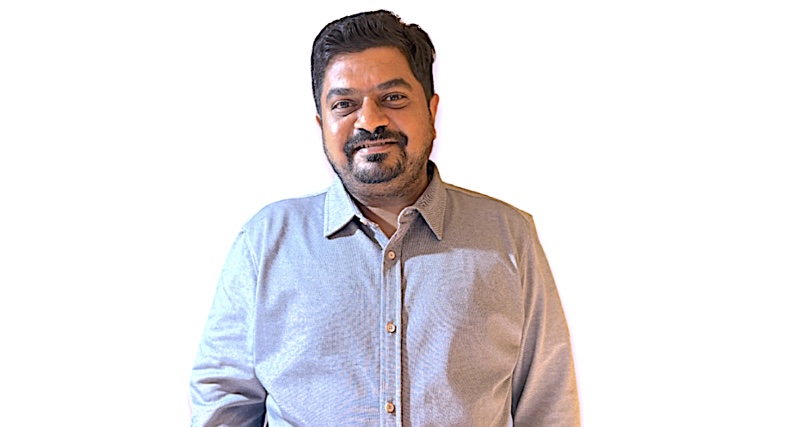
    MUMBAI:  CloudTV, India’s first certified Smart TV operating system, is switching to a higher gear on its monetisation plans with the appointment of Harshad Wadivkar as business head – monetisation. The move signals CloudTV’s growing ambitions to cash in on India’s fast-expanding connected TV (CTV) advertising wave.

    In his new role, Wadivkar will lead revenue strategies, forge fresh media partnerships, and unlock new monetisation channels across CloudTV’s platform, which today reaches more than 12 million viewers in regional markets across the country.

    A digital sales veteran with over 15 years under his belt, Wadivkar has previously clocked stints at Adscholars, Xapads Media, and Mediascope. His client roster reads like a brand who’s who — from DSP Mutual Fund and ESPN to Mahindra Auto and Jaguar Land Rover — and his agency links span GroupM, Madison, IPG, and Publicis. His knack for scaling revenues and building lasting partnerships makes him a prized recruit for CloudTV’s next growth lap.

    CloudTV COO  and co-founder Abhijeet Rajpurohit  said: “We are delighted to welcome Harshad aboard. His deep digital expertise and sharp monetisation focus will be pivotal as we strengthen our footprint in India’s rapidly evolving connected TV landscape.”

    With the CTV market shifting into overdrive, CloudTV is betting big on seasoned hands like Wadivkar to drive its revenue engine and bolster its standing as an indispensable advertising enabler for smart TV audiences.

  • For India to become a gaming hub, it needs clear, consistent & credible policies: Dr Aruna Sharma

    For India to become a gaming hub, it needs clear, consistent & credible policies: Dr Aruna Sharma

    Mumbai: The online gaming industry in India is rapidly evolving amidst a backdrop of regulatory scrutiny and technological advancement. With a staggering 28 per cent CAGR from FY20-23 and a market valuation of ₹16,428 crore, it has caught the attention of global investors and developers alike. As policymakers navigate challenges around GST implementation and classification of games, the industry seeks a stable regulatory framework to propel it towards becoming a global hub for game developers, leveraging India’s vast potential and cultural richness.

    Delving deeper, Indiantelevision.com caught up with development economist and retired secretary of Government of India, Dr. Aruna Sharma, to gain more insights on how regulatory dynamics and technological advancements are shaping the future of the Indian online gaming industry.

    Edited Excerpts:

    On the current trends shaping the Indian online gaming industry

    The gaming industry in India is evolving rapidly. It is focusing on avoiding misleading ads, ensuring secure digital payments, and keeping an open dialogue with policymakers. The rise of smartphones, better internet access, and new gaming start-ups is exciting. We’re seeing challenges being tackled both with policymakers and in courts. What’s unique about India is how it differentiates between games of skill and games of chance. There’s also a growing perception of online games as valuable learning tools.

    On the implementation of GST impacting the online gaming industry, and the changes you would recommend for a more balanced taxation policy

    In 2023, the GST on online games of skill jumped from 18 per cent to 28 per cent, which was a big shock to the industry. Thankfully, courts have stayed with this increase, recognising the issue, and an inter-ministerial group is now looking into GST rationalisation. The retrospective application from July 2017 was especially tough. However, a recent amendment in Section 11A allows the government to waive these retrospective taxes and penalties, and a quick, positive decision on this is essential.

    Moreover, GST is currently imposed on the entire amount on the table, including player contributions and winnings, which aren’t classified as goods or services. This needs to be corrected, and hopefully, the Supreme Court will address it soon.

    On responsible online gaming contributing to India’s goal of becoming a $5 trillion economy and a global hub for game developers

    Responsible gaming involves several key practices: including SROs among its members, ensuring KYC for all players, mandating digital payments, storing all data on blockchain for easy retrieval and analysis, implementing filters for time spent, money limits, and age restrictions, reporting any signs of money laundering, and adhering to advertising codes to prevent misleading ads.

    For India to become a gaming hub, it needs clear, consistent, and credible policies. All gaming companies should register in India and pay taxes here. India has the talent to develop new, culturally relevant games and a significant potential for expansion. Games should be classified as either games of skill or games of chance, with no bans on any type of game.

    On cultural localisation impacting the success of online games in India

    Online gaming can be a great learning tool, especially for games of skill. People can learn game rules, strategise, and play in teams. India’s rich storytelling tradition can be transformed into engaging games. Online games can also teach kids important skills like color recognition, pattern identification, and grouping. They can even include lessons on civic sense and traffic rules in a fun way.

    On the convergence of online gaming with other digital sectors like fintech and e-governance

    Online gaming is a unique product. Its use of blockchain, digital payments, and KYC helps detect and prevent misuse like money laundering, with data that can be easily traced. While e-governance can use online gaming for skill development, the two remain distinct. Fintech has stricter rules to follow, as it involves finance. All digital transformation platforms need their own core discipline.

    On the impact of too many intrusive ads in mobile games, and the industry striking a balance between monetisation and maintaining a positive user experience

    Many digital platforms have moved to a subscription model instead of relying solely on ads. Plus, many platforms offer the option to pay extra for an ad-free experience, which users appreciate.

    On envisioning the future of the online gaming industry in India over the next decade, especially in terms of technological advancements, regulatory changes, and market growth

    Technological advancements will spread globally. If we delay implementing the right policies, online gaming might move offshore, and India could miss out. We need policies that are convergent, consistent, and credible.

    Today, 60 per cent of mobile phones in India are smartphones. With secure digital payments and expanding internet access, the market for online gaming will grow exponentially. India has the potential to become a hub for game developers and a leading platform for online gaming.

    Currently, games of chance are registered under the Gambling Act. However, online games of skill are only registered for taxation purposes, as MeitY has not yet established an SRB, set parameters to define money and non-money games as skill-based, or enabled all Indian and offshore developers to register in India and legitimise the process.

  • PFT launches Clear AI to simplify the Foreign Language Mastering process

    PFT launches Clear AI to simplify the Foreign Language Mastering process

    Mumbai: Multi-platform content fulfilment demand from the library continues to grow exponentially. Fulfilment encompasses activities that include the most appropriate content identification, determination, and creation of missing material; aligning all pieces of content, including video, audio, and text artefacts; and developing ready-to-distribute masters. Prime Focus Technologies (PFT) said that its clients believe these activities are highly laborious, time-consuming, and expensive when done at scale. This includes custom work and massive coordination between internal studio teams and global vendors, resulting in an extended timeline, a slower go-to-market, and delayed monetisation.

    Therefore, it has introduced Clear AI to simplify the Foreign Language Mastering process, which includes: assisting the mastering team in creating international masters with AI tools to help human efforts offer convenience, speed, efficiency, and faster time to monetization; automatically identifying languages in dubs, subs, and on-screen text; identifying metadata and segments to master from multiple versions; comparing versions and determining the best master to conform; helping confirm foreign language assets (dubs and subtitles) even across multiple frame rates; automatically creating forced narration files that can be localised; and identifying and packaging foreign language masters in the specified format.

    “A powerful combination of identifying languages and content segments, comparing versions, conforming, and packaging masters using AI boosts operational productivity by at least 3X. This makes the process simple and as easy as possible for both businesses and editors. With an AI-driven approach, Foreign Language Mastering works at exceptional scale and speed like never before,” said PFT senior VP & head of product management Murali Sridhar.

    Clients can use Clear AI to create fully localised foreign language file masters for distribution in multiple international territories. The company also claims a 60-75 percent reduction in editorial/conform effort, as well as increased efficiencies, speed, and time to market.

  • Pocket FM introduces ad solutions to increase revenue growth

    Pocket FM introduces ad solutions to increase revenue growth

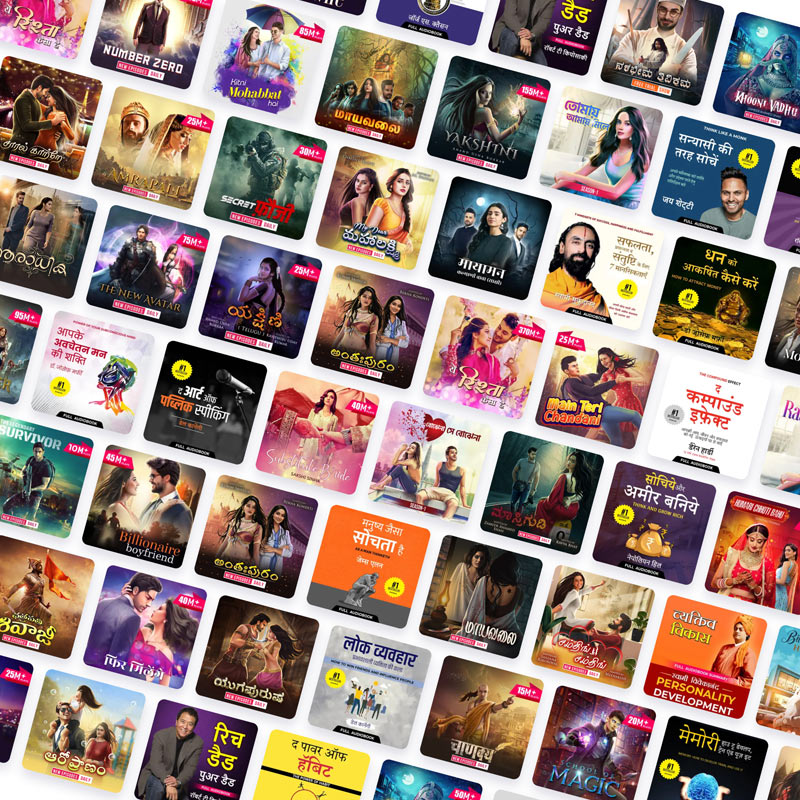
    Mumbai: Pocket FM, a personalized audio streaming service, has launched ad solutions on the app to accelerate its revenue growth. In order to discover the best audio innovations, the company has conducted numerous experimental campaigns with more than 100 brands. It has also offered engaging brand solutions to companies like One Plus, Croma, Amazon Prime, Fino Banking Payments, Hero Vired, and others.

    While ensuring a clutter-free and smooth advertising experience with little ad interference for its listener community throughout the test period, Pocket FM achieved enormous engagement for these brands on its platform. Brands can engage with the listener community using a customised strategy thanks to Pocket FM’s solution’s precise targeting choices.

    Pocket FM head – agency relationship Manish Nagar said, “We have been spearheading the category creation for audio streaming with innovations and our unique storytelling capabilities guiding us towards sustainable and profitable growth. The marketing and advertising community has shown immense interest in our ad solutions due to its strength to optimise brand engagement without disrupting listeners’ experience.”

    The project undertaken by Fino Banking Payments with Pocket FM garnered immense industry appreciation for its innovative approach to audio.

    FINO Banking Payments chief marketing officer Anand Bhatia said, “For a relatively new platform to churn out such innovations in the audio OTT category is a great thing. But to win an award for it within the first six months itself is an even greater achievement. We are glad to have associated with Pocket FM and tried, tested, and approved of its prowess. A first of its kind for our category, really!” 

    In the last quarter, Pocket FM introduced the micro-payment module for its listener to imbibe piecemeal content consumption habits and witnessed an exponential growth trajectory in content monetization, setting the trend for a micro-payment mechanism.

    Having over 1,00,000 hours of audio content, Pocket FM is focused on building the largest audio-streaming repository across multiple formats, including audio series, audiobooks, podcasts, and others. With more than 15 million monthly active listeners on the app, and a daily average time spent of over 100 minutes, the app has emerged as a preferred media category for brands and marketers. 

    Pocket FM has raised $93.6 million till date and is backed by some marquee investors like Lightspeed, Times Internet, Tanglin Venture Partners, Goodwater Capital, and Naver. 

  • GUEST COLUMN: Film and TV revolution through NFTs and metaverse

    GUEST COLUMN: Film and TV revolution through NFTs and metaverse

    Mumbai: Technology and entertainment have historically gone hand in hand. For every new technology that came about, the world of entertainment has usually been at the forefront and adapted it to its advantage. Take the example of any technology in the past, starting from VCRs to DVDs to Blu Ray and now to 3D cameras, Imax cinemas; the entertainment industry has always made the best use of it.

    Today, as we see newer forms of technologies like NFT’s, blockchain and metaverse emerge, the entertainment space is already eyeing different ways how to make the optimum use of it. Ranging from sports collectibles to music collectibles, in-game purchases in video games and NFT sales rose to more than $17 billion globally in 2021.

    Bollywood and NFTs

    The Indian entertainment sector, too, has started to explore ways in which it can include these new, pathbreaking technologies. Given the connection that Indians share with Bollywood, it is no surprise that we have seen a lot of interest when it comes to collectibles featuring celebrities. Domestic marketplaces are turning over both physical and digital assets, and the collectors who are bidding for these assets are spending big.

    In terms of revolutionising the entertainment space, NFTs have allowed studios to find another avenue of monetisation. Big Budget films that are made for hundreds of crores, now have another way of recovering their costs by selling digital assets. Additionally, studios that have a ton of memorabilia from films that are a part of our social and cultural fabric, now have the option to convert these collectibles into NFTs and add another source of revenue to their existing models. Smaller films too have an additional avenue to recover costs through selling NFTs to fans. With NFTs, even smaller films that have a cult following can reap decent amounts of revenue.

    Bollywood enters metaverse

    There are many questions about the metaverse. Can things be worth anything in a virtual place that does not even exist in reality? While that can be said for social media as well, Bollywood has literally marked its territory in the metaverse. Producer VashuBhagnani’s Pooja Entertainment recently purchased virtual land on metaverse for $5,613. The production house is calling the space Poojaverse and it plans to provide users with a movie theatre-like experience. Another example is singer Daler Mehndi who bought land-titled ‘Balle Balle Land’ for an undisclosed amount. The singer plans to open an NFT store in the space where he plans to sell both digital art and merchandise as both virtual and digital products. Reportedly, the singer will have live concerts in the virtual space and even have interactive games.

    Another exercise of the entertainment industry’s tryst with metaverse is the ALTBalaji’s reality show titled “Lock Upp.” Even though it is using the metaverse as a way of marketing rather than being an actual metaverse based on a blockchain, it does have features where viewers can experience the unique world of the show, complete tasks, and win real money. With viewers always looking for a personal connection with celebrities, connecting with their favorite actors or artists in the metaverse becomes something very special for them.

    While NFTs are faring much better than the metaverse space, as technology evolves, the entertainment sector, like always, will not fail to take advantage of this unique opportunity and cash in on this revolution.

    (About Author: Abhayanand Singh is the Vistas Media Capital and Fantico group CEO and co-founder)

  • MX Player’s super-app format offers advertisers a well-rounded opportunity: Karan Bedi

    MX Player’s super-app format offers advertisers a well-rounded opportunity: Karan Bedi

    KOLKATA: Indian audiences have acquired a taste for premium originals offered by the over-the-top (OTT) platforms in recent times, and their appetite has only grown stronger in the wake of the Covid 2019 crisis. Exploiting the huge opportunity, MX Player has witnessed 5X increase in engagement during this period, thanks to its library of originals. The user and engagement growth has translated into monetisation, with at least 150 new brands coming to the platform, MX Player CEO Karan Bedi said.

    Bedi is pleased with the platform’s performance this year across all metrics. But he mentioned that when Covid2019 swept the country initially, high anxiety was prevalent in the market. However, stakeholders soon saw the silver lining in terms of users and engagement, with the platform registering significant uptick on the revenue front within a few weeks, overcoming the concern of decline in ad-spend.

    “We have had a lot of retention of users. Along with high growth, users stuck with us because of the content we were putting out. We had a very large set of users returning to watch more and more content. Initial concern was users may come and go away but that has not played out with MX Player,” Bedi shared.

    Read more news on MX Player

    Bedi noted that the pandemic has brought about an unprecedented acceptance of OTT services. Viewers are now experimenting with previously unexplored genres and languages, especially with online content that has become the new mainstream. MX Player majorly caters to audiences in the 18–24 age bracket, followed by the 25-34 years group, with a sharp focus on tier-2 and tier-3 markets going beyond the metros.

    MX Player has added new features to the platform in recent times including music streaming and casual gaming. Bedi highlighted that they have always maintained MX player is not only a video OTT platform, but it also aims to address the different needs of users – more precisely, all entertainment needs. Hence, the experiment around new features has yielded positive results in terms of engagement and revenue, he claimed.

    It’s also worth pointing out that MX Player forayed into the short video space within a week after TikTok was banned. MX TakaTak was built entirely from scratch in the space of one week. While two-three smaller players tried to bridge the huge void, Bedi claimed that MX TakaTak had the highest growth owing to its scale, content, and technology.

    “Our super-app format promises all forms of entertainment to the user and allows us to offer our advertisers a well-rounded opportunity to suit their marketing goals – including impact, reach and engagement. We have been successfully catering to categories like FMCGs, F&B, mobile handsets, gaming, e-commerce, SMB, social media and service apps, auto and BFSI,” Bedi stated.

    “To give you an example, one of our most seamless branded content solutions was with Smule on our flagship music reality series – Times of Music. On the live streaming front, we’ve had associations with Blenders Pride Fashion Week, Oneplus TV + 8T launches. We’ve hosted content for brands like Skoda and Oppo, among others, and for gaming sponsorship, we had Duracell. We’re also looking at scaling monetisation for our recently launched short format video platform – MX TakaTak,” he added.

    MX Player has a unique positioning in the market, being the only platform with premium originals not locked behind a paywall, which could be lucrative to many brands. Bedi is quite pleased with the AVod business model that MX Player is based on as it has scaled up courtesy of its swelling user base; he has no intention to abandon it for the subscription. He pointed out that the key factors behind a successful AVoD service are scale and technology.

    Additionally, the platform is deepening its library in regional languages. It is now seeing a lot of action happening in other regional markets like Punjabi, Bhojpuri, Bengali along with the core ones like Tamil, Telugu, Punjabi and Marathi. It is also making its presence stronger on the international stage, with a higher focus on the Middle East market.

  • GEMS | Monetisation, improved experiences required to level-up e-gaming in India: Dhaval Ponda

    GEMS | Monetisation, improved experiences required to level-up e-gaming in India: Dhaval Ponda

    NEW DELHI: Gaming and e-sports is swiftly going mainstream in India and for the industry, it’s only onward and upwards from here. PUBG ban not withstanding, the sector is giving stiff competition to major sporting events while simultaneously attracting broadcasters, aggregators, players, and viewers – all the markers of a robust ecosystem of growth and success. 

    However, there are still certain areas that need work in order to fully tap into the industry’s potential. At the first Gaming, E-sports, and More Summit (GEMS), presented by indiantelevision.com and AnimationXpress.com, co-powered by Tata Communications, this hot-button issue was taken up and thoroughly examined by industry experts.

    Opening the two-day-long virtual summit with his keynote address, Tata Communications global head media and entertainment Dhaval Ponda shed light on the emerging trends, growth drivers, and barriers impacting the Indian e-sports and gaming industry. 

    Read more news on gaming industry

    While the Indian gaming crowd is growing at a faster click than the global community, it is still not getting the right monetisation and publishing support within the country, says Ponda. Indian gamers today make for 15 per cent of the global total but the domestic market size is less than 1 per cent in value. Indian game publishers are only 3 per cent of the global value. 

    Though he insisted that things have started improving since 2018, there is still a lot of work that needs to be done in the sector of broadcasting and monetisation.  

    “We are seeing that e-sports gaming content is now being treated by these broadcasters as good as tier-1 traditional sports, and is being watched by millions of viewers. So, you (broadcasters) are also going to attract the same rights-holding fee that you would charge from tier-1 sports, like cricket and football,” stated Ponda.

    Broadcasts will not only be crucial to gauge interest and get tongues wagging about e-sports,but also sustain andreinforce the community, he explained.

    He added that the platforms also need to consider what else they can do beside streaming e-sports live to grab eyeballs, and make it an wholesome experience for viewers as well as the gaming community. “If you are investing, try and understand how you can be unique in your content. Ask yourself if you can have content outside of just gaming,” said Ponda. To drive his point home, he added: “For example, the way you document the NBA champions. Everyone knows where the player was born, what their history is.”

    Read more news on Tata Communications

    Ponda insisted that a similar culture needs to be developed for players in e-sports and gaming categories too. “People want to know who they (the players) are and where they are coming from. It is the sort of content that also sustains engagement and active viewership.” 

    User-experience is also going to be a crucial factor in promoting and supporting the community. “The digital infrastructure needs to grow leaps and bounds in terms of broadband and mobile internet availability. Furthermore, a sound cloud architecture, transcoding infrastructure and CDN infrastructure is required to have a good viewing experience,” he said.

    Artistic and technical talent for the game development side is quite crucial too, Ponda pointed out, and suggested that the industry take inspiration from gaming studios in LA, London, and south Korea to finetune the culture within India. 

  • Vidnet 2019 to lead OTT industry discussions on monetisation

    Vidnet 2019 to lead OTT industry discussions on monetisation

    MUMBAI: Video streaming services are in the race to grab the attention of India's surging internet audience. Streaming platforms have left no stones unturned with their investments. However, the question mark on monetising content still remains.

    While advertising has been the primary monetisation mode till now, subscription will have to catch up soon.

    A recent report by MPA also predicted that subscription will form a major chunk of revenue for OTT platforms in the coming years.

    At the stage of Vidnet 2019 , experts from the industry will discuss the pressing issue of fine tuning models of monetisation – a session that assesses the challenges video-on-demand services face in pocketing a share of the consumer's wallet, a deep dive into new monetising models, sachet pricing and the potential of branded solutions.

    There is no single solution for monetisation in a dynamic market like India. It depends on factors such as content genre, target audience, scale and competition. However, OTT players are attempting many ways such as sachet pricing, content bundling, regional packs, offline payments and collaboration. A session at the Vidnet Summit on 3 October will capture all questions related to the issue.

  • OTT players see subscription revenue as India’s future

    OTT players see subscription revenue as India’s future

    MUMBAI: Most Indian over the top (OTT) and even traditional mediums have assumed that Indian audiences aren’t willing to pay for content. But of late, discussions have shown that monetisation is happening at a slow pace. Though the return on investment (RoI) is not for the foreseeable future, the business minds are highly optimistic that the scenario will change in the next five years.

    Eros Digital COO Ali Hussein, SonyLIV EVP Uday Sodhi, Syntropic Systems managing partner Alap Ghosh, Atechnos founder Apurv Modi and Hungama Digital Media VP Soumini Shridhara Paul delved on the future of the industry at an OTTv Mumbai session.

    The session started with the age-old debate that Indian people don’t want to pay for content. The scenario hasn’t changed since last year’s panel.

    Hussein said the main challenge is not that people don’t want to pay but whether the platforms are able to grow a habit among consumers to return. “The question is to allow the whole ecosystem to pave the way for a feasible experience for the consumers to pay,” he said.

    Sodhi backed Hussein’s statement saying that everyone is paying for content in some way but it isn’t enough to allow evolution. 10 or 15 years ago, similar questions were thrown for traditional TV. He is optimistic in that next five years the scenario of the OTT industry will change too.

    “In the last two to three years, significant consumption appetite has been seen. Penetration of smartphone, easy access to 4g has activated this. Now some of us are encouraged to create content as we believe that some sort monetisation is coming through,” he said.

    Paul said, “When we come to down monetisation challenges, one has to look at how we can build something which is scalable.” She also thinks the quality of production makes a difference. Everybody cannot have $2 billion for content but ensuring the best product within budget is important. In spite of making some content similar, finding something different can really help.

    The reasons that make consumers hesitate to pay have never been found. Ghosh mentioned three reasons. One of the reasons is that people stop paying when they finish watching what they wanted to watch. The doubt on the validity of the expense also restricts them to pay again as the consumers are habituated to pay Rs 200 for 300 channels where they don’t have to think what to watch next.

    Whenever it comes to monetisation, everyone discusses subscription but it is advertising through which significant money can come through and that depends on good content. Going forward, revenue from both subscription and advertising will increase as the market will mature. As advertising is itself a complex ecosystem, there are bigger challenges for AVOD model to make money.

    While Modi said that there is enthusiasm from advertisers to engage in OTT platforms, Ghosh thinks that in the urge to be across platforms they choose to be on one or two select platforms like YouTube, Hotstar to create interest among viewers.

    Moreover, strategic partnerships for distribution also leave an impact to reach more consumers leading to better scaling as well as subscriptions.

    While monetisation has been the key challenge to Indian OTT industry, there are new avenues which can help to overcome the challenge. It’s important for the ecosystem to be able to allow growth of both advertising and subscription based models. The increased attention on statistics from optimising data can help the players to understand what is working and what needs to be changed to retain consumers.

  • ‘Integrated video’ key to TV’s digital transformation, aids cost optimisation

    MUMBAI: Ooyala, a global provider of video monetisation technology and services, today published a new report, “The Lifecycle of Content: From Production to Monetisation,” in collaboration with Futuresource Consulting, a specialist research and consulting firm for media and entertainment industries. The findings show content providers will seek integrated video solutions to minimize costs, streamline processes and provide growth opportunities at every step in the video lifecycle.

    The research, which included input from both traditional and new media operators across multiple geographies, identifies common concerns and challenges due to the new era of TV and its digital transformation to over-the-top (OTT) delivery. All participants agree OTT is necessary to match audience demands and grow video businesses, however, it also cites new pressures on finance and resources. Primary challenges include:

    The integration of, and interoperability between, new and legacy infrastructure
    * The need to produce more with limited or no increase in investment or ongoing spend
    * The management and distribution of an ever-rising number of OTT video endpoints
    * The lack of standardisation and automation of metadata
    * The underutilisation of metadata to improve experiences, enable personalisation and, subsequently, achieve greater monetisation

    Futuresource finds fully optimized integrated video solutions that connect disparate systems and workflows is essential to reduce the mounting pressure from OTT. Operators will seek greater efficiencies and economies of scale at every step in media operations—from production to distribution. Respondents are turning to automation for improved productivity across production workflows and metadata insertion. Further, greater data collection from OTT viewing will reduce risk in content investments, as acquisition and commissions are more tightly aligned to consumers’ viewing preferences.

    “Due to the many hurdles to still overcome, most media and broadcast organizations are not yet fully realizing the potential of integrated video solutions and automation,” said Head of Broadcast Technology at Futuresource Consulting, Adam Cox. “The continued rise of multi-platform content delivery is placing ever greater pressures on operations. Therefore, a successful approach to absorbing initial investment and operating costs, in addition to seeking alternative monetization strategies, is imperative.”

    “The report is indicative of the sheer complexity that content providers face in today’s world of global audiences, global operations and global opportunities,” said Ooyala Co-founder and SVP of Products and Solutions, Belsasar Lepe. “Achieving greater productivity for our customers is top of mind so they can maximize their resources and revenue, without letting scale burden their operations.”