Tag: Monaz Todywalla

  • #Throwback2020: How the pandemic reshaped agency culture

    #Throwback2020: How the pandemic reshaped agency culture

    NEW DELHI: There were a lot many seemingly impossible things that 2020 managed to turn into reality. One such thing was advertising and marketing agencies locking their gates and their employees working remotely for a good chunk of the year. For a business that thrives on human contact and face-to-face interactions, where beer pe charcha has been a trend for the longest time, and where teamwork defines the core strength of the company, it seemed like a herculean task to undertake. However, the year made everyone used to it. In fact, for the industry, it has paved the way for a more relaxed, geo-agnostic, hybrid working model, which will possibly be its future. And not just the technology, but the human connections that have developed this year will help sustain this model. 

    Relationships across the screen 

    The first task for the agencies in the lockdown was to create a system for its teams while working from home to ensure that the output does not drops and their commitment to the clients continues in the same way as before. This was a humungous task as none was prepared for it. They adapted the new techniques of sharing the status of work, deliberating ideas, seeking feedback, team meetings and briefing sessions. Agency folks across the hierarchies took time to adapt but they did and the work went back at the same pace. 

    Earlier in the year, Indiantelevision.com had also reported that the Covid2019 crisis made agencies and clients bond well than ever before. 

    Publicis Worldwide MD Srija Chatterjee had this to say about improved client-agency relationships during one of our virtual roundtables: “We have started understanding each other more. There is much more transparency now. As an agency, we know what the issues are that they face with cash flows and we are trying our best to help them out.”

    Also, Kinnect CEO Rohan Rohan Mehta and COO Chandni Shah in a live virtual chat corroborated that clients, in fact, became very comfortable with presentations and pitches over video calls. And it might be a trend that will continue to stay in the industry for a good long while, though they personally would prefer it to be otherwise. 

    Be it crunching numbers or deliberating on that one great creative idea, all the teams adopted the new normal and started bonding on the screens. They collaborated more and engaged with each other beyond work making work-from-home feel like not a very tough task. 

    Wavemaker South Asia CEO Ajay Gupte told us in a previous interaction, “On the team-level, we have gotten much more closer and understanding of each other. Earlier, our teams in various states could manage to meet once or twice a year, but now we are having at least two meetings every week.” 

    During the lockdown, the agency execs took up participated in team games and sessions like learning cooking, singing. They celebrated festivals online, shared new learnings and developments to create a light atmosphere.

    Embracing a hybrid model

    Advertising is a people's business and at the end of the day, one needs to have boots on the ground to ensure the execution of the ideas at the last mile. This includes production, post-production, art-work, shoots and several other things.  

    While the lockdown restrictions eased, it was not possible for everyone to immediately go back to the office. Havas Media Group MD India Mohit Joshi mentioned in a tete-a-tete with Indiantelevesion.com founder, CEO and editor-in-chief Anil Wanvari a few months back, “Yes, the offices are open but we are not forcing anyone to join. Additionally, we have done extensive joining assessments for the people on grounds like who all are living alone versus who all are living with old parents or young children, who have morbidities associated, etc. So, only those people are being called to the office for whom it is absolutely safe. We are not allowing anyone who travels via public transport to come to the office.” 

    Wunderman Thompson South Asia group CEO and chairman Tarun Rai, while speaking at a Bangalore Advertising Club webinar, insisted that it is high time that agencies embrace the hybrid working model. 

    “I have been passionate about the fact that people should be allowed flexibility at workplaces. We need to be more output-focussed and not input. We can work remotely and deliver the same results,” he said. Rai added that this will help in vapourising the gender bias at the workplace. 

    But more than everything, it will allow agencies to rope in skilled people with hyper-local and targeted capabilities to deliver better solutions to clients. Several industry leaders pointed out that having great talent on-board will not be a function of geography anymore. 

    Several big agencies have reopened the offices. Leadership teams are meeting once or twice every week. Mid-level execs are allowed to come office but are needed to inform in advance. Its HR teams are ensuring that the office does not have over 30 per cent staff at once.  

    What the future looks like

    The industry is positive that hybrid is the way ahead. Freshly appointed PHD India CEO Monaz Todywalla said, “In terms of working models, hybrid working is going to stay. Agencies will collaborate with skilled professionals more. There is also going to be a big focus on in-house skill development.”

    Case in point being most of the young agencies that launched this year – like Syed Amjad Ali’s Catalysts, Saurabh Varma’s WondrLab – are going to be geo-agnostic enterprises. Although nearly all agencies are regularly working with freelance professionals across different geographies to execute projects but this trend will further grow.

    In Rai’s view, traditional agencies also will be moving towards a more free working environment where going to the office would not necessarily mean sitting in a cubicle. It could also mean meeting for a coffee or sitting at a co-working space.

    However, he added that for this to turn into a reality, legacy agencies will have to do a rejig of their entire culture, HR policies, and appraisal systems. He argued that to make all of this function in the real world, people will have to give up the control they are used to exercising on their teams and will have to turn more trusting towards people.

    “In addition to that, we also need to work on our HR policies and appraisal schemes. To this date, we have to punch in our office timings as the system remains input-based. Even with consultants, we are used to asking how many days they will be coming to the office. All this needs to change,” he remarked. 

    For Mehta and Shah, this pandemic has paved the way to a flourishing gig economy in India. Mehta noted that more agencies will be open to outsourcing specialised skills to freelancers and consultants. However, there is a long way to go for standardising the prices and work culture for those who are not on company payrolls.

    He added, “LinkedIn has been a part of the media mix for most advertisers for the past three years now and it has constantly been bringing in new formats to advertise also. The place where LinkedIn lacks a little bit is its expensive pricing. Also, the number of people on the platform is quite limited and you can’t reach a wide audience. I have been waiting for LinkedIn to become more India-centric and viable in terms of pricing. As soon as that happens, a ton of advertisers will flock the place and will be using it way more aggressively.”

  • My focus is on creating a happy and passionate team: Monaz Todywalla

    My focus is on creating a happy and passionate team: Monaz Todywalla

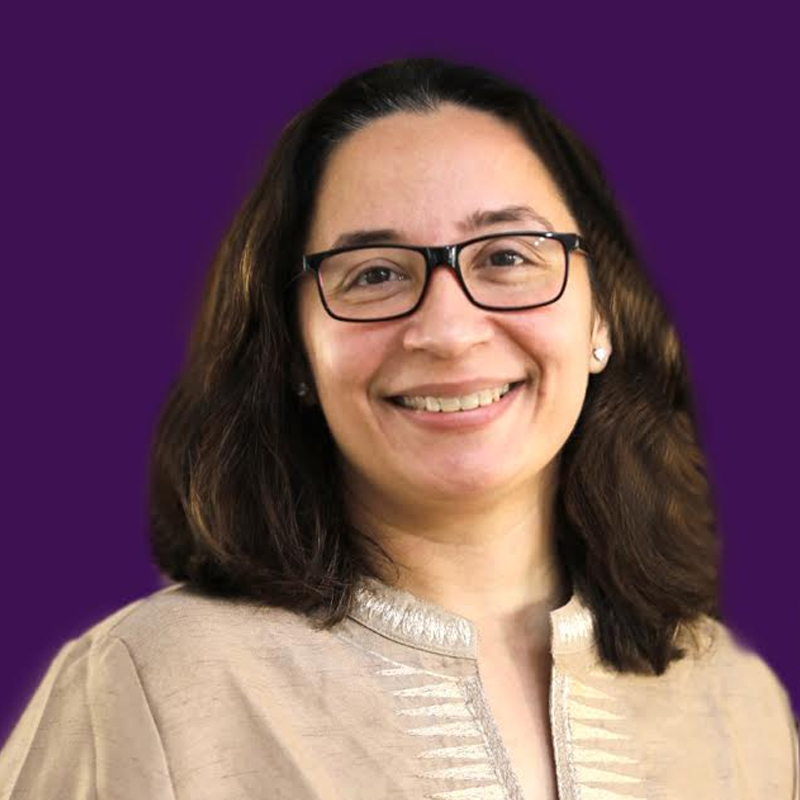
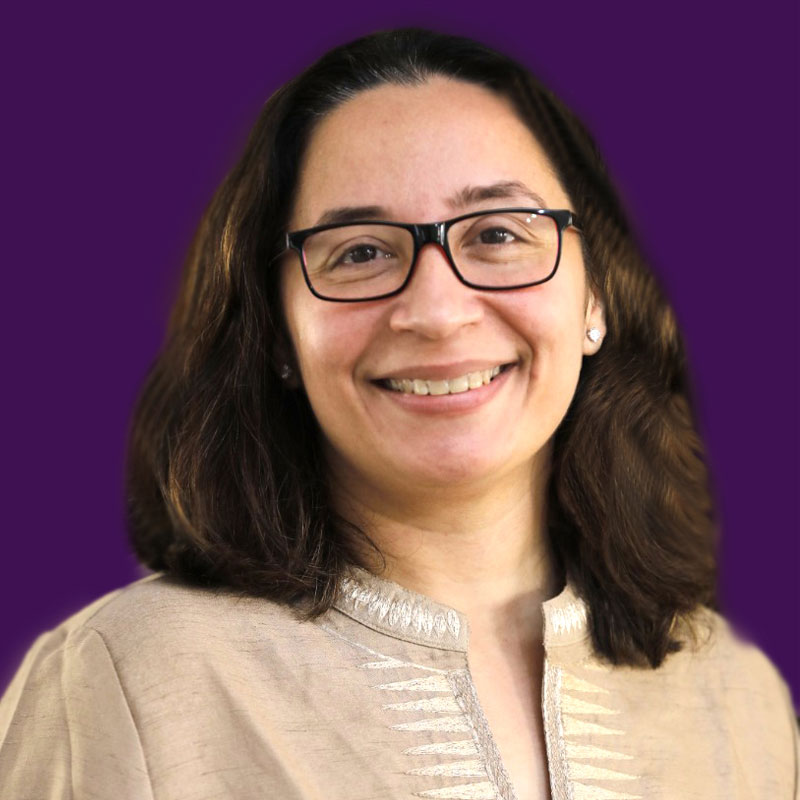
    NEW DELHI: One of the most skilled, innovative, and capable marketing professionals active in the country right now, Monaz Todywalla began her third decade in the field with possibly the biggest achievement she could have asked for; she was made the CEO of PHD India in September this year. Rather than balk at the challenge, she is taking by the reins the fastest-growing and successful agencies in India amidst a global pandemic that has the industry at a big inflection point. In a recent conversation with Indiantelevision.com’s Mansi Sharma, Todywalla talked about her role, her strategies, and what 2021 bodes for the industry as a whole. Edited excerpts follow:

    On her new role

    I am very excited to begin this new phase of my career and it has been the best experience of my life, thus far. I am becoming a CEO for the first time but I somewhere knew what to expect from this role. However, certain unexpected things also happened, making it the fastest learning experience of my life. The lockdown came with its own challenges and my first and foremost priority was to support the new team and I think all of us have emerged victorious. I am looking forward to more such learning experiences. 

    The thing that I am enjoying the most here is that PHD is a young agency and doesn’t have many traditional roots, unlike my previous organisations. The team here is relatively younger and the culture is more enthusiastic, promoting rapid learning. 

    On her short-term and long-term goals

    For any leader, obviously, the long-term goals are building new businesses, talent building within the organisation and skill appreciation. But for the short-term, my whole focus is on taking care of the mental and emotional well-being of my employees. I believe that a happy and passionate team is far more capable of delivering great things and I want to create a positive work environment for all of them. 

    Secondly, Covid2019 has transformed our industry massively. Trust has become a very large factor impacting client-agency relationships. So before we go on getting newer clients on-board, I want each of my existing clients to believe that they can count on me and the agency. 

    On her inspiration and role models

    I was always very passionate about being on the agency side of things and worked really hard to reach there. I was hired by Lodestar during a campus placement drive at my alma mater NMIMS and there has been no looking back since. I was very fortunate to have worked with some of the best bosses in the industry, be it Sam (Balsara), Shashi (Sinha), and Karthik (Sharma). 

    What influenced me personally a lot was the fact that I was trained under a number of kickass female bosses like Punitha Arumugam, Apurva (Purohit) and Vanita (Keswani), who remain my role models to date. 

    All of them gave me an understanding of the business and especially how to build and maintain client relationships. The top lessons that I would now be adopting as my personal style are going to be: clarity of thought – knowing what to do and how it will be done; collaboration – working as a team; leading from the front – your team should be comfortable in approaching you with any problem and you should be able to demonstrate the solutions; most importantly, telling it like it is.

    On the future of the industry

    As I said, Covid2019 has impacted our industry immensely and things are going to be different from here on. Digital, obviously, has grown manifold, offering a lot of opportunities to agencies like ours. The pandemic has also changed consumer behaviour in a massive way, and for good. Our focus is going to be on helping clients connect better with their consumers online, as well as offline. There is definitely a need to relook at e-commerce too. 

    Next, purpose-led commerce is going to only accelerate from here. Products have become much more than just a commodity and it has made a lot of clients go back to the drawing board. We want to partner with them. 

    In terms of working models, hybrid working is going to stay. Agencies will collaborate with skilled professionals more. There is also going to be a big focus on in-house skill development. 

    On her 2021 resolutions

    Personally, I want 2021 to be a period of hyper-learning and new experiences. For the agency, I want to create improved business models based on the core competencies of media, creativity, innovation, and science. 

  • Skoda India launches all-new WhatsApp Bot for buyers

    Skoda India launches all-new WhatsApp Bot for buyers

    MUMBAI: With the lockdown and social distancing norms keeping customers at home, Skoda Auto India and PHD Media have come together to launch an all-new WhatsApp bot for the automobile manufacturer’s customer engagement.

    Meant for both current owners of Skoda vehicles and for prospective buyers, the WhatsApp Chat service provides easy and convenient access for customers in need of information. The service also ensures that consumers can avail of automated customer-care on a 24*7 basis. This tool is not only expected to boost overall customer engagement and improve communication, but it will also strengthen marketing via automation.

    Tarun Jha, head of marketing at Skoda Auto India said, “In times like these, it’s important to turn to innovative, new solutions every day. With the WhatsApp Bot, we want to reassure our customers that we are always available and easily accessible for any query they may have. In light of the lockdown, it has become essential to provide customers with alternative avenues of communication and our on-demand customer support offering is going to do just that. The added personal touch of chat is also slated to further raise customer engagement.”

    PHD Media India CEO Monaz Todywalla said about the Whatsapp Bot: “We are essentially automating marketing with aided product discovery. The new service also promises to engage consumers significantly more because of the graphical output and easy notifications for opt-in users.”

  • PHD Appoints Monaz Todywalla as CEO for India

    PHD Appoints Monaz Todywalla as CEO for India

    Mumbai: PHD, part of Omnicom Media Group, has roped in Monaz Todywalla as its new chief executive officer for India. Prior to joining PHD India, Monaz held the role of VP of growth & strategy at Wavemaker India.

    PHD APAC CEO James Hawkins said, “We could not have asked for a more experienced, skilled and innovative thinker to lead the India team. With Monaz’s strong emphasis on cross-functional, multi-disciplinary work, and her focus on creating an inclusive work environment, I am absolutely confident that Monaz will lead PHD India to greater heights.”

    Monaz comes with close to two decades of extensive experience in the field of media, marketing and communications, with an in-depth understanding of planning, buying, strategy and execution across industries such as FMCG, Telecom, BFSI, Retail and Confectionary. Her diverse experience is best illustrated by the sheer range and number of clients she has worked closely with. From L’Oréal, Vodafone, Kotak, HDFC Life and Starbucks, to Tata Cliq, Asian Paints, MDLZ, Amul and Marico – her varied expertise has led to her being recognised as a top media and marketing professional in India.

    Todywalla said, “I am excited about working with the talented and diverse team at PHD India, fostering creativity and inclusiveness in a space that is already abuzz with innovative thought. Coupled with a solution-oriented and richly-curious ethos at PHD, I am looking forward to leveraging my experience and helping our clients make the leap in a rapidly changing business landscape.

  • Kids content should not be excessively kiddy

    Kids content should not be excessively kiddy

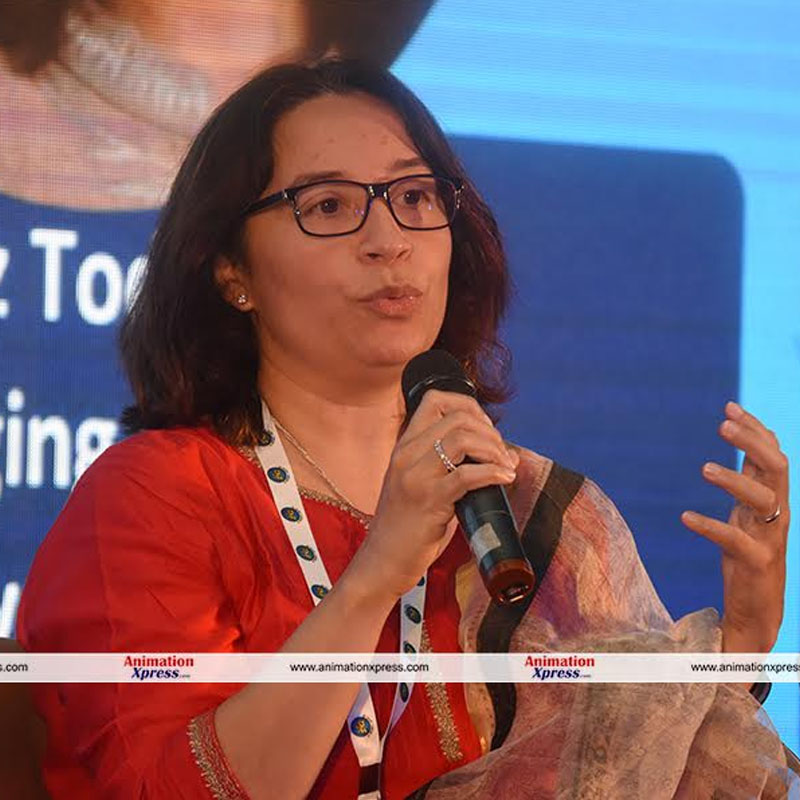
    MUMBAI: Kids animation content should be more inclusive to make a bigger impact, insisted a panel, speaking on “Creating an Impact for Kids Audience”, at the recently concluded KAM Summit by AnimationXpress.com. The panellists noted that content created for kids should not be ‘so kiddy’ that it doesn’t appeal to the people they are watching it with.

    The panel aimed to highlight ground rules for creating marketing content targeted and kids and included Wavemaker managing partner Monaz Todywalla, Omnicom Media Group AVP-PhD media Asmita Reelkar, and GREY Group India head of strategy and national planning director Arun Raman. The session was moderated by Sony YAY! VP – marketing and OAP Sujoy RoyBardhan.

    Reelkar mentioned that parents play a key role in monitoring the content that kids are watching and are also making most of the purchasing choices for them, so it is pertinent that a brand can persuade the parents too.

    Citing some interesting examples, Raman said, “There are no massive kids’ brands in India. I can think of Gini & Jony, which is one of the largest brands in the space, but no one is buying from them. People buy from brands like H&M Kids and Zara Kids.”

    He pointed out that there has been a behavioural and cultural shift in the Indian audience. “There are many kid-centric brands like ‘Naughty Boy’ from Bata, which are not as popular now. They now have something called ‘Ambassador Collection’. I am hearing Britannia and Parle are putting ‘Chota Bheem’ on their packages but it doesn’t mean that they are creating separate kids brands. In fact, it is making a brand meant for adults relevant to kids.”

    The panellists also pointed out that kids today are smarter and know facts. They can read through if a brand is trying to lie to them and that’s why it is important for brands to maintain highest standards of advocacy while creating communications for them.

    Another important point shared was that the brands should now be focussing on multi-screen advertising as the kids of today are digital natives.

    Todywalla said, “More and more creators, marketers, and brand custodians are realising that it has become a multi-touch world. But brands are still relying mostly on TV to interact with kids. Maybe they do some sprinkling of digital or a few events. But the landscape is changing dramatically. Kids are probably bypassing the whole TV phase and going directly to digital. Brands are agencies are still grappling with that area.”

    They unanimously agreed on the point that content is going to play a key role in taking brands through this phase of change.

  • Maxus strengthens regional leadership teams in west and south

    Maxus strengthens regional leadership teams in west and south

    MUMBAI: In the first six months of 2014, the west and south regions of Maxus have been on a winning spree of adding 23 new businesses. To keep up the pace, the media investment planning agency is strengthening its regional teams.


    In the southern region, Maxus has elevated Kishankumar Shyamalan to general manager. In his previous role as client leader, Shyamalan was the key lead for the Tata Global Beverages pitch, ultimately converting the business in Maxus’ favour. He is the key architect of the Power of 49 campaign, conceptualised and executed by Maxus Bangalore. He also spearheaded media teams for Titan Industries, Wipro and the Kerala office. He has been a key contributor to all Maxus south pitches over the past six years, and also led the geographical expansion for the media agency in the south. His erstwhile roles include buying head for Maxus south.


    The new appointment at Maxus Mumbai is of Monaz Todywalla as general manager. Todywalla will be leading client teams for Vodafone, L’Oreal, HDFC Life and Kotak. She comes with a wealth of experience across categories like FMCG, BFSI, Retail and Confectionary. She joins Maxus from Madison Communications, where she worked on clients such as Marico Industries, Asian Paints, Kaya and Sleek. She began her career with Lodestar where she serviced Amul and SC Johnson.


    Maxus south Asia MD Kartik Sharma said, “We are excited to elevate Kishan and bring Monaz on board at Maxus. We have always attracted the very best talent in the industry and have given them every opportunity to grow and prosper within Maxus. We are confident that Kishan and Monaz will be ambassadors of the PACE values of Passion Agility, Collaboration and an Entrepreneurial spirit that drives us to become change agents in a fast paced media environment.”


    Maxus India 23 new clients have added Rs 300 crore to the agency’s billing. Maxus has also been pitching for several of its specialist services across digital marketing, experiential marketing, content marketing to give clients an edge in not just media, but also brand messaging and outreach.