Tag: Mohun Bagan

  • Viraj Chouhan hops onto RP-Sanjiv Goenka group in corporate affairs role

    Viraj Chouhan hops onto RP-Sanjiv Goenka group in corporate affairs role

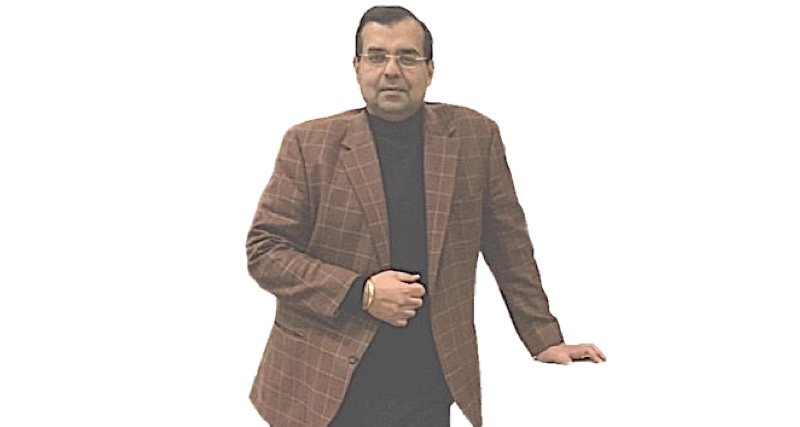
    MUMBAI: In a splashy move that coincides with the festival of colours, corporate affairs  veteran Viraj Chouhan has jumped ship from PepsiCo to join the RP-Sanjiv Goenka Group as its group corporate affairs officer. The announcement, dripping with Holi metaphors, marks the end of Chouhan’s nearly six-year innings with the fizzy drinks giant.

    “Just as Holi symbolises renewal, this opportunity marks a vibrant new chapter,” gushed Chouhan in a LinkedIn post.

    The alumnus of Nagpur University brings hefty credentials to the table, having previously served as vice president corporate affairs for PepsiCo’s APAC region. His CV reads like a who’s who of corporate India, with stints as chief communications officer at Ola and executive director of corporate communications at MTS India.
    Chouhan cut his corporate affairs and communications teeth during a five-year spell at Coca-Cola before switching allegiance to arch-rival PepsiCo. 

    The RP-Sanjiv Goenka Group, which Chouhan now represents, boasts an asset base of US $7 billion (approximately Rs 58,000 crore) and revenue of US $4 billion (Rs 33,000 crore). The conglomerate has its fingers in numerous pies, from power and FMCG to retail and IT.

    Sports enthusiasts might recognise RPSG as the owner of IPL team Lucknow Super Giants and football club Mohun Bagan—giving Chouhan plenty of metaphorical playing fields for his corporate messaging.

  • Be patient with RoIs; may own & transfer players: Bhaichung Bhutia advises corporates

    Be patient with RoIs; may own & transfer players: Bhaichung Bhutia advises corporates

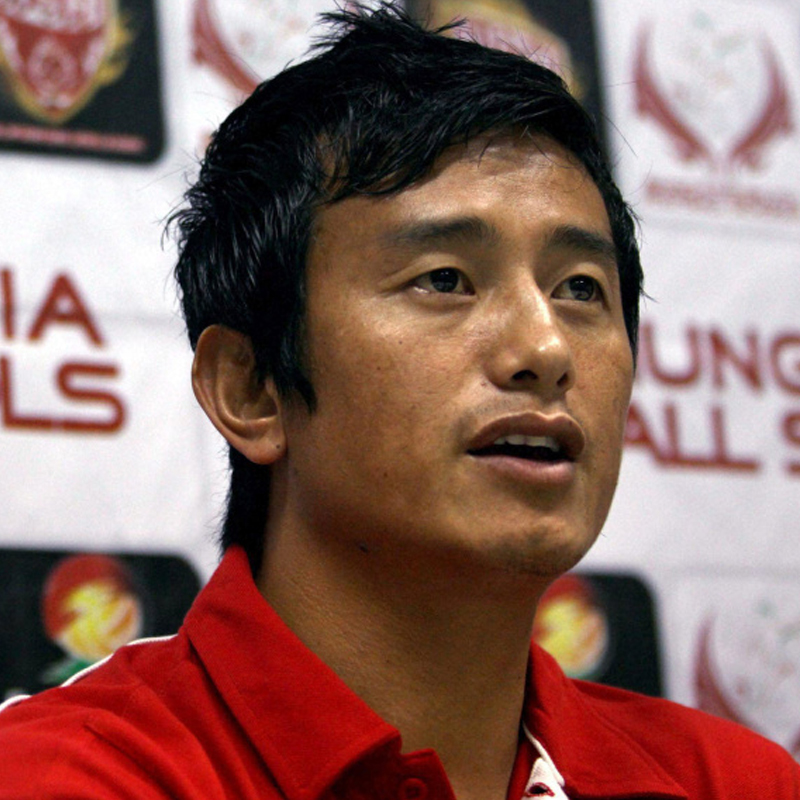
    MUMBAI: No footballer in India has had fanfare similar to Bhaichung Bhutia. The Sikkimese Sniper, as he’s known to the football world, changed the dynamics of the Indian game, went on to play for Bury FC, and has been one of the leading lights of Indian football.

    In a free-wheeling chat with indiantelevision.com, the former Mohun Bagan and East Bengal striker said that the corporate sector needs to join hands for development at the grassroots level. He added that the companies must be little more patient for their returns on investment.

    The former national captain also said the corporate sector could own players’ rights and had a transfer system similar to Europe, investing more into the game and earning more benefits. The founder of Bhaichung Bhutia Football School also added that sponsors were difficult to find in the Indian market and, thus, scouting for talent becomes tough. Excerpts:

    ISL Season III has disappointed you in terms of less goals and defensive coaching techniques. Where do you think we’re lacking and why do you think such tactics are being supported even by the foreign coaches?

    Because it’s a format in which coaches do not get much time to understand the players in the current format and give equal chances to them.

    Coming on board of an expert or famous coach cannot automatically guarantee a victory because he’s not dealing with the players for a reasonable period of time.

    Coaches such as Zico have also struggled and I think that’s why they have been on the defensive and tried to play safe. The number of goals (scored) came down and the number of Indian scorers came down (in the current season). The last season was very different from this season; there were a number of Indian stars, but, in this season, we’ve had only Vineeth in the second part and Kean Lewis ….to a certain extent.

    Bhaichung Bhutia has grown from being the Sikkimese Sniper to one of the most commendable brands in the Indian sporting market. You have been the ambassador of Nike, Adidas and various brands. How do you look to take the game forward with your credible image?

    I think the biggest thing that I’m doing is working at the grassroots level. It’s very challenging because you’ve to work and do everything on your own. Finding grounds for the kids to practice is in itself a big challenge. Sponsors are difficult to find and then scouting for talent becomes tough.

    Even after facing such challenges, I think the journey has been good and we’ve been able to produce capable players in different age-groups and we’re the biggest grassroots-level programme in India today. We’ve over 2000 kids and about 70-80 per cent licenced coaches associated with our programmes.

    With around 60,000 spectators turning up for the finals, the support this season has been overwhelming, and witnessed good numbers throughout the ISL matches. How do you think I- league can have similar numbers?

    Kerala has always been a football hub. A few years ago during the Nehru Cup that I played, we had over a million supporters throughout the tournament. It is great for Kerala and they’ve very passionate fans. I-League fans would have to connect with the fans and the audience and, without that, it would be very difficult to happen.

    Where do you think the corporate sector needs to chip in to help Indian football grow and what can they learn from Bhaichung, the footballer?

    I think the corporate sector just needs to come and support the game from the grassroots level. They look into the Return of Investment which I’m sure is very important. So, I think, they should start investing from the grassroots to the higher leagues, and wait a bit for returns to start coming in.

    Indian players, more often than not, have played fringe roles in the ISL. Do you see any change in this attitude of the coaches? What can be the important modifications to get the best out of the home-grown players?

    I think the duration of league has to be longer. If it keeps happening just for three months, everybody is going to struggle to get into the rhythm. The smaller league would be great viewership-wise, but the quality of the sport and the players might not be so great.

    What do you think about a successful merger between ISL and I-League and what can be a good business model for Indian football?

    I don’t know how they’re going to merge it but all I can say is that the league should be longer. Even if the ISL and I-League go on parallel, they have to be on for a longer period of time to ensure more Indian players can participate and concentrate on the respective tournaments. Right now, there’s also a huge unemployment crisis amongst Indian footballers and that’s very harmful for Indian football. This needs to change for us to have a realistic chance to improve.

    Ashique Kuruniyan’s stint with Villareal FC is a story which is few and far-between. How do you think Indian football can replicate this trend?

    I think India must do well in international tournaments to turn this trend into a winning spree. The countries and foreign clubs would then start taking you seriously. If the national team doesn’t do well, the changes of Indian players going out can be very challenging and look bleak. The ultimate goal should be strengthening the national team, and once that happens, the eyeballs of the clubs are sure to fall on India. It will not be just for marketing but also for getting the right kind of footballing talent.

    ATK has joined hands with Atletico Madrid and Delhi Dynamos have a tie-up with West Bromwich Albion. Why don’t these ISL clubs send their junior players to the foreign clubs for better training. And why is Bhaichung Bhutia Football Schools (BBFS) not tying up with any such club?

    The fee for such tie-ups is astronomical. We have tried to get such deals done, but with no major sponsorship, it gets difficult. Atletico de Kolkata has given 25 per cent of its shares to Atletico Madrid which could be around Rs 50-60 crore deal. It depends on the deal, and if they send their junior players to train, that’s certainly the best thing that can happen to Indian football.

    How are your football schools running? What’s the business model? When do we see the next Bhaichung shoot on the international scenario?

    It’s doing well. We’re one of the best grassroots programme despite a lot of challenges. Its all through the fees the kids pay and some of the money is generated from the foundation. We make very little profits and whatever profit is made, we pay it back through scholarships to kids who’re highly talented and then we’ve a team which plays in U-15 I-League and takes part in other tournaments too.

    Your wishes and suggestions to the Indian U-17 team?

    The players should enjoy and give their best. It is going to be a very difficult tournament for them, but a great learning curve. The quality is there, and they’re a talented side, so I think they should just enjoy and not take any undue pressure on their shoulders. (Winning) is asking a lot from them.

  • Be patient with RoIs; may own & transfer players: Bhaichung Bhutia advises corporates

    Be patient with RoIs; may own & transfer players: Bhaichung Bhutia advises corporates

    MUMBAI: No footballer in India has had fanfare similar to Bhaichung Bhutia. The Sikkimese Sniper, as he’s known to the football world, changed the dynamics of the Indian game, went on to play for Bury FC, and has been one of the leading lights of Indian football.

    In a free-wheeling chat with indiantelevision.com, the former Mohun Bagan and East Bengal striker said that the corporate sector needs to join hands for development at the grassroots level. He added that the companies must be little more patient for their returns on investment.

    The former national captain also said the corporate sector could own players’ rights and had a transfer system similar to Europe, investing more into the game and earning more benefits. The founder of Bhaichung Bhutia Football School also added that sponsors were difficult to find in the Indian market and, thus, scouting for talent becomes tough. Excerpts:

    ISL Season III has disappointed you in terms of less goals and defensive coaching techniques. Where do you think we’re lacking and why do you think such tactics are being supported even by the foreign coaches?

    Because it’s a format in which coaches do not get much time to understand the players in the current format and give equal chances to them.

    Coming on board of an expert or famous coach cannot automatically guarantee a victory because he’s not dealing with the players for a reasonable period of time.

    Coaches such as Zico have also struggled and I think that’s why they have been on the defensive and tried to play safe. The number of goals (scored) came down and the number of Indian scorers came down (in the current season). The last season was very different from this season; there were a number of Indian stars, but, in this season, we’ve had only Vineeth in the second part and Kean Lewis ….to a certain extent.

    Bhaichung Bhutia has grown from being the Sikkimese Sniper to one of the most commendable brands in the Indian sporting market. You have been the ambassador of Nike, Adidas and various brands. How do you look to take the game forward with your credible image?

    I think the biggest thing that I’m doing is working at the grassroots level. It’s very challenging because you’ve to work and do everything on your own. Finding grounds for the kids to practice is in itself a big challenge. Sponsors are difficult to find and then scouting for talent becomes tough.

    Even after facing such challenges, I think the journey has been good and we’ve been able to produce capable players in different age-groups and we’re the biggest grassroots-level programme in India today. We’ve over 2000 kids and about 70-80 per cent licenced coaches associated with our programmes.

    With around 60,000 spectators turning up for the finals, the support this season has been overwhelming, and witnessed good numbers throughout the ISL matches. How do you think I- league can have similar numbers?

    Kerala has always been a football hub. A few years ago during the Nehru Cup that I played, we had over a million supporters throughout the tournament. It is great for Kerala and they’ve very passionate fans. I-League fans would have to connect with the fans and the audience and, without that, it would be very difficult to happen.

    Where do you think the corporate sector needs to chip in to help Indian football grow and what can they learn from Bhaichung, the footballer?

    I think the corporate sector just needs to come and support the game from the grassroots level. They look into the Return of Investment which I’m sure is very important. So, I think, they should start investing from the grassroots to the higher leagues, and wait a bit for returns to start coming in.

    Indian players, more often than not, have played fringe roles in the ISL. Do you see any change in this attitude of the coaches? What can be the important modifications to get the best out of the home-grown players?

    I think the duration of league has to be longer. If it keeps happening just for three months, everybody is going to struggle to get into the rhythm. The smaller league would be great viewership-wise, but the quality of the sport and the players might not be so great.

    What do you think about a successful merger between ISL and I-League and what can be a good business model for Indian football?

    I don’t know how they’re going to merge it but all I can say is that the league should be longer. Even if the ISL and I-League go on parallel, they have to be on for a longer period of time to ensure more Indian players can participate and concentrate on the respective tournaments. Right now, there’s also a huge unemployment crisis amongst Indian footballers and that’s very harmful for Indian football. This needs to change for us to have a realistic chance to improve.

    Ashique Kuruniyan’s stint with Villareal FC is a story which is few and far-between. How do you think Indian football can replicate this trend?

    I think India must do well in international tournaments to turn this trend into a winning spree. The countries and foreign clubs would then start taking you seriously. If the national team doesn’t do well, the changes of Indian players going out can be very challenging and look bleak. The ultimate goal should be strengthening the national team, and once that happens, the eyeballs of the clubs are sure to fall on India. It will not be just for marketing but also for getting the right kind of footballing talent.

    ATK has joined hands with Atletico Madrid and Delhi Dynamos have a tie-up with West Bromwich Albion. Why don’t these ISL clubs send their junior players to the foreign clubs for better training. And why is Bhaichung Bhutia Football Schools (BBFS) not tying up with any such club?

    The fee for such tie-ups is astronomical. We have tried to get such deals done, but with no major sponsorship, it gets difficult. Atletico de Kolkata has given 25 per cent of its shares to Atletico Madrid which could be around Rs 50-60 crore deal. It depends on the deal, and if they send their junior players to train, that’s certainly the best thing that can happen to Indian football.

    How are your football schools running? What’s the business model? When do we see the next Bhaichung shoot on the international scenario?

    It’s doing well. We’re one of the best grassroots programme despite a lot of challenges. Its all through the fees the kids pay and some of the money is generated from the foundation. We make very little profits and whatever profit is made, we pay it back through scholarships to kids who’re highly talented and then we’ve a team which plays in U-15 I-League and takes part in other tournaments too.

    Your wishes and suggestions to the Indian U-17 team?

    The players should enjoy and give their best. It is going to be a very difficult tournament for them, but a great learning curve. The quality is there, and they’re a talented side, so I think they should just enjoy and not take any undue pressure on their shoulders. (Winning) is asking a lot from them.

  • Ten Sports Network renews I-League broadcasting contract

    Ten Sports Network renews I-League broadcasting contract

    MUMBAI: Ten Sports Network has renewed the broadcasting contract of I-League for an additional one year. The broadcaster had the rights for 10 years since the inception of the league. The entire rights of India football is with IMG Reliance and the broadcaster’s deal is with the company.   


    The league was officially launched today in Kolkata in the presence of players from all nine competing clubs, along with All India Football Federation (AIFF) general secretary Kushal Das and representative from Hero Motocorp.


    This season will have two debutants in the I-League namely DSK Shivajians FC and Aizawl FC. With the addition of these two clubs, the battle for the ultimate glory in Indian football will be fought between nine clubs. The Hero I-League 2015-16 kicks off on the back of some solid showing by the Indian players in the recently concluded SAFF Championship 2015-16 and the Hero Indian Super League 2015.


    The first match of the Hero I-League 2015-16 season will see defending champions Mohun Bagan take on Aizawl FC in Kolkata on 9 January, 2016.


    Touting this Hero I-League season as the most competitive and promising, Das said, “We’ve witnessed an enthralling Hero I-League last season, which kept us captivated till the final whistle on 31 May, 2015. Definitely the teams will try to push their limits this season too and strive hard to win the silverware. Champions Mohun Bagan can’t show any signs of complacency as all eight teams will play out of their skins to dethrone them.”


    Hero MotoCorp chairman MD and CEO Pawal Munjal added, “This will be the second year of our association with the I-League and after the exemplary show last season, we are all eagerly looking forward to the upcoming season which kicks off in three days. Over the years we have continued to support various sporting events in the country and it gives us immense pleasure to be associated with both the Hero ISL as well as the Hero I-League. Football is fast emerging as one of the most popular sports among youngsters in the country and we are indeed happy to support the game. After the grand conclusion of the Hero ISL season 2, it is now time for Hero I-League to take centre stage.”


    Over the next five months, fans will get to witness 72 high-octane matches across six cities in the country. Traditional rivals Mohan Bagan and East Bengal will lock horns on 23 January, 2016 amidst the ever-so-passionate Kolkata fans. The return leg between these two Indian Football power houses will be played on 2 April, 2016.


    The Hero I-League 2015-16 champions will receive a whopping prize amount of Rs 1 crore. It may be recalled that the previous season’s champions pocketed Rs 70 lakh in prize money. The teams finishing second and third will win Rs 60 lakh and Rs 40 lakh respectively. Additionally, winners of every game will win Rs 50,000. As if this was not enough, travel subsidy has been raised to Rs 45 lakh with the match day subsidy hiked to Rs 1 lakh.


    The Hero I-League 2015-16 will be telecast live across the Ten Sports Network.