Tag: Mohit Kapoor

  • Revolutionising ecommerce: How technology is stepping up in the game

    Revolutionising ecommerce: How technology is stepping up in the game

    NEW DELHI: Ecommerce businesses are having a field time, reaping the benefits of an otherwise massive calamity. More and more people are getting online for shopping everything from grocery to apparel, to automobile, to precious jewellery resulting in a massive jump in their numbers. However, it has also paved the way for the requirement of modifying their business models, amplifying the user experiences, and marrying the offline experiences with online shopping. 

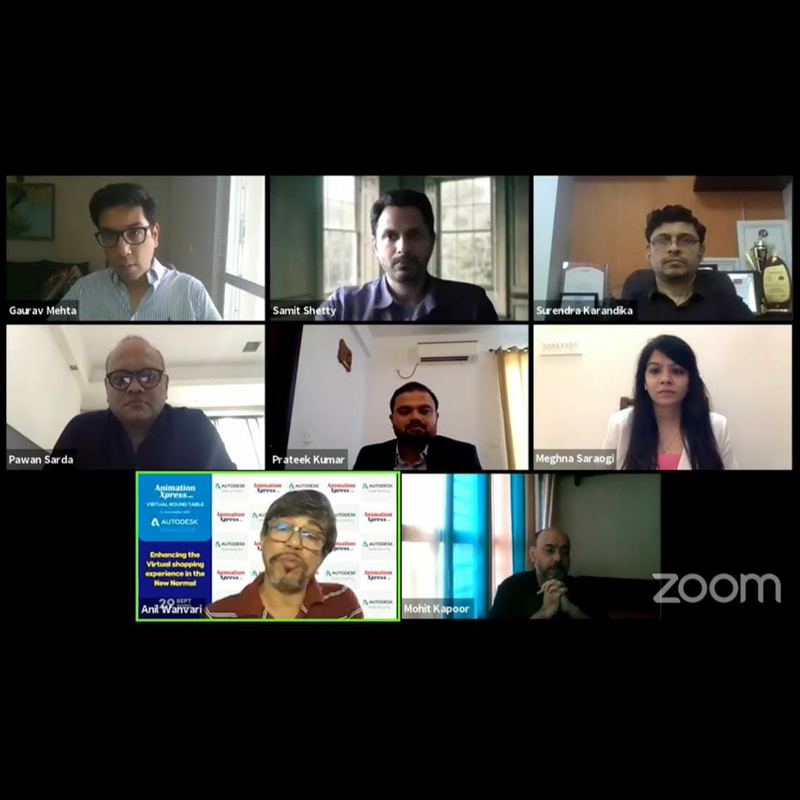
    In a recent panel discussion on “Enhancing the Virtual shopping experience in the New Normal" organised by AnimationXpress.com in association with Autodesk, Indiantelevision.com founder, CEO, and editor-in-chief Anil Wanvari discussed with the leading industry experts their experiences and strategies for ushering in the new era of e-commerce and online shopping that has customer interest at the centre of it and is driven by life-like experiences. Sitting on the panel were Jio VP – advertising and innovations Mohit Kapoor, Future Group group CMO (marketing, digital, and e-commerce) Pawan Sarda, CarDekho, Gaadi & Zigwheels CMO Gaurav Mehta, Vedant Fashions Pvt.Ltd. (Manyavar) head – global ecommerce Prateek Kumar, mirrAR byStyleDotMe co-founder and CEO Meghna Saraogi, Prorigo Software Pvt. Ltd (Jewelfie) founder-CEO Surendra Karandikar, and Autodesk India sr.technical sales specialist, M&E Samit Shetty. 

    The Whole New World of Opportunities

    All the panellists were delighted to agree that Covid-2019 has created a very positive atmosphere for the online retailers and associated businesses who are helping them in curating exciting virtual experiences. 

    Read more news on e-commerce 

    Kumar shared that he was surprised to witness a 350-400 per cent jump in Manyavar’s online sales during the lockdown. “If I talk about pre-covid times, we were already recording a 200 per cent y.o.y growth on our brands. To my surprise, when the lockdown ensued in March and in the following months, we recorded a 400 per cent jump in our online sales. And it was all for pre-paid orders. So it was quite interesting for me to see that people are buying online during the pandemic too.” 

    And this growth in online retailing and shopping isn’t only limited to tier1 cities and metros but goes deep down within the nooks and corners of the country. 

    Saraogi noted, “We are working with around 225 jewellers across the country and I am not only talking about the big brands. There are jewellers who are sitting in tier 3-tier 4 cities, where an aeroplane won’t land, but they are digitising their shopping experience.” 

    Creating Immersive Experiences 

    All the categories which are selling online are now busy in evolving their businesses to offer immersive, real-like experiences to customers online. They agree that the fear associated with the virus is not going away anytime soon and more people are going to explore and buy products online, therefore they are trying to offer as advanced as possible AI, VR, and MR shopping experience to the consumers. Here are the few top trends that the panel highlighted: 

    Digitising Trials 

    Mehta quipped, “While auto-buying and car-buying was already a very digitised function, which we have been noticing for the past few years, in the last six months we have witnessed a number of new users coming on-board. They are looking for as real and as close to natural look and feel of a product as they can get. So, we are investing a lot of time and effort in sharing 360-degree views of the car, along with more raw experiences like how the door opens, how the engine sounds, etc. Whatever can be digitized is being digitized.”

    He added that a lot of focus is put on personalisation of the vehicles for the consumers too, so one can put in place the filters regarding various aspects and functionalities of the sort of vehicle they are looking for and see in options only the relevant results. 3D imaging is also playing a big role.  

    Sarogi pointed out that they personally observed 3D imagery creating a lot of problems for them in terms of offering a smooth user experience, therefore for the time being they have moved to 2D images of products. However, a great emphasis is on facial recognition technology that puts the jewellery right in place and a person can experience it how they will look like wearing it in real life. “We are creating exciting co-shopping experiences too, where you can get on a video call, do screen sharing and show others what the jewellery is looking like on you.”

    Kumar highlighted, “We launched our own app a few weeks ago. Apart from that, we are offering WhatsApp video call options to our customers who can get assistance for shopping just like they get into physical stories. Another thing that we tried was getting chatbots on our sites. And we are seeing around 2000 people interacting with those bots on a daily basis. In fact, 90 per cent of our queries come from those chatbots.” 

    WhatsApp to the rescue 

    While WhatsApp might be dealing with its own shares of problems when it comes to the privacy of chats, it has surely turned out to be one of the favourite tools for online businesses. Not just Manyavar, but other brands have also invested in WhatsApp video calling options and other shopping tools to ease out the process for customers. 

    Kapoor noted, “India has around 60-62 million SMEs and around 30-32 million Kirana stores. When we talk about real-life experiences or 3D imaging, etc., these models won’t work for them. You do not need to see the 3D image of your grocery. They require a whole different model of ecommerce. “We (Jio) have one model, in which we are working with Facebook right now; opening up shopping within WhatsApp and getting on board the small merchants.”

    He added that the firm is working on a number of direct-to-consumer models wherein the focus on simplifying the experience as much as possible. “You can share a handwritten list of your grocery with us in a photo, and we will get it delivered.” 

    Reshaping Offline Stores

    The whole going online business will not necessarily mean that offline brick-and-mortar shops will go irrelevant and non-existent. In fact, the idea is to turn them into exhibition centres for experiences and then the purchases can be made online. 

    Kapoor shared his personal experience of shopping a bicycle from Decathalon wherein he was allowed to test the bicycles in physical stores, but he eventually had to place the order online. 

    Sarda elaborated, “I think stores can really up their capacity in terms of doing businesses if we put another layer of digital on top of it. We can see stores typically as exhibition centres. It will have to be constrained in terms of the number of people who can go inside but I see it as a large opportunity.”

    How Technolgy Firms Are Helping

    There is as much as backend work required to create seamless online shopping experience as much as you see online. Therefore, technical firms and partners are surely playing a key role in assisting online businesses in making shopping a truly immersive and gratifying experience for consumers. 

    Shetty noted, “When it comes to 3D experiences, the smallest of factors like lighting impact the overall experience of a consumer. When it comes to the artist who is working on it, rendering is a big issue; it takes a lot of time. Therefore, the creator might lose patience and just give up on the project and might not try more variants. We are working on specific pain-points like that. We now have GPU rendering, which is an integral part of Autodesk that makes the job simpler, cutting the time significantly.”

    It is also allowing them to make 3D models more real with more apt textures, colours, and backgrounds. 

    Apart from that, they are working hard on collaborative technologies like Shotgun that allows various stakeholders to interact easily on creative projects that can accelerate the approval processes as well. “All this delivers a good ROI to not just us but also to businesses.” 

    Karandikar added that going ahead, there is a lot of constant innovation happening in the technology industry and tools like voice are going to be the next big thing. He suggested that apparel brands can also innovate on aspects like creating life-size mannequins based on a customer’s measurement to give them a real feel of how the product will actually look on them. 

  • Internet to be disruptive force in video distribution to rural areas

    Internet to be disruptive force in video distribution to rural areas

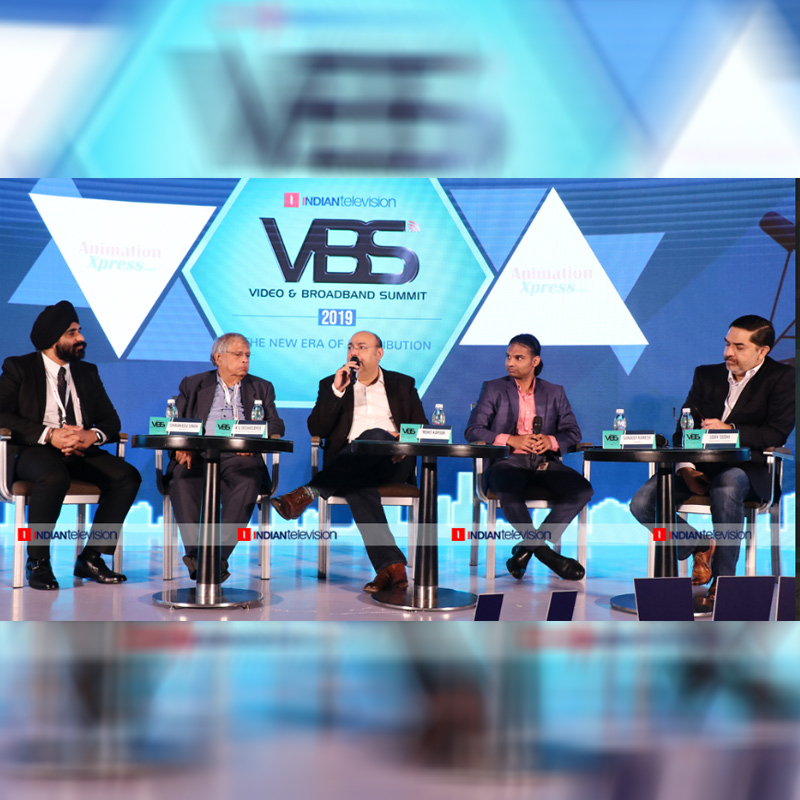
    MUMBAI: Internet has become a new medium for delivering video to consumers. It has been reaching around 400 million consumers with a free to watch option on their mobiles. VBS 2019 organised by Indiantelevision.com created a platform for industry doyens to discuss the changing role of the internet in video distribution.

    A panel discussion of Video and Broadband Summit 2019 focused on the Internet's role in video distribution. It was moderated by digital strategy consultant Uday Sodhi with MediaKind APAC marketing head Chiranjeev Singh, Win Broadband Services MD and CEO K V Seshasayee, Jio advertising & strategy VP Mohit Kapoor and Google media and entertainment industry head Sandeep Ramesh as the panellists.

    They shared their views on the internet being a new medium of delivering content. They agreed that while the internet will impact video entertainment distribution, there is enough space in the Indian media industry for all stakeholders, from internet providers, OTT players to media networks, to co-exist and complement each other. The panellists also believe the internet has emerged as another prominent distributor in the broadcast industry.

    Google’s Ramesh briefed the audiences on how internet disrupts the videos delivered to the consumers today and how things will be going forward. He said, "From the consumer’s point of view, video on demand is a habit. Once the consumers move to video on demand, they will not come back. This will happen as it is a secular change. All entertainment will be available online, sooner or later, and consumers will have a desire to watch the content wherever they want. This change will have implications on the content makers and distributors, but from the advertising stand point, digital advertising will be benefitted."

    Jio’s Kapoor highlighted an important fact, which is the innovation of smartphones. He said that Jio introduced Jio phones which have feature phone segments and are smart phones, sold for a price between Rs 700 and Rs 1,500. Around 100 million phones have been sold and consumers are using feature phones, but not using internet for viewing content or videos. About broadband, he informed out of 250 million homes in India, 50 million homes is Jio’s target, which will be achieved. Compared to the US or any other country, India is ahead in content consumption. Currently, average consumption of internet is around 8.5 – 9 GB. Jio is offering more than 11 – 12 GBs monthly.

    Win Broadband’s Seshasayee said, “All content providers and aggregators are focusing on tier 1 and 2 cities and few are trying to reach tier 3 cities. As per the statistics, out of more than 400 million Indian viewers who do not have internet access, the ones who have the access are using 2G, which will be obsolete within two months. As per mobile consumption statistics, 60 per cent consumers are consuming videos on mobile. So, if there are places with no internet access, there are opportunities for the country providers to enter that market, make use of the available resources and find an alternate solution to the problem.”

    Sodhi said that there is a huge opportunity created by the internet, daily in the dark areas. For around 700-800 million users who do not get cable to DTH in their homes, internet may become a way for them to deliver content.

    MediaKind’s Singh said that internet has actually enabled content creators and owners to reach consumers directly, which is happening with OTT platforms. This is a challenge for linear TV. Consumers watch linear TV for live updates like breaking news. The lag between the live TV and the OTT platform for the same content is narrowing down, which is now around maximum five seconds. So, consumers are moving to OTT platforms. We need to make sure that the consumers get enough value for the services they are paying for.

    The panelists also agreed that internet is a great opportunity for LCOs as well. They can provide OTT and video service to consumers in rural areas. LCOs can also build a library of YouTube videos, but monetisation or cost should be nominal because ultimately the content is free for the consumers.

    Kapoor said that in a few years, all countries will have OTT apps. Countries will spend a huge amount of money on programming. There will be a competition but that will happen when fibre will reach homes and the app or video will show up on the screens.

    He further said that the first thing which will happen is that India will get real broadband. The starting speed will be 100 mbps and will go higher in gbps. Once broadband will be available, consumers will realise that what they are paying for. He gave an example by saying that he has not viewed cable in a while, and his TV runs on broadband. As per the statistics, there were 20 – 25 million consumers who were consuming 1 GB internet in a month, but now the number has increased to 400 million consumers using 1 GB internet in a day.

  • An evening dedicated to D-CODEing the digital landscape

    An evening dedicated to D-CODEing the digital landscape

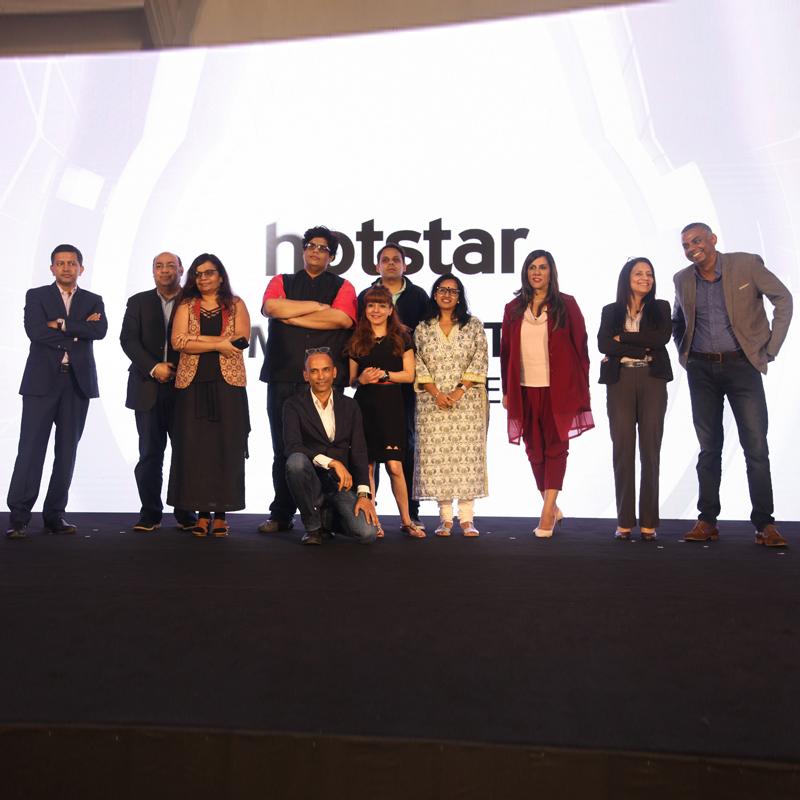
    Mumbai, 1st August, 2018: The ballroom at a posh city hotel transformed into an interaction and learning hub as the leaders of Indian media, marketing and advertising industry gathered together at The Advertising Club’s maiden edition of D-CODE: The Annual Digital Review 2018. The panel asked its members to share an example of their own work, one work they admire and 3 learnings they would want to share with the audience. 

    On the stage were Ajit Mohan- CEO, Hotstar, Anupriya Acharya- CEO Publicis Media, Anuradha Aggarwal- CMO, Marico, Arun Iyer- Chairman & CCO, Lowe Lintas, Juhi Kalia- Head of India & Anthology APAC for Creative Shop, Facebook, Rahul Johri- CEO, BCCI, Mohit Kapoor- VP Advertising, Reliance JIO, Sam Singh- CEO- South Asia, GroupM, Sapna Chadha- Head of Marketing, India and SEA, Google, Siddharth Banerjee- EVP, Marketing, Vodafone and Tanmay Bhat- Co-Founder, AIB. 

    Vikram Sakhuja, President, The Advertising Club, said, “The Advertising Club has been at the forefront of driving the A&M industry’s excellence agenda. We are constantly creating forums that enhance the learning curve of the fraternity. With D-CODE we have created another engaging property that bring together the industry to debate and deliberate on the stimulating issues of the digital ecosystem.”

    Aditya Swamy – Managing Committee Member, The Advertising Club said: “I have always believed in the power of colabs. Inspire and be inspired was the theme of D-CODE and bringing together key stakeholders across the industry to crack the digital code was an exciting idea. From my days at MTV where we looked to marry pop culture and brands to now at Google where we unlock the power of digital and tech to deliver value to advertisers, this is a journey that only throws up more and more interesting opportunities. I look forward to being in the center of this equation as we build centers of excellence.”

    Punitha Arumugam – Managing Committee Member, The Advertising Club said: “Our endeavor while curating D-CODE was to create a platform that would showcase pioneering work on Digital and facilitate ideas exchange within the fraternity.  We have tried to bring representation of all facets of digital with the versatile panel of stalwarts from across the M&E industry.”

    The five key learnings that the advertising, digital and marketing mavens agreed upon were:

    1) Digital is a medium that everyone is experimenting with and no one exactly knows how to ‘crack-it’. The need of the hour is to approach it with an open mind, keep experimenting and learning from one’s own and each other’s strategies.

    2) Digital as a medium does not exist in a silo. All that media needs are great ideas, beautiful craft and creative people who can utilize the right tools to gain success. 

    3) One needs to invest in the right marketing technology, tools, talent and partnerships.

    4) To execute successful digital campaigns, one needs to fully leverage digital signals, customize messaging, employ data and have performance oriented goals. 

    5) Partnerships are critical in making digital campaigns effective. Scale for both a campaign and digital as a medium of marketing can be amplified when the power of partnerships is harnessed.
    With a galaxy of the who’s who of the media, advertising and digital industries in attendance, the debut edition of D-CODE was off to a fantastic beginning.