Tag: Mohit Joshi

  • Havas Media India wins integrated media business of World Kabaddi League

    Havas Media India wins integrated media business of World Kabaddi League

    MUMBAI: Havas Media India has been awarded the integrated media mandate for World Kabaddi League (WKL), the first professional Kabaddi League of the world, in a multi-agency pitch. The account is estimated to be upwards of Rs 30 crore.


    WKL is an initiative to uplift the level of Kabaddi by professionalising the sport. It aims to give a chance to experienced players as well as upcoming talent from various countries to come on one platform and play to win.


    World Kabaddi League CEO Raman Raheja said, “We are a young and dynamic organisation looking to scale Kabaddi to new heights on a global platform. Havas Media understood this. They have scale, the thought leadership, experience, were transparent and displayed tremendous passion. We know they are the people to partner with to achieve our goals.”


    Havas Media Group India and south Asia CEO Anita Nayyar said, “We are honoured that WKL has chosen us as their partners to further their business objectives. It has been a good year at Havas Media with strong integrated media new business wins. Our digital at core approach has paid off big dividends and impressed clients.”


    “WKL is a great brand with a huge potential. This win is another feather in our cap proving that Havas Media is the ‘go to’ agency for integrated media. We will provide meaningful solutions to achieve WKL’s goals and look forward to a long business relationship,” added Havas Media India MD Mohit Joshi.

    Havas Media recently won the integrated media mandate of MTS India, Yepme.com and the digital mandate of XOLO mobile.

  • Hans Mathews joins Havas Media India

    Hans Mathews joins Havas Media India

    MUMBAI: Havas Media India has appointed Hans Mathews as executive director for its west India operations. He will be based out of agency’s Mumbai office.


    Mathew’s key mandate will be to drive growth for the group in the western region.


    Mathews said, “I am delighted to be a part of the dynamic Havas Media team which has witnessed great momentum in the last few years. I find the agency’s positioning around Meaningful Brands engaging and think the framework offers brands tremendous opportunities to communicate effectively. I am looking forward to contributing to Havas Media’s western operations and taking the business to the next level.”


    He joins with seventeen years of experience in the industry, having worked with international agencies in India, MENA and Malaysia. Most recently he was the chief client officer at Mindshare Malaysia where he led Ford’s regional APAC media team managing partnerships with digital and content partners. He was also responsible for managing brands like UL, Maxis, Kraft, Nestle and HSBC. Prior to this Mathews has held leadership roles at Mindshare India, Zenith Optimedia and other leading agencies.


    Havas Media Group India and South Asia CEO Anita Nayyar said, “Hans has a rich industry experience working across multiple blue chip brands in different categories. He has been in many leadership positions and has managed critical client relationships. This along with his business development ability makes him ideal to head our Western operations. We are very happy to have him with us.”   


    “Mumbai and the Western region are at the core of Havas Media India’s operations. Our business in the region has grown tremendously over the years and today we are handling very prestigious clients in that market like Parle, Quikr and many others. Hans, with his astute leadership, will propel our operations further. We warmly welcome him”, added Havas Media India MD Mohit Joshi.

  • 68 per cent Indians trust brands: Havas Media Study

    68 per cent Indians trust brands: Havas Media Study

    MUMBAI: The results from Havas Media Group’s 2013 Meaningful Brands statistically demonstrate that Meaningful Brands outperform the stock market by 120 per cent. It demonstrates in hard financial terms, how the relationship between people and brands can benefit from measuring, communicating and delivering increased well-being.


    In its sixth year, the 2013 findings show Indians as the ‘most passionate and grateful’ customers across the globe, believing brands ‘can and should’ contribute positively to their overall quality of life. People in India tend to believe the overall intentions of brands yet are a bit sceptical of their communication creating huge opportunities for brands to make a real, tangible meaningful difference. India is increasingly expecting brands to enhance personal well-being as brands become aspirational symbols of their improved standard of living.


    The study measures 13 dimensions: impact of the brand’s ‘Marketplace’ benefits alongside its impact on 12 different areas of ‘Well-being’ (Personal and Collective), for a comprehensive view of its effect on quality of life. Unique in scale – 700 brands, over 134,000 consumers and 23 countries, it measures the benefits brands bring to people’s lives. The Meaningful Brand Index (MBi) forms the core of the Meaningful Brands framework allowing a view of brand results in terms of consumer perception over time.


    Life Insurance Corporation (LIC), Cadbury, Unilever are the top Indian brands having greatest attachment (highest per cent of people who would care if they disappeared). The other top brands on the list are Britannia, Sony, Samsung, Parle-G, Tata Motors, Airtel, Hyundai, LGE and Maruti.


    Globally the top 12 Meaningful Brands are Google, Samsung, Microsoft, Nestle, Sony, IKEA, Dove, Nike, Wal-Mart, DANONE, Philips and P&G. Top three sectors in India are F&B, Auto and IT & Consumer Electronics (ITC) where as globally it is Retail, F&B and ITC.


    Continuing the trend from 2011 only 20 per cent of brands make a significant difference to people’s well-being with a growing gap between developed and emerging markets (Europe 5 per cent, USA 9 per cent and Asia 39 per cent). In Europe and the US people would not care if 92 per cent of brands disappeared. In Asia, people are attached six times more.


    Since 2011, individual quality of life and personal well-being has become increasingly important in western economies. In emerging markets, people place more importance on a brand’s impact on their community and environment. At the same time, people in India expect brands to enhance their individual and personal lifestyles. The data shows the majority of top performing brands taking a holistic approach contributing to both.


    Commenting on the study, Havas Media Group, India & South Asia CEO Anita Nayyar said, “The India findings highlight deep customer involvement with brands, making ‘meaningful’ the sweet spot of brand strategy in India. Meaningful – today is real business, delivering what matters when, in the truest economic and social sense. It drives brands to establish relationship connections with their customers directed towards sustained personal, societal and financial success.”


    “More meaningful global brands are likely to come from emerging than western markets where brands need to reinvent themselves to reconnect with people, to avoid getting commoditised. This presents huge opportunities for existing and new brands to establish meaningful connections with their customers in India. Here consumers are still warming up to brands and core categories like F&B brands are seen as meaningful. The study is scalable and throws up rich inferences for a strategic outlook. LIC is an outlier being in the insurance category yet completely in sync with Indian touch points, thus its India’s 2013 top meaningful brand,”added Havas Media India managing director Mohit Joshi.


    Other key India findings include:

    • 68 per cent people in India generally trust brands (Asia 58 per cent, US 36 per cent, Global avg. 45 per cent) Consumers in India not only trust brands more but also expect more.


    • 71 per cent believe that brands can play a role in improving their quality of life and well-being (Asia 65 per cent, US 41 per cent, Global avg. 50 per cent)


    • 82 per cent think companies and brands should play a role in improving our quality of life and well-being (Asia 77 per cent, Global avg. 70 per cent)


    • 79 per cent agree that large companies should be actively involved in solving social and environmental problems (Asia 75 per cent, Global avg. 71 per cent)
  • Havas Media Group India appoints Ranjoy Dey

    Havas Media Group India appoints Ranjoy Dey

    NEW DELHI: Havas Media Group India has appointed Ranjoy Dey as digital head. His key responsibility will be to drive growth for the digital offering of Havas Media in India.


    Havas Media Group India and South Asia CEO Anita Nayyar said, ‘Digital at core’ is not only our group philosophy but our mission in India. Havas Media Group had a great run in 2013 and in 2014 won key digital accounts of Yepme.com and Xolo. We are committed to deliver digital across platform, across device. It is clearly our focus area of growth year-on-year to give clients integrated incremental value fulfilling their business objectives. Ranjoy has the attitude, the all round experience and the energy to drive organic and inorganic digital expansion in the India market; we are delighted to have him on board to jettison the digital strength at Havas Media Group forward.”


    “Young India is a hotbed for digital and 360marketing with challenging and exciting times ahead for all of us. Havas has some of the best digital and media tools and trainings in the industry that have delivered rich rewards to clients across the globe. Ranjoy will be a good navigator to bring to the table innovation and real value for the present and future clients of Havas Media in India”, added Havas Media India MD Mohit Joshi.


    “Joining Havas Media gives me the right opportunity to build further on to the deep relationships that Havas has developed over the years with its clients for its traditional media services. Now, through a strengthened Digital focus globally, global best practices, tools and framework – Havas Media is gaining traction for its Digital practice in the market, and my role will be to take it through a high growth path. The critical approach will be to demonstrate in this market the proven global proprietary tools and frameworks for developing strategy, planning, media buying, analytics, and reporting – and deliver a differentiated value for our clients. This will deepen our involvement in client businesses and help us be a partner in their success stories”, explained Dey.


    With around 19 years of experience, Dey has worked in the digital marketing domain with Ignitee Digital where he was COO prior to Havas and with Digitas India. Brands worked on include Nestle, Samsung, Reckitt Benckiser, Dabur, ITC, JK Tyre, Axis Bank, SanDisk, Airtel, Pizza Hut Delivery, amongst others. His works have won several national and international awards including the PMAA, MAA Globes, Abbys and DMA.

  • Havas Media Group India wins integrated media AOR of Yepme.com

    Havas Media Group India wins integrated media AOR of Yepme.com

    MUMBAI: The year has surely started with a good note for Havas Media group. After being graded at No.1 in YTD new business achievements in both the RECMA 2013 Compitches preliminary reports, the agency has won the Integrated Media AOR for Yepme.com India.


    The account is estimated to be upwards of Rs 50 crores annually.


    Havas Media Group, India and South Asia CEO Anita Nayyar explained, “We have just completed a successful year and Yepme.com has added another feather to our cap. It is a young and growing company and we gave them a differentiated and targeted approach to deliver the core message. We are extremely delighted to work with their forward thinking team.”


    “Yepme.com being the first win of the year is always special, we will continue with our effort to deliver value to our existing clients and keep growing the new business organization”, added Havas Media India MD Mohit Joshi.


    Speaking on the appointment, Yepme.com co-founder Sandeep Sharma said, “Havas Media had a keen understanding of our audience and business. They have specialist divisions like Mobext to handle the mobile advertising which is so very critical to us. Besides all this, the sheer passion of the team made us choose them as our media partners.”


    In December 2012, Forbes India magazine ranked Yepme.com as one of the top five start-ups to watch out for. In February 2014, Stylophane ranked fashion brands across the world on social index where Yepme ranked 19th worldwide.

  • Adversioning advertising gains currency

    Adversioning advertising gains currency

    MUMBAI: A national jewellery brand had to reach out to the diverse markets in south India. It needed a solution that would allow it to simultaneously beam on a national television channel different creatives for the diverse markets in the region, each featuring a regional celebrity.


    Thanks to technology solutions, the jewellery company could get its different creatives beamed to relevant demographics at the same time on the same channel.


    The concept is called adversioning or geo-targeted advertising in the media world.


    Technology for such simultaneous telecast of different advertisements on the same channel has been available for a few years now but advertisers have begun to use it on a significant scale only recently.


    Advertisers are increasingly making use of geo-targeting. These include fast moving consumer goods major Hindustan Unilever.


    The geo-targeted advertisements in value terms now account for about 20 per cent of total ads on television. In the US, the proportion of such ads is almost 40 per cent. According to GroupM, total advertising spend on television in 2013 was Rs 16,860 crore.


    But the potential for geo-targeted ads in India is seen to be much, much higher considering the extent of diversity in the country, says SureWaves founder Rajendra Khare. SureWaves is a technology solution provider for geo-targeted advertising and had provided its service to the national jewellery brand but decline to disclose the name of the brand.


    Khare says it makes sense for any advertiser to opt for geo-targeted advertising to not only break the language barrier but also to target differently the different the socio-cultural groups across the country with a sharp and direct emotional connect.


    So, the next time when you are on a trip to Chennai, don’t be surprised if you come across an ad by Fastrack Cabs on a national channel.


    The Indian market is a complicated one. From regional differences to numerous brands, one needs to stand out in a clutter to catch the attention of as many consumers as possible.


    Apart from SureWaves, there is amagi Media Labs that offers advertisers and broadcasters solutions for geo-targeted advertising.


    Geo-targeting or adversioning is done with the help of a barcode system and cloud-based infrastructure on which TVCs are stored. The technologies solutions then enable playing of different ads in different regions on the same air-time band on a particular channel.


    There’s a possibility of making available different solutions to meet different needs. For instance, Carat Media which handles baby products maker Libero’s account, wanted to reach out to non-Marathi female audience in Maharashtra. Amagi’s technology enabled Libero to use channels with a national footprint for the launch campaign of Libero in a specific market like Maharashtra.


    Amagi which had to answer a lot of questions when it started out in 2008 feels that those doubts have now been put to rest.


    “Today, largest national players like HUL, GSK too want to follow a regional plan and have different communication depending on the region,” says Amagi’s co-founder KA Srinivasan.


    Geo-targeting or adverisioning implies customised broadcast of creative communication to different markets in the same ad slot. In other words, it means splitting up of the national beam of a broadcaster into local beams akin to what national newspapers do for their local editions.


    ‘How can we sell a standardised product to local and different consumers?’ has been a dilemma for most marketers. However, with the adversioning concept, things are supposed to change.


    According to GroupM Trading (CTG) south Asia Managing Partner Prasanth Kumar, who is a big votary of adversioning, says, “clients can benefit in multiple ways as spill-over reduces, national channels can be used to run local promotions, the same 30 second slot can be used for multiple creatives (different brands in different markets, different language versions in specific markets). Majority of the clients who have used this availability are local clients.”


    There might be companies which don’t feel the need to make an ad locally oriented, but there are a few which opt to geo-target ads. One of the main reasons a brand may geo-target ads is because it only offers services/products within specific areas. There is a huge and compelling demographic component involved with geography that can influence click-through-rate (CTR) and conversion rates as well.


    Recalling how cable operators’ years ago would show local advertisements, Havas Media India managing director Mohit Joshi says if we take a look at the southern market, one can see a lot of local players which isn’t the case in the northern part of the country. “The concept makes sense for local clients/marketers a lot as it gives them a chance to target their TG.”


    But will the local marketers be able to find their place and compete with national players? Answers Kumar, “Yes. Local advertisers form a large part of the 2,000 plus clients who have tried this concept. They see value in placing their ads on national channels as these channels were earlier much more difficult to afford and local players have specific market requirements.”


    On the same lines, Pipal Majik CEO CD Mitra highlights how brands too have been emphasizing on “localisation” and if adversioning helps them achieve it then many will opt for it.


    “For example, if a particular tea brand wants to sell its particular blends in certain regions then this is the perfect solution for them to advertise in a certain regional beam of a national channel.”


    Talking about the cost of geo-targeted ads, experts say creative production cost is just a small segment of the overall marketing budget a brand allocates.


    The credit for the growth of the format and news, movies and GEC channels experimenting with it goes to the fact that vernacular media has been growing at a much quicker pace than the national media, Kumar elaborates.


    “The reason for the growing importance of Class B and Class C towns for advertisers, the growing education levels, expansion of vernacular publications into new markets with categories like retail, real estate along with FMCG is fuelling the growth,” he adds.


    Khare adds that a marketer needs to utilize both national as well as regional channels to reach out to as many people as possible. “It is not national vs. regional, but how one can utilize both for its benefit. We have to also understand the importance of spot TV which is the most cost effective way for advertisers to market.”


    Technology plays an important part of the concept to become a part of life, soon. Joshi says, “If the technology is not there to support the concept then it will surely fall flat in its face. We as an industry will have to invest in it to see it grow and become an integral part of advertising soon.”


    Apart from this, industry professionals feel that pricing too plays an important role here. The competition between national and local players will vary and also depend on it. “Broadcasters in the end need money. If they get it from local players or national ones, it doesn’t matter. Hence, stakeholders have to come up with attractive pricing and strategies to make it real,” says Mitra when asked if broadcasters would opt for local marketers over national ones.


    Zee TV has been selling ad spots split into regional beams since late last year and has had a good experience with it. Zeel chief sales officer Ashish Sehgal says, “The concept has helped us  increase number of clients if we offer them a strategic plan which will help them reach out to their TG better.”


    He further says the sum of revenues from a divided ad spot has been higher than the revenue it would have got having sold it as one national beam.


    Sehgal says Zee TV has seen an increase in local marketers through geo-targeting. “In the past few months, around 25-30 SMEs have come to us to use the platform.”


    Bennett Coleman & Co president corporate development Sunil Lulla says adversionsing is very much a reality now with many brands and broadcasters using it.


    However, he says that a broadcaster has to be clear about this with the clients otherwise it can hurt some advertisers who pay for a national beam but sometimes local/regional beams could be sold to another client. “We (broadcasters) have to understand that there is a big (regional) market which can be tapped through this and it will benefit everyone.”
  • High hopes for ‘Satyamev Jayate 2’

    High hopes for ‘Satyamev Jayate 2’

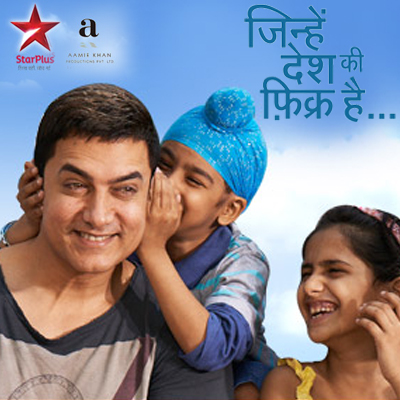
    MUMBAI: Aired two years ago, this television show hosted by Aamir Khan took the country by storm with its focus on social ills such as female foeticide, dowry, domestic violence, child abuse, rape, domestic violence and honour killings among others.


    Buoyed by the overwhelming response, the makers decided to take the franchise further. And so, starting 2 March, viewers can once again tune into Satyamev Jayate on Sundays at 11 am on Star Plus.


    With a tagline that reads: ‘Jinhe Desh Ki Fikar Hai’, season two promises hard-hitting content like before but the format will be different. Unlike the last time when all 13 episodes ran at a stretch, this time, the series has been broken up into three quarters with five episodes in March and the remaining eight episodes split into groups of four each.


    Airtel has been roped in as title sponsor while Axis Bank is the powered by sponsor this season. According to industry sources, the sticker price of the show is anywhere between Rs 3 crore and Rs 3.5 crore.


    Graphene Media CEO Sanjoy Chakrabarty

    Marketing and promotion


    Host Aamir Khan and Star Plus have come out with six different promos that are already doing the rounds on the network.


    One of them begins with Khan asking the question, ‘Pata hai apna show kaun dekhega?’ later shifting his gaze to the cars and autos on the road below. He sees some of them breaking the traffic rules and shakes his head: ‘Yeh nahin dekhega’. Moments later, he breaks into a smile on seeing one of the cars paying heed to the red signal. ‘Yeh dekhega,’ he signs off…


    The promo, which urges people to be responsible citizens, went on air on 25 January and has since garnered 552,000 views.


    Apart from the promo, the show itself has set social media aflutter. From 1.6 million likes last season on Facebook, season two has garnered nearly 2.7 million likes. From close to 93,000 followers on Twitter last season, this time, there are around 143,000 followers.


    While initial conversations around SMJ were triggered by Khan’s popularity, later conversations are more around the causes espoused by the actor on the show. Plus, the channel shares and tweets these conversations and uploads videos on a daily basis to keep up the buzz.


    Havas Media managing director Mohit Joshi

    Industry Speaks


    Ahead of the launch of season two, indiantelevision.com spoke to a cross-section of industry about the return of SMJ and how it would fare in their opinion…


    “For me, a show like SMJ doesn’t need any promotions. The fact that it is coming back says a lot about it and the impact it has had on people. In one of the promos where Aamir is talking about who will watch SMJ and who won’t speaks of responsible behavior. SMJ is beyond television, it is meaningful TV!” said Havas Media managing director Mohit Joshi.


    “The promos this time are a little tongue in cheek. They’re quite subtle. Even the timings are correct, with elections coming near and what is happening in Delhi, these things are tying in very relevantly. It’s really bang on to start conversations around it especially Aamir Khan in this style,” said Lodestar UM vice-president Deepak Netram.


    However, about the change in format, he said: “A show always works if you have continuity; appointment viewing builds up after a certain period of time certainly for GECs. Having gaps is not going to help, but I guess in the grain of what the show is I am sure it is possibly going to be an objective which will have people looking forward to the show.  The challenge will be to maintain the momentum and keep the excitement going, because there will be so much happening in between.”


    Lodestar UM vice-president Deepak Netram

    “The promos are more interesting than the previous season. If someone is watching it for the first time, they will be inquisitive about it. But for people who have already watched the previous season, they know the format of the show. This season the promos are much more focused, straight to the point and more subjective,” believes Graphene Media CEO Sanjoy Chakrabarty.


    Commenting on the break pattern Chakrabarty asserts: “Since the topics are relevant and very engaging, people will consume the content in dozes so break won’t affect the viewership.”