Tag: Mohit Joshi

  • India’s SF loss in ICC Cricket World Cup 2019 to impact brand visibility in the final

    India’s SF loss in ICC Cricket World Cup 2019 to impact brand visibility in the final

    MUMBAI: The ICC Men's Cricket World Cup 2019 started off with a lot of hopes pinned on the Indian team to lift the trophy for the third time. Not just international fans but many international experts had the ‘men in blue’ as the likely winners. The tournament was, therefore, quite popular amongst the Indian brands who were advertising heavily during the matches. It was predicted that broadcaster Star India will manage to clock in revenues of around Rs 18,000 crore  in the World Cup.

    However, India’s loss in the semi-final stage has shattered these hopes and has left the advertisers and the broadcaster in a lurch. It is expected that Star will record a significantly lesser amount in ad revenues in the final stage than expected. However, the greater impact will be on the advertisers who had purchased the ad slots in advance at exorbitant rates of Rs 25 lakh.

    Havas Media Group India managing director Mohit Joshi tells Indiantelevision.com that he doesn’t see much impact on the revenues of Star as most of the FCT had been sold already and those deals cannot be revoked. “Some very limited opportunistic FCT that could have been leveraged if India reached the final, might not happen now.”

    But the visibility of the brands that had purchased these slots in advance, especially only for the finals and semi-finals will be impacted, he notes. “Everybody bought World Cup with this possibility (India reaching the finals) in mind. The brands have been visible across the tournament. However, if there are some brands who bought only SFs and Finals, their visibility will get impacted.”

    Commwiser co-founder and CEO Aman Abbas is of the thought that the brands, which will be buying the remaining FCTs will have to keep in mind the limited audience the match will attract and therefore the reserve inventory which could have generated extra revenue is expected to find a few takers.

    “The broadcasters had earned a lot from the advertising in the World Cup, particularly from matches played by team India. An unexpected exit of the Indian team from the tournament is very likely to affect the revenue earned from the advertising for Star Sports and Hotstar. The broadcasters might have sold some of the inventory of the finals beforehand while some of it would have been kept in the reserve, expecting India to reach the finals and generating some extra money from last-minute sales,” he says.

    However, Samsika Marketing Consultants CMD Jagdeep Kapoor feels that the interest is very much alive in the finals given India’s obsession with the game of cricket.

    He notes, “If people can watch the Wimbledon final, they would surely watch the sport they love, cricket. The momentum of the World Cup is intact. The advertisers will get their money’s worth. In fact, Indian fans will choose a team to cheer in the finals.”

    India was stopped short of reaching the finals of the World Cup by New Zealand by 18 runs in an interesting match that spanned across two days because of interruption by rain. A number of advertisers like Kamla Pasand, Lloyd, Pepsi, Dairy Milk, MRF Tyres, BYJU’s were some of the top advertisers during the tournament whose final is scheduled on 14 July 2019 between England and New Zealand.
  • WhatsApp ads to test targeted marketing, user readiness and data security

    WhatsApp ads to test targeted marketing, user readiness and data security

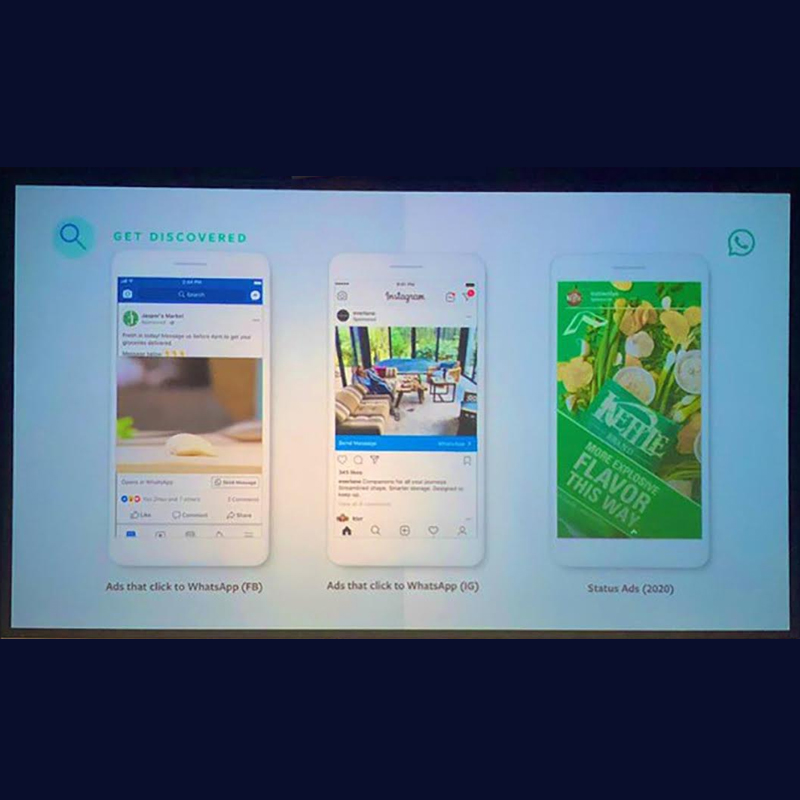
    MUMBAI: Ever since Facebook acquired WhatsApp, people have been expecting the popular chatting app to move towards an ad-based model. Recently, a tweet from an attendee at the Facebook Marketing Summit Rotterdam confirmed that WhatsApp intends to launch ads soon in the status/stories section and will also be connected to its sister sites like Instagram and Facebook.

    This started a fresh conversation around two major topics; are the users ready and what about data security on an ‘encrypted platform’? Indiantelevision.com interacted with some marketing and digital experts and sought answers to these two very pressing questions.

    While users on all social media platforms have become used to seeing ads, a similar pattern on WhatsApp is difficult to follow. As it is a more personalised platform used for chats with close peers, unlike the Facebooks and Instagrams of the world, which people use to follow a global base of users who might not be directly related to them, introducing ads will seem like an intrusion in the personal space.

    ADOHM chief executive officer Kuldeep Chaudhary says, “While the content consuming pattern in the audience is evolving and they are getting used to seeing ads on multiple platforms, having ads on WhatsApp may not be welcomed easily. The reason being WhatsApp has a very large user base in the masses, for whom ads will be an intrusion. This step will see a similar reaction like how it was during the initial days of YouTube ads. While platforms need to take this step from a revenue perspective, audiences are not yet ready for the move as from consumer point of view it is another bombardment from advertisers.”

    Vertoz founder and CEO Ashish Shah also advises brands to be cautious. “Ads showing up on WhatsApp might be looked upon as an intrusion into the users’ private space, considering the highly personal and very private environment of this communication tool. It is imperative for brands to ensure that the ads are non-intrusive in nature and do not irk off the users or disturb their privacy.”

    Though feature ads are going to be a new addition to the chatting platform, WhatsApp has already been active in giving some brands a chance to interact directly with the consumers. Be it delivering e-tickets like MakeMyTrip and BookMyShow do, or sharing timely updates of order deliveries like Ajio does, many brands are active on the platform to offer their customers a more personalised and seamless experience.

    Havas managing director Mohit Joshi notes, “Currently WhatsApp is a great space for two-way communication between the consumer and the brand. Marketers are creating WhatsApp brand profiles and then integrating them with their product/service offering across verticals. Many brands like MakeMyTrip, Ixigo and Milap have already started using this platform as a substitute/addition to email/SMS to connect with consumers once they have interacted with their platform. Currently, there is merit in using the platform more from an ‘owned media’ standpoint.”

    However, any of these activities do not rely directly on the data from the app. But with advertisements from sources that are not connected to the users coming in place, a huge pile of data and information will be required by the advertisers to create a targeted reach. Users, in the past, have moved away from platforms like parent Facebook after cases of data breaches came to light.

    NeoNiche Integrated Solutions Pvt Ltd MD and CEO Prateek Kumar mentions, “WhatsApp has always tried to ensure security between users for their conversations with end-to-end encryption being introduced in 2016. The announcement of ads on the platform seemed inevitable but the true extent of targeted marketing will only be realised after the full release. However, the extent of data shared with companies is probably the most contentious issue in this scenario.”

    Also, getting data out of an encrypted platform seems quite impossible. Carat SVP Mayank Bhatnagar says, “Right now, it (ads on WhatsApp) is just to drive the reach. I will not forward my tickets to anyone else, and thus there is no engagement parameter in place. It is just to help consumers. Once they open the full-fledged advertising solutions, it will be helpful in garnering that reach but I am not sure how will they measure the engagement.”

    However, Chaudhary states that Facebook can access keywords from WhatsApp chats despite encryption being in place. “In spite of the fact that WhatsApp states that they cannot access users’ data due to end-to-end encryption but in order to run targeted ads, access to data specific to individuals is required. Security researchers have pointed out that even with encryption in place, it will be possible for Facebook to derive keywords from people’s messages and use them to impose an ad-targeting model on the app. These ads will be showcased on WhatsApp stories and in-message advertising for WhatsApp business accounts.”

    Kumar further shares, “It seems more likely that while chatting with other users, WhatsApp will showcase ads of particular brands that might be most relevant to you depending on the topic of conversation or particular keywords. One of the best-case scenarios for users would be if sponsored ads were only displayed after the use of keywords or syntax based content to drive clicks where individual, demographic and chat-based data would not be shared. However, understanding the growing prominence of target marketing and its effectiveness in the digital world, the on-ground scenario may differ greatly.”

    Another way to access relevant data could be through telecom companies, as shared by RK Swamy BBDO president and director Sangeetha N. She notes, “Telecom companies do provide data based on gender, age, make of phone, average billing per month, location, post-paid/pre-paid, etc. While we’ve used this data in the past to send out SMS’es, we can surely use the same data to send out WhatsApp messages.”

    Shah vouches on the importance of programmatic methodology to drive successful ads on WhatsApp as he notes, “WhatsApp can build the users’ profile using the information gathered directly from the platform and elsewhere. If WhatsApp is using programmatic advertising, then it will be the smart choice for these requirements. Programmatic advertising uses Data Management Platforms (DMPs) that help advertisers to analyse, process and structure the user’s data. DMPs can be used to get relevant audience profiles and to deliver personalised and relevant ads to them. Further, using the different targeting options like interest-based targeting, behavioural targeting, contextual targeting and many more, advertisers can deliver relevant and targeted ads to their customers on platforms like WhatsApp.”

  • Havas Media India appoints R Venkatasubramanian as national head of investments

    Havas Media India appoints R Venkatasubramanian as national head of investments

    MUMBAI: Havas Media India has announced the appointment of R Venkatasubramanian as national head of investments. Venkat joins the agency from Initiative Media where he was serving as senior vice president.

    A former Havas employee, Venkat has over 22 years of experience in advertising specialising in media buying. He has worked with clients across sectors such as Maruti, Suzuki Motor cycle, DishTV, RB, MG Motor, Usha International and InfoEdge.

    In his new role, Venkat will be based out of Gurgaon and will be responsible for driving media investments, partnerships, and strategic thinking for all Havas Media clients across markets.

    Commenting on his appointment, Havas Media Group CEO – India and Southeast Asia Anita Nayyar said, “Venkat is an accomplished, seasoned professional, with his rich experience of over two decades, Venkat will ensure that the complex media environment is well navigated and negotiated for Havas Media clients. Collaboration is the cornerstone of our unified operating model, allowing us to deliver 100 per cent accountability and ideas that flourish without boundaries. Havas Media has the team, capabilities and is well positioned to be a data-cum-content driven media partner to brands across sectors driving their overall marketing and goal strategy. We wish Venkat a happy homecoming!”

    “We are delighted to have Venkat back with us once again. Havas Media has been growing at a phenomenal rate over the years. We have always been keen to get great professionals who have made a mark in the industry. Venkat is one such person who has contributed phenomenally in building brands through the creation of innovative media associations. We are looking forward to using his experience and commitment to develop our brand partnerships further,” added Havas Media Group MD – India Mohit Joshi.

    Venkat said, “I am motivated to come back to Havas Media as the company is open to innovative and creative ideas. My focus will be to drive new and dynamic properties across media with an added focus in the sports arena to ensure that our brands get the best ROI under the guidance of Havas’ senior management.”

  • Havas Media wins integrated media duties of OYO

    Havas Media wins integrated media duties of OYO

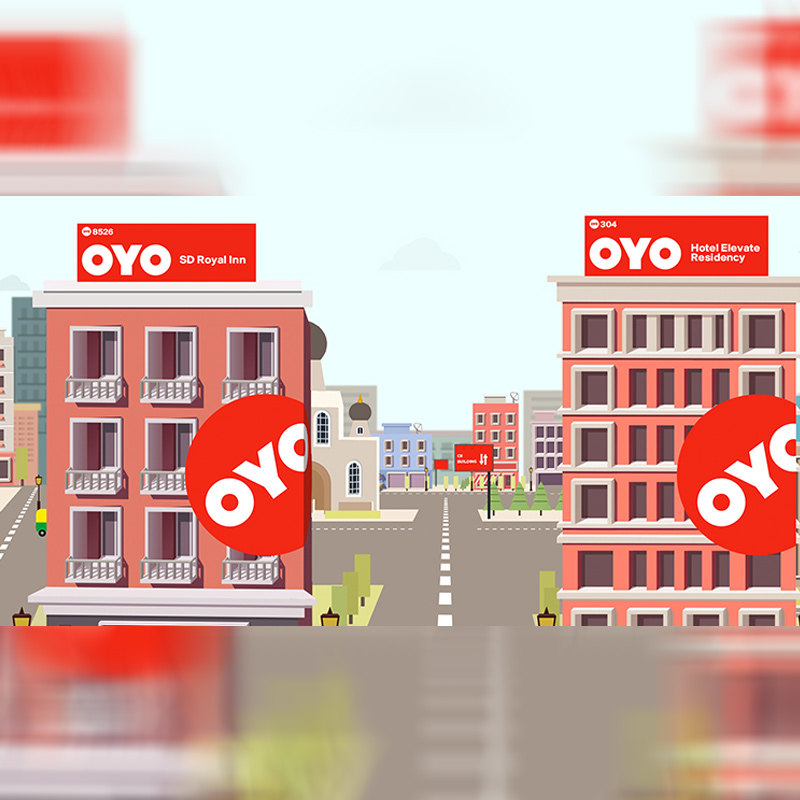
    MUMBAI: Havas Media has bagged the integrated media duties of OYO, South Asia’s largest hotel chain with presence across India, China, Malaysia and Nepal.

    The account will be handled out of the agency’s Gurgaon office led by Uday Mohan, managing partner for North and East India.

    OYO’s expertise in managing chain of hotels backed by technological innovations and its unique business model makes it possible for it to offer high quality standardised experiences at unmatchable scale. Over the last five years, OYO has built distribution, operational and transformational, construction capabilities and its diverse portfolio includes OYO Rooms in the budget category with OYO Townhouse, OYO Home, SilverKey in the mid-market category and Palette Resorts in the leisure category.

    OYO VP of conversions Burhanuddin Pithawala says, “We want our customers to have a hassle-free, technology-driven travel experience with quality living space at affordable pricing. Price point and quality are the two strong differentiators of OYO. With the launch of the brand and expansion into international markets, defining a brand positioning and a go-to-market plan is the need of the hour. We are confident that Havas Media with its integrated media approach and market expertise will take the brand to newer heights.”

    Havas Media Group CEO for India and South Asia Anita Nayyar adds, “According to a research conducted by Havas Group, travel & hospitality ranks No 1 as the most meaningful category globally while in India it stands at No 10. OYO with its unique business model is using technology and talent to fix this socio-economic problem. It is among the few start-ups creating a global brand from India. We are very excited to be partnering with yet another innovative and entrepreneurial brand.”

    “OYO is a pioneer brand in the hospitality space which thrives on technology & innovation. We proposed a unique city level micro-marketing approach leveraging advanced analytical techniques. Going forward, Havas’ Meaningful Brands framework, will be key in mapping the brand chart for OYO. According to the research, brands that are meaningful enjoy 60 per cent higher chance of purchase in the hospitality and travel industry. We look forward to a long and mutually fulfilling partnership with OYO,” mentions Havas Media Group, India managing director Mohit Joshi.

  • Havas Media bags media duties of Bajaj Allianz Life Insurance

    Havas Media bags media duties of Bajaj Allianz Life Insurance

    MUMBAI:  Havas Media, India has bagged the integrated media duties of Bajaj Allianz Life Insurance, one of the leading private players in the insurance sector in India. The agency also handles media duties of Bajaj Finserv, the financing arm of Bajaj Group. 

    The account size is estimated to be upwards of Rs 50 crores and will be handled out of the Mumbai office led by Kunal Jamuar, managing partner of West and South, Havas Media India. 

    Led by Bajaj Allianz Life Insurance MD and CEO Tarun Chugh, the company began operations in 2001 and today has a pan-India presence of 759 branches. It is headquartered in Pune, India. 

    Bajaj Allianz Life Insurance chief marketing officer Chandramohan Mehra says, “To offer differentiated yet relevant proposition to our customers, we have embarked on a brand re-orientation journey. We will rely on deeper customer insights and data-driven actions for a holistic brand transformation. Agility and consumer-centric mindset from our teams and partners will be key to our deliveries. We look forward to a long and mutually beneficial relationship with Havas.”

    The comprehensive life insurance solution covers a range of services, operating through participating, non-participating, and linked segments. Bajaj Allianz Life Insurance also launched digital branches through Mosambee, a handheld device that offers the services of a mobile branch and assists customers with an entire range of customer services. Currently, Bajaj Allianz has a strong life insurance portfolio and caters to all kinds of customer needs from ULIPs to child plans, from group insurance to health insurance. Bajaj Allianz Life Insurance is a joint venture between Bajaj Finserv Limited (formerly part of Bajaj Auto Limited) owned by the Bajaj Group of India and Allianz SE, a European financial services company. The joint venture incorporates global expertise with local experience. 

    “At play will be Havas Media Group’s integrated media skills centred on digital and our ‘Meaningful Brands’ framework which will together map the brand chart for Bajaj Allianz. According to our research, brands that are meaningful enjoy 80 per cent higher intent of repurchase in the insurance industry. We look forward to a successful collaboration,” adds Havas Media Group India managing director Mohit Joshi.

    Bajaj Allianz Life Insurance is a joint venture between Bajaj Finserv Limited (formerly part of Bajaj Auto Limited) owned by the Bajaj Group of India and Allianz SE, a European financial services company. The joint venture incorporates global expertise with local experience. 

  • Has advertising finally begun to embrace AI?

    Has advertising finally begun to embrace AI?

    MUMBAI: Artificial intelligence (AI), a tool that uses logic to mimic the human brain, has been the buzzword in the advertising industry for quite some time now. 

    AI was founded as an academic discipline in the year 1956, and in the years since, the technology has experienced several waves of optimism, followed by disappointment and the loss of funding (known as an AI winter), thereafter by new approaches and success.

    People often tend to use the term AI interchangeably with machine learning (ML), but they are completely different tools. While AI is the broad concept of teaching machines with data to do things in an efficient way, ML is the technique of using algorithms to process data, learn from insights and make predictions that train AI. As Wunderman AI’s global leader Robbee Minicola rightly says, “You can have machine learning without AI, but you can’t have AI without machine learning.”

    With the implementation of AI in advertising and marketing, brands can discover the price at which networks are willing to pay for an impression and identify the optimum times of data to serve an ad for target consumers.

    public://IKEA.jpg

    AI’s potential for improving campaign effectiveness is only just being unearthed with a limited understanding of impact. AI-driven elements like image and voice recognition on smartphones, algorithm-based viewing suggestions for Netflix and Google’s real language analysis in search are now gaining mainstream status. It is believed that AI will soon become indispensable in advertising. 

    The concept of ‘technological singularity’, in which machines become better at developing themselves, is a reality but human intervention will always be required. Isobar executive vice president Gopa Kumar doesn’t believe in giving everything to automation and AI as it is an indispensable part of the future media ecosystem.

    According to Adobe’s 2018 Digital Trends report, top-performing companies globally are more than twice as likely to be using AI for marketing (28 per cent vs 12 per cent). The report also found that less than one in five global respondents said their companies are pushing forward with AI and nearly half of respondents said their organisation has inconsistent integration between technologies.

    Although advanced and matured markets like the US, UK, China and Japan have been early adopters of the technology, India is catching up at a fast pace because of its risk-taking ability. Programmatic platforms and advertising are the first kind of AI intervention in advertising and is increasingly becoming more and more pervasive. 

    It is still early days for AI in India as compared to the western world in understanding and implanting these technologies. Havas Media Group India MD Mohit Joshi believes that the adoption of technologies is already happening, however, reaching the US level of adoption will require the clients to be equally convinced and more importantly give them some ‘use case’ success stories. 

    Programmatic advertising will contribute to more than 60 per cent of advertising in the next two years in India which is the currently world average.

    Isobar India EVP Gopa Kumar thinks that AI in India is still at a very nascent stage and in media it is just being initiated. He adds that though it will take a while to be the prime choice, but once it does, its adoption will be widespread and then the usage of AI in advertising will be across platforms and mediums. 

    In India, sectors like BFSI, e-commerce and FMCG have been able to make the most of artificial intelligence, big data analysis and machine learning to have better connect with consumers and enhanced consumer experience. But there’s a lot to learn from the daddies like IKEA and Alibaba.

    public://alss.jpg

    Since AI is an expensive tool and hiring an agency for it is often expensive, advertisers today are looking at building their own in-house AI capacities. With benefits including improved consumer engagement through personalisation, leaner marketing operations and cost savings on ad serving, the return on investment (RoI) prospects are rather appealing for advertisers. What it does require is a heavy initial investment in hardware and software for data collection and processing and acquiring the right talent.

    Dentsu Aegis Network chief data officer Gautam Mehra admits that AI is not a magic sauce and it will not change the brand’s RoI overnight and clients (brands) need to understand their business challenges before they plan on investing in these technologies. “The primary challenge for any advertiser is how do you know which data to go after and how do you bring that data into your warehouse (cloud or physical) and maintain that data warehouse to give data insights. Brands need to trust data and have a data driven culture in the organisation,” he adds. 

    Not all advertisers may understand the technicality of AI and the automation of basic data processes and the implementation of integrated analytics. This is precisely where advertising agencies can help their clients, both as trusted advisers and execution partners.

    The lack of good media infrastructure is a barrier to better implementation of AI in India. Our challenge is how do we make AI actionable because our other mediums are not evolved enough and we don’t have programmatic OOH or digital OOH except at airports. Mehra asks how do we bring about a real time change in media when our media itself is not programmatic? While India’s radio is still terrestrial, a majority of set-top boxes for television are not trackable and, therefore, there is reliance on BARC data. 

    India is still a data-starved market and AI works only on data. Joshi concludes that the biggest challenge for India will be getting the right talent, as we need great data scientists and the best of them ignore the media space.

    While India is on its way to becoming AI-ready, some major players including Vodafone, Myntra, Flipkart, HSBC Bank and SBI Bank have started putting in the effort to adopt the technology.

    Also Read :

    The Glitch to leverage GroupM data to reach rural India

    2017 – The year of long-format ads

    How iProspect’s Vivek Bhargava foresaw a digital future two decades ago

    Talent retention is key, says Mindshare’s Prasanth Kumar

  • English movie channels line up movies despite lower advertising

    English movie channels line up movies despite lower advertising

    MUMBAI: Taking advantage of people’s presence at home during Diwali and most likely in front of the TV screens, English movie channels have strengthened their programming lineup.

    Times Network has curated a month long content for each of its English movies channels except MNX. MNX will feature a Harry Potter movie marathon from 16–23 October at 9pm.

    Movies Now has lined up explosive blockbusters from 2 October 2017, every weekday at 11pm including The Pacifier, National Treasure: Book Of Secrets, Race To Witch Mountain, Rush Hour 2, 10,000 BC.

    In communication with Indiantelevision.com Havas Media Group-India MD Mohit Joshi said, “The viewership of English Movies platform is stable as of now. However, the revenues have got impacted because of the downward trend in advertising spends. As the viewership and penetration of OTT platforms mature, content will drive revenues and whoever has better content will be the winner.”

    Joshi pointed out that this year there is no festive rate increment in English movies genre and neither for other genres.

    Romedy Now has a special line-up for the festival of Diwali called ‘Diwali Delights’. It began on 2 October and will go on till the end of the month, everyday at 9 pm. Movies lined up include Serendipity, 2 Weeks Notice, Runaway Bride, A Lot Like Love, Pitch Perfect, 10 Things I Hate About You, It’s Complicated, French Kiss, When In Rome and Pretty Woman.

    Sony PIX brings Hollywood blockbusters via ‘PIX Amazing Aces’ Festival for a full month leading up to Diwali. Movies include The Mummy series, Fast and Furious series and Jurassic Park series.

    AXN, home to iconic shows and characters, brings a special line-up for Diwali week. This Diwali, binge-watch seasons of America’s Next Top Model S22, the Amazing Race S26, American Ninja Warrior S6, Survivor S32 and Fear Factor S5. These thrilling shows are sure to give you a mind rush to keep your Diwali week an ultimate celebration.

  • Havas Media’s new identity tells story of brand ethos; new logo embodies integration of services

    Havas Media’s new identity tells story of brand ethos; new logo embodies integration of services

    MUMBAI: Created by Havas (the creative division of the group, formerly known as Havas Worldwide) New York team, the new ‘h’ logo lockup comes from the concept that Havas (Group) is great because of the sum of its parts. In this spirit, the logo concept developed embodies the integration of services, celebrates the diversity of talent and expertise, and comes directly from the three things done every day at the agency – create, share and learn. The logo lockup system showcases the different entities within the HavasGroup.

    Havas Group was founded by Charles Louis Havas in 1835 when he launched the first international press agency. Since then the group has gone through many periods of transformation and acceleration to become what it is today, a collaborative and unified marketing agency. The brand refresh aims to emphasize this unity & reinforce that Havas Group is a global company by sharing one logo across the entire network.

    The multiple colors are intentional and flexible. The logo does not use a single color but offers a broad color spectrum and combines different shades of primary colors which stand for a diverse and expansive agency. A blend of engineering and expression, the new system comes from what makes the agency unique.

    The color choices reflect the large network of people, locations, and clients the agency represents. It covers a wide range of uses and expressions. The typeface projects the clarity and simplicity clients demand in an age of overstatement.

    Havas Media Group India and South Asia CEO Anita Nayyar said, “More than a new logo and matching business cards, this brand refresh signals a deep transformation in the way we work and is an invitation to do what we’ve always done, but better. It reflects both that the company has grown significantly and that we are indeed a collective group which in turn strengthens the group’s vision ‘To Better Together’. Collaboration is the cornerstone of our unified operating model, allowing us to deliver 100% accountability and ideas that flourish without boundaries. The new logo brings vibrancy and variety to the brand system”.

    “Our new brand identity offers a wide color spectrum which is synonymous to the offerings at Havas Media, India i.e. providing diverse, integrated and meaningful solutions to our clients. Our Together strategy means that all of us at Havas (Group) share one vision, one brand, and one offering.It reflects unity in diversity. The new logo highlights this collaborative culture and is designed to be a container for – ideas, knowledge, and aspirations”, added Havas Media Group MD Mohit Joshi.