Tag: Modi Sarkar

  • Blossoming of a ‘Sunrise’ industry, with help from a ‘Sunshine’ Budget

    Blossoming of a ‘Sunrise’ industry, with help from a ‘Sunshine’ Budget

    Literary purists will expect an op-ed on the media and entertainment sector’s budget wish-list to begin with a reference to Chanakya’s Arthashastra or Manu’s Manusmriti; and rightly so, for they contain priceless public policy principles that hold good even today. However, as someone who is tasked with navigating an innovative organisation that takes pride in its ability to win the hearts of Indians across the world, I will opt for a more recent, relevant and simpler quotation, with a creative twist:

    ‘Kuch to phool khilaye ‘aapne’, aur kuch phool khilane hai Mushkil yeh hai bag me ab tak, kaante ‘kuch’ purane hai’

    Shri Arun Jaitleyji

    Honourable Finance Minister, Government of India

    28 February, 2015, Union Budget Speech

    Last year, the FM listened to two of our industry’s requests. Withholding tax rates on payment of royalty were reduced to 10 per cent and a new, comprehensive foreign trade policy (SEIS) ensured that service sectors are treated at par with their counterparts in manufacturing. This time we have three sets of requests: those that remain from last year, those that are relatively more recent and those that are apply uniformly to all industries.

    Irrespective of which part of the value chain they might represent, all industry stakeholders will agree that consolidation is a much-needed, ongoing business reality that is critical for our sector to flourish. It is only natural that as this trend gathers steam, the regulation should treat our sector at par with other sectors like telecom and software when it comes to the carrying forward of losses in case of a merger or amalgamation. All this needs is an amendment in Section 72A of the IT Act to include the ‘broadcasting, media and entertainment sector.’ The second issue is an oft-repeated one and refers to the treatment of hire charges for transponders as royalty. This leads to an unnecessary tax burden given that there is no transfer of technology taking place. Moreover, even foreign jurisdictions don’t treat these payments as royalty. A simple clarification from the authorities can help resolve this issue.

    Amongst the more recent requests, the first pertains to how we treat payments for content production. These are not ‘fees for technical services’ (u/s 194J) and should instead be treated as ‘work’ (u/s 194C). This will bring clarity regarding the applicability of withholding taxes and help reduce litigation. The other pertains to the sponsorship of ground events. Currently, despite the recipient of the service paying service tax in entirety, set off of CENVAT credit is not available to the sponsorship service provider. This anomaly needs to be corrected.

    The final category pertains to requests that will help industry at large and not just our sector. However, this very aspect makes them even more critical for the M&E sector given our role as a ‘force-multiplier.’ Around $18 billion of investment proposals have been received in electronics manufacturing under the ambitious ‘Make in India’ programme, driven mainly by mobile handset manufacturers. Without high-quality engaging video content, that device with a 5-inch HD screen, 64GB storage and oodles of computing power has practically no use. Media rights are the single largest contributor to almost all sporting leagues in this country. FMCG companies spend a significant portion of their top-line (~10-15 per cent) on advertising because it contributes significantly to their growth. The moot point here is that we power several ecosystems, beyond our own. In keeping with this philosophy the top four requests are (1) reduction in Minimum Alternate Tax (MAT) rate (2) utilisation of credit of Education Cess and Secondary and Higher Education Cess lying in CENVAT balance (3) allowing CENVAT credit on Swachh Bharat Cess (SBC) and (4) removing restrictions on claiming CENVAT Credit.

    While MAT may eventually have lesser relevance (as corporate tax rates and the number of exemptions available to companies reduce), it is in the transitory period that a reduction in the MAT Rate (ideally coupled with the possibility of claiming MAT Credit over an indefinite period of time) can be extremely beneficial. On the issue of Education Cess and Secondary and Higher Education Cess, a simple clarification will suffice. Finally, the Swachh Bharat mission is a unique, much-needed effort that has several positive externalities. So much so, that many organisations are, in their individual capacity, trying their best to support it. At MTV we’ve launched the Junkyard Project, where we are helping with the cleaning and beautification of junkyards. In its current avatar, it is likely that the burden of the SBC will be passed on to the end consumer, after the effects of cascading. Therefore, it will be helpful if CENVAT Credit is allowed on the Swachh Bharat Cess. The government has placed huge emphasis on the ease of doing business. A smooth, seamless flow of tax credits is a critical aim in this regard. As a precursor to the GST regime, it will be helpful if all restrictions on claiming CENVAT credit are removed, including those related to timelines and specific inputs and input services.

    At Viacom18 we take the value of ‘listening deeply’ very seriously. In addition to some of the points above, my op-ed before the last year’s Budget had also argued for a more ‘innovative’ style of dissemination of the budget speech (‘engaging, multi-lingual, audio-visual with info graphics’). I hear that this time around the Finance Ministry has launched an official YouTube channel. Clearly the prashaasan is listening. Now it’s our turn to switch on the TV sets on and grab the popcorn. We’re all ears for Budget 2016.

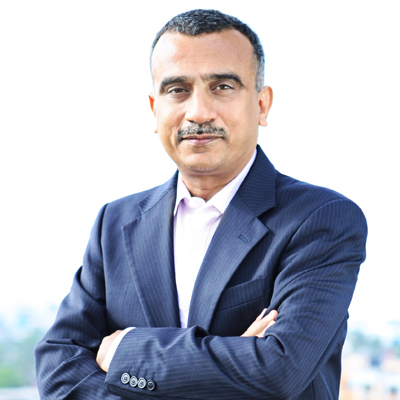
    (These are purely personal views of Viacom18 group CEO by Sudhanshu Vats and Indiantelevision.com does not necessarily subscribe to these views.)

  • Blossoming of a ‘Sunrise’ industry, with help from a ‘Sunshine’ Budget

    Blossoming of a ‘Sunrise’ industry, with help from a ‘Sunshine’ Budget

    Literary purists will expect an op-ed on the media and entertainment sector’s budget wish-list to begin with a reference to Chanakya’s Arthashastra or Manu’s Manusmriti; and rightly so, for they contain priceless public policy principles that hold good even today. However, as someone who is tasked with navigating an innovative organisation that takes pride in its ability to win the hearts of Indians across the world, I will opt for a more recent, relevant and simpler quotation, with a creative twist:

    ‘Kuch to phool khilaye ‘aapne’, aur kuch phool khilane hai Mushkil yeh hai bag me ab tak, kaante ‘kuch’ purane hai’

    Shri Arun Jaitleyji

    Honourable Finance Minister, Government of India

    28 February, 2015, Union Budget Speech

    Last year, the FM listened to two of our industry’s requests. Withholding tax rates on payment of royalty were reduced to 10 per cent and a new, comprehensive foreign trade policy (SEIS) ensured that service sectors are treated at par with their counterparts in manufacturing. This time we have three sets of requests: those that remain from last year, those that are relatively more recent and those that are apply uniformly to all industries.

    Irrespective of which part of the value chain they might represent, all industry stakeholders will agree that consolidation is a much-needed, ongoing business reality that is critical for our sector to flourish. It is only natural that as this trend gathers steam, the regulation should treat our sector at par with other sectors like telecom and software when it comes to the carrying forward of losses in case of a merger or amalgamation. All this needs is an amendment in Section 72A of the IT Act to include the ‘broadcasting, media and entertainment sector.’ The second issue is an oft-repeated one and refers to the treatment of hire charges for transponders as royalty. This leads to an unnecessary tax burden given that there is no transfer of technology taking place. Moreover, even foreign jurisdictions don’t treat these payments as royalty. A simple clarification from the authorities can help resolve this issue.

    Amongst the more recent requests, the first pertains to how we treat payments for content production. These are not ‘fees for technical services’ (u/s 194J) and should instead be treated as ‘work’ (u/s 194C). This will bring clarity regarding the applicability of withholding taxes and help reduce litigation. The other pertains to the sponsorship of ground events. Currently, despite the recipient of the service paying service tax in entirety, set off of CENVAT credit is not available to the sponsorship service provider. This anomaly needs to be corrected.

    The final category pertains to requests that will help industry at large and not just our sector. However, this very aspect makes them even more critical for the M&E sector given our role as a ‘force-multiplier.’ Around $18 billion of investment proposals have been received in electronics manufacturing under the ambitious ‘Make in India’ programme, driven mainly by mobile handset manufacturers. Without high-quality engaging video content, that device with a 5-inch HD screen, 64GB storage and oodles of computing power has practically no use. Media rights are the single largest contributor to almost all sporting leagues in this country. FMCG companies spend a significant portion of their top-line (~10-15 per cent) on advertising because it contributes significantly to their growth. The moot point here is that we power several ecosystems, beyond our own. In keeping with this philosophy the top four requests are (1) reduction in Minimum Alternate Tax (MAT) rate (2) utilisation of credit of Education Cess and Secondary and Higher Education Cess lying in CENVAT balance (3) allowing CENVAT credit on Swachh Bharat Cess (SBC) and (4) removing restrictions on claiming CENVAT Credit.

    While MAT may eventually have lesser relevance (as corporate tax rates and the number of exemptions available to companies reduce), it is in the transitory period that a reduction in the MAT Rate (ideally coupled with the possibility of claiming MAT Credit over an indefinite period of time) can be extremely beneficial. On the issue of Education Cess and Secondary and Higher Education Cess, a simple clarification will suffice. Finally, the Swachh Bharat mission is a unique, much-needed effort that has several positive externalities. So much so, that many organisations are, in their individual capacity, trying their best to support it. At MTV we’ve launched the Junkyard Project, where we are helping with the cleaning and beautification of junkyards. In its current avatar, it is likely that the burden of the SBC will be passed on to the end consumer, after the effects of cascading. Therefore, it will be helpful if CENVAT Credit is allowed on the Swachh Bharat Cess. The government has placed huge emphasis on the ease of doing business. A smooth, seamless flow of tax credits is a critical aim in this regard. As a precursor to the GST regime, it will be helpful if all restrictions on claiming CENVAT credit are removed, including those related to timelines and specific inputs and input services.

    At Viacom18 we take the value of ‘listening deeply’ very seriously. In addition to some of the points above, my op-ed before the last year’s Budget had also argued for a more ‘innovative’ style of dissemination of the budget speech (‘engaging, multi-lingual, audio-visual with info graphics’). I hear that this time around the Finance Ministry has launched an official YouTube channel. Clearly the prashaasan is listening. Now it’s our turn to switch on the TV sets on and grab the popcorn. We’re all ears for Budget 2016.

    (These are purely personal views of Viacom18 group CEO by Sudhanshu Vats and Indiantelevision.com does not necessarily subscribe to these views.)

  • CNN-IBN to air shows on Narendra Modi’s one year in office

    CNN-IBN to air shows on Narendra Modi’s one year in office

    MUMBAI: It has almost been a year since Narendra Modi – the longest serving BJP chief minister created history when he won by a landslide victory of 282 seats in the Indian General elections and formed the first single party majority Government in three decades.


    Taking charge, the Modi government undertook a series of administrative measures with a vision of better India, marking a shift in leadership and style of governance.


    CNN-IBN and IBN7 will introduce two new shows in order to  answer the curious minds on how the country has fared under Modi’s rule so far and assess the impact of the measures taken by his government.


    The two programs are an exclusive array of shows that focus on all the aspects of the key decisions and initiatives government has taken. CNN-IBN will air Modi @ 360 from 16 – 26 May, that will constitute a half-hour tete-a-tete with ministers and MPs from the ruling party along with interviews with senior opposition leaders. It also has a slot for feature stories like ‘five point something’ that showcase the top five highlights of PM Modi in various fields.


    While Modi@360 focuses on the political impact of Modi’s government and his leadership, Ek Saal Modi Sarkar on IBN7 that will run from 18 – 26 May will evaluate the work from a common man’s point of view. The extensive programming will be in the form of documentaries, surveys, discussions and interviews. It includes an eight episode long series of discussions discussion titled Modi Ke Mantri featuring key ministers of Modi government on the performance and the way forward for their respective ministries. This will be an eight episode series, which will be followed by 12 Mahine, 12 Faisle, a three hour long special that will bring the reasons, details and outcomes of 12 key decisions taken by the Modi government to the limelight.


    Apart from these programs, the channels will also conduct an exclusive nationwide survey on the performance of PM Modi and his team. Sabse Bada Survey will gauge mood of the nation from a sample size of about 20000 respondents from across 20 states and more than 400 districts.