Tag: Modi government

  • S Jaishankar addresses the importance of strong leadership with News18

    S Jaishankar addresses the importance of strong leadership with News18

    Mumbai: Foreign minister S Jaishankar has emphasized the importance of presenting the ten-year record of the Modi government to the public so to instil confidence among voters and likened this record to an insurance policy, stating that it serves as evidence of Modi’s commitments and achievements.    

    In an exclusive interview with News18, S Jaishankar addressed the significance of strong leadership in navigating global challenges, citing the need for experienced leadership in times of tension and conflict worldwide. He noted the growing interest among voters in foreign policy matters, reflecting on his extensive interactions across various states.    

    Responding to queries about managing news flow, Jaishankar explained the structured approach of the ministry, including the establishment of situation and control rooms during crises. He underscored the importance of swift decision-making and adherence to standard operating procedures (SOP’s) in handling emergencies.    

    Speaking about his career choices, Jaishankar revealed his initial 
    preference for the Indian Foreign Service (IFS) due to his academic background and interest in international affairs. He acknowledged the accessibility and popularity he enjoys among the youth, attributing it to his relaxed demeanor and commitment to public service.

    Addressing criticism of government functioning, Jaishankar emphasized 
    the inclusive decision-making process under Prime Minister Modi’s leadership. He highlighted the collaborative approach in cabinet meetings and foreign tours, where every voice is heard and valued.    

    Regarding the issue of Muslim reservation raised by Congress, Jaishankar criticized the party’s approach, likening its manifesto to a blend of Muslim League and Maoist ideologies. He asserted the Prime Minister’s stance against reservation based on religion, highlighting the government’s commitment to equality.    

    Jaishankar’s remarks drew attention to the ongoing debate over the reservation policy, particularly in Karnataka, where the Congress government has proposed a four per cent quota for Muslims. He emphasized the need for clarity and consistency in addressing social and economic disparities without resorting to divisive measures.

    On Rahul Gandhi’s comments about Indian democracy being in danger 
    during his overseas visits, Jaishankar expressed disappointment, urging politicians to refrain from airing domestic grievances abroad. He cautioned against inviting external interference in India’s internal affairs, citing historical precedents and emphasizing the importance of maintaining national unity.    

    Addressing Rahul Gandhi’s assertions about Chinese encroachments, 
    Jaishankar refuted claims of silence, highlighting historical context and infrastructure developments. He clarified misconceptions surrounding China’s activities in Ladakh and Arunachal Pradesh, citing past instances of border disputes and emphasizing the government’s commitment to border negotiations.

    Switching to election dynamics, Jaishankar commented on the possibility of achieving a substantial victory margin. He dismissed opposition skepticism, expressing confidence in voter turnout and the Modi government’s track record. Jaishankar projected optimism for reaching 400 mark electoral milestone, attributing it to public trust and the government’s proactive governance approach.    

    Reflecting on international election observation, Jaishankar welcomed foreign interest in India’s electoral processes, affirming positive intentions behind such engagements. He underscored the importance of 
    transparent electoral practices and dismissed foreign media criticisms 
    as uninformed perspectives.    

    In discussing language preferences, Jaishankar emphasized the natural 
    evolution of language usage, particularly in political discourse. He highlighted the BJP government’s emphasis on Hindi, aligning with the linguistic preferences of many leaders and constituents.    

    Regarding election turnout and Microsoft’s warnings of potential 
    interference, Jaishankar expressed confidence in India’s robust electoral system while acknowledging the challenges posed by advancements in technology.    

    Addressing allegations of EVM tampering and border tensions, Jaishankar debunked misconceptions and provided historical context, emphasizing the government’s efforts to strengthen border infrastructure and resolve disputes diplomatically.    

    In response to queries about India’s global standing, Jaishankar highlighted the country’s resilience during the COVID-19 pandemic and its economic growth trajectory. He emphasized India’s role as a civilization power and the need to assert its cultural identity on the world stage.    

    Regarding the arrest of Arvind Kejriwal and other contentious issues raised by a newspaper based in England, Jaishankar emphasized the primacy of law and elections. He dismissed suggestions that legal proceedings should be halted during election periods, citing international norms and urging consistency in legal enforcement.    

    On the topic of intruder killings, Jaishankar offered a blunt 
    assessment of Pakistan’s role in fostering terrorism. He suggested that individuals engaging in illicit activities should face consequences, regardless of their location, underscoring the need for accountability.

    Shifting the conversation to lighter topics and when inquired about Jaishankar’s holiday plans. Jaishankar, downplayed the notion of vacations under Modi’s governance, emphasizing his dedication to duty.

    Pointing to his previous visit to Kashmir, he expressed interest in exploring Tawang, Arunachal Pradesh, citing its burgeoning tourism industry and historical significance.    

    Jaishankar expressed optimism about the upcoming elections, citing faith in the Modi government’s track record and commitment to fulfilling promises. He underscored the importance of presenting a strong and stable government to address the aspirations of the Indian populace. 
     

  • Govt’s digital channel to tell ‘India story’, Rs 75 cr investment planned

    MUMBAI: The Modi government is reportedly planning to launch a digital platform which will report on international news to a global digital audience with an India perspective. It will “challenge the anti-India narrative” and present “India’s perspective on global events.”

    The concept, approved by the Prasar Bharati Board, was discussed by a committee that included Prasar Bharati board members Sunil Alagh and Shashi Shekar Vempati, and Prasar Bharati interim CEO Rajeev Singh.

    The 24×7 operational digital platform, with an investment of Rs 75 crore, will have correspondents across the globe. Targeted at English-speaking audience, the Indian diaspora and the global opinion makers, the channel will change the narrative that presents India as a “constant point of conflict between Hindu nationalists and so-called secularism.”

    If the information and broadcasting ministry agrees to a proposal by Prasar Bharti, the country will soon have a digital channel to tell the “India story”.

    Prasar Bharati chairman A Surya Prakash said that the idea was discussed by the United Progressive Alliance government.

    The objective of this digital channel over the next three years will be to reach 10 million to 100 million page views a month, a million mobile app downloads and YouTube subscribers each.

  • Discovery & AIM Television bring Netaji docu on air on 18 July

    Discovery & AIM Television bring Netaji docu on air on 18 July

    MUMBAI: A lot of curiosity has arisen about what really happened to Netaji Subhash Chandra Bose and the declassification by the Modi government of files concealed for decades has heightened interest in it.

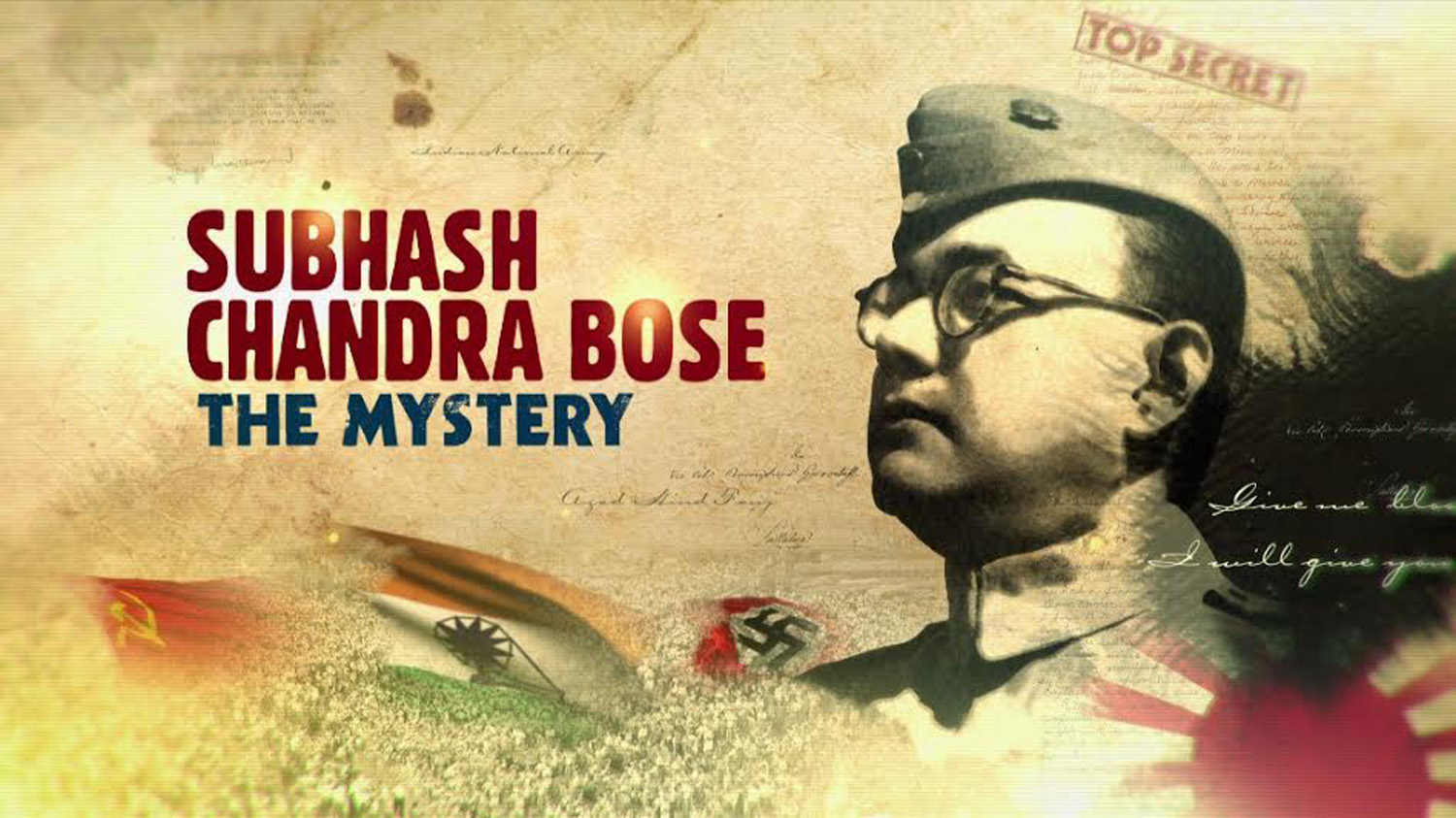
    Now here to add to material on the subject is Discovery Channel which is all set to air Subhash Chandra Bose: The Mystery on 18 July at 9 pm. The documentary has been produced by Iqbal and Anu Malhotra’s AIM Television and seeks to track what happened to Netaji.

    The enduring question spans a complex web of characters, places and international politics. Did Bose die in a plane crash in Taipei as officially accepted? Is it true that Bose returned to India and lived incognito as a wandering monk? Why did the Government of India kept the files relating to his death secret for 70 years? What’s in the files declassified in January 2016?

    Shot in three counties, including Russia, India and the UK by a crew of 12 , the film is focused on the mystery post Netaji’s disappearance and it documents many of his personal stories and experiences.

    Says Subhash Chandra Bose: The Mystery chief assistant director Meghna Talwar: “The challenge while starting the project was the enormous information available on him, to filter out and find the right leads from available information was the first task.”

    The documentary follows an enterprising young NRI, Sidhartha Satbhai who commissioned Neil Millar, a former veteran of the Royal Signals Regiment of the British Army, to conduct an image analysis on video and photographic material supplied to him by an internet group, Anonymous. The footage pertains to an individual referred to as ‘The Tashkent Man’, who was present during the Indo-Pak Tashkent Declaration of 10 January 1966. Through modern scientific and facial analysis, the investigation points to the possibility that the bespectacled man could be Netaji. The report also infers that if Netaji was present in the Tashkent Declaration in 1966, he could not have died in the plane crash on August 18, 1945, as officially reported.

    The film then reveals the story of Leon Prouchandy, a forgotten chapter in the history of the Indian National Army. His story told by his grandson Prashant More raises yet another question in the enduring mystery of Subhash Chandra Bose. According to author and historian Prashant More, the day Bose supposedly died in the plane crash in Taipei, he was at the Prouchandy Mansion in Saigon (present day Vietnam). He believes that Bose entrusted the INA’s substantial finances to Leon Prouchandy, one of the key figures in Bose’s operations in South East Asia.

    The documentary then brings in Purabi Roy, Author and Visiting Professor at Moscow State University and Major General Alexandr Kolesnikov, Retired Major General of the Warsaw Pact, who draw upon critical information from Russian archives regarding Netaji’s presence in Post-World War II Russia.

    Further in the film, Prathama Banerjee, Historian and Associate Professor at The Centre for the Study of Developing Societies (CSDS) sheds light on the rise of secret societies in pre-Independence India, their influence, the leftist leanings of Bose as President of the Indian National Congress and his association with members of the Communist party.

    The film also interrogates Netaji’s associates and his family including his grandnephews Ashish Ray and Abhijit Ray. Abhijit retraces Netaji’s steps and narrates his meticulous and planned escape in 1941 from his ancestral house at Elgin Road, Calcutta to Berlin under a new Italian identity and further raising a Regiment in the German Army, the Wehrmacht.

    The production team has also recreated few of incidents and has shown a photographic collection.

    Putting various perspectives in one frame, Subhash Chandra Bose: The mystery underlines various controversies and surmises if the Bose mystery is an International conspiracy of silence or does the Indian government already has the answers?

    Shot in English, it is also likely that it will be shown with a Hindi, Tamil. Telugu and Bengali dub. The repeat is also scheduled on July 19 2016 at 9AM, July 23 at 3PM, and July 24 at 8PM.

    Malhotra is expecting the film to get popular among scholars, researchers, students and experts, since it compiles information from various sources. And he expects it to get Bengal viewers to tune in to it, considering Netaji’s huge cachet in the region.

  • Discovery & AIM Television bring Netaji docu on air on 18 July

    Discovery & AIM Television bring Netaji docu on air on 18 July

    MUMBAI: A lot of curiosity has arisen about what really happened to Netaji Subhash Chandra Bose and the declassification by the Modi government of files concealed for decades has heightened interest in it.

    Now here to add to material on the subject is Discovery Channel which is all set to air Subhash Chandra Bose: The Mystery on 18 July at 9 pm. The documentary has been produced by Iqbal and Anu Malhotra’s AIM Television and seeks to track what happened to Netaji.

    The enduring question spans a complex web of characters, places and international politics. Did Bose die in a plane crash in Taipei as officially accepted? Is it true that Bose returned to India and lived incognito as a wandering monk? Why did the Government of India kept the files relating to his death secret for 70 years? What’s in the files declassified in January 2016?

    Shot in three counties, including Russia, India and the UK by a crew of 12 , the film is focused on the mystery post Netaji’s disappearance and it documents many of his personal stories and experiences.

    Says Subhash Chandra Bose: The Mystery chief assistant director Meghna Talwar: “The challenge while starting the project was the enormous information available on him, to filter out and find the right leads from available information was the first task.”

    The documentary follows an enterprising young NRI, Sidhartha Satbhai who commissioned Neil Millar, a former veteran of the Royal Signals Regiment of the British Army, to conduct an image analysis on video and photographic material supplied to him by an internet group, Anonymous. The footage pertains to an individual referred to as ‘The Tashkent Man’, who was present during the Indo-Pak Tashkent Declaration of 10 January 1966. Through modern scientific and facial analysis, the investigation points to the possibility that the bespectacled man could be Netaji. The report also infers that if Netaji was present in the Tashkent Declaration in 1966, he could not have died in the plane crash on August 18, 1945, as officially reported.

    The film then reveals the story of Leon Prouchandy, a forgotten chapter in the history of the Indian National Army. His story told by his grandson Prashant More raises yet another question in the enduring mystery of Subhash Chandra Bose. According to author and historian Prashant More, the day Bose supposedly died in the plane crash in Taipei, he was at the Prouchandy Mansion in Saigon (present day Vietnam). He believes that Bose entrusted the INA’s substantial finances to Leon Prouchandy, one of the key figures in Bose’s operations in South East Asia.

    The documentary then brings in Purabi Roy, Author and Visiting Professor at Moscow State University and Major General Alexandr Kolesnikov, Retired Major General of the Warsaw Pact, who draw upon critical information from Russian archives regarding Netaji’s presence in Post-World War II Russia.

    Further in the film, Prathama Banerjee, Historian and Associate Professor at The Centre for the Study of Developing Societies (CSDS) sheds light on the rise of secret societies in pre-Independence India, their influence, the leftist leanings of Bose as President of the Indian National Congress and his association with members of the Communist party.

    The film also interrogates Netaji’s associates and his family including his grandnephews Ashish Ray and Abhijit Ray. Abhijit retraces Netaji’s steps and narrates his meticulous and planned escape in 1941 from his ancestral house at Elgin Road, Calcutta to Berlin under a new Italian identity and further raising a Regiment in the German Army, the Wehrmacht.

    The production team has also recreated few of incidents and has shown a photographic collection.

    Putting various perspectives in one frame, Subhash Chandra Bose: The mystery underlines various controversies and surmises if the Bose mystery is an International conspiracy of silence or does the Indian government already has the answers?

    Shot in English, it is also likely that it will be shown with a Hindi, Tamil. Telugu and Bengali dub. The repeat is also scheduled on July 19 2016 at 9AM, July 23 at 3PM, and July 24 at 8PM.

    Malhotra is expecting the film to get popular among scholars, researchers, students and experts, since it compiles information from various sources. And he expects it to get Bengal viewers to tune in to it, considering Netaji’s huge cachet in the region.

  • Media protests on streets; Press Council of India demands police report on attacks on scribes

    Media protests on streets; Press Council of India demands police report on attacks on scribes

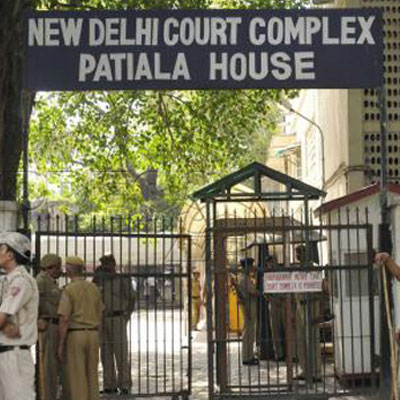
    NEW DELHI: Reiterating that attacks on journalists discharging their professional duties was not acceptable, the Press Council of India has sought a report from the Delhi Police regarding the assault on media persons in the Patiala House Court complex.

    “Our view is that attack on journalists doing professional work is not at all acceptable. I have sought a report today,” PCI chairperson Justice (retd) C K Prasad said.

    The events at Patiala House court resulted in a massive outrage and top editors of national media and hundreds of journalists yesterday demonstrated on the streets demanding action against those involved in beating up members of their fraternity in police presence and sought Supreme Court’s intervention in protecting freedom of speech.

    The journalists shouting slogans against the Modi Government and Delhi Police marched from Press Club of India to the Supreme Court and submitted a memorandum to its Registrar seeking cancellation of licences of lawyers involved in the assault.

    Earlier both the News Broadcasters Association and the Delhi Union of Journalists have issued statements condemning the attacks.

  • Media protests on streets; Press Council of India demands police report on attacks on scribes

    Media protests on streets; Press Council of India demands police report on attacks on scribes

    NEW DELHI: Reiterating that attacks on journalists discharging their professional duties was not acceptable, the Press Council of India has sought a report from the Delhi Police regarding the assault on media persons in the Patiala House Court complex.

    “Our view is that attack on journalists doing professional work is not at all acceptable. I have sought a report today,” PCI chairperson Justice (retd) C K Prasad said.

    The events at Patiala House court resulted in a massive outrage and top editors of national media and hundreds of journalists yesterday demonstrated on the streets demanding action against those involved in beating up members of their fraternity in police presence and sought Supreme Court’s intervention in protecting freedom of speech.

    The journalists shouting slogans against the Modi Government and Delhi Police marched from Press Club of India to the Supreme Court and submitted a memorandum to its Registrar seeking cancellation of licences of lawyers involved in the assault.

    Earlier both the News Broadcasters Association and the Delhi Union of Journalists have issued statements condemning the attacks.

  • MIB organises talkathon with Ministers to mark Modi govt’s one year

    MIB organises talkathon with Ministers to mark Modi govt’s one year

    NEW DELHI: Even as the Modi Government is marking completion of one year in office, the Ministry of Information and Broadcasting (MIB) has organised a talkathon with three union ministers as part of its initiative to highlight the achievements of the Government.


    In the first Talkathon of its kind, Human Resource Development Minister Smriti Irani,  Power, Coal, New and Renewable Energy minister Piyush Goyal, and Commerce and Industry minister Nirmala Sitharaman will be participating for a duration of 90 minutes on 30 May from 6 pm onwards. The programme would be live from National Media Centre, New Delhi.


    Talkathon is an initiative by the New Media Wing of the MIB, which connects the virtual space with the physical world. Under the platform, participants in the social media space can post questions on Twitter, which would be answered by the guests. The users can use the hashtag #AskYourGovt to post their queries to the Twitter handle of the Ministry @MIB_India. 


    The speakers will reply to the queries posted on Twitter, in real time. The event will be webcast LIVE on MIB’s YouTube channel (www.youtube.com/inbministry),pib.nic.inindia.gov.inwww.youtube.com/DDNewsofficial and DD News.


    This is the third edition of the Talkathon. It was introduced at the International Film Festival of India (IFFI) 2014 followed by Talkathon with Railway Minister Suresh Prabhu after the Rail Budget. The last edition of the Talkathon was with Finance, Corporate Affairs and MIB minister Arun Jaitley soon after he presented the Budget on 28 February. The latter was especially successful with the hashtag #AskFM trending at Number 1 on Twitter. 


    The current edition of Talkathon is a collaborative effort of the New Media Wing, Press Information Bureau and Doordarshan News under the aegis of the MIB.

  • 72% satisfaction rate with Modi Government: CNN IBN, IBN7 poll

    72% satisfaction rate with Modi Government: CNN IBN, IBN7 poll

    MUMBAI: As Network18’s news channels CNN-IBN and IBN7’s special programming around Modi Government’s one year in power draws to a close, the channels presented a special poll for its viewers assessing the government’s performance from the citizen’s perspective.


    Marking a shift in leadership and style of governance, the Modi Government undertook a series of measures to achieve the vision of a better India. To evaluate the impact of these changes at the ground level, Axis MyIndia conducted a comprehensive survey across 23 states and more than 155 districts with a sample size of 20,000 across all age groups of society with a 70/30 urban-rural spread.


    The survey findings showed that over 72 per cent of the respondents said that they were satisfied with the performance of the Modi Government on account of development, skillful governance and lower prices in the previous year.  Close to 56 per cent of the sample, believed that Modi is an effective Prime Minister and has helped improve India’s image globally.


    Network18 news president Umesh Upadhyay said, “We have always ensured to follow the most robust and scientific research processes to truly capture the voice of the people. This survey is another initiative driven by this thought process and we believe that it reflects the sentiments of the common men and women of this country, most accurately, with regards to the performance of the Modi Government as it reaches the crucial milestone of an year in office.”


    On the issue of the relationship between the Government and RSS, 32 per cent of the respondents felt that there was no interference by RSS in the affairs of the government. On the impact of controversial statements such as those relating to Ghar Wapasi, approx 31 per cent of the respondent felt that such statement do not dent the image of the Government at all whereas approx 33 per cent felt that such statements do have an adverse impact; overall 43 per cent of the respondents felt that those making controversial statement should be controlled. 

  • CNN-IBN, IBN7 to conduct exclusive poll on Modi government’s one year in power

    CNN-IBN, IBN7 to conduct exclusive poll on Modi government’s one year in power

    MUMBAI: As CNN-IBN and IBN7’s special programming around Modi Government’s one year in power draws to a close, the channels present a special poll for its viewers assessing the government’s performance from the common man’s / woman’s perspective.


    Marking a shift in leadership and style of governance, Modi government in the last one year undertook a series of administrative measures to achieve the vision of a better India. To evaluate the impact of these changes through the eyes of the common men and women, Axis APM conducted a comprehensive survey across 20 states and more than 200 districts with a sample size of 20,000 across all age groups and sections of society.


    With an aim of giving its viewers the sharpest and the most incisive analysis, the survey questions revolve include various facet of the government’s performance such as- the financial situation of the country, employment opportunities, reduction in inflation, corruption, etc. The channels will bring to its viewers the most detailed analysis of the findings with the finest panel of guests & experts that include Aakar Patel, R.Jagannathan, Ashok Malik, Nalin Kohli, Manini Chatterjee and Shankkar Aiyar.


    The special poll programming will be aired on IBN7 from 23 to 25 May, 8pm-10pm and on CNN-IBN on 25 May at 8 pm–10.30 pm.